Dialogue with CZ: I'm not particularly money-driven, and the Chinese-themed Meme is purely coincidental
TechFlow Selected TechFlow Selected
Dialogue with CZ: I'm not particularly money-driven, and the Chinese-themed Meme is purely coincidental
I hope to continue contributing to the crypto industry, but I don't feel personally responsible for the entire industry.
 Navigating Web3 tides with focused insights
Compiled & Translated: TechFlow
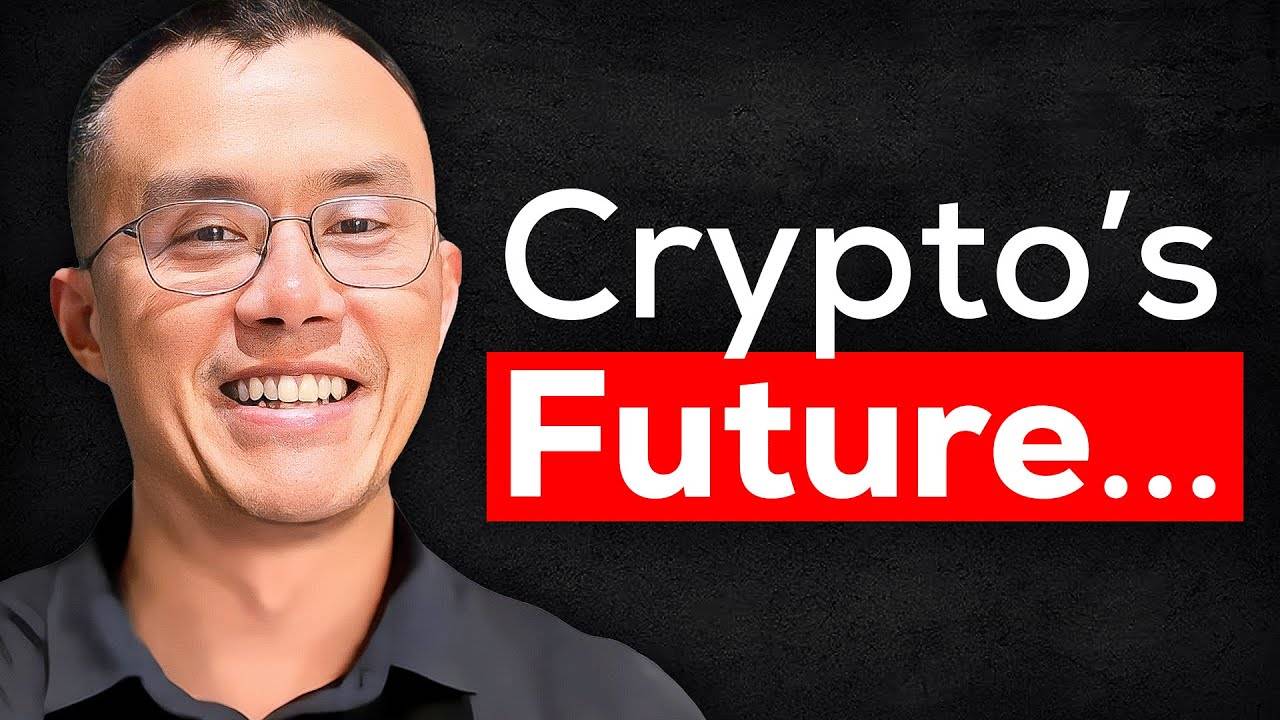
Guest: CZ, Founder of Binance
Host: Michael Jerome
Podcast Source: threadguy
Original Title: Binance Founder CZ on Memecoins, Aster, BNB vs SOL and More | TG Podcast
Release Date: October 11, 2025
Key Takeaways
In this in-depth interview, Binance founder CZ (Changpeng Zhao) shares his life journey after stepping down, reflections during incarceration, a renewed understanding of wealth and life goals, and unique insights into the future of the crypto industry, memecoins, and decentralized finance (DeFi). Hosted by ThreadGuy, CZ also dives deep into Bitcoin’s next market cycle, the rapid rise of BNB Chain, the competitive landscape among perpetual contract DEXs like Aster and Hyperliquid, and how young developers can find their path in today’s crypto ecosystem. This conversation is a must-listen intellectual feast for anyone interested in cryptocurrency, blockchain technology, or entrepreneurship.
Highlights Summary
-
I’ve never been someone particularly obsessed with money.
-
I hope to continue contributing to the crypto industry, but I don’t feel personally responsible for the entire sector.
-
I believe BNB can surpass Solana and maintain dominance in on-chain and meme activity.
-
I’m not against memecoins—I just don’t personally enjoy them. That doesn’t mean I don’t support their development.
-
The emergence of China-themed memes on BNB Chain is purely coincidental—completely accidental.
-
In the long run—over the next 20, 30, or 50 years—crypto trading will fully shift on-chain.
-
The path of "Launchpad, Aster, Alpha, Spot" is a result of natural evolution.
-
I don’t know Hyperliquid’s Jeff. I once missed a meeting with him because my alarm was set wrong and I overslept—but I don’t regret missing it.
-
Once you have a clear vision of the future, investing in Bitcoin becomes more than just short-term profit-seeking.
-
I advise young people to get involved in startups early, without being overly results-driven. I founded Binance at age 40, and now I'm 48—you don't need to succeed early.
-
The appeal of the crypto industry lies in its diversity—every area holds immense potential, which is precisely where crypto’s strength lies.
-
Health is the most important thing. Without health, everything else is meaningless.
-
Users ultimately choose exchanges that offer the best trading experience—typically platforms with the deepest liquidity, lowest fees, and most stable and secure environments. These are the core factors users truly care about.
-
I once predicted Bitcoin could reach between $500,000 and $1 million—that still seems reasonable today.
Hyperliquid Jeff Tweet Incident and Missed Meeting
Host:
A lot has happened recently—we’ll go through it all. This morning I woke up to see Twitter flooded with tweets about Jeff. What exactly happened? Everyone’s talking about it. You retweeted something from 2018 mentioning a panel Jeff was on. There's huge buzz on Twitter today. Can you explain the backstory?
CZ:
To be honest, I don’t know Jeff personally, nor do I recall meeting him. Actually, I wasn’t directly involved in all teams or incubation projects under Binance Season 1 Labs, so my knowledge of Jeff is limited. Earlier this year, Ella told me he was part of Season 1 and asked if I’d be willing to chat with him. I agreed, thinking it would be good to understand the situation. But I felt he wasn’t well-prepared for the meeting. We didn’t discuss any deals or collaboration proposals. In fact, their project was already quite mature, while we tend to focus on earlier-stage investments. Our goal with incubation and residency programs is to help projects grow from scratch. So, this meeting was more of an informal chat.
Unfortunately, due to a misconfigured alarm, I overslept and missed the meeting. Since there was no specific agenda, we didn’t reschedule.
Host:
Do you regret missing the meeting?
CZ:
No, I don’t regret it. The meeting was only a few months ago, and by then they had already achieved significant success and high valuation. For us, it was no longer a suitable investment target. We generally avoid large-scale acquisitions—our biggest so far was CoinMarketCap, around several hundred million dollars. Their scale was already beyond our range. Since the meeting lacked a concrete purpose, we didn’t reschedule. They’re busy, I’m busy—things just moved on. It wasn’t a deal-oriented meeting, just a casual exchange.
Life After Binance and Finding Purpose
Host:
What are your goals now? Right now, you're undoubtedly one of the wealthiest people in the world and a key figure in the crypto industry. Now, after going through incarceration and returning to Twitter, what drives you forward? What motivates you?
CZ:
To be honest, I've never been someone particularly obsessed with money. Success with Binance came too fast—I never experienced the gradual process of building and enjoying wealth. From day one, we were extremely busy, constantly dealing with emergencies, followed by legal issues with the U.S. government, which brought tremendous pressure.
I come from a relatively modest background and don’t crave luxury. My lifestyle needs are simple—as long as things work, I’m fine. Binance grew incredibly fast—within five months, it went from zero to becoming the world’s largest crypto exchange. Seven months later, we were on the cover of Forbes—going from nothing to Forbes in such a short time felt surreal. I remember thinking: “Is this real?” But honestly, I didn’t feel much change in my life. I hadn’t cashed out, and my bank account didn’t grow significantly. Sure, I was somewhat wealthier than before, but nowhere near the billions people assume. So I never experienced the slow accumulation of wealth.
When it comes to pursuing what I want, I never felt poor. I don’t need wealth to prove myself. I’m satisfied with being a successful entrepreneur—I don’t need to be a serial success. I think I’ve done well enough. While I made some mistakes during the entrepreneurial journey, none were serious. I never deceived anyone, and users weren’t harmed. On the contrary, I always tried to protect our users, BNB investors, and team members who held equity. I believe our team performed exceptionally well. I also did my best to protect the platform we built together. For my own mistakes, I took responsibility and faced them bravely.
During my time in prison, I had more time to reflect on what truly matters. Honestly, prison sharpened my mind. I realized health is the most important thing. Without health, everything else is meaningless. Luckily, in prison I had nothing else to do, so it became a forced “rest.” There, I began asking myself: If I lost everything, what would I miss most? The answer: family and relationships. Other things—like good food or a comfortable bed—are nice, but secondary and manageable.
Before incarceration, I already knew I couldn’t continue managing Binance, though I remained a shareholder. I started wondering: what kind of work would excite and fulfill me? After deep reflection, I realized humans might be naturally designed to help others. When you’re self-sufficient, helping others feels better. If I’m hungry, I solve that first; if I’m cold, I find shelter. But once basic needs are met, helping others brings fulfillment and joy.
So, I began thinking: how can I better help others? At that point, I had already pleaded guilty to U.S. federal charges, so I didn’t care about reputational damage. Still, I deeply value integrity. I never hurt users or anyone else. I no longer seek power—I resigned from Binance. I’m not interested in money either—I spend very little, not even a fraction of the wealth people say I have. So these things aren’t important to me.
I hope that when I’m old, I can look back and say I did my best to help others. That’s what matters most to me now. I want to make a positive impact on the world. If my capacity is high, I’ll do more; if limited, I’ll do my best. I believe education is highly promising because it can affect many people. Building a digital education platform accessible to all would be deeply meaningful.
That’s why we’ve been working toward it. After release, I spent months adjusting mentally—the experience profoundly impacted me. A few months later, I returned to Twitter and normal interactions. I also spent time with family. Later, I found I could still manage the investment side of my portfolio—unrelated to Binance. I started engaging with Binance Labs, clearly distinguishing brand identities. Now I’m deeply focused on developing the BNB Chain ecosystem—again, unrelated to the centralized exchange. I invest here and help others.
Now, my greatest joy is helping other founders succeed. I’m happy to be their mentor, supporter, or anything they need. That’s my current life and purpose.
Lessons from Incarceration and Shifting Priorities
Host:
Given your status in the crypto industry and past experiences, do you feel responsible for shaping the industry’s future direction?
CZ:
I don’t feel that way. First, I don’t think I’m that important. I don’t believe any single individual bears sole responsibility for the entire crypto industry. The industry itself is a self-adjusting ecosystem—it goes through downturns (“winters”) and cycles, but each recovery is more mature than the last. So I believe the future of crypto is bright.
While I don’t see myself as a leader, I do want to contribute. I’ll focus on areas I know well and use my influence to push progress. Crypto is what I understand best and where I can truly make a difference. That’s why I now spend a lot of time connecting with people in the space. My social circle is mostly within this field—everyone wants to discuss crypto with me.
Of course, people from other fields reach out too—like those in AI. Some from Facebook have spoken with me, but their approach is completely different from crypto folks. In biotech, when we decide to invest, we often have to proactively contact experts because I’m less familiar with that domain.
I hope to keep contributing to crypto, but I don’t feel responsible for the whole industry. That kind of burden would be too heavy. I believe there are many excellent players driving progress. I’m just one of many contributors—a role that feels lighter and more comfortable.
Current State of Crypto and On-Chain Culture
Host:
Crypto Twitter, especially on-chain culture, seems a bit strange lately. For example, Bitcoin just hit a new all-time high, yet today it dropped a few percent. Yet browsing Twitter timelines reveals overwhelming negativity. Viewed macroscopically, however, many positive changes are happening: the Trump administration is embracing crypto, ETFs for Bitcoin, Solana, and Ethereum have launched, and major financial institutions globally are adopting stablecoins. From the outside, crypto appears massively successful—even permeating every aspect of society.
Yet on-chain culture seems stagnant. Meme coin mania persists but lacks previous scale. Many feel lost about the next step. How optimistic are you about the future of on-chain culture?
CZ:
I agree with your observation—the issue exists, but overall it’s a positive sign because it means the industry is expanding. In 2013–2014, people called it the “Bitcoin industry,” focusing solely on Bitcoin, without broader awareness of cryptocurrencies or blockchain tech. By 2017, Ethereum opened a new chapter and spawned promising altcoins.
Ethereum’s ERC token standard fueled the ICO boom, rapidly increasing project numbers. This growth laid the foundation for the 2021 explosion, bringing innovations like DeFi and NFTs. Though DeFi and NFTs have cooled, they remain vital parts of the industry. Now, more ETFs, stablecoins, and financial products are emerging—clearly positive signs of progress.
As the industry grows, internal fragmentation becomes more evident—not just across technical domains, but also among participant groups and regions. This diversification is a natural outcome of industry maturation.
Institutional involvement is also reshaping the space. Governments, Wall Street, and central banks are entering, bringing new participants. Traditional finance’s entry creates a new balance with industry libertarians—I position myself in the middle.
Meanwhile, new entrants bring fresh perspectives and voices. Crypto is a decentralized ecosystem open to all. Diversity, debate, competition, and collaboration define the industry and drive its evolution.
I’m used to the chaos of emerging fields. I remain open-minded, so I view this diversity and dynamism positively. We should support everyone and contribute to sustained growth.
Host:
About five months ago on Ferox’s podcast, you mentioned predicting Bitcoin could reach $500,000–$1 million. Do you still stand by that forecast?
CZ:
I still think that prediction is reasonable. Of course, I admit price predictions aren’t reliable. Honestly, no one—including me—can accurately predict prices. I’ve talked to many in the industry—they don’t have clear answers either. Price forecasts are just personal opinions.
But if we look at historical four-year cycles, Bitcoin typically peaks between October and December every four years. Based on that pattern and current market performance, I remain optimistic about Bitcoin’s future.
Bitcoin is near all-time highs, and though minor 1–2% fluctuations occur daily, for those in the industry for 11 years, this is trivial. Bitcoin once dropped 50% in a day, then rose 50% the next. Long-term, such volatility is entirely normal in crypto.
BNB Chain vs Solana
Host:
Many viewers may have first encountered crypto through the 2024 Solana memecoin craze or the rise of AI. Over the past month, they may have engaged with BNB Chain for the first time. Where do you see BNB Chain positioned in the crypto industry in 2025? How does it compare to other chains and infrastructure?
CZ:
Yes, currently Bitcoin remains the largest blockchain, but it lacks programmability and smart contracts, limiting its functionality. Bitcoin and Ethereum networks, due to massive user bases, are nearing saturation—partly why transaction fees are generally high.
BNB Chain has evolved over time and now consists of three main technical chains: Greenfield (storage chain), BNB Smart Chain (EVM-compatible smart contract chain), and opBNB (Layer 2-based). Additional new chains with different architectures are in development. Overall, BNB Chain emphasizes practicality and trading liquidity—closely tied to our background.
In terms of community and user base, BNB Chain users are relatively stable. In contrast, Solana is a powerful blockchain but currently resembles a meme-centric chain. While Solana has potential, its community includes many memecoin traders, and recent memecoin activity has declined.
Meanwhile, BNB Chain activity is rising. Last week, we saw many Solana users migrate to BNB Chain—an encouraging sign. Community feedback suggests BNB Chain users prefer long-term holding over daily volatility.
Of course, differences exist between chains. For example, some U.S.-based blockchain projects have low volume but interesting tech, like Move-based blockchains. This shows the industry is still early with vast room for growth.
Host:
Still, Solana and its ecosystem activity remain a key narrative of this cycle. Do you think BNB can surpass and maintain dominance in on-chain and memecoin activity?
CZ:
I think it’s possible. Over recent weeks, memecoin activity on BNB Chain has exceeded Solana’s. I understand five BNB Chain memecoins have reached $100M–$500M market cap, whereas similar cases haven’t emerged on Solana—likely affecting its recent performance.
However, I don’t view blockchain competition as zero-sum. Each chain has unique history. Solana’s growth is closely tied to FTX, whose collapse severely impacted Solana’s team. Despite this, Solana has achieved remarkable recovery.
During recovery, however, their ecosystem lost exchange support. Current regulations also challenge the entire industry. Under Biden and SEC Chair Gary Gensler, many utility tokens face securities litigation risks—including BNB and others.
If a project launches a product with real utility, it may face legal pressure from the SEC. Memecoins, by explicitly stating “no value or utility,” often bypass these issues. Hence, some Solana projects may lean toward pure speculation. For instance, a platform called Pump—if something like that appeared in our ecosystem, I believe it would cause problems, though I’m not directly linked to such platforms.
This partly explains why memecoins haven’t widely emerged on many blockchains. Still, as long as Solana maintains its speed, efficiency, and strong technical support, I believe it remains a blockchain worth watching. Personally, though, my focus is now more on the BNB Chain ecosystem. Our portfolio projects and wallets support both Solana and BNB Chain.
Our investment strategy is open, but clearly I dedicate more time and energy to the BNB Chain ecosystem. We’re committed to supporting innovation and helping founders advance projects. Currently, the BNB Chain ecosystem is highly active. Though daily challenges arise, overall I’m confident in its trajectory.
CZ’s Evolving View on Memecoins
Host:
I noticed your comments on Solana, and I also see BNB Chain’s infrastructure undergoing similar shifts, especially around Launchpad standards. In 2024, you publicly expressed lukewarm views on memecoins—for example, saying on podcasts you weren’t a fan. But recently, you seem more positive. What caused this shift?
CZ:
First, let me clarify: I’m not against memecoins. I’ve never explicitly opposed them—I just don’t personally enjoy them. That doesn’t mean I don’t support their development. I’m not a memecoin creator or NFT trader. I’ve never bought an NFT, and my altcoin investments are minimal. My main holdings are Bitcoin and BNB—long-term assets. I rarely invest in other blockchain projects, but I consistently support the growth of all blockchain ecosystems.
I collaborate closely with many blockchain developers, backing their projects. Though I don’t buy memecoins personally, I still support ecosystem growth. If users succeed on other chains, I’ll fund relevant projects—especially teams building platforms and infrastructure.
Daily, I receive numerous project requests—people launching new Launchpad projects, stablecoins, or memecoin trading platforms. If I believe a team has potential, I try to support them.
I simply think if memecoins come to BNB Chain, we should welcome them and optimize infrastructure to meet their needs. Memecoins pose new technical demands—like rapid updates and real-time data processing—which challenge infrastructure capabilities. To date, I haven’t actively invested in memecoins. I’ve bought a few just to learn—not for profit. I’m not the type chasing 10x returns quickly—that’s not my style.
Host:
BNB Chain’s infrastructure, especially for memecoins, has made significant progress. I’ve participated in many trades and the experience is great. If this trend continues, how big could BNB Chain’s memecoin activity become? The past month’s momentum surprised many.
CZ:
It’s hard to predict—memecoin lifecycles change fast. Some explode quickly—Doge being a rare long-lasting case. Meanwhile, millions of new memecoins launch daily.
I’m not on the “market frontier,” so I’m not the best person to forecast market size or growth. I focus more on building infrastructure to support such activity. I’m not a frequent trader—I’m a long-term holder.
My background is as a builder—I want to create efficient tools for others to achieve their goals. I see many energetic young people with strong technical skills. I hope to support them in advancing blockchain technology further.
Rise of Chinese Memecoins
Host:
Recently, many China-themed memecoins have emerged on BNB Chain, drawing widespread attention from Western communities. What do you think about this phenomenon?
CZ:
I think this is purely coincidental—completely accidental. Back in February, I first tried trading memecoins via blockchain using Trust Wallet. The interface seemed simple, and I was familiar with private keys, so I thought it would be easy. But reality surprised me—I suffered an MEV (Maximal Extractable Value) attack and the trade failed. It later became a joke, with everyone mocking my unfamiliarity with such trades. Still, I learned a lot—though the amount was small, maybe $50 or $100.
Over time, my attempts drew community attention. Especially when I posted tweets related to DOGE, people became fascinated with my pet dog and dog-related memes. Later, I noticed that whatever I tweeted or posted turned into memes. For a while, I became cautious, afraid to tweet freely. But eventually I realized that was too restrictive, so I decided to let go and post freely. If the community wanted to meme my content, so be it. Gradually, this interaction became part of BNB Chain’s memecoin culture—with many participants being Chinese users.
Binance co-founder He Yi has strong Chinese language skills, writes poetry, and is artistically talented. She once replied to a tweet about life biases, which later became a meme. Just this week, I tweeted a Mid-Autumn Festival greeting. I deleted it and reposted: “Happy Mid-Autumn, share your best memes.” I just wanted community participation and fun. But since Mid-Autumn is a traditional Chinese festival, the memes revolved around Chinese elements—mooncakes, the moon, etc.
These memecoins also have Chinese naming flair. For example, someone feminized my name as a joke—only Chinese speakers would get it. As community interaction increased, Chinese user engagement surged, and these coins gained popularity. All of this evolved naturally—not pre-planned.
Understanding the Meme Hype
Host:
Recently, I’ve been using Google Translate trying to understand what’s happening with BNB Chain’s memecoin surge. One controversial project is Meme Rush, which uses a special mechanism: only users who complete KYC can buy tokens via bonds below a $1M market cap, blocking immediate U.S. access. Though I’m unsure how much you can disclose, what’s the purpose behind launching projects like Meme Rush?
CZ:
I wasn’t involved in Meme Rush—I only learned about it yesterday. When the community exploded with discussion, people kept asking: “What is this?” I didn’t even know it was called Meme Rush. Only after seeing details did I realize there were issues. But I didn’t pay much attention—I don’t manage it, nor did I dig into specifics. I usually let the community develop projects independently without direct intervention.
When I first heard about it, I was flying to Bahrain for a conference. I left early, met the central bank governor, and joined a panel. During the busy day, I discovered the community accusing me of “selling fake coins”—very confusing. By the time I figured it out, the market had already fluctuated—not collapsed. This highlights memecoin risks: lack of price support leads to extreme volatility. Prices surged fast over recent days, then crashed sharply—shocking.
Host:
Next, a memecoin-related question. I originally wanted to ask about differences between BNB Chain and Solana, but while reading tweets, Frank D. Gods made an interesting point. He argued BNB Chain has a unique advantage: a full vertical ecosystem—memecoins can launch via Launchpad, list on Aster, graduate to Binance Alpha, then reach Binance Spot.
Was this ecosystem design intentional? Do you think it makes BNB Chain activity more vibrant?
CZ:
First, this was absolutely not intentional. For the past six and a half years, I focused entirely on the centralized exchange, never deliberately planning BNB Chain’s ecosystem. These developments emerged naturally. Then, I decided to stop spending time on the centralized exchange—so where should I focus?
I turned to decentralized things. I believe Binance Exchange is a huge advantage, but that doesn’t mean Binance only lists BNB Chain projects or tokens. In contrast, Solana’s ecosystem may be more exclusive. For example, Phantom wallet supports only Solana, not BNB Chain. Trust Wallet supports multiple chains, including BNB and Solana. So BNB Chain’s ecosystem is actually more open.
When Solana users bridge to BNB Chain, they can use Trust Wallet instead of Phantom. Platforms like Radium support only Solana. In that sense, other ecosystems are more exclusive. BNB Chain’s close link with Binance means more users hold BNB, strengthening community cohesion. BNB Chain has advantages, but it’s not a closed ecosystem.
Comparing Hyperliquid and Aster
Host:
While discussing memecoins, I notice another major trend: the rise of specialized exchanges. Regarding Aster, let’s start with this: why have perp (perpetual) exchanges risen so prominently in crypto? What enabled Hyperliquid’s early success?
CZ:
First, perp exchanges aren’t new. Even before dydx, many similar projects existed. However, Hyperliquid excelled in trade traceability and capital pool utilization, and their marketing succeeded—landing large orders like James Wayne’s. These factors combined drove their early success.
But I believe traders’ demand for privacy has always been important. From conversations with Wall Street traders, they typically don’t want orders publicly visible in real-time—or even after execution. Such data could reverse-engineer their algorithms, exposing strategies to attacks. So transparency isn’t always beneficial. This is a key insight from my 20 years in Wall Street, crypto, and centralized exchanges. Early June, I tweeted about this and received over 30 related proposals the same day. Aster proposed a solution enabling hidden orders—so we decided to invest.
Host:
How big is the market potential for perp exchanges? What conditions must they meet to succeed?
CZ:
I see two key factors. New crypto users typically start with CEX, as these platforms offer email login, password protection, and customer support—instead of requiring users to manage private keys or handle complex technical issues like MEV. Also, CEX interfaces are friendlier, offering better UX for beginners. Currently, CEX user adoption isn’t saturated—over 90% of the world hasn’t entered crypto. When they enter, they usually start with CEX.
Over time, DEXs begin offering innovative products, like early access to tokens. Long-term, I believe in 20, 30, or 50 years, crypto trading will fully move on-chain. Until then, traditional user inflow will shape the pace. CEXs will keep improving, while DEXs gradually attract more users. Still, CEXs will retain importance through fiat channels, banking partnerships, and regulatory support. This transition may take decades or longer.
Host:
So users typically start on CEX, deepen crypto knowledge, then shift to DEX. What must Aster do to truly surpass Hyperliquid?
CZ:
It depends on timing and direction—I believe their positioning and use cases already differ. Hyperliquid suits users wanting fully transparent trading, while Aster focuses on offering some privacy. Additionally, Aster handles native asset deposits better—e.g., allowing trading with native Solana tokens—and supports more blockchains. This openness gives Aster advantages in certain areas.
Note that both Aster and Hyperliquid are very new—less than two years old. Aster originated from ApolloX, so it has some legacy, but both are early-stage. Future competition may bring more players. Being first doesn’t guarantee staying ahead—sometimes latecomers learn faster and surpass.
Host:
This reminds me of OpenSea. Could Hyperliquid add privacy features? If so, would that affect Aster’s market positioning?
CZ:
Sure, I’d recommend they do. But exchange competition isn’t about single features. Over time, exchanges roll out different features and philosophies—founders have varying visions. They imitate each other while innovating. Beyond that, user protection, error handling, and technical architecture matter greatly.
In the future, these exchanges may migrate to L1 blockchains—where their tech choices and ecosystem appeal will determine long-term success. So competition involves far more than one feature. This is just the beginning—many possibilities remain unexplored.
How DEXs Compete with CEXs
Host:
Recently, controversy arose—Defi Llama paused tracking Aster because its trading volume spiked, and Defi Llama couldn’t distinguish real from fake or wash trading. Until resolved, they paused tracking.
What’s the most important metric for measuring perp exchange success? What metrics should people use to judge which perp DEX performs better?
CZ:
This can’t be measured by a single metric. If forced to pick one, it would be a combination of user count and trading volume. This has long been debated. Even CEXs face similar issues—like preventing wash trading.
From an exchange perspective, valuable trades are judged mainly by fee payments. Zero-fee trades are a different case. Air drops are another scenario: users may trade frequently to earn rewards, boosting volume. Whether such trades are meaningful depends on context—it’s highly subjective.
For Defi Llama, they could directly state an airdrop is ongoing, so users understand part of the volume is incentive-driven. Airdrops are common—Hyperliquid and Aster have both run them. So volume may be influenced by airdrops, user count, and address numbers. Note that DEXs don’t have traditional accounts—only addresses. A bot can easily generate thousands of addresses, making user counting complex.
Users ultimately choose exchanges offering the best trading experience—typically platforms with the deepest liquidity, lowest fees, and most stable and secure environments. These are the core factors users truly care about; everything else is secondary.
Host:
How do you define “real trading volume”? Is there a clear standard? What does this concept even mean?
CZ:
I have some personal thoughts. For most users, if they want to buy $1,000 worth of a token tradable on two exchanges, they might buy $500 on each. Then they can compare performance—how many tokens they got, and what fees were deducted upon withdrawal to wallet.
CZ’s All-In Mindset on Bitcoin
Host:
You have a famous story—over a decade ago, after discovering Bitcoin, you quit your job, invested all assets, even sold your house, fully committing to this space. Today, on-chain behavior is completely different—average holding time is just 17 seconds. Most chase memecoins, almost no one holds long-term. You once went all-in, putting your net worth into Bitcoin, holding for two to three years until prices finally rose. How did you build such conviction in Bitcoin?
CZ:
It was a gradual process. I spent about six months deeply studying Bitcoin. First encountered in July 2013, by December that year, I realized this technology would change the future. Building that belief takes time. For me, it wasn’t just an investment decision—it was a life choice. I wasn’t thinking of buying Bitcoin to profit in days, weeks, or months and then exiting. I chose Bitcoin because I believed it represented the future.
Recalling the internet era, I missed many opportunities young. I was just out of college then—now I’m 35. Fifteen years later, I’ll be 50. I realized if I didn’t seize this chance, I might miss another transformative tech. Today, AI is hot, but at 48, I feel too old to fully join. Back then at 35, it was the perfect timing. I was lucky to discover Bitcoin and recognize its potential.
Once you have a clear vision of the future, investing in Bitcoin becomes more than short-term profit-seeking. I joined because I had strong faith in the industry’s future. As a technologist and programmer, I was deeply intrigued by Bitcoin’s tech and philosophy. If I commit to an industry, I must go all-in. I didn’t have much cash then, so I quit my job, sold my house, and fully committed.
Many see this as high risk, but I had a solid backup plan. If Bitcoin went to zero, I could return to an IT job earning six figures—still live comfortably. So while I took big financial risks, my fallback was secure.
After buying Bitcoin, its price fell for two straight years—painful. I kept asking: am I wrong, or haven’t others realized its value yet? But I never wanted to sell—I believed in its future. If I sold, what then? So I held for about 18 months.
Later, Bitcoin rebounded. After surviving one price cycle, subsequent volatility became easier to bear. I bought at $200 in a bear market, now it’s $3,000. People ask: “What are you complaining about?” Today, when price drops from $120K to $115K, people panic. I think it’s about differing cycle perspectives.
Host:
When did you make your first million?
CZ:
Probably around 2017, during Bitcoin’s price rise. Actually, this was before Binance.
Host:
Where were you working in 2016–2017?
CZ:
Bitcoin kept rising—I didn’t actively calculate profits. Plus, my company BJ Tech had stable B2B business—financially free.
Host:
Who’s the most talented person you’ve worked with or competed against?
CZ:
I’ve worked with some brilliant programmers. My first boss was seven years older—a genius coder—but unreliable. He was amazing when focused, but only 5% of the time. So I learned to be a better programmer from him, and a crucial lesson—reliability matters more.
Host:
You’ve been involved in trading since early career—worked at Bloomberg, Tokyo Exchange. Now we’re discussing memecoins on BNB and Solana. How much has trading changed since you first entered the field?
CZ:
Hugely. In traditional finance, exchanges often have dedicated data centers with colocation. Stock markets open 4–6 hours daily, with morning and afternoon sessions, plus auction phases before opening. Today, crypto trades 24/7—transactions happen every minute, every second, especially with frequent memecoin trades. Though trading tech and basic concepts are similar, the actual content is entirely different. So yes, the industry has changed dramatically.
Advice for Young Developers
Host:
If you were starting over now—say, age 23—which field would you focus on? Crypto, other tech, finance? Many young Solana users are watching this stream—what areas should they prioritize?
CZ:
I can offer advice, but don’t copy me blindly. First, I’d advise young people to get involved in startups early. Office jobs are fine, but real opportunities lie in startups. I’d join startups earlier to gain experience, and try founding one too. Startup risks are high—so consider worst-case scenarios. If everything fails, can you still survive? That’s why you need a backup plan. With that, your mindset stays calm, and entrepreneurship feels more secure.
But timing matters. Too early without experience may lead to failure. So young people should avoid reckless moves, ensuring adequate preparation and support.
Host:
I dislike the “success has a time limit” narrative—like GCR’s famous tweet saying you only have a few years post-college to hustle, otherwise you’re stuck forever. This mindset may push people into “heroic trades” to avoid lifelong employment. How do you view younger generations’ anxiety about timing for success?
CZ:
Actually, success has no deadline. I’m a classic counterexample—I founded Binance at 40, now I’m 48. In my first 20 career years, I tried many things and achieved results. I evolved from top programmer to manager of large organizations—but that doesn’t mean you must succeed early.
In fact, many successful founders aren’t young. Statistics show average founder age is over 40. Of course, startups often involve failure—but that’s part of growth. My advice: young people can start early, but manage risks—avoid catastrophic failures you can’t recover from.
Also, don’t rush. We’ve seen failures due to excessive haste. They’re smart, but lack mental resilience, leading to downfall. So entrepreneurship requires patience and long-term planning.
Host:
Your story inspires me—it breaks the stereotype of “must succeed young.” Finally, what are your thoughts on crypto media’s future? Any advice for what I’m doing—this livestream? As a crypto media company, how can I succeed in this space?
CZ:
Traditional media is declining—this industry is undergoing radical transformation. In the future, social media will dominate. Within social media, many independent media outlets will emerge—some highly successful, with tens or hundreds of millions of followers, wielding massive influence. As long as you focus on content quality, the opportunity is huge.
Crypto enables micro-payments. People might pay small amounts per episode—like 10 cents or 0.1 cents. With a large audience, this model can generate substantial revenue. You can also add sponsorships. Globally, strong, trustworthy news sources are lacking—traditional media no longer meets demand.
Final Thoughts
Host:
As a member of the crypto industry, I naturally support your success with BNB and related projects. Finally, any closing thoughts? Any exciting work you’re doing, projects worth watching, or future plans?
CZ:
I don’t have much to add, but I’ll say this: crypto’s development has never been smooth. It’s a challenging field, facing setbacks and problems. But I firmly believe strong founders, excellent projects, and united communities can overcome these hurdles together. Problems will arise, but as long as we work collectively, solutions will emerge.
From personal experience, I’ve faced many difficulties. I’ve lived through industry highs and lows, tough times. But I always believe as long as we keep doing the right thing, stay honest, help others instead of harming
Join TechFlow official community to stay tuned
Telegram:https://t.me/TechFlowDaily
X (Twitter):https://x.com/TechFlowPost
X (Twitter) EN:https://x.com/BlockFlow_News
 深潮TechFlow