Tether's next chapter
TechFlow Selected TechFlow Selected
Tether's next chapter
Tether's next chapter depends on its ability to maintain its network effects and sustain its long-standing dominance.
 Navigating Web3 tides with focused insights
Author: Tanay Ved
Translation: AididiaoJP, Foresight News
Key Takeaways:
-
Tether remains the global leader in stablecoins, providing dollar access in emerging markets and driving demand for U.S. Treasuries through its reserves.
-
USDT's dominance is declining as new regulations and competitive dynamics reshape the stablecoin market, with differentiation emerging in compliance and yield distribution.
-
The roles of Ethereum and Tron in USDT activity are evolving—Tron maintains leadership in high-frequency, low-cost payments, while falling fees and growing liquidity on Ethereum are enabling broader retail and settlement use cases.
-
New channels are creating fresh growth opportunities, with USDT0 and stablecoin-focused networks like Plasma expanding Tether’s reach across more blockchains and use cases such as payments.
Introduction
Tether's USDT is undoubtedly the leading global stablecoin today, holding around 60% of a roughly $300 billion market. Once primarily a trading tool, USDT has grown beyond cryptocurrency markets to become a critical channel for accessing U.S. dollars in emerging economies, gaining increasing geopolitical significance within domestic U.S. markets. At the same time, Tether has become one of the most profitable companies in the industry, generating billions in quarterly profits and currently raising $20 billion in funding that could make it one of the world’s most valuable private companies.
Yet, as regulation and intensifying competition reshape the stablecoin landscape, Tether’s next chapter hinges on its ability to maintain network effects and extend its long-standing dominance. Based on our recent observations of stablecoin dynamics following the GENIUS Act, we examine Tether’s market position as it balances a dominant present against an increasingly competitive future. We explore how USDT’s market share is evolving, how its activity differs across blockchains, and how emerging channels will shape its role in the next phase of stablecoin growth.
Tether’s Market Position and Significance
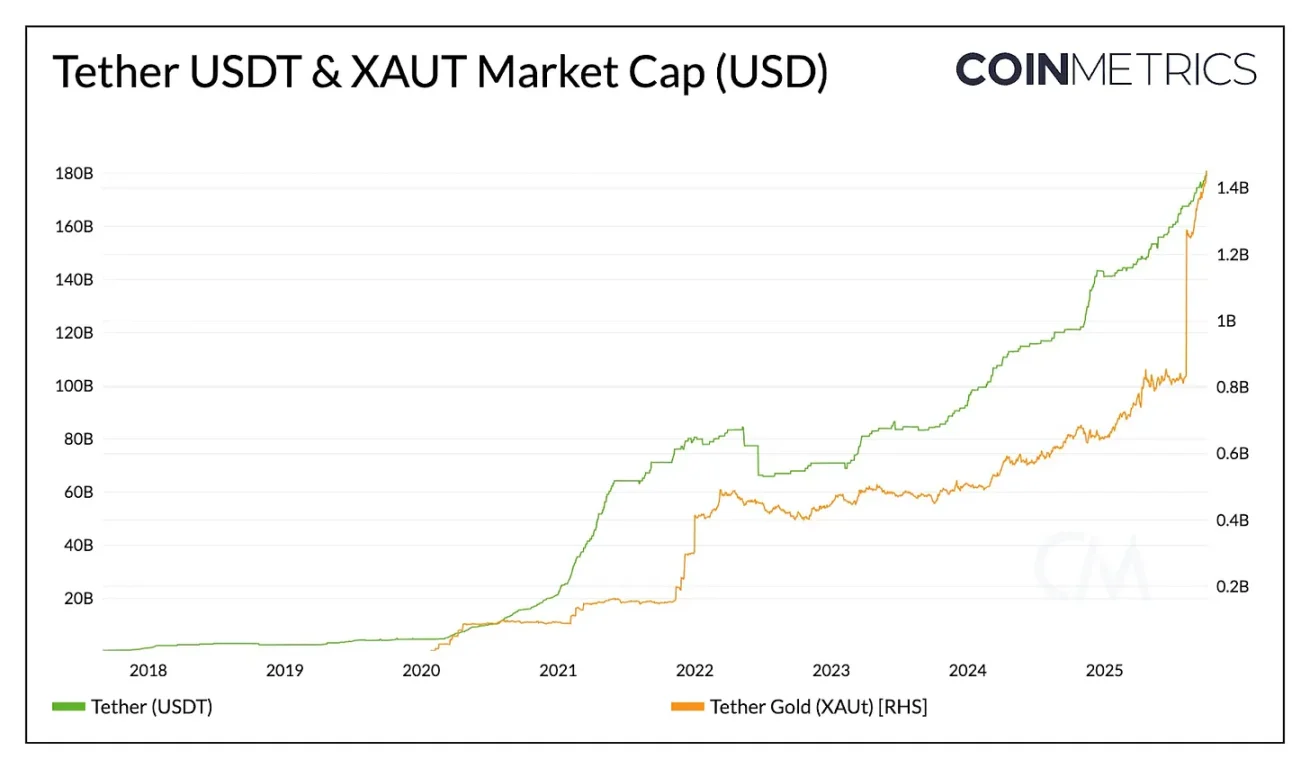
With a circulating supply of $178 billion, Tether’s USDT is by far the largest stablecoin—approximately 2.4 times larger than Circle’s USDC and about 3.6 times larger than the combined supply of all other stablecoins. Its scale and liquidity make it a vital tool for savings protection, economic stability, and transaction facilitation, especially in regions with limited banking infrastructure or where local inflation exceeds 5%.
Source: Coin Metrics Network Data Pro
Beyond the dollar, Tether offers tokenized gold exposure via XAUt, which has grown to over $1.4 billion in market cap amid rising demand for alternative stores of value. Tether appears to be expanding this dual strategy, seeking a $200 million raise with Antalpha Platform to establish a digital asset treasury that will acquire Tether’s XAUt tokens. With further investments in Bitcoin and gold mining, Tether is moving toward integrating multiple forms of value preservation.
Market Share and Growth Pressure
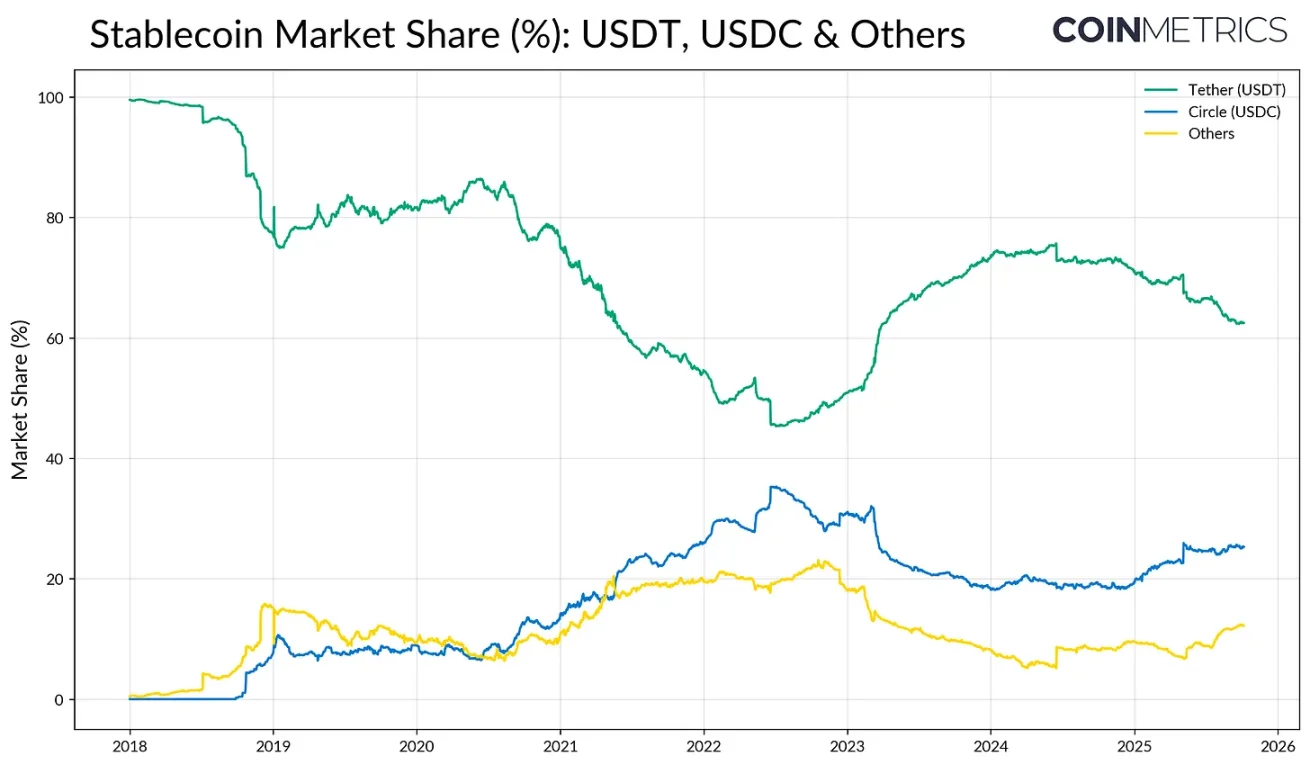
USDT’s first-mover advantage and deep exchange liquidity have given it strong "network effects." In the early days of the industry, USDT’s market share exceeded 80%, but the rise of USDC and BUSD reduced its dominance to near 50%. The collapse of Silicon Valley Bank (SVB) in 2023 quickly reversed this trend, as capital fled competing issuers. However, since 2024—and with the anticipated passage of the GENIUS Act in 2025—USDT’s share has again shown signs of pressure.
Source: Coin Metrics Network Data Pro
Circle’s USDC is gradually regaining ground, driven by regulatory momentum in the U.S., while “other” stablecoins—primarily yield-bearing alternatives such as Ethena’s USDe, Sky’s USDS, and tokenized money market funds—are gaining market share. The market appears to be in transition: USDT continues to lead in liquidity and adoption but faces increasingly fierce competition from established payment networks entering the space and alternatives that distribute yield.
Profitability and the Path to Compliance
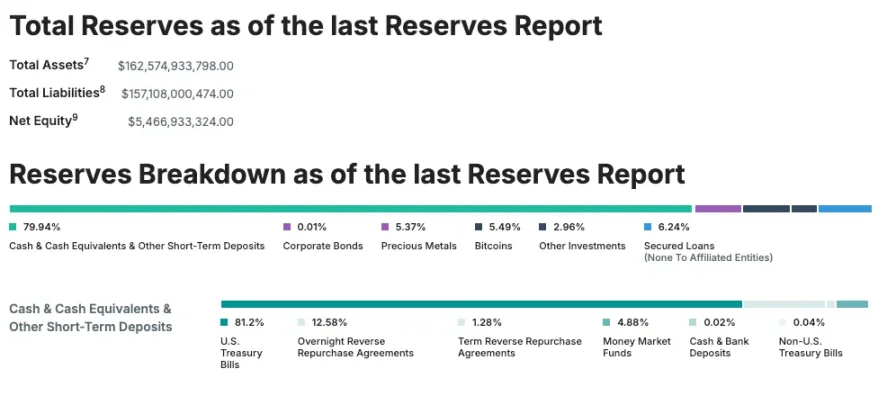
Despite growing competition, Tether remains the most profitable stablecoin issuer, reporting a net profit of $4.9 billion in Q2 2025. This is fueled by its $127 billion in U.S. Treasury reserves, making it one of the largest holders of U.S. government debt globally. However, Tether has historically operated as an offshore issuer based in El Salvador, with parts of its reserves including non-compliant assets such as precious metals, Bitcoin, and secured loans. To address this, Tether plans to launch USAT, a fully compliant stablecoin established in the U.S., to strengthen its domestic growth strategy and deepen its role in U.S. debt demand.
Source: Tether Transparency (Audited Report as of June 30)
How USDT Moves Across Blockchains
Having established Tether’s market position as an issuer, understanding how USDT flows across different blockchains—and the channels underpinning its transfers and settlements—is crucial. The circulation of USDT is shaped by each network’s capabilities and influences the types of dominant activities and user bases on each chain. USDT usage reflects diverse activity patterns, with the vast majority of issuance concentrated on Ethereum and Tron.
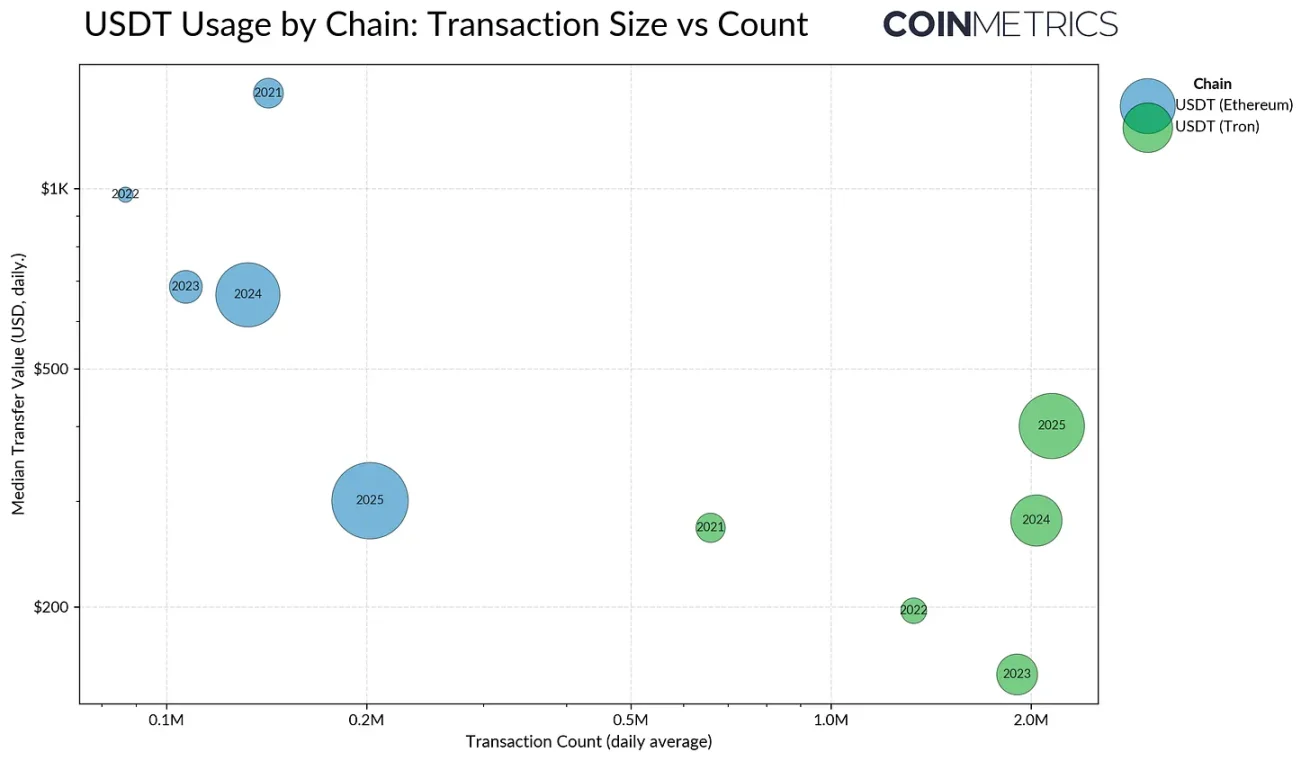
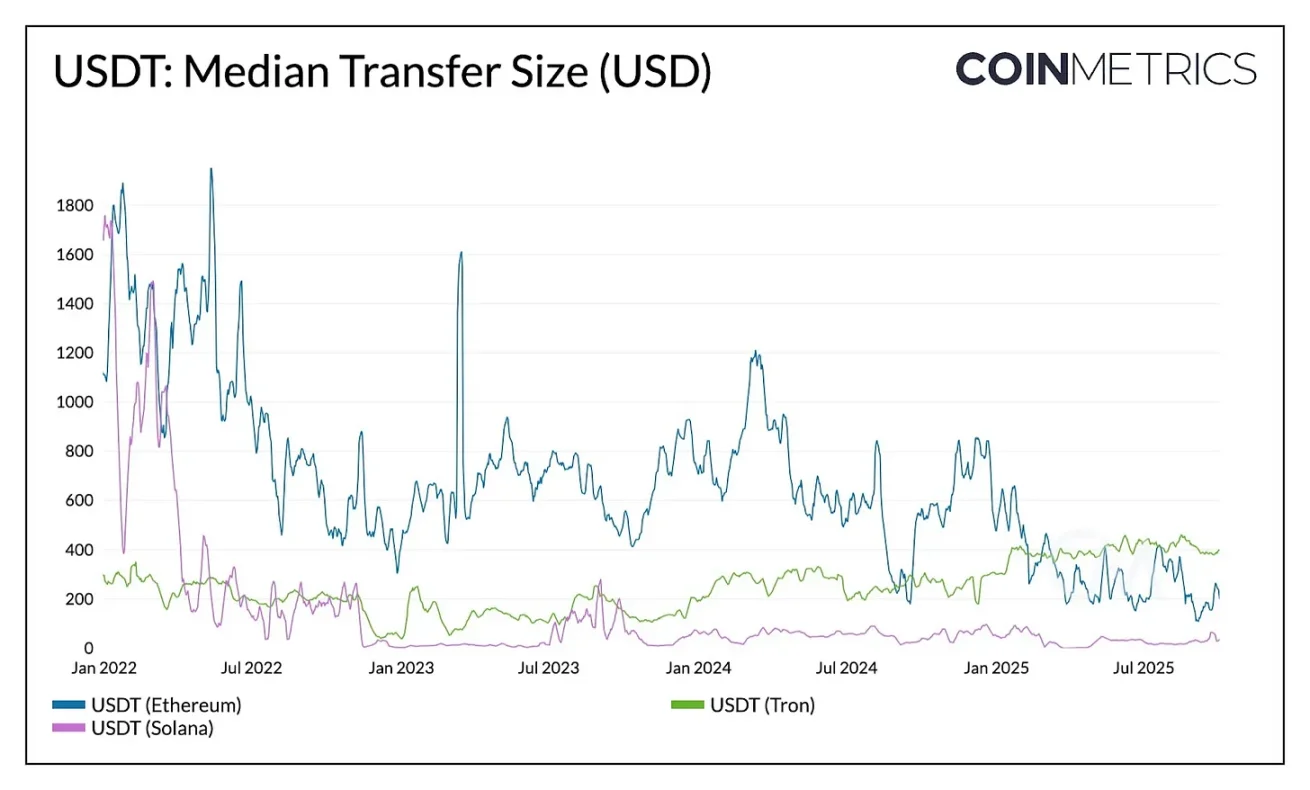
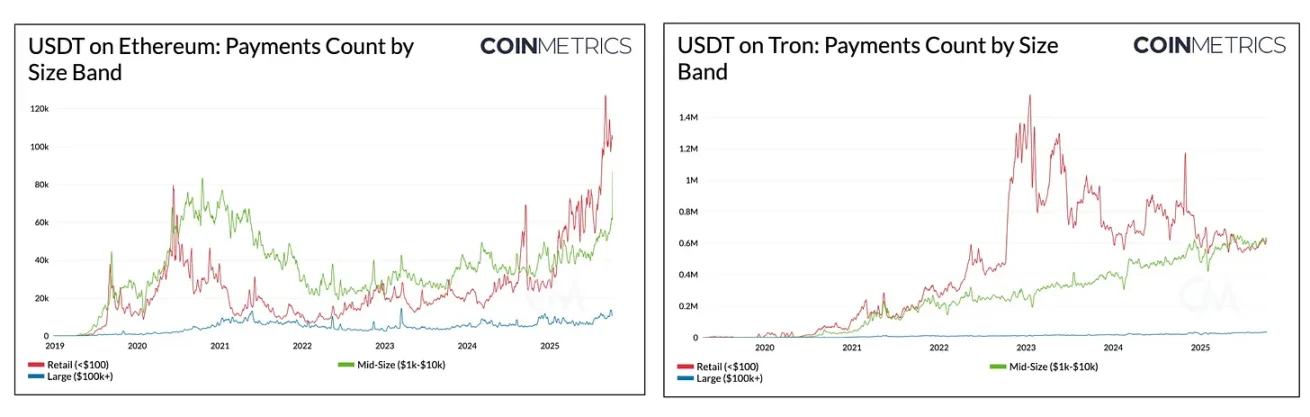
Tron has historically been the primary entry point for users in emerging markets, favored for its low fees and fast settlements. In 2025, Tron averaged over 2.3 million daily transactions, appearing to be a highly sticky network for USDT transfers, supporting a continuous, high-speed flow of small, payment-like transactions. This pattern aligns with its use in retail and remittance payments, where cost efficiency and accessibility are paramount.
Source: Coin Metrics Network Data Pro
In contrast, Ethereum has traditionally handled higher-value, lower-frequency transfers, reflecting its role as a settlement and liquidity hub for DeFi and institutional activity. However, this dynamic is shifting.
Following the Dencun and Pectra upgrades, average transaction fees on Ethereum have fallen below $1, enabling increased frequency of small transfers. The median transfer amount on Ethereum has dropped from over $1,000 in 2023 to around $240 by mid-2025, while Tron’s median amount has risen slightly. This shift brings Ethereum closer to the type of activity once unique to Tron.
Source: Coin Metrics Network Data Pro
This behavioral shift coincides with a redistribution of supply. In August 2025, USDT supply on Ethereum ($96 billion) surpassed that on Tron ($78 billion), indicating that lower fees and deeper liquidity are drawing activity back to Ethereum.
Source: Coin Metrics Network Data Pro (USDT on Ethereum, USDT on Tron)
This trend is also evident in the composition of USDT payments across blockchains. On Tron, the gap between retail payments and mid-sized transfers has narrowed as moderate-sized flows gain momentum. On Ethereum, since 2024, the number of retail (<$100) and mid-sized ($1k–$10k) payments has surged, while large ($100k–$1M) transfers remain stable. This suggests that as the network becomes more accessible, USDT usage is diversifying into smaller-scale activities.
Extending USDT’s Dominance Through Emerging Channels
USDT’s evolution across chains like Tron and Ethereum highlights how settlement speed, cost, and liquidity shape user behavior. Looking ahead, Tether is strategically expanding its reach through new distribution channels and settlement layers.
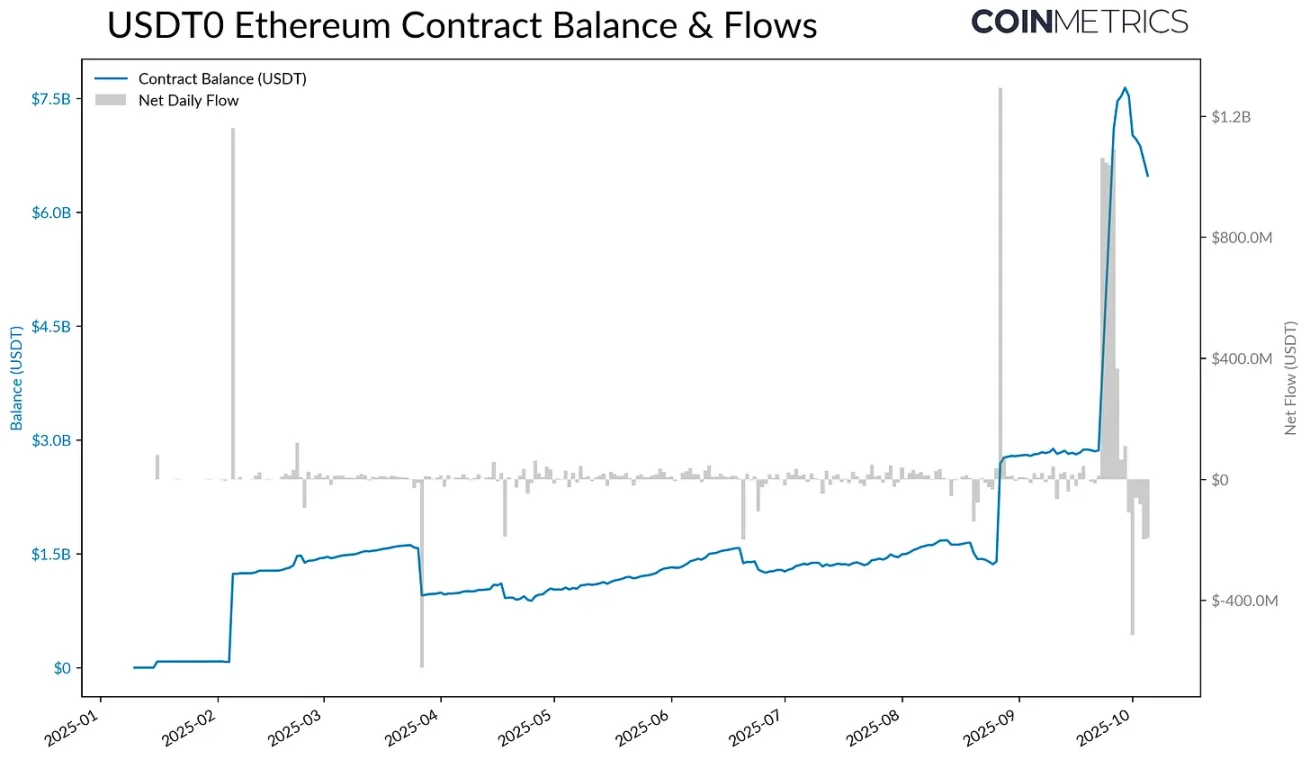
For example, USDT0—the omnichain fungible token (OFT) standard built on LayerZero—enables seamless cross-chain transfers by locking USDT on Ethereum and minting an equivalent amount on the destination chain, maintaining a 1:1 backing.
Source: Coin Metrics ATLAS
Following the launch of Plasma on September 25—a Layer-1 blockchain optimized for stablecoins—the supply of USDT locked in the USDT0 Ethereum contract surged from $2.8 billion to $7.7 billion. With zero-fee USDT transfers, stablecoins used as gas, and a high-throughput design, Plasma quickly attracted over $6 billion in USDT0 supply, now stabilizing around $4.2 billion.
While its long-term sustainability will depend on adoption for payment and savings use cases, Plasma represents a new class of complementary USDT channels, similar to how Tron and Ethereum serve different activities today. Together, USDT0 and Plasma illustrate how Tether is extending its distribution across a broader set of networks capable of supporting diverse needs—from high-value settlements to payments, DeFi, and retail activity.
Conclusion
As stablecoins become part of global payment infrastructure, Tether’s next chapter will unfold amid intensifying competition and clearer regulation. Its ability to maintain dominance will depend on evolving from an offshore issuer into a multi-chain, compliant infrastructure provider without eroding its core advantages in liquidity and distribution. The emergence of omnichain USDT and stablecoin-centric networks like Plasma signals a more diversified future for settlement and payments. Whether Tether expands its network effects or loses ground to competitors will ultimately define the next stage of the industry’s evolution.
Join TechFlow official community to stay tuned
Telegram:https://t.me/TechFlowDaily
X (Twitter):https://x.com/TechFlowPost
X (Twitter) EN:https://x.com/BlockFlow_News
 @coinmetrics