Chronicles of the Fat Penguin
TechFlow Selected TechFlow Selected
Chronicles of the Fat Penguin
NFTs are not merely speculative tools, but IP assets capable of creating real commercial value.
 Navigating Web3 tides with focused insights
Author: c4lvin, Four Pillars
Translation: Saoirse, Foresight News
Editor's Note: As a representative case of Web3 transitioning from speculative attributes to real-world business, this article systematically presents the complete evolution of Pudgy Penguins—an NFT project—from founder crisis to building a global IP ecosystem. It deeply analyzes Luca Netz’s strategic restructuring after acquisition, covering breakthroughs in physical toy commercialization, establishment of the PENGU token economy, and exploration of compliance in traditional financial markets. Through analysis of its hybrid model combining "NFT asset ownership + brand IP operations + blockchain infrastructure," it reveals an innovative paradigm for digital asset monetization.
Below is the translated content, with appropriate abridgment and adjustments based on the original text.
Key Summary
-
After experiencing a founder removal crisis in 2022, Pudgy Penguins underwent a major transformation under Luca Netz's acquisition, gaining brand influence through social media strategies and partnerships, while successfully expanding into physical toy businesses.
-
The project later launched the PENGU token, becoming the world’s fourth-largest cryptocurrency by market cap and the largest memecoin issued in the past three years; expanded into comprehensive entertainment IP via games like Pengu Clash and Pudgy Party, children's content releases, and accelerated globalization through collaborations with Asian companies such as Lotte and LINE FRIENDS.
-
Pudgy Penguins became the first NFT project to enter traditional financial markets, applying via Canary Capital for an ETF combining NFTs and tokens, and plans to initiate an IPO soon. It continues to demonstrate that NFTs can serve as IP assets creating real commercial value rather than mere speculative tools, striving toward mass adoption of Web3.
Pudgy Penguins NFT: Origins and Early Development
Launch and the "Big Blizzard" Crisis
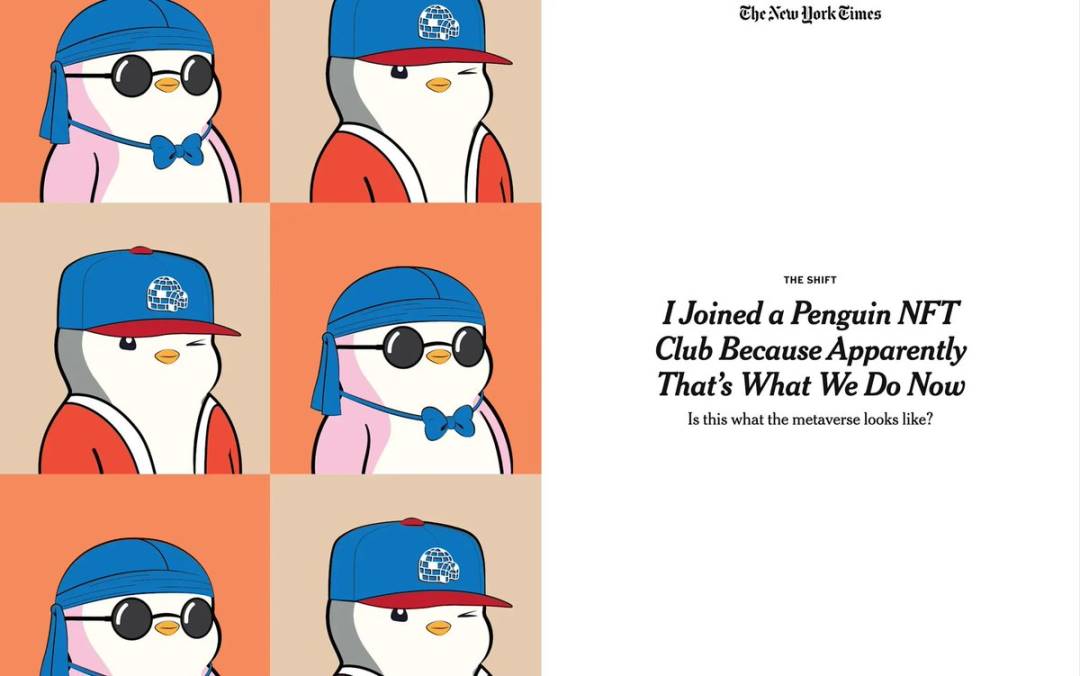
Source: The New York Times
In July 2021, the NFT series “Pudgy Penguins,” created by four college students including Cole Villemain, officially launched. All 8,888 uniquely generated Pudgy Penguin NFTs sold out within 19 minutes at 0.03 ETH each, attracting celebrity buyers and coverage from mainstream media such as The New York Times.
In December 2021, Pudgy Penguins released the Lil Pudgys series consisting of 22,222 items, distributing one free mint to every Pudgy Penguin NFT holder, then successfully selling the remaining 13,334 units, further expanding the community size.
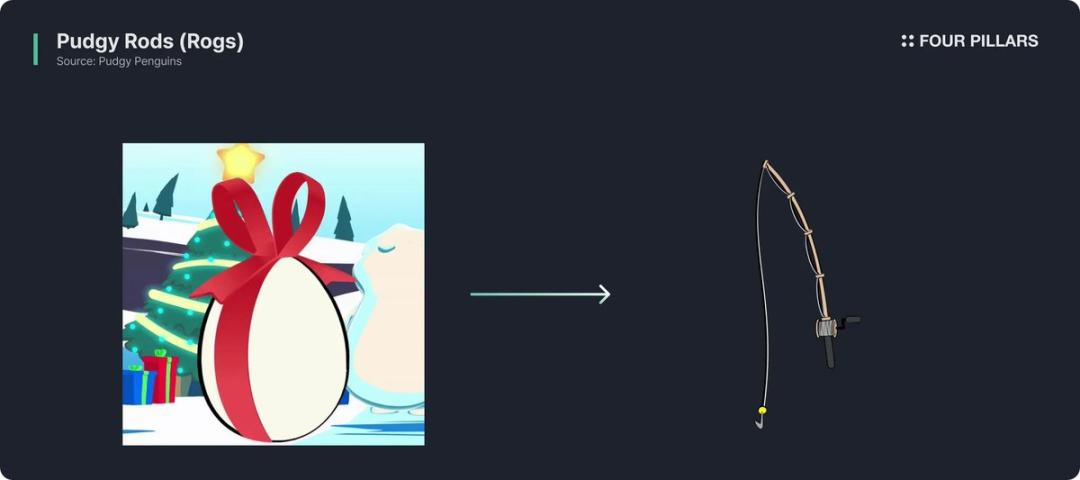
However, underlying issues emerged amid early success: the original team had promised video games, NFT educational books, and a “mystery egg” hatching at Christmas 2021, but most plans were unfulfilled. The eventual hatch revealed a “fishing rod NFT” mistakenly labeled as “Rogs” (should be “Rods”), disappointing holders expecting new penguin characters and triggering widespread community dissatisfaction. In January 2022, the community voted to remove the founders—a period later known as the project’s darkest chapter, the “Big Blizzard.”
Luca Netz Takes Over
In April 2022, when the floor price of Pudgy Penguins NFT dropped below 1 ETH and the community neared collapse, serial entrepreneur Luca Netz, who had previously built wealth across multiple ventures, proposed an acquisition. Prior to the purchase, Luca had already generated $6 million in net profit over five months using the Pudgy Penguins IP, eventually acquiring the project for $2.5 million.
Source: EO Youtube
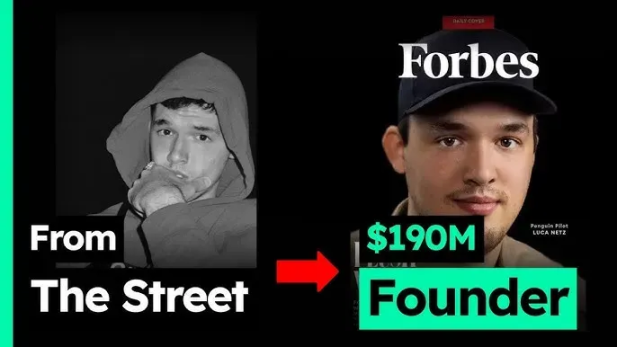
Luca Netz’s upbringing and entrepreneurial journey are distinctive: growing up in hardship, he moved over 30 times in nine years with his single mother, dropped out of school at 16, and started working packing goods at Ring Doorbell, then a startup with only 25 employees. Within two years, Ring Doorbell grew to over 500 staff before being acquired by Amazon for $1 billion, giving Luca his first full exposure to a company lifecycle.
Later, Luca entered online brokerage sales and succeeded through a model of importing products from China for distribution in the U.S., selling his first company to a competitor at age 19 and becoming a millionaire. In 2019, leveraging Instagram marketing experience, he founded venture capital firm Netz Capital; in 2020, joined apparel brand Von Dutch and helped revive it, later serving as Chief Marketing Officer at toy company Gel Blaster, achieving $100 million in revenue within 14 months. Drawing on this track record, Luca revived the struggling Pudgy Penguins project.
Recovery Begins
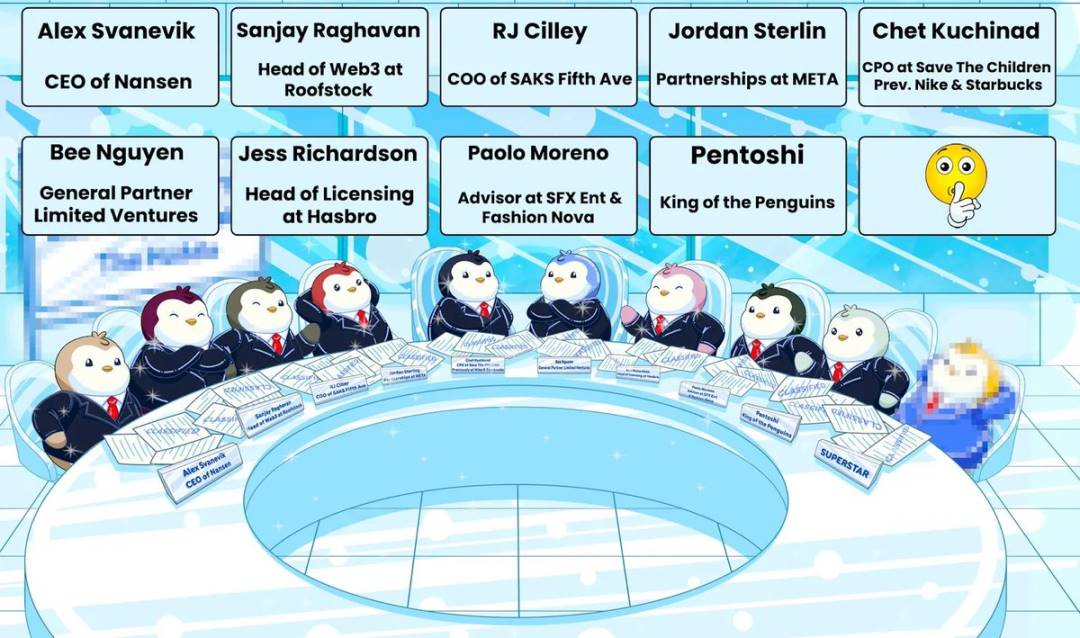
After acquisition, Luca Netz and his team quickly advanced business and community reorganization:
-
Operationally: Recruited industry advisors spanning Web2 and Web3 to implement project plans; in July 2022 partnered with major toy distributor PMI Toys to launch Pudgy Penguins dolls and collectibles, pioneering a Web3 IP business model—leveraging IP rights from NFT holders and sharing a portion of physical toy revenues with them, strengthening community cohesion.
-
Brand outreach: Immediately after acquisition, uploaded Pudgy Penguins GIFs to GIPHY and began producing character short videos on Instagram, accumulating over 1 billion total GIF views and surpassing 100,000 Instagram followers within six months, establishing initial brand recognition.
-
Industry collaboration: In November 2022, collaborated with Sotheby’s, the world’s largest auction house, to auction 10 Pudgy Penguins NFTs and issue soulbound tokens (SBTs) to buyers. This marked Sotheby’s first foray into crypto, featuring Cole Villemain’s own penguin NFT among the lots, boosting public awareness of Pudgy Penguins and becoming a landmark community event.

Source: Sotheby's
Physical Products and Brand Collaborations: Breaking Into the Market
Building Brand Influence
One core strategy behind Pudgy Penguins’ upgrade from an NFT project to a global IP has been enhancing brand strength through social media and penetration into Web2 industries:
Social Media Outreach
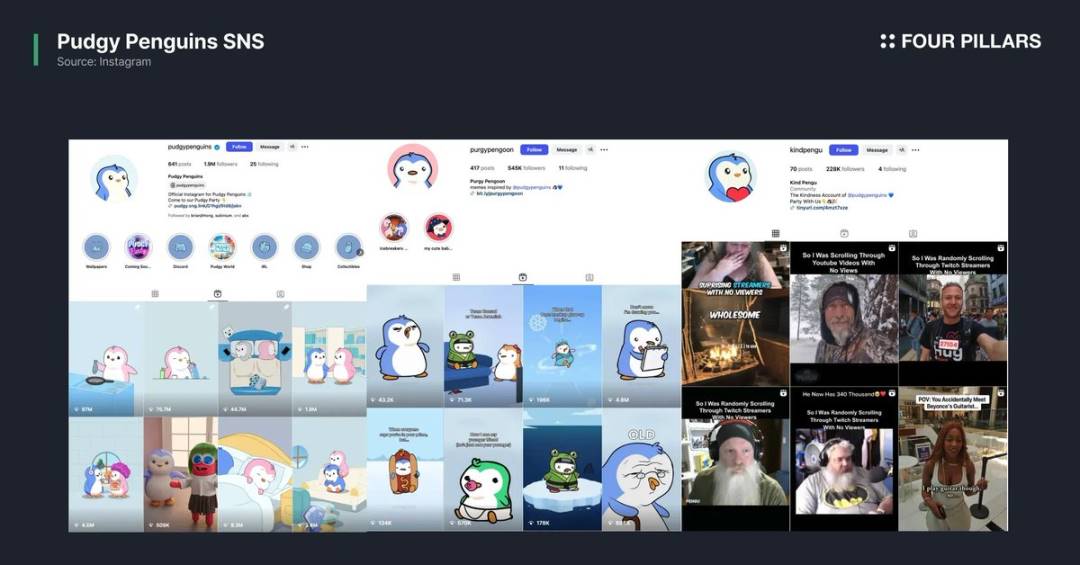
Luca Netz applied prior business experience to Pudgy Penguins’ social media strategy: After acquiring the project in April 2022, the team massively uploaded Pudgy Penguins GIFs to GIPHY, amassing over 1 billion views in six months—even users without NFTs began using these GIFs in daily communication. Short-form video content on Instagram attracted Gen Z and millennials, reaching 100,000 followers within six months post-acquisition and exceeding 1 million by end-2024, with high reshare rates further amplifying brand visibility.
Infiltrating the Web2 IP Industry
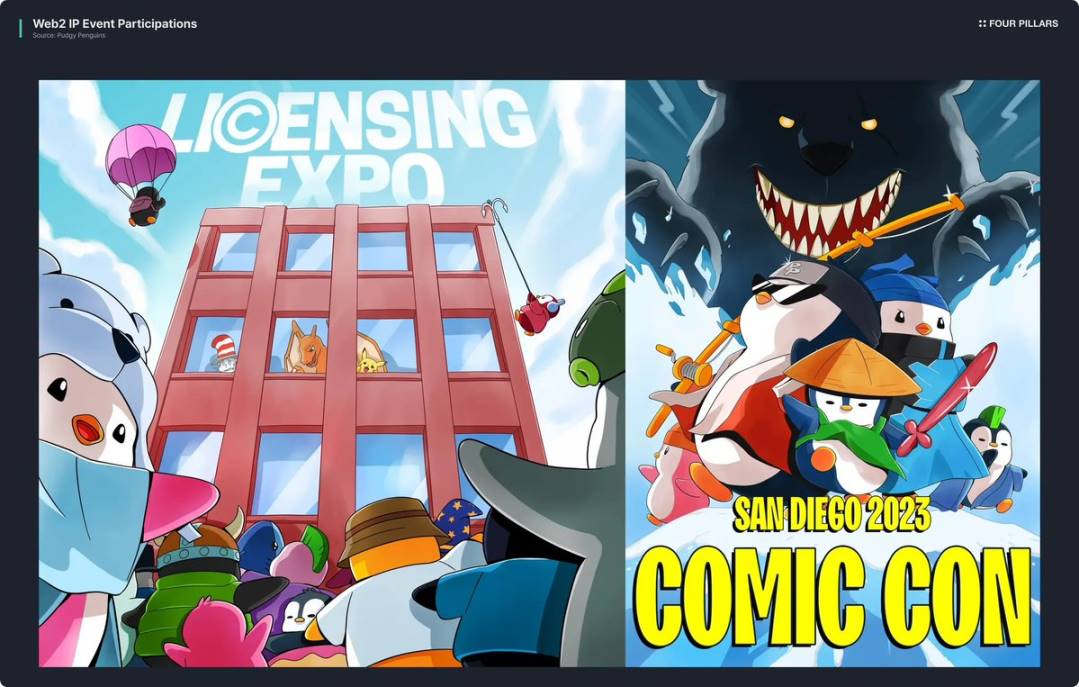
To promote mainstream adoption, Pudgy Penguins actively participated in Web2 IP industry events, positioning itself as “content eligible for licensing and cultural relevance” rather than just digital assets:
-
In June 2023, appeared at the Las Vegas “Licensing Expo 2023”—the world’s largest licensing trade show, attended by top IPs like Disney and Pokémon—marking the first time an NFT IP was presented as licensable content to connect with Web2 enterprises.
-
In July 2023, established a booth at San Diego Comic-Con (SDCC 2023), the nation’s biggest pop culture event, becoming the first official Web3 presence at the convention. With annual attendance exceeding 100,000, this appearance not only boosted brand exposure but also symbolized Web3 innovation penetrating traditional entertainment sectors.
With its cute character design and community-centric philosophy, Pudgy Penguins resonates strongly with mainstream Web2 audiences. These exhibitions broke through licensing barriers, laying the foundation for future brand partnerships and gradually transcending Web3 confines to integrate into the broader Web2 ecosystem.
Strategic Brand Collaborations
Source: Pudgy Penguins
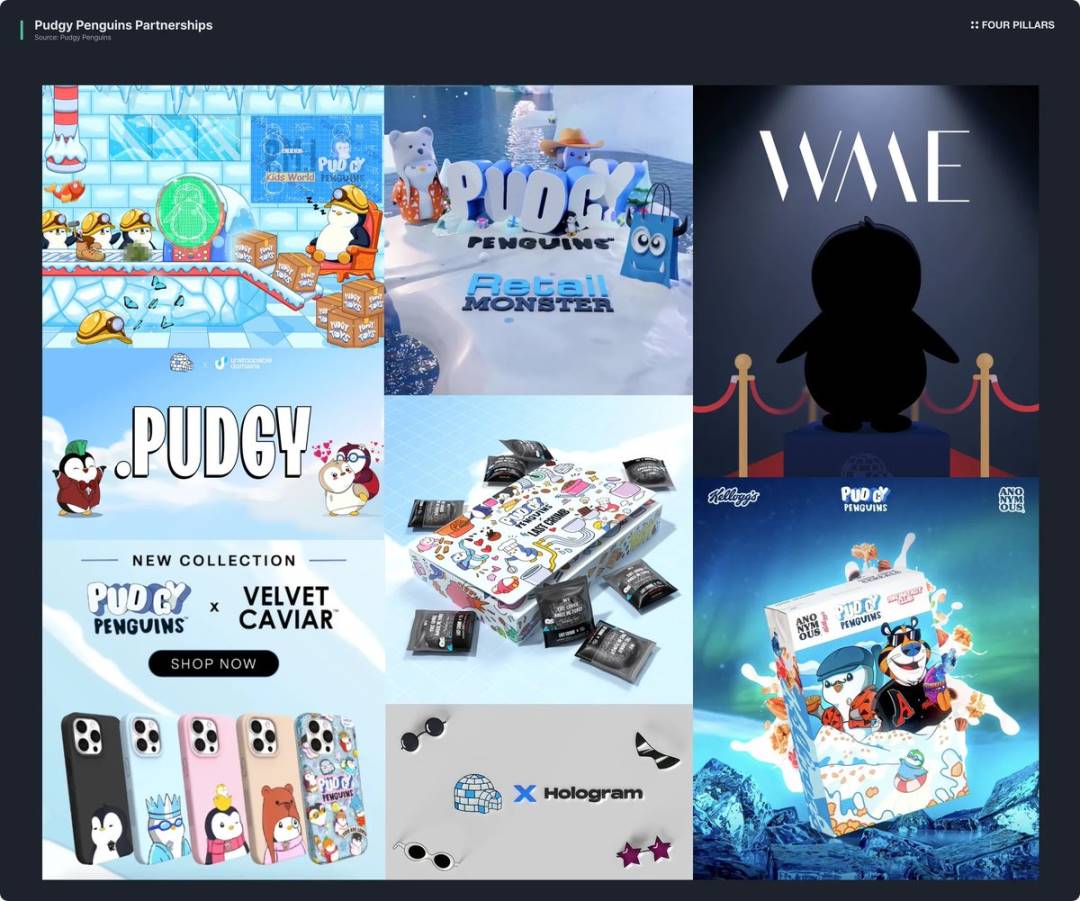
Pudgy Penguins’ brand collaborations have expanded systematically:
-
Toys & Retail: Partnership with toy manufacturer PMI in July 2022 laid the foundation for physical toy production; in February 2023, a distribution deal with Retail Monster established a global toy sales network, placing products in major chains like Walmart and Target, making it a benchmark case of NFT projects entering the real economy.
-
Food & Beverage: Collaboration with Kellogg in November 2022 introduced cereal packaging, marking the first partnership between an NFT project and a mass consumer brand; in 2024, teamed up with premium cookie brand Last Crumb for limited-edition Pudgy Penguins cookies, targeting both young consumers and high-end markets.
-
Tech & Digital: Early 2023 collaboration with Hologram Labs developed 3D modeling and AR/VR content for Pudgy Penguins characters, supporting metaverse ambitions; in February 2024, partnered with Unstoppable Domains to launch ".pudgy" domain services, enabling community members to build websites, receive crypto in Web3, and establish digital identities.
-
Fashion & Lifestyle: Early 2024 collaboration with premium phone case brand Velvet Caviar launched Pudgy Penguins-designed cases, broadening IP reach through everyday accessories and reinforcing its identity as a lifestyle brand.
-
Entertainment: June 2023 partnership with Hollywood powerhouse WME opened pathways into film, TV, and music, pushing the brand beyond NFT boundaries toward becoming a global multi-platform IP.
Success of the Physical Toy Business
When Luca Netz acquired Pudgy Penguins in mid-2022, the crypto market was in crisis: the Terra Luna collapse triggered a market crash, NFT trading volume dropped 95%, royalty systems failed, and Ethereum prices fell 80%. Luca even had to personally invest additional funds exceeding his initial acquisition cost. Yet despite this backdrop, brand strength drove explosive growth in physical toys:
Source: @ST_McFly
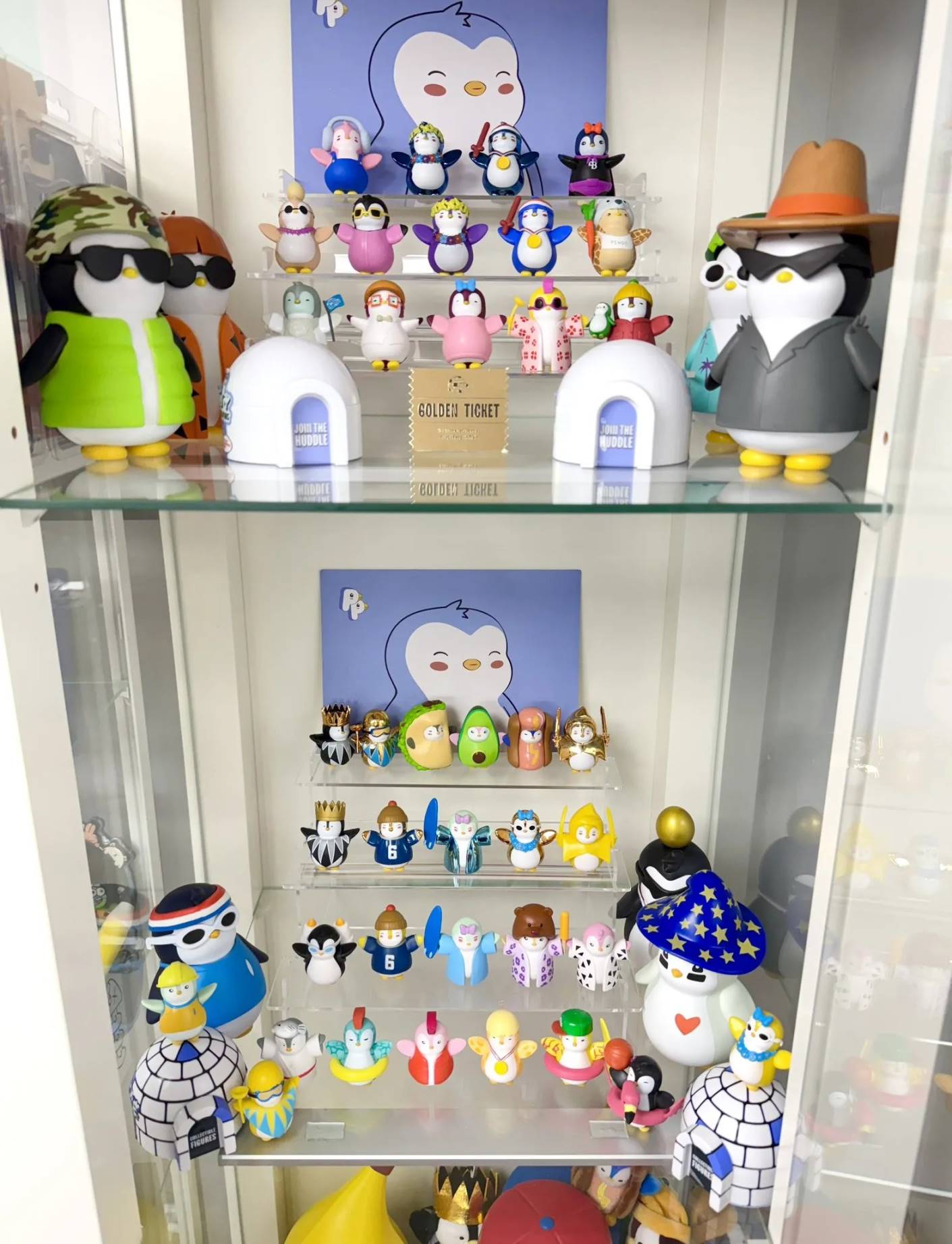
In May 2023, community-licensed “Pudgy Toys” launched on Amazon, generating over $500,000 in sales during the first weekend. Within 12 months, sales surpassed 1 million units with revenue exceeding $10 million, ranking #1 across multiple Amazon categories. In September 2023, toys entered 2,000 Walmart stores—the largest retailer in the U.S.—and were named “Best Summer Toy of 2023” by Toy Insider.
In February 2024, the Walmart partnership expanded to 1,100 additional stores, covering 3,100 locations nationwide, along with exclusive Walmart product lines—five collector figures and 25 “Lil Pudgy Mystery Igloos.”
Since then, Pudgy Toys have continued expanding retail channels: entering UK toy retailer Smyths in October 2023; U.S. Target and Australia’s largest chain Big W in May 2024; 2,000 Walgreens pharmacies in June 2025; and partnering with Basic Fun in February 2025 to bring products into amusement parks across the U.S.
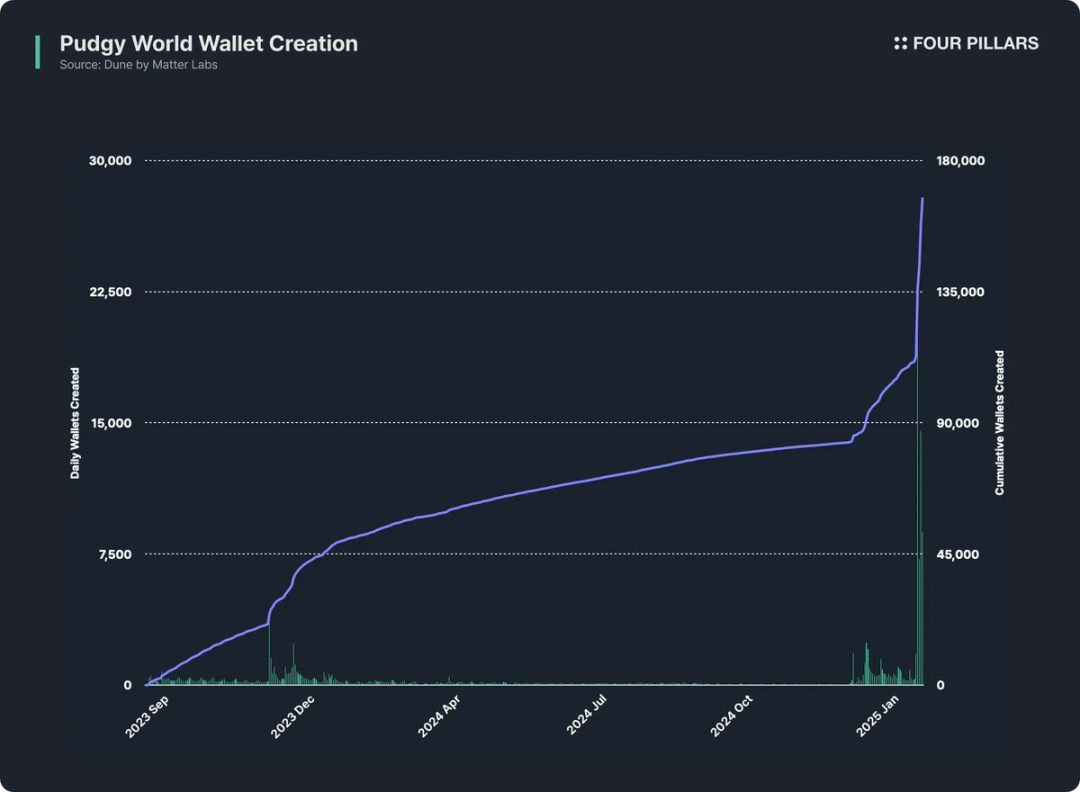
A key feature of Pudgy Toys is their natural pathway into Web3: each toy includes a QR code that unlocks character traits and collectibles in “Pudgy World,” an open-world online game powered by zkSync. Users can play or customize their penguin avatars in the game. As of January 2025, about 20% of toy buyers entered the blockchain environment through Pudgy World, totaling over 160,000 users. To date, more than 10 million Pudgy Penguins toys have been sold globally across over 10,000 stores.
The success of the physical toy business provided Pudgy Penguins with stable revenue, laying the foundation for future growth.
Expansion Signals: PENGU Token Launch and Abstract Mainnet
PENGU Token Launch

On December 17, 2024, Pudgy Penguins announced the launch of its official token PENGU, aiming to transcend existing community size limits and build a “global community of billions.”
Over the past three years, Pudgy Penguins achieved significant success in Web2: over 50 billion social media impressions, 1.5 million toys sold across more than 10,000 global stores, and millions of social media followers. However, due to the capped supply of 8,888 NFTs and 22,222 Lil Pudgys, community expansion faced bottlenecks. The PENGU launch aimed to break this ceiling by creating a “social currency” allowing broader participation in the brand’s growth.
Although Pudgy Penguins originated as an Ethereum-based NFT project, the team chose to launch PENGU on Solana to reach more users.
Source: Pudgy Penguins
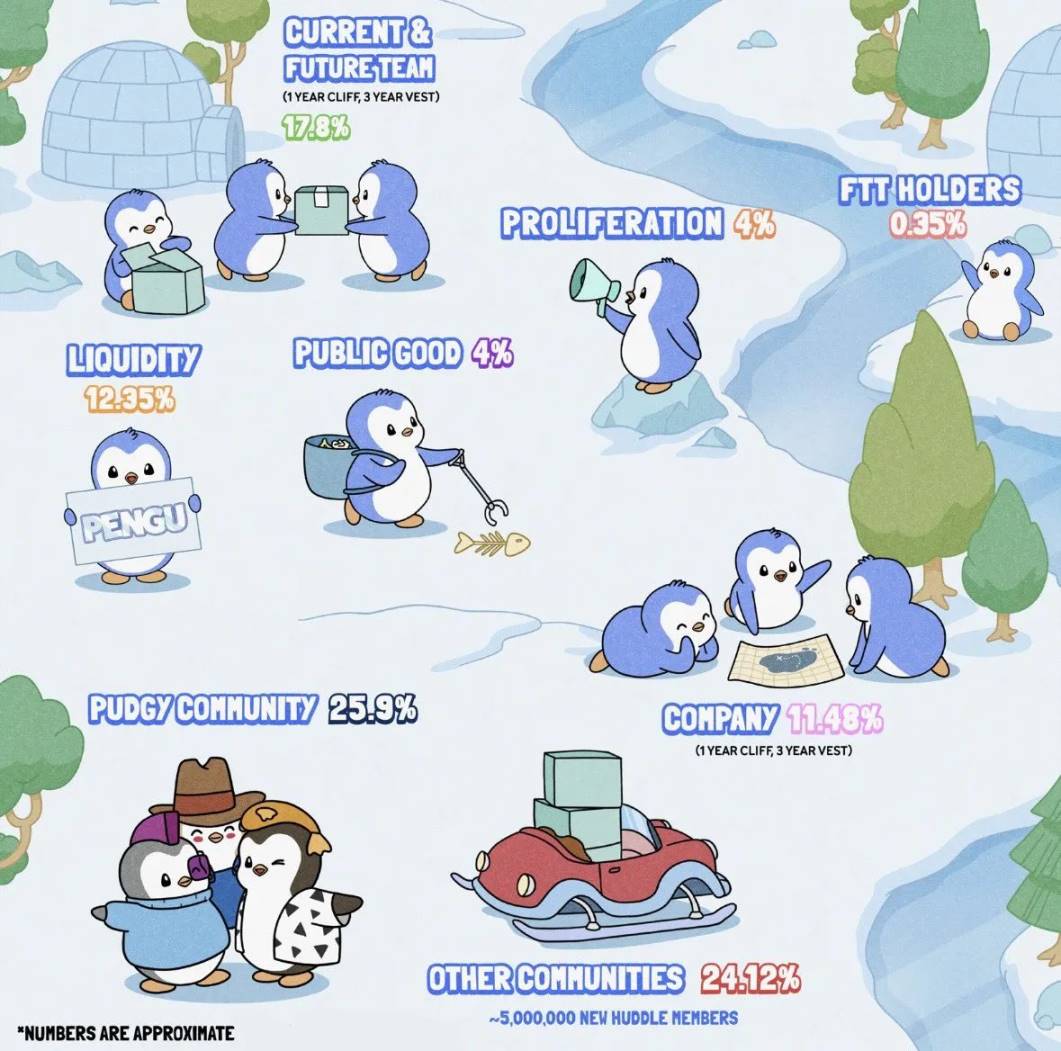
PENGU’s token distribution centers on “expanding ecosystem participation”: total supply is 88.888 billion, with 25.9% (about 23 billion) allocated to the community. Based on market value at the time, this constituted a $1.5 billion airdrop—one of the largest in crypto history.
Notably, around 24% of the airdrop went to contributors in the broader blockchain ecosystem unrelated to Pudgy Penguins, including active users on Ethereum and Solana, holders of major NFT projects, and the wider crypto community. Ultimately, over 6 million wallets qualified to claim PENGU, enabling a breakthrough in community scale.
Following PENGU’s official launch on December 17, 2024, market response was strong: initial market cap reached $2.5 billion, peaking at $3.5 billion; over 500,000 on-chain holders within one week; within a month, it became the world’s fourth-largest memecoin after DOGE, SHIB, and PEPE, and the highest-market-cap memecoin launched in the past three years.
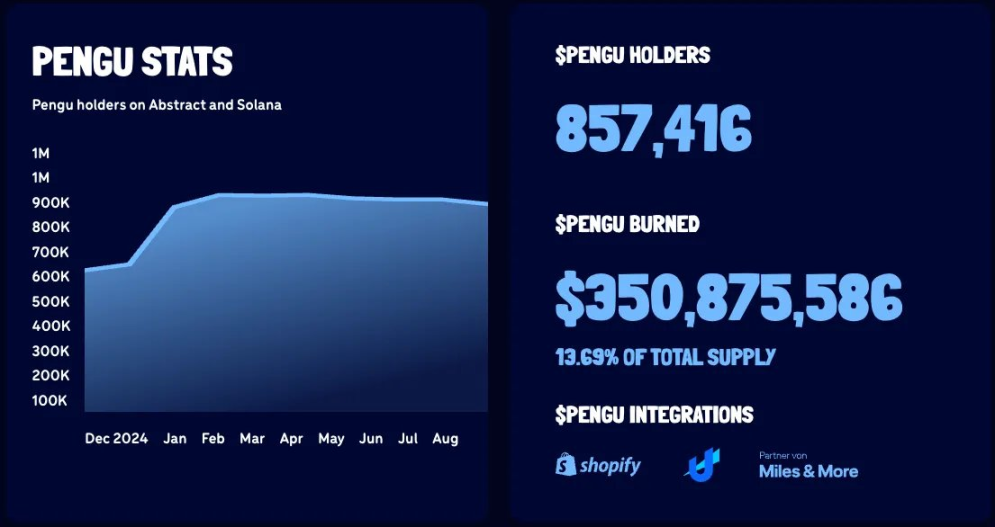
Source: Pudgy Penguins
PENGU is listed across major and minor exchanges worldwide, lowering investment barriers.
Abstract Mainnet Launch
Source: Pudgy Penguins
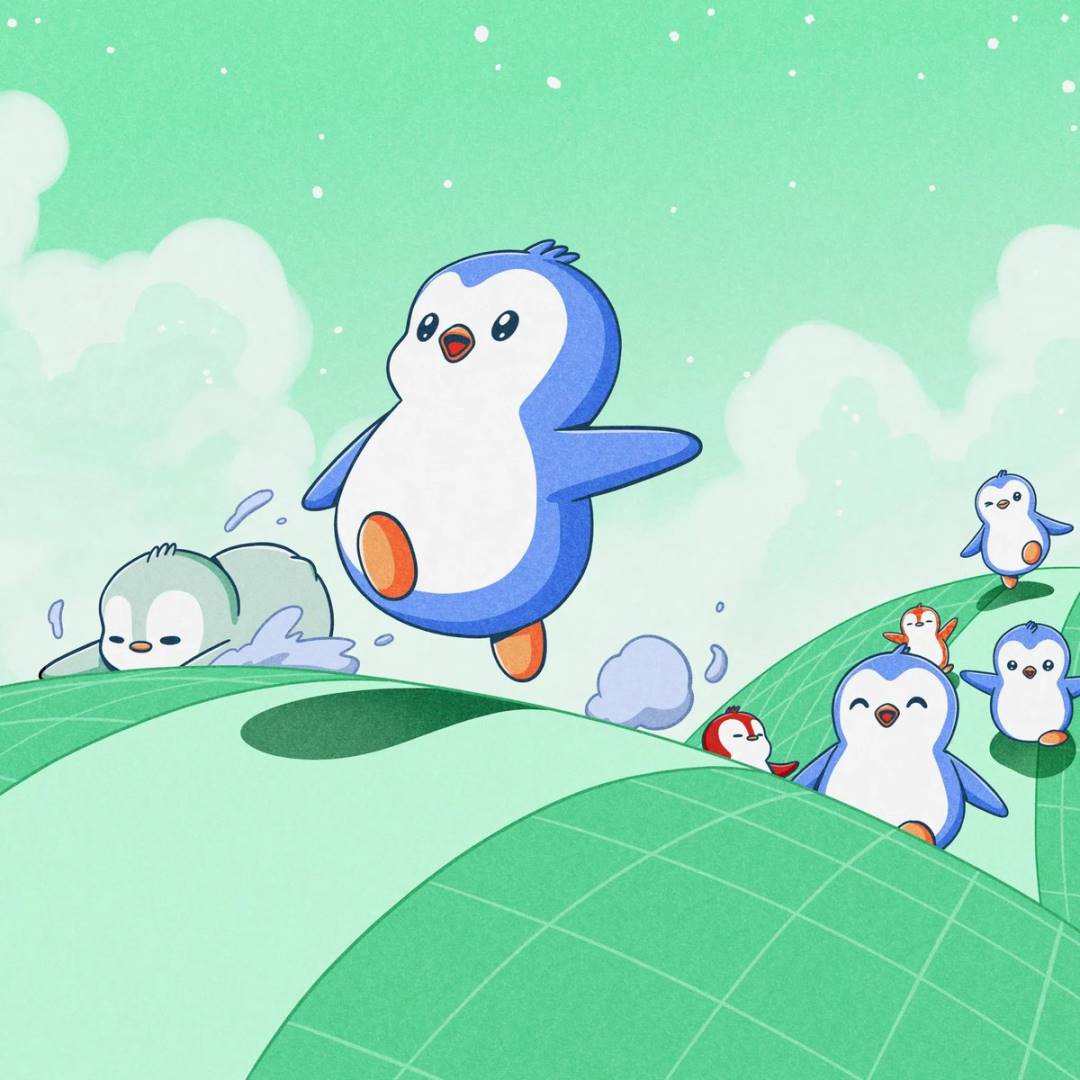
While preparing for the PENGU launch, the Pudgy Penguins team initiated a new initiative—developing Abstract, an Ethereum Layer 2 chain designed to solve user experience pain points in existing blockchains and drive mainstream adoption. To achieve this, the team secured investment from Founders Fund, which previously backed Stripe and SpaceX, and acquired Frame, a dedicated NFT blockchain, to strengthen technical capabilities.
Abstract differentiates itself by positioning as a “consumer-grade blockchain”: while most blockchains focus on technical completeness or decentralization ideals, Abstract prioritizes delivering everyday digital experiences in gaming, social networking, and entertainment. Its key innovation is an account-abstraction-based wallet system—users can log in directly using Google or Apple accounts to create wallets, which are reusable across multiple apps, catering to both existing crypto users and new Web2 adopters, aiming to eliminate core barriers to blockchain mainstreaming.
Currently, the Abstract ecosystem has grown to operate relatively independently from the Pudgy Penguins team, while also serving as foundational infrastructure for brand expansion: PENGU is used for tipping streamers on Abstract portals, and Pudgy Penguins’ self-developed games (mentioned later) are integrated onto the chain, potentially bringing the brand’s massive Web2 community into Web3.
Pudgy Penguins Today: Becoming a Global Top-Tier IP
Accelerating Global Expansion
Deepening Brand Partnerships
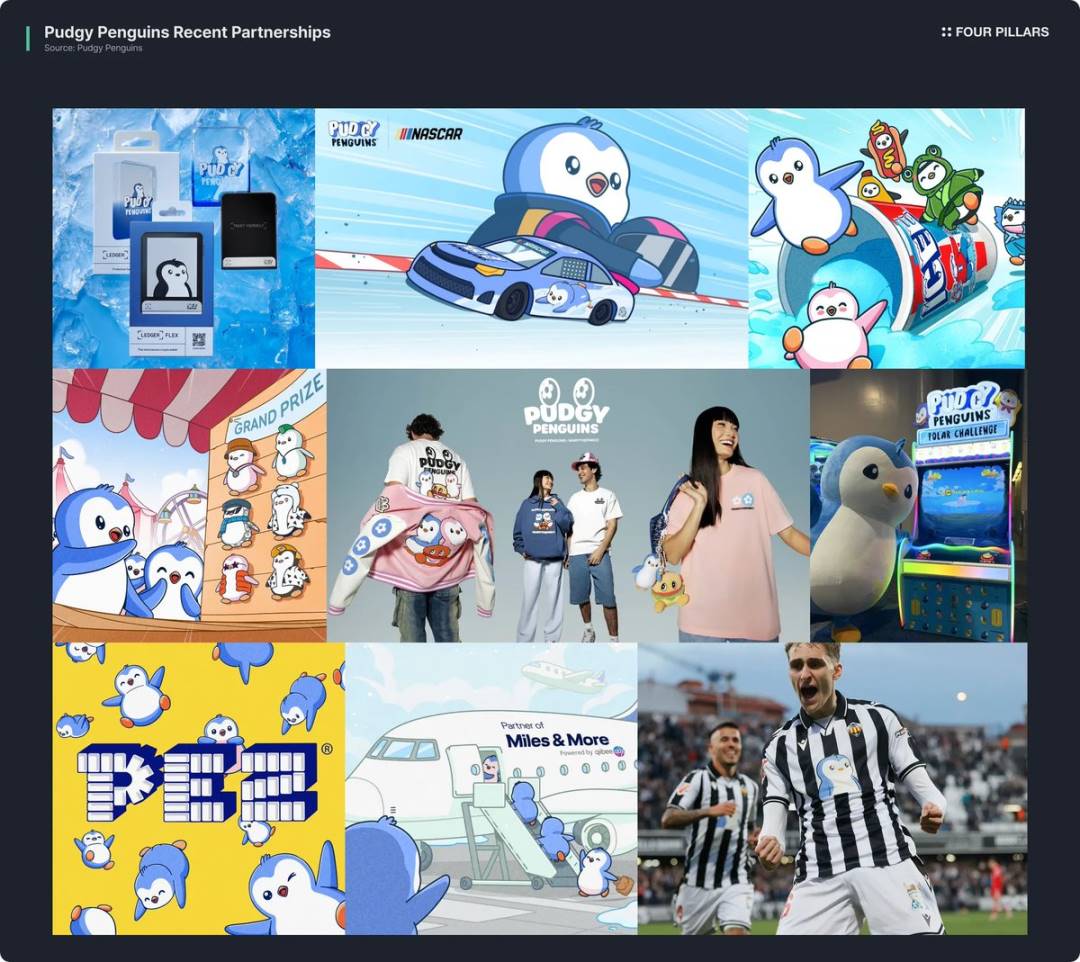
In 2025, Pudgy Penguins transitioned toward becoming a “global lifestyle brand” through cross-industry collaborations, shifting focus from “brand visibility” to “integration into daily life”:
-
Entertainment & Toys: Early 2025 collaboration with Basic Fun launched amusement park-themed toy lines; partnership with PEZ introduced Pudgy Penguins-branded candies and dispensers, joining iconic IPs like Pokémon and Disney in PEZ’s lineup, signaling Pudgy Penguins’ status as a mainstream character brand; collaboration with classic slush brand ICEE launched custom ICEE skins for the game Pudgy Party, enriching offline events and brand experiences.
-
Sports: September 2024 partnership with Spanish second-division football club CD Castellón featured Pudgy Penguins NFTs printed on team jerseys and merchandise, marking the first time an NFT appeared on professional football kits; August 2025 collaboration with NASCAR placed full Pudgy Penguins branding on Ricky Stenhouse Jr.’s HYAC Racing vehicle competing in Labor Day Weekend—one of NASCAR’s four marquee events—reaching motorsport fans and symbolizing convergence between Web3 and traditional sports.
-
Other Sectors: Partnered with Lufthansa’s “Miles & More” frequent flyer program, allowing customers to earn airline miles when purchasing Pudgy Penguins products; collaborated with streetwear brand VANDYTHEPINK to expand into fashion; co-released products with hardware wallet brand Ledger.
Focusing on the Asian Market
Source: Igloo APAC
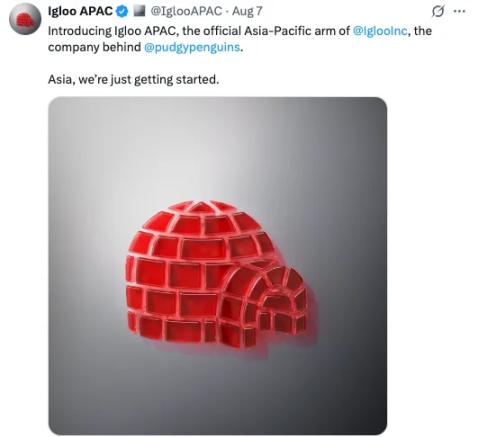
Recently, Pudgy Penguins has intensified efforts in Asia, enhancing regional influence through offline events and partnerships with leading companies. Its operator Igloo established a dedicated Asia-Pacific division to advance localization of Pudgy Penguins and PENGU in the region.
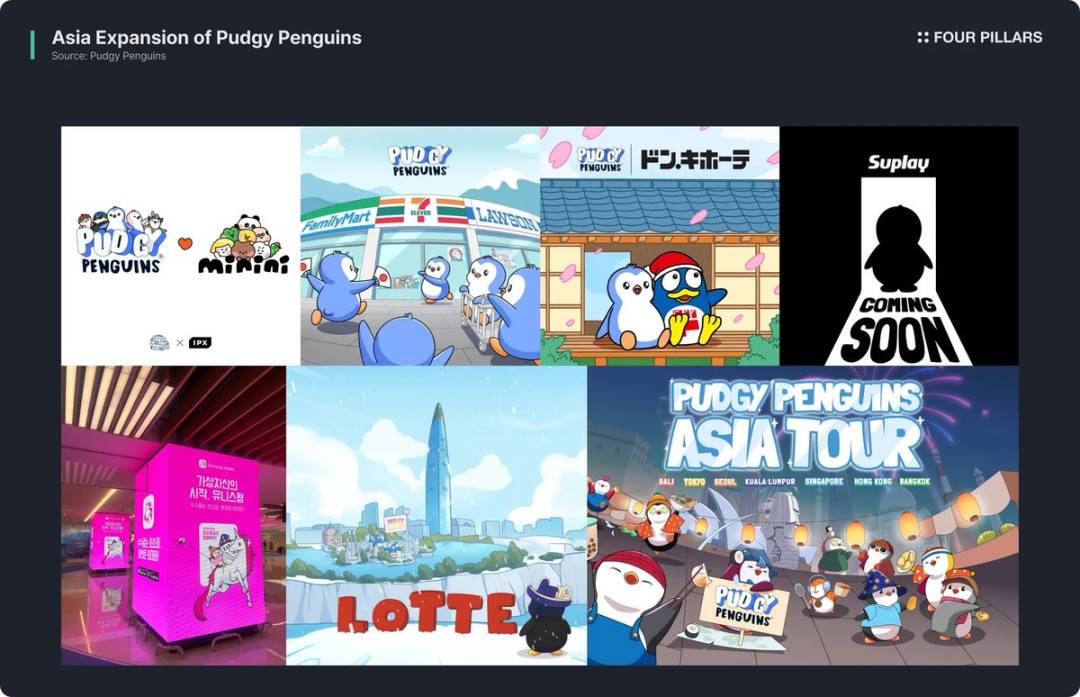
For offline visibility, Pudgy Penguins ran “Pengu Takeover” campaigns, placing outdoor ads in central districts of Seoul and Tokyo, and using entire buildings for branding in Bangkok.
In brand collaborations: strategic partnership with South Korea’s Lotte Group—one of the country’s five largest conglomerates—launched limited-edition collectibles in 2024; February 2025 collaboration with Minini, a sub-IP of Asia’s largest IP brand LINE FRIENDS; partnership with Chinese toy collectible company Suplay laid the groundwork for entry into China, the world’s largest toy market; in August 2025, collectible cards debuted in Japanese convenience stores, and Pudgy Toys entered Don Quijote, Japan’s largest retailer.
As Luca Netz noted on the 0xThreadGuy podcast: “Historically, IPs spread from West to East, but over the next decade, cultural flows will increasingly move from East to West. IP professionals must pay attention to this shift.” Pudgy Penguins aims to leverage this trend to capture the Asian market, enhancing brand awareness through localized content while solidifying PENGU’s market position.
Building a Gaming Ecosystem
To evolve from a “collectible” into an “interactive entertainment brand,” Pudgy Penguins actively developed games across platforms and blockchains targeting diverse player segments:
Pengu Clash
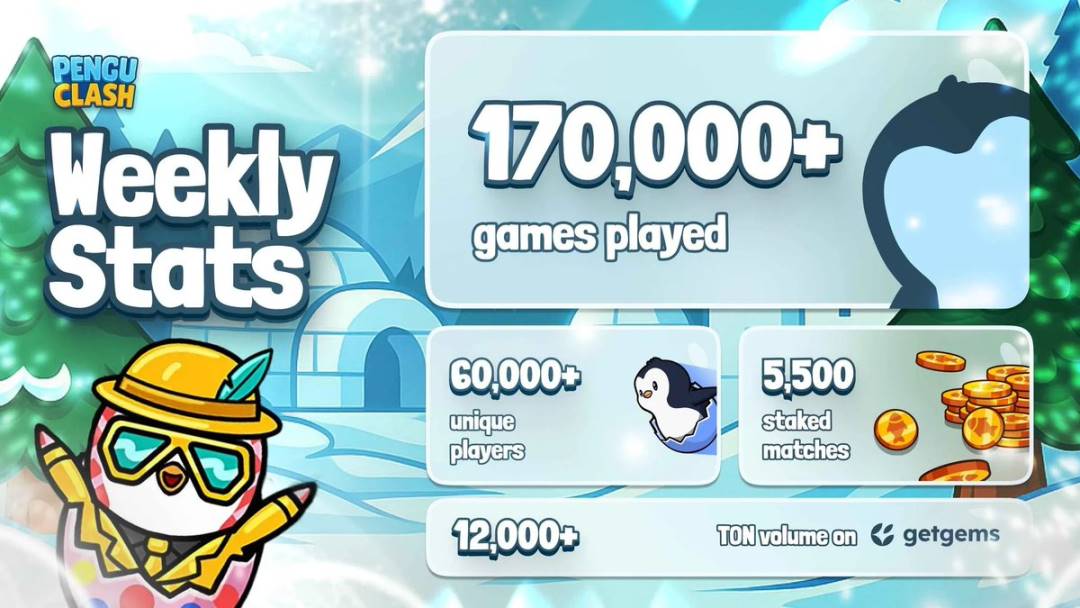
Source: Pengu Clash
In May 2025, Pudgy Penguins partnered with Elympics to launch skill-based game Pengu Clash on the TON blockchain, where the core gameplay involves “pushing opponents off an iceberg”—simple rules with strategic depth.
The game is deployed on both Abstract and TON: the Abstract version targets PC users, while the TON version operates as a Telegram mini-app, enabling mobile users to play instantly without downloading an app, drastically lowering entry barriers.
Within its first week, Pengu Clash attracted over 60,000 players and 170,000 gameplay sessions; within one month, player count exceeded 200,000 with over 1 million gameplay sessions.
Pudgy Party
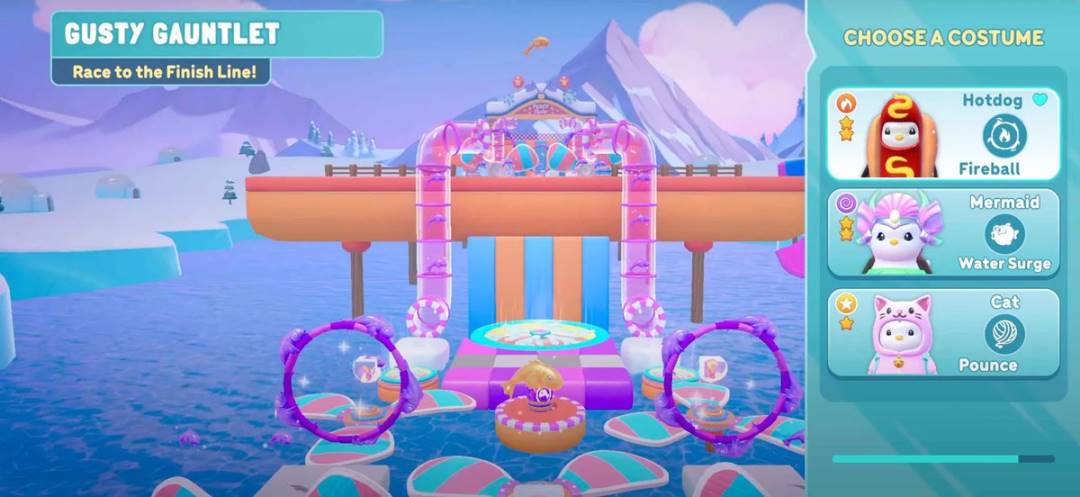
Pudgy Party is Pudgy Penguins’ first mobile-exclusive game, a competitive obstacle course title in the style of Fall Guys. Addressing the scarcity of high-quality mobile games, the project leverages its own IP to attract Web2 mobile gamers. Launched on August 29, 2025, it topped the U.S. App Store racing games chart on day one and entered the top 30 of the overall free games chart.
The game’s standout feature is “tradable character skins”: skins can be earned through gameplay and events and traded on Mythical Games’ marketplace. The “Power Pudgy” skin, distributed for free during Comic-Con 2025, now trades for around $4,300, reflecting strong market demand for such digital assets.
Vibes TCG
Vibes TCG, developed by Orange Cap Games based on the Pudgy Penguins IP, is a collectible card game (TCG). Its first set, “Enter the Huddle,” launched in Q4 2024, following a $2 million seed round from angel investors.
The game’s uniqueness lies in its “dual-format gameplay”: it supports both traditional physical card collecting and convenient digital play, appealing to players with differing preferences.
Riding the recent surge in physical card trading, Vibes TCG physical cards have drawn significant market attention: cards given away for free during Comic-Con, depending on condition, now trade between $70–$150 each; booster boxes containing 10 starter decks recently sold for $5,000, further validating strong market demand for the IP’s card offerings.
Content Expansion: Entering the Children’s Market
Pudgy Penguins’ “cuteness” gives it a natural edge in the children’s market, and rapid growth in this segment makes it a critical long-term strategic area. Accordingly, Pudgy Penguins has advanced children-focused content development, most notably through children’s book publishing and animation:

Source: Lil Pudgys
In May 2025, Pudgy Penguins announced a collaboration with Penguin Random House Children’s Publishing, the world’s largest children’s publisher, to release its first picture book, The Worst Birthday Gift. Penguin Random House has long partnered with legacy IPs like Disney, and this collaboration promises broad exposure of the Pudgy Penguins IP to young audiences.
Additionally, the animated series Lil Pudgy Show, serialized starting spring 2025, marks a milestone in Pudgy Penguins’ media strategy. Co-produced with TheSoul Publishing, it follows the adventures of four penguin roommates—Atlas, Eureka, Snofia, and Springer—in a mysterious world hidden beneath an iceberg, leaving ample room for future story arcs. Each character features distinct personality and backstory, designed to resonate emotionally with viewers across age groups.
TheSoul Publishing, responsible for Lil Pudgy Show, is a globally renowned content producer reaching over 2 billion people, making this partnership a vital channel for Pudgy Penguins to access global youth audiences.
The Future of Pudgy Penguins: Achieving the Ultimate Form of a Global Top-Tier IP
Entering Institutional Markets and Advancing ETF Approval
Source: Pudgy Penguins
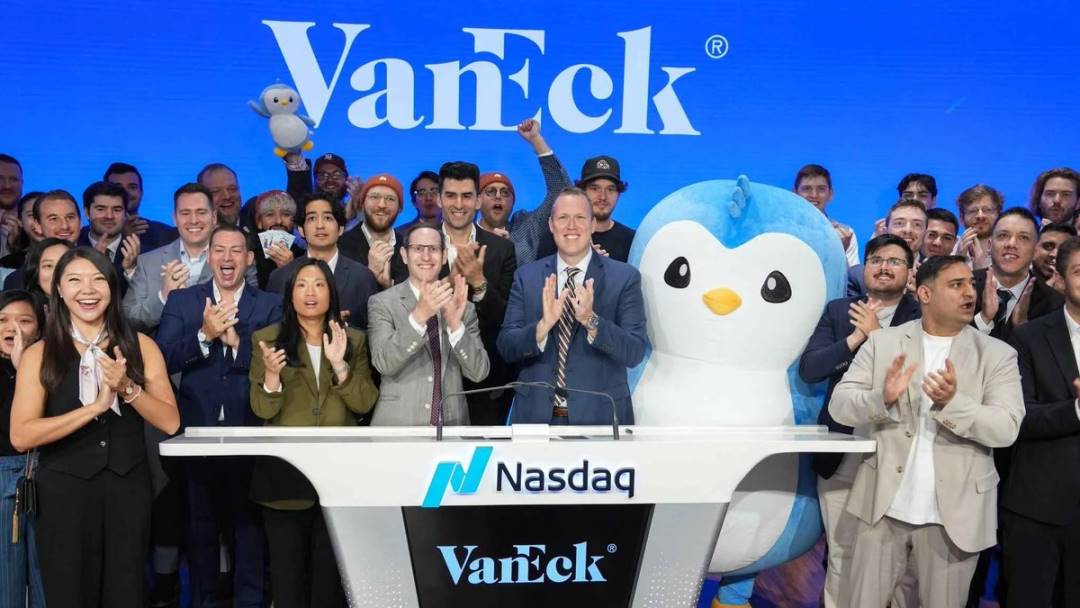
Pudgy Penguins is exploring uncharted territory for Web3 IPs—institutional financial markets. Currently, Pudgy Penguins appears in ETF advertisements from major asset managers like VanEck and Bitwise, who have also shown support by changing their social media profile pictures to Pudgy Penguins. Recently, the Pudgy Penguins team rang the Nasdaq opening bell alongside VanEck—an unprecedented event for any Web3 project.
In March 2025, Pudgy Penguins filed an ETF application with the U.S. SEC through Canary Capital, sending shockwaves through the industry. This ETF adopts a hybrid “NFT + token” structure instead of relying solely on tokens, pioneering a new paradigm for NFT asset securitization.
Source: Pudgy Penguins
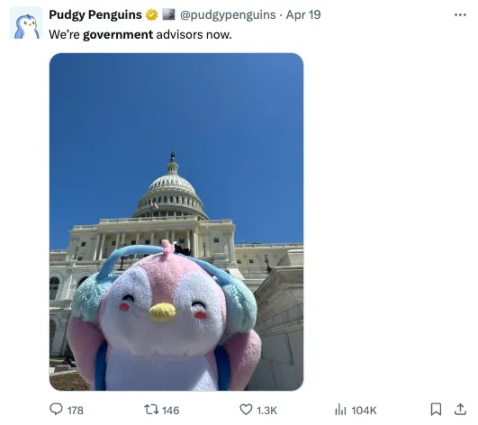
The approval process for the Pudgy Penguins ETF is progressing smoothly: in June 2025, the Chicago Board Options Exchange (CBOE) submitted a 19b-4 application (exchange product listing) on behalf of Canary Capital’s Pudgy Penguins ETF; in July, the SEC formally acknowledged receipt and initiated review. Additionally, the Pudgy Penguins team has recently been invited to serve as an official regulatory advisor to the U.S. government—a role with significant long-term strategic value. By participating in rule-making, Pudgy Penguins can shape a favorable market environment, proactively mitigate potential regulatory risks, and lower entry barriers for conservative institutional investors through its “government-recognized project” status.
Preparing for IPO and Entry into Traditional Capital Markets
Source: Yahoo Finance
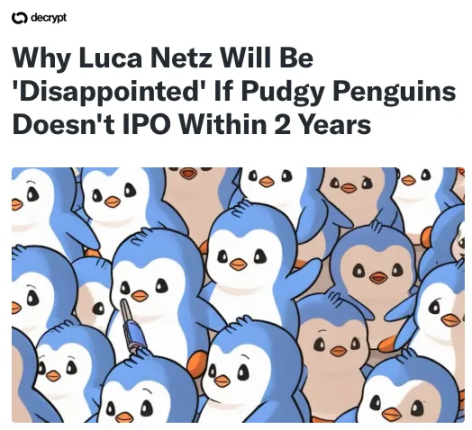
One of Pudgy Penguins’ most ambitious plans is to complete an initial public offering (IPO) by 2027. In an August 2025 interview, Luca Netz clearly stated this goal: “If I fail to take the company public within the next two years, I’ll be very disappointed in myself.” This plan is not wishful thinking but a concrete roadmap tied to clear performance targets—Pudgy Penguins has set a 2025 revenue target of $50 million, a key milestone for the IPO process.
For an NFT-originated project to list on a traditional stock exchange would be an industry-defining moment. If successful, it would fundamentally reshape market perception of Web3 assets—proving that NFTs are not just digital collectibles but can evolve into sustainable, real-world businesses. Currently, Pudgy Penguins already generates stable revenue through toy sales, IP licensing, and brand partnerships—a trait highly attractive to traditional investors.
Building the Ultimate Global Top-Tier IP
Source: @jpgKenny
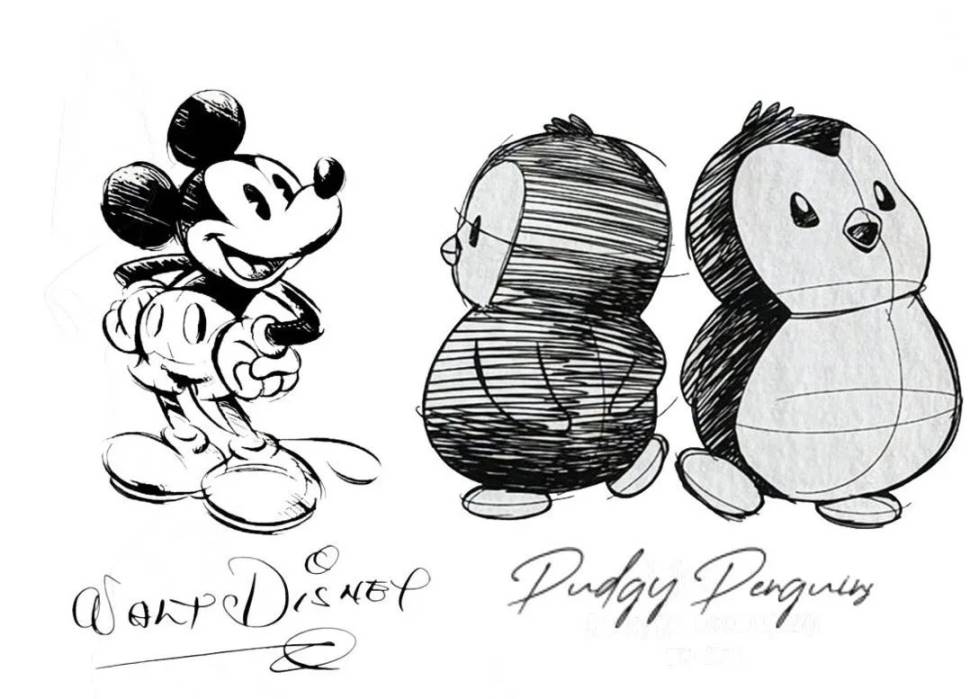
Pudgy Penguins’ ultimate goal is clear: to become a “global IP surpassing Disney.” This vision is not fantasy but a pragmatic plan grounded in systematic strategy and execution capability. In just three years, Pudgy Penguins has achieved what traditionally takes decades: over 50 billion social media impressions, products available in over 10,000 global stores, millions of social media followers, and now its own blockchain and token ecosystem—making it a unique bridge between Web2 and Web3.
The development roadmap clearly reflects this ambition: the recent launch of Pudgy Party naturally draws Web2 mobile gamers into the Pudgy Penguins ecosystem; children’s books and animations in various formats enable full-scale entry into the kids' market; collaborations with Penguin Random House on picture books and TheSoul Publishing on animation signal the project’s transformation from an “NFT project” into a “comprehensive entertainment company.”
Pudgy Penguins’ success holds profound implications for the entire Web3 industry: it proves that NFTs are not mere speculative instruments but IP assets capable of generating real commercial value. By launching the PENGU token, Pudgy Penguins expanded its holder base to over 600,000, achieving a quantum leap in community scale; through the Abstract blockchain, it built essential technical infrastructure; and through IPO plans, it forged connections with traditional finance—these initiatives collectively propel Pudgy Penguins toward becoming the “Disney of the Web3 era.”
The journey of Pudgy Penguins has only just begun. But judging by its achievements over the past three years and its future roadmap, it is not “dreaming”—but systematically realizing its vision: breaking down boundaries between Web2 and Web3, connecting digital and real economies, and growing with its community to build a new paradigm for the next generation of global IPs. Its goal of a “global community of billions” is no longer a distant dream, but an increasingly tangible and reachable future.
Join TechFlow official community to stay tuned
Telegram:https://t.me/TechFlowDaily
X (Twitter):https://x.com/TechFlowPost
X (Twitter) EN:https://x.com/BlockFlow_News
 Four Pillars