Pudgy Penguin CEO's Latest Interview: a16z Could Have Bought Pudgy Equity Cheap, But Chose to Write a Sky-High Check for Moonbirds
TechFlow Selected TechFlow Selected
Pudgy Penguin CEO's Latest Interview: a16z Could Have Bought Pudgy Equity Cheap, But Chose to Write a Sky-High Check for Moonbirds
LucaNetz shared how he and his team faced tough challenges in the early days of Pudgy Penguins, including financial difficulties, investor rejections, and community distrust.
 Navigating Web3 tides with focused insights
Compiled by: zhouzhou, BlockBeats
Editor’s Note: This conversation primarily covers how LucaNetz and his team faced significant challenges in the early days of Pudgy Penguins—including financial hardship, investor rejections, and community distrust—and discusses the Pudgy Penguins ecosystem, its token, and future development. It also explains why Pudgy Penguins chose Solana over other blockchains and emphasizes their intention to transform the Solana ecosystem by driving a cultural phenomenon.
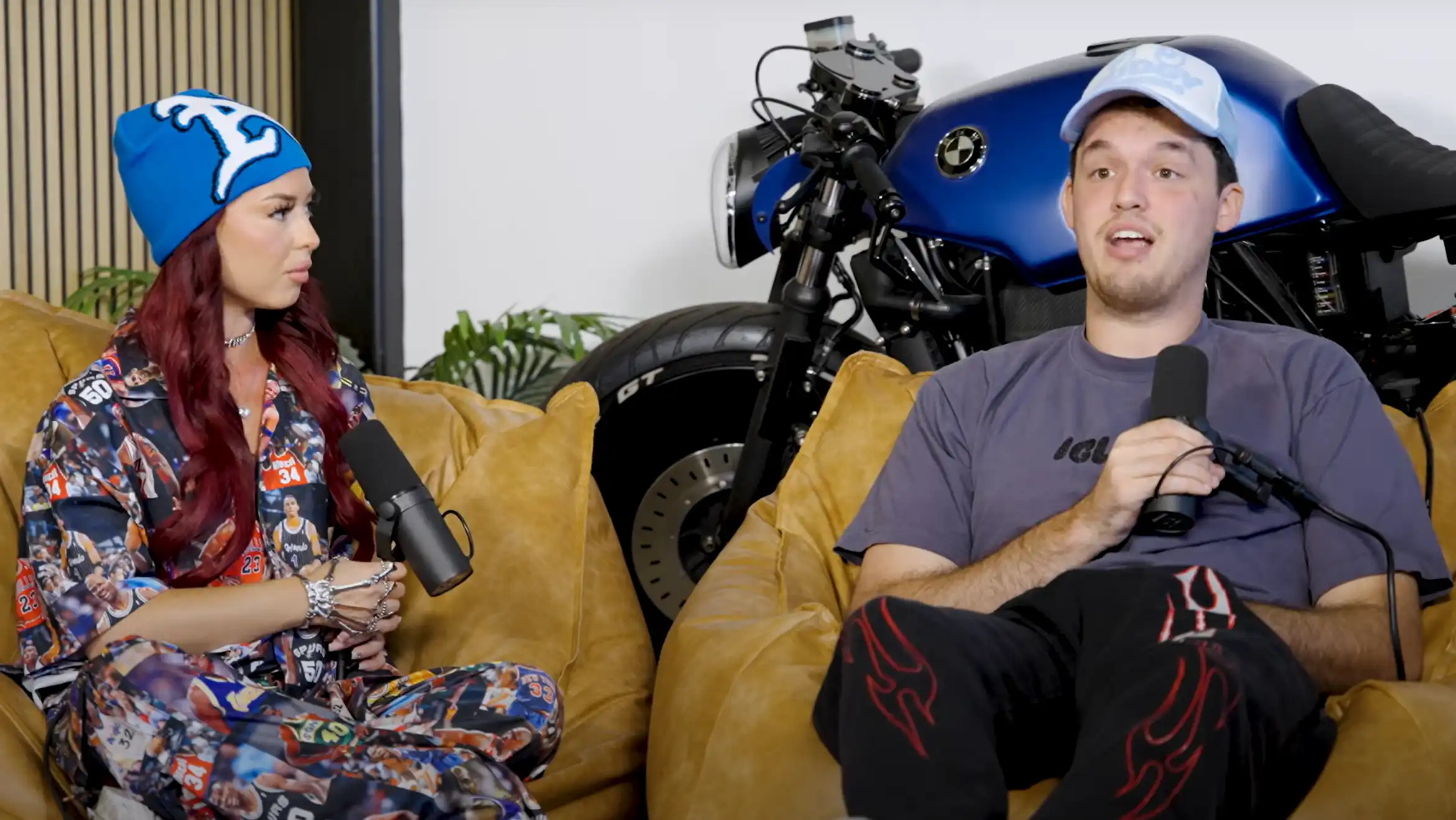
Below is the original content (slightly edited for clarity):
Host: LucaNetz is like Kobe in the Web3 crypto world. Everyone keeps asking: How can I be like LucaNetz? How do you become world-class? How do you become a legend?
LucaNetz: Honestly, I'm just taking credit. Just before we announced PENGU and other projects, I spoke with my team. I told them then—my strength lies in having the most incredible people around me. That's not my achievement at all.
I’m good at communication, being a strong community leader. But everything you see behind the scenes—the real work—is the result of Peter, Lorenzo, Vadon, Jennifer, and every other team member. We have a 60-person team at Pudgy now. All the success belongs to them. I'm just getting some recognition.
Host: Luca, I knew you back when your team wasn’t 60 people. How did you manage everything? This industry is incredibly stressful—it’s really tough. What advice can you give on staying focused? Because clearly, there's a reason you’ve become the 'Kobe' and 'LeBron' of mainstream adoption in this space.
LucaNetz: We’re extremely driven—exactly like your 'Kobe' and 'LeBron' analogy. That’s our biggest strength, though some might see it as a weakness, and I understand that view. We have fierce competitiveness—we want to be the biggest, the best. We believe we deserve it, and so does our community. After years of proving ourselves, it’s time to rise above.
When we entered this space years ago, we were determined to prove ourselves. We invested millions, risked our reputations, poured in blood, sweat, and even tears. We've been betrayed by friends, fallen into traps, experienced deception. We gritted through every storm, endured every possible test.
We crave success—not just for ourselves or our company, but for our community. More than anything, I truly want to deliver something better for our community. That’s what drives me.
You know, if you don’t know the penguin story, they were initially mocked and suppressed. In many ways, their journey mirrors mine. We were underestimated, overlooked, even ridiculed from the start—at least that’s how it felt to me. My childhood wasn’t bad materially, but internally, there was always a sense of being doubted, of carrying pressure on our shoulders.
I think Pudgy’s story is similar—just amplified through these penguin NFTs. So I hope these penguins feel what I feel when I succeed: that I made the right decisions, that I’m smart, that I had conviction. Even when everyone doubted and took sides, the penguins backed the right team. That validation means more to me than anything—I know this value will be repaid.
This mindset comes largely from our competitive nature. We all grew up loving sports, competition. I hate losing, I love winning—and our executive team shares that same spirit.
Our time is now. We have all the ingredients for success. It’s time to go all-in and prove it to the world. This is the cultural moment of this cycle. We respect and thank those who paved the way—but this isn’t their era anymore. It’s ours.
What Is Pudgy Penguins?
Host: That’s the Luca I know! You always acknowledge the team effort, but that’s exactly why we call you the 'LeBron' or 'Kobe' of Web3 crypto. I hope people send this clip to their grandma, friends, cousins. Everyone’s asking about meme coins—they see them on TikTok, Instagram, social media. So, how would you explain Pudgy Penguins and the entire ecosystem to your grandma?
LucaNetz: First, you need to understand Pudgy Penguins’ mission. We have two goals: First, to become the global synonym for penguins. When people think of penguins, I want them to instantly picture Pudgy Penguins. Second, to become the mascot and ambassador of cryptocurrency.
We achieve this by building a positive, giving brand—producing products people love and creating characters that form memories and emotional connections in people’s lives. This is a brand that radiates positivity. Through that brand power, we become the universal symbol of penguins and the face of crypto.
If we achieve both, it’ll be a massive win for the entire industry. Especially for the IP (intellectual property) space, which desperately needs fresh, creative energy—and Pudgy Penguins delivers that. More importantly, crypto itself needs this breakthrough. Crypto still carries stigma, feels inaccessible. But Penguins are an IP anyone can embrace—whether you're 5 or 60, regardless of race, gender, profession, or background. Penguins are universally likable—no weirdness, no exclusivity. They’re just cute. Everyone loves penguins.
The penguin story is also crypto’s classic underdog tale. Combined, these factors make it a true cultural phenomenon. People may ask: Is this token an ecosystem token? Or…
Host: Hold on, let’s not talk tokens yet! The penguin itself is already special enough. Let’s start from the basics—like NFTs. How do you connect NFTs to IP? Your ecosystem includes NFTs, games, and an upcoming token. Let’s walk through it step by step—what are these layers?
LucaNetz: Okay, let’s look at it through a funnel model—a framework I’ve used since day one. At the top of the funnel is demand, right? What creates that demand? Millions of followers on Instagram? Millions on TikTok? Billions of monthly views on Giphy? Toys reaching millions of homes? Demand and emotional connection begin at the top of the funnel.
As you move down, the middle of our funnel used to be “Pudgy World”—transforming someone from a toy buyer or Instagram fan into a blockchain-based experience. It’s blockchain-powered backend with a gamified frontend.
Host: You mentioned this blockchain experience—can you elaborate?
LucaNetz: You’ll see the final version soon. Essentially, every toy we sell comes with a QR code. Scan it, and you get three to five digital wearable NFTs. Enter your email and password to access “Pudgy World,” where you’re given a custodial wallet. Then, by paying a small fee, you can redeem these NFTs. For example, you spend $5 on a toy at Walmart, follow the steps, and within 3–4 minutes, you’re collecting digital assets on-chain.
How Pudgy’s CTO Changed the Game
Host: Why does this matter? Why would people care about owning these blockchain assets? Why put this on-chain, especially using a traditional toy industry mechanic like ‘gacha’?
LucaNetz: Because it gives you access to global liquidity—which only exists on blockchain. The importance here is, if Pudgy World succeeds—and I’m excited for the next few months—we’ll finally see if this mechanism actually works, after a year-long delay. And I think now is the perfect timing because penguin momentum has never been higher.
The key is: I spend $5 on a toy, unlock three to five digital traits worth $2 each. I can sell those digital traits while keeping the physical toy. In effect, I spent $5, unlocked $10 worth of digital value, sold it, got my money back, and kept the toy. This model could disrupt the entire consumer goods industry—especially CPG (consumer packaged goods) and loyalty reward systems.
If we create a successful case here, it reshapes the entire industry’s business model. This is the biggest catalyst to bring in major brands. Retailers like Walmart care deeply about “value for money.” Walmart’s goal is to deliver value to customers. If I can walk in with data—millions of dollars supporting this theory—I’d become the most value-packed product on their shelf without question.
I can show Walmart that every customer buying this item has a high chance of breaking even or profiting. So buying this toy costs them almost nothing. If consumers truly adopt this mindset, the product will sell out instantly—maybe within an hour.
Of course, there are variables—economic conditions, demand levels. These factors have higher success probability in a bull market, and we’re clearly in one now. So I think the odds are stronger—that’s exciting. Obviously, bear markets bring different variables—I don’t want to dwell on that.
Host: Let’s go back to those traits. You called them NFT traits—can you help us visualize it? Like Fortnite skins? Or similar trading/profit models?
LucaNetz: I think of them more as digital collectibles—like buying a Michael Jordan basketball card. Comparing them to baseball or basketball cards is more accurate. The difference between a Jordan card and a Pudgy Penguin NFT is brand awareness and emotional connection. But fundamentally, digital collectibles have advantages physical ones don’t: no insurance issues, no counterfeits, no transaction friction, no shipping or storage problems—all inherent benefits of NFTs.
A Pudgy Penguin NFT and a Michael Jordan card are essentially the same thing—collectibles. One is digital, one is physical. But digital collectibles have features physical ones lack—like being digital.
For example, I collect art, but I’m running out of wall space—so my collection is limited. But I can buy unlimited NFTs—my wallet holds infinite art. My gallery can be infinite because it’s digital.
That’s the difference: NFTs inherit the qualities of physical collectibles—but digitally. When we first entered this space, people were confused—asking what we were doing. I said: I’m just doing what physical collectibles already do. I’m replicating it because, honestly, there’s not much difference. Everyone else is trying to redefine what digital collectibles should be.
Now, we need to match digital collectibles with physical ones in brand recognition, affinity, and emotional connection. That’s exactly what we’ve been doing for the past three years: How do we go viral? Become internet icons? Build love and resonance around this brand? Then reverse-engineer it.
Host: I remember seeing Pudgy Penguins NFTs priced at just $60. Now they’re worth $100,000—that’s amazing! But I feel we haven’t reached that peak yet—there’s still a long way. I have a bigger vision. But looking back at what’s been achieved—it’s still thrilling. This isn’t just your team’s effort, but your vision too. Achieving this takes serious entrepreneurial spirit and business foresight. Could you give a quick summary of how you saved Pudgy Penguins—from a $60 asset to today’s $100,000—just to help others understand?
LucaNetz: Simply put, we bought the project about three years ago for $2.5 million, initially investing $500,000. The day we acquired it happened to be the start of a bear market, so we immediately faced continuous decline. We went through incredibly tough times—nearly bankrupted multiple times.
We never took a single dollar from the community—except for programmable royalties, which were slashed by 90% just one month after our acquisition. We just tried our best to do the right thing, build a project people could love. Our sole focus was creating value for holders and the community. It was hard, but we persisted.
Even in the last three months, many said “Penguins are dead, past their prime,” thinking I didn’t know what I was doing. There’s so much behind the scenes I could share. We’re now in 10,000 retailers—big names like Walmart and Target. Major collaborations—like Vandy, and recently Pokémon. All super cool.
Our social video views have surpassed 50 billion—with 40 billion alone on Giphy. Massive. Through memes, I believe aside from Doge, no crypto-native IP has spread this widely into the mainstream. We have all the necessary ingredients—huge user base, transformative potential.
Have you seen Pudgy Kindness or Kind Pango on TikTok? We changed users’ usernames—simple content, but on that channel, we’re genuinely changing lives. Ten videos, 500 million views—that’s a beautiful story. I want to represent this industry well, uplift lives, set an example worth following. Of course, we’re not perfect—we’ve made mistakes—but we strive to lead.
Common Misconceptions About Cryptocurrency
Host: What do you think is the most common mistake people make when talking about crypto and the Web3 ecosystem?
LucaNetz: They act like it’s their private show—arrogant, high-and-mighty. Honestly, I can only speak from our success. You might agree or disagree, but I believe you must put community first. Take care of your community, and they’ll reward you. Look at us—we’re still here, still doing our thing. We know that if we take care of them, they’ll return the value. I’m not sure how that return looks—though maybe I know a bit now—but we just try our best to support them, help them succeed. Others think, “It’s my business, I’m in charge,” and get too self-centered.
Host: But stepping outside—how do outsiders view the crypto industry? Where are they wrong?
LucaNetz: I think they have PTSD. Every crypto bull run and adoption cycle revolves solely around price increases. But retail investors are always the last to jump in. So in each cycle, say a million new users enter—only 50,000 profit, see opportunity, stay. The other 95% suffer the pain of crypto until they forget, until the trauma fades. Truth is, 95% of average people and retail investors get burned by crypto. That’s the core issue. You get me? They think crypto isn’t real, too abstract.
So much of Pudgy’s work is about connecting with consumers and retail—not centered on price. Sure, they might stumble upon PENGU or Pudgy NFTs, but we want their first impression to come from real products—like a toy they hug while sleeping, a charm on their backpack, or a funny, uplifting post from their partner. We want these to be their entry points. Over time, if they choose to join and believe in Pudgy Penguins’ vision, they can dive deeper. But alignment comes first.
Host: What about people outside crypto, those not yet in Web3? What misconceptions do they have about the industry?
LucaNetz: They have PTSD. The problem is, every crypto bull run focuses only on price. Retail investors are always the last to enter. So in each cycle, among a million new users, maybe 50,000 profit and stay. The other 950,000 complain, get hurt, forget, move on. About 95% of regular people and retail investors have been burned by crypto. That’s the crux. You see? They don’t believe crypto is real, feel it lacks tangible value.
So part of Pudgy’s mission is bridging crypto with consumers and retail—without price as the centerpiece. Yes, they might find PENGU or Pudgy NFTs, but we want to attract them through real products—like a bedtime toy, a backpack charm, or a joyful social post from their partner. We want these to be their first touchpoints. Later, if they choose to join and believe in Pudgy’s vision, they can take further steps. But alignment must come first.
Pudgy’s Entrepreneurial Journey Through Hell
Host: You mentioned your 60-person team. For aspiring founders wanting to enter this space, can you share how you made this project succeed? What was your first step? What happened right after you bought the project?
LucaNetz: After acquiring Pudgy Penguins, we went through an extremely tough first 12 months. We couldn’t rely on royalties at all. I knew we needed a sustainable business model fast—but I never expected to nearly go bankrupt so quickly. The first month after acquisition, royalty revenue was $500,000. The next month? $20,000. I was like, this is insane! Transaction volume didn’t drop that much—maybe 20-30%—but royalty income vanished overnight. We got wrecked. You can’t imagine how brutal that period was. A few people—some still here—were part of our early team, then stabbed us in the back. Literally.
Host: How do you handle betrayal like that?
LucaNetz: Man, I cried. It was awful—the betrayal, absolutely devastating. I also had major holders calling me stupid behind my back. Early on, some guys leaked NDA-signed contracts, spread FUD. Don’t you get it? I was grinding, trying to make this work, and we were completely broke—team members earning $1,000/month. Jennifer, our CLO, is a Stanford lawyer—could’ve made $40,000/month—but she stayed, trusted our vision, believed we’d find a way.
Then I joined a Zoom call with 300 VCs pitching for funding—got rejected. I was shocked. I’d built a nine-figure company before—why “no”? You invest in projects I can’t even understand—felt utterly disrespected.
Host: Why do you think they rejected you? Did they see it as a “kids’ brand”? Didn’t they get it?
LucaNetz: I think they missed the big picture. They focused too narrowly—saw us as just e-commerce or CPG. They didn’t see we’re a real team, a dream team, and I’m a founder with vision. Most VCs suck at investing—I’ll tell you from an investor’s lens: you don’t bet on the idea, you bet on the team. Investment is about people. Team matters more than idea or product. Every successful investment I’ve made was because the team was exceptional. That’s the only thing worth betting on.
So we were in deep trouble. Down to about $200,000, and every VC still said “no.” Meanwhile, I saw them writing huge checks—Moonbirds raised $50M early. Do you know how I felt? I was furious—“Are you crazy?” They didn’t trust us. That’s when I decided: I’d write down every name, make them regret missing out. I have a list—I know where they deployed capital. It was painful—because I was ready to give one guy $50, but he wouldn’t even quote a Mia.
Host: I always hear people say, “I wish we had a Luca on our team.” Right? I’ve said, I wish I could be Luca in certain companies—especially in kids’ IP. It’s hard.
LucaNetz: Even then, the problems piled up. That wasn’t the hardest part. The hardest was watching other NFT projects—some started at 2 ETH, then jumped to 20, 50, 100. When I pitched, they’d say, “Nice, cute, good job.” That was the hardest—people’s attitudes.
That was truly the toughest—doing Spaces tours harder than anyone, grinding nonstop. No one worked harder—every meeting, flight, call. They put me in the back row of every meeting—until just three to six months ago. That was the struggle. Now? I won’t accept anything less than front row.
That was the real difficulty—not just investors, nearly everyone dismissed us—except the community. Huge respect to them. Someone stepped up—Spencer’s here.
Spencer’s NFT fund might be the best-performing in history, right? His largest investment: Pudgy Penguins. I love that—because how many big NFT funds are there? They buy art that doesn’t move the needle. But if Pudgy pulls off what we plan in the coming weeks, we’ll revive the NFT market—not the artists.
I respect that, I like it—I’m not knocking it. But bro, how can you spend $10M on that, yet not own a single penguin?
I’m telling you this to inspire those who will eventually replace me. I’m at the top now, moving forward.
I’ll hold this spot for a long time—but know this: the person replacing me? They’ll crush you into oblivion, just like we were crushed. You must dig deep, stay strong, let nothing break you. Bro, I had days I nearly broke down—it was brutal.
I’m sharing this story and background on this podcast to motivate you, encourage you. I know what you see now is fun and exciting—but I’m telling you, every terrible thing an entrepreneur can face in business, we’ve lived through—and more than once. So for every founder and builder out there: keep going, brother. This isn’t a victory lap—we still have plenty to prove. I’m not claiming to be GOAT-level, okay? But at least we’ve arrived somewhere.
Why PENGU Will Fill Solana’s Final Gap?
Host: There’s a lot beneath the surface. We’ve covered NFTs, now games, then tokens. Can we talk about the game? The token? How does it fit in? Give us key intel—straight facts. It’s not a meme coin, not just another crypto—say it outright.
LucaNetz: I want people to define what they think it is: a community coin? Cultural coin? Meme coin? Consumer brand token? It’s all of those. To me, it’s the face of crypto—you embody the most beautiful story in crypto over the past four to five years. It’s the ultimate underdog story. If it succeeds, it’ll change the entire industry for the better.
Hard to argue otherwise—though I’m biased. So judge for yourselves. But you can’t deny Pudgy’s success hasn’t been a massive win, a powerful force pushing the industry forward. To me, Pudgy’s success is that driving force. It’s simple. Many may see it as just a meme coin on steroids, right?
Structurally, technically, it resembles a meme coin. 4 billion views on Giphy, all content meme-driven. So yes, it’s highly fungible and memetic. From that angle, many will buy into that narrative. Plus, Penku Man prophecies and lore existed before me.
From that lens, sure, many see it as a meme coin. But I’m putting that blue penguin on Walmart and Target shelves, topping the App Store, in hundreds of millions of hands across social media. I’ll bring it to the big screen—I’ll do it all.
Meme coins usually don’t move, right? But I firmly believe this will be the first case of meme coin evolution. I think if Doge had a team like ours, its value would multiply—Doge could appear in movies, TV shows. Tell me IP exposure doesn’t drive demand, and demand doesn’t increase value. It’s basic supply and demand—true for any fixed-supply asset.
So you’re telling me millions of fans, billions of daily views, won’t impact or support this ecosystem and theory? That argument just doesn’t hold.
Host: What can the PENGU token actually do?
LucaNetz: I can’t specify exact utilities. Anything meaningful to you—is meaningful. Buy things, do whatever you find useful. Everything is possible. It depends on your interpretation. We’re a smart team, right? But ultimately, it’s about community participation.
But don’t expect more from it than you do from your local Doge or Pepe. It’s the same vehicle. Anything beyond that? A pleasant surprise, pure joy.
Host: Why choose Solana over Abstract or other chains?
LucaNetz: Originally planned for Abstract—but it wasn’t ready. Timing is everything in crypto, right? I had a gut feeling: now is the time. You can’t rush something this important just to hit an arbitrary timeline.
Launching on Solana only grows the community, fuels more hype and momentum, strengthens foundations. Many building on Abstract care about two things: belief in Abstract’s Web2 distribution power, and belief that Pudgy is crypto’s best community. The first still holds. The second is now even stronger—soon I’ll have thousands of token holders, then tens of thousands, possibly millions. The “Penguin Army” isn’t 10K anymore—it’s 50K, maybe 100K. It’ll be multi-chain. Pudgy will be a multi-chain project.
I believe in a multi-chain future. Solana is where we most want to go. What we bring to Solana is vital to that ecosystem. We can unify efforts, combine everything. Solana has its PvP; we stand atop its L1. But from our view, Pudgy isn’t Ethereum’s face—it’s crypto’s face. I believe in Solana’s ecosystem, its community, its culture.
If we weren’t on Solana in this space, it’d be a huge failure in pioneering and leading this new frontier—for us, for our ecosystem, and for Solana. I think it’s the right fit.
What we bring, to me, is the beginning of a cultural phenomenon. I believe this is Solana’s final missing piece. Put a cultural phenomenon on Solana—like Bored Apes and Punks did—elevates the whole ecosystem. Based on my interactions with the Solana community, I want to give back. This is a great opportunity for me. Ultimately, it’ll be an SPL token—an SPL token is simply Solana’s native token standard. Among several on Solana, SPL is the most common. Nothing too complex—just learn it.
Host: SPL token—explain it for listeners.
LucaNetz: SPL is one of Solana’s native token standards—SPL is the most widely used. So nothing complicated—just get familiar.
Host: When will the token launch?
LucaNetz: Soon. Very soon. We’re not waiting till year-end, nor launching immediately. So by the time this airs, it might already be live.
Join TechFlow official community to stay tuned
Telegram:https://t.me/TechFlowDaily
X (Twitter):https://x.com/TechFlowPost
X (Twitter) EN:https://x.com/BlockFlow_News
 BlockBeats