Pop Mart, women, and gambling
TechFlow Selected TechFlow Selected
Pop Mart, women, and gambling
Shopping is gambling.
 Navigating Web3 tides with focused insights
By: John Wang
Translated by: AididiaoJP, Foresight News
The Rise of Female-Led Soft Gambling
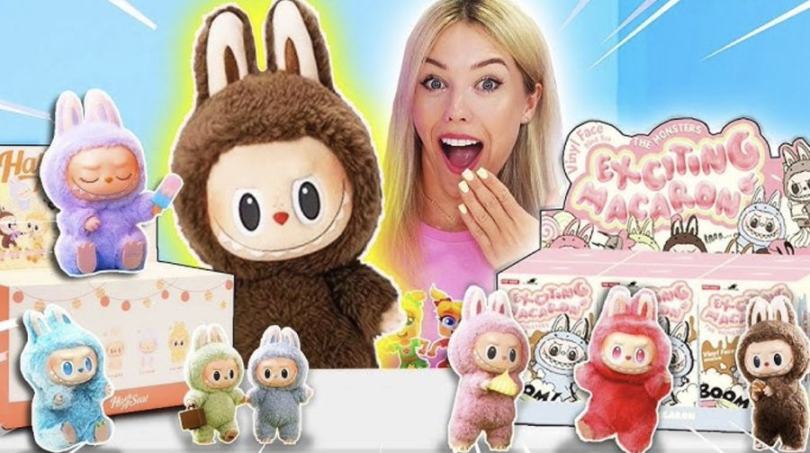
A girl buys three Pop Mart mystery boxes and films a curious TikTok unboxing video. She whispers, "Please let me get the hidden sleepy bear... but honestly, as long as it's cute, I'll be happy."
A man tears open a $500 Pokémon box live on stream, eyes locked on the camera. "If I don't pull a PSA 10 Charizard, this whole damn box is worthless."
Gambling isn't always poker chips and slot machines—sometimes it's pink bunnies, blind boxes, and TikTok livestream shopping. Somewhere between retail marketing and roulette lies a new addiction loop targeting female consumers. The same variable reward mechanism, but with entirely different stakes, atmosphere, and psychology. Welcome to the world of soft gambling: a form of gambling built not for glory or conquest, but for emotional comfort.
The Data Shows
Consider the user demographics of the biggest "soft gambling" brands:
-
Pop Mart mystery toys: 75% female users, 50% repurchase rate
-
Shein and Temu: 63%-66% female users, compared to Amazon’s male skew
-
Slotomania social casino: 72% of active players are women, primarily aged 35–55
-
In contrast, only 4% of participants in the 2025 World Series of Poker were women
The further you move from real-money tables, the more the audience leans female—and the more people pay simply "for the surprise itself."
Forms of "Soft" Gambling
Pop Mart: Each series features twelve cute figurines, with one or two rare "hidden" variants. Each $10 box guarantees a prize—but not necessarily the one you want. Collectors film suspenseful unboxings, trade duplicates, and keep buying. Nearly half repurchase within a year, according to the company.
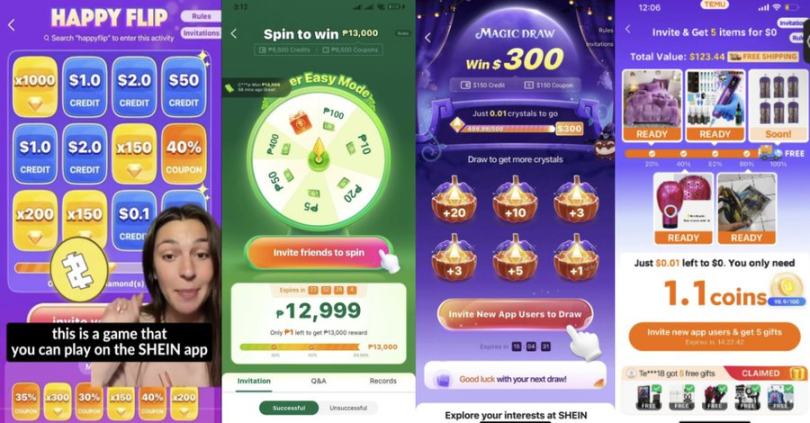
Shein and Temu: Toys become tops and lip gloss; loot boxes turn into spin-to-win coupons or two-hour flash sales. Shopping becomes a video game loop: click, reveal, dopamine, repeat.
Social casino apps (like Slotomania or Bingo Blitz) press the same psychological buttons digitally—free spins, confetti celebrations, zero-risk capture—and generate billions by selling virtual cosmetics inside the app.
All three use variable reward systems familiar to casino designers, but the stakes are emotional rather than financial. Unlike poker or slot machines, these systems rarely disclose odds, creating a gentler "fog of war." This is low-risk, soft-feedback-loop gambling, designed for habitual engagement rather than thrill-seeking.
Why It Works So Well
Something over total loss: Whether it's a rabbit doll or $2 lipstick, you always get something. This psychological reassurance draws people in.
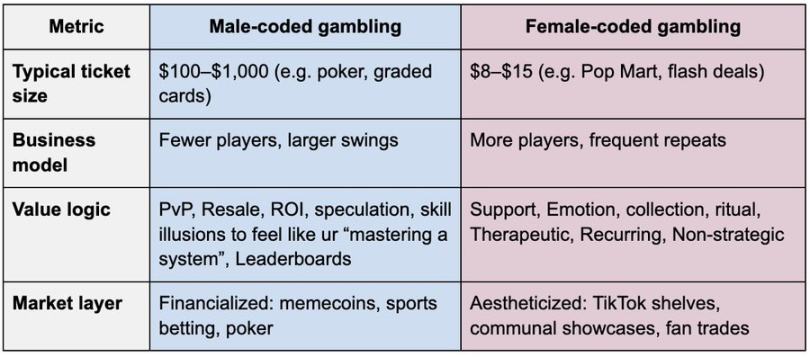
Ritual over risk: Opening the box, spinning the wheel, showing off your haul—these small daily rituals add meaning. A Pop Mart fan might whisper “Please be the sleepy bear…” while unboxing to music on TikTok. Contrast this with GTO (game theory optimal) EV calculations and hero calls in poker. One is self-fulfillment; the other is zero-sum competition.
Aesthetics over conquest: Rewards aren’t about resale value but how they fit an emotional outlet. Pop Mart fans don’t flaunt prices—they decorate with a mischievous Labubu next to Sanrio plushies. While male collectors often chase single high-value items, female collectors tend to seek full sets that reflect personal taste (“I finally got the pink bunny—I’ve completed my zodiac series!”).
Shared joy, not PvP: Memecoin traders show off 1000% P&L screenshots. Pokémon unboxers boast about $400 pulls. Pop Mart unboxers post duplicates on TikTok asking, “Does anyone want this pink bunny?” One is competitive; the other is about sharing and emotional connection.
Saving money over making money: Shein shoppers spin wheels for 20% discounts and invite friends to unlock coupons. The thrill comes from the dopamine of unlocking deals, not beating the market.
Half of the functionality in Shein and Temu apps is shopping—the other half is social gambling mini-games to unlock discounts, and they’re highly addictive.
Psychology of Gambling Motivation
Academic research supports these behavioral differences:
A 2024 study in the journal Addictive Behaviors found men gamble more for money and competition, while women do so for escape, emotional regulation, and social connection.
Another study shows women respond more strongly to low-risk reward loops, while men engage more when stakes and potential rewards are higher.
Men gamble for glory; women gamble for joy.

Business Model with Extreme Retention
Low price per transaction, high volume is the growth engine. Pop Mart’s gross margin is around 60%; Shein users open the app over 100 times per month. Businesses don’t rely on big spenders but on hundreds of millions spending $10 at a time.
Customer lifetime value (LTV) isn’t driven by jackpots or leaderboards. It’s built on emotional attachment, soft ritual, and the urge to complete collections. That’s why Pop Mart’s retention outperforms traditional toy brands and mainstream retail.
Shopping as Gambling
Call it blind-box retail, lucky-bag fashion, or pastel-colored slot machines—the underlying mechanism is gambling DNA stripped of macho bravado.
Shein, Temu, and TikTok Shop have adopted the same dopamine framework and scaled it into full retail ecosystems:
Shein: Daily spin-the-wheel, flash sale bags, recommendation feeds replacing search, over 100 monthly app opens
Temu: Lightning deals, social invitation roulette for coupons, first-day “spin-to-start” mechanic (women click 1.4x more than men)
TikTok Shop: Shoppable unboxing videos labeled “mystery bags” see 2–4x higher engagement than standard posts. The “surprise premium” is real.
Each platform turns shopping into a gamified loop: browse → spin → possibility → repeat. Counterintuitively, the prize isn’t the product—it’s the dopamine hit when the box opens, the wheel stops, or the flash deal appears.
Conclusion
For women rarely seen at poker tables, these gentler spaces offer the same dopamine rush.
The feminine side of gambling has nothing to do with chasing jackpots. It’s about chasing a feeling—the moment of “possibility” before the box clicks open, the wheel stops spinning, or the flash sale drops. It proves that happiness can indeed be bought—one $10 box at a time.
And that makes the “blind box economy” the stickiest casino on Earth.
Join TechFlow official community to stay tuned
Telegram:https://t.me/TechFlowDaily
X (Twitter):https://x.com/TechFlowPost
X (Twitter) EN:https://x.com/BlockFlow_News
 @j0hnwang