2025 Latin American Cryptocurrency Landscape Report
TechFlow Selected TechFlow Selected
2025 Latin American Cryptocurrency Landscape Report
In this region plagued by inflation, currency fluctuations, and limited traditional banking services, millions have turned to cryptocurrency out of practical necessity rather than speculation.
 Navigating Web3 tides with focused insights
By: Filippo Armani
Translation and compilation: Saoirse, Foresight News
(Content abridged; for quick reading, go directly to key insights and summaries at the end of each section)
In Latin America, cryptocurrencies have evolved into practical financial tools used for daily savings, transfers, and spending. In a region plagued by inflation, currency volatility, and limited access to traditional banking, millions adopt crypto out of necessity rather than speculation. This report focuses on its core use case—payments—and analyzes four pillars of infrastructure: exchanges, stablecoins, on/off ramps, and payment applications, revealing the underlying architecture supporting real-world scenarios like remittances, payroll, and savings.
While not exhaustive, this report aims to provide a shared, transparent, data-driven perspective on cryptocurrency usage in Latin America. As highlighted in Lemon Cash’s State of Crypto Report 2024, the region is large, fast-growing, and under-researched, with significant differences in adoption patterns across countries—Brazil dominated by institutional flows and retail speculation, Mexico driven by remittance activity, Venezuela and Argentina heavily reliant on stablecoins for inflation hedging. Therefore, the report emphasizes common practical use cases rather than treating Latin America as a single market.
Key Insights
-
Exchanges remain core financial infrastructure: Driving retail adoption, institutional activity, and cross-border value transfer across Latin America, annual exchange flows surged ninefold from $3 billion in 2021 to $27 billion in 2024. Ethereum dominates high-value settlements, Tron supports low-cost USDT payments, while Solana and Polygon drive growth in retail capital flows.
-
Stablecoins are the backbone of Latin America's on-chain economy: In July 2025, USDT and USDC accounted for over 90% of tracked exchange trading volume. Meanwhile, local stablecoins pegged to Brazil’s real (BRL)—with trading volume up 660% year-on-year—and Mexico’s peso (MXN)—up 1100x year-on-year—are emerging as domestic payment tools.
-
On/off ramps are faster and more accessible: Beyond exchanges, protocols like PayDece and ZKP2P, along with infrastructure providers like Capa, have processed nearly $60 million in volume, enabling permissionless multi-channel access between crypto and local economies.
-
Payment apps are evolving into crypto-native digital banks: Platforms like Picnic, Exa, and BlindPay integrate stablecoin balances, savings, and real-world spending within a single interface. Cryptocurrencies are widely used by both banked and unbanked populations to meet practical financial needs, particularly favored by young, mobile-first users.
Introduction
Latin America is one of the most active regions globally for cryptocurrency adoption, shaped by economic instability, financial exclusion, and everyday needs. Facing persistent inflation, continuous currency devaluation, and limited access to traditional banking, millions in the region use cryptocurrencies not for speculation or entertainment, but for survival, stability, and efficiency.
In the past year ending June 2024, total cryptocurrency inflows to Latin America reached $415 billion, with Brazil, Mexico, Venezuela, and Argentina ranking among the top 20 globally for grassroots crypto adoption (Chainalysis, 2024). In markets like Argentina and Colombia, stablecoins have replaced Bitcoin as the most popular crypto asset, and exchange data shows transaction activity often spikes around payday as users convert salaries into digital dollars for preservation (Bitso, 2024).
Within this ecosystem:
-
Whether pegged to the U.S. dollar or local currencies, stablecoins serve as vital financial lifelines across Latin America, helping people protect savings, send remittances, and maintain purchasing power. In 2024, over 70% of cryptocurrency purchases in Argentina were stablecoins (Lemon, 2024).
-
Exchanges such as Lemon, Bitso, and Ripio are key infrastructure for accessing crypto and liquidity. Centralized platforms dominate regional usage, with 68.7% of Latin America’s crypto trading volume occurring on centralized exchanges—on par with North America (Chainalysis, 2024).
-
On/off ramp solutions like ZKP2P, PayDece, and Capa play crucial roles in connecting crypto with local economies, especially in countries with limited traditional financial services.
-
Payment applications like Picnic, Exa, and BlindPay make crypto more usable by integrating wallets, remittances, exchange, and even yield features into mobile-native interfaces tailored for local users.
Together, these pillars form a parallel financial system that is often more stable, accessible, and practical than traditional alternatives.
Exchanges
As of mid-2024, centralized exchanges remain the primary gateway to cryptocurrency in Latin America, accounting for 68.7% of regional activity—slightly below North America but far exceeding other emerging markets (Chainalysis, 2024). This reflects user preference for trusted, regulated platforms with direct fiat access. These exchanges have expanded beyond basic trading into payments, savings tools, and cross-border transfers, becoming critical on-ramps to the crypto economy.
The market is highly concentrated. According to Lemon’s 2024 report, Binance controls 54% of trading volume on Latin American centralized exchanges, maintaining dominant position. Among regional competitors like Bitso, Foxbit, and Mercado Bitcoin, Lemon leads with a 15% market share, highlighting the role of local platforms in serving needs overlooked by global giants (Lemon, 2024).
Use cases are also evolving. At the retail level, exchange functionality is becoming more sophisticated: Bitso Alpha, Bitso’s professional trading interface, matched the trading volume of Bitso Classic in 2024 despite fewer users, indicating significant influence from active professional traders (Bitso, 2024). Institutionally, Brazil leads the region: from Q4 2023 to Q1 2024, transactions over $1 million increased 48.4% quarter-on-quarter (Chainalysis, 2024), driven by interest from traditional financial institutions, ETF demand, and regulatory initiatives like the Drex pilot. Major banks like Itaú and BTG Pactual now offer cryptocurrency investment services, blurring the line between exchanges and banks. SMEs also use exchanges for cross-border settlements and currency hedging—for example, Brazilian companies pay Asian suppliers in crypto to avoid bank fees, where Bitcoin and stablecoins are widely accepted (Frontera, 2024).
On-Chain Flow Analysis of Latin American Exchanges
Flow analysis tracks asset transfers between exchange hot wallets, reflecting actual platform adoption, liquidity demands, and their role in moving value between crypto and the broader economy. Due to data availability constraints, the analysis excludes native Bitcoin chain data, meaning total exchange volumes may be underestimated and Bitcoin’s role is only reflected via wrapped forms (e.g., BTCB) on other networks.
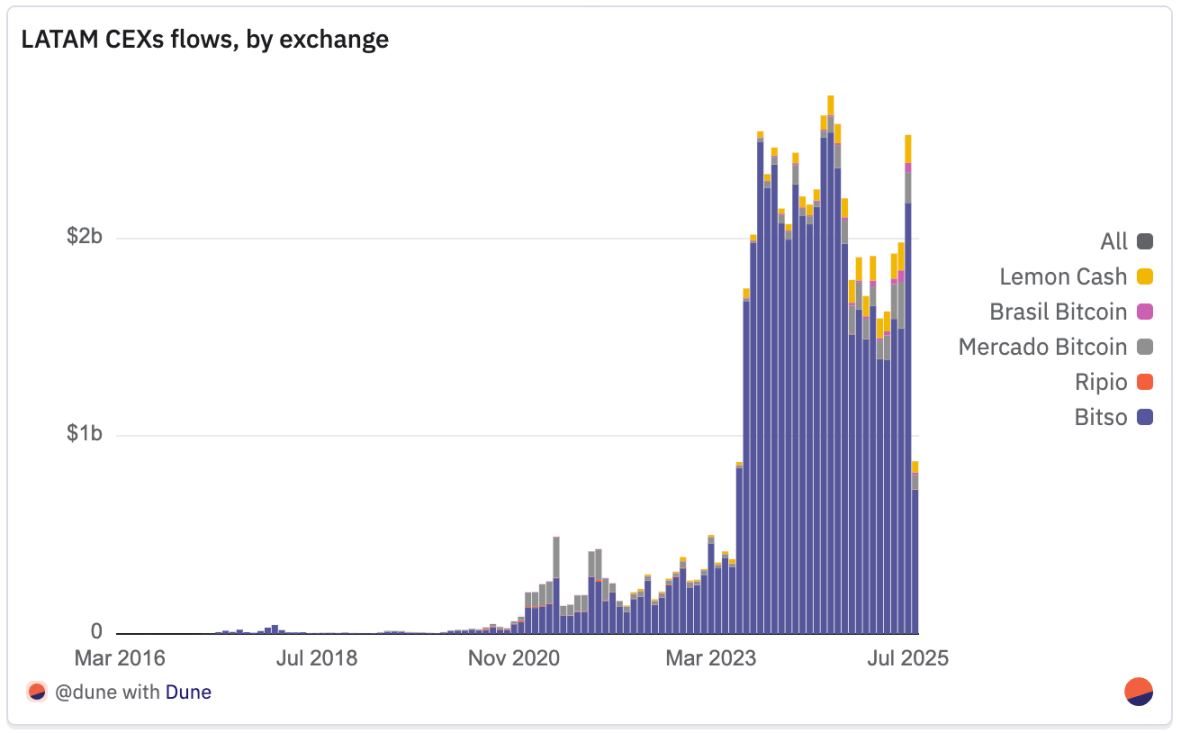
From early 2021 to mid-2025, capital flows through Latin American centralized exchanges show clear trajectories of growth, maturity, and consolidation, with total tracked transfers increasing from $3 billion in 2021 to $27 billion in 2024.
In 2021, activity was small by global standards: Bitso processed under $2 billion, Mercado Bitcoin around $1.2 billion, and smaller platforms like Brasil Bitcoin and Ripio handled tens of millions. The market remained fragmented across OTC desks, informal brokers, and a few formal exchanges. In 2022, diversification began, with new entrants like Lemon Cash transferring $90 million in their first recorded year.
2023 marked a true inflection point, with trading volume growing over threefold year-on-year. Bitso jumped from $2.5 billion to $13.6 billion, Lemon Cash nearly tripled to $260 million, and exchanges increasingly integrated into payment ecosystems, remittance channels, and corporate cash flows. Inflation and currency depreciation in Argentina and Brazil drove demand for stablecoins, making exchanges key on/off ramps for digital dollars.
Liquidity peaked in 2024, with Bitso reaching $25.2 billion, Mercado Bitcoin rising to $915 million, and Lemon Cash hitting $870 million. Crucially, this growth wasn’t dependent on a sustained bull market, but reflects a shift toward real-world applications like cross-border trade, remittance settlement, and currency hedging.
Early 2025 saw a slowdown, dropping to recent lows in January, but activity steadily recovered. By July, monthly volume hit its highest level since September 2024. Bitso’s flow from January to July totaled $11 billion—below 2024 levels but still many times higher than any pre-2023 year; Mercado Bitcoin reached $990 million, and Lemon Cash processed $890 million in just over half a year, potentially matching its all-time record.
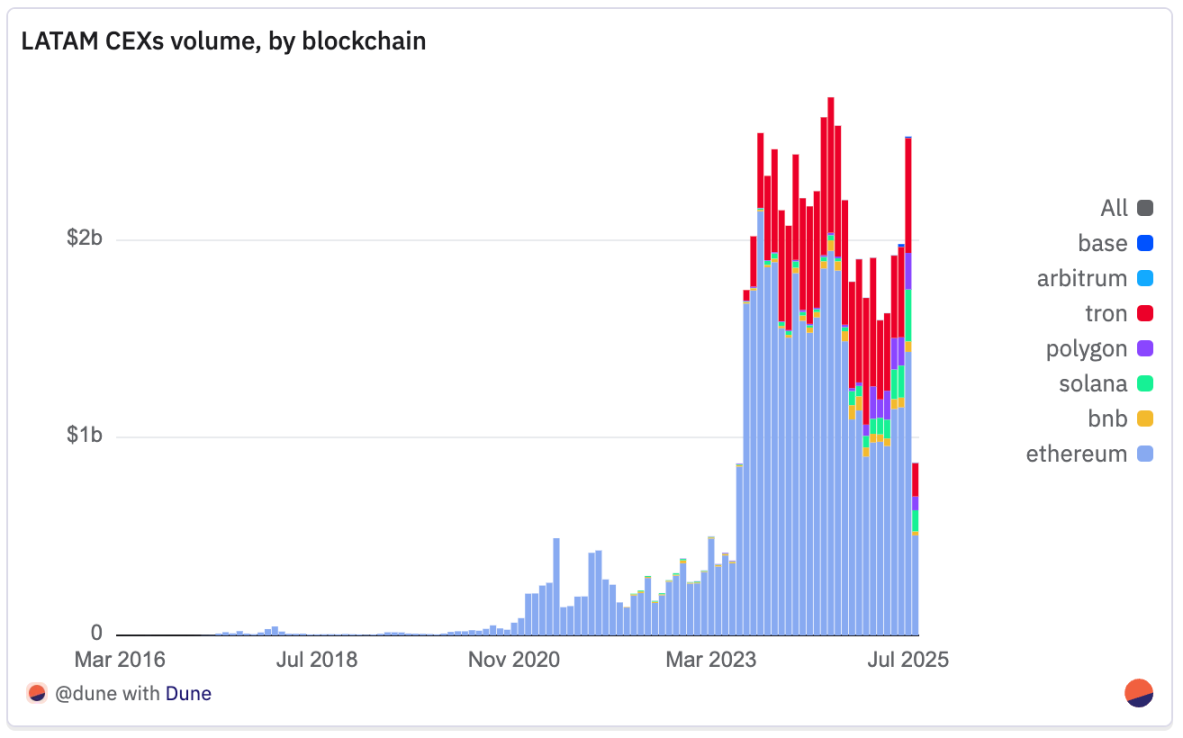
Underpinning all these flows is a clear technical pattern: Ethereum remains the backbone of exchange activity in Latin America. From January 2021 to July 2025, Ethereum-based transfers totaled over $45.5 billion, about three-quarters of all tracked flows, underscoring its role as the primary settlement layer for high-value transfers, stablecoins, and tokenized assets. Tron ranks second with $12.5 billion, largely due to its status as a low-cost USDT transfer channel widely used for remittances and cross-border payments. Solana ranks third with $1.45 billion in total flows, slightly ahead of Polygon’s $1.17 billion. In 2025, Polygon’s share has grown steadily, playing an expanding role in payment-related activities, capturing 7.2% of monthly volume in July—just above Solana’s 7.1%. Binance Chain follows closely with $963 million. Base ($23.6 million) and Arbitrum ($11.2 million) are smaller but growing rapidly: Base has already processed $22 million in 2025, compared to just $1 million in all of 2024; Arbitrum matched its full 2024 volume by July 2025.
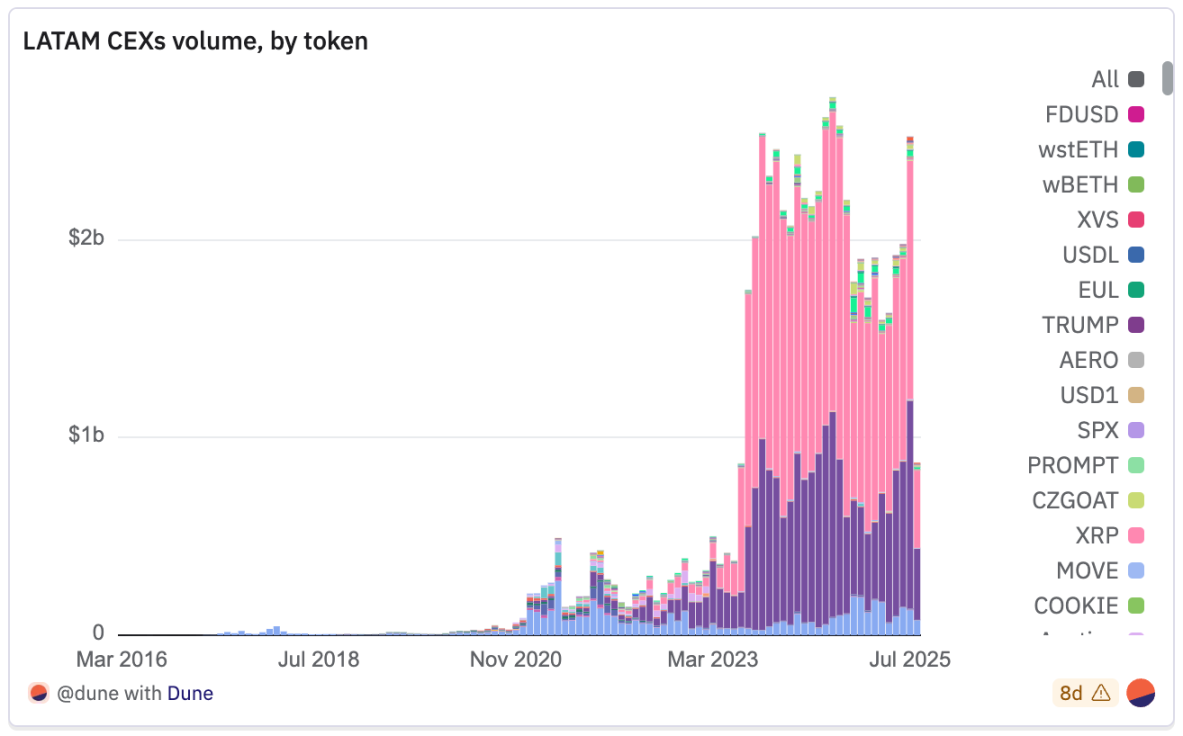
The picture at the token level is even clearer. As noted, stablecoins dominate: in July 2025, USDT and USDC together accounted for nearly 90% of all transfers. From January 2021 to July 2025, USDT processed $32.4 billion—almost double USDC’s $18.36 billion—reflecting USDT’s central role on Tron. ETH ranks third with $4.74 billion transferred. As of July 2025, SOL ranks fourth, representing about 1% of identified flows, having moved $660 million since 2021.
Notably, composition has shifted over time: from 2021–2022 through most of 2023, ETH’s trading volume share often matched or even exceeded stablecoins, and the top token list was more diverse, including BTCB (the BEP-20 version of Bitcoin) and MATIC, which performed well due to Polygon’s role. However, since late 2023, stablecoins—especially USDT and USDC—have significantly expanded their share. This evolution likely reflects a broad shift in the use cases behind exchange flows: from speculative trading of volatile assets to practical applications like payments, remittances, merchant settlements, and on/off ramps for dollar-denominated savings.
Shifts in blockchain and token composition indicate a maturing exchange ecosystem in Latin America. Ethereum remains the settlement backbone, Tron dominates low-cost stablecoin transfers, and Polygon steadily gains share by carving out a niche in payment-focused flows. Together, these trends suggest exchanges are increasingly used as payment and value transfer channels, not just venues for pure speculation.
Lemon Cash exemplifies this evolution. Proof-of-reserves data shows that by mid-2025, the exchange held approximately $100 million in assets, with stablecoins making up the bulk.
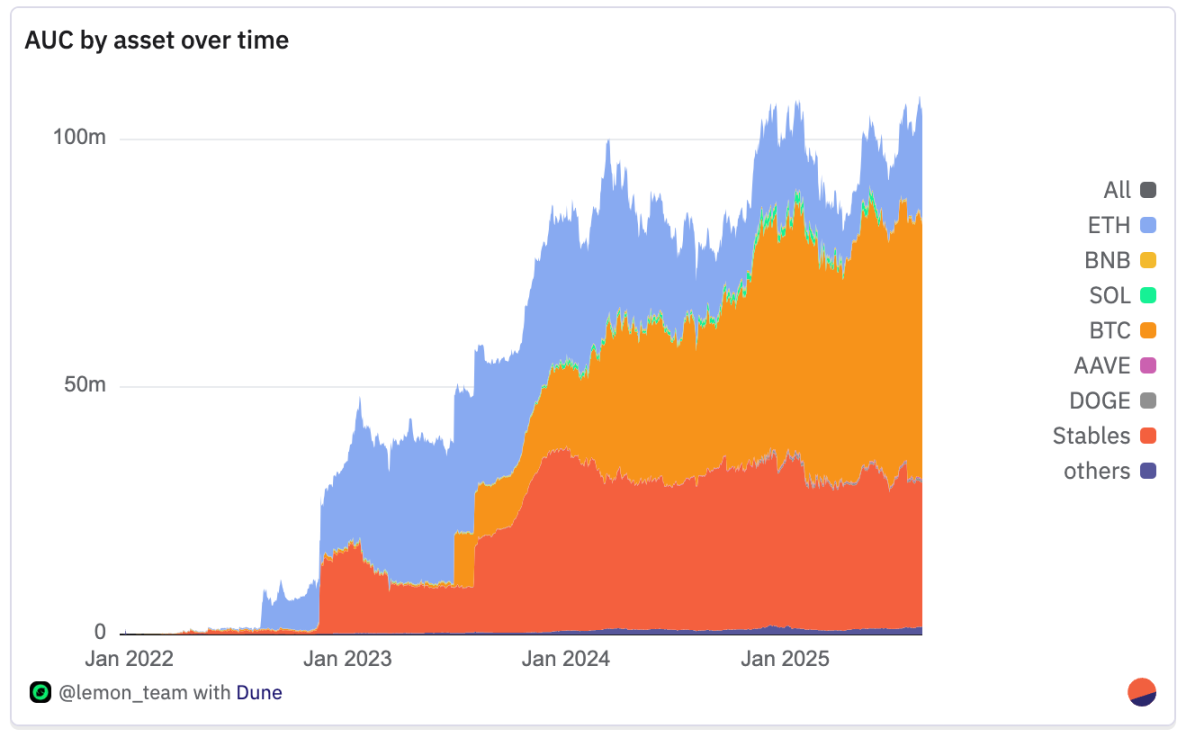
Over the past year, stablecoin balances have consistently stayed within the $20–30 million range, highlighting its role as a retail-friendly dollar conduit.
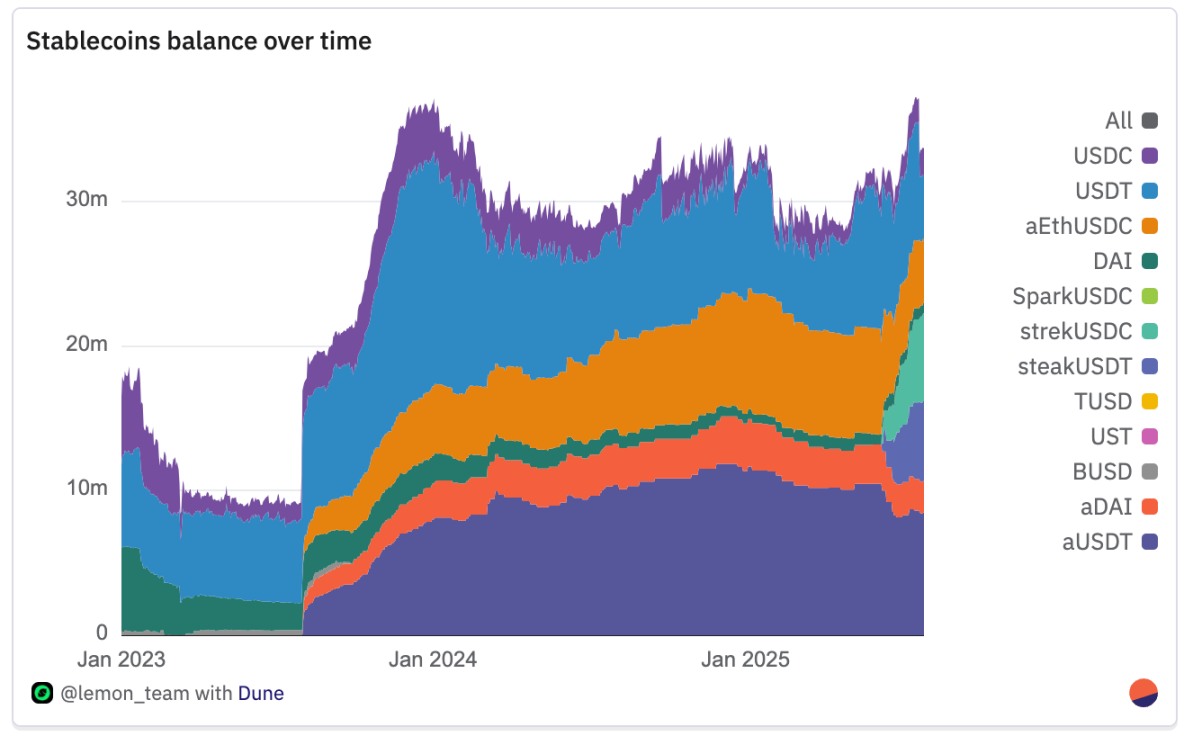
Its network activity is multi-chain: withdrawals are most active on Tron, Binance Chain, and Ethereum; deposits strongest on Binance Chain, Tron, and Stellar; and newer Layer 2 networks like Polygon and Base are growing from small bases. This reflects how regional exchanges adapt to different networks’ fees, speed, and accessibility, though settlement volumes at the regional level remain Ethereum-dominated.
Overall, chain and token data reinforce structural trends: Latin American exchanges have scaled massively on an Ethereum-based, stablecoin-driven foundation, with occasional speculative surges temporarily altering volume rankings. The combination of pragmatic adoption and cultural dynamism may define exchange activity in the region for years to come.
Summary
Exchanges have evolved into financial infrastructure. From 2021 to 2024, tracked exchange flows grew from $3 billion to $27 billion—a ninefold increase in annual volume—shifting from fragmented OTC activity to large integrated platforms serving retail and institutional users.
-
Bitso’s flow rose from $1.96 billion in 2021 to $25.2 billion in 2024 (a 1185% increase), accounting for most of the tracked Latin American exchange volume. Through July 2025, it has processed $11.2 billion—44% of last year’s total.
-
Lemon’s volume nearly doubled in 2023 and reached $87 million in 2024; through July 2025, it has already processed $84 million.
-
From January 2021 to July 2025, Ethereum dominated about 75% of Latin American exchange flows (cumulative $45.4 billion), handling high-value stablecoin and token transfers. Tron followed with $12.5 billion, leading in low-cost USDT remittance transfers.
-
Solana ranked third overall with $1.5 billion, but in July 2025, Polygon surpassed it, capturing 8% of monthly flows.
Stablecoins
Stablecoins are the financial bedrock of cryptocurrency adoption in Latin America, going far beyond speculation. In the region, they serve as savings tools, payment channels, remittance conduits, and inflation hedges—the most practical and widely adopted form of crypto. Today, Latin America leads globally in real-world stablecoin use: according to Fireblocks’ State of Stablecoins 2025, 71% of respondents use stablecoins for cross-border payments, and 100% either have launched, are piloting, or planning to launch stablecoin strategies. Equally important, 92% report their wallet and API infrastructures support stablecoins, highlighting both demand and technological maturity. For millions in the region, stablecoins have become digital dollar equivalents—accessible inflation hedges and a way to bypass capital controls (Frontera, 2024). In many cases, they are the only practical way citizens can hold dollar-denominated savings.
In countries like Argentina, Brazil, and Colombia, stablecoins have replaced Bitcoin as the preferred daily-use asset, thanks to price stability and direct pegs to dollar-denominated value (Fireblocks, State of Stablecoins 2025). This trend aligns with exchange data from the previous section, where over 90% of exchange transfers involve USDC and USDT. In 2024, on Argentina’s Bitso platform, these two stablecoins accounted for 72% of all crypto purchases, while Bitcoin made up only 8% (Bitso, 2024). Colombia is similar, with stablecoins comprising 48% of purchases, driven by restrictions on dollar bank accounts and ongoing currency volatility. Brazil’s shift is even more pronounced: on local exchanges, stablecoin trading volume grew 207.7% year-on-year, surpassing all other crypto assets (Chainalysis, October 2024). Beyond transfers, stablecoins accounted for 39% of regional purchases in 2024, up from 30% the previous year (Bitso, 2024).
Local Stablecoins
Although dollar-pegged assets still dominate stablecoin usage in Latin America for inflation hedging, local-currency-pegged stablecoins have grown rapidly over the past two years. Tokens pegged to national currencies like Brazil’s real (BRL) or Mexico’s peso (MXN) are increasingly used for domestic payments, on-chain commerce, and integration with local financial systems. By eliminating the need for frequent USD-to-local-currency conversions, they reduce costs for merchants and users while accelerating local business settlements. For enterprises, direct integration with payment systems like Brazil’s PIX enables instant, bank-free transfers that comply with accounting and tax requirements. In high-inflation economies, they also act as bridge assets, allowing users to transact in stable local currency terms while retaining the option to hedge into dollars or other stores of value when needed.
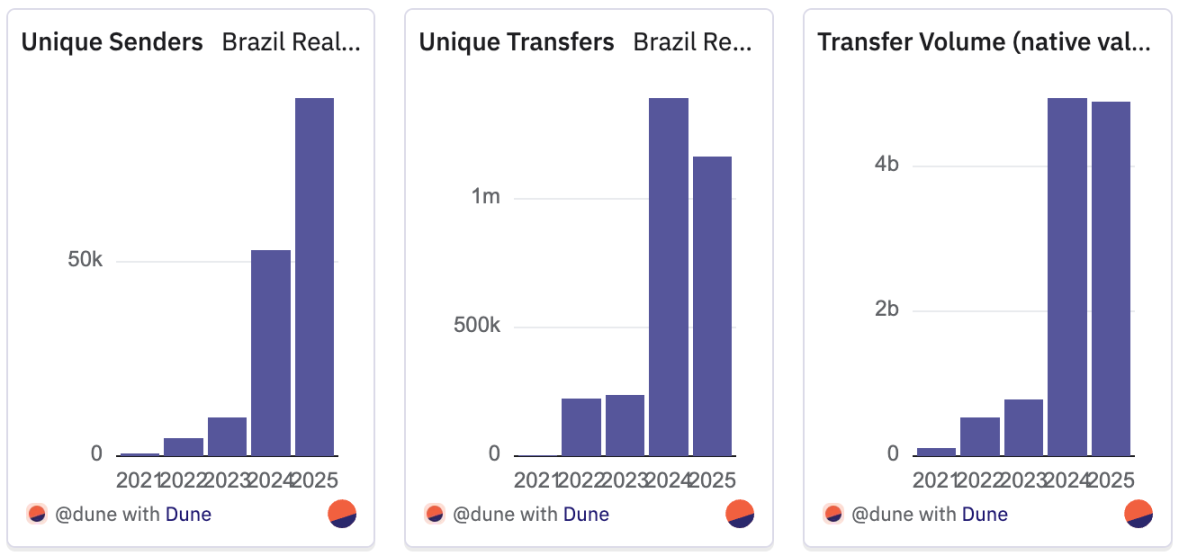
Brazil best exemplifies this trend, with real-pegged stablecoins showing strong year-on-year growth. From just over 5,000 transfers in 2021 to over 1.4 million in 2024, and over 1.2 million so far in 2025, this represents over a 230x increase in four years. Independent sender counts follow a similar trajectory—rising from under 800 in 2021 to over 90,000 in 2025, an 11x increase since 2023 alone. Native transfer volume grew from around 110 million BRL in 2021 (approx. $2.09 million at current rates) to nearly 5 billion BRL (approx. $90 million) in July 2025—nearly matching 2024’s full-year total. With August data included, 2025 has already surpassed 2024. What started as a marginal experiment has rapidly become a core pillar of Brazil’s on-chain economy, with transaction volume, users, and value transferred growing manyfold in just a few years.
As of June 2025, five different real-pegged stablecoins are actively traded, reducing concentration and signaling ecosystem maturity. BRZ, issued by Transfero, provides infrastructure for banks, fintechs, and payment providers in Latin America; cREAL on Celo takes a mobile-first DeFi integration approach; BRLA Digital/Avenia’s BRLA focuses on compliant fiat-crypto bridges; BRL1, launched by a consortium including Mercado Bitcoin, Bitso, and Foxbit, aims to establish industry standards; and Braza Group’s BBRL targets regional commerce and payments.
Despite significant growth, real stablecoins remain in early stages, with a circulating supply of about $23 million.
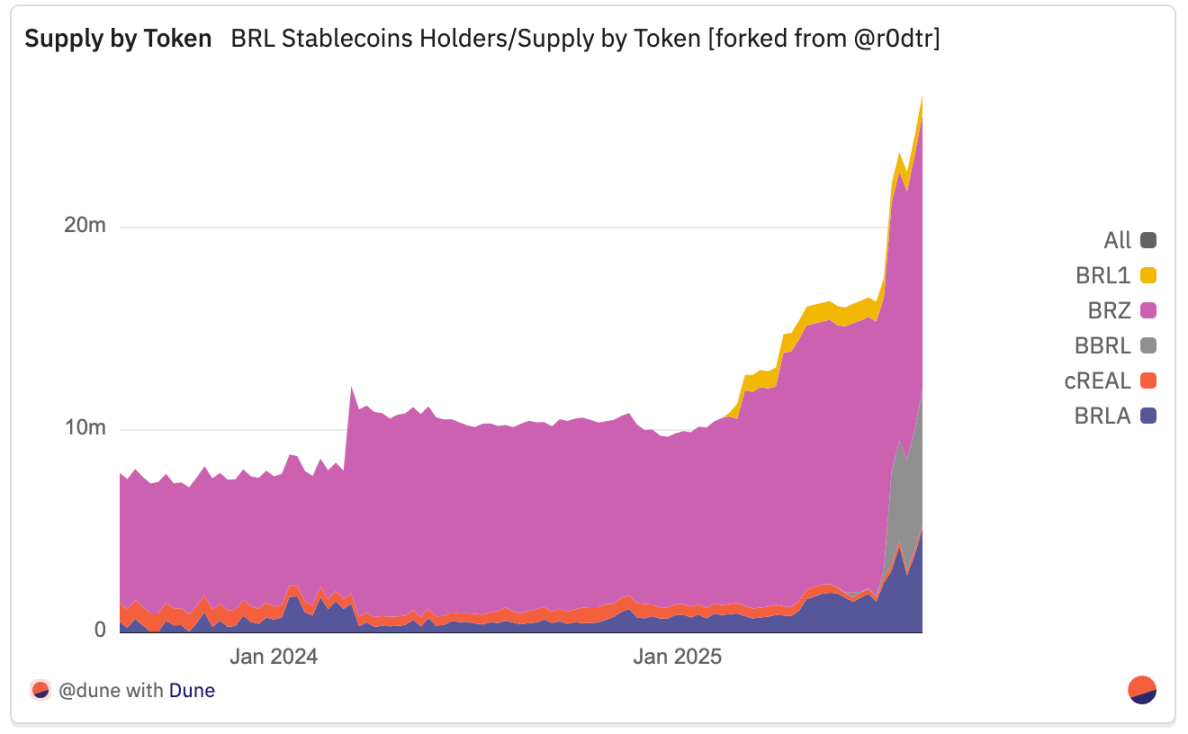
Moreover, the ecosystem evolves quickly—as emphasized in Iporanga Ventures’ latest Real Stablecoin Report, no clear market leader has emerged yet, but deeper project data reveals leaders in specific areas:
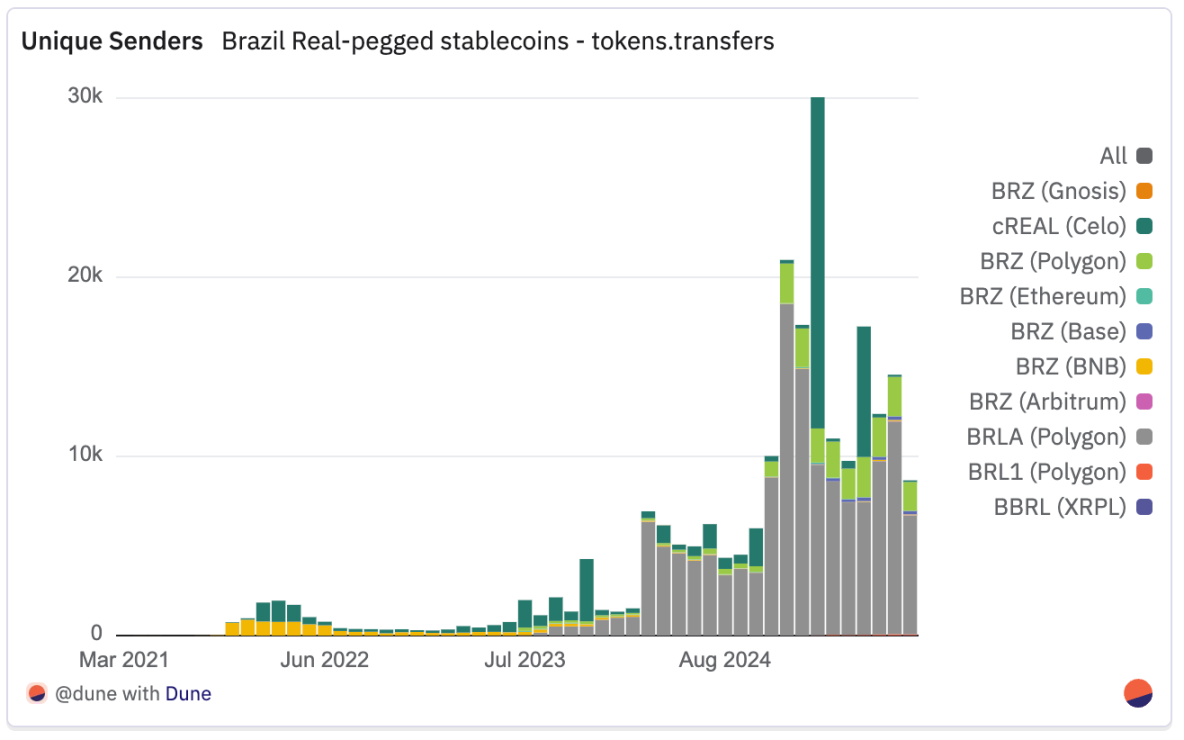
BRLA: Leads in number of independent senders, showing the broadest retail reach.
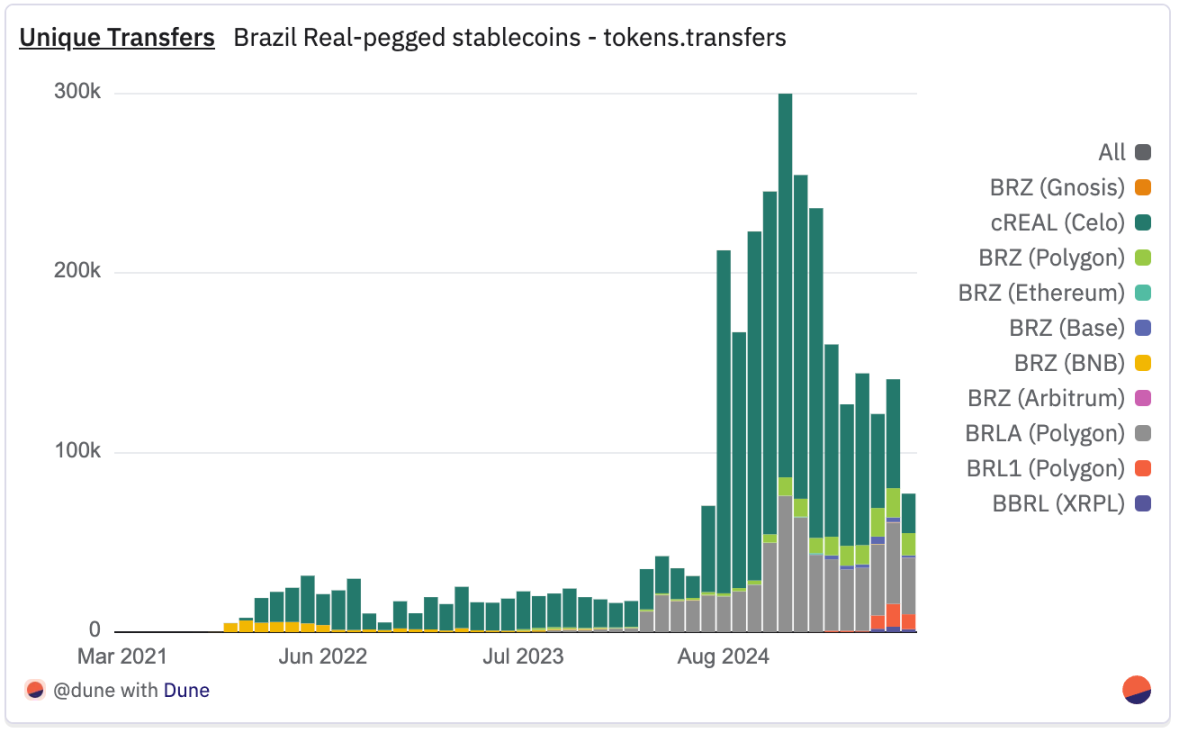
cREAL: Dominates in number of transfers, reflecting early appeal in retail and micro-payment sectors.
In native transfer volume, BRZ was clearly leading until mid-2024, after which cREAL surged to the top in the second half. Early 2025 saw Celo’s transaction volume leadership recede, while BRLA grew steadily. Then in July 2025, BBRL achieved a significant breakthrough with its launch on XRPL, accounting for about 65% of all native transfers—though with relatively few active senders, this surge correlates directly with its network listing.
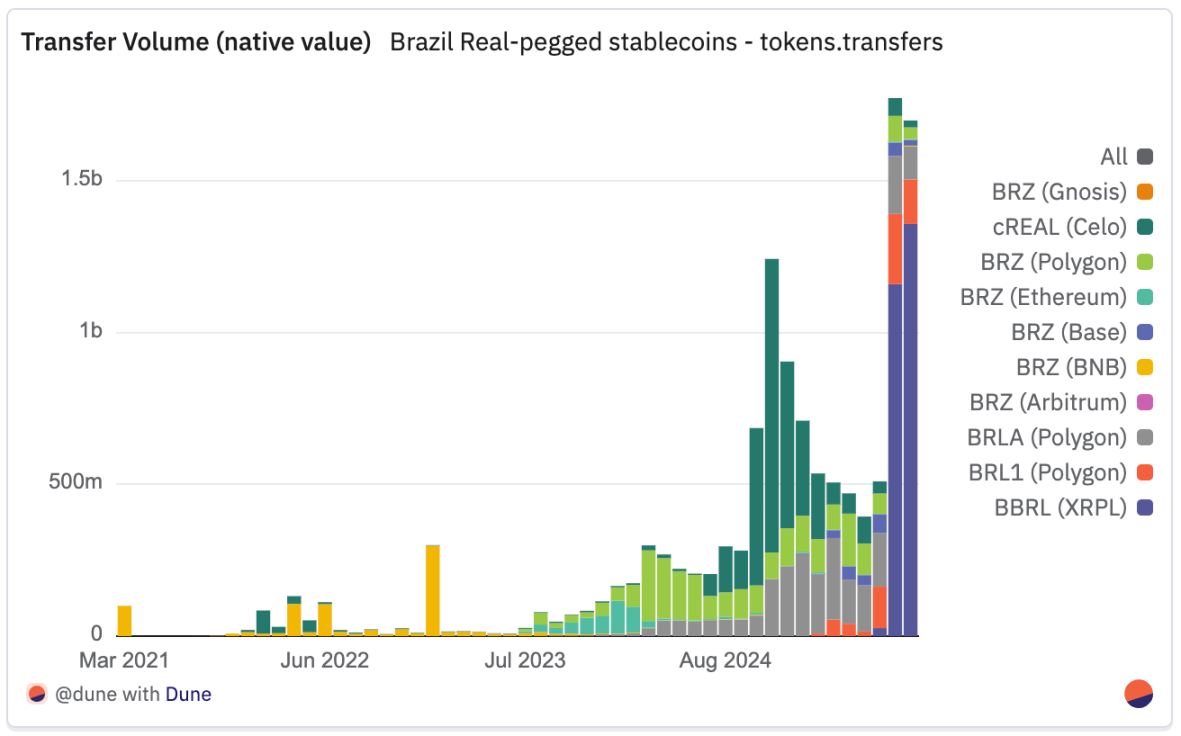
Unlike dollar-pegged stablecoins, whose supply and transfers are concentrated primarily on Ethereum mainnet, real-pegged stablecoins are mainly active on Layer 2s and alternative chains. Polygon is the primary channel, leading in both native transaction volume and active users; in July 2025, Polygon saw about 74,000 transfers involving 14,000 unique users, setting a monthly record of 500 million reais in volume.
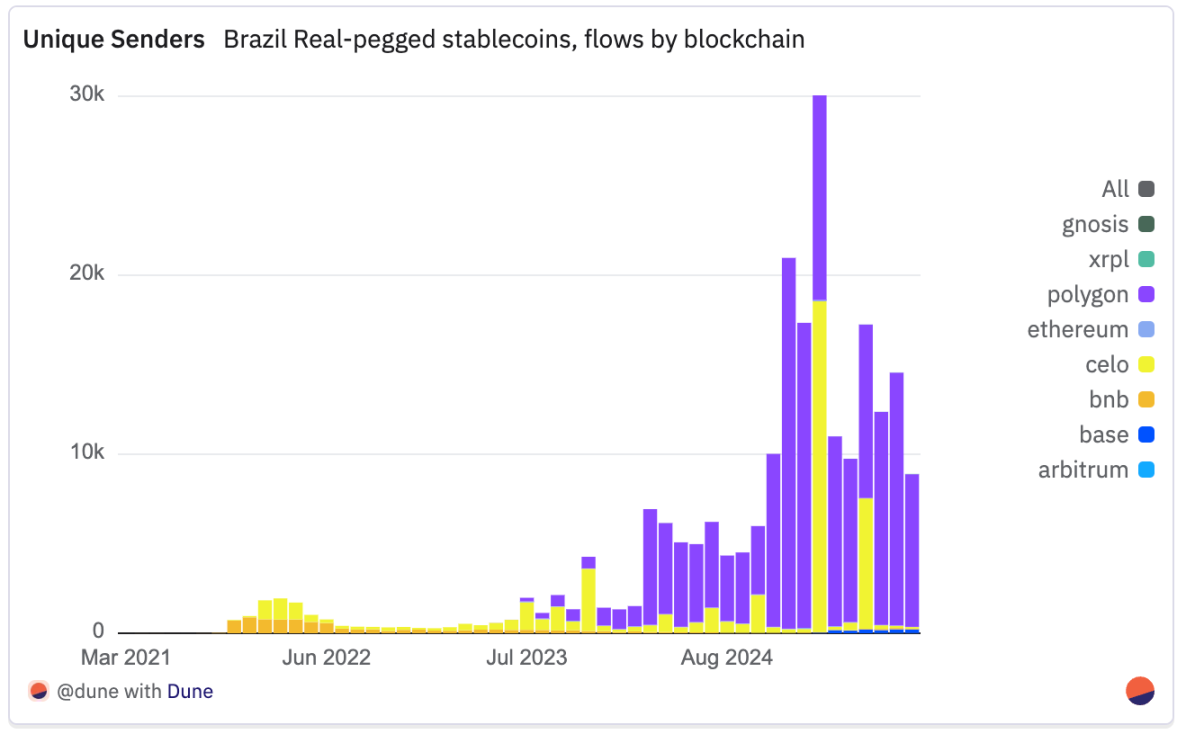
Celo ranks second, historically leading in transfer count, peaking at 213,000 transfers in December 2024 due to cREAL’s early appeal in retail and micro-payments. In 2025, despite a decline in independent senders, Celo maintains substantial volume, reflecting large recurring transaction flows from merchants, aggregators, and treasuries.
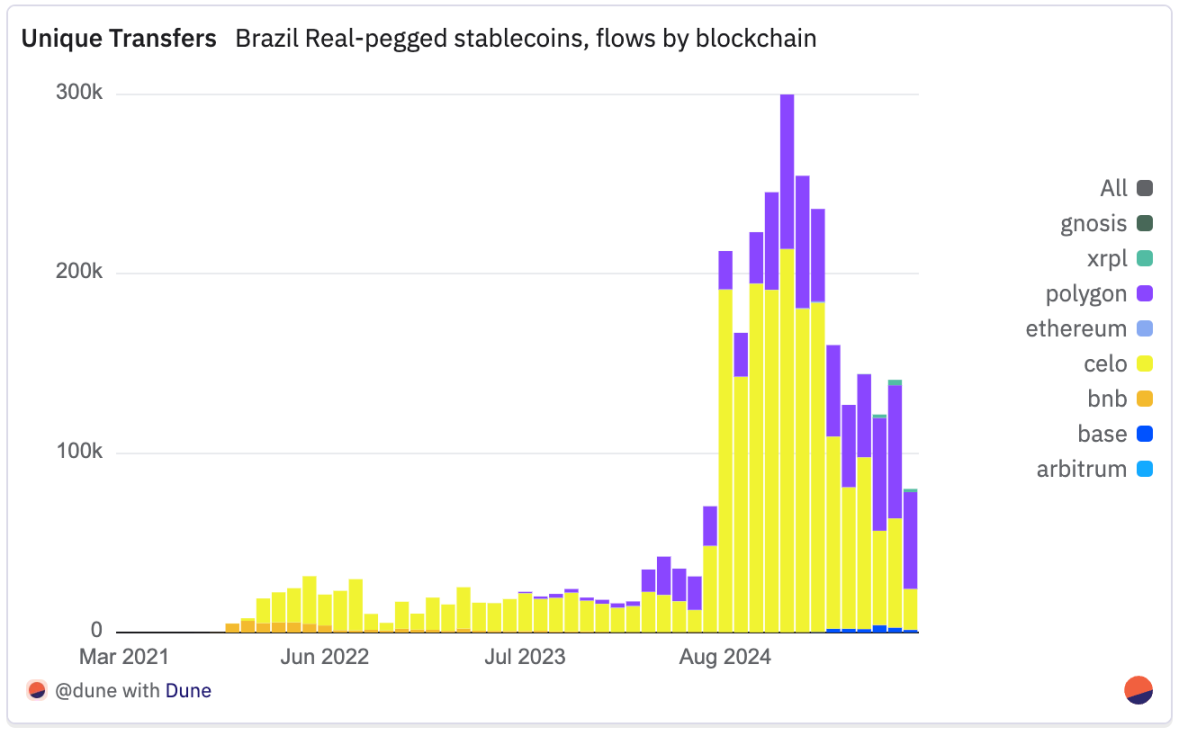
XRPL is a notable newcomer, spiking with BBRL’s July 2025 launch: transfers rose from hundreds in May to about 3,000 in July, with native volume soaring to ~1.16 billion reais, marking the emergence of a high-value channel.
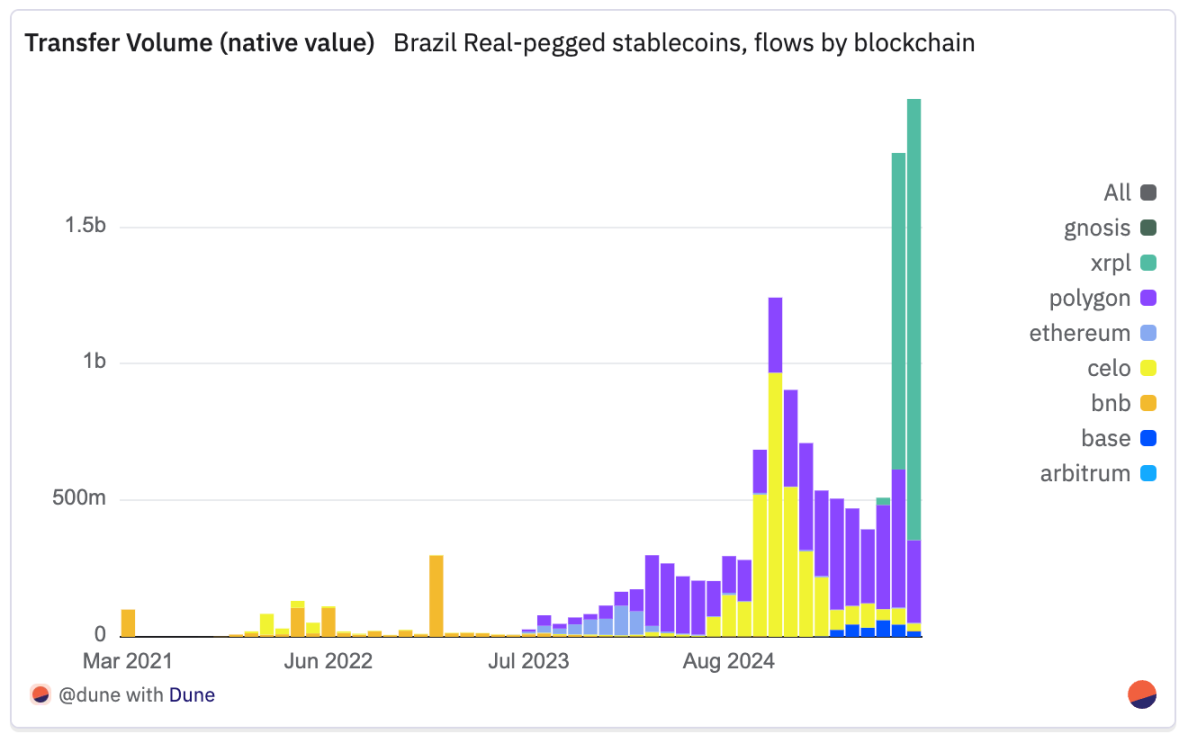
Base showed steady growth in 2025, peaking in June; Binance Chain remains small after a sharp drop in 2022. Ethereum mainnet plays a limited role, occasionally used for large, low-frequency transfers, although BRZ briefly dominated activity on the network from late 2023 to early 2024.
Beyond raw data, Iporanga Ventures’ report shows adoption is driven by practical, high-value use cases. B2B payments lead, with businesses paying overseas suppliers or employees and settling locally via PIX; inbound flows involve converting dollars into real stablecoins for domestic use. They are becoming key infrastructure in Brazil’s tokenized asset ecosystem, enabling on-chain settlements without bank custody. In gig economies and SMEs, stablecoins enable payments, hedging, and capital protection, with merchant integrations like CloudWalk’s BRLC and Mercado Pago’s dollar stablecoin expanding mainstream utility.
While Brazil hosts the most diverse and mature local-currency stablecoin ecosystem, Mexico’s peso-pegged market is coalescing around two major projects—Juno/Bitso’s MXNB and Brale’s MXNe—with different adoption paths. Notably, MXNB has evolved from sporadic issuance in late 2024 to a more stable and widespread application model in 2025.
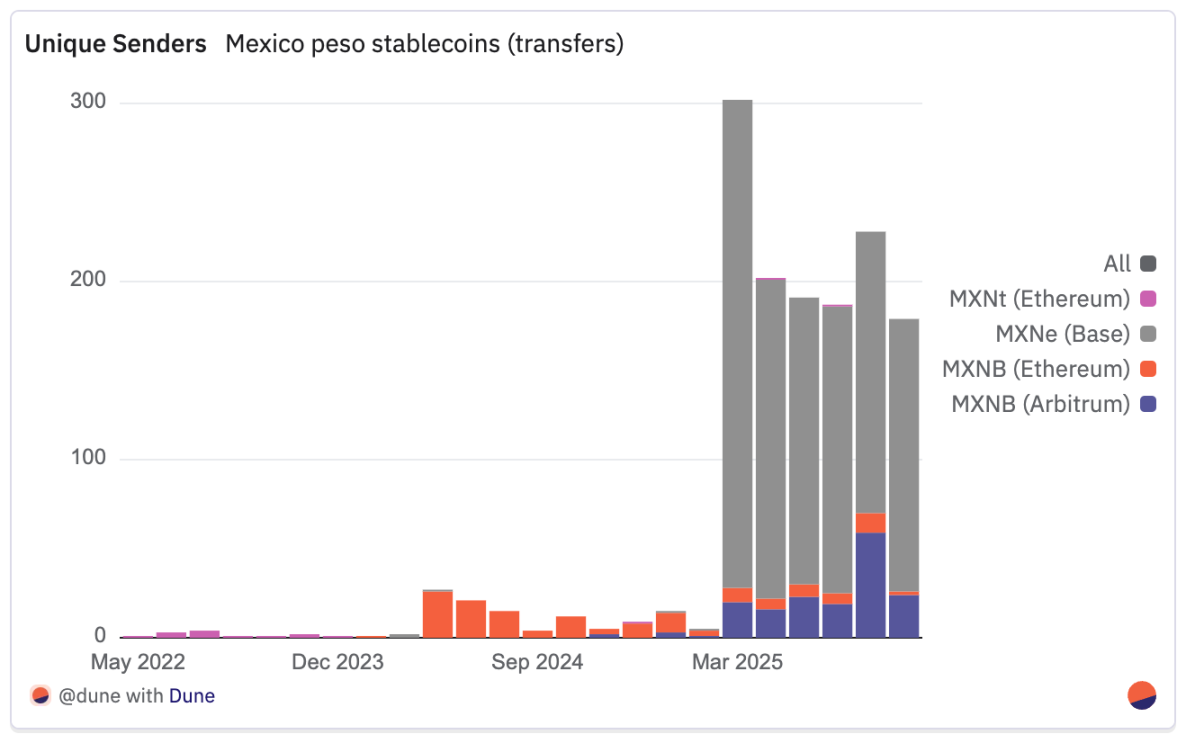
MXNB’s 2025 growth marks a clear shift toward daily use. In July 2025, MXNB recorded 179 transfers involving 70 unique senders—up sharply from 46 transfers and 21 senders a year earlier (339% and 290% YoY growth respectively).
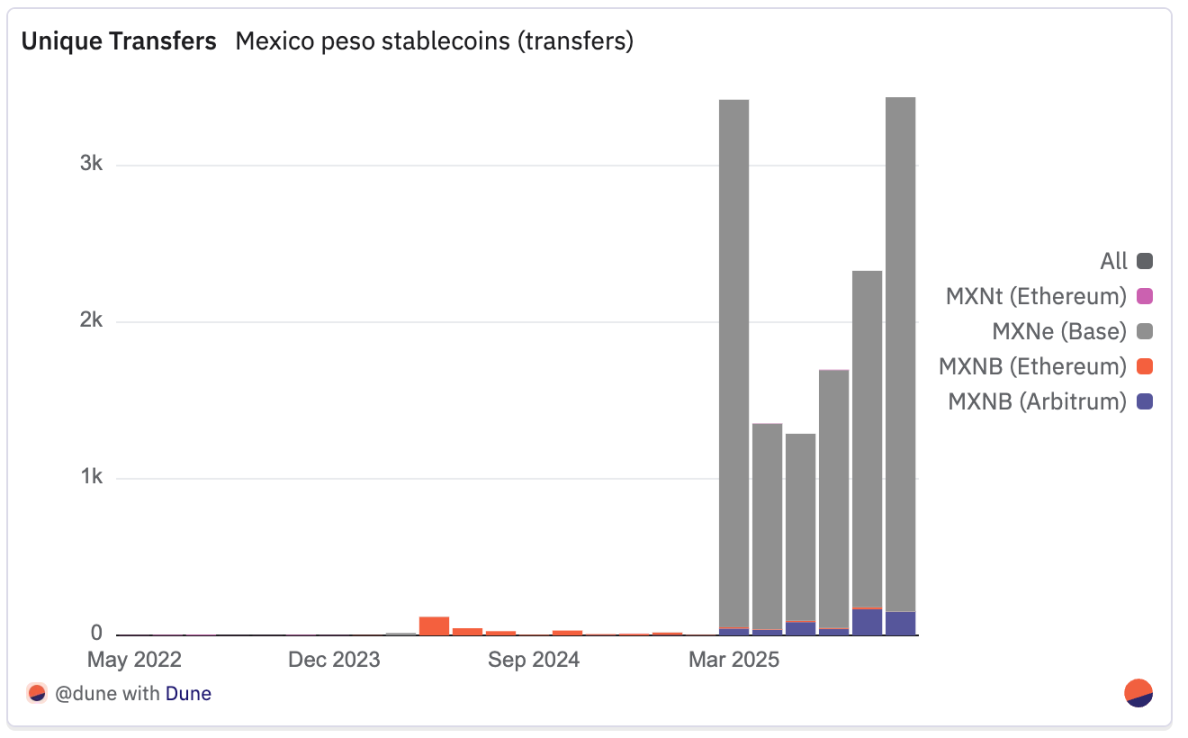
Although transaction volume peaked in January 2025 at 14.5 million pesos (approx. $750k) across relatively few trades, July’s 480k pesos (approx. $25k) came from more micro-transactions. Average transaction size dropped from ~28.7k pesos in July 2024 to 3.6k pesos. This shift coincided with a decisive migration to Arbitrum: about 99% of transfers occurred on Ethereum in 2024, but since Q2 2025, about 94% have shifted to Arbitrum, making the low-cost L2 the default choice.
MXNe under Brale took the opposite path, becoming the highest-volume peso stablecoin operating solely on Base.
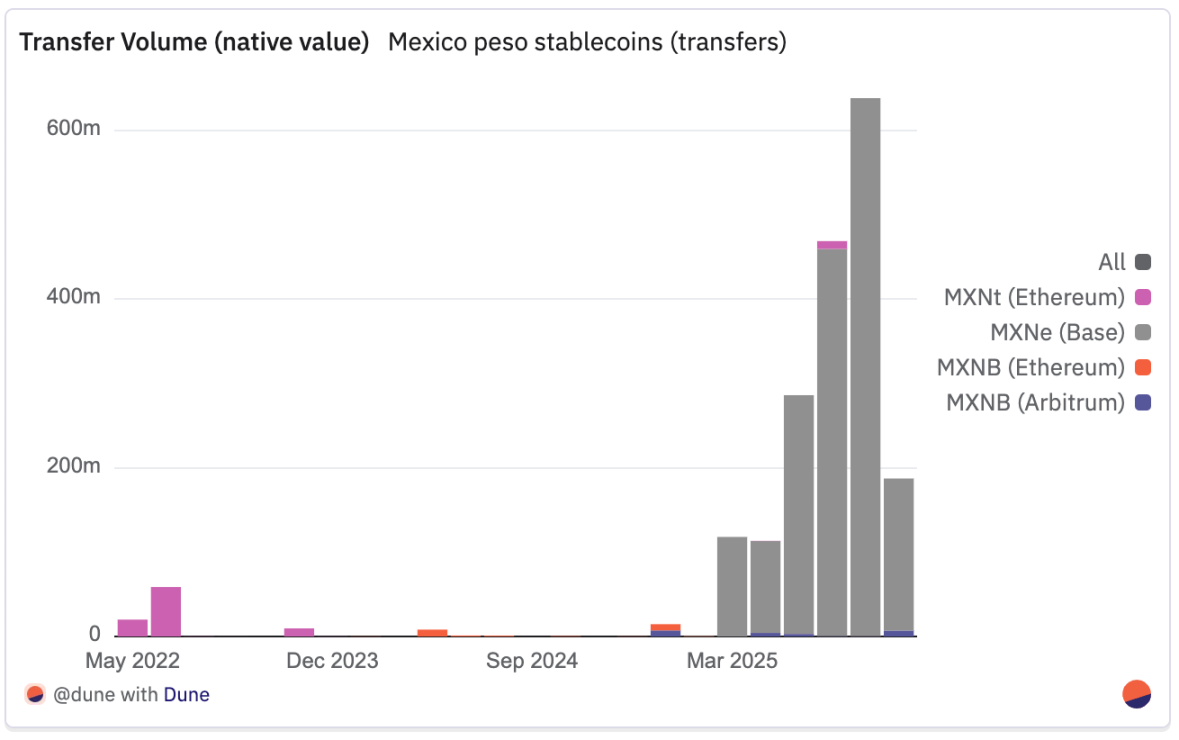
Activity peaked in March 2025 with 3,367 transfers and 274 senders, but even as transaction counts declined, volume rose—setting a record of ~637.7 million pesos in July 2025 from 2,148 transfers and 158 senders. This brings average transaction size close to 297k pesos, suggesting high-value transactions and potential institutional use.
The contrast is stark: MXNB now dominates small retail payments, while MXNe appears focused on large settlements. Compared to Brazil’s more diverse real stablecoin landscape, Mexico’s market remains concentrated on two issuers and fewer chains—yet this hasn’t hindered liquidity growth. Since mid-2025, peso pairs have rapidly climbed to the top of decentralized exchange volumes, signaling maturing market structure.
Decentralized Exchange Liquidity and Trading Patterns
The rise of real- and peso-pegged stablecoins in Latin America extends beyond payments into meaningful decentralized exchange (DEX) liquidity, creating on-chain foreign exchange channels between local and global stablecoins.
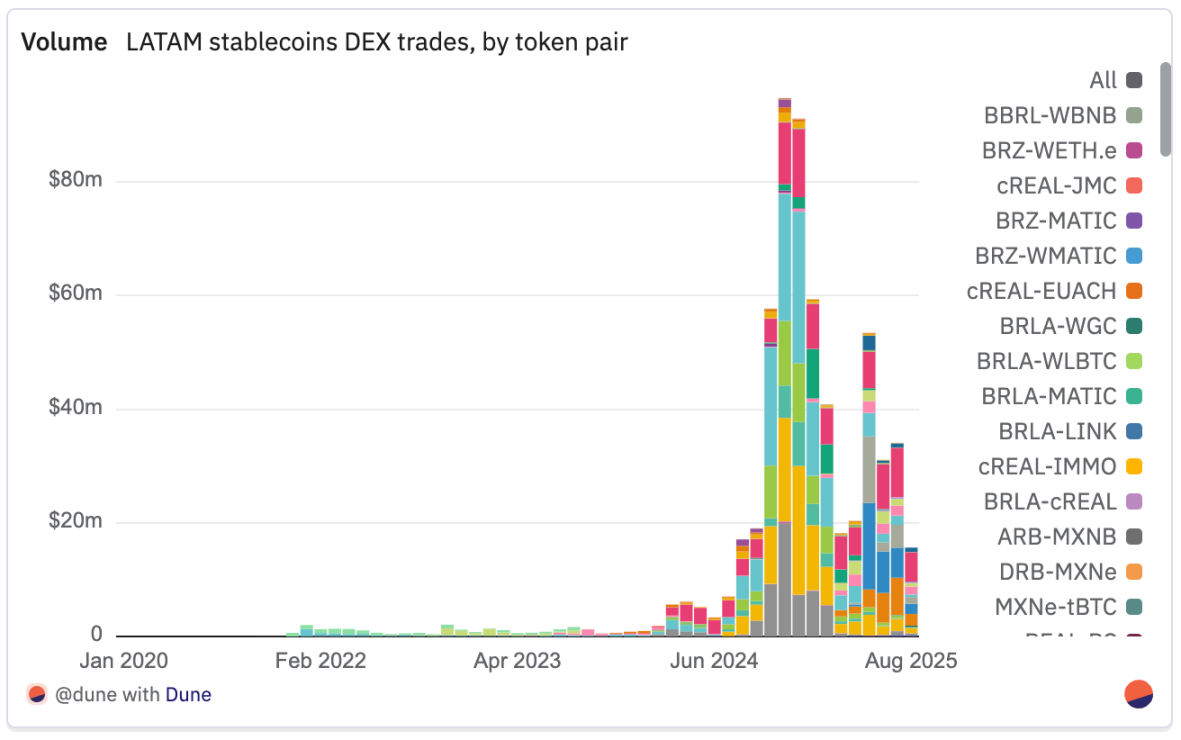
Among real-related assets, cREAL is the main trading hub. Its largest pair, CELO–cREAL, has cumulatively processed ~$126 million, supported by deep liquidity in Celo’s native DEX ecosystem. cREAL also anchors major cross-stablecoin markets—cREAL–USDT ($87.7M), cREAL–cUSD ($59.1M), and non-USD pairs like cEUR–cREAL ($48.6M) and cKES–cREAL ($24.9M)—highlighting its dual role as a real on-ramp and base currency for multi-currency swaps. However, after peaking at $80 million in November 2024 (85% of tracked stablecoin volume that month), cREAL’s monthly DEX volume has steadily declined, reaching $5 million in July 2025—back to July 2024 levels.
BRLA is emerging as a major dollar conduit, with BRLA–USDC ($97.5M) and BRLA–USDT ($21.3M) as its top pairs. Since March 2025, BRLA–USDC has been the top dollar-denominated DEX pair in the dataset, briefly overtaken only by the MXNB pair in May 2025. While BRLA never reached cREAL’s peak volume, in July 2025 BRLA pairs moved $9 million—nearly double cREAL’s volume that month and triple BRLA’s own volume from July 2024.
BRZ remains stable and widely integrated, with liquidity spread across BRZ–USDC ($15.1M), BRZ–USDT ($14.7M), and BRZ–BUSD (~$9.1M). It offers the broadest range of trading pairs among real stablecoins, and though volume trails cREAL and BRLA, it has grown steadily—from $26k in July 2024 to $3M in July 2025, peaking at $4.77M in April.
For peso-pegged stablecoins, MXNB’s top pairs—MXNB–WAVAX ($29.7M) and MXNB–USDC ($18.6M)—surged during a period of high-value transactions and liquidity inflows in May 2025. Since then, peso pairs have remained strong, with three Mexican peso pairs still ranking among the top local stablecoin DEX volumes—indicating this growth isn’t incidental.
MXNe operates only on Base, concentrated in the MXNe–USDC pair (~$18.3M). Its DEX activity grew steadily from $1.13M in March to $6.6M in July 2025, consistent with Base’s push to integrate local stablecoins with deep dollar pools. Interestingly, despite MXNe leading in transfer volume over MXNB, MXNB holds higher DEX volume—suggesting MXNe focuses on high-value transfers and dollar integration, while MXNB prioritizes active on-chain trading.
BRL1 and BBRL have limited DEX volume and minimal cross-stablecoin activity, with only three pairs showing notable activity—the largest (BRLA–BRZ) peaking at ~$400k in April 2025.
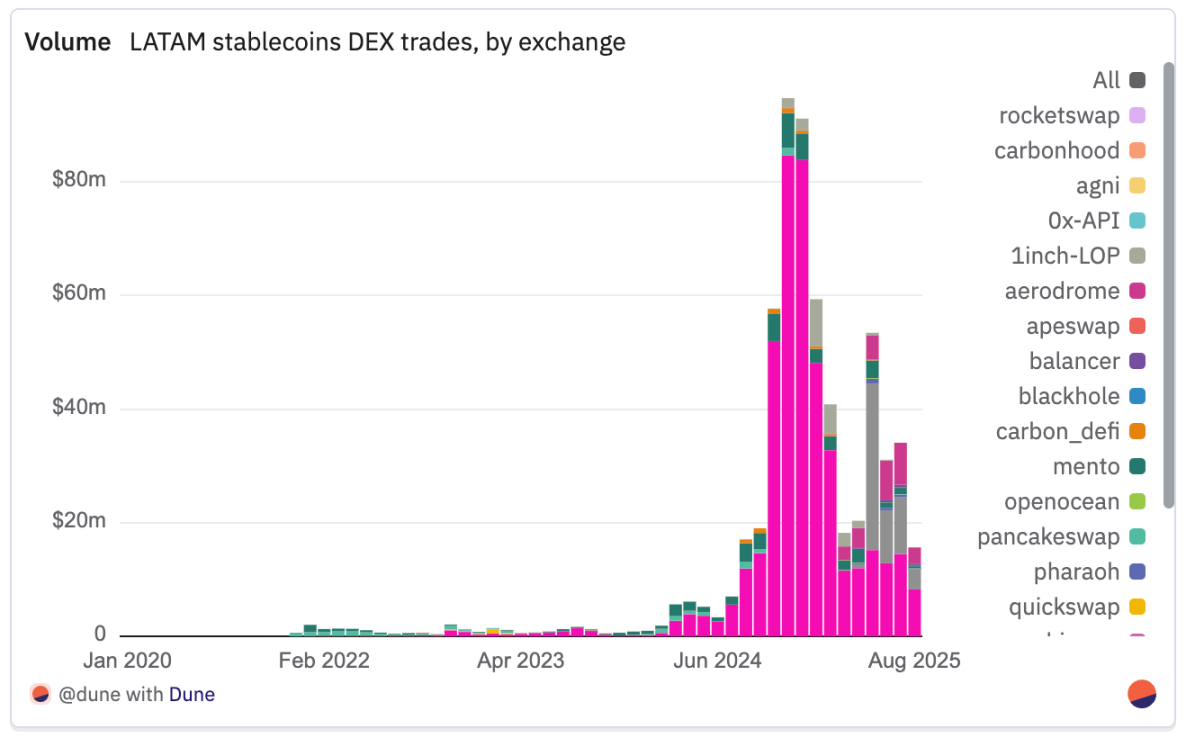
Volume is concentrated on a few platforms, each tied to a specific local stablecoin ecosystem. Uniswap remains the dominant liquidity giant with $426M in total volume, playing a central role in real- and peso-pegged stablecoin markets on Ethereum and L2s. Native DEXs capture decisive shares for their respective stablecoins: Trader Joe ($52.8M) and PancakeSwap ($13.3M) capture most BRZ liquidity on Avalanche and Binance Chain, while Mento ($50.8M) is the dedicated platform for cREAL trading in the Celo ecosystem. 1inch Limit Order Protocol functions differently—more like an aggregator settlement layer than a liquidity host—often appearing in large one-off swaps rather than maintaining deep pools.
One of 2025’s most notable developments is Aerodrome’s rise, with cumulative volume of $25.8M—almost entirely since Q2, driven by MXNe–USDC trading. As a Base-native anchor for local stablecoins, its role mirrors Mento’s in Celo. Smaller but notable platforms like Carbon DeFi ($4.8M), Pharaoh ($1.95M), and Balancer (~$1.8M) serve fragmented or niche cross-asset pools. Overall, absolute local stablecoin liquidity is expanding and increasingly anchored to chain-native DEX infrastructures, with Aerodrome’s rapid 2025 ascent being the clearest example.
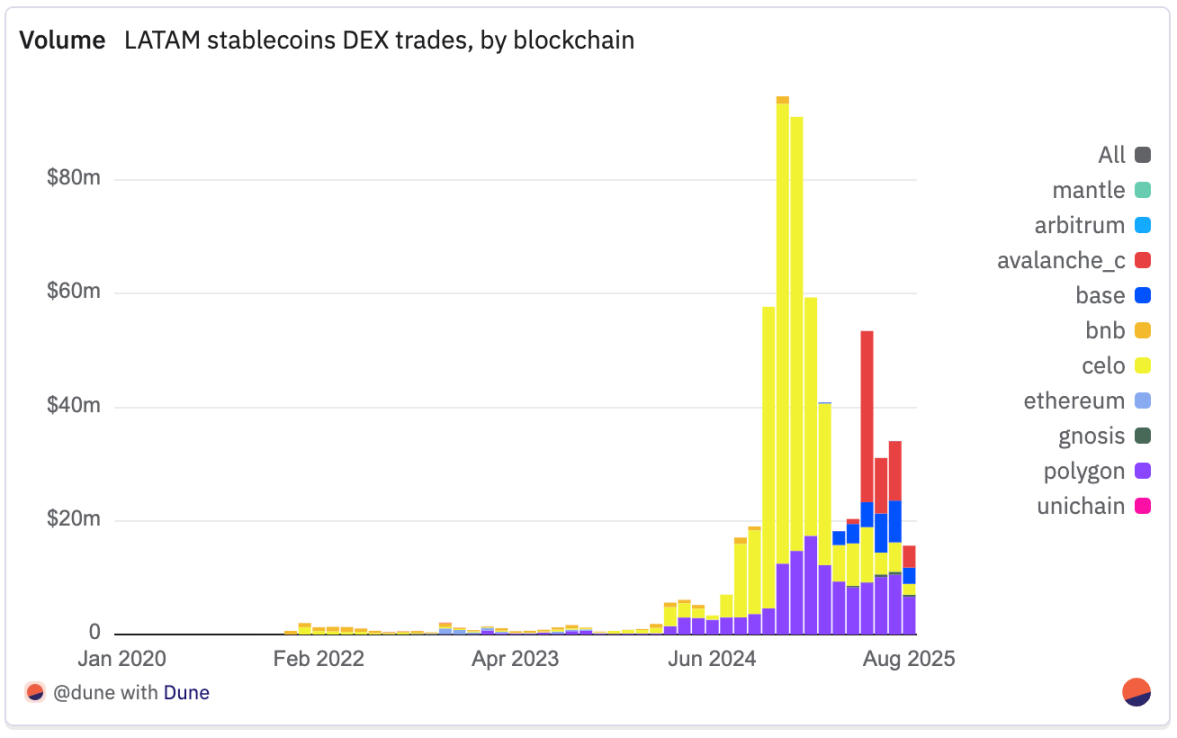
Liquidity patterns remain closely tied to each stablecoin’s home chain and dominant DEX. Celo leads with $363M in total volume, almost entirely driven by cREAL–cUSD/USDC trading on Mento, which consistently ranked top in dollar-denominated volume from July 2024 to February 2025. Polygon follows with $136M, offering diversified real-pegged liquidity—especially BRLA and BRZ—spread across Uniswap and QuickSwap, reflecting its dual role in stablecoin transfers and DeFi/payment integration. Avalanche ranks third with ~$54.8M, boosted in May 2025 by a surge in MXNB–WAVAX trading on Trader Joe (the chain’s largest DEX), with Uniswap, Pharaoh, and 1inch Limit Order Protocol adding liquidity for real and peso markets. Base follows with ~$26.2M, almost entirely driven by MXNe–USDC trading on Aerodrome, aligning with Base’s 2025 push for local stablecoins.
The broader conclusion is clear: local stablecoin DEX liquidity is ecosystem-anchored, with each major chain pairing its flagship asset with a few dominant platforms. The breakout growth cases in 2025—MXNB trading on Trader Joe (Avalanche) and MXNe on Aerodrome (Base)—show how blockchain adoption and exchange dominance can reinforce each other when local stablecoins gain strategic importance.
Beyond Brazil and Mexico, several other Latin American countries have experimented with local-currency stablecoins, though most remain in early growth or limited pilot stages. In Argentina, extreme currency volatility has hindered lasting appeal for peso-pegged tokens like Transfero’s ARZ and Num Finance’s nARS. Colombia has seen multiple stablecoins—including nCOP (Num Finance), cCOP (Celo/Mento), COPM (Minteo), and COPW (Bancolombia)—aimed at remittances and domestic payments, but adoption remains limited. Chile’s CLPD on Base and Peru’s nPEN (Num Finance) and sPEN (Anclap on Stellar) remain niche, with use confined to pilots and specific payment channels. While these projects signal growing regional interest, their volumes remain limited, underscoring how local conditions—especially currency stability and regulatory clarity—determine adoption success.
Summary
Stablecoins are the backbone of Latin America’s on-chain economy. Dollar- and local-currency-pegged stablecoins have replaced volatile assets as the core of crypto adoption, achieving sustained double- and triple-digit growth.
-
In July 2025, USDT and USDC accounted for over 90% of all exchange transfers, up from about 60% in 2022.
-
Brazil leads in number of active local stablecoins and overall activity. Through July 2025, real stablecoins have processed $906 million—nearly matching 2024’s full-year total ($910M)—with an annualized run rate of ~$1.5 billion.
-
In Mexico, peso-pegged stablecoins (MXNB + MXNe) reached ~$34M in July 2025, up from just 1M pesos (~$53k) in July 2024—a ~638x year-on-year increase.
-
Main blockchain channels for local stablecoins: Polygon (BRLA, BRZ), Celo (cREAL), Base (MXNe), and Arbitrum (MXNB).
On/Off Ramps
On/off ramps—including centralized and peer-to-peer models—are critical links between Latin America’s crypto economy and traditional finance. In countries like Argentina, Brazil, and Mexico, users often convert salaries into stablecoins on payday, using crypto not for speculation but as a buffer against volatility.
In Brazil, the government-backed Pix system plays a key role as a fiat-to-crypto on-ramp, enabling instant, low-cost settlements. In Argentina, despite growing formal platforms, informal currency exchange networks known as “cuevas” remain primary off-ramps due to capital controls and economic uncertainty.
Behavioral data from Bitso (2024) shows crypto usage spikes on specific days and times aligned with pay cycles. This pattern reinforces crypto’s role as a practical financial tool for preserving value in turbulent environments.
New players like PayDece, zkP2P, and Takenos are innovating at the infrastructure level, building non-custodial, mobile-first solutions to serve underserved populations and enhance financial sovereignty. Their emergence signals a shift toward more decentralized, censorship-resistant channels.
For the region’s growing cohort of freelancers and remote workers, crypto off-ramps are becoming essential components of the ecosystem, enabling receipt of international payments in crypto—especially stablecoins—bypassing unstable local currencies and limited traditional banking (Frontera, 2024).
ZKP2P
ZKP2P is a decentralized, minimally trusted peer-to-peer on/off ramp protocol using advanced cryptographic proofs like zkEmail and zkTLS to enable direct fiat-to-crypto conversion without intermediaries, fees, or additional verification. Launched in late 2023 and upgraded to V2 in 2024, it currently supports multi-chain swaps (Ethereum, Solana, Base, Polygon) and various tokens—from USDC, ETH, to local favorites and even meme coins.
In Argentina, ZKP2P integrates with Mercado Pago, enabling near-instant ARS-to-USDC conversion.
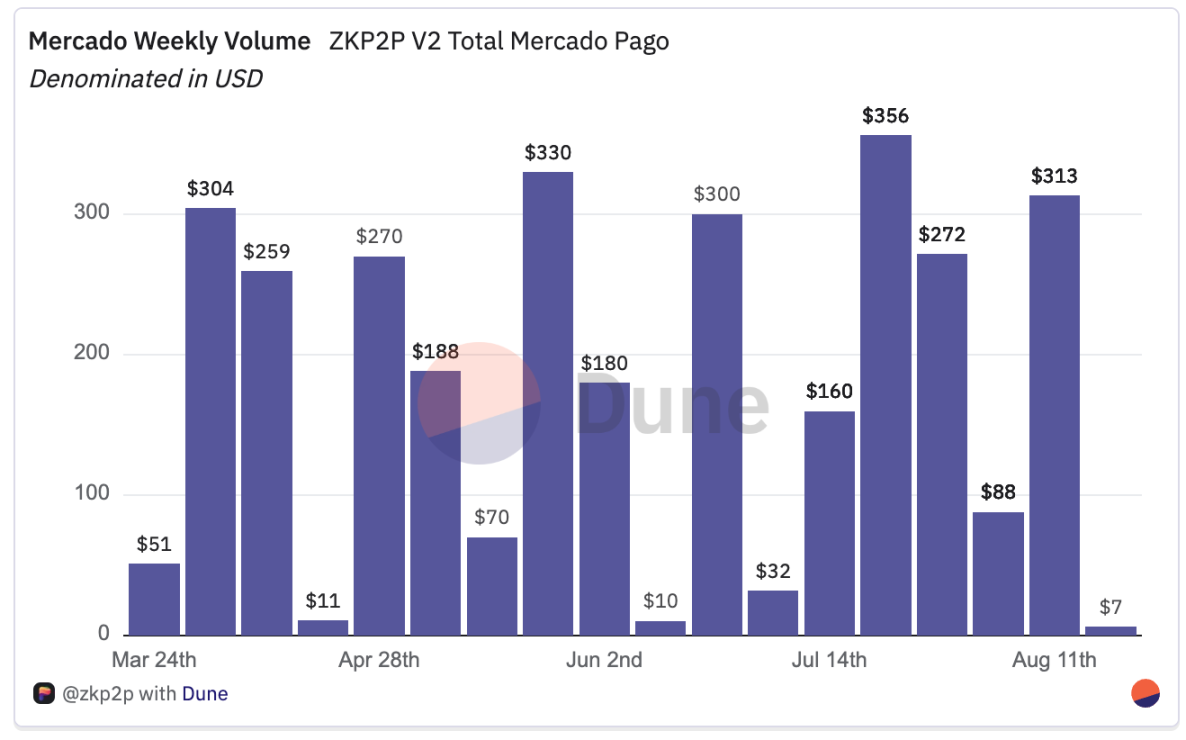
Since launch, Latin America-focused channels have processed over 100 on-ramps totaling over $3,000 in USDC, averaging $30 per transaction, ranging from $1 to $356.
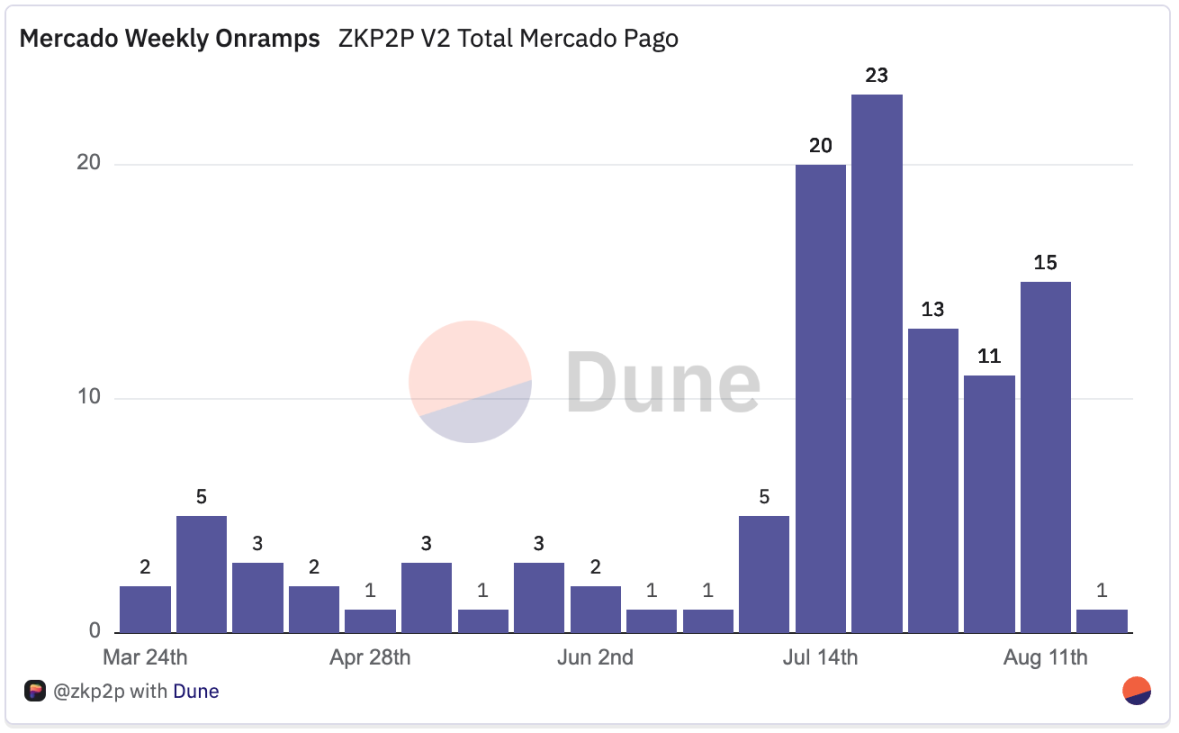
By P2P standards, settlement is fast, with a median time of ~30 minutes in the past week.
Globally, ZKP2P sees stronger traction, completing 4,861 on-ramps in V2, processing over $1.9M (total $2.08M across V1 and V2).
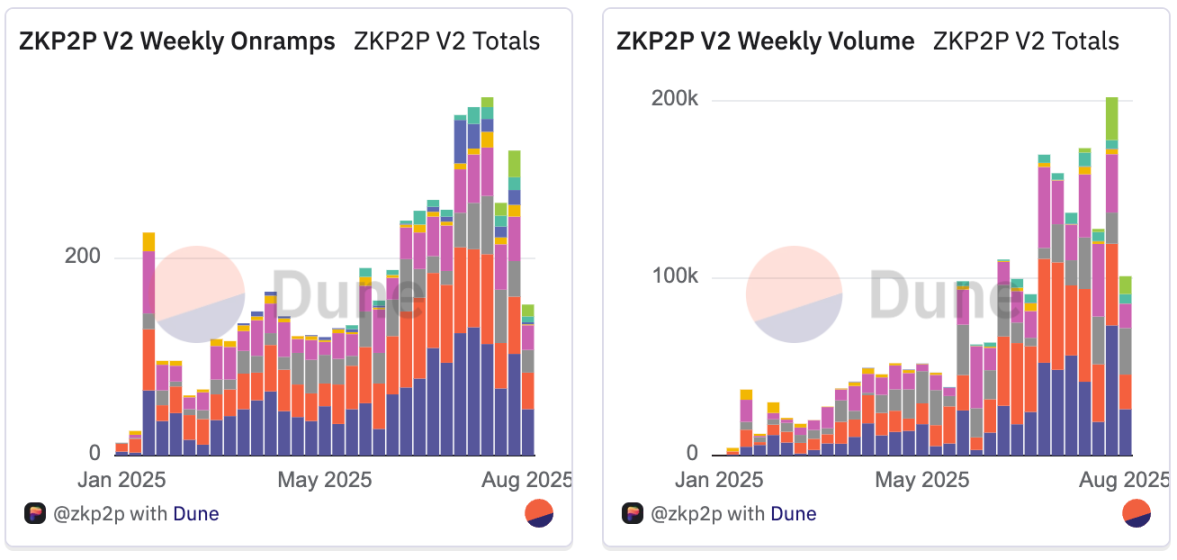
Total liquidity across all payment channels stands at $114k, with major channels including Revolut (total volume $470k), Wise ($390k), Cash App ($327k), and Venmo ($559k). Global average on/off ramp transaction size is $385—over 12x the Latin American average—highlighting significant growth potential as the region scales toward global patterns.
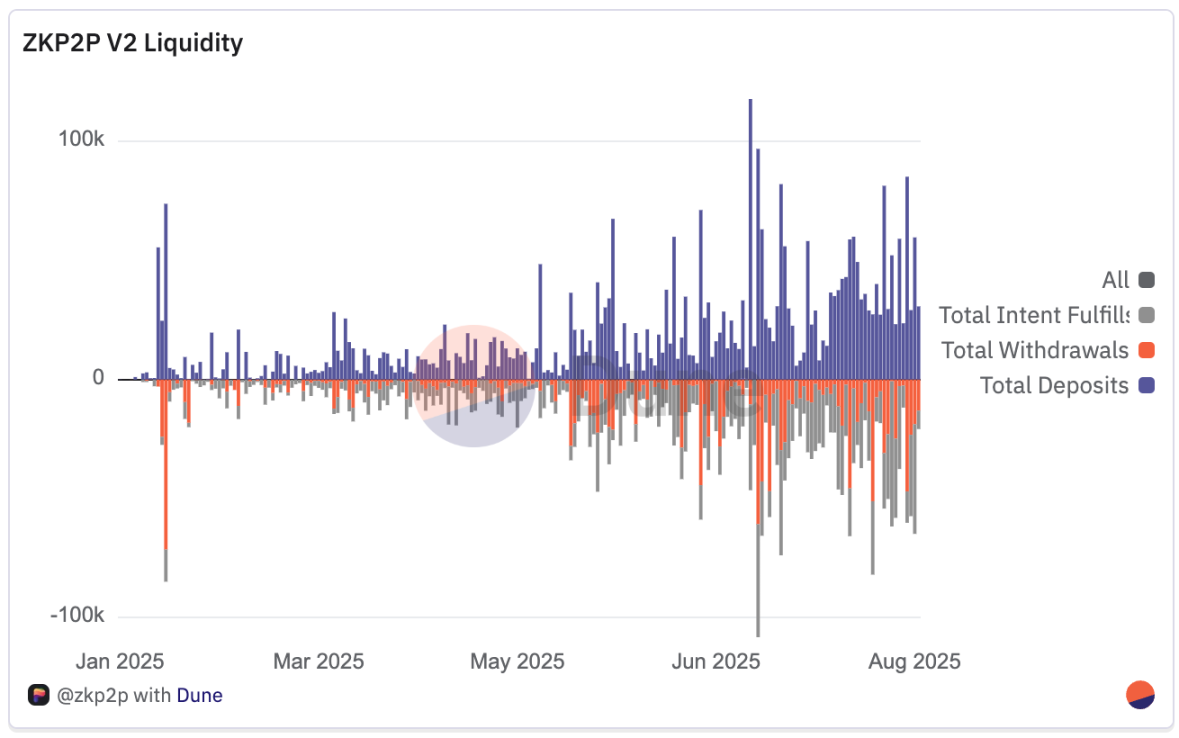
Though still early in Latin America, ZKP2P is steadily gaining traction, especially in low-value, high-frequency use cases. Upcoming integrations with local rails like Brazil’s PIX could expand its role as a permissionless bridge between local currencies and crypto. A standout case is the integration of Daimo Pay × ZKP2P × World Account, converting WLD from Worldcoin into USDC, bridging to Base, and listing on ZKP2P, settling directly in the World App in about 15 minutes. This model enables faster, cheaper settlements, demonstrating how cross-chain, non-custodial off-ramps can turn crypto from a speculative asset into spendable income.
PayDece
PayDece is a peer-to-peer crypto on-ramp platform built on Web3 principles—decentralization, privacy, and self-custody. Using smart contracts, it enables secure, anonymous transactions without centralized intermediaries or mandatory KYC.
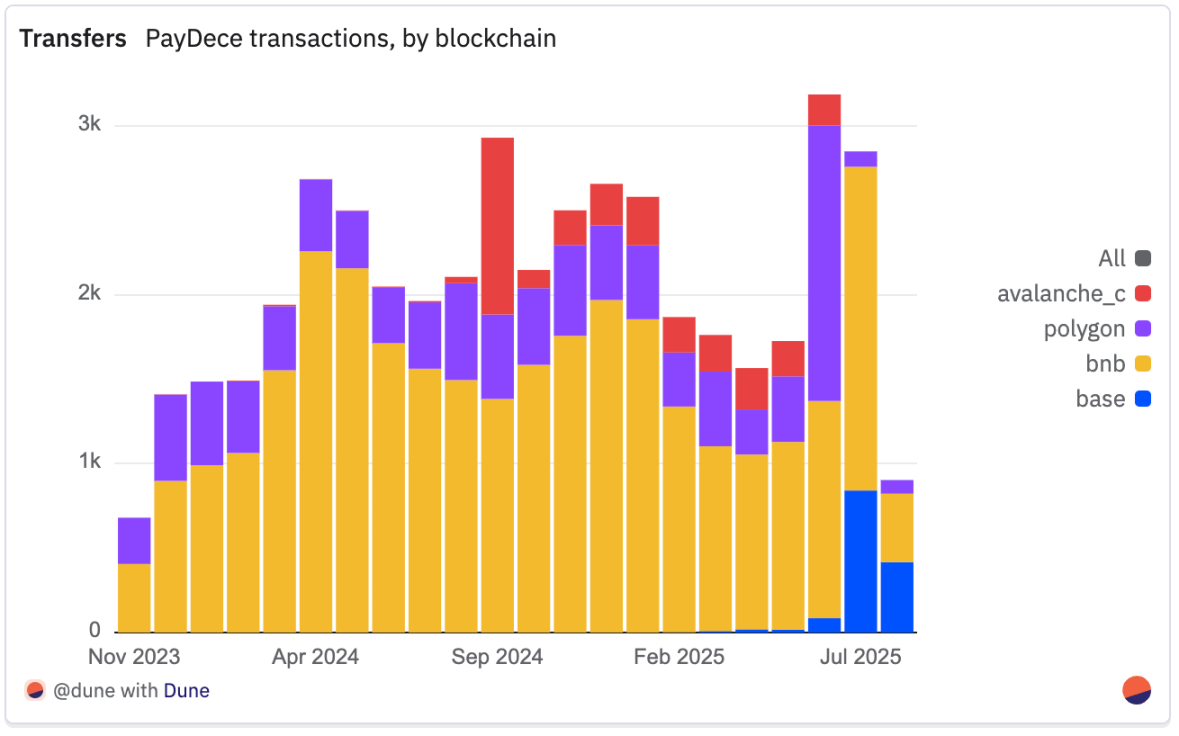
Across all supported chains, PayDece has processed over 44,000 transfers involving ~15,000 unique users. Activity centers on stablecoins—USDT ($19.17M) and USDC ($7.74M)—with Binance Chain leading in blockchain usage ($19.5M), followed by Polygon ($6.3M), Avalanche ($1.68M), and Base ($
Join TechFlow official community to stay tuned
Telegram:https://t.me/TechFlowDaily
X (Twitter):https://x.com/TechFlowPost
X (Twitter) EN:https://x.com/BlockFlow_News