World's most "profitable" company changes hands: a crypto team of 11 people, generating $100 million in revenue per person
TechFlow Selected TechFlow Selected
World's most "profitable" company changes hands: a crypto team of 11 people, generating $100 million in revenue per person
The project is entirely self-funded, rejects venture capital, maintains community-led ownership, and enables user co-creation through token airdrop distribution.
 Navigating Web3 tides with focused insights
Author: Zen, PANews
The title of the world's most profitable company per capita has changed hands, but it remains a crypto project. Recently, HyperliquidFR claimed that decentralized exchange Hyperliquid surpassed Tether, OnlyFans, Nvidia, and Apple by generating $102.4 million in annual revenue per employee, ranking first globally in revenue per employee. Previously, stablecoin issuer Tether held the top spot with over $90 million in revenue per employee. According to DefiLlama data, Hyperliquid has only 11 core team members, with estimated annual revenue of approximately $1.127 billion.
In the cryptocurrency industry, filled with rags-to-riches myths, it is not uncommon for project founders—especially young ones—to become overnight crypto millionaires. However, cases like Jeff Yan and his creation Hyperliquid, achieving such scale and efficiency with a small team, remain rare. A closer look at Jeff’s family background, education, and career reveals that Hyperliquid’s emergence and development path may not be accidental.
From Top-Tier "Exam Prodigy" to Founder of a Decentralized Exchange
Jeff Yan was born and raised in Palo Alto, California. His parents are Chinese immigrants. As a teenager, Jeff demonstrated exceptional talent in mathematics and physics. In 2012, he won a silver medal at the 43rd International Physics Olympiad (IPhO), having studied physics intensely for only about a year. In 2013, Jeff participated again in the 44th International Physics Olympiad, ultimately winning a gold medal and ranking 24th overall—a first for any graduate from his alma mater, Palo Alto High School, in this prestigious competition.
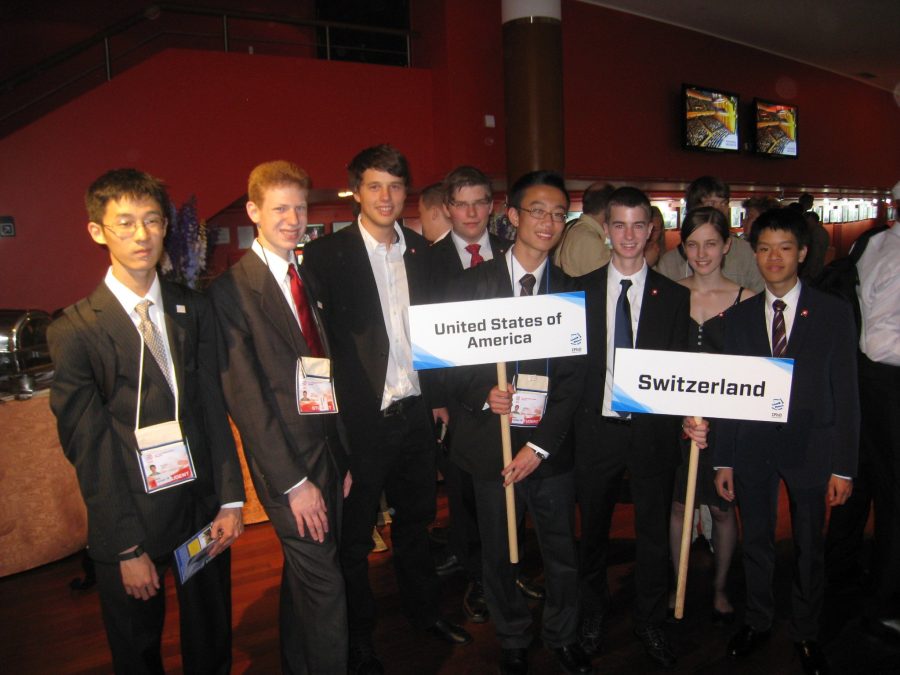
Jeff Yan (4th from right) with other members of the U.S. and Swiss teams
As a top-tier "exam prodigy," Jeff was admitted to Harvard University, where he majored in mathematics and computer science. After graduation, he joined high-frequency trading giant Hudson River Trading (HRT) as a quantitative trader. At HRT, he conducted in-depth research on the U.S. stock market, designing low-latency systems capable of executing thousands of trades per second, and gained deep insights into how market makers provide liquidity and how different trading flows impact market efficiency.
In 2018, Jeff became intrigued by the burgeoning cryptocurrency industry. He attempted to build an Ethereum Layer-2 prediction market platform, but the project failed due to regulatory uncertainty, limited application scope, and lack of users. Learning from this experience, he refocused on trading. Leveraging his professional expertise, he founded Chameleon Trading, a crypto market-making firm, in early 2020. During the bull market, Chameleon Trading rapidly grew into one of the largest market makers on centralized exchanges.
Then in November 2022, the collapse of FTX shocked the world. "People realized that crypto was supposed to be a fun game, until something terrible happened," Jeff recalled. Witnessing billions of dollars vanish overnight due to users trusting centralized platforms, many saw this as a signal to quit crypto entirely, causing the industry to enter a prolonged downturn. Yet, Jeff saw both challenge and opportunity.
Jeff realized that ordinary users would place greater emphasis on self-custody and prefer to trade crypto assets in a decentralized manner. At the same time, he noticed a lack of trading platforms that balanced decentralization principles with high user experience. Based on this insight, Hyperliquid’s core concept emerged: building a fully on-chain, high-performance perpetual contract exchange that allows users to retain control of their assets while enjoying a trading experience close to that of centralized exchanges—Hyperliquid can theoretically process 200,000 transactions per second and supports multi-market trading with high leverage.
Self-Funding and Lean Teams: Jeff Yan's Small-Team Strategy
In traditional startup narratives, once a team demonstrates unicorn potential, they typically seek funding and resources from venture capital firms and rapidly expand their workforce. This script is rarely deviated from—even in the decentralized Web3 and cryptocurrency space. Jeff and Hyperliquid are the exception.
Jeff emphasized that Hyperliquid was developed entirely with self-raised funds and never accepted venture capital. He stated that he didn't start the company for wealth, viewing money merely as "a number." What matters more to him is creating valuable and meaningful products. Jeff believes that real progress lies in delivering tangible value to users rather than chasing milestone-based publicity through repeated VC fundraising.
Therefore, from day one, Hyperliquid embraced the principle of "community-owned ownership": distributing tokens directly to users based on trading activity, ensuring venture capitalists never gain control over the network. As Jeff put it, "Allowing VCs to hold large stakes in a decentralized network becomes a 'scar on the network.'" His vision is to build a financial system that is "built by users, for users."
In team building, Hyperliquid has consistently followed a "small and elite" strategy. The core team currently consists of only 11 people, about half of whom are engineers, with the rest handling product and operations. The team maintains a flat, efficient work culture. While Jeff grants his team full autonomy in management, he remains deeply involved in technical matters and stays informed on all developments. Hyperliquid operates with minimal overhead, without a dedicated marketing department or traditional business development team.
In the early days of the startup, Jeff and his teammates navigated various challenges together, forming strong synergy. This stems from Jeff’s strict "perfectionist" approach to hiring. He openly admits to being highly selective about every new hire, believing that "hiring the wrong person is worse than hiring no one at all." Although he is open to modest team expansion as the business grows, he insists on bringing in only those who are "exceptionally intelligent, driven, and genuinely passionate about the mission."
In an interview, Jeff said: "We're not like common teams in the crypto space who have grand long-term visions, raise large amounts of funding, and publish multi-year roadmaps. I think that approach is cool, but it's not our strength." Jeff claims the team focuses instead on the next immediate steps, confident they are moving in the right direction, without drafting plans containing hundreds of steps.
How Did Hyperliquid Rise?
Hyperliquid’s technical architecture differs completely from traditional DEXs. It is a fully on-chain matching decentralized perpetual exchange, unlike AMM models such as Uniswap. The Hyperliquid team built a high-performance Layer-1 blockchain (also named "Hyperliquid"), enabling transaction throughput comparable to CEX levels. On this foundation, Hyperliquid实现了 a complete order book system—limit orders, executions, cancellations, and liquidations all occur transparently on-chain and can be finalized within a single block. Analysis indicates that by June 2025, Hyperliquid had captured approximately 78% of the on-chain derivatives market, with daily trading volume exceeding $5.5 billion.
Hyperliquid’s matching engine also introduces unique rules: the platform deliberately lowers the priority of high-frequency taker orders to give market makers time to update quotes. This encourages tighter bid-ask spreads, providing better pricing for traders. Under this time-and-price-priority and strategically smoothed matching mechanism, all trades execute on-chain with full transparency for users. These sophisticated matching rules combined with decentralized execution have made Hyperliquid particularly popular among professional traders.
Regarding liquidity, Hyperliquid established a protocol-level HLP: a hybrid pool combining market-making and clearing functions. The HLP treasury is owned by the protocol, and any user can deposit funds to participate in market making. When there is no match in the order book, HLP acts as the counterparty to fulfill trades. Jeff emphasized that apart from HLP, Hyperliquid has no private agreements or financial arrangements with any market-making institutions. In other words, unlike some centralized exchanges, Hyperliquid does not designate internal pools or market makers; the sole source of liquidity comes from the open HLP—a design choice aimed at ensuring fairness and transparency.
Additionally, Hyperliquid’s decentralized design extends to its tokenomics. The native token HYPE serves both as a governance tool and, when staked, reduces trading fees. It also features a listing buyback mechanism to capture value. When HYPE launched in November 2024, Hyperliquid airdropped 31% of the tokens to around 94,000 users—one of the largest user-centric distributions in recent years.
From launch, Hyperliquid experienced explosive growth. Thanks to its fully on-chain transparency, it successfully attracted participation from major crypto whales and top-tier institutions. All trades, positions, and margin data are publicly verifiable. This unprecedented transparency not only built a strong foundation of trust but also became its most distinctive feature. Frequent activity from renowned trading firms and major capital players brought substantial liquidity and, implicitly, "credibility endorsement," enabling Hyperliquid to rise rapidly in the derivatives space.
When launched in 2023, without massive marketing campaigns or KOL promotions, Hyperliquid surpassed $1 billion in daily trading volume in under 100 days. A DWF research article reported that in July 2025, Hyperliquid achieved approximately $320 billion in crypto perpetual trading volume and $86.6 million in protocol revenue—both record highs. On August 15, Hyperliquidannounced a new milestone: 24-hour trading volume reached $29 billion, with fees totaling $7.7 million.
According to a new report by data provider RedStone, within just one year, Hyperliquid has captured over 80% of the decentralized perpetual contracts market, rivaling some of the largest centralized exchanges. These astonishing figures have led the community to dub Hyperliquid the "on-chain Binance"—all achieved by a team of just over ten people and with zero marketing budget.
Join TechFlow official community to stay tuned
Telegram:https://t.me/TechFlowDaily
X (Twitter):https://x.com/TechFlowPost
X (Twitter) EN:https://x.com/BlockFlow_News
 PANews