Decoding Flipr: Bringing prediction markets to the mainstream on X, where every trade is a tweet
TechFlow Selected TechFlow Selected
Decoding Flipr: Bringing prediction markets to the mainstream on X, where every trade is a tweet
Prediction trading bots on X platform turn betting into social content.
 Navigating Web3 tides with focused insights
Author: Zoomer Oracle
Translation: TechFlow
Prediction markets are gradually gaining attention, but most platforms remain difficult to access and disconnected from everyday internet usage. Flipr takes a different approach: users can trade directly on X, turning every bet into shareable, interactive, and rebuttable content.
By making trades public by default, Flipr transforms market participation into a social experience. Trade visibility becomes a core feature—users don't just make predictions; they showcase them and draw others into the conversation.
This design creates a powerful feedback loop: users place bets, those bets appear in timelines, and others can copy, challenge, or quote them. This interaction attracts more users and more trading, generating higher fees and rewards. Flipr's product grows through public use.
How It Works
Flipr is currently integrated with Polymarket and will soon connect to Kalshi. Unlike traditional platforms, Flipr does not build its own interface—it uses X as the front end. Users simply tag @fliprbot in a post and specify their position and amount, for example: @fliprbot bet $100 yes.
This simple setup reduces barriers for new users—no need to visit a website, connect a wallet, or learn a new interface. Users can deposit funds, trade, and track results entirely within X.
This approach also supports more expressive forms of trading. Users interact in real time, build reputations, and publicly share their views. As more content flows into tradable posts, product discovery and usage become easier.
Mindshare Mining Campaign
On July 5, 2025, Flipr launched Mindshare Mining, a six-week campaign rewarding users who trade and post about Flipr on X. A total of 10 million FLIPR tokens will be distributed over the period, with weekly rewards allocated based on a scoring system.
Unlike traditional reward programs that focus solely on trading volume, Mindshare Mining tracks five key metrics:
-
Trade Size: Larger trades earn more points;
-
Timing: Posts published earlier in the week carry higher value;
-
Consistency: Reward multipliers increase for sustained posting;
-
Spam Control: Excessive posting is penalized;
-
Engagement: Higher interaction improves scores.
This design encourages meaningful activity. A few well-timed, high-quality trades and posts may outperform sheer volume. The system aims to reward quality content, not simple engagement farming or spam. Flipr has also purchased 1% of the token supply on the open market and is redistributing it to the community via the Mindshare Mining campaign.
Industry Growth
To better understand Flipr’s potential, consider these industry benchmarks:
Polymarket
-
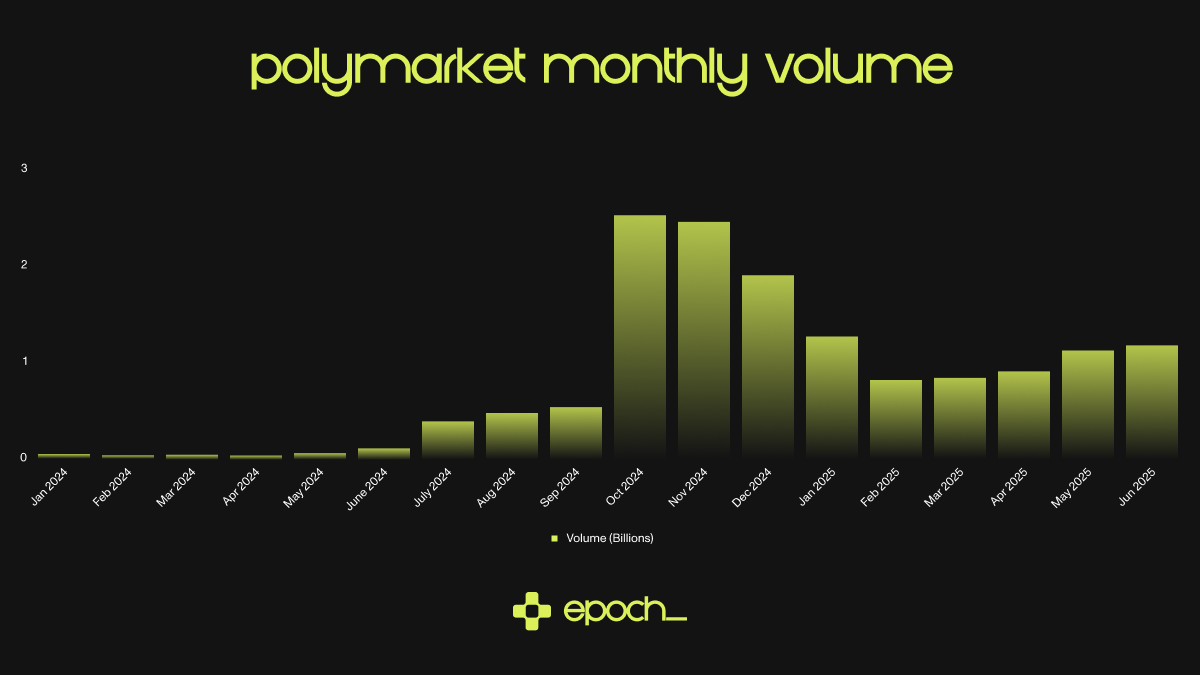
Over $9 billion in trading volume in 2024, peaking at $2.63 billion during the U.S. election;
-
Approximately 314,500 active traders in December 2024;
-
Continues to dominate, holding over 70% market share among crypto-native prediction platforms;
-
Generated $1.1 billion in trading volume in May 2025 alone, indicating consistent market activity;
-
Total funding of $74 million, with a company valuation reaching $1 billion.
Kalshi
-
Trading volume grew to approximately $1.97 billion in 2024, nearly 10x year-over-year;
-
Projected revenue of $24 million in 2024, a 1200% year-over-year surge;
-
Raised $185 million in mid-2025, achieving a $2 billion valuation;
-
Operates under approval from the U.S. Commodity Futures Trading Commission (CFTC), making it fully legal for retail users in the United States.
Together, these platforms have processed over $10 billion in prediction market volume, highlighting a vertical that remains early in its mainstream cycle but is growing rapidly.
The Significance of Kalshi
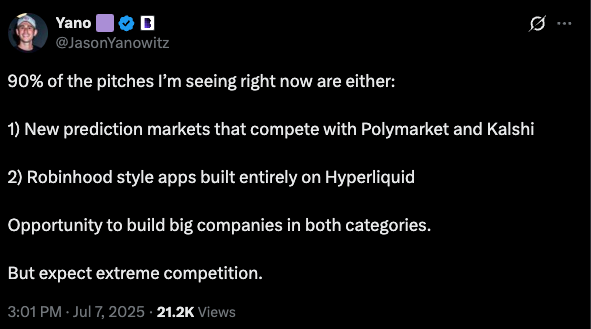
Prediction markets are experiencing notable growth. Polymarket has demonstrated this trend, and Kalshi’s funding round valued the company at twice that of Polymarket, with many new entrants emerging to compete. However, rather than competing directly, Flipr adopts a complementary strategy—offering a smarter, beta-style exposure to both Polymarket and Kalshi. Integration with Kalshi hints at promising future collaboration.
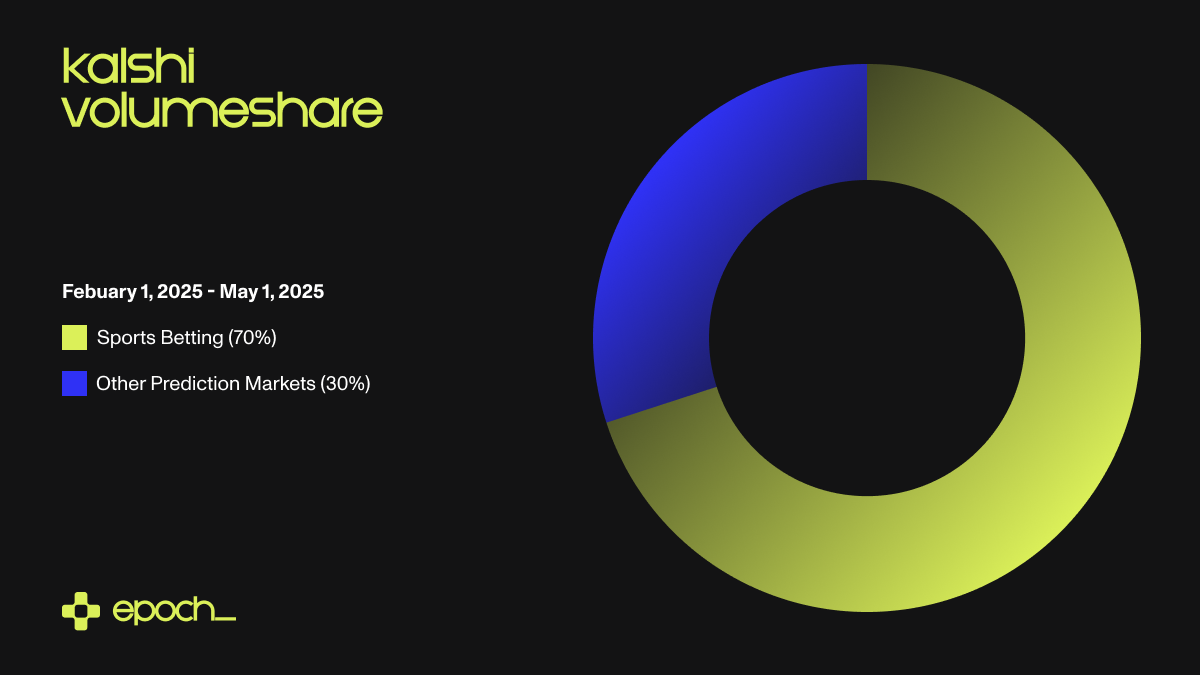
For U.S. prediction market users, regulation remains a major hurdle. Polymarket, as a borderless platform, leads in user numbers but is inaccessible to U.S. residents. In contrast, Kalshi is fully open to American users. Notably, sports betting now accounts for 75% of total volume, with $513 million traded in March and $453 million in April.
Traditional sportsbooks like DraftKings and FanDuel face disadvantages: they require state-by-state licensing, leaving them unavailable in 11 states, and typically charge a 4–5% house edge per bet. Kalshi, as a federally regulated derivatives exchange, bypasses state restrictions and is available in all 50 states, charging only a 1% fee per trade.
Integration with Kalshi
Flipr is integrating with Kalshi, one of the few CFTC-regulated prediction markets in the U.S., which recently raised $185 million and achieved a $2 billion valuation. Its platform is legally accessible to retail users in most states. However, its challenge lies in user accessibility—the UX remains geared toward professional or sophisticated traders.
Flipr offers a more open entry point. By building a lightweight interface on X, Flipr surfaces Kalshi market content directly within users’ regular feeds. This lowers the barrier to entry for new users while expanding distribution for both Kalshi and Polymarket.
Public interactions between the Flipr and Kalshi teams suggest active collaboration. If fully integrated, Flipr could serve as a social front-end for a regulated U.S. platform, driving adoption through creator activity, public trading, and influencer engagement.
Outlook (Flipr vs. Pcule)
Flipr isn’t attempting to rebuild prediction markets from scratch. Instead, it builds an additional layer that makes prediction markets more usable, visible, and social.
While Polymarket and Kalshi focus on infrastructure, Flipr prioritizes reach. Its product design aligns with this goal: trades become content, interactions drive distribution, and users participate in both markets and discussions.
This strategy positions Flipr as the social layer of prediction markets. It attracts new users, rewards public conviction, and seamlessly connects existing platforms in a simple, user-friendly way.
Despite rapid development in the space, most prediction market platforms remain isolated or hard to access. Flipr changes this by meeting users where they already are—on X—and offering a seamless, transparent experience.
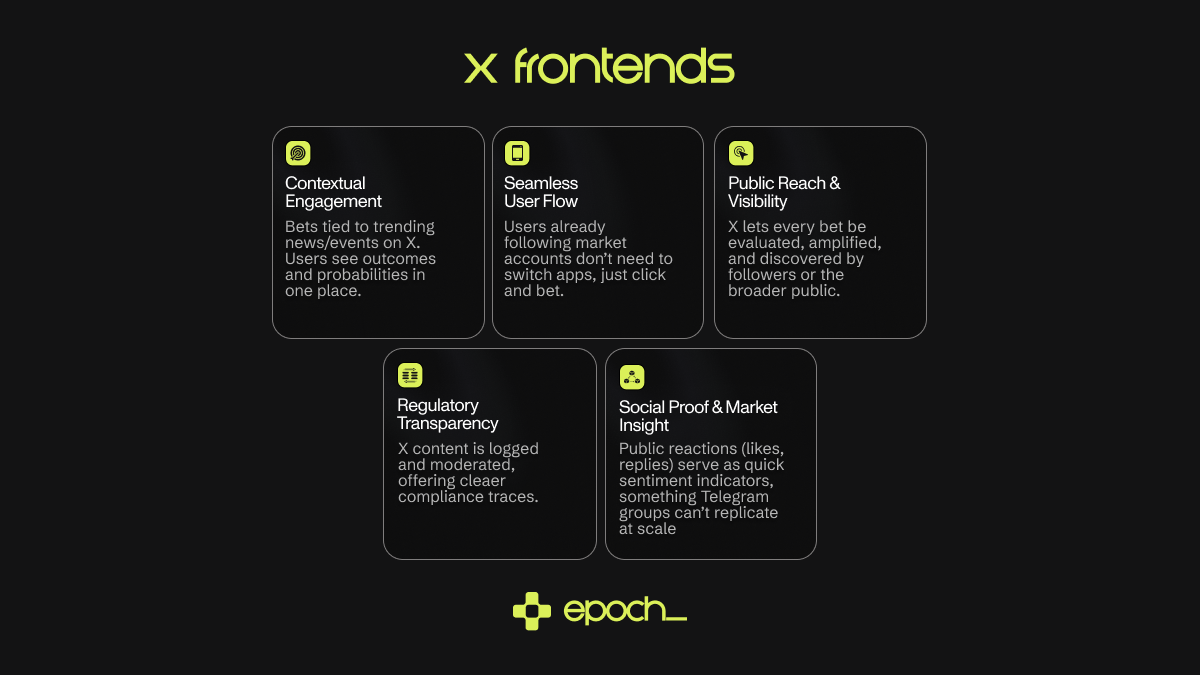
Unlike PCULE, which focuses on backend infrastructure and tools, Flipr emphasizes frontend experience (social). This distinction is critical: X has proven to be an ideal platform for real-time betting activity. Flipr leverages X’s ~150 million daily active users, who are already engaged with live news and events, lowering participation barriers and increasing discoverability.
Conclusion
By integrating Kalshi and Polymarket, Flipr is positioning itself as the go-to bot for prediction market betting. With neither Polymarket nor Kalshi having issued a token, and Flipr’s current market cap at just $4 million (at the time of writing), it stands out as a sub-$10M opportunity with significant upside.
The main risk lies in user adoption: will X users widely embrace Flipr for betting?
If the answer is yes, the growth potential is substantial—especially given the trading volumes cited in this analysis.
The opportunity is even more compelling considering that a large portion of X’s user base comes from the U.S. Ongoing interactions between the Flipr and Kalshi teams on X also suggest a close relationship, potentially signaling exciting developments or future support from Kalshi.

Join TechFlow official community to stay tuned
Telegram:https://t.me/TechFlowDaily
X (Twitter):https://x.com/TechFlowPost
X (Twitter) EN:https://x.com/BlockFlow_News
 @ZoomerOracle