Trump's new pension policy sparks controversy: democratizing investment or systemic risk?
TechFlow Selected TechFlow Selected
Trump's new pension policy sparks controversy: democratizing investment or systemic risk?
The only special interest guiding President Trump's decisions is the greatest interest of the American people.
 Navigating Web3 tides with focused insights
Reporting: Antoine Gara, Jamie John, Eric Platt
Translation: Block unicorn
Recently, Donald Trump has opened the door for private equity and cryptocurrency industries to access trillions of dollars in new investments from American retirement savers, potentially reshaping the financial future of 90 million Americans and accelerating the growth of asset management firms and digital currency groups.
But this order allowing 401k savings plans to invest in a range of alternative assets also exposes U.S. retirees to new risks.
The move comes after intense lobbying by private capital firms such as Apollo Global Management and BlackRock Group, which see inclusion in these retirement plans as a path to attract hundreds of billions of dollars in lucrative assets.
The measure is expected to enable retirement funds to invest in a range of unlisted investments, from corporate acquisitions and private loans to infrastructure deals. This could expose them to higher fees and lower transparency. Of the $9 trillion in assets held within these 401k plans, some portion may be directed toward assets that are harder to value and sell—very different from the traditional stocks and bonds that currently dominate retirement portfolios.
"The door to alternative investments is more open than ever before," said Sean McGee, global head of asset management at KPMG's audit division. He added, "Many leaders will see this as an opportunity for their business model."
Benjamin Schwabrin, director of securities policy at Better Markets, warned that this move is "bad news" for 401k plan holders. "Retail investors will face a completely different type of asset, and they may not even realize it," he said.
Private equity firms have struggled to exit trillions of dollars in investments and deliver returns to investors, prompting pension funds and endowments to retreat from the sector, cutting off a vital source of cash. Large private capital firms like BlackRock have instead turned to managing the savings of retirees and wealthy individuals for future growth.
Wall Street successfully convinced Trump to sign the order, giving the industry significant political and legal protection as it seeks to persuade 401k plan administrators to include their funds in investment offerings. Apollo, Carlyle, and BlackRock conducted aggressive lobbying efforts, according to their financial disclosures.
Other firms, such as BlackRock, worked through trade associations.
Some of the industry’s most influential leaders—including Apollo CEO Marc Rowan—have publicly backed the initiative.
Rowan and his peers have argued publicly that 401k savers who lack access to private markets miss out on diversification and the potential for higher returns.
"We're basically betting the nation's retirement system on Nvidia," Rowan said in February, referring to how 401k savings are heavily concentrated in a few tech-dominated index funds. This week, he reiterated his call to open up 401k markets to private investments, calling it "common sense."
According to people familiar with the matter, the influential lobbying group Defined Contribution Alternatives Association—a favorite among many large private equity firms—has even claimed in Washington that 401k plans could be sued for failing to offer the higher returns of private equity deals.
Carlyle CEO Harvey Schwartz said the order was "long overdue" because "wealthy clients have had access to this space for years."
BlackRock said adding private investments to retirement plans would "ensure millions of Americans build stronger, more diversified portfolios."
According to one official, within the White House, Trump’s National Economic Council and Council of Economic Advisers acted as liaisons between the private capital industry and the president. The office of Deputy Chief of Staff Stephen Miller helped draft the order.
A senior adviser said the administration’s interest in cryptocurrencies played a role in bringing the order to the president’s desk, noting its popularity within the White House.
Trump has made deregulation of digital assets a centerpiece of his administration, viewing the industry as instrumental in helping him win the 2024 presidential election. Entities controlled by the Trump family have also recently invested billions of dollars into cryptocurrencies.
Some in the private equity industry worry the order could link their funds too closely with newer, more speculative crypto assets—especially if 401k plans suffer heavy losses from digital asset investments. But according to people familiar with the matter, they view this as an acceptable trade-off.
While no explicit rules prohibit investing in alternative assets, 401k plan managers have historically been cautious about doing so. Most fear lawsuits from employees over investments in these funds, both due to high fees and the elevated leverage used in many strategies.
"These lawsuits are costly, and while there are many settlements, plaintiffs rarely win in court," said Rajib Chanda, a partner at Simpson Thacher & Bartlett. He added that the concern "creates a massive chilling effect, regardless of the merits of any litigation."
Trump directed government agencies to make it easier for 401k plan managers to offer private investments, including measures aimed at curbing lawsuits targeting private investment strategies.
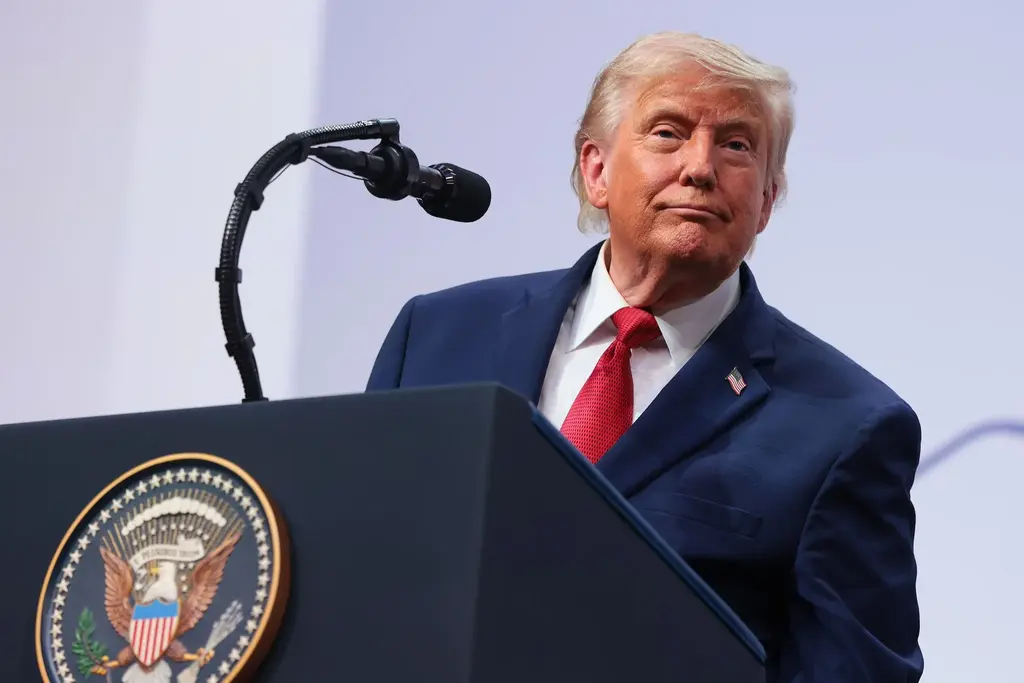
"The only special interest guiding President Trump’s decisions is the best interest of the American people," said Kush Desai, White House deputy press secretary.
"The president’s historic executive order fulfills his promise to make America rich again by modernizing and expanding retirement investment options for ordinary Americans through democratizing access to alternative asset classes."
Attention now turns to the Labor Department, responsible for overseeing and enforcing the 1974 law that sets standards for companies offering 401k benefits.
Asset management firms are racing to prepare 401k products ahead of anticipated guidance from the Labor Department expected within the next six months. Many firms have already announced partnerships to offer private investments within target-date funds—professionally managed portfolios designed for retirement decades away. These funds will blend publicly traded stocks and bonds with less transparent private assets.
Other firms are offering more direct access to private investments but require employers to provide advisory services for 401k participants who wish to invest.
Empower, the second-largest U.S. retirement plan provider, said in May it would partner with Apollo, Goldman Sachs Asset Management, and Partners Group to offer private asset investment options for retirement plans.
A month later, BlackRock said it would provide blended public-private investment target-date funds for 401k provider Great Gray Trust. Additionally, BlackRock is developing its own target-date funds that include private assets.
Other partnerships have emerged. BlackRock formed a "strategic alliance" with Vanguard and Wellington Management to create public-private hybrid funds for retirees, while KKR and Capital Group are exploring model portfolios and target-date funds spanning both public and private markets.
Michael Pedroni, a former Treasury official who now runs policy advisory firm Highland Global, said a "big question" remains unanswered: how much extra fee are American households willing to pay for access to private assets, which cost more to identify and manage, and thus carry higher fees?
"Right now, Americans are used to paying 30 to 50 basis points for their 401k. Will they pay 80 if fees go up?"
Join TechFlow official community to stay tuned
Telegram:https://t.me/TechFlowDaily
X (Twitter):https://x.com/TechFlowPost
X (Twitter) EN:https://x.com/BlockFlow_News
 @FT
@FT