The Original Sin of Poverty
TechFlow Selected TechFlow Selected
The Original Sin of Poverty
All fiat currencies will eventually perish, but before their demise, they always serve a hidden purpose.
 Navigating Web3 tides with focused insights
Author: Knut Svanholm
Translation: AididiaoJP, Foresight News
Money is at the heart of markets, facilitating trade and economic calculation. Its value—purchasing power—is eroded by inflation, which benefits the wealthy at the expense of savers.
Nothing is more crucial to the functioning of free markets than money. Money constitutes every transaction and represents the embodiment of all value in the exchange of goods and services. But what exactly determines the price of money?
The most liquid good in the market tends to become society's preferred medium of exchange—money. Prices expressed in this common medium make economic calculation possible, enabling entrepreneurs to discover opportunities, earn profits, and advance civilization.
We understand how supply and demand determine prices for goods, but determining the price of money is more complex. Our dilemma lies in the fact that since prices are already denominated in money, we lack an accounting unit to measure money’s own value. Unable to express it in monetary terms, we must find another way to articulate money’s purchasing power.
People buy and sell money (exchanging goods and services for money) based on expectations about its future purchasing power. As we know, individuals always act at the margin, giving rise to the law of diminishing marginal utility. In other words, action stems from value judgments, where actors choose between their most urgent goals and less pressing desires. The law of diminishing marginal utility applies here as well: the more units of a good one possesses, the less satisfaction each additional unit provides.
Money is no exception. Its value lies in the additional satisfaction it enables—whether buying food, securing safety, or preserving future options. When people exchange labor for money, it is solely because they value the purchasing power of money more than immediate use of their time. Thus, the cost of exchanging money is the highest utility the individual foregoes by parting with cash. If someone works one hour to obtain a ribeye steak, they necessarily value that meal more than an hour of leisure.
The law of diminishing marginal utility states that each additional unit of a homogeneous good satisfies a progressively lower-ranking want, so individuals value each new unit less. However, the definition of a “homogeneous good” depends entirely on the individual. Since value is subjective, the utility of each additional monetary unit depends on personal goals. For someone who only wants to buy hot dogs, “one unit of money” equals the price of one hot dog. Only when they accumulate enough cash to purchase the next hot dog do they increase the count of this homogenous good—"hot-dog-buying money."
This explains why Robinson Crusoe would ignore a pile of gold—it cannot be exchanged for food, tools, or shelter. Money has no meaning in isolation. Like all language, it requires at least two participants to function; money is fundamentally a tool of communication.
Inflation and the Illusion of Idle Money
Based on time preference and expectations about future monetary value, individuals choose between saving, spending, or investing. If they expect purchasing power to rise, they save; if they expect it to fall, they spend. Investors operate similarly, often shifting funds into assets expected to outpace inflation. Yet whether saved or invested, money continues serving its holder. Even "idle" or "dry powder" capital fulfills a clear purpose: reducing uncertainty. Those holding cash are satisfying their desire for flexibility and security.
Thus, the concept of "money in circulation" is misleading. Money does not flow like a river—it is always held, owned, and serving someone. Exchange is action, and action occurs at specific moments. Therefore, there is no such thing as "idle money."
If severed from historical prices, money loses its anchor and individuals can no longer perform economic calculation. If a loaf of bread cost $1 last year and $1.10 this year, we can infer the direction of purchasing power change. Accumulating such observations over time forms the basis of economic expectations. The government's CPI (Consumer Price Index) is merely the official version of this analysis.
The index attempts to reflect the "inflation rate" through a fixed basket of goods, yet deliberately excludes high-value assets like real estate, stocks, and art. Why? Because including them would expose a truth authorities strive to conceal: inflation is far more pervasive than admitted. Measuring inflation via CPI is essentially a method of obscuring the obvious: rising prices ultimately correlate proportionally with money supply expansion. The creation of new money always reduces its purchasing power relative to what it otherwise would have been.
Rising prices are not caused by greedy producers or supply chain failures—the root cause is always monetary expansion. Increased money supply leads to reduced purchasing power. Those closest to the source of new money—banks, asset holders, and politically connected firms—benefit, while the poor and working class bear the brunt of higher prices.
This effect is delayed and difficult to trace directly, making inflation often called the most insidious form of theft. It destroys savings, worsens inequality, and amplifies financial instability. Ironically, even the rich would fare better under sound money. In the long run, inflation harms everyone, including those who appear to benefit in the short term.
The Origin of Money
If money's value derives from its purchasing power, and that value is always judged relative to past prices, how did money acquire value initially? To answer this, we must return to the barter economy.
A good that evolves into money must have had non-monetary value before becoming money. Its initial purchasing power must have been determined by demand for other uses. When it begins to serve a second function—as a medium of exchange—its demand and price rise. From then on, it offers dual value to holders: use-value and exchange-value. Over time, demand for the latter typically surpasses the former.
This is the core of Mises’ Regression Theorem, explaining how money emerges from the market and remains tied to historical valuation. Money was not invented by the state but arose spontaneously through voluntary trade.
Gold became money because it met the criteria for good money: durability, divisibility, recognizability, portability, and scarcity. Its uses in jewelry and industry still give it intrinsic value today. For centuries, paper money was merely a claim on gold. Lightweight paper solved gold’s transportation problem. Unfortunately, issuers soon discovered they could overissue paper notes—a practice that continues to this day.
When the link between paper money and gold was fully severed, governments and central banks gained the ability to create money from nothing, forming today’s unanchored fiat system. Under fiat, politically connected banks—even insolvent ones—can be bailed out, creating moral hazard, distorting risk signals, and causing systemic instability—all achieved through the silent confiscation of savings via inflation.
The temporal connection between money and historical prices is vital to the market process. Without it, individual economic calculation becomes impossible. The regression theorem discussed earlier is a frequently overlooked praxeological insight in monetary discussions. It proves money is not a bureaucratic fiction but genuinely linked to the original market-driven desire for a "means of exchange for specific purposes."
Money is the product of voluntary exchange, not political invention, collective illusion, or social contract. Any good with limited supply that meets the basic requirements of a medium of exchange can become money. Items that are durable, portable, divisible, uniform, and widely accepted qualify.
Had the Mona Lisa been infinitely divisible, its fragments could have served as money—provided there was an easy way to verify authenticity. Speaking of the Mona Lisa, a 20th-century painter anecdote perfectly illustrates how increasing the supply of a monetary good affects its perceived value. These artists realized they could profit by signing their names. They discovered signatures themselves had value—even usable to pay for meals. Salvador Dali was said to have signed a wrecked car, instantly turning it into a valuable artwork. But as signed bills, posters, and car parts multiplied, the value of each new signature declined—a perfect example of diminishing marginal utility. Quantity increases lead to quality depreciation.
The World's Largest Ponzi Scheme
Fiat money follows the same logic. Increasing the money supply dilutes the value of existing units. Early recipients of new money benefit; others suffer. Inflation is not just a technical issue—it is a moral one. It distorts economic calculation, rewards debt over savings, and plunders the most defenseless. In this sense, fiat money is the world’s largest Ponzi scheme, enriching the top at the expense of the bottom.
We accept flawed money only because we inherited it—not because it is optimal. But when enough people realize that sound money (non-counterfeitable money) better serves markets and humanity, we may stop accepting false gold receipts that cannot feed us, and instead build a real, honest world where value is earned.
Sound money arises from voluntary choice, not political decree. Any item meeting the basic requirements of money can serve as money, but only sound money allows civilization to prosper long-term. Money is not merely an economic tool—it is a moral institution. When money is corrupted, everything downstream—savings, price signals, incentives, and trust—is distorted. When money is honest, markets coordinate production, signal scarcity, reward thrift, and protect the vulnerable.
In essence, money is not just a medium of exchange—it is the guardian of time, the record of trust, and the most universal language of human cooperation. Corrupting money destroys not only the economy but civilization itself.
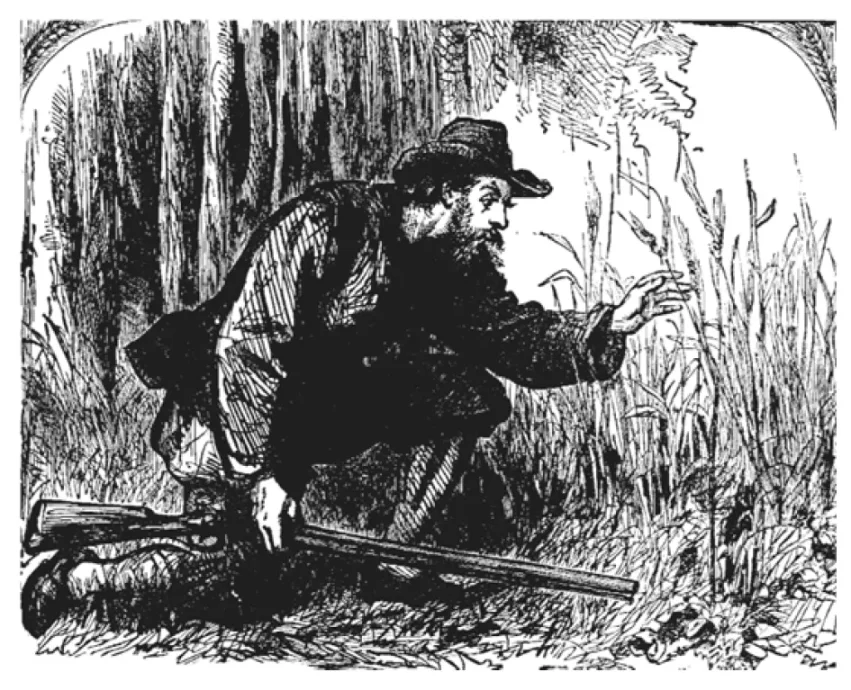
"Man is a shortsighted creature, able to see only what lies immediately before him. And as passion is no friend to reason, particular emotions are often the tools of evil designs."
Counterfeiting: The Illusion of Modern Money and Fiat
We now examine the mechanics of modern money. You may have heard of negative interest rates and wondered how they coexist with the fundamental principle that time preference is always positive. Perhaps you’ve noticed consumer prices rising while media blames factors other than monetary expansion.
The truth about modern money is hard to accept, because once the scale of the problem is understood, the outlook appears bleak. Humanity struggles to resist the temptation to exploit others through printing. The only solution may be to remove humans from the process—or at least separate money from state power. Nobel laureate Friedrich Hayek believed this could only happen through "some roundabout and indirect method."
Britain was the first country to weaken its currency’s link to gold. Before World War I, nearly all currencies were convertible into gold—a standard developed over millennia because gold emerged as the most liquid good on Earth. But by 1971, when U.S. President Richard Nixon announced the "temporary suspension" of dollar convertibility into gold and unilaterally severed the final tie, redeemability was abandoned altogether. He did so to finance the Vietnam War and preserve political power.
We need not detail all aspects of fiat money, but the key point is this: today’s state-issued money lacks physical backing and is created entirely as debt. Fiat masquerades as money, but unlike real money—born of voluntary exchange—it is a tool of debt and control.
Every new dollar, euro, or yuan originates from commercial banks issuing loans. These loans must be repaid with interest. Since interest is never created alongside principal, the total money supply is perpetually insufficient to repay all debts. In fact, the system depends on ever-increasing debt. Modern central banks further manipulate supply through bailouts (preventing inefficient banks from failing) and quantitative easing (adding fuel to the fire).
Quantitative easing is the central bank’s creation of new money to purchase government bonds—an exchange of IOUs for freshly printed cash. Bonds represent government promises to repay principal plus interest, backed by the state’s taxing authority over current and future citizens. The result is a continuous, hidden extraction of wealth from producers through inflation and debt enslavement.
Money printing continues under the banner of Keynesian economics, which underpins most modern government policy. Keynesians claim spending drives the economy forward, and if the private sector stops spending, government must step in. They assert that every dollar spent creates a dollar of economic value, ignoring the reality of value dilution through inflation. This is merely a replay of Bastiat’s "broken window fallacy." Adding zeros creates no value.
If printing money truly created wealth, we’d all own yachts. Wealth arises from production, planning, and voluntary exchange—not from number games on central bank balance sheets. Real progress comes from people accumulating capital, deferring gratification, investing in the future, and exchanging with others—and with their future selves.
The Ultimate Fate of Fiat Money
Increasing the money supply does not accelerate the market process—it distorts and hinders it. Literal "slowness and stupidity" follow. Declining purchasing power makes economic calculation harder and long-term planning slower.
All fiat money eventually dies. Some collapse from hyperinflation, others are abandoned or absorbed into larger systems (e.g., small nations adopting the euro). But until death, fiat serves a hidden purpose: transferring wealth from value creators to political insiders.
This is the essence of the "Cantillon Effect," named after 18th-century economist Richard Cantillon. When new money enters the economy, early recipients benefit most—they spend before prices rise. Those furthest from the source—ordinary workers and savers—bear the costs. Under the fiat system, poverty carries a steep price.
Still, politicians, central bankers, and mainstream economists insist "moderate" inflation is necessary. They should know better. Inflation does not generate prosperity; at best, it redistributes purchasing power. At worst, it erodes the foundations of civilization by destroying trust in money, savings, and cooperation. The abundance of cheap goods today exists despite taxes, borders, inflation, and bureaucracy—not because of them.
Praxeology
Left unhampered, the market process naturally tends toward providing better goods at lower prices for more people—that is real progress. Interestingly, praxeology is not just a critical tool but a framework for understanding. Many become cynical upon seeing systemic flaws, but praxeology offers clarity: it shows you that producers, not governments, are the true engines of human prosperity. With this understanding, even the most mundane work gains deeper meaning. Cashiers, cleaners, and taxi drivers all participate in a system of voluntary cooperation and value creation that meets human needs. They are civilization itself.
Markets produce goods; governments often produce "anti-goods." Competition among firms to serve customers drives innovation, while competition among parties for state control rewards cunning over competence. In markets, the fittest survive; in politics, bad money drives out good.
Praxeology helps you understand human motivation. It teaches you to look at actions, not words, and to imagine parallel realities that might have existed—worlds erased by intervention and never seen.
Fear, Uncertainty, and Doubt
Human psychology is naturally biased toward fear. We evolved to respond to survival threats, not flower appreciation. Hence, alarmist messages spread faster than optimism. The prescribed solution to any "crisis"—terrorism, pandemics, or climate change—is always the same: increased political control.
Students of human action understand why. For every acting individual, the end justifies the means. The problem is that power-seekers think the same way. They trade freedom for security, but history shows transactions driven by fear rarely end well. Understanding these dynamics clears the noise and brings the world into sharper focus.
You turn off the TV, reclaim your time, and realize that accumulating capital and liberating time is not selfish—it is the foundation of helping others. Investing in your skills, savings, and relationships expands well-being for all. You participate in the division of labor, create value, and do so entirely voluntarily. In a broken system, the most radical act is building better alternatives outside it.
Every time you use fiat money, you are paying the issuer with your time. If you can avoid using it entirely, you help build a world with less theft and fraud. It may not be easy—but worthwhile endeavors never are.
Join TechFlow official community to stay tuned
Telegram:https://t.me/TechFlowDaily
X (Twitter):https://x.com/TechFlowPost
X (Twitter) EN:https://x.com/BlockFlow_News
 @BitcoinMagazine