Grayscale Research: Institutional Inflows and Regulatory Approval Drive Ethereum's Strong Rise
TechFlow Selected TechFlow Selected
Grayscale Research: Institutional Inflows and Regulatory Approval Drive Ethereum's Strong Rise
The outlook for crypto assets in the coming months remains highly optimistic.
 Navigating Web3 tides with focused insights
Author: grayscale
Translation: Baihua Blockchain
In July 2025, the price of ETH on the Ethereum network surged nearly 50%. Investors turned their attention to stablecoins, asset tokenization, and institutional adoption—areas where Ethereum, as the oldest smart contract platform, holds a core advantage over competitors.
The passage of the GENIUS Act was a milestone moment for stablecoins and the broader crypto asset class. While market structure-related legislation may still take time to pass through Congress, U.S. regulators can continue supporting the digital asset industry through other policy adjustments, such as approving staking features in crypto investment products.
In the short term, crypto asset valuations may experience consolidation, but we remain highly optimistic about the outlook for the asset class in the coming months. Crypto assets offer investors exposure to blockchain innovation while potentially providing some immunity to risks associated with traditional assets—such as persistent weakness in the U.S. dollar. As a result, Bitcoin, ETH, and many other digital assets are expected to remain attractive to investors.
On July 18, President Trump signed the GENIUS Act into law, establishing a comprehensive regulatory framework for U.S. stablecoins. This marks an "end of the beginning" for the crypto asset class: public blockchain technology is transitioning from experimental stages into the core of regulated financial systems. The debate over whether blockchain technology can deliver tangible benefits to mainstream users has ended; regulators are now focused on ensuring that as the industry grows, appropriate consumer protections and financial stability mechanisms are in place.
In July, the crypto market celebrated the passage of the GENIUS Act, supported by favorable macroeconomic conditions. Stock indices rose across much of the globe, and fixed-income returns were led by high-risk segments such as U.S. high-yield corporate bonds and emerging market debt (see Chart 1). With declining market volatility, related investment strategies also performed well.
The FTSE/Grayscale Cryptocurrency Index—a market-cap-weighted, investable index of digital assets—rose 15%, while Bitcoin increased 8%. Ethereum’s ETH emerged as the star of the month, surging 49%, and up more than 150% since its early April lows.
Chart 1: Ethereum shines during a strong July for crypto assets
Don't Call It a Comeback
Ethereum is the largest smart contract platform by market capitalization and the infrastructure backbone of blockchain finance. However, until recently, ETH's price performance lagged behind Bitcoin and even other smart contract platforms like Solana. This led some to question Ethereum’s development strategy and competitive standing within the industry (see Chart 2).
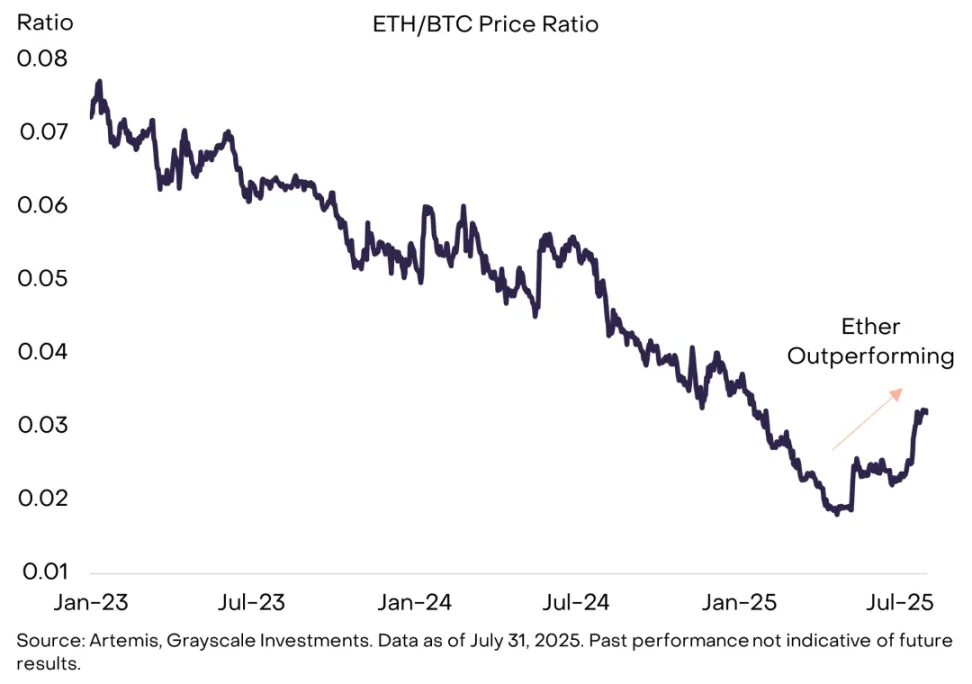
Chart 2: Ethereum outperforms Bitcoin since May
Renewed enthusiasm for Ethereum and ETH likely reflects growing market focus on stablecoins, asset tokenization, and institutional blockchain adoption—areas where Ethereum excels (see Chart 3). For example, including its Layer 2 networks, the Ethereum ecosystem hosts over 50% of all stablecoin balances and processes approximately 45% of stablecoin transactions by dollar value.
Ethereum also holds around 65% of the total value locked in decentralized finance (DeFi) protocols and nearly 80% of tokenized U.S. Treasury products. It has been the preferred network for many institutions building crypto projects, including Coinbase, Kraken, Robinhood, and Sony.
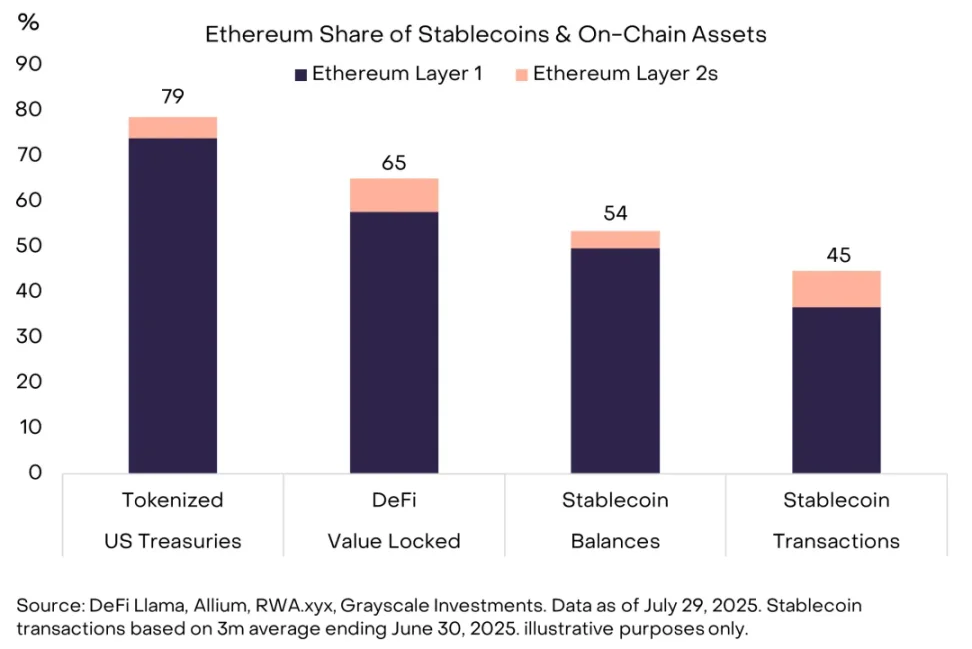
Chart 3: Ethereum leads as the blockchain for stablecoins and tokenized assets
Increased adoption of stablecoins and tokenized assets will benefit Ethereum and other smart contract platforms. Grayscale Research believes stablecoins have the potential to disrupt certain segments of global payments through lower costs, faster settlement times, and greater transparency (for more background, see “Stablecoins and the Future of Payments”).
There are two types of revenue linked to stablecoins: net interest margin (NIM) earned by stablecoin issuers (such as Tether and Circle), and transaction fees earned by blockchains processing these transactions. Given Ethereum’s leading position in the stablecoin space, its ecosystem appears poised to benefit from rising transaction fees as stablecoin adoption grows.
The same applies to tokenization—the process of bringing traditional assets on-chain (for more background, see “Public Blockchains and the Tokenization Revolution”). The current market size for tokenized assets is small (around $12 billion), but growth potential is enormous. Tokenized U.S. Treasuries are currently the largest category, and Ethereum is the market leader. In alternative assets, Apollo Global recently partnered with Securitize to launch an on-chain credit fund.
Additionally, the tokenized equities market is small but growing: Robinhood launched tokenized shares of private companies such as SpaceX and OpenAI, and eToro plans to tokenize stocks on Ethereum. While Apollo’s product is available across multiple blockchains, Robinhood and eToro’s tokenized equity offerings reside within the Ethereum ecosystem.
ETP Boom and Other Trends
Investor interest in Ethereum drove significant net inflows into spot ETH exchange-traded products (ETPs). In July, U.S.-listed spot ETH ETPs recorded $5.4 billion in net inflows—the largest monthly net inflow since these products launched last year (see Chart 4).
Currently, ETH ETPs hold approximately $21.5 billion in assets, equivalent to nearly 6 million ETH, or about 5% of the total circulating supply. According to CFTC Commitment of Traders data, we estimate only $1–2 billion in net ETH ETP inflows came from hedge funds engaging in “basis trades,” with the remainder representing long-term capital.
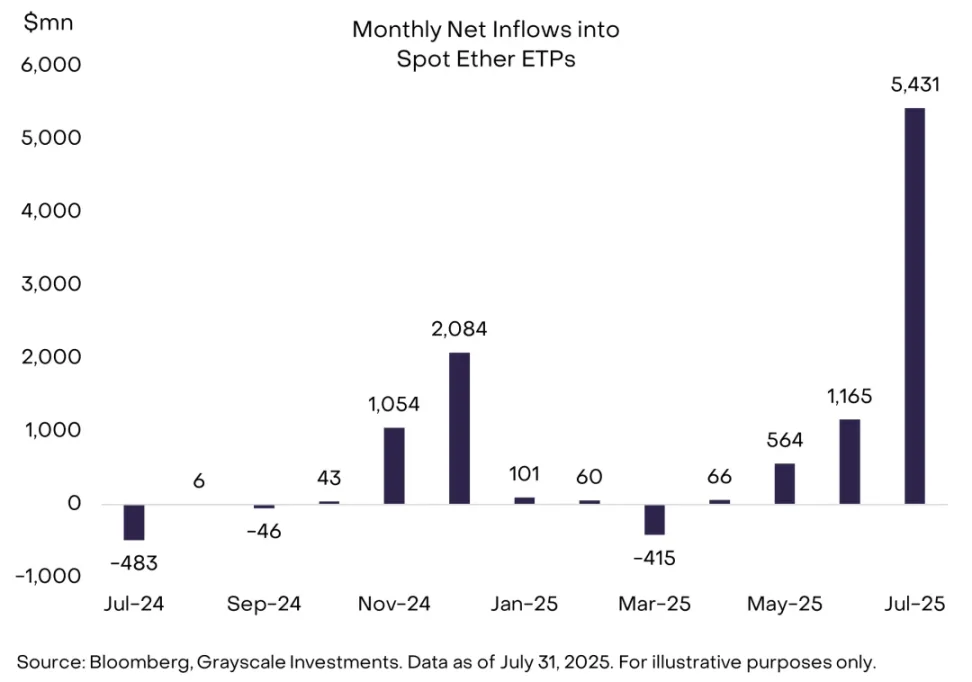
Chart 4: ETH ETP net inflows exceed $5 billion
Some public companies have also begun accumulating ETH to gain token exposure via equity instruments. The two largest “crypto treasury management” firms holding ETH are Bitmine Emersion Technologies ($BMNR) and SharpLink Gaming ($SBET). Together, they hold over 1 million ETH, valued at $3.9 billion.
A third publicly traded company, BTCS ($BTCS), announced in late July its plan to raise $2 billion through common and preferred stock offerings to purchase additional ETH (BTCS currently holds about 70,000 ETH, worth approximately $250 million). Beyond net inflows into ETH ETPs, buying pressure from corporate Ethereum treasury managers may have also contributed to price appreciation.
Moreover, Ethereum’s share of the cryptocurrency derivatives market increased this month, indicating rising speculative interest in the asset. On traditional futures listed at the Chicago Mercantile Exchange (CME), open interest (OI) in ETH futures rose to around 40% of BTC futures OI (Chart X). In perpetual futures contracts, ETH’s OI reached approximately 65% of BTC’s. This month, trading volume in Ether perpetual futures also surpassed that of Bitcoin perpetual futures.
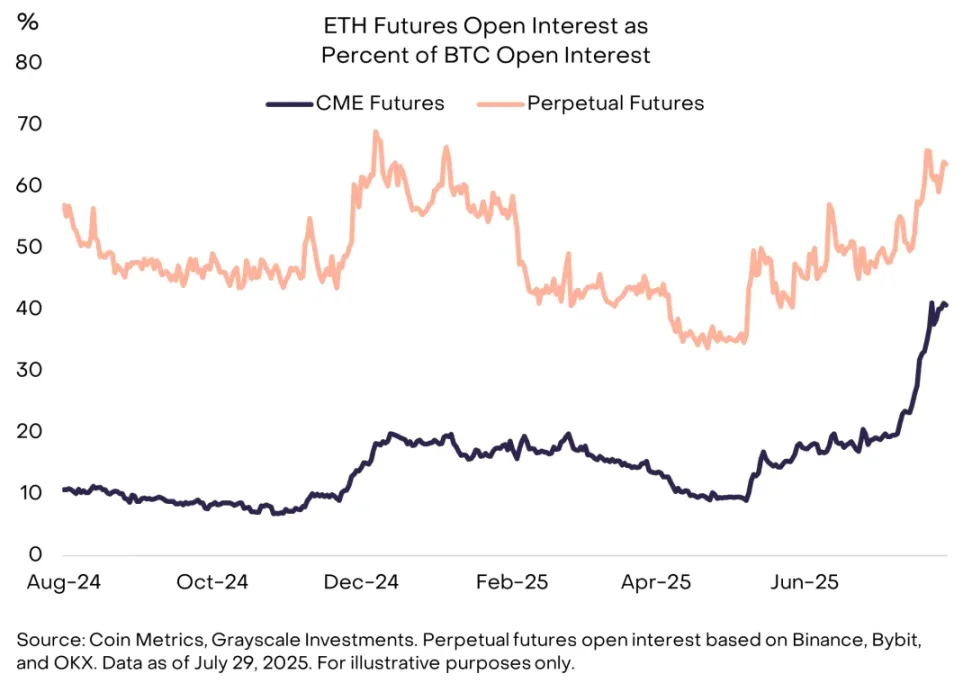
Chart 5: ETH futures open interest rises
While ETH captured much of the spotlight in July, Bitcoin investment products continued to see steady investor demand. Spot Bitcoin ETPs listed in the U.S. recorded $6 billion in net inflows and now hold an estimated 130,000 bitcoins. Several public companies also expanded their Bitcoin treasury strategies. Market leader Strategy (formerly MicroStrategy) issued $2.5 billion in new preferred shares to acquire more Bitcoin.
In addition, Bitcoin pioneer and Blockstream CEO Adam Back announced the formation of a new Bitcoin treasury management firm—Bitcoin Standard Treasury ($BSTR). The company will use Back’s and other early adopters’ Bitcoin holdings as capital and will raise equity financing. BSTR’s deal structure closely resembles an earlier SPAC (special purpose acquisition company) transaction organized by Cantor Fitzgerald for Twenty One Capital—another major Bitcoin treasury management firm backed by Tether and SoftBank.
Crypto Asset Rally
In July, valuations across all crypto market sectors rose. From a sector perspective, the smart contract segment performed best—driven by ETH’s 49% gain—while the AI sector lagged due to weakness in a few tokens (see Chart 6). Throughout July, open interest and funding rates (the cost of financing leveraged long positions) rose for many crypto assets, signaling increased investor risk appetite and speculative long positioning.
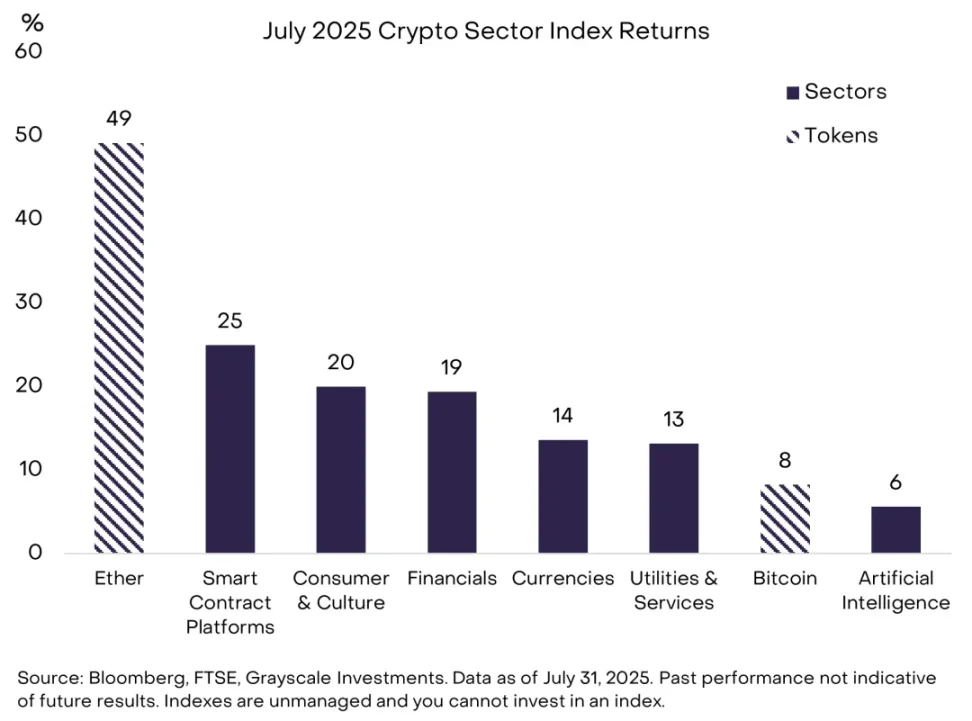
Chart 6: All crypto market sectors rose in July
After strong returns, valuations may undergo some pullback or consolidation. The passage of the GENIUS Act was a major positive catalyst for the crypto asset class, boosting both absolute and risk-adjusted returns. Congress is still considering crypto market structure legislation—the House’s CLARITY Act passed with bipartisan support on July 17. However, the Senate is reviewing its own version of market structure legislation, and no significant progress is expected before September. As a result, there may be fewer legislative catalysts to support crypto asset valuations in the near term.
Summary
Nonetheless, we remain highly optimistic about the crypto asset outlook for the coming months. First, even without new legislation, regulatory tailwinds persist. For example, the White House recently released a detailed report on digital assets, proposing 94 specific recommendations to support the growth of the U.S. digital asset industry. Of these, 60 fall under regulatory agency authority (the remaining 34 require action from Congress or joint agency-Congress action). Through supportive regulations, crypto investment products—such as those featuring staking or broader spot crypto ETPs—could attract new capital into the asset class.
Second, we expect the macro environment to remain favorable for crypto assets. These assets provide investors with exposure to blockchain innovation while offering some resilience against certain risks in traditional assets—such as sustained U.S. dollar weakness. Beyond the crypto-related legislation passed in July, President Trump also signed the One Big Beautiful Bill Act, locking in large federal budget deficits over the next decade.
He has also clearly expressed his desire for the Federal Reserve to lower interest rates, emphasized that a weaker dollar would benefit U.S. manufacturing, and raised tariffs on numerous products and trading partners. Large budget deficits and lower real interest rates—especially with implicit White House support—may continue to weigh on the dollar’s value. Scarce digital commodities like Bitcoin and ETH could therefore benefit and serve as partial hedges in portfolios exposed to ongoing dollar weakness.
Join TechFlow official community to stay tuned
Telegram:https://t.me/TechFlowDaily
X (Twitter):https://x.com/TechFlowPost
X (Twitter) EN:https://x.com/BlockFlow_News
 @Grayscale