An app you can build just by speaking—this company wants to be the Instagram of the AI era
TechFlow Selected TechFlow Selected
An app you can build just by speaking—this company wants to be the Instagram of the AI era
Demands that were previously unmet due to technical barriers are now becoming reality through AI.
 Navigating Web3 tides with focused insights
Author: Geek Friend
In the past year, AI coding assistants like Cursor and Windsurf have rapidly taken over developers' workspaces, with the entire industry seemingly discussing Vibe Coding.
The early competition between OpenAI and Google to acquire Windsurf was likely the most mainstream moment for Vibe Coding. Recently, major Chinese companies such as Alibaba, Tencent, and ByteDance have also successively launched their own AI coding assistants, further reflecting the surging popularity of Vibe Coding.
Ordinary users without coding knowledge may struggle to feel this "heat." The reason is simple: although Vibe Coding assistants reduce programming complexity, they are still essentially "code generators." Developers still need to understand programming language syntax, be familiar with various frameworks and APIs, and master debugging and deployment skills. For the vast majority of non-technical users, this barrier remains prohibitively high. Yet, on the other hand, this high threshold also represents a significant market gap.
It is against this backdrop that MyShell's release of ShellAgent 2.0 introduces a more radical concept—"Vibe Coding 2.0"—which enables app creation through natural language interaction, without requiring any coding knowledge.
01 Chatting Your Way into Building an App
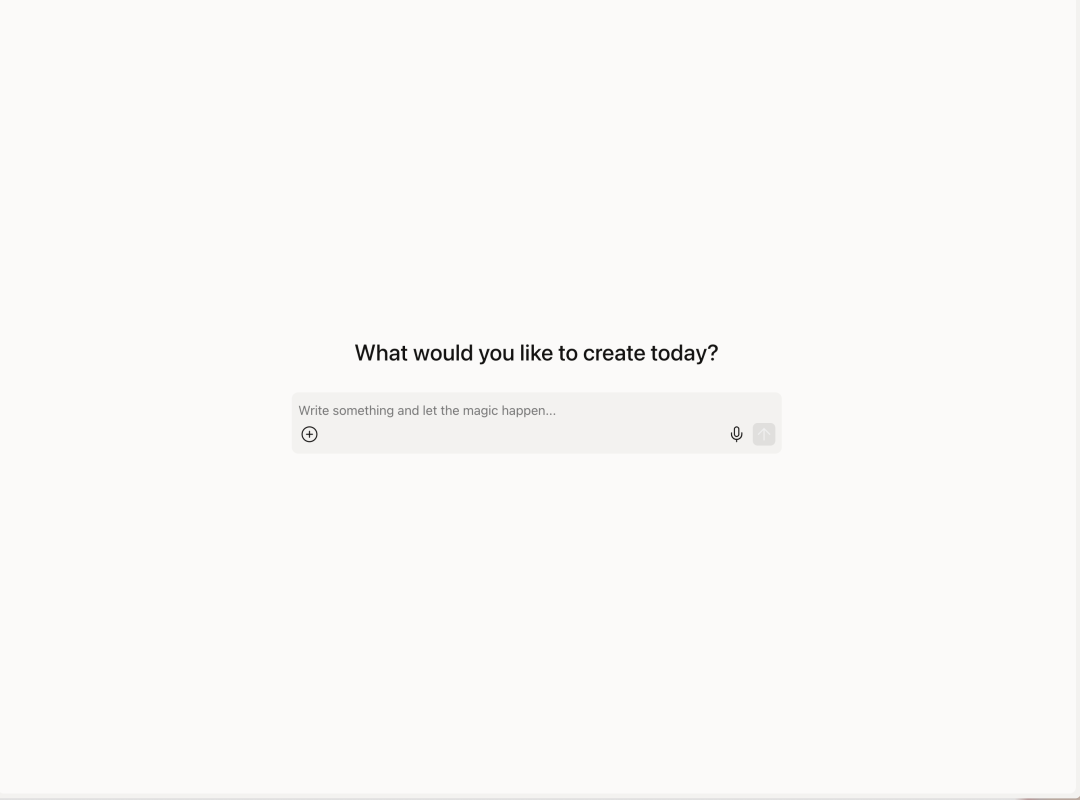
Opening ShellAgent 2.0, its interface differs significantly from IDE-style coding assistants—the entire page is simply a clean chat box. Talking to it and clearly stating your needs is all the work required to develop an app. If you can explain to someone what kind of app you want, ShellAgent 2.0 can build it for you.
Initial interface of ShellAgent 2.0
For example, if we want it to replicate the viral AI feature previously popularized by NotebookLM, we input the following instruction:
I want to create an app that automatically summarizes content from uploaded PDFs or web links and turns them into podcasts.
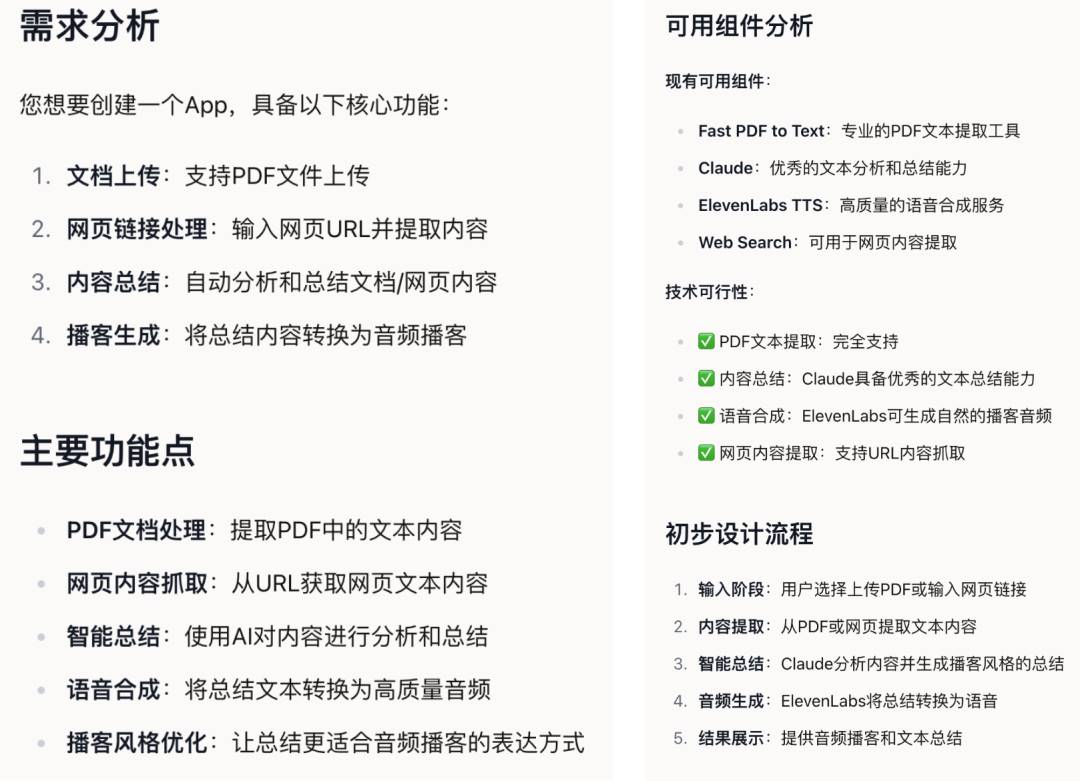
Then, ShellAgent 2.0 begins analyzing the functional components implied by the request and locates corresponding modules from its own component library.
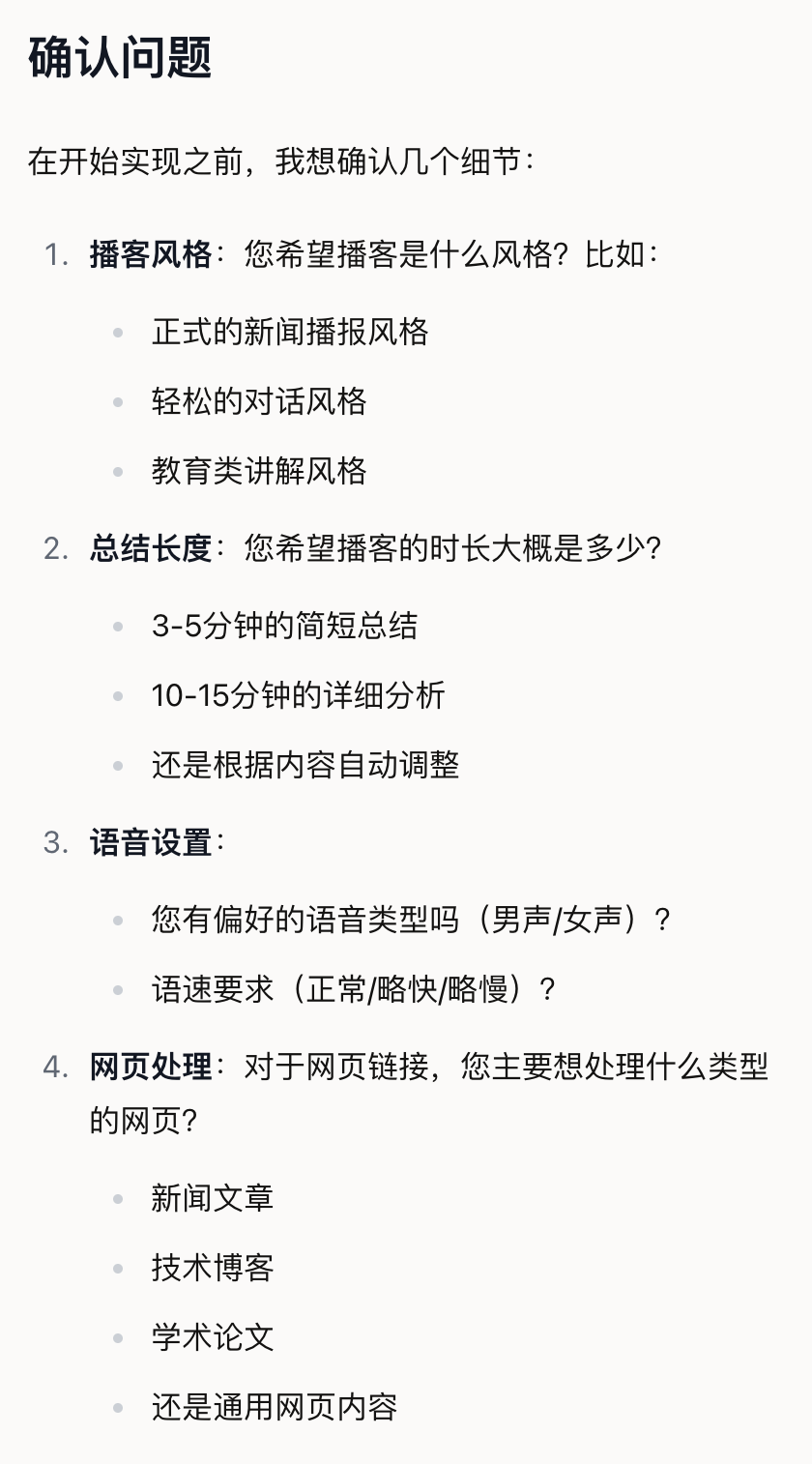
Clearly, a single-sentence prompt is far from sufficient for actual app development. In traditional workflows, an entire document would be needed to specify requirements. Thus, ShellAgent 2.0 proactively initiates dialogue, asking for more detailed information about the app.
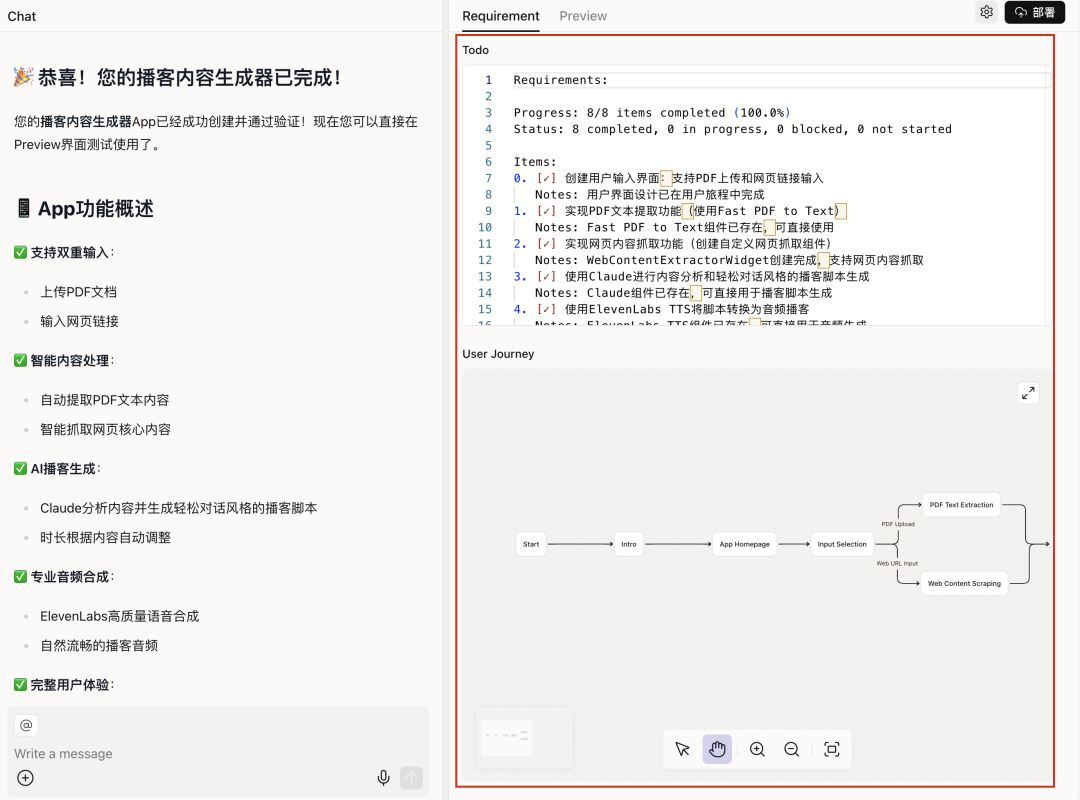
After approximately 10–20 minutes, the entire app is completed. During this process, progress is displayed as a Todo List on the right side. Simultaneously, ShellAgent 2.0 generates a flowchart, making the app’s logic fully transparent. After clicking “deploy,” the app is finished—ready for personal use or public sharing with other users.
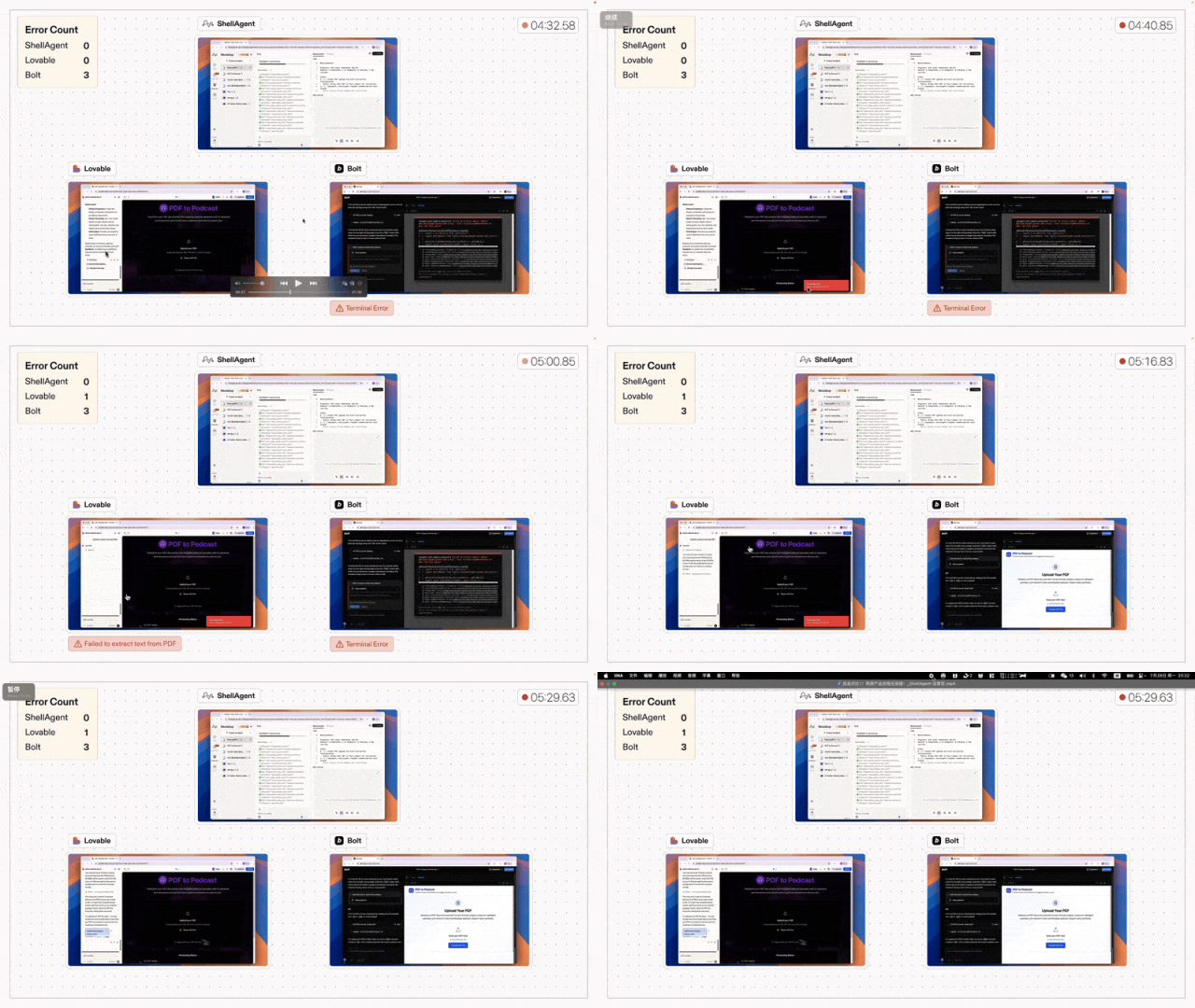
In comparison with similar competitors, ShellAgent also leads in bug control. When building an AI podcast app, Lovable encountered 4 bugs and Bolt had 5, while ShellAgent completed the task flawlessly.
Of course, bugs cannot be completely avoided. But there's no need to worry. Simply click "Use ShellAgent" to fix—it will automatically identify the issue, repair the bug, and update the application. If new requirements or issues arise after the fix, you can continue specifying them directly in the chat window; ShellAgent will continuously optimize and adjust the app accordingly.
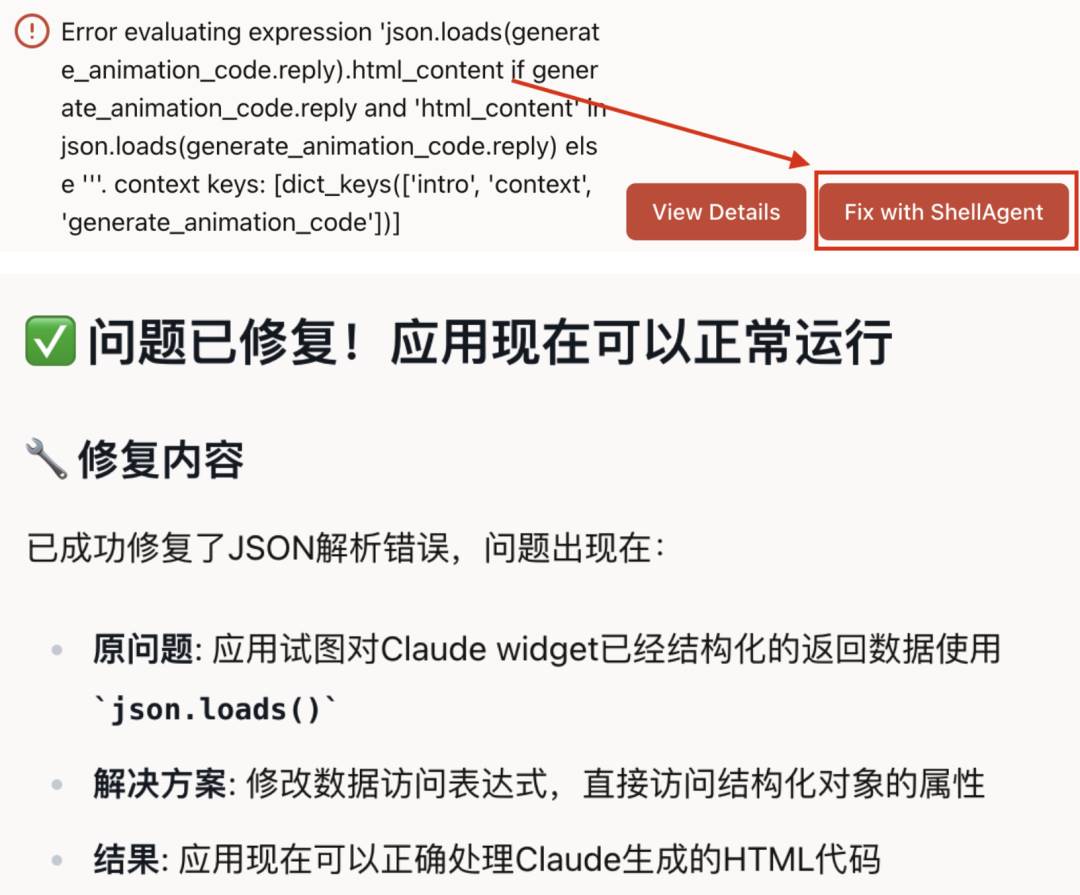
Bug appears in ShellAgent (top), error cause analyzed and corrected (bottom)
02 The Product Philosophy of ShellAgent 2.0:
Building Instagram for the AI Era
In fact, merely creating apps from natural language isn't particularly unique to ShellAgent 2.0—products like Cursor and TRAE in the Vibe Coding space can do this too.
So what sets them apart?
A telling detail: ShellAgent never shows a single line of code throughout the entire process. This reflects fundamentally different product philosophies—one is Instagram, the other Photoshop.
Photoshop is a powerful productivity tool designed for professionals, but comes with a steep learning curve—just like IDE-based products such as Cursor and TRAE. Most ordinary users may never even encounter the term "IDE," short for integrated development environment, which can be simply understood as where programmers write code.
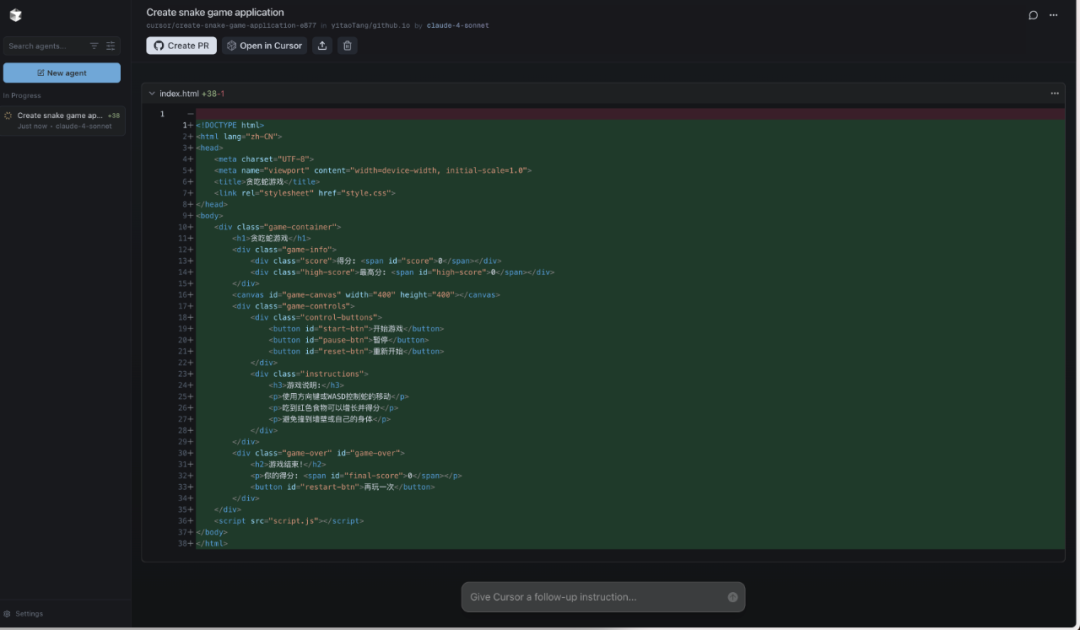
Cursor working interface
What Cursor brings is freeing programmers from tedious manual labor, allowing them more time to focus on harder, more interesting, and higher-value decisions.
However, Cursor users still need to understand programming languages, be familiar with various frameworks, and possess broad technical vision—these factors determine the upper limits of an app, but also form barriers for average users.
Instagram’s rise followed an entirely different logic. Its most famous innovation was simplifying complex image processing into a few filter options. With one tap, users could make photos look better and become eager to share them on the platform.
Viewing ShellAgent 2.0 through the lens of Instagram quickly reveals how many of its features are built around the core principle of "lowering barriers."
The Remix function is particularly noteworthy—perhaps analogous to ShellAgent 2.0’s version of "filters." For many novice users, the biggest pain points in creation are "not knowing what to make" and "not knowing how to express it."
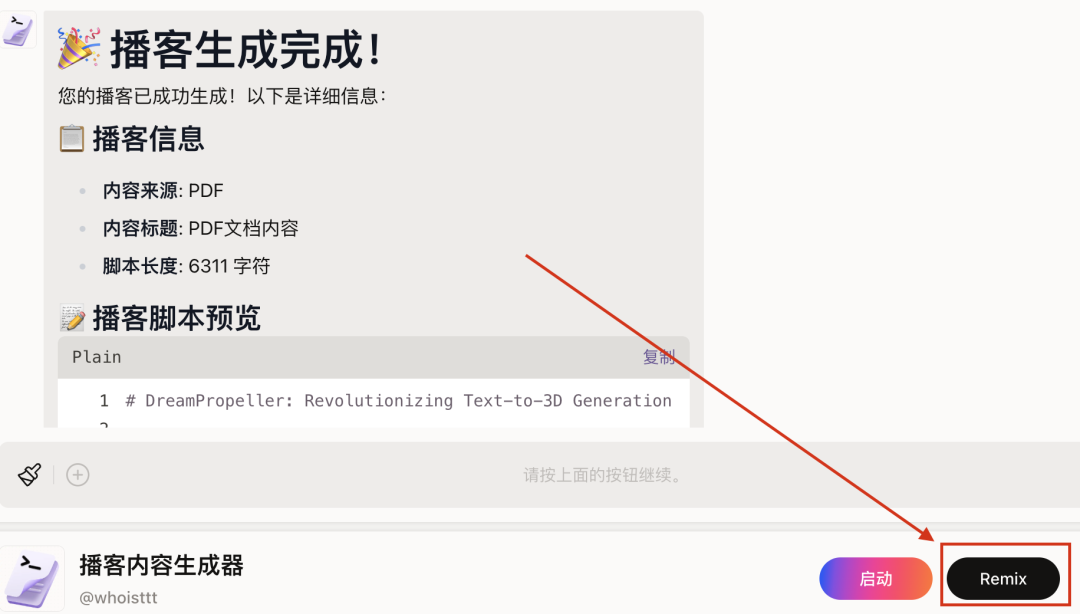
Modify existing app functions via Remix for other users’ published apps
The Remix function addresses both these pain points. The platform already hosts a rich variety of app examples—from simple calculators to complex data analysis tools, from personal productivity apps to small business utilities. Users can browse existing apps, find versions close to their needs as starting points, and customize their own variants. For instance, changing the tracking topic of a news aggregation app from "AI" to "cryptocurrency," or adding new multimodal AI capabilities to transform "PDF-to-podcast" into "video-to-podcast."
When every user's remix can become inspiration for others, a virtuous cycle of creativity emerges.
In ShellAgent 2.0, app creation is not the end—publishing it on the Creation Square is key. Once deployed, your app becomes visible, usable, modifiable, and consumable by others. At this point, an app is no longer just software—it becomes a medium of content. Building a creator ecosystem around this content medium is the true essence of ShellAgent 2.0.
In this new ecosystem, a new profession—"app designer"—might emerge: people who don’t write code but deeply understand user experience design, capable of creating applications that are both practical and elegant. Top app creators may develop their own fan bases, much like today’s influencers and bloggers.
03 A Watershed Moment for the AI Era
If we view the history of software development as a series of major paradigm shifts, it has roughly progressed from machine language to high-level languages, command-line interfaces to graphical interfaces, local computing to cloud computing, and low-code to no-code. Vibe Coding may represent the current wave of transformation—intelligent coding—where users simply describe needs in everyday language, and AI automatically generates applications.
Within this shift, a new divide in productivity might emerge.
To draw an analogy, IDE-style tools like Cursor enhance the productivity of professional engineers—similar to upgrading from film SLR to digital SLR cameras. The ceiling is high, but users still need foundational programming knowledge and technical understanding, much like photographers mastering parameters such as shutter speed, aperture, and ISO.
No-code tools like ShellAgent 2.0, on the other hand, empower ordinary people to create software—the equivalent of "the camera behind the smartphone." While smartphone image quality lags far behind DSLRs, the camera has enabled platforms like Instagram to reach the widest possible audience and foster entirely new creator communities.
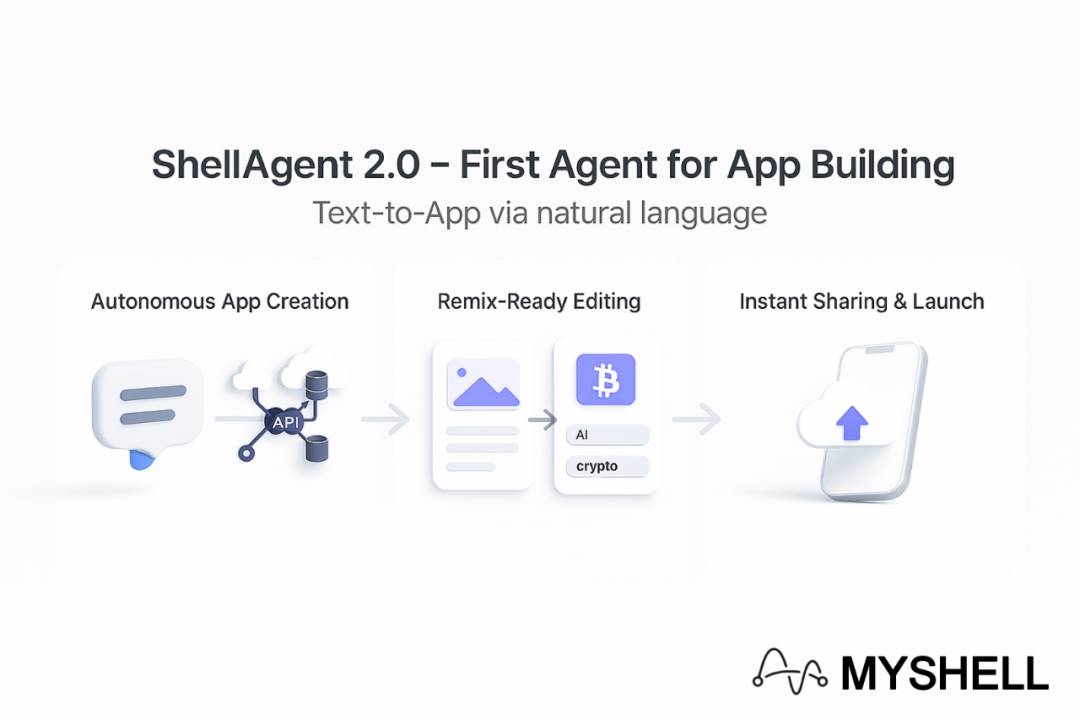
Over the past two decades, programmers have enjoyed the greatest benefits of the mobile internet era, with programming language serving as the core technical barrier. Many brilliant ideas have remained stuck at the conceptual stage due to technical implementation hurdles.
The real value of ShellAgent 2.0 may lie not in the technology itself, but in the vision it launches—releasing software creation rights from the hands of technical experts and distributing them to ordinary people.
This transformation could redefine many concepts. Who is a "developer"? In the world of ShellAgent 2.0, anyone with a creative idea could be a developer. What is a "software company"? When individual users can rapidly create and share apps, the business models of software itself may face reinvention.
Under this new paradigm, the core of software development shifts beyond mere technical implementation toward value-driven design. People who understand user pain points, possess creative thinking, and can design excellent user experiences may become more valuable than those with pure programming skills.
Join TechFlow official community to stay tuned
Telegram:https://t.me/TechFlowDaily
X (Twitter):https://x.com/TechFlowPost
X (Twitter) EN:https://x.com/BlockFlow_News
 极客公园
极客公园