From Growth Illusion to Cash Flow Reality: When Buybacks Become the Collective Narrative for Altcoins
TechFlow Selected TechFlow Selected
From Growth Illusion to Cash Flow Reality: When Buybacks Become the Collective Narrative for Altcoins
Survival is tough; only solid revenue structures and clear financial actions can win back market attention.
 Navigating Web3 tides with focused insights
By Dingdang, Odaily Planet Daily
On June 19, Humayun Sheikh, CEO and founder of Fetch.ai, announced the launch of a large-scale buyback program: The Fetch Foundation will partner with multiple exchanges and market makers to jointly execute a $50 million buyback of FET tokens. This move is underpinned by steadily growing demand for its agent platform and ASI-1 application. "FET is currently undervalued by the market," he stated bluntly.
This buyback initiative is no isolated case, but rather part of an increasingly evident trend across the altcoin sector in recent months. Capital continues to flow into BTC, while ETH has recently regained favor among whales and institutions. Yet trading volume in the altcoin market has plummeted and investor sentiment remains weak. Projects seem to have collectively entered a “survival struggle mode”: amid tightening fundraising conditions and shrinking valuations, the central question for every project is how to survive—and how to tell a story still worth believing.
And token buybacks are becoming the shared answer for more and more projects.
The Logic Behind Buybacks in a Survival Narrative
If the bull market’s main theme was “growth stories,” then the bear market is all about “cash flow strength.” Token buybacks are a natural extension of this logic: using project-generated funds to repurchase circulating tokens not only reduces selling pressure and stabilizes prices, but also serves as a public signal—“we still have the capability and confidence.”
In this process, buybacks are more than just a market maneuver—they serve as a financial mechanism of self-validation. Only projects with sufficient revenue and reserves can afford to spend real money betting on their own future. For investors, such actions themselves constitute an endorsement of the project's value.
But precisely because of this, only a select few projects can sustain continuous buybacks. Most can only keep “buybacks” in governance proposals or roadmaps, eventually abandoning them. While details like buyback design, whether tokens are burned or locked matter, the most fundamental factor remains: do you have real, stable, and sustainable income?
Fetch.ai’s buyback plan stems from surging usage of its ASI-1 and agent platform. As platform value rises, the token price has stagnated. The $50 million funding comes from the foundation’s reserves. This sum may not be enough to rewrite FET’s price trajectory, but crucially, if successfully executed, it would break the market’s entrenched perception of the project as “cash-flow constrained.”
Who Is Conducting Buybacks?
Since 2024, multiple established projects have launched or already implemented buyback programs. Despite differing approaches, their motivations are highly aligned: leveraging cash flow to amplify market confidence.
On April 9, 2025, Aave’s buyback proposal passed with 99.63% support. The full plan involves buying back $1 million worth of AAVE weekly over six months, with the first buyback executed on April 10. Since activating its protocol fee-based buyback mechanism, Aave DAO has consistently carried out $1 million weekly buybacks. Latest data shows that the protocol has spent $10 million cumulatively to repurchase 50,000 AAVE tokens at an average cost of $199.74. At the current market price of $264, this treasury holding has generated approximately $3 million in unrealized gains. This is not merely a capital operation—it reflects the execution capability and strong cash flow health of Aave DAO’s governance structure.
Meanwhile, Rune, co-founder of Sky (formerly MakerDAO), has fully utilized the 2 million USDS transferred to the buyback address to repurchase SKY tokens. Starting from June 4, Rune has used 2.33 million USDS to buy back 30.227 million SKY tokens—about 1.4% of its circulating supply—at an average price of approximately $0.077 per token.
On February 14, Jupiter announced that 50% of all protocol fees would be used to buy back JUP tokens, which would then be locked for three years. The buyback officially began on February 17. To date, the value of JUP buybacks amounts to roughly $25 million.
Hyperliquid initiated its buyback program on March 20, allocating 50%–100% of platform revenue to repurchase HYPE tokens, with the majority of these repurchased tokens being burned to reduce total supply. According to buyback data, Hyperliquid spent around $55 million over the past 30 days—averaging $1.83 million per day. Based on this rate, quarterly buybacks could reach $165 million. At HYPE’s current price of $37, this equates to approximately 4.46 million tokens repurchased, representing about 1.3% of its circulating supply (333 million).
According to TokenTerminal data, Sky generates annual revenue of around $310 million, second only to Tether and Circle in the stablecoin sector. That said, a significant gap remains between centralized and decentralized stablecoins in terms of revenue scale. Aave’s annual revenue over the past year stands at approximately $100 million, leading the lending sector.
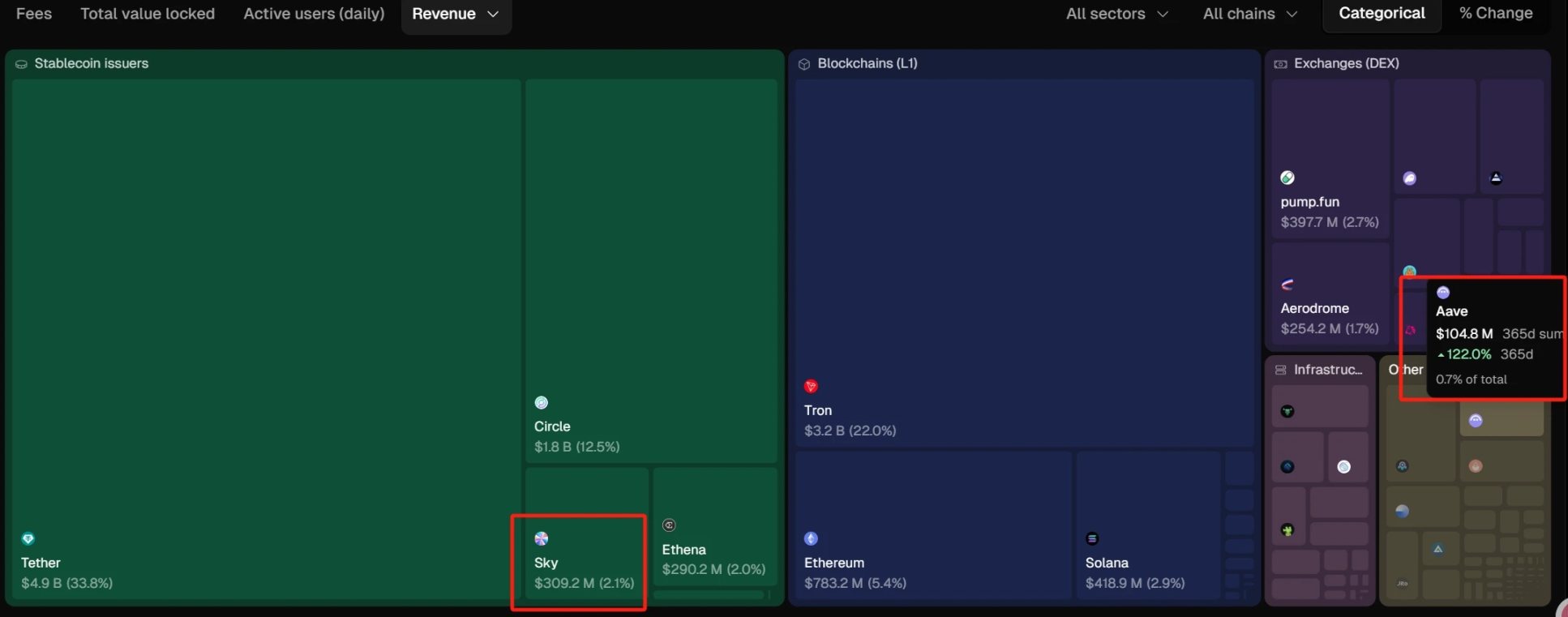
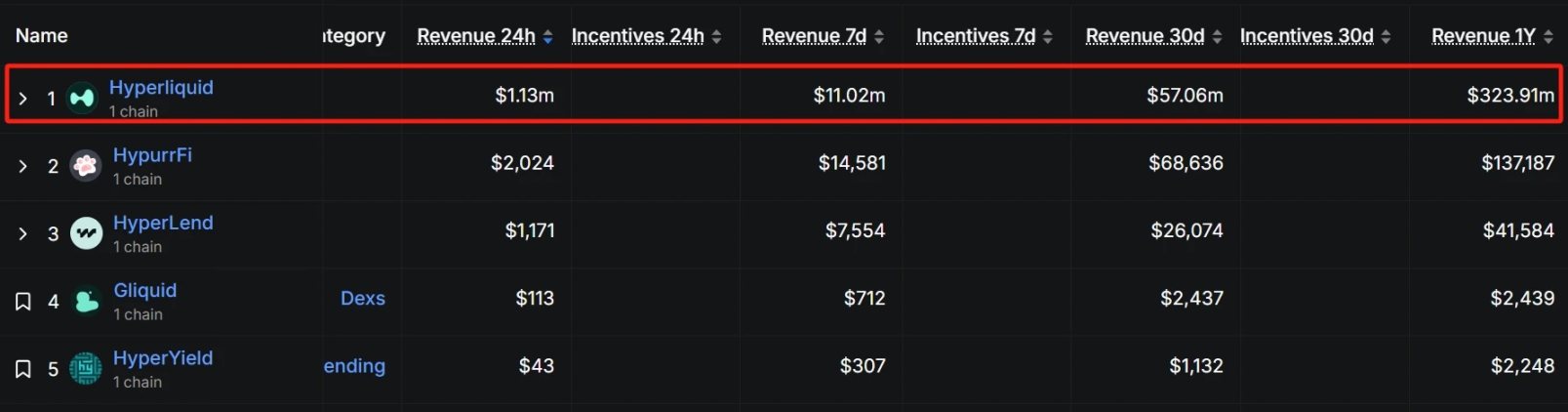
Data from defillama.com indicates that Jupiter’s annualized revenue is around $30 million. Notably, despite being a relatively new DeFi player, Hyperliquid has achieved $320 million in revenue over the past year—a substantial figure indicating immense potential within the DeFi ecosystem. For more details, see “With $1.5 Trillion Total Trading Volume, Hyperliquid (HYPE) Is the King of On-Chain Derivatives—Is It the Next SOL?”
Conclusion
Token buybacks are not a magic solution, but in cycles where confidence is scarce, they serve as an effective narrative entry point. Rather than relying on hollow promises of “vision,” “roadmaps,” or “utility,” projects now need solid revenue models and clear financial actions to regain market attention.
The real competition is no longer about who tells the biggest story, but who can stay alive long enough to see it come true.
Join TechFlow official community to stay tuned
Telegram:https://t.me/TechFlowDaily
X (Twitter):https://x.com/TechFlowPost
X (Twitter) EN:https://x.com/BlockFlow_News
 Odaily