AI-Powered Search Redefined: Who Will Capture the Gateway to the Intelligent Era?
TechFlow Selected TechFlow Selected
AI-Powered Search Redefined: Who Will Capture the Gateway to the Intelligent Era?
In the AI era, search remains the gateway to the ecosystem.
 Navigating Web3 tides with focused insights
Author: Lian Ran
Header image source: Baidu
From Chatbot to Perplexity, search is being rewritten by AI—but this is just the beginning.
Chatbot and Perplexity.ai represent two distinct approaches to reshaping search with AI: one through conversational interaction, the other via an “answer-as-result” model.
While both appear to break beyond traditional search frameworks, they still face limitations—either lacking systematic capabilities or suffering from narrow coverage and shallow reasoning. Today, neither can fully replace conventional search engines.
The true AI-era search product may not yet be fully defined, but the “reconstruction” of search is steadily advancing.
For over two decades, search engines have served as the core gateway to the internet. Their essence lies in keyword-based logic, delivering fast and broad information retrieval. Now, as large models continue to advance, this system is undergoing continuous transformation.
Search is no longer merely about organizing lists of information; it has evolved into an “intelligent assistant” capable of understanding user intent, generating answers, and even predicting next steps. User habits are being reshaped, and industry momentum has quietly shifted.
Take Perplexity, an AI search startup founded less than three years ago. With its innovative “AI-as-answer” product philosophy, it quickly became an industry focal point. In May this year, Perplexity raised $500 million at a $14 billion valuation—doubling its value within just six months. NVIDIA CEO Jensen Huang has publicly stated on multiple occasions that Perplexity is one of his most frequently used AI tools.
However, the real battleground in search isn’t simply about who builds a product first, but who can become the user’s long-term primary entry point for information. In reality, Perplexity still only satisfies relatively simple question-and-answer needs. Internet users’ information-seeking behaviors are far more complex than mere Q&A—they include product searches, service usage, community content browsing, and comparing sources—diverse demands that current products like Perplexity struggle to comprehensively cover.
This is precisely where giants like Google and Baidu have built their core moats over many years. Now, leveraging powerful foundational models and mature ecosystems, they are using the search interface as a hub to reconstruct a new generation of AI product ecosystems.
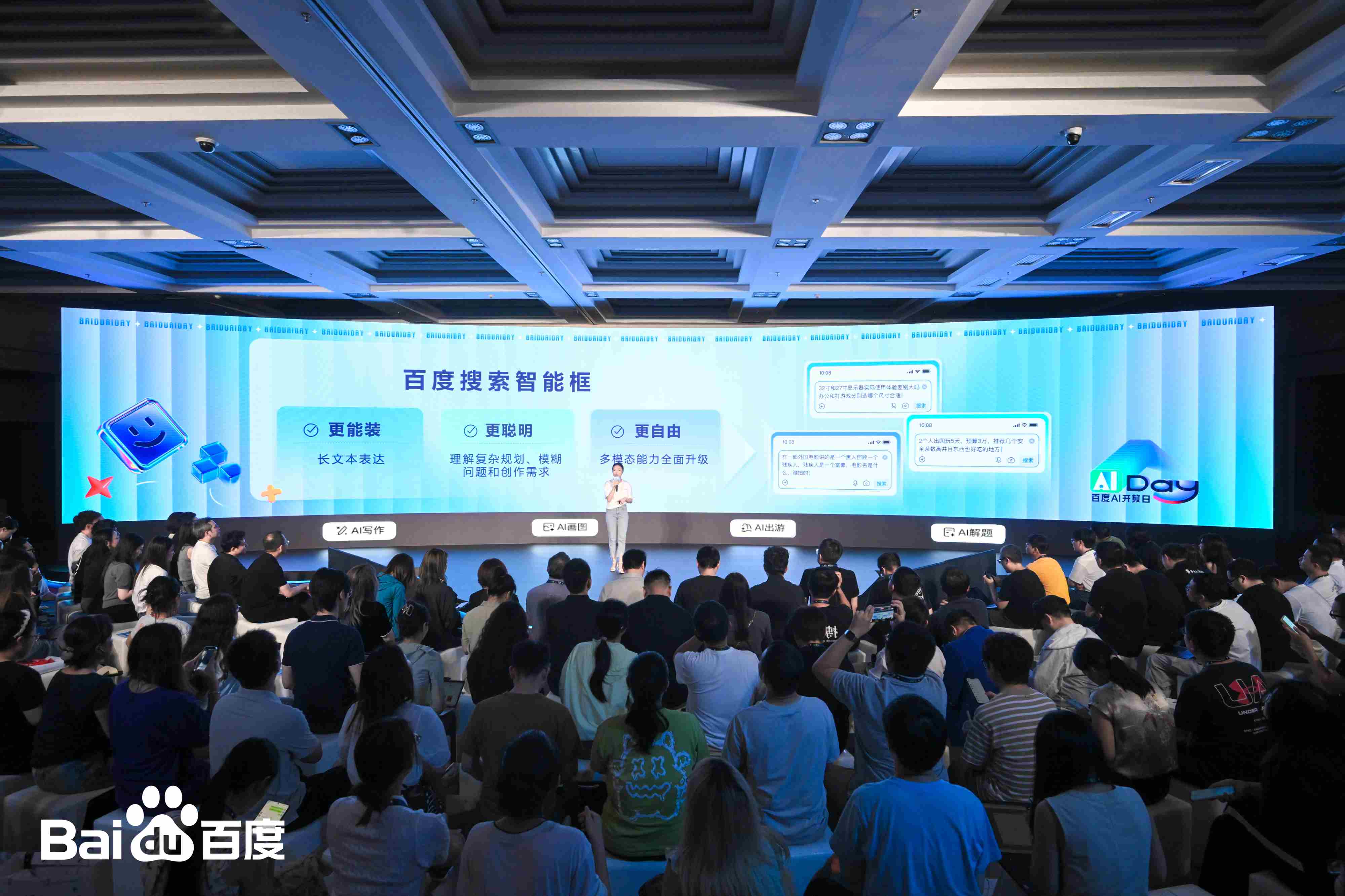
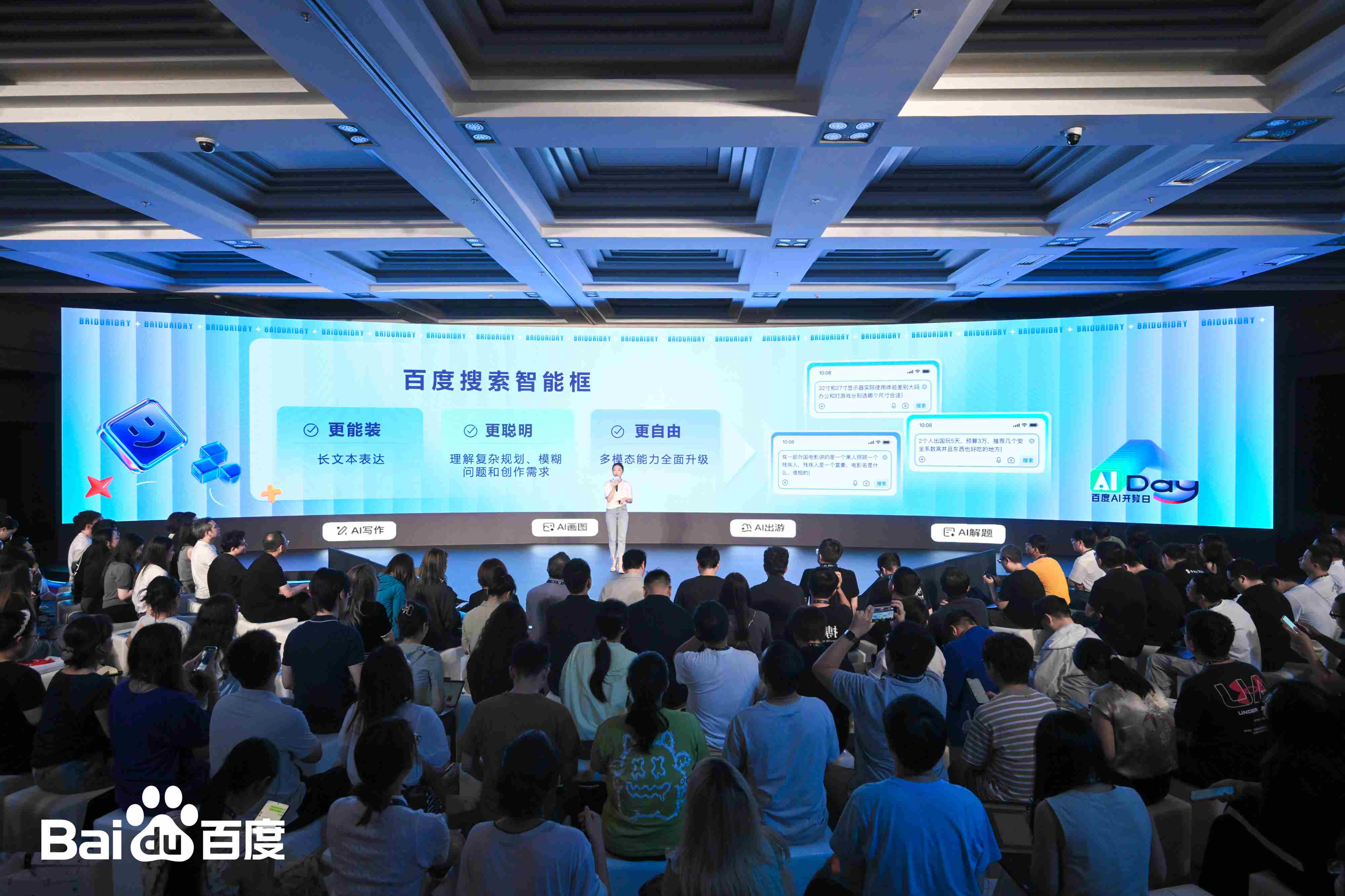
Baidu, for example, recently unveiled its most significant homepage update in years: the single-line search box at the center of the page has been enlarged. A new “Deep Search” toggle appears in the lower-left corner, alongside multimodal input features such as voice, file attachments, and image uploads. Below the search bar, a suite of AI-powered tools—AI Search, AI Image Generation, AI Writing, AI PPT, AI Reading—have been rolled out all at once.
These interface changes reflect Baidu’s attempt to innovate the underlying logic of search in the AI era—not just cosmetic adjustments, but a systemic redesign centered around “input” and “capability orchestration.” In the new Baidu App, users can directly input lengthy text, upload documents or images, and even one-click invoke AI tools to complete tasks. The search box evolves from a starting point for “finding information” into a central hub for “invoking capabilities.”
Beyond adjusting interfaces and input methods, deeper transformation comes from fundamental upgrades to its AI capabilities. Leveraging key technologies such as large models, multimodal processing, Agents, and MCP (Model Calling Platform), Baidu Search now goes beyond answering questions to performing complex tasks like writing, image creation, video production, and coding—expanding the very boundaries of what search can do. At its core, Baidu Search is evolving from traditional “information retrieval” toward genuine “task fulfillment.”
For tech giants like Google and Baidu, search is not just a tool—it’s a central nexus connecting traffic, commerce, and ecosystem. Precisely because of this, their efforts to restructure search demonstrate a more strategic vision and stronger execution capability—the kind of force that could truly reshape the search landscape.
1. Search Giants Rebuilding Search
In the AI era, the core of search products is shifting from “complex pages and interactions” to “simple entry points + powerful backend systems.”
As established search leaders, Google and Baidu are each pursuing different paths to transform and rebuild their products.
Baidu is exploring a new evolutionary path for search in the AI era—one distinct from both Chatbot and Perplexity—through systematic reconstruction of its search product.
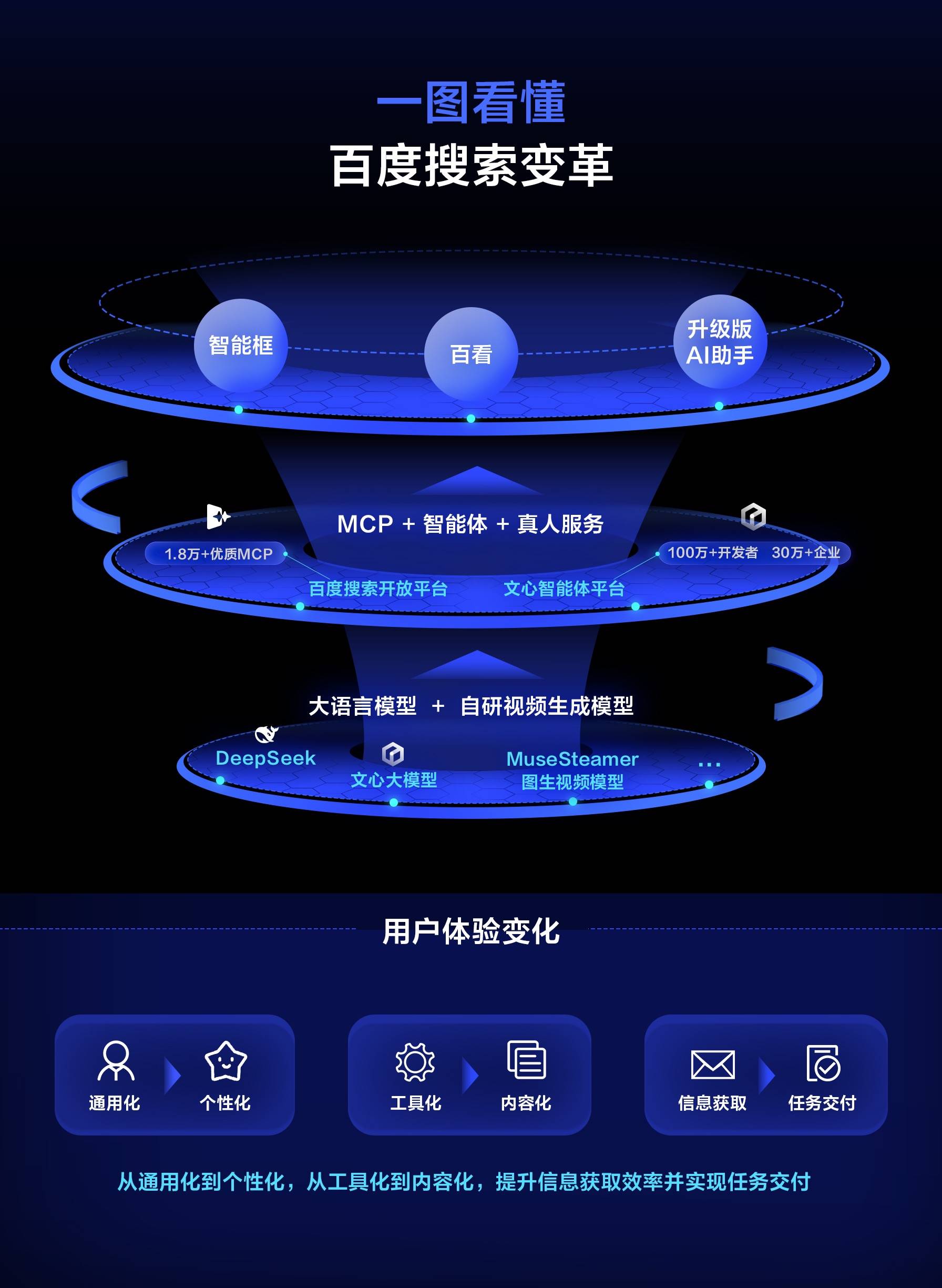
The core of this approach treats the search box as an entry point, embedding richer AI capabilities and service ecosystems, upgrading search from “information list” to “intelligent task orchestrator.” This shift involves not only advances in interaction design, but also comprehensive upgrades in product logic, technical architecture, and ecosystem building.
First, Baidu is redefining the user search experience at the “input” level. Traditional keyword inputs are giving way to more natural and complex forms of expression. Today’s search box is smarter and more open: supporting long-form text, PDF files, and multimodal inputs like images and voice. Users can initiate complex information requests with a single sentence, a screenshot, or even an entire document.
More importantly, this input interface can invoke tools and models, backed by Baidu’s proprietary multimodal large models and MCP (Model Calling Platform), turning search into a system-level capability orchestration process.
On the “output” side, Baidu has completely redesigned result presentation through “Bai Kan.” Instead of a list of links, users enter a rich-media information space where text cards, structured knowledge graphs, short videos, and interactive service modules coexist—delivering content that is both efficient and intuitive.
Furthermore, results integrate Alden tools, agents, and human services, enabling users to not only see answers but also directly complete actions like booking meals, medical consultations, or purchasing tickets. Search is no longer just the starting point—it's now embedded in the middle of the problem-solving chain.
Underlying this experiential overhaul is Baidu’s deeper ambition: transforming search from information retrieval into a task-delivery engine. In this process, Baidu deeply integrates multiple native AI capability modules into the core search workflow.
For instance, “MiaoBi Intelligent Creation” enables one-sentence generation of a 5-minute video; workspace tools allow one-click generation of text, images, and code; Deep Search supports multi-level reasoning chains, enhancing performance on complex queries. The essence of search is no longer crawling and matching, but understanding, generating, reasoning, and executing.
Equally important is Baidu’s ecosystem strategy. Unlike lightweight AI search products, Baidu is building an open AI capability ecosystem anchored around the search entry point, with a focus on opening up and standardizing MCP (Model Calling Platform).
Baidu has built China’s largest and truly usable MCP service platform, covering high-frequency scenarios including lifestyle, finance, e-commerce, and healthcare, hosting over 18,000 quality modules. End users can quickly access these capabilities via AI assistants, while enterprise developers can join the ecosystem through distribution channels like Bai Kan and A Page—creating a closed loop from user demand to service delivery.
This holistic reconstruction—from product functionality to ecosystem integration—represents Baidu’s redefinition of search’s “gateway role.”
If traditional search was a distribution hub for website content, in the AI era, search will become the “super gateway” connecting agents and model services. Behind search is no longer just webpages and links, but an intelligent system composed of large models, MCPs, and agents.
Baidu’s strategic direction targets this central role—making search not just about answering questions, but serving as a central platform for completing tasks, connecting ecosystems, and mobilizing intelligence.
Google is doing the same. Two months ago at I/O 2025, Sundar Pichai declared “the search box doesn’t matter anymore,” unveiling a major overhaul of Google Search.
This isn't merely a change in product form, but the launch of an entirely new search logic: powered by AI Mode and Task Assistant, search is evolving from “answering questions” to “getting things done for users.”
AI Mode is Google Search’s new interface—a system designed to automatically complete tasks for you, rather than just show a results page.
Users need only send a sentence to receive a directly generated, structured answer—or even complete full workflows like price comparison, ordering, and payment. Search moves beyond information retrieval to become an actionable AI.
Behind the scenes, Gemini models and Query Fanout technology power this transformation. The system automatically breaks down a query into subtasks, runs parallel searches across multiple data sources, performs background reasoning and integration, and delivers a visual, multimodal answer page.
Further, Google has introduced Project Mariner—an execution agent system integrated into search. Once it understands user intent, this system can complete entire task sequences across apps and services—finding housing, booking flights, processing documents, filling out forms—without requiring any manual navigation.
This time, Google embeds conversational abilities directly into search, reinventing the search experience and exploring multimodal input and ecosystem-wide interactions starting from Gemini.
Though their paths differ, Google and Baidu share the same goal: building an AI search that appears simple but is profoundly powerful.
2. Who Can Actually Pull It Off?
As large model capabilities rapidly advance, the winner in AI search remains undecided—andwho can actually execute at scale remains the critical prerequisite for victory.
The market has seen rising stars like Perplexity, which leverages its “answer-as-result” model combined with RAG (Retrieval-Augmented Generation) technology to deliver more direct and immediate answers than traditional search.
Others include Arc Search, which emphasizes “reading webpages for users”—similar to a browser-layer version of Perplexity; and You.com, positioning itself as a “customizable AI search engine,” integrating chat, search, code generation, and writing assistance, focusing on being a “multi-functional AI toolkit.”
These lightweight approaches have quickly validated early product forms and attracted capital attention. Yet they still face challenges: weak foundational model capabilities, high compute costs that are difficult to sustain long-term, difficulty building robust ecosystems, inability to create service loops, and unclear business models.
For example, in an April interview, Perplexity CEO Aravind Srinivas revealed that launching new features like DeepSeek and Deep Research quickly exhausted computing resources, forcing them to seek partner support. The cost per query continues to rise, creating urgent demand for more scalable compute solutions.
They move fast, but cannot avoid fundamental issues or build lasting moats—let alone support the role of a primary information gateway in the AI era.
In contrast, core players from the search era—Google and Baidu—while not always the fastest movers, possess mature large model systems and comprehensive product portfolios. They also benefit from the robust infrastructure honed during the search era, enabling them to understand complex tasks and close service loops effectively.
Compared to lightweight products reliant on user subscriptions or ads, platform-scale search engines offer diverse monetization avenues—service referrals, API usage, content distribution, native transactions—giving them more sustainable business models in the AI era.
More crucially, they are systematically building closed-loop ecosystems around search in the AI age—including Agent architectures, MCP (Model Calling Platforms), and content distribution mechanisms—forming a new generation of technical stacks. Search is no longer an isolated information tool, but an interactive hub linking large models, toolkits, and service chains.
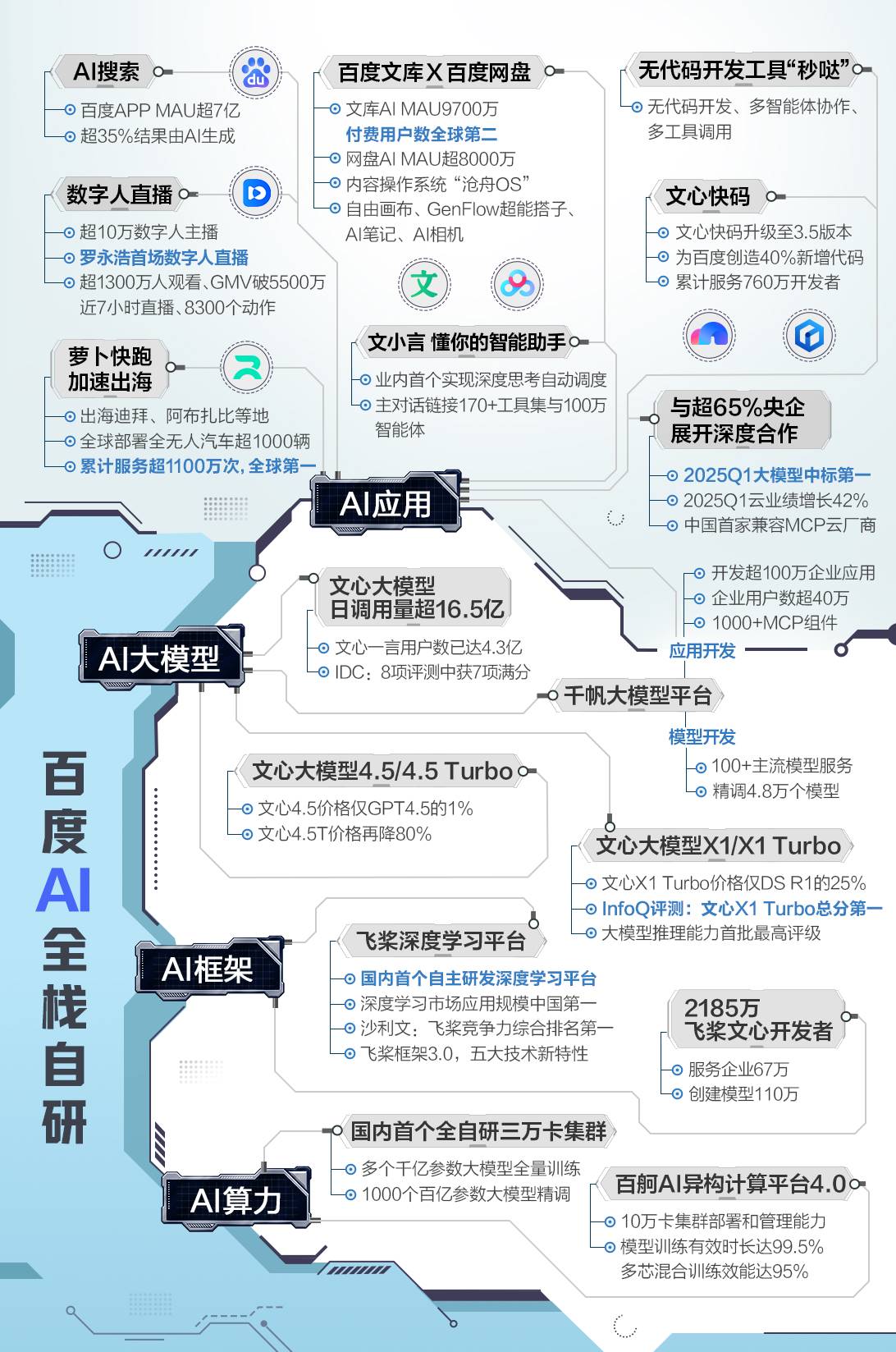
This leads to a growing industry consensus: the true “new search” won’t be a feature or small tool, but a platform-level product system capable of handling frequent, broad, and diverse user demands.
In the internet era, search was the gateway connecting countless websites. In the AI era, search remains the gateway—but behind it lies not just new features or content platforms, but an AI ecosystem built on Agents and MCPs. Just as the internet-era ecosystem was constructed from websites with search as the entry point, the AI-era ecosystem will be built from agents and MCPs—with search becoming the super gateway.
The future of search is no longer a mere information retrieval tool, but the central hub through which users interact with a complex intelligent ecosystem. Mastering this gateway requires not only strong technical capabilities, but also the construction of an open, rich, and efficient ecosystem—one that seamlessly connects information access to task completion. Only those who deeply understand diverse user needs and continuously drive technological and ecological synergy will prevail in this new battle for the ultimate entry point.
The future of search has already arrived. We stand at the threshold of this transformation, witnessing the dawn of a new intelligent era.
Join TechFlow official community to stay tuned
Telegram:https://t.me/TechFlowDaily
X (Twitter):https://x.com/TechFlowPost
X (Twitter) EN:https://x.com/BlockFlow_News
 极客公园
极客公园