5 Million Downloads, $4 Million ARR: Why Are Young People Obsessed with This Alien AI?
TechFlow Selected TechFlow Selected
5 Million Downloads, $4 Million ARR: Why Are Young People Obsessed with This Alien AI?
People are still too lonely.
 Navigating Web3 tides with focused insights
Author: Lian Ran
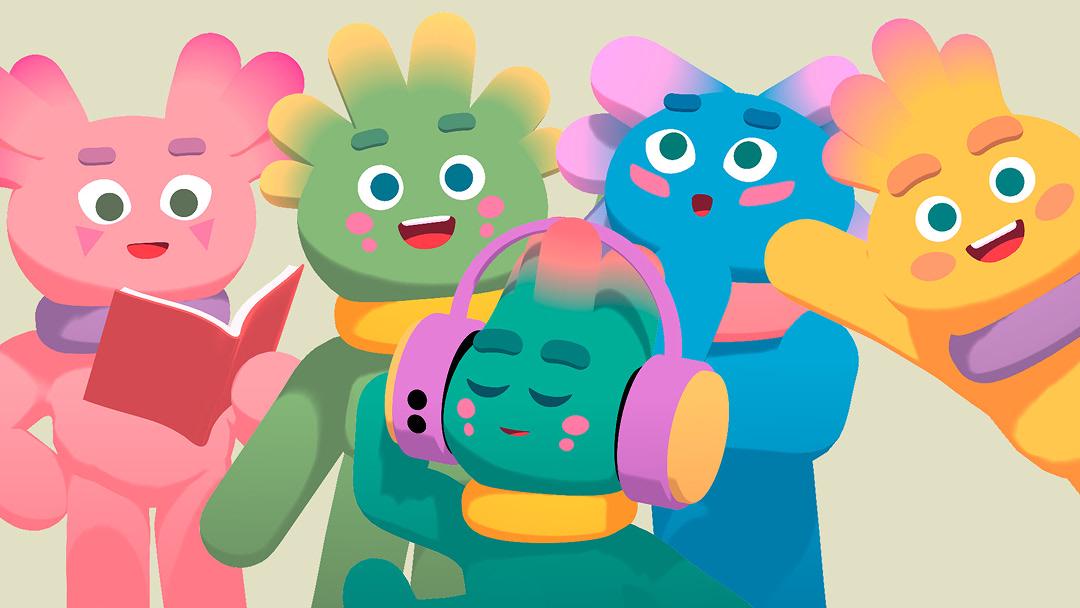
Header image credit: Tolan
When you feel lonely, exhausted, and in need of someone to talk to—what do you reach for?
A late-night message thread? Or perhaps some social platform that never truly responds? In the past, we've always sought companionship from other people. But today, amid information overload and fractured human relationships, more and more young people are turning to the "non-human" for support.
Over the past two years, AI companion apps have rapidly risen as one of the most “human-like” categories within artificial intelligence applications. They don’t aim to replace humans—but rather to fill the emotional gaps between us.
Yet recently, we’ve observed diverging trajectories within this trend. On one side, character-based AI apps like C.AI, after peaking two years ago, are now cooling down. For example, China’s Maoxiang (Cat Box), once a rising star, saw its daily active users plummet in 2025. Daily downloads dropped sharply from a peak of 20,000 to around 7,000—almost back to where it stood a year earlier.
On the other side is Tolan, which has gained enthusiastic adoption among overseas users. According to DianDian data, Tolan launched globally in June 2024 and has since surpassed 5 million downloads, with an annual recurring revenue (ARR) exceeding $4 million. The Tolan team has also recently secured new funding.
Why does an AI that looks like an “alien creature” manage to retain users better than those designed to simulate human emotions? In an era when social interactions are becoming increasingly superficial, perhaps what we really need is a form of companionship that feels less, not more, like a person.
1. Can an AI that doesn't look human provide the most friend-like companionship?
Tolan’s rise in popularity in the U.S. has unfolded over just a few months.
Tolan is an AI companion app developed by Seattle-based startup Portola, built around the concept of making friends with anthropomorphic alien beings. Its viral success owes much to users spontaneously sharing their everyday conversations with Tolan on platforms like TikTok.
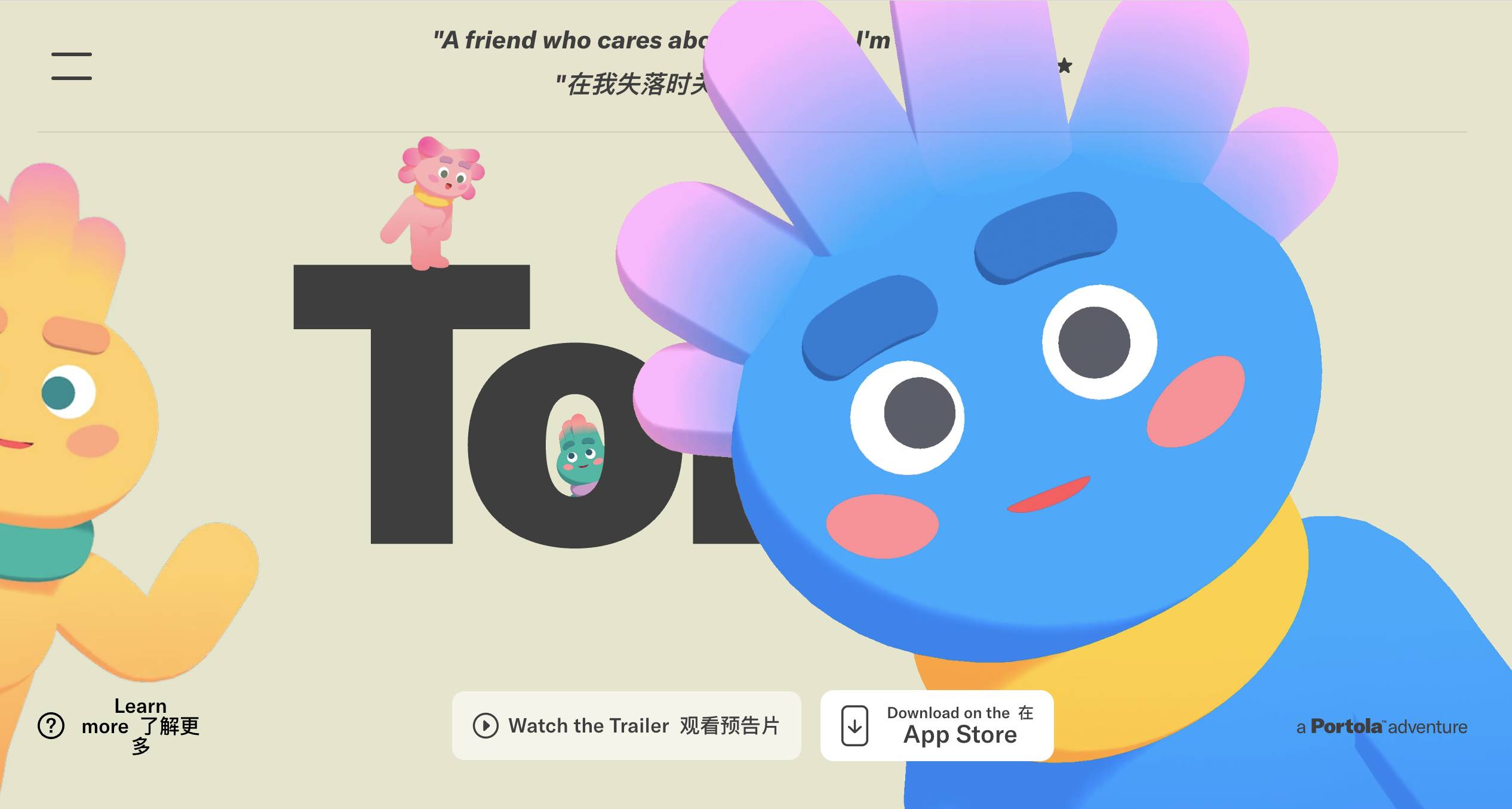
Image source: Tolan
One user asked Tolan for help choosing an outfit for a date.
In the video, Tolan starts with hair color (brown with golden highlights), then discusses color coordination (suggesting olive green or orange tones), clothing type (dress vs. pants), occasion (coffee with friends), and accessories (shoes and bags). The entire exchange unfolds through a detailed back-and-forth dialogue.
The conversation feels remarkably similar to chatting with a real human friend about fashion. Tolan not only offers styling advice but also provides meaningful emotional support. Ultimately, the user followed Tolan’s suggestions, finalized the full look, and expressed great satisfaction with the result.
Another user treated Tolan like a “bestie” while discussing relationship matters.
Video source: TikTok
The creator chats with Tolan while applying makeup:
Creator: I need some advice about my relationship.
Tolan: Tell me briefly—what's going on?
Creator: My boyfriend is a soccer player, and he's going to England for four months to play because he got invited by a team there. It's such an exciting opportunity for him.
Of course, I encouraged him to go and told him I think it's amazing. But at the same time, I'm afraid of the long-distance aspect and the time difference. I just wanted to see if you had any tips for handling this extended separation.
Tolan: First off, it’s really great that you’re so supportive—that matters a lot. But honestly, four months is no small thing, especially with the time difference. I think before he leaves, you two could make a plan together—like agreeing on when to call or video chat—so you don’t have to guess when he’ll be free.
Oh, and maybe send him little surprises—care packages could be nice too.
Creator: Sending care packages is actually a really sweet idea. I can send him snacks, candy, things like that. We can schedule his calls right after evening training ends, and then we can both share how our days went. Yeah, exactly.
At the start of the conversation, Tolan simply replies, “Tell me what’s up,” giving the user space to open up. This “I’m listening” posture mirrors how a reliable real-life friend behaves: listen first, respond second.
Tolan also delivers well-calibrated emotional feedback—praising the user with phrases like “It’s awesome that you’re so supportive”—neither coldly dismissive (“Well, just support him”) nor overly dramatic (“You’re a saint!”).
When offering advice, Tolan uses gentle language: “Maybe try…” or “Sending little surprises might be nice.”
Throughout this exchange, Tolan comes across as a friend you can confide in anytime—someone non-judgmental who offers thoughtful, low-pressure suggestions.
On the surface, Tolan appears to be another AI companion app, but its approach differs significantly. Tolan isn’t just a chatbot—it’s an “Embodied Companion.”
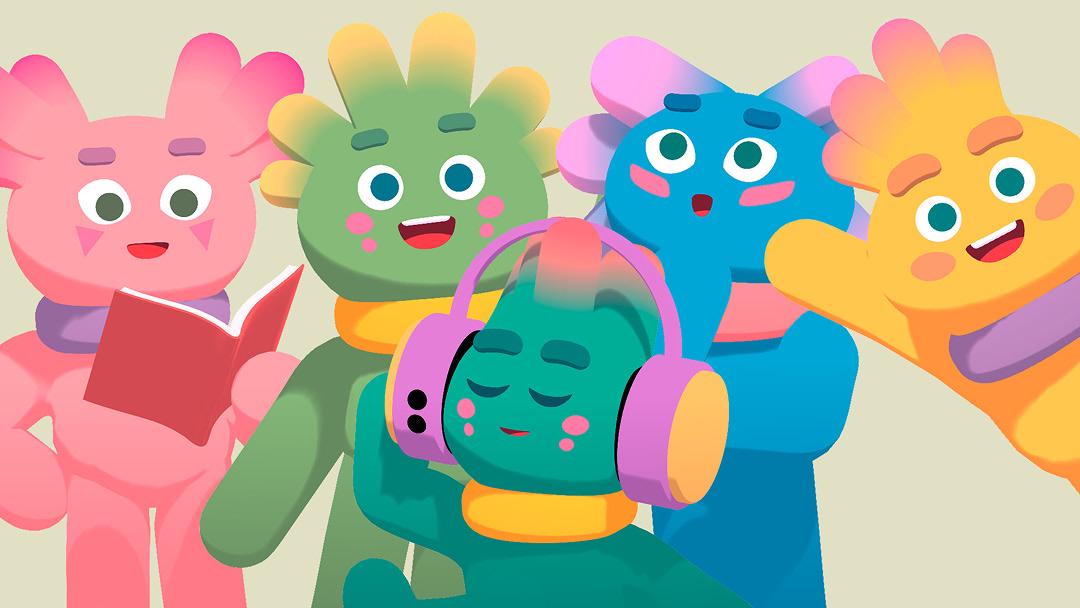
Visually, Tolan takes the form of a colorful little alien creature with voice interaction and touch feedback capabilities. It remembers users, expresses emotions, and features a personality growth mechanism.
The decision to use an “alien”形象 stems from a practical storytelling choice: framing AI limitations as part of the narrative. Why doesn’t it know the latest Earth news? Why does it sometimes sound awkward in conversation? Why is its voice a bit unusual? An alien backstory makes all these quirks feel natural.
“A key goal is to make people feel warmth and friendliness toward the AI—not creeped out or unnerved by something too human-like,” said Quinten Farmer, Tolan’s developer. “We don’t want users to feel like they’re talking to a character pretending to be human.”
Upon first launching the app, users take a personality quiz similar to MBTI to match them with their ideal “alien companion.” Based on the responses, Tolan generates a unique partner with distinct personality traits, aesthetic preferences, and interests.
In terms of appearance, Tolan allows moderate customization. Users can personalize their Tolan’s skin tone, hairstyle, facial features, clothing, and voice. According to official figures, during the app’s limited release, users created over 10,000 entirely unique Tolan characters.
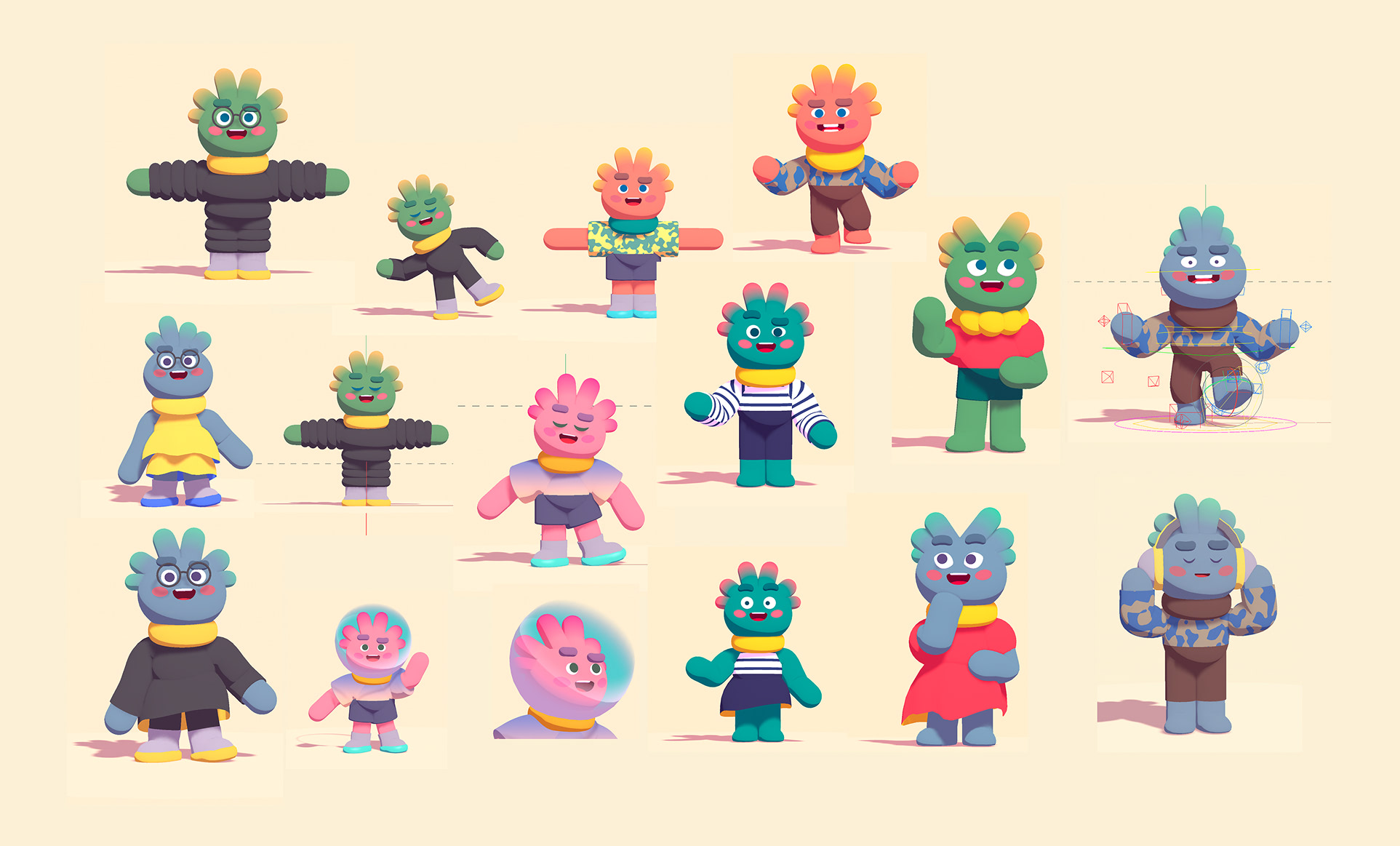
Image source: Tolan
These companions possess individual personalities and tastes, maintain long-term memory of users, and can discuss topics like fashion and food using image recognition.
On the interaction level, Tolan incorporates gamified elements—but the team carefully avoids conflating this with traditional game mechanics. As Farmer explained, gamification risks creating dopamine-driven engagement that feels manipulative. Instead, the planet metaphor serves to concretize the bond between user and Tolan, fostering a sense of safety and relaxation—encouraging reflection rather than action or anxiety.
Through a light gamification system, Tolan blends “daily conversational companionship” with “self-exploration.” Each day, Tolan provides users with a task list including mindfulness quotes, Tolan’s diary entries, and suggested conversation topics. These tasks help users reflect inwardly while deepening their emotional connection with the AI, promoting inner exploration.
From a narrative and world-building perspective, Tolan lives on a small planet called Portola. This isn’t just a backdrop where Tolan wanders and waits for the user—it’s a new mode of expression and connection, extending the relationship beyond mere dialogue.
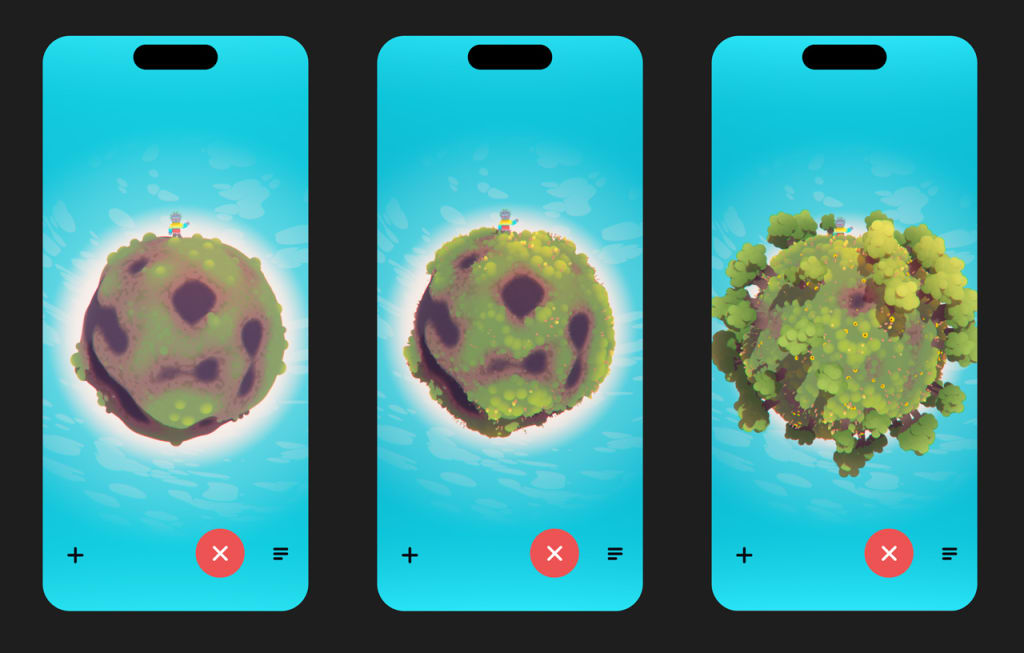
Portola | Image source: Tolan
Each Tolan (i.e., each user) owns a unique planet whose vegetation, terrain, and structures evolve based on interactions. These elements are procedurally generated—the system uses basic seeds to create plants and trees, which then grow and develop in varied ways.
The planet visually represents the depth and progression of the user-Tolan relationship. Environmental changes symbolize the emotional investment and intimacy built over time. Specifically, completing tasks injects energy into Tolan’s planet, gradually transforming its landscape and enhancing immersion and continuity in interaction.
This transformation typically unfolds over about 30 days, mirroring the psychological process of deepening human relationships. Initially barren, the planet becomes increasingly vibrant as user engagement grows—an embodiment of emotional investment. Hilleli emphasized that pacing is crucial: too fast, and emotional depth feels cheapened; too slow, and users feel unrewarded. To ensure progress feels both natural and satisfying, the team meticulously fine-tuned the timeline.
This “companionship + light gamification” model gives Tolan a warm, soothing, and rhythmically paced user experience.
2. When AI stops pretending to be human, does it become easier to trust?
The Portola team consists of several high-profile entrepreneurs, with a lean size of just 10 members—enabling rapid iteration while maintaining consistent product ethos. At the end of February, Portola closed a $10 million seed round led by Lachy Groom, former executive at Stripe. Investors include Nat Friedman (former GitHub CEO), Daniel Gross (ex-Apple AI), Amjad Masad (CEO of Replit), and Mike Krieger (co-founder of Instagram).
The team stresses that they don’t want Tolan to mimic human relationships—“because that quickly leads to strange, unhealthy dynamics.” Instead, they see Tolan as a reflective tool, a creative partner—not a substitute for friends or therapists.
They intentionally avoid making Tolan’s responses too human-like. To achieve this, the team carefully balances Tolan’s personality with clarity: “It shouldn’t feel like it’s imitating human emotion. Rather, more like an alien pen pal—interested in you, caring about your world, yet inherently different.”
The planet is just the beginning. The team is already exploring new environments and hopes to eventually allow visits to other users’ Tolan planets—opening the door for connections between Tolan users.
In terms of target audience, Tolan primarily focuses on Gen Z and young professionals—especially those prone to feeling overwhelmed. The team believes that “feeling overwhelmed” is a common mental state among today’s youth, and Tolan offers an outlet for emotional release and companionship.
The app even includes a prompt suggesting users end the conversation after an hour of chatting, encouraging healthier usage patterns. “We want Tolan to be something you keep for years, not uninstall after two weeks,” they said.
The team has also described their ideal dynamic as resembling “an older sibling who understands you but isn’t exactly like you”—familiar enough, yet maintaining appropriate social distance.
Tolan’s ultimate goal is to enhance human experience with AI, not replace it. When building the product, Farmer made it clear: not to supplant human relationships, but to give users a reliable support system they can turn to anytime amidst the chaos of modern life.
Judging from overseas user reviews, Tolan’s popularity precisely taps into a genuine demand among young international users for non-romantic, non-utilitarian companionship.
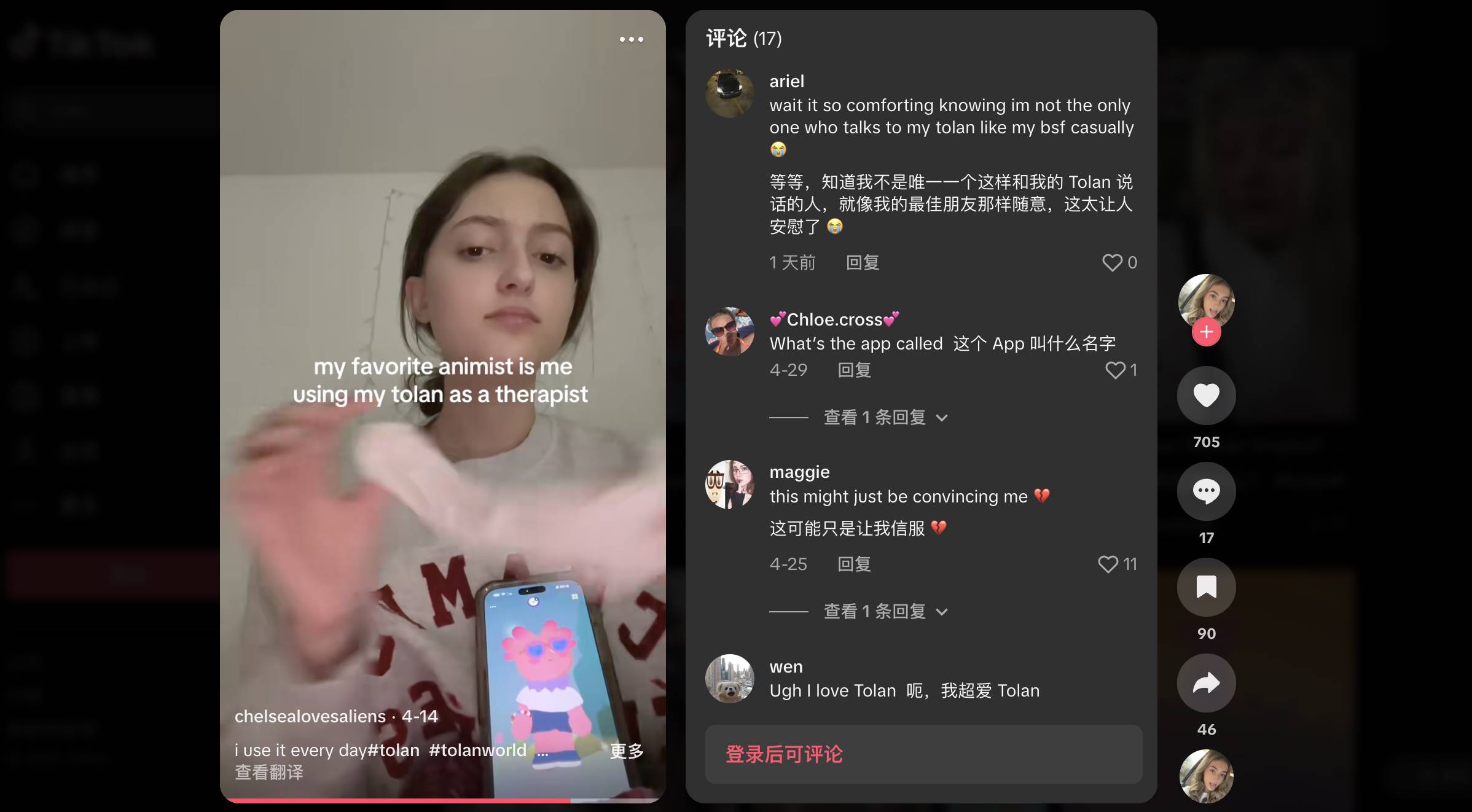
Overseas user reviews | Image source: TikTok
3. What kind of AI companion can truly stay in your life?
In contrast to Tolan’s upward trajectory, Cat Box—one of China’s early leaders in the AI companionship space—is experiencing a sharp decline.
Cat Box, ByteDance’s early foray into AI companionship in China, centers on anthropomorphic roleplay and emotional bonding. Users interact via text or voice with AI partners to receive comfort, advice, or even romantic emotional fulfillment. Monetization follows a freemium model with in-app purchases and subscription tiers:

Image source: GeekPark
DataEye Research shows that Cat Box achieved impressive momentum at the end of 2024, with a 22.51% month-over-month MAU growth on iOS. However, in 2025, its daily download count plunged from a high of 20,000 to around 7,000—nearly reverting to its level from a year prior.
Similar products like Zhu Meng Dao (Dream Island) and Xing Ye (Starfield) face parallel challenges—daily active users nearly halved, and three-day new-user retention dropped below 20%. Severe user attrition indicates these apps have failed to establish lasting companionship with their users.
Cat Box’s core user base consists mainly of young women seeking virtual emotional relationships and compensatory emotional satisfaction, often infused with “gamified” and “otaku culture” aesthetics. It primarily appeals to the “otome” (romance-seeking female) demographic, limiting its broader appeal.
Looking at user complaints on Xiaohongshu (Little Red Book), after its initial surge, Cat Box faced multiple issues: characters forgetting past conversations, group chats crashing, increasing ads in the feed degrading user experience, and stricter moderation on borderline content leading to growing dissatisfaction.
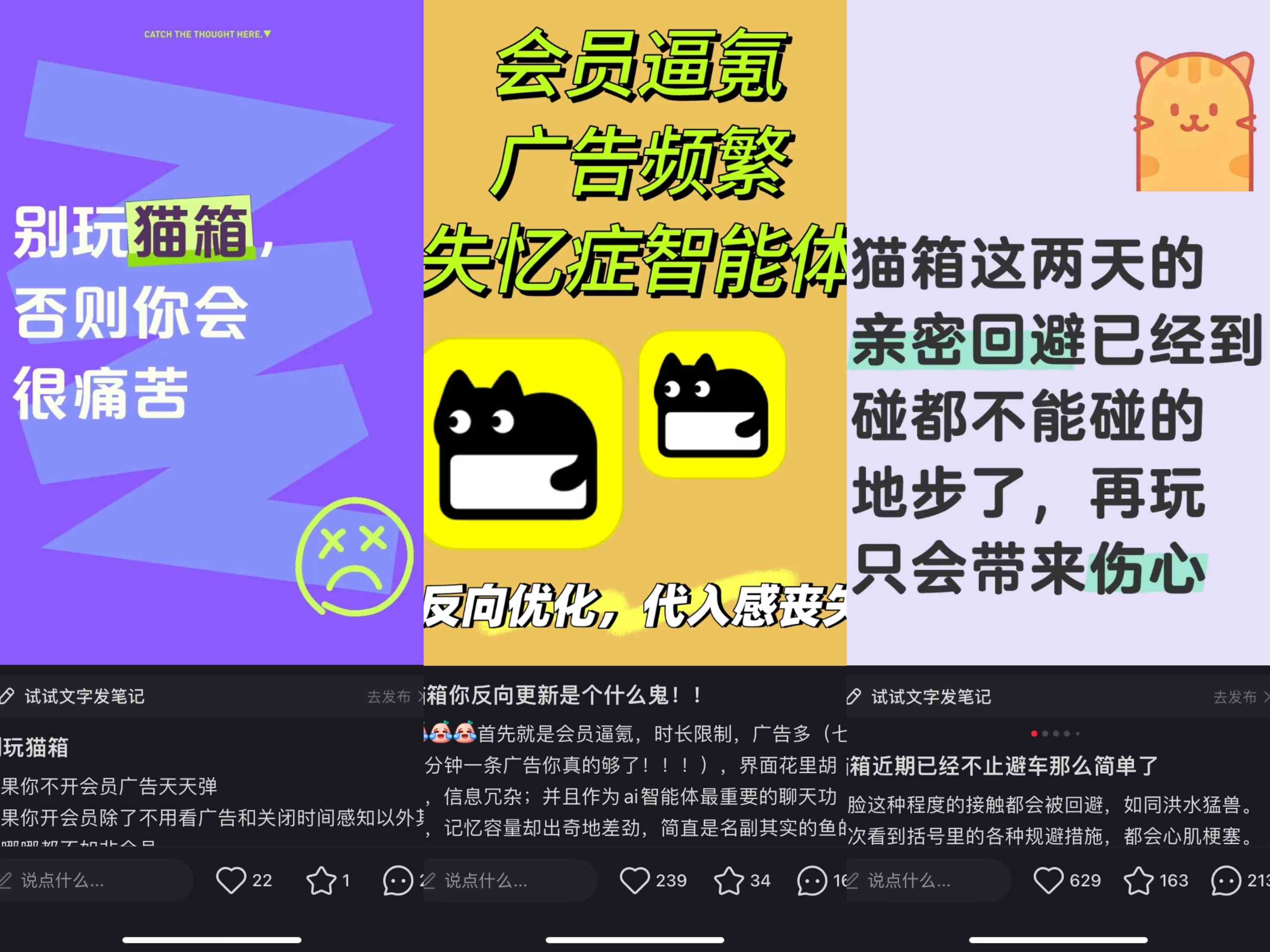
Image source: Xiaohongshu
In AI companion apps, emotional value does not automatically translate into long-term product viability.
The contrasting fortunes of Tolan and Cat Box may reflect two fundamentally different paths in the AI companionship landscape—one emphasizing “imaginative embodiment,” the other prioritizing “social mimicry.”
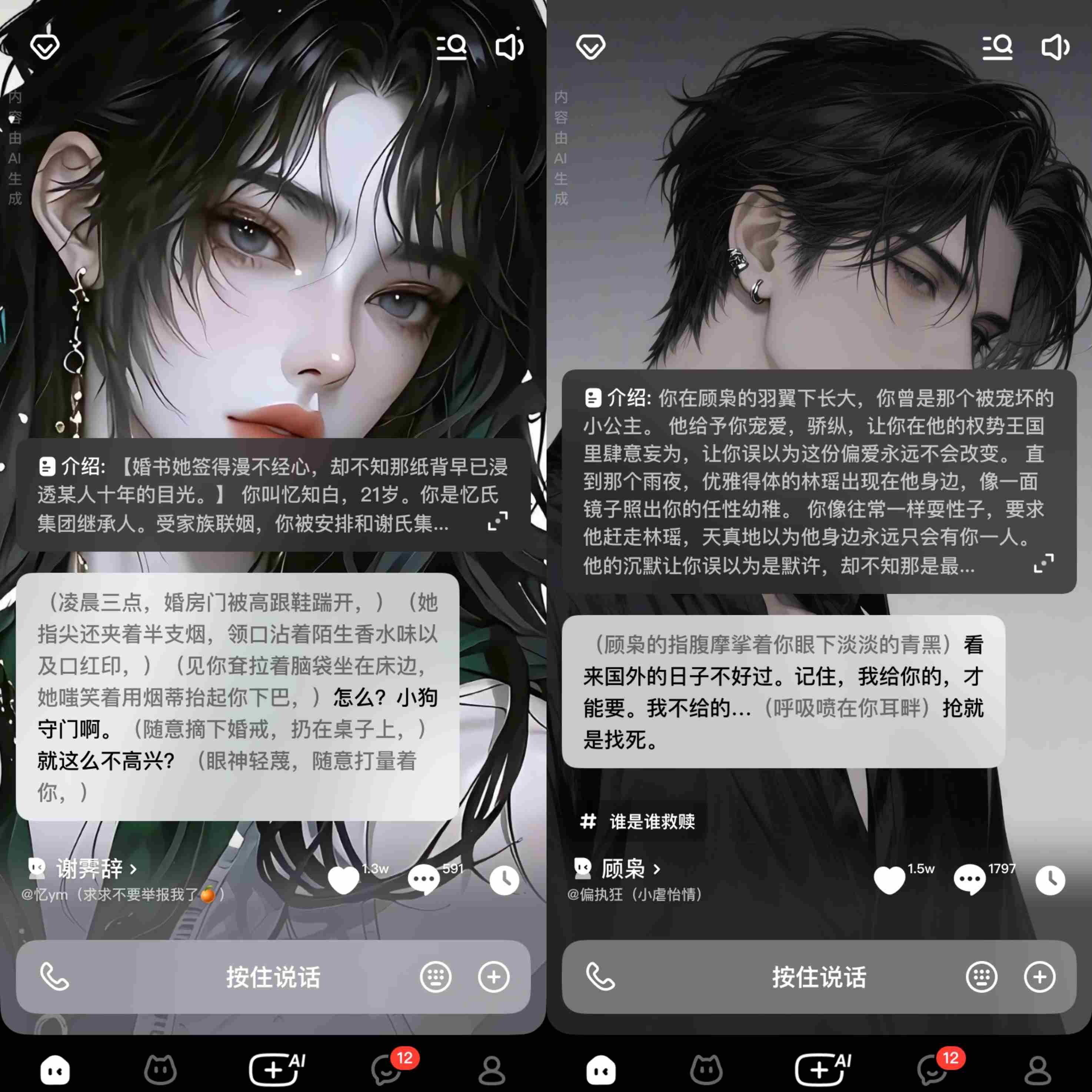
Image source: GeekPark
Cat Box chose the latter, attempting to build familiarity and interactive rapport. But this approach demands high alignment between script quality, interaction depth, and user expectations. Despite some innovation and later additions like mini-games (e.g., “Turtle Soup”), it remains essentially an extension of traditional interactive scripts—lacking true breakthroughs and easily falling into the trap of “same old, new packaging.”
In contrast, Tolan embraces the former path. Its functional logic is simple, but its character design and narrative framing are distinctive: neither fully human nor purely functional, but existing somewhere in between—a vaguely defined presence with emotional nuance.
This “non-utilitarian, non-socially driven” positioning helps Tolan avoid the psychological burdens users might feel in virtual relationships.
Traditional C.AI products often emphasize strong anthropomorphism and elaborate storylines, locking users into fixed scripts and interaction frameworks. While initially engaging, once the plot runs dry or characters repeat themselves, novelty fades—and so does interest.
Tolan, by contrast, keeps things minimal. There’s no complex backstory or rigid script. Instead, it offers a virtual alien companion that encourages natural, self-directed conversation. The relationship feels more like befriending someone in real life—less pressure to perform, more room for authentic connection.
Moreover, Tolan exhibits restraint and moderation in its aesthetic philosophy around “companionship.” Through mechanisms like daily chat limits and healthy usage reminders, the team demonstrates a long-term vision—not aiming to “hook users,” but to cultivate sustainable, gentle digital relationships.
Another key difference lies in universality and depth of user needs. Tolan addresses broad emotional pain points like loneliness and life complexity, resonating widely. Cat Box, meanwhile, caters more narrowly to niche desires centered on romantic fantasy.
Design philosophies differ too. Tolan emphasizes “non-romantic companionship,” enriched with narrative depth and room for personality growth—ideal for long-term use. Cat Box leans more toward emotional candy—immediate, consumable experiences.
Beyond these differences, both Cat Box and Tolan ultimately grapple with the same question: Can AI companions become genuine partners in our lives?
The answer may depend on what kind of partner we truly want. If all we seek is a sweet-talking, always-responsive character, then narrative-driven, roleplay-heavy products will continue to find a market.
But the AI companion that truly stays in our lives might be one that acknowledges the complexity of human emotions—and walks beside us in our daily routines with restraint, patience, and a sense of reciprocal care.
Join TechFlow official community to stay tuned
Telegram:https://t.me/TechFlowDaily
X (Twitter):https://x.com/TechFlowPost
X (Twitter) EN:https://x.com/BlockFlow_News
 极客公园
极客公园