$100 Billion Price Tag: Zuckerberg Buys "Half a Genius" and the Future of Meta AI
TechFlow Selected TechFlow Selected
$100 Billion Price Tag: Zuckerberg Buys "Half a Genius" and the Future of Meta AI
Not just the large models themselves, Meta also aims to become a major AI infrastructure company.
 Navigating Web3 tides with focused insights
Author: Jingyu

"What's the most valuable thing in the 21st century? Talent!"
The weight of Ge You’s line from the movie Lost on Journey years ago continues to grow.
On June 10 local time, media reported that Meta will acquire a 49% stake in Scale AI for $14.9 billion (approximately 106.6 billion RMB), with Alexandr Wang, co-founder of the latter, becoming head of Meta's newly established "Super Intelligence Group."
Based on equity ratios, Wang and his team could receive up to $7.4 billion from this deal—making it arguably the most expensive talent poaching in Silicon Valley history. For context, Google acquired DeepMind back in 2014 for just $600 million.
Zuckerberg wrote in an internal memo: “We will jointly build the future of AI.” Given Llama 4’s underperformance and ongoing attrition within its AI team, what exactly is Meta betting on with this bold move into Scale AI? And can Meta reclaim its position in the AI race with Scale AI and Alexandr Wang?
01 The Most Expensive Swing Player
As one of Silicon Valley’s fastest-rising stars in the AI era, Scale AI has seen its valuation skyrocket—reaching $13.8 billion in just five years. Yet Meta must pay $14.9 billion for a mere 49% stake.
The 49% figure is clearly designed to avoid antitrust scrutiny. But what Zuckerberg and Meta truly want is not the company—it’s co-founder Alexandr Wang himself. This 19-year-old prodigy will now lead Meta’s new Super Intelligence Lab, ushering Meta AI into a new era.
Interestingly, it would be inaccurate to say Meta has fully acquired Wang. He will continue serving as CEO of Scale AI, meaning both Wang and Scale AI will maintain a degree of independence. This may be the most expensive case of “straddling two boats” in tech history. If Scale AI sustains its growth trajectory, Wang could become the fastest wealth-accreting entrepreneur in Silicon Valley—period.
Zuckerberg’s urgency—and willingness to spend at such an unprecedented scale—reflects deep anxiety over Meta falling behind in the AI race.
Despite launching Llama 4 Behemoth in 2024 with a staggering 1.8 trillion parameters, Meta still lags GPT-4.5 by about 12% on key benchmarks like multimodal understanding and long-context reasoning. Worse, reports have exposed serious data quality issues in Llama training: industry estimates suggest roughly 30% of its training corpus comes from low-quality social media content, leading to frequent model hallucinations.
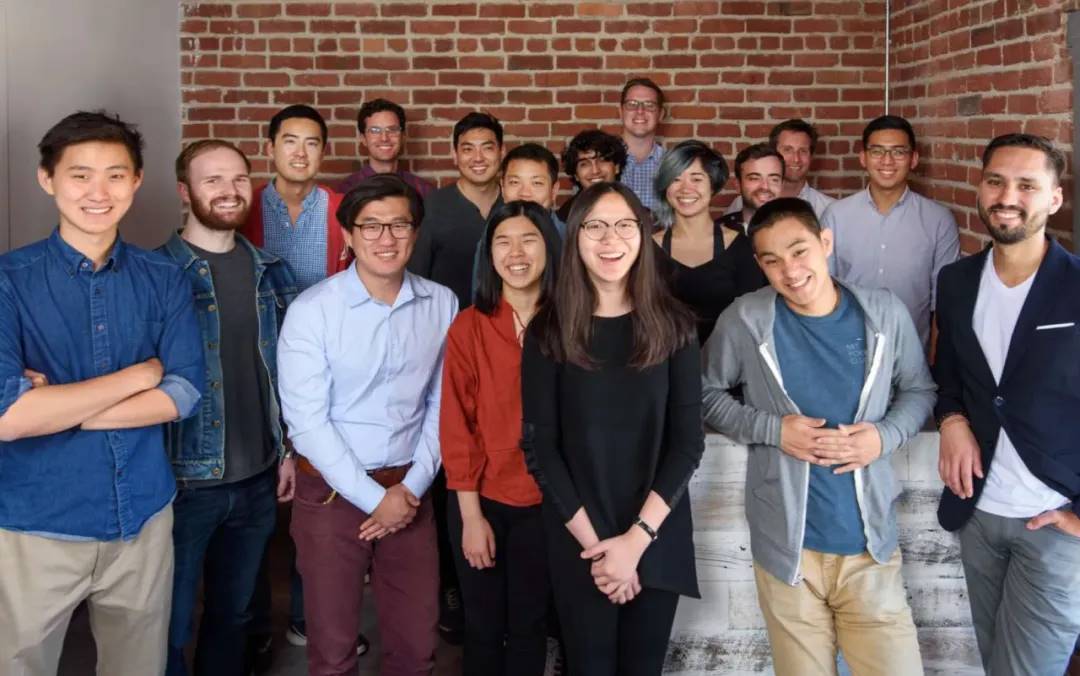
The Scale AI team just two years after founding; Wang is far left|Image source: Scale AI
“What we lack isn’t compute power—it’s clean data and top-tier engineering talent,” anonymously complained a Meta AI researcher. This explains why Zuckerberg is betting big on Wang—an infrastructure-focused visionary renowned for data labeling innovation.
Scale AI’s rise to become the highest-valued data annotation company wasn’t accidental. Its competitive edge lies in transforming raw data into high-grade fuel for AI:
Military-grade annotation accuracy: Using a hybrid human-AI quality control system, Scale claims a data error rate of only 0.3%, compared to the industry average of 5%.
Monopoly on multimodal data: It owns the world’s largest video action labeling database (including 120 million human motion clips) and a cross-lingual text dataset covering 217 languages.
In reality, spending $14.9 billion for half of Scale AI and Wang himself signals ambitions far beyond large models alone.
02 Shifting to AI Infrastructure, Filling B2B Gaps
Data, compute, and models are the three pillars of large language models. As a social media giant, Meta enjoys inherent advantages in data volume and computing resources—but the word “data” comes with caveats. While Meta’s data trove is vast, poor quality limits its usefulness in AI training.
“Behind every GPT response you see, there are 500 data points we labeled,” said Wang—a statement that cuts to the heart of Meta’s insecurity. While OpenAI leverages Scale AI’s high-quality data to train smarter models, Meta remains trapped within the echo chamber of its own social data. Acquiring Scale AI is akin to seizing the ammunition depot of its competitors.
Scale AI controls 35% of global AI training data traffic and serves elite clients ranging from the Pentagon to OpenAI. Meta researchers reportedly grumble internally: “When training Llama 3, we waste 30% of our compute power cleaning junk data, while Scale AI achieves 99.7% annotation precision.”
With Scale AI’s precise data cleaning and labeling capabilities, experts estimate Meta could reduce data contamination rates from 15% down to 2%, shortening the training cycle for the next-generation Llama 5 by 40%. Insiders reveal that the experimental “Llama 5 Behemoth” is already being tested with a 3 trillion parameter count, specifically aimed at advancing toward AGI.
Moreover, Scale AI’s labeling systems are already deeply optimized for Meta’s custom AI chip architecture, creating a closed loop of “data labeling → model training → hardware optimization” that could cut Llama model inference costs to just one-third of GPT-4o’s.
In short, integrating Scale AI will significantly enhance Meta’s Llama models across training quality, efficiency, and cost.
In fact, Scale’s integration could fundamentally reshape Meta’s entire AI strategy. Unlike Google and Microsoft, Meta lacks a cloud platform and has historically been confined to consumer-facing (C-end) applications. With Scale AI’s capabilities, however, Meta plans to offer Scale-powered data services via AWS and Azure, building an ecosystem similar to Microsoft’s “Copilot + OpenAI” model—turning rivals into customers.
If data is the new oil, then by acquiring the largest “refinery” in the game, Meta has secured control over nearly half the AI infrastructure stack.
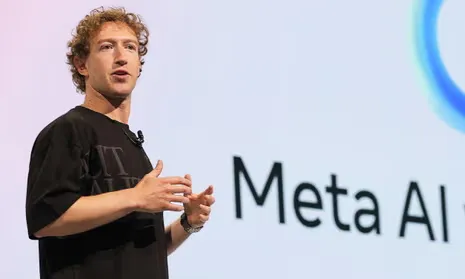
Meta gradually falling behind in the AI race|Image source: Meta
Of course, whether competitors like OpenAI and Anthropic will actually buy into Meta’s offering remains uncertain. Although Meta owns only half of Scale AI (and half of Wang), the perceived neutrality of Scale AI has already raised red flags. OpenAI, for instance, is accelerating collaboration with Handshake, a rival annotation firm.
Still, given Scale AI’s overwhelming dominance in data labeling, completely severing ties in the short term isn't practical. At least for now, even AI giants remain dependent on Scale AI’s services.
Even if former Scale AI clients begin reducing orders, Meta and Scale AI are already developing alternative revenue streams—particularly in government and defense sectors. Reports indicate Scale AI has secured over $200 million in contracts from U.S. military agencies. Furthermore, Scale AI is expanding into vertical AI applications tailored for defense use cases, where Meta’s enterprise sales muscle and brand credibility can provide significant momentum.
Rumors suggest the massive Meta–Scale AI deal includes a hidden earn-out clause: if Scale AI fails to achieve annual revenue growth below 80% over the next three years, Meta gains the right to acquire the remaining shares at a discounted price. In other words, Wang must not only make “Meta AI great again,” but also ensure Scale AI maintains explosive revenue growth. Clearly, B2B business will be a key growth engine for both parties.
For Meta’s existing teams, Wang’s arrival—as a dual-role leader straddling two companies—will create a powerful “catfish effect.” Meta has long been known in Silicon Valley for its strong academic culture; the open-source, democratizing ethos of Llama stems directly from this mindset. But Wang’s relentless focus on “data-first thinking” is bound to shake up and transform Meta’s current AI organization.
Media reports claim that shortly after joining Meta, Wang canceled three academic research projects, pushing the team toward more pragmatic, product-oriented directions.
Setting aside potential antitrust hurdles, Meta’s massive investment in Scale AI and Wang could redefine its role and trajectory in the fiercely competitive AI landscape. This move allows Meta to rapidly close the gap with rivals in model performance, while enabling the social media titan to evolve from an application-layer player into a foundational AI infrastructure provider.
At its core, this high-stakes gamble represents Meta’s attempt to rewrite the rules of AI competition through capital power. As Silicon Valley analyst Sarah Guo put it: “While everyone else is busy building cars, Meta has bought the entire highway—no matter who’s driving, they’ll have to pay tolls.”
Join TechFlow official community to stay tuned
Telegram:https://t.me/TechFlowDaily
X (Twitter):https://x.com/TechFlowPost
X (Twitter) EN:https://x.com/BlockFlow_News
 极客公园
极客公园