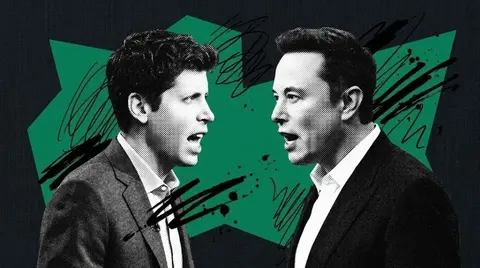
From "White House Favorite" to "Public Enemy Number One": Musk's Reversal Revelation
TechFlow Selected TechFlow Selected
From "White House Favorite" to "Public Enemy Number One": Musk's Reversal Revelation
Elon Musk's dramatic shift from once being a "White House favorite" to becoming Trump's "number one critic" reveals the intricate interplay between modern power, business, and politics.
 Navigating Web3 tides with focused insights
By Oliver, Mars Finance
"I see him build his tower high, I see him feast with honored guests, I see his tower crumble to the ground." Historical dramas seem to don the brocade robes of a new era and replay themselves without warning. When we turn our gaze to Elon Musk, Silicon Valley's seemingly omnipotent "Iron Man," a strong sense of déjà vu arises. There was a time when he was a trusted ally of certain political forces, a "White House favorite" who mingled easily with centers of power under the spotlight, where every word and action could stir waves in public discourse and be interpreted as pivotal signals shaping the direction of influence. Yet, as the game of politics constantly evolves, this tech titan has abruptly turned his guns around—transforming from a frequent guest at the table into an outspoken, sharp-tongued "number one hater."
This dramatic reversal is more than just a personal feud; it acts like a prism reflecting the complex entanglement of modern power, commerce, and politics. Musk’s transformation offers us a vivid "revelation": it exposes the fragility and unpredictability of influential figures caught in political whirlwinds, and allows us to glimpse the shared fate of history’s reformist "strongmen." If history truly is a mirror, what timeless patterns can we discern from Musk’s abrupt pivot from "favorite" to "hater," and what lessons might serve as warnings for future generations?
The Eye of the Storm: Musk vs. Trump—A Modern Political 'Karma'?
Comparing Elon Musk to historically ill-fated reformers is no exaggeration. The intense "war of words" between Musk and U.S. President Donald Trump on June 5–6, 2025, played out like a modern-day drama of a once-celebrated "hero" turning into a discarded "outcast." It clearly illustrates the trajectory of this tech magnate’s fall from "White House favorite" to "public enemy number one"—and hints at the potential consequences awaiting him.
There was indeed a brief "honeymoon period" between Musk and Trump. Musk was once a regular visitor to the White House, serving on Trump’s economic advisory council. His immense influence in technology and business made him a valuable asset any politician would seek to court. However, this delicate balance shattered completely when Musk publicly criticized the Trump administration’s flagship "massive spending bill" (the so-called "Great America Bill").
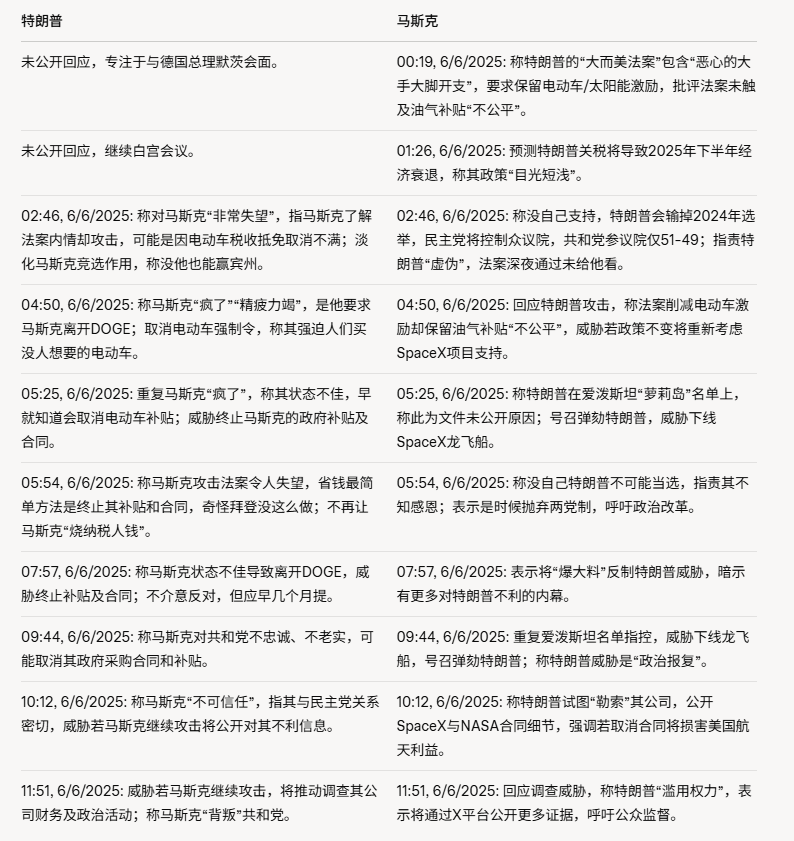
This very public split—filled with mutual accusations, vested interests, leaked scandals, and even political threats—has thrust Musk from a potential "campaign architect" and political insider into direct opposition against those in power. He has become the de facto "number one critic" and a thorn in the side of the establishment. His claims of past contributions now stand in stark, ironic contrast to his current predicament: facing contract cancellations and being labeled as "deranged by personal gain." This sets the stage for our deeper exploration.
The Cost of Change: Why Do Pioneers So Often Fall First?
The modern political drama between Musk and Trump is not an isolated incident. Throughout history, those who attempt to accelerate the wheels of progress—the pioneers—often enjoy only fleeting glory before plummeting into the abyss of misfortune. At its core, change inherently carries profound risks and contradictions.
First, reform inevitably triggers fierce backlash from entrenched interest groups. In any stable social structure, intricate webs of privilege exist. Whether bureaucratic elites, resource-hoarding oligarchs, or gatekeepers of traditional discourse, these groups are deeply invested in the status quo. A reformer is like a boulder dropped into a still pond—disrupting their comfort and privileges. Before a new order fully takes shape, the retaliation from old powers emerges swiftly and relentlessly.
Second, public inertia and fear pose major obstacles to change. Human nature naturally fears the unknown and clings to familiarity. Even when existing systems are deeply flawed, people may resist change simply because they’ve grown accustomed to the slow boil. Sweeping reforms often bring initial pain and chaos. Adjustments to daily life and uncertainty about the future are tests in themselves. When reactionary forces exploit these anxieties, public doubt and discontent can quickly swell into a powerful undercurrent, placing reformers squarely in the line of fire.
Third, the reformer’s own personality and methods often accelerate their downfall. Those capable of shifting history typically possess sharp edges, unyielding wills, and a near-obsessive idealism. These traits are invaluable for breaking deadlocks and launching bold initiatives. But once reforms enter complex, consensus-driven phases, such inflexibility can isolate them politically. Their decisiveness may be labeled "autocratic" by opponents; their visionary thinking dismissed as "delusional" by the masses.
Echoes of History: The Fates of the Overachieving or Unfinished Reformers
History’s mirror reflects clearly the rugged path of reform and the tragic fates of its trailblazers. Few reformers who sought to reshape nations have retired in peace. Most end with unfulfilled ambitions and early deaths, leaving behind sorrow and reflection.
Shang Yang: Revitalized Qin, but Built His Own Execution Ground
Shang Yang stands as the quintessential Legalist reformer of the Warring States period. Firmly believing that “governing the world need not follow one path; benefiting the state requires no adherence to antiquity,” he journeyed west to the state of Qin, where he found a willing partner in the ambitious Duke Xiao. Together, they launched transformative reforms that profoundly shaped China’s destiny. Abolishing the well-field system, opening land routes, rewarding farming and warfare, standardizing weights and measures, implementing commanderies and counties, enforcing strict laws—through cold, efficient measures, Shang Yang transformed a marginalized, weakened Qin into a war machine of unparalleled efficiency, laying the foundation for its eventual unification of China.
Yet, Shang Yang’s reforms came at the cost of shattering aristocratic privileges and overturning traditional social hierarchies. By replacing hereditary nobility with military merit, he opened upward mobility for commoners—but directly threatened the core interests of the clan-based elite. His harsh legal code boosted governance in the short term but earned him a reputation for cruelty and lack of compassion. Even when the crown prince broke the law, Shang Yang punished his tutors, upholding the rule of law but planting seeds for future retribution.
As long as Duke Xiao lived, Shang Yang remained protected. But upon the duke’s death, the former crown prince—now King Huiwen of Qin—took the throne, backed by vengeful nobles who accused Shang Yang of treason. Attempting to flee, Shang Yang ironically found himself trapped by his own law forbidding lodging without proper credentials. He was captured and executed by charioteers tearing his body apart, his entire family exterminated. The chief architect of Qin’s rise became a victim of the very system he built—a fate both tragic and instructive.
Wang Anshi: The Stubborn Chancellor’s Reform and History’s Regret
Bai Song Dynasty’s Wang Anshi was another idealistic yet ill-fated reformer. Confronted with the empire’s chronic weakness and financial crisis, he declared, “Heaven’s changes need not be feared, ancestral ways need not be followed, public opinion need not be heeded,” and with Emperor Shenzong’s support, launched the "Xining Reforms" aimed at enriching the state and strengthening the military. Policies like the Green Sprouts Loan, Recruitment Tax, Market Exchange System, and Baojia Militia touched every aspect of politics, economy, military, and culture.
Objectively, many of Wang Anshi’s policies were progressive, both in his time and in hindsight. He sought to use state power to regulate the economy, curb monopolies by the wealthy, increase revenue, and strengthen national defense. Yet, ideals often collide with reality. First, his reforms threatened the fundamental interests of conservative scholar-officials led by Sima Guang, who denounced the new laws as “harassing the people,” “extorting wealth,” and “violating tradition,” creating massive resistance. Second, good intentions went awry due to poor implementation—local officials misapplied policies, increasing burdens on some citizens and eroding popular support. Third, Wang Anshi’s uncompromising nature alienated allies; he rarely accepted criticism, growing increasingly isolated in court. Ultimately, after Emperor Shenzong’s death, nearly all reforms were scrapped. Wang Anshi died in loneliness and regret, his grand vision unrealized.
Such cases abound in history. Wu Qi, a famed general of the Warring States, reformed Chu and briefly made it dominant—only to be assassinated by arrows from resentful nobles after King Dao of Chu died. Zhang Juzheng, Ming Dynasty grand secretary, revitalized governance during the early Wanli reign, reorganized tax rolls, filled the treasury, and stabilized the state. Yet after his death, he was posthumously disgraced, his property seized, and nearly exhumed and desecrated.
These reformers were all extraordinary figures who tried to single-handedly reverse decline—yet they often became victims of reactionary forces or were abandoned by the very rulers they served. Their tragedies have become a recurring curse for historical reformers.
Musk’s Rebellion: Lessons from History and Reality
The public rupture between Elon Musk and Donald Trump—filled with accusations, threats, and scandal—is far more than a personal spat. It reveals the perils and risks faced by reformers dancing too closely with power. Drawing from the fates of historical pioneers, we can extract several key lessons:
Lesson One: The "Honeymoon" with Power is Short-Lived—When Interests Fade, So Do Alliances. Musk and Trump’s falling-out vividly embodies the political axiom: “There are no permanent friends, only permanent interests.” Their earlier mutual reliance and frequent interactions dissolved like mist once core interests clashed and power dynamics shifted. Musk’s claimed contributions are now seen by those in power as expendable chips. When a reformer or influencer’s utility diminishes—or worse, when their actions challenge authority—they’re quickly cast aside. Musk’s shift from insider to enemy serves as a stark warning to anyone seeking to leverage political power.
Lesson Two: Influence Is a Double-Edged Sword—It Can Carry You or Capsize You. The fates of historical figures like Shang Yang and Wang Anshi hinged on the ruler’s favor. Musk’s global influence makes him both a strategic asset and a potential liability. By openly challenging a powerful political figure and listing past favors, he has placed himself at the epicenter of a political storm. This is no longer just business rivalry or media noise—it’s direct engagement in high-stakes political combat. In such battles, commercial success, technological innovation, and even fan bases prove fragile. Musk’s defiant stance showcases his character and grievances, but also exposes him to greater uncertainty. Will his influence shield him, or hasten his downfall? History suggests volatility. Trump’s revocation of Musk-backed Jared Isaacman’s nomination as NASA administrator, along with hints of canceled government contracts, exemplifies this real-world risk of being "capsized."
Lesson Three: Character Determines Fate—The Courage of Solitude Comes at a Price. Musk’s current role as "top hater" is not just venting personal anger—it’s the ultimate expression of his fiercely independent, uncompromising nature. This trait is a superpower in tech innovation and industry disruption. But in the political arena, excessive boldness and refusal to compromise often lead to isolation. Shang Yang’s harshness, Wang Anshi’s stubbornness—these traits amplified their downfalls. Musk’s escalation—from attacking the "Great America Bill," to releasing the Epstein files, to supporting impeachment—shows zero retreat. His courage is admirable, but history offers countless precedents for the heavy price such defiance may exact.
Conclusion: The Wheel of History and Individual Choice
"The mighty Yangtze flows eastward, washing away heroes of old." History moves forward with its own logic and momentum. Any force resisting societal progress will ultimately be crushed by the wheels of time—an objective truth beyond individual will. From this macro view, those brave enough to challenge outdated orders and drive change contribute, in varying degrees, to historical advancement—regardless of whether their personal endings are triumphant or tragic. Though Wang Anshi’s reforms failed, his brilliant ideas continue to inspire reflection. Though Shang Yang died torn apart, the legal and agricultural foundations he laid enabled Qin’s ultimate unification.
Yet grand historical narratives often overlook the intimate joys and sorrows of individual lives. For those standing at the forefront of change, the cost is often unimaginable. They may spend lifetimes battling societal inertia and prejudice, walking alone through misunderstanding, and even becoming martyrs—paying with their lives for incremental progress.
So where will Elon Musk, the digital age’s "disruptor," end up after his rebellion? Will he repeat the tragic fate of past reformers? It’s too soon to say. The era he inhabits—defined by lightning-fast information, rapid tech cycles, and unprecedented globalization—bears little resemblance to ancient times. His resources, influence, and direct access to hundreds of millions via social platforms exceed anything historical reformers could dream of. Perhaps, with extraordinary wisdom, relentless will, and deep insight into emerging technologies, he can forge a new path and finally break the so-called "curse" that reformers never survive.
Or perhaps he remains bound by the reformer’s inherent fate. When disruptive forces cross untouchable lines, or when personal missteps trigger uncontrollable crises, history may once again coldly cast him aside. Musk’s shift from "White House favorite" to "number one hater" is itself a cautionary "revelation"—reminding us that in the game of power, there are no eternal allies, only eternal interests; and that the road of reform is forever strewn with thorns and uncertainty.
No matter how the future unfolds, Elon Musk’s story will remain a profoundly significant case study of our time. It compels us to reconsider the meaning and cost of change, and to reflect deeply on the intricate dance between individual will and historical currents. For all who care about the future of human civilization, this is a suspenseful, turbulent, and deeply enlightening drama. The alarm bells of history still echo. The reformer’s thorny path continues, winding onward beneath our feet.
Join TechFlow official community to stay tuned
Telegram:https://t.me/TechFlowDaily
X (Twitter):https://x.com/TechFlowPost
X (Twitter) EN:https://x.com/BlockFlow_News