IOSG | Ethereum RWA Boom: Regulatory Shifts and a Brand-New Growth Engine
TechFlow Selected TechFlow Selected
IOSG | Ethereum RWA Boom: Regulatory Shifts and a Brand-New Growth Engine
The data clearly indicates that Ethereum's RWA value has entered a definitive growth cycle.
 Navigating Web3 tides with focused insights
Author: Sam @IOSG
TL;DR
-
Using stablecoin legislation as a starting point, this article introduces recent public interest in RWA before diving into Ethereum-based RWA.
-
Data analysis (with zkSync as a highlight)
-
The emergence of Etherealize and its implications for Ethereum
-
Ethereum has long maintained strong moats in stablecoin issuance and DeFi. With new U.S. policies, can RWA create an organic link between traditional finance and DeFi? As the most credible and decentralized blockchain, what are the key reasons we remain bullish on Ethereum?
Legislative Catalyst and Market Attention
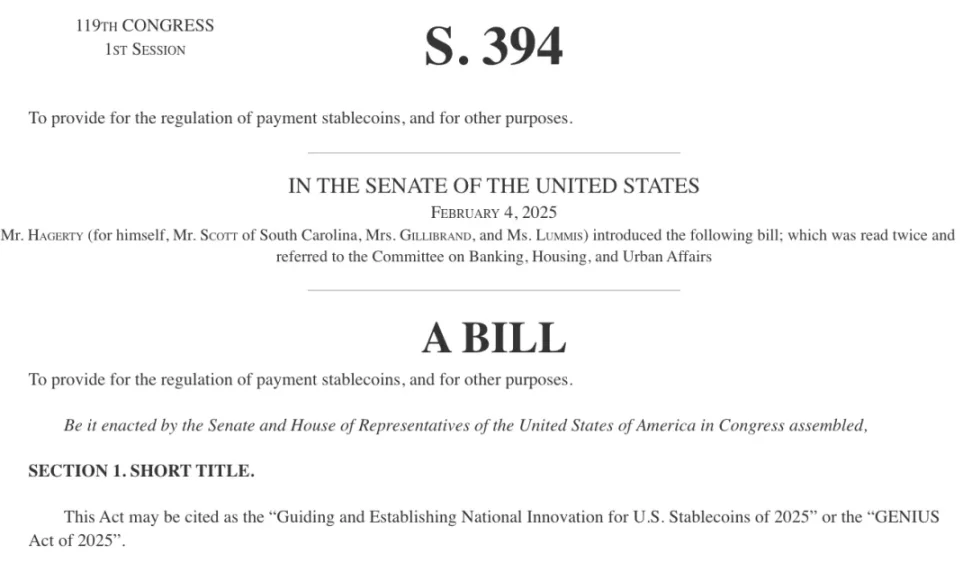
Amid rapidly evolving traditional financial and regulatory landscapes, the recent passage of the GENIUS Act has reignited market interest in real-world assets (RWA). Beyond stablecoins and major legislative milestones, the RWA space has quietly achieved several significant breakthroughs: sustained robust growth marked by notable developments such as Kraken launching tokenized stocks and ETFs, Robinhood proposing to the U.S. Securities and Exchange Commission (SEC) that tokenized assets be treated equally with traditional assets, and Centrifuge issuing a $400 million decentralized JTRSY fund on Solana.
At this moment of heightened market attention and on the cusp of broader adoption by traditional finance, it is critical to examine the current state of the RWA landscape—particularly the position of leading platforms like Ethereum. Ethereum-based RWA has demonstrated remarkable month-over-month growth, consistently maintaining double-digit rates, with 2025 showing accelerated momentum compared to single-digit monthly growth seen in 2024. Another key driver behind this trend is "Etherealize" acting as a catalyst for regulatory engagement, alongside the Ethereum Foundation prioritizing RWA as a strategic focus. At this pivotal juncture, this article explores the dynamics of RWA development across Ethereum and its Layer-2 networks.
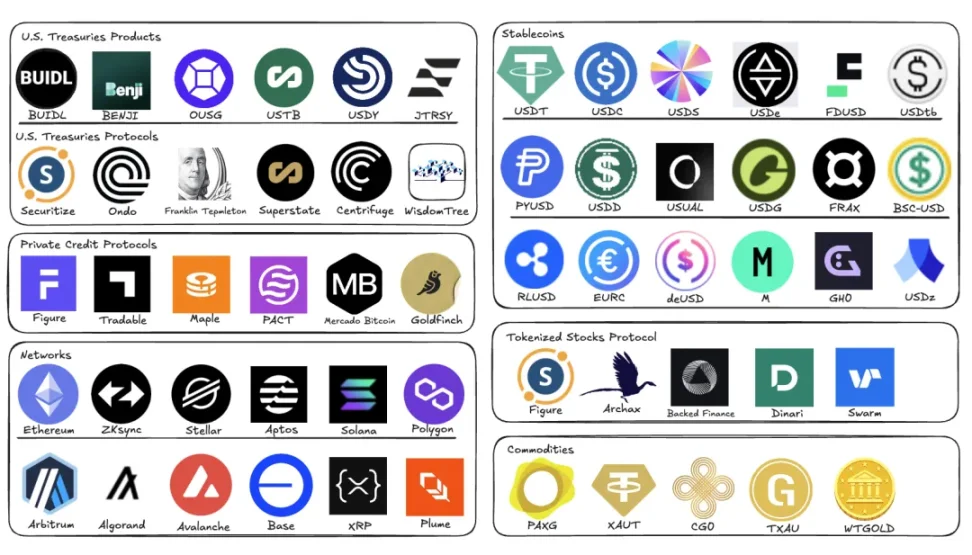
RWA Ecosystem Map, IOSG
Data Analysis: The Big Picture of Ethereum RWA Growth
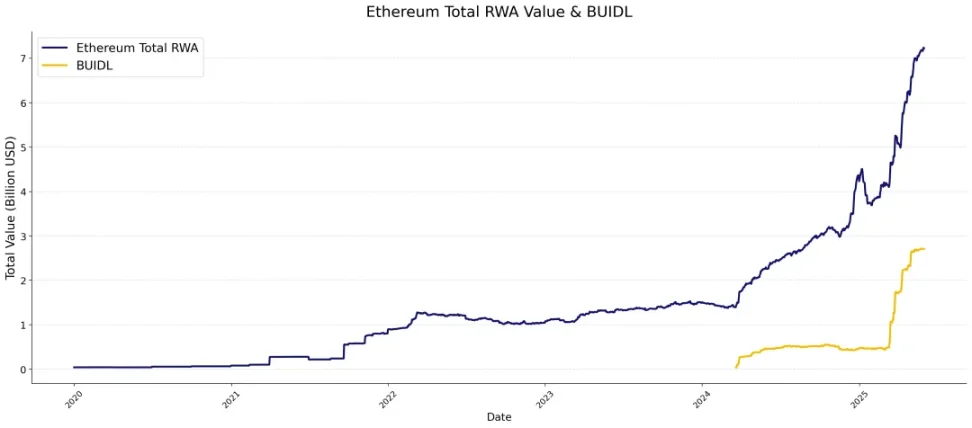
Data clearly shows that the value of RWA on Ethereum has entered a definitive growth cycle. Examining the historical trend of non-stablecoin RWA on Ethereum reveals a striking pattern: for years, total value remained within the $1–2 billion range until entering a rapid growth phase in April 2024. This momentum has continued accelerating into 2025. The primary force driving this expansion is BlackRock’s BUIDL fund, which now manages $2.7 billion. As shown by the orange trend line, BUIDL itself has followed a parabolic growth trajectory since March 2025, significantly boosting the overall Ethereum RWA ecosystem.
RWA.xyz, IOSG
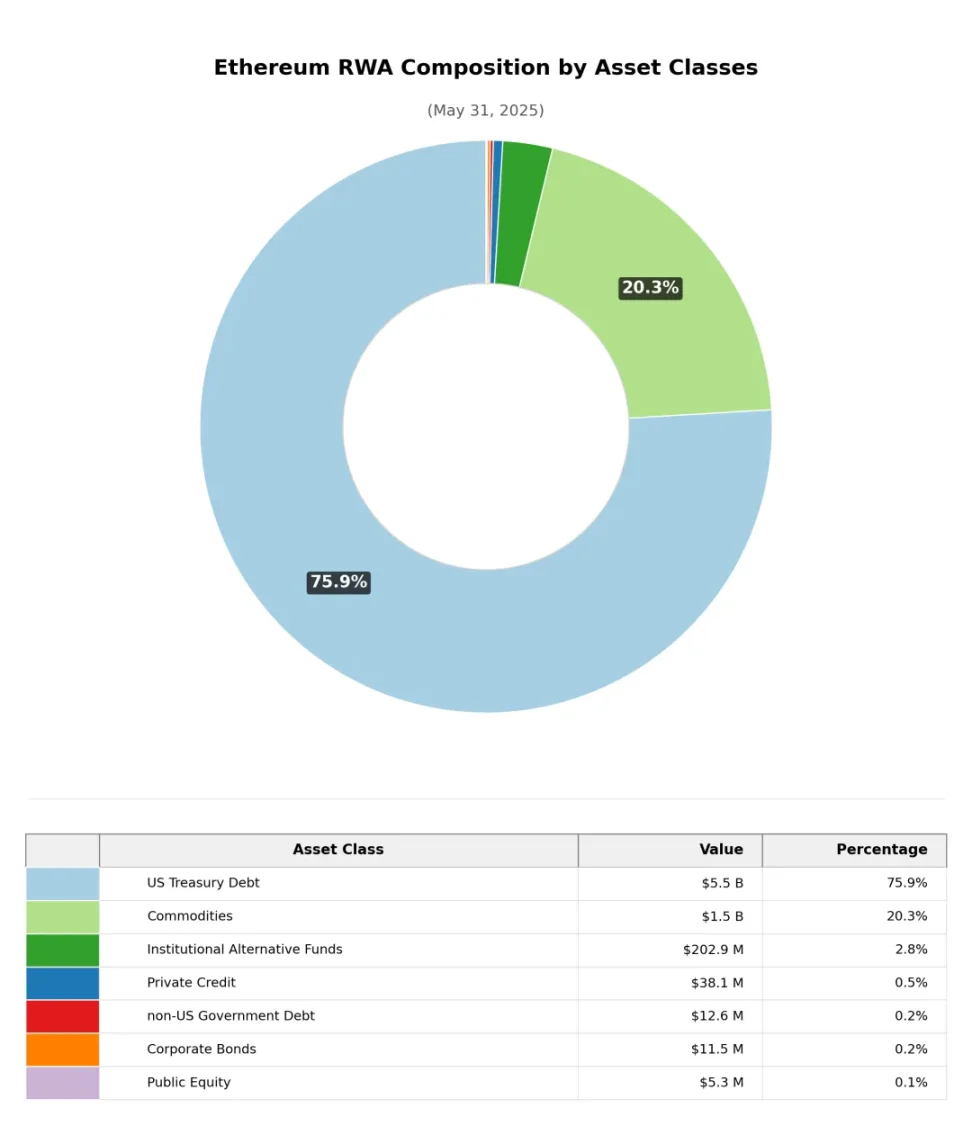
In terms of asset categories (excluding stablecoins), Ethereum’s RWA market cap is highly concentrated in two main types: treasury-backed assets (75.9%) and commodities—primarily gold (20.3%), with other categories making up a small share. In contrast, across the broader crypto RWA market, private credit holds the largest share (57.4%), followed by treasury-backed projects (30.9%).
RWA.xyz, IOSG
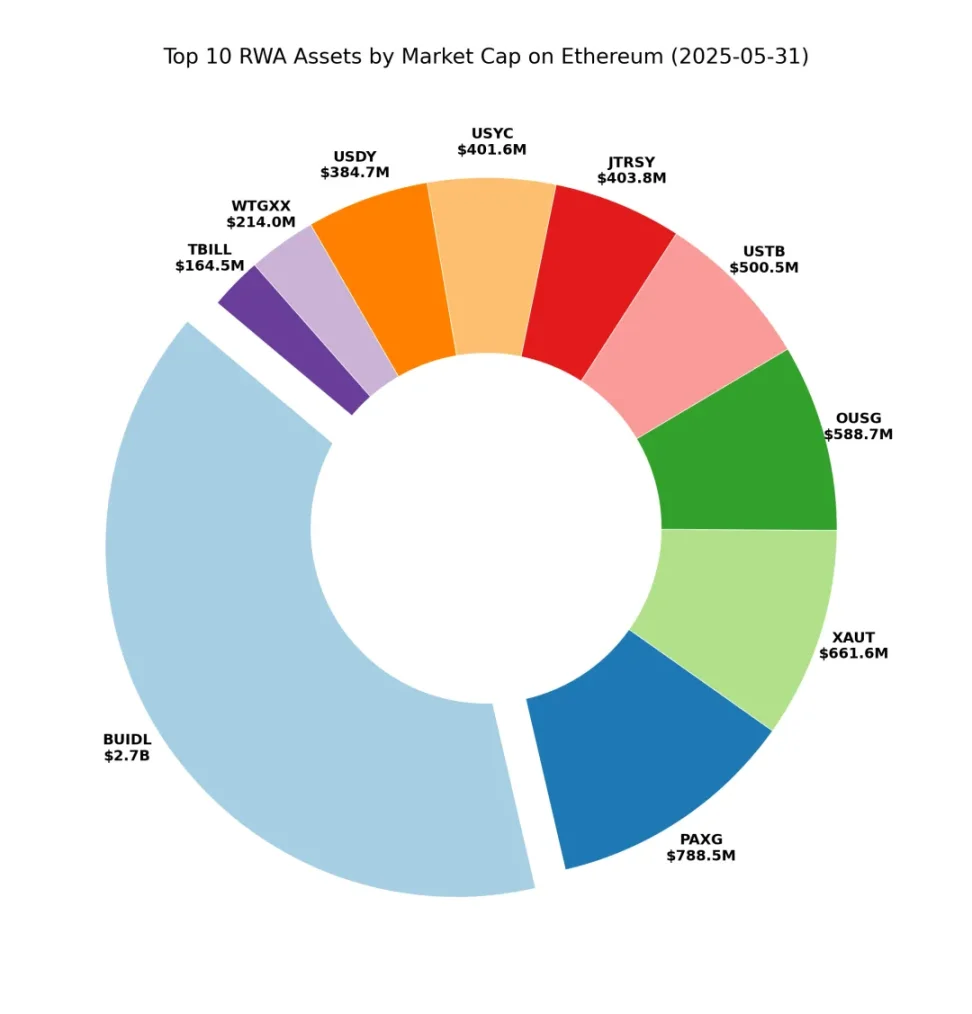
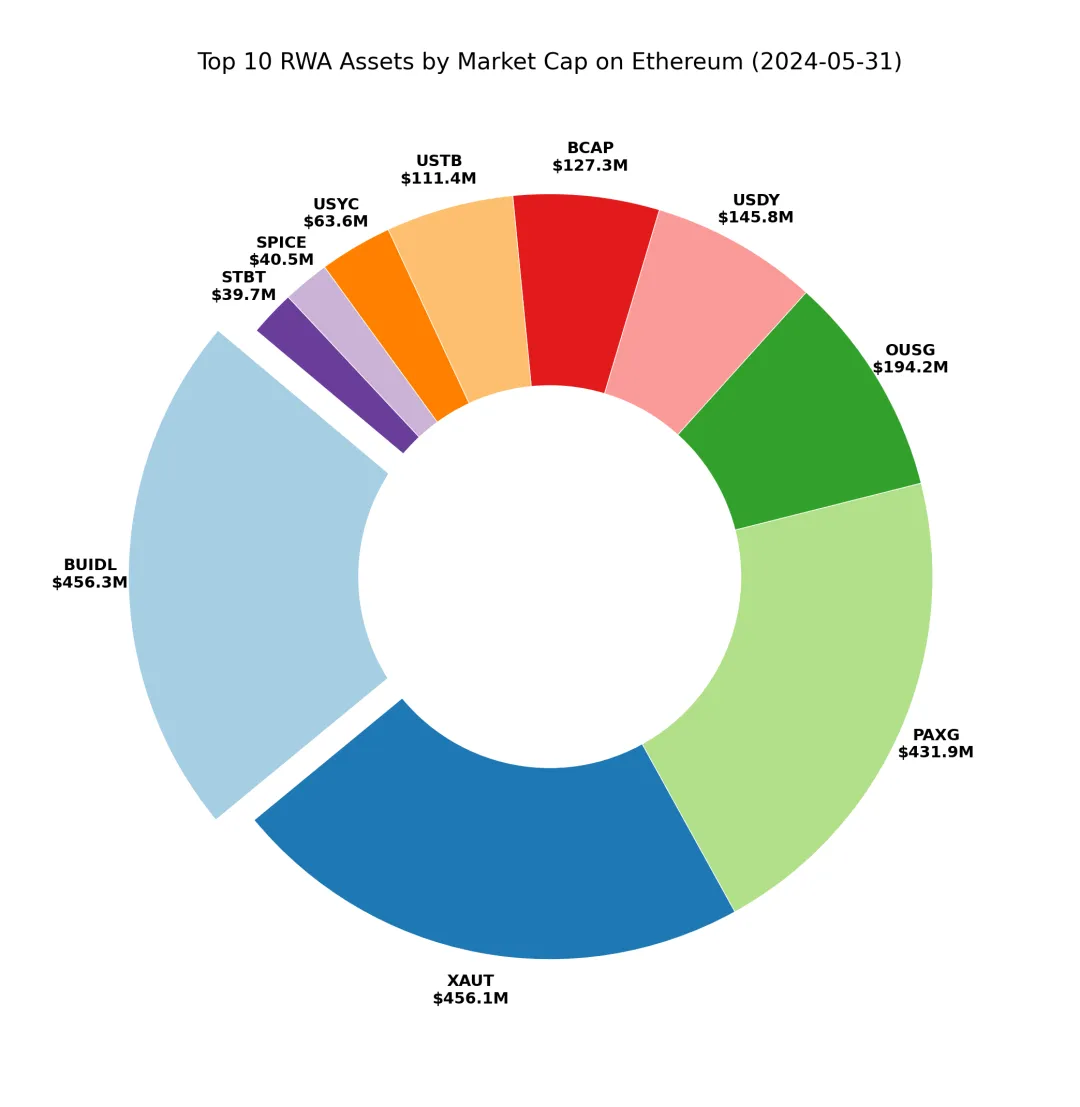
Focusing further on top Ethereum RWA assets, the pie chart clearly illustrates BUIDL’s dominance. A year ago, BUIDL was comparable in size to products like PAXG and XAUT; today, it has pulled far ahead. While the top ten projects have remained largely stable in composition, treasury-based products have grown significantly faster than gold-backed ones, continuously expanding their market share.
RWA.xyz, IOSG
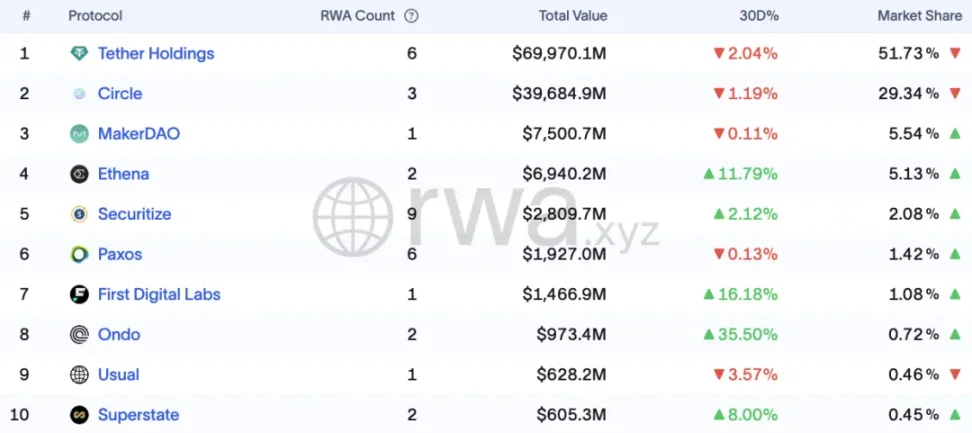
From a protocol perspective, dominant players are currently stablecoin issuers—the top four being Tether, Circle, MakerDAO (Dai ecosystem), and Ethena. Notably, the securities protocol Securitize has surpassed several stablecoin projects including FDUSD and USDC in total value locked, rising into the top tier. Other securities protocols in the top ten include Ondo and Superstate.
RWA.xyz, IOSG
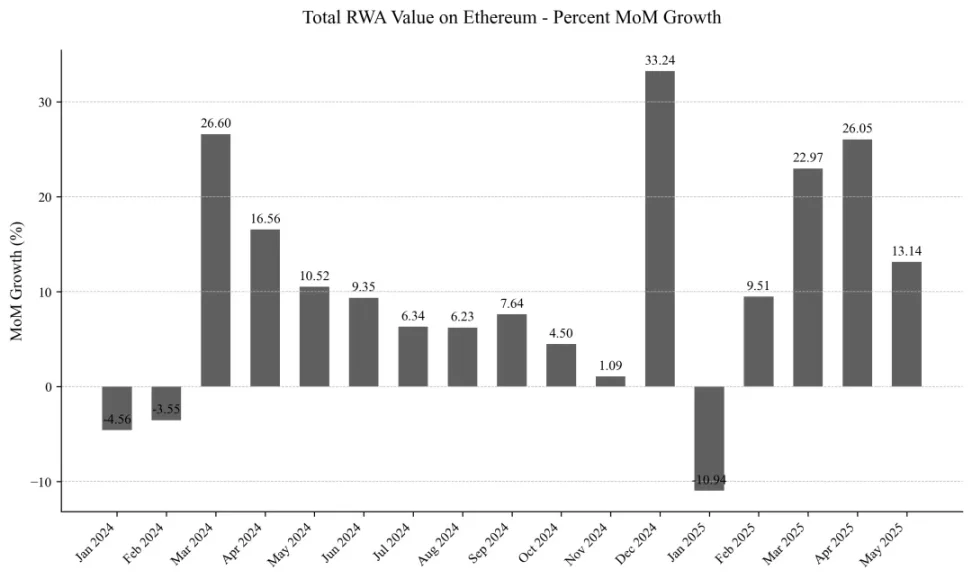
Looking at monthly data from early 2024 to present, the growth wave began in April 2024 with an astonishing 26.6% increase—accounting for one-quarter of Ethereum's total RWA growth over the period. This momentum carried through the next three months. Although growth slowed slightly between August and December 2024, the network still added approximately $200 million per month (around 5% MoM growth, annualized above 60%).
In January 2025, growth surged again with a 33.2% month-over-month spike. After a brief pullback in February, Ethereum recorded four consecutive months of double-digit growth, with April and May both exceeding 20% MoM increases.
RWA.xyz, IOSG
BUIDL
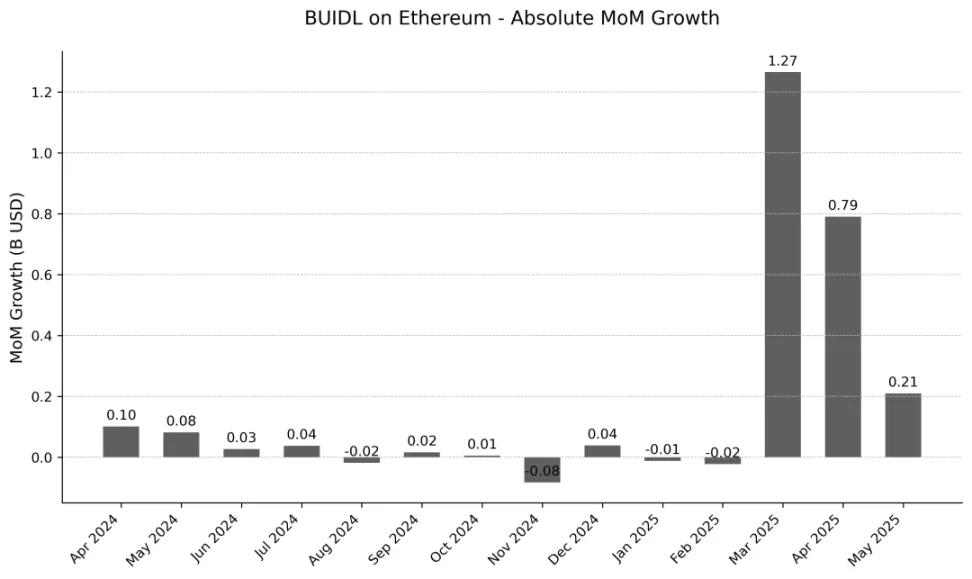
As BUIDL rapidly emerges as the largest RWA project by market cap on Ethereum, analyzing its growth trajectory becomes crucial. The month-over-month growth chart shows relatively steady performance until March 2025, when a sharp acceleration occurred. However, the latest data for May indicates a slight cooling in hypergrowth, though it still posted a $210 million increase, representing an 8.38% MoM gain. The coming months will be a critical observation window—to see whether this deceleration continues or if explosive growth resumes.
RWA.xyz, IOSG
BUIDL’s explosive growth stems from multiple factors. Demand is primarily institutional, and product competitiveness has been a key driver: 24/7 operability, faster settlement than traditional finance, and high yields under a compliant framework. Importantly, integration with DeFi is creating synergies and unlocking new utilities—for example, Ethena Labs’ USDtb, which is backed 90% by BUIDL. Additionally, BUIDL is increasingly recognized as high-quality collateral, with Securitize’s sBUIDL further enabling DeFi use cases.
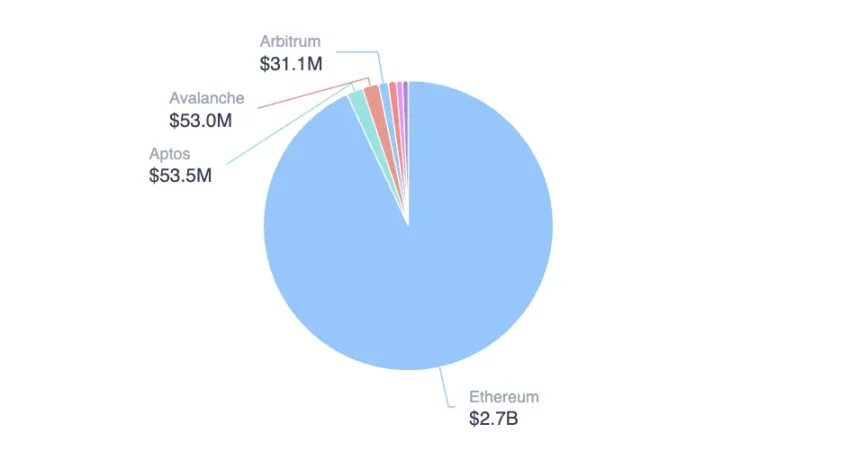
BUIDL’s distribution is highly centralized: about 93% resides on Ethereum mainnet, with negligible presence across other chains. As assets under management continue expanding, BUIDL’s monthly dividends keep setting new records—reaching $4.17 million in March 2025 and soaring to $7.9 million by May.
BUIDL Distribution, screenshot from RWA.xyz
Stablecoins
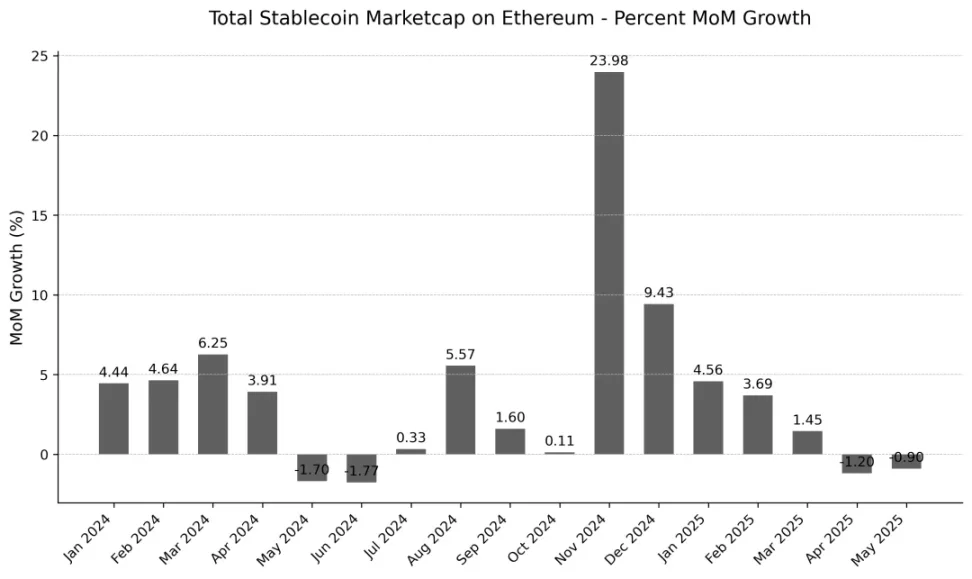
Given that the GENIUS Act will structurally reshape stablecoin regulation, examining the trajectory of Ethereum’s stablecoin market offers important forward-looking insights. Since 2024, the sector’s total market cap has exhibited steady upward momentum. While growth has been more moderate compared to other RWA subsegments, it maintains a resilient monthly expansion rhythm.
RWA.xyz, IOSG
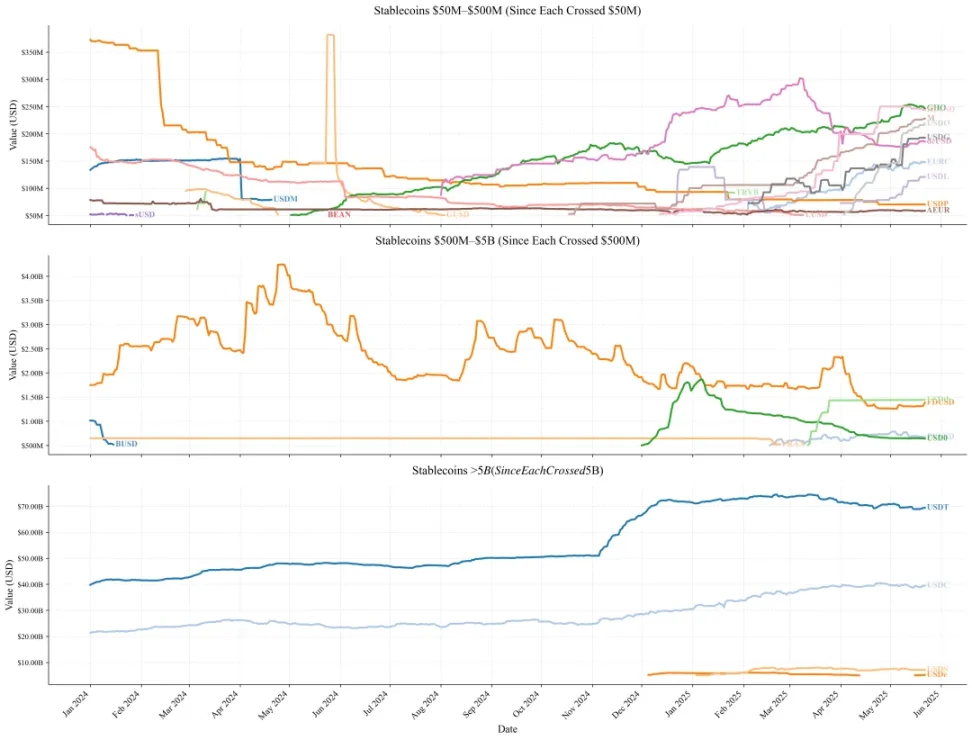
Among smaller projects (<$500M), most saw continuous contraction in early 2024. But toward the end of 2024, many began recovering—GHO, M, and USDO all showed sustained market cap growth. A number of new stablecoin projects also crossed the $50M threshold, indicating increasing diversity in Ethereum’s stablecoin ecosystem. Small-cap projects have flourished steadily since 2025.
Mid-sized projects ($500M–$5B) included only FDUSD and FRAX in 2024; BUSD dropped below $500M in March after its issuer halted minting, down from $1B in January. In 2025, however, USD0 and PYUSD both surpassed $500M, signaling greater diversification among mid-tier stablecoins.
Top-tier stablecoins (> $5B) remain dominated by USDT and USDC: USDT hovered around $40B for much of 2024, spiked to $70B in early December, then stabilized before recently declining slightly. USDC grew steadily from $22B in January 2024 to $38B by May 2025. Early in 2025, USDS and USDe both crossed $5B, but USDT and USDC still lead overwhelmingly in market share.
RWA.xyz, IOSG
USDT and USDC’s absolute dominance directly shapes the entire stablecoin ecosystem.
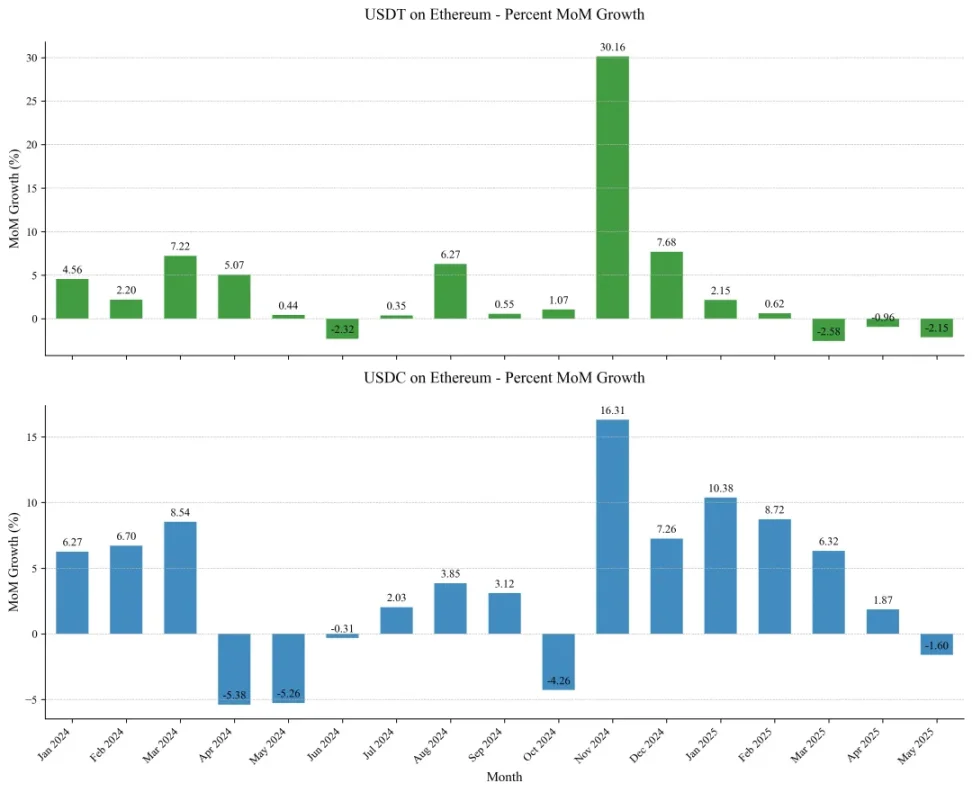
The November 2024 surge deserves special attention: USDT grew 30.16% MoM, while USDC increased 16.31%. Growth continued for several months afterward, with USDC posting particularly stable gains—over 5% MoM in subsequent months. According to disclosures: Tether attributed the surge to “a flood of collateral assets from exchanges and institutional desks anticipating higher trading volumes”; Circle emphasized “a 78% YoY increase in USDC circulation… driven not only by user demand but also by renewed market confidence and improved standards amid emerging regulatory clarity.”
However, market momentum has recently shifted—USDT on Ethereum has stalled over the past four months, and in May 2025, USDC declined for the first time after months of growth. This may signal the beginning of a new market phase.
RWA.xyz, IOSG
L2 Ecosystem
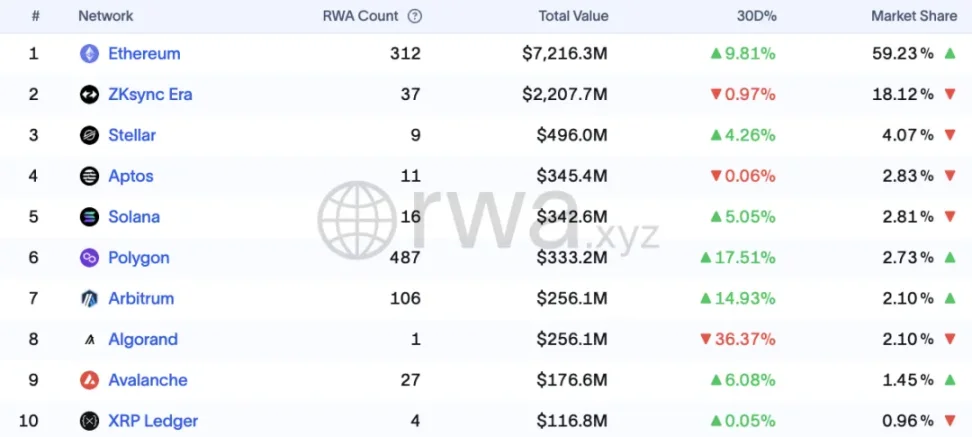
In the broader RWA landscape, Ethereum maintains absolute dominance with a 59.23% market share (excluding stablecoins), yet faces key challenges.
Screenshot from RWA.xyz
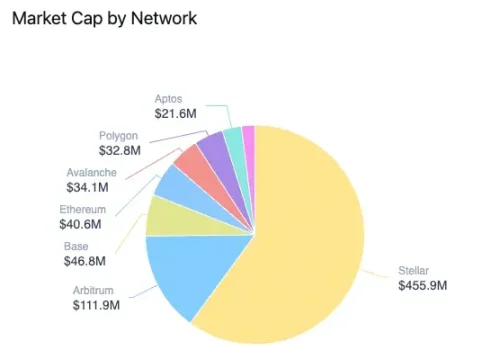
Notably, zkSync has risen to second place largely due to a single driver—Tradable—while Stellar ranks third almost entirely due to Franklin Templeton’s BENJI fund ($455.9M). Despite impressive headline figures, both chains face structural weaknesses: lack of asset diversity and overreliance on individual projects.
BENJI’s Composition, screenshot from RWA.xyz
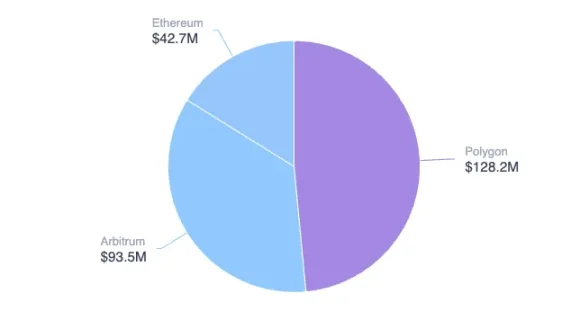
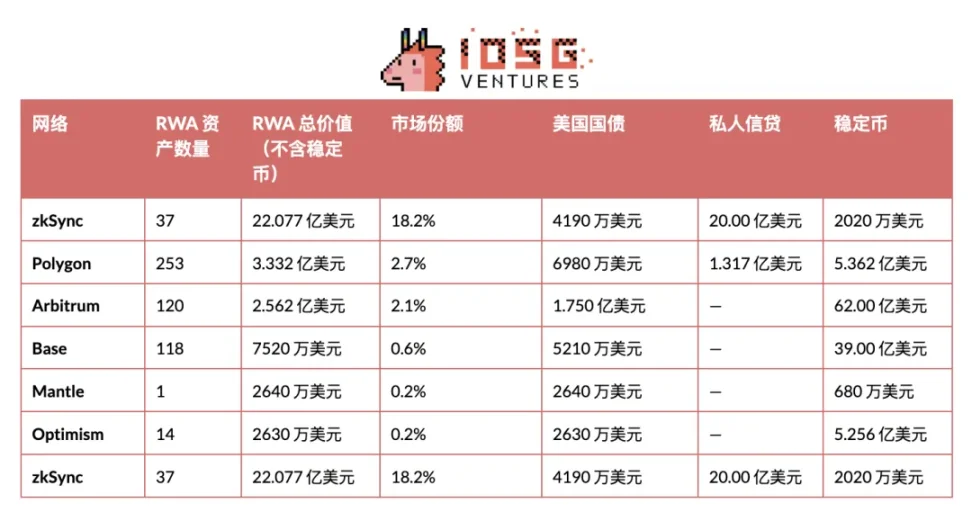
Like zkSync and Stellar, most L2 networks currently struggle with limited ecosystem diversity—their RWA market caps depend heavily on just one or two core projects. For instance, on Arbitrum: of its $256M total, BENJI contributes $111.9M (43.7%) and Spiko accounts for $93.5M (36.5%), together capturing over 80%. Polygon exhibits a similar concentration, with Spiko and Mercado Bitcoin forming the core of its RWA value.
Spiko’s Composition, screenshot from RWA.xyz
Across the broader L2 ecosystem, there is significant divergence in RWA value and market share (see table below). Aside from zkSync, only Polygon and Arbitrum have achieved meaningful scale; other L2s remain in early stages. The success of Polygon and Arbitrum hinges largely on one driver—Spiko—which contributes roughly one-third of total RWA value on each chain.
RWA.xyz, IOSG
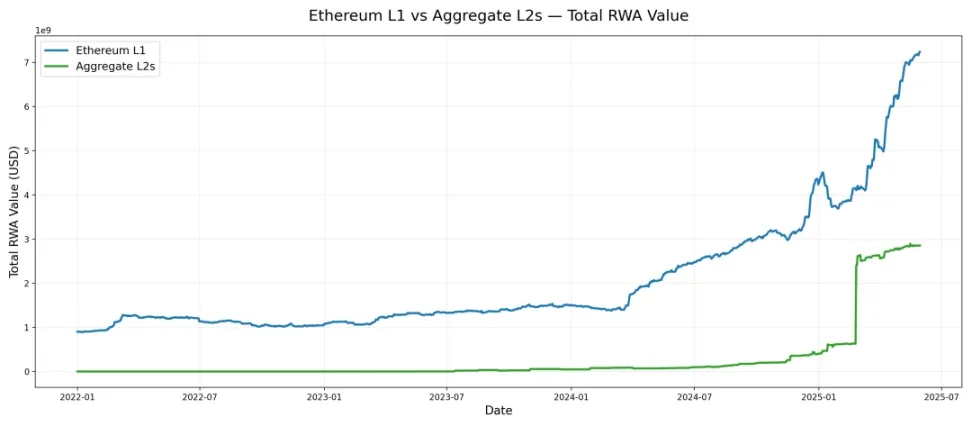
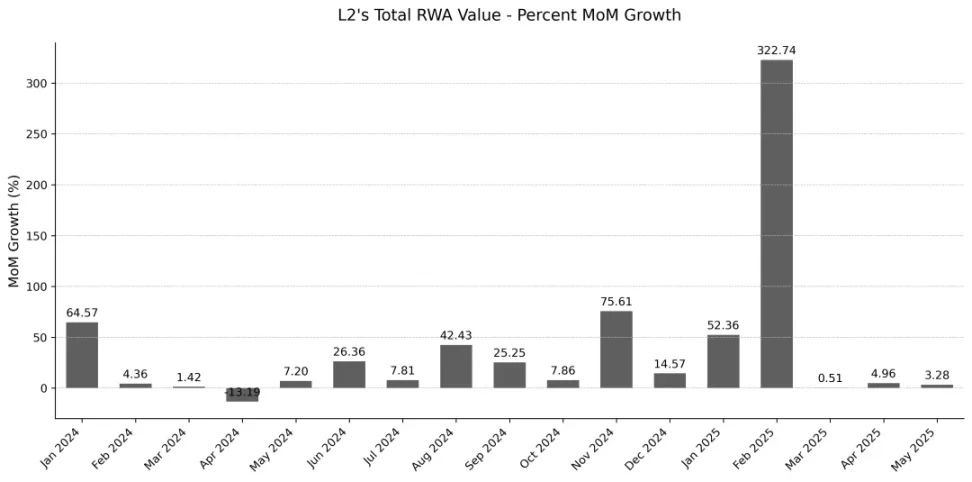
Examining the evolution of total RWA value across L2 networks, their growth cycle does not perfectly align with Layer-1: mid-2024 did not see synchronized expansion. zkSync’s integration with Tradable brought ~$2B in market cap. Even excluding this outlier, the L2 growth trend is clear—since September 2024, L2s have consistently posted double-digit MoM growth. Prior to that, RWA expansion was sporadic and minimal. Thus, late 2024 marks a turning point: L2 RWA entered a strong growth cycle.
RWA.xyz, IOSG
Etherealize: A New Engine for Ethereum RWA
As a key force driving Ethereum RWA adoption, Etherealize emerged from deep industry insight: when protocol-level breakthroughs fail to translate into real-world applications, institutional participation stalls. To bridge this gap, Etherealize systematically connects technological innovation with practical deployment through customized tooling, strategic partnerships, and active policy engagement.
Currently, Etherealize promotes Ethereum RWA adoption via market education, content dissemination, and data dashboard tools. On one hand, the team publishes in-depth articles on Etherealize and the Ethereum ecosystem and participates in popular podcasts and interviews with traditional finance and crypto media, amplifying influence through dialogue with industry thought leaders. On the other hand, Etherealize actively engages regulators, hosting multiple workshops and roundtables on digital asset compliance and offering constructive proposals for standardizing RWA advancement.
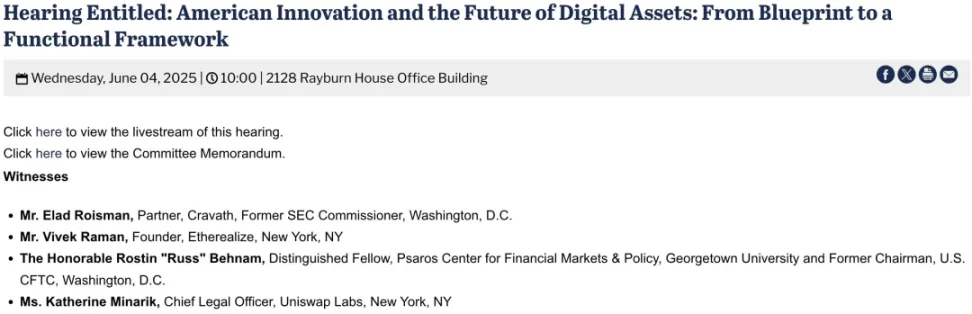
Recently, Etherealize founder Vivek Raman was invited to testify at a U.S. House Committee on Financial Services hearing titled “American Innovation and the Future of Digital Assets,” further strengthening Etherealize’s role in regulatory discourse.
To date, Etherealize has launched only a data dashboard for market education and outreach. However, the team has outlined plans to develop institutional-grade SDKs and is actively hiring founding engineers—progress worth monitoring closely.
In Q2 2025, the roadmap prioritizes releasing an institutional-grade SDK integrating custody interfaces, compliance workflows, and gas optimization modules—enabling banks and asset managers to build secure, auditable issuance processes and dramatically lowering barriers to entry for traditional institutions.
In Q3, Etherealize plans to pilot an enterprise wallet built on Noir, ensuring enterprise-grade privacy via a “privacy-by-default” model to meet confidentiality requirements in RWA transactions.
In Q4, the team will expand internationally, partnering with Singapore’s Digital Port and Switzerland’s Crypto Valley Association to localize product features and compliance frameworks for APAC and European markets.
To reduce friction across Layer-2 networks, the team will lead efforts toward Rollup standardization and develop unified cross-chain interfaces to enable seamless asset movement, thereby consolidating Ethereum’s RWA ecosystem and enhancing interoperability.
Finally, to bridge the gap between traditional finance and blockchain technology, the team will maintain 24×7 support, offering end-to-end professional services—from legal documentation to smart contract deployment.
Ethereum RWA Strategic Moats
First-Mover Advantage
Traditional financial institutions operate differently from DeFi: regulatory scrutiny, pilot validations, and proof-of-concept (PoC) phases greatly extend deployment timelines. Institutions typically adopt cautious strategies initially, only scaling up after successful pilots. Even dominant projects like BUIDL required nearly a year of accumulation before explosive growth. Ethereum’s core advantage lies in its first-mover status—having conducted experimental collaborations with multiple top-tier financial institutions well before the RWA wave gained momentum.
Ecological Depth
Beyond institutional partnerships, a mature RWA ecosystem requires long-term development. Ethereum maintains leadership through:
-
Breadth: diverse asset issuers and protocol architectures
-
Depth: multiple projects surpassing billion-dollar valuations, achieving economies of scale
The integration between traditional finance and DeFi continues to deepen. Most RWA projects prioritize deployment on Ethereum mainnet, leveraging established DeFi protocols for lending, market-making, and derivatives to improve capital efficiency. Recent examples include Ethena using BUIDL as 90% of USDtb’s reserve. The GENIUS Act’s mandate for stablecoin reserves to shift toward U.S. Treasuries is accelerating convergence between U.S. Treasuries, on-chain treasury products, and stablecoin protocols. Meanwhile, mainstream DeFi protocols are incorporating BUIDL into core collateral systems.
Ethereum maintains advantages in RWA liquidity: leading in active addresses, token variety, and depth of liquidity. While coordination mechanisms among L2s remain uncertain, they are still central to scalability.
Security
Security is foundational to the RWA ecosystem, with smart contract maturity playing a critical role. As RWA projects grow more complex, demands on smart contracts intensify. In May 2025, Cetus Protocol on Sui suffered a hack (losses of $223 million), exposing fatal risks from oracle manipulation and contract vulnerabilities. Although $162 million was recovered via on-chain freezing, such reactive measures highlight limitations in risk control. By comparison, Ethereum’s core strengths lie in its more decentralized architecture, proven reliability, and vibrant developer community.
Technical Evolution
Ethereum’s technical roadmap will accelerate RWA development. First, improving L1 performance closes the gap with high-throughput blockchains. Second, advancing L2 interoperability and focusing on application layers will streamline connections between traditional finance and on-chain RWA.
Additionally, Ethereum’s privacy roadmap—enhancing security standards and privacy mechanisms (e.g., integrating privacy tools into mainstream wallets, simplifying censorship-resistant transactions)—will provide institutional-grade confidentiality for RWA transactions.
The Genius Act: A Regulatory Double-Edged Sword
The new stablecoin regulatory framework strengthens centralized oversight while providing regulatory clarity. Currently, Section 4(6) of the Act does not explicitly allow stablecoin issuers to pay interest to holders. While alternative models may emerge, uncertainty remains. Moreover, the Genius Act mandates that stablecoin reserves consist solely of 1:1 backing in USD or high-liquidity safe assets like U.S. Treasuries.
USDC already holds reserves almost entirely in U.S. Treasuries, complying with the new rules. Other major issuers must fundamentally restructure their reserves or risk exiting the U.S. market. This will directly impact algorithmic and delta-neutral stablecoin designs.
By anchoring collateral to U.S. sovereign credit, regulators gain stronger intervention capabilities—and simultaneously drive demand for Treasuries. Yet loopholes in the legislation could introduce new systemic risks—echoing lessons from the Commodity Futures Modernization Act (CFMA) of 2000.
On the positive side, clear compliance boundaries may accelerate institutional adoption: banks and asset managers have long sought regulatory certainty. More large companies and institutions may soon gain approval to issue stablecoins. Examples include discussions among major U.S. banks about a joint crypto stablecoin, or Meta reconsidering plans to launch a new stablecoin.
Ethereum’s Resilience: A Diverse Ecosystem
Ethereum’s stablecoin resilience stems from its diversity. Since early 2025, multiple issuers have seen significant market cap growth, and numerous new stablecoin projects have emerged, featuring varied designs: different collateral structures, yield strategies, and governance models. The GENIUS Act’s mandatory 1:1 U.S. Treasury reserve requirement poses compliance pressure on most projects, forcing them to either restructure or temporarily exit the U.S. market.
Ethereum’s ecological resilience distinguishes it from blockchains dominated by a few stablecoin/RWA projects—reducing homogenization risk post-regulation. This diversified structure creates natural risk isolation: even if some stablecoins adjust strategies due to compliance, others can continue innovating and preserving decentralization, avoiding full assimilation into the U.S. Treasury system. However, future outcomes will also depend on strategic directions set by the Ethereum Foundation and Etherealize.
Conclusion
Ethereum’s RWA ecosystem has experienced explosive growth over recent months. BUIDL has been the strongest driver of this momentum, while other treasury-backed projects also show robust growth. Behind this expansion, treasury-based assets are increasingly integrating with Ethereum’s existing DeFi and RWA infrastructure—for example, serving as collateral in lending or stablecoin protocols.
Ethereum retains significant advantages in the RWA space. Whether through first-mover timing, security, deep ecological foundations, ambitious tech roadmaps, BUIDL’s strong lead, L2 diversification, or Etherealize’s deep empowerment—these factors collectively form Ethereum’s core moat in the wave of traditional finance moving on-chain.
With the push from the Genius Act, U.S. dollar credit is accelerating its integration into the on-chain world. This brings larger capital inflows, greater yield opportunities, and new growth—but also poses a challenge: it increasingly anchors Ethereum’s financial system to fiat (the dollar), introducing fiat credit risk and potentially extending dollar hegemony into on-chain settlement. The on-chain world risks becoming less of an independent parallel financial system. Amid this explosive growth lie underlying concerns, centered on Ethereum’s self-definition—specifically, whether it supports deep integration with the U.S. dollar system.
Join TechFlow official community to stay tuned
Telegram:https://t.me/TechFlowDaily
X (Twitter):https://x.com/TechFlowPost
X (Twitter) EN:https://x.com/BlockFlow_News
 IOSG Ventures