








NBA's Crypto Gold Rush
TechFlow Selected TechFlow Selected
NBA's Crypto Gold Rush
One can only hope that when we're screaming ourselves hoarse over our team's thrilling last-second buzzer-beater, we're not watching a carefully orchestrated stage play.
 Navigating Web3 tides with focused insights
By: Bright, Foresight News
As summer heats up, the NBA playoff semifinals are nearing their climax. On May 29, the Oklahoma City Thunder defeated the Minnesota Timberwolves 4–1 to claim the Western Conference finals title.
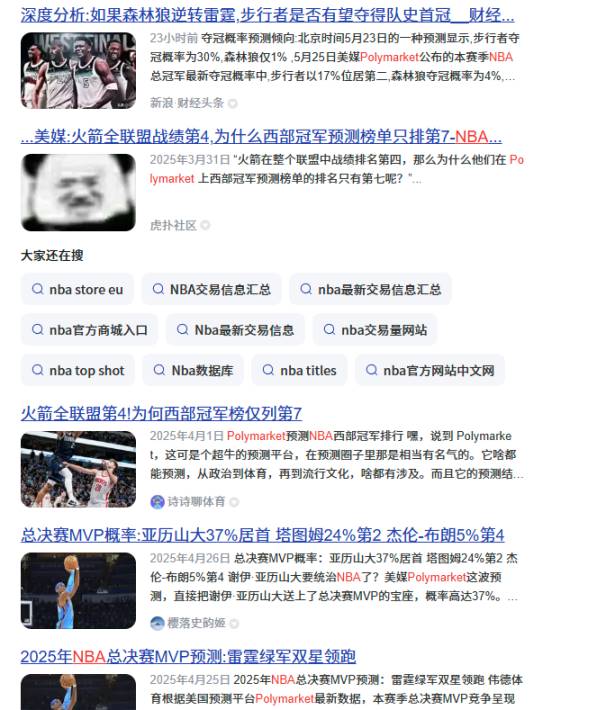
If you're a seasoned basketball fan, you've likely come across game forecasts from foreign media such as ESPN, Yahoo, BPI, and The Athletic on sports forums or live broadcasts. But in the 2025 season, you absolutely cannot miss prediction data from Polymarket. Currently, domestic sports self-media outlets have widely adopted data from this emerging prediction platform for analysis.
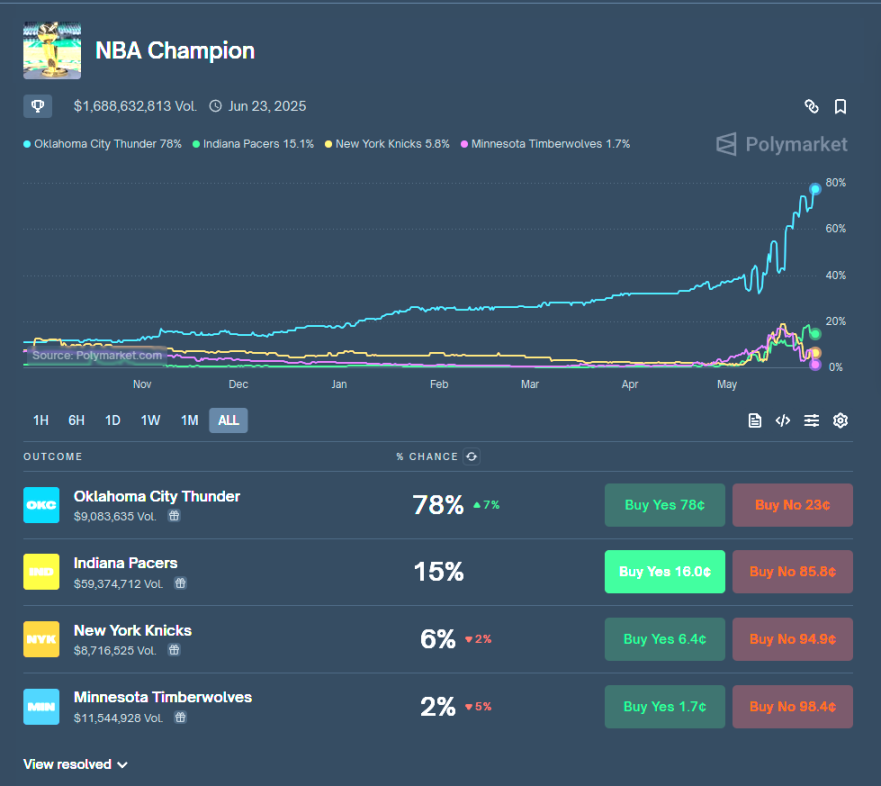
Before the semifinals officially began, the real-money betting odds on Polymarket gave the Thunder a 61% chance of winning the championship, with total trading volume exceeding $1.684 billion. As the series approached Game 4, the NBA Champion market fluctuated like a meat grinder: the Thunder’s odds rose to 78%, while the Pacers, trailing 3–1, surged from 10% to 15%. Meanwhile, the Minnesota Timberwolves, stuck in a 1–3 deficit, plummeted to just 2%.
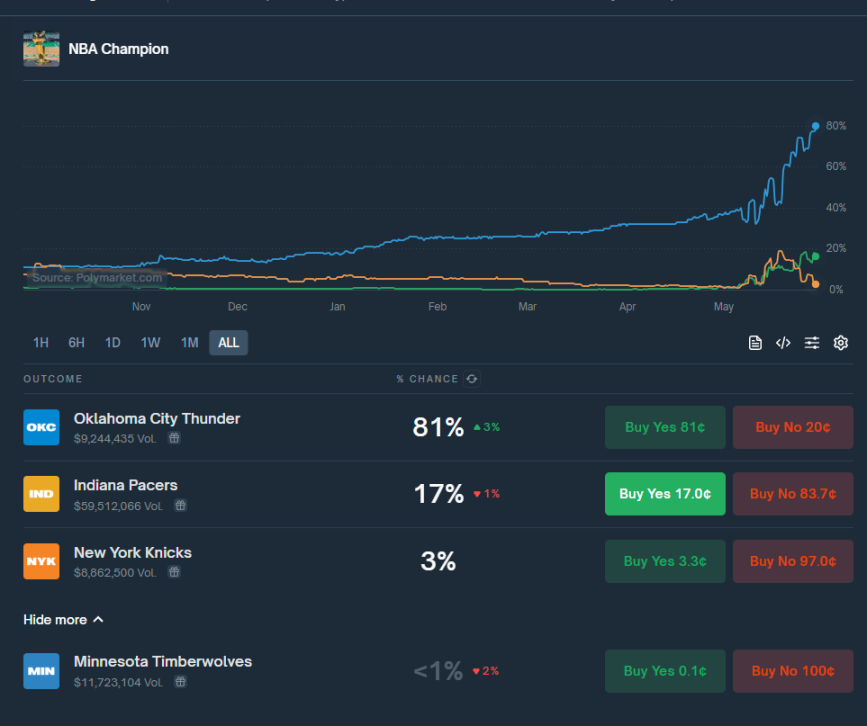
When the Timberwolves still trailed by 25 points in the third quarter of Game 5, their championship odds on Polymarket had already dropped below 1%.
At this point, curious readers might ask: How can the NBA openly allow, even "encourage," gambling? Further, why doesn't the NBA exclusively partner with gambling giants like Sands, but instead tacitly permit $1.68 billion to flow into Polymarket, an obscure startup?
I. The "Stench of Copper" Around the Larry O'Brien Trophy — Sports Betting Meets Crypto
Shifts in NBA Management: From Strict Prohibition to Dancing with Capital
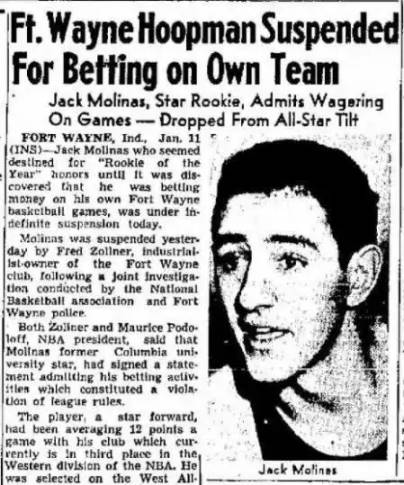
In the NBA's early days, gambling loomed like a sword of Damocles over the league. The 1954 Jack Molinas case stands as a classic example—the All-Star rookie averaging over 20 points was banned for life for betting on his own team. Then-commissioner Podoloff promised Molinas help as a fellow Jew to withdraw his appeal, yet remained silent about the truth after he went to prison. At that time, the league had only nine teams, and average ticket prices were under $2; any rumors of match-fixing could trigger systemic collapse. Thus, Podoloff maintained fragile credibility through "harsh punishment and media suppression."
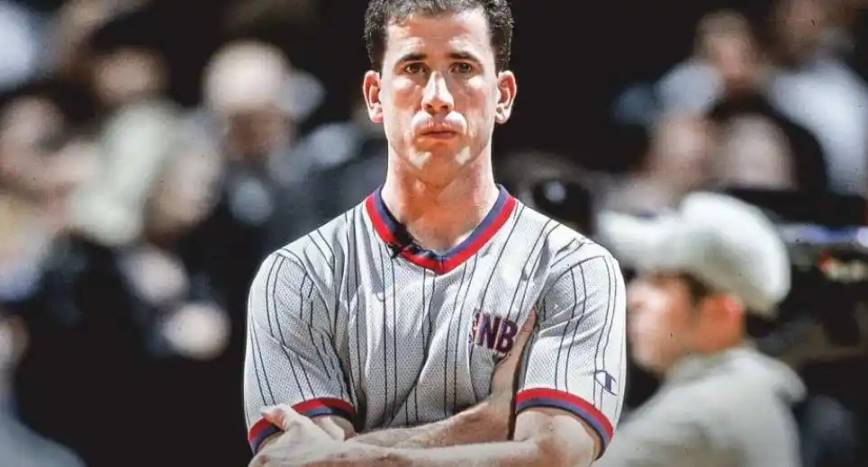
Under former commissioner David Stern, the NBA took a firm public stance against off-court betting. However, the 2007 scandal involving referee Tim Donaghy exposed the dark underbelly of external gambling and remains a scar on the NBA's credibility. The official who refereed over 13 years and 772 regular-season games was imprisoned for accepting bribes to manipulate games. According to ESPN investigations, he deliberately favored his betting side in 23 out of 30 games, even intervening in outcomes during the 2006 Finals and the 2007 Spurs-Suns playoffs under the guise of "orders from superiors." More ironically, Donaghy revealed in his autobiography that iconic moments such as the Lakers' comeback against the Kings in 2002 and the Heat's Finals reversal in 2006 involved league-level "refereeing bias"—the farce of "$2,000 per game" exposed centralized power rent-seeking, pushing fan skepticism about NBA game integrity to its peak.
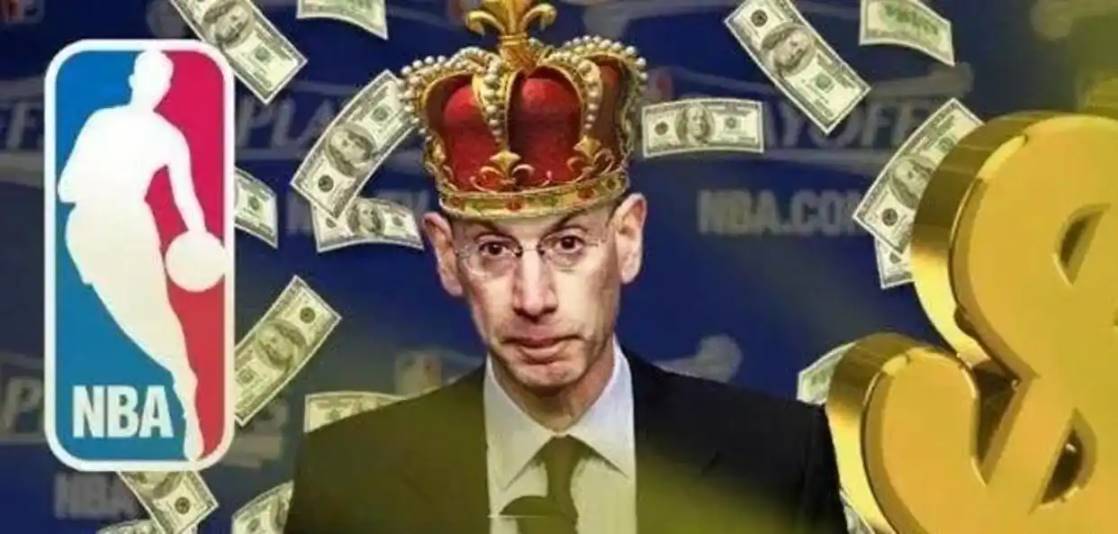
Over seven decades later, when Adam Silver announced a lifetime ban on Raptors player Jontay Porter in 2024, the context had completely changed. In 1992, the U.S. Professional and Amateur Sports Protection Act explicitly prohibited states from issuing sports betting licenses. In 2011, when David Stern led the league, the NBA joined three other North American professional sports leagues and the NCAA in suing New Jersey over its legalization of sports betting. But in 2018, the U.S. Supreme Court overturned the act, clearing the way for state-level legalization of sports betting. Seven years later, 38 out of 50 U.S. states now permit sports betting.
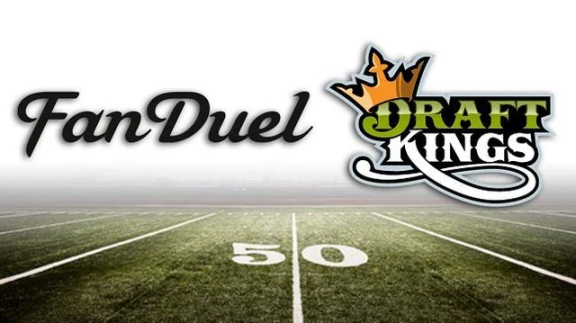
Indeed, after sports betting was legalized in the U.S. in 2018, the NBA quickly became one of the biggest beneficiaries: in 2023, national betting revenue surpassed $10.9 billion, and the NBA earned substantial profits through revenue-sharing deals with platforms like FanDuel and DraftKings. Commissioner Silver made it clear at board meetings: "With the rise of the internet, online sports betting has become widespread—even before legalization. Now more than 30 states allow legal betting. We must face technology directly and recognize that even without legalizing sports betting, people will find ways to bet illegally anyway." This shift reflects the inevitable capitulation of a commercial empire—30 teams each valued at over $2 billion—to capital.
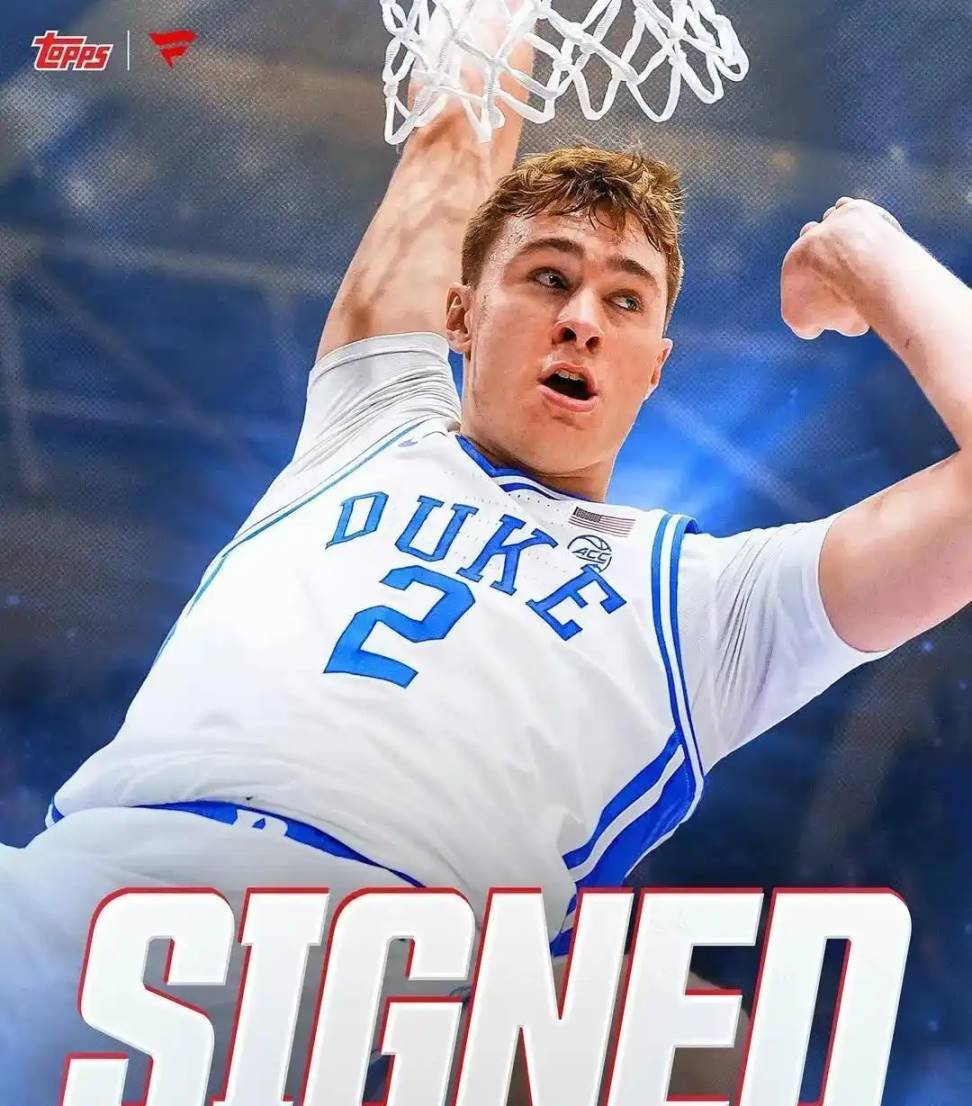
Yet on the flip side lies technological escalation of gambling and regulatory blind spots. In the Jontay Porter case, players manipulated game stats via text messages (e.g., "frantic shooting in garbage time," "leaving due to illness after playing just 2–3 minutes"), with the syndicate extending influence into the NCAA, manipulating point spreads in three games including Eastern Michigan University. Even more ironically, when the Mavericks landed the No. 1 draft pick with a mere 1.8% probability, bookmakers offered 1:50 odds—far exceeding Super Bowl long-shot odds—sparking nationwide suspicion over whether the quantum random number generator had been tampered with. After all, the team’s new $3.5 billion stadium project, the "Galaxy Center," desperately needed the commercial value of a star rookie. More subtly, the NBA’s response highlights a contradiction: while embedding real-time odds on its official website, the league insists in cases like Porter’s that "gambling is individual behavior." This logic of "official traffic referral, individual liability" renders Silver’s "transparent governance" nothing more than a fig leaf for capital.
The Casino on Chain: How Polymarket Is Rebuilding the NBA’s Crypto 3.0 Ecosystem
After lifting the betting ban, the NBA signed a $25 million annual sponsorship deal with MGM in 2018, and by 2023, all 30 teams had integrated betting data APIs. According to the 2023 NBA financial report, betting-related sponsorships grew annually by 39%, data licensing generates $45 million per season, and emerging real-time betting revenue sharing is projected to reach $200 million by 2025.
At the time of writing, Polymarket hosts over 25 predictions related to the 2025 NBA playoffs. More than $1.683 billion is being wagered on who will lift the Larry O'Brien Trophy—meaning the NBA stands to earn tens of millions in profit. Currently, the odds of the Oklahoma City Thunder winning the championship have surged to 80%. Previously viral niche bets such as "Celtics spread win rate when Tatum is absent" and "whether Jokić records a triple-double in this game" also sparked widespread discussion.
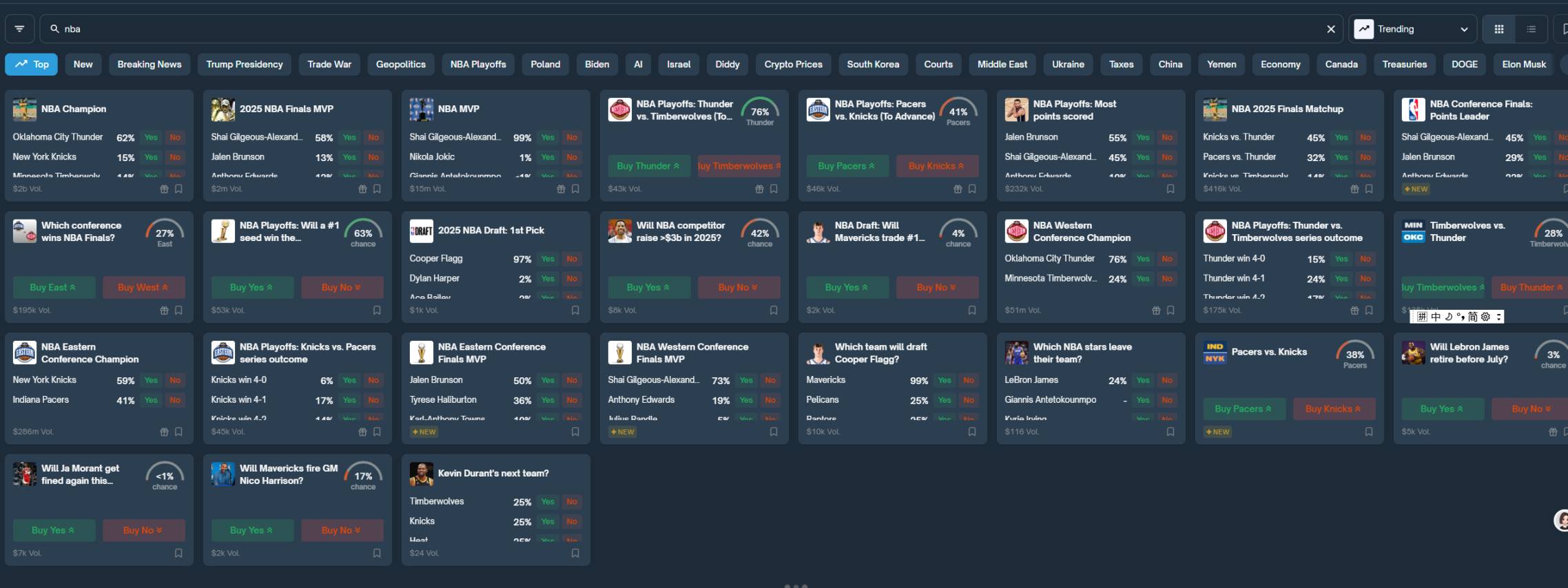
The magic of on-chain casinos lies in their ability to instantly break down games into countless tradable "atomic events," moving beyond traditional fixed wagers like predicting winners or final scores. During the second quarter of a Western Conference semifinal between the Thunder and Nuggets, fans can even place live bets on whether "Shai Gilgeous-Alexander’s next drive draws a foul" or whether "Michael Porter Jr. hits his next three-pointer." These fragmented markets keep user attention locked in throughout the game.
More radically, the "instant settlement" feature means that when Gordon hits a buzzer-beating three, Polymarket instantly resolves all related bets—a "millisecond feedback loop" that boosts dopamine release efficiency tenfold and wipes out millions in bets amid arena-wide gasps.
Polymarket’s reconstruction of the NBA’s crypto ecosystem stems from blockchain’s disruptive transformation of traditional betting models. Its transparent, publicly verifiable ledger naturally fits gambling applications, with every bet and odds change visible on-chain.
This Polygon-based decentralized prediction market allows users to anonymously bet USDC on NBA player stats, game progress, or even referee calls. Pre-programmed smart contracts automatically settle bets with only a 1.5% fee (compared to the NBA’s 1%), significantly lower than the 5%–8%, or even 13%, fees charged by other NBA betting platforms.
In fact, Polymarket gained significant attention during the 2024 U.S. presidential election, hailed as the top non-sports prediction/betting platform. From October 6 to November 5—one month before the election—its daily trading volume hit record highs, averaging $103 million. On election day, it ranked second on Apple’s free app chart, just behind Kalshi, the legally accessible betting market for U.S. citizens.
Nonetheless, Polymarket hasn’t abandoned the lucrative sports betting space. Unlike traditional gambling giants constrained by strict anti-money laundering and KYC regulations, Polymarket avoids the burden of compliance as it expands into sports betting. Instead, with its low fees, Polymarket brands itself not as a casino but as a "media outlet," claiming to deliver "financial truth" by revealing societal preferences and information distribution.
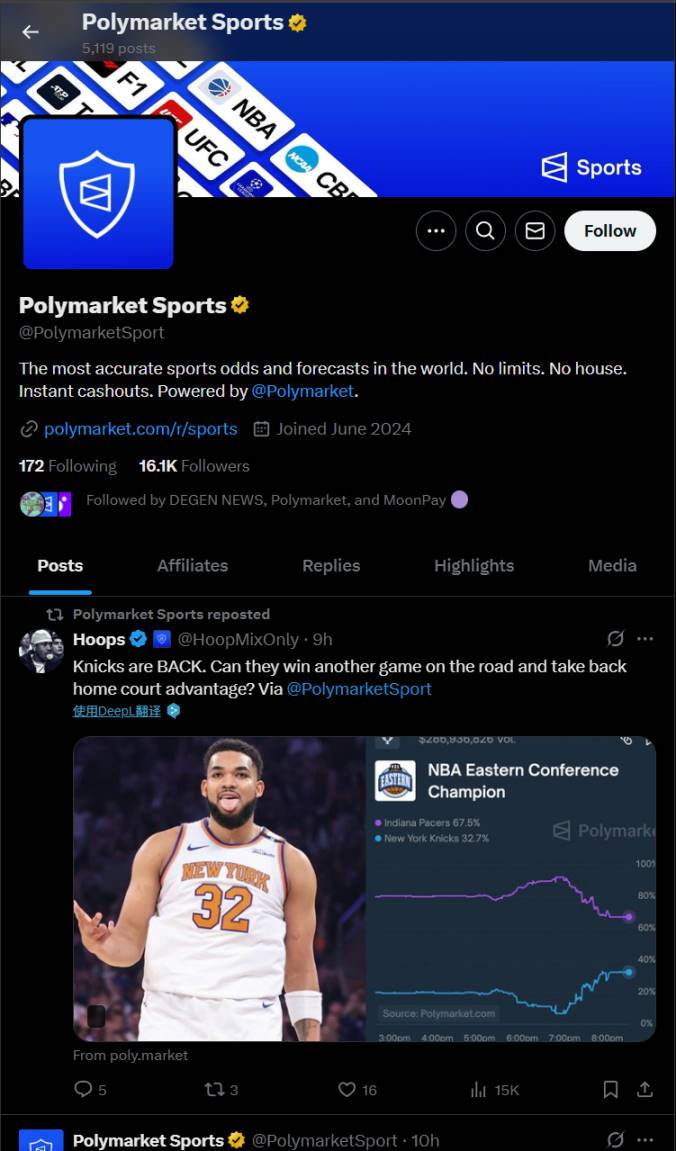
Despite these advantages, regulatory compliance remains a "sword of Damocles" hanging over on-chain betting. Singapore and India have already labeled Polymarket illegal, and several U.S. states demand KYC integration. Nevertheless, the platform continues to disperse its funds across Layer-2 networks like Arbitrum and Optimism via cross-chain bridges. The whack-a-mole game between regulators and decentralized casinos continues.
II. Five Years After Staples’ Renaming — The NBA’s Crypto Roots
Arena Naming Rights: Top Crypto Capital’s Traffic Play
In 2025, the Staples Center has long been renamed Crypto.com Arena. This landmark, once synonymous with the Los Angeles Lakers’ glory, is now nightly bathed in purple LED lights symbolizing cryptocurrency. A $700 million, 20-year naming rights deal reflects Crypto.com’s hunger for mainstream sports exposure—especially when compared to legacy industries like American Airlines, which paid only $195 million over 10 years to name the Dallas home arena.
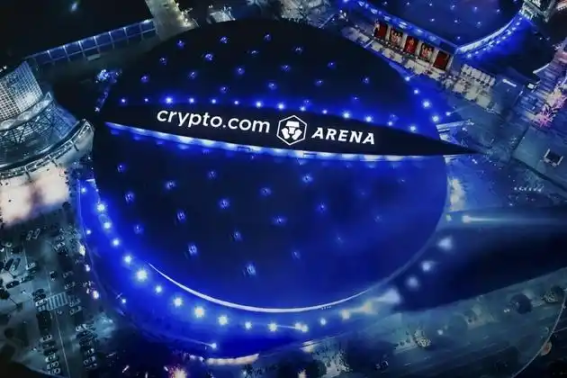
In the attention-driven economy of crypto, the synergy between star athletes and crypto marketing is no loss-making venture. Staples Center delivers: one of the world’s busiest sports venues, housing four professional teams—the NBA’s Lakers and Clippers, the WNBA’s Sparks, and the NHL’s Kings—an arrangement possibly unmatched globally. It has witnessed six Lakers championships and the legendary Shaq-Kobe era.
This gamble is backed by precise user targeting. Coinbase CEO Brian Armstrong stated bluntly: "Among LA residents under 40, 35% hold crypto assets—they’re both NBA viewers and our potential users." Data confirms this: in the first month after rebranding, Coinbase found 32% of new registrants came from California, with 61% being Lakers fans.
The NBA’s Crypto 1.0 era was defined by eager new crypto money seeking instant recognition and legitimacy through sponsorship of mainstream sports and arenas. What better branding opportunity exists than naming Los Angeles’ cultural and sports landmark Staples Center?
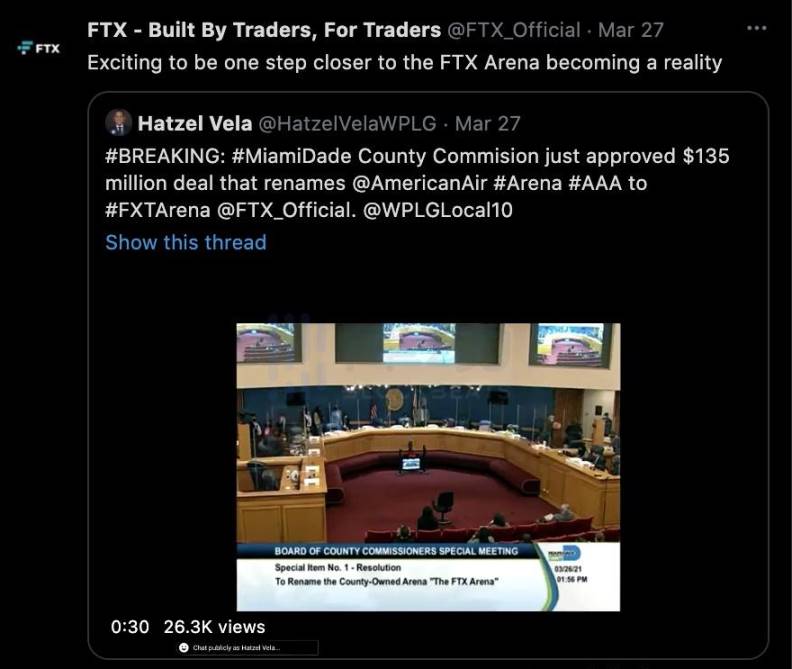
FTX, the now-collapsed crypto exchange, was another major NBA sponsor. In 2019, the Miami Heat’s home arena was renamed "FTX Arena" following a $135 million naming rights deal. After FTX’s collapse, however, Miami-Dade County courts revoked FTX’s naming rights.
Yet, as previously mentioned, when Shaquille O’Neal declared “I’m all in” in an FTX ad, crypto endorsements evolved beyond simple brand exposure into deep alignment. O’Neal faced a class-action lawsuit in Florida federal court for aggressively promoting Astrals NFTs and Galaxy tokens on social media.
According to public court documents, O’Neal and the company behind Astrals agreed to pay $11 million in settlement, covering plaintiffs’ legal fees and compensating affected NFT and token buyers. After FTX’s collapse, the Heat’s arena briefly lacked a replacement sponsor and resorted to local geographic naming. Later, a 17-year, $117 million deal with software company Kaseya still fell far short of previous sponsorship levels.
NBA Top Shot: Peak and Decline
The NBA wasn’t content with mere endorsements and sponsorships. During the NFT and metaverse boom, the business-savvy league launched its own IP monetization experiment—its hands-on entry into Crypto 2.0.
NBA Top Shot Moments (shortened to NBA Top Shot) is a sports-themed digital collectible card built on the Flow blockchain. These NFT player cards capture highlight clips from NBA games. Launched in 2020 by Dapper Labs with official NBA licensing, the project also attracted investments from NBA stars Jordan and Durant. One LeBron James clutch moment NFT sold for $208,000 in 2021.
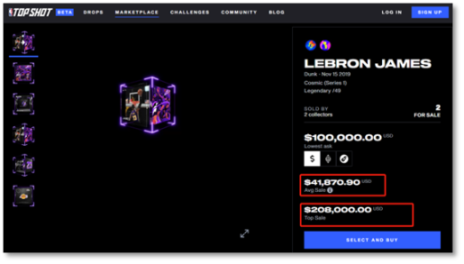
Leveraging the NBA’s official endorsement and massive fan base, NBA Top Shot reached a peak daily trading volume of over $40 million in 2020, consistently ranking among the top five NFT marketplaces. But its decline followed swiftly, driven by oversupply of player cards and a U.S. SEC lawsuit against its parent company. Although the SEC dropped the securities charge in 2022, the momentum was lost. NBA Top Shot ultimately succumbed to "zeroing out." On the official marketplace, the average price of Moments player cards dropped from a high of $156 to single digits.
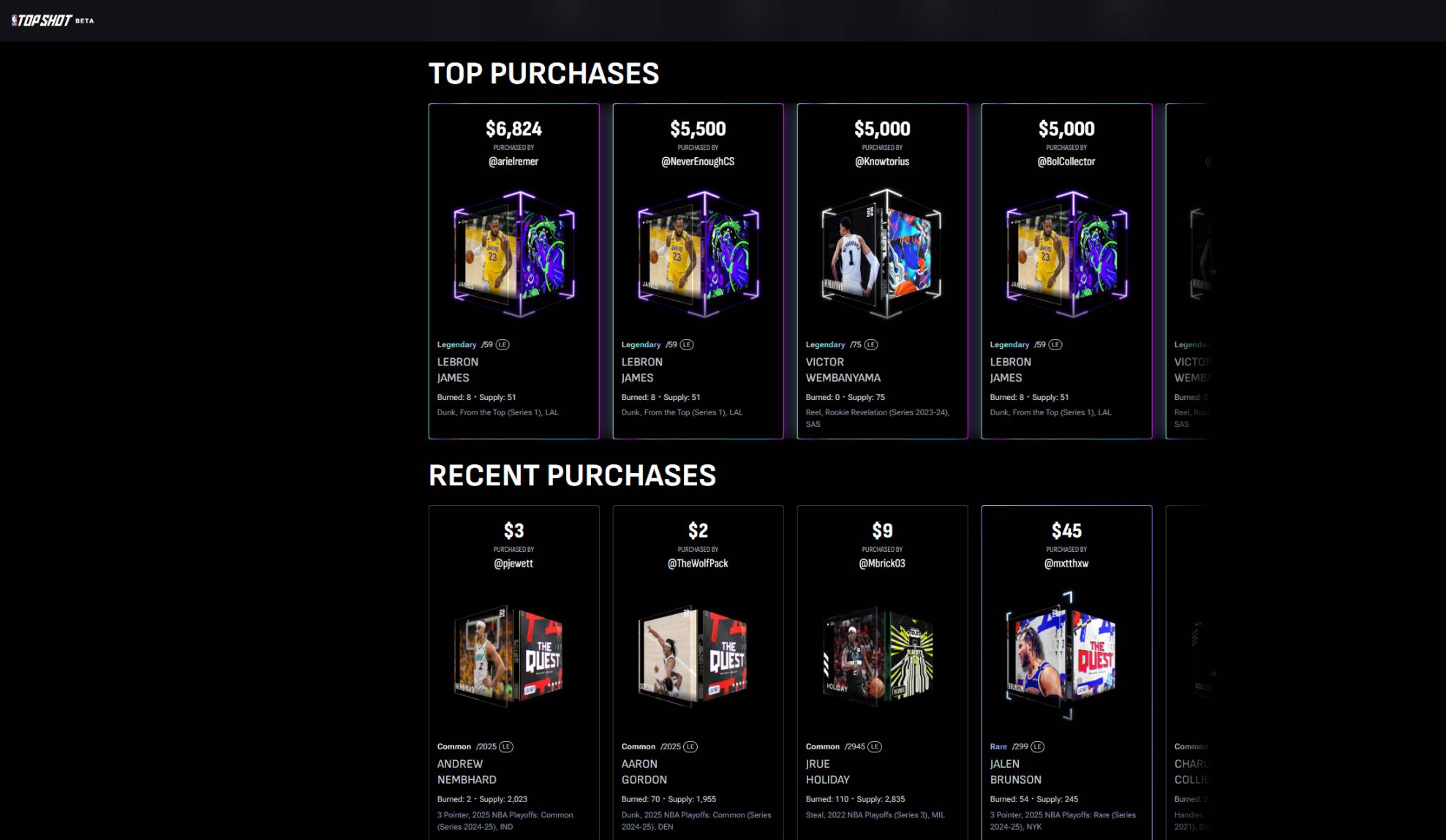
Even with the world’s largest fanbase, NBA Top Shot’s NFT fan economy model failed. Most sports NFT players sit at the intersection of sports fans and Web3 users. When the NFT market cooled, lack of outside participation left the marketplace illiquid. Coupled with market stagnation and inaction from the project team, activity spiraled into a "death loop."
Fantasy Sports’ Redemption
Although sports collectible NFTs declined in activity, sports themselves retain vast fanbases—especially global elite leagues. With entrants like DraftKings and Sorare, sports NFT gameplay evolved, incorporating richer gaming elements.
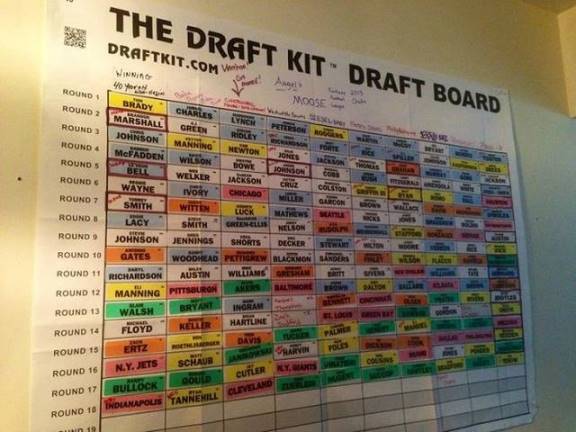
Web3 sports games such as DraftKings, Sorare, and UltimateChampions embraced "Fantasy Sports," blending real-world matches with NFT mechanics. Players build virtual lineups based on real athletes’ performance, earn points according to actual game stats, and compete for rankings and rewards. While not novel in gaming—titles like FM (Football Manager) and basketball fantasy leagues have mature simulation systems—this model found renewed relevance.
What sets Web3 fantasy sports apart is the centrality of player card NFTs, tradable on secondary markets. This financialization attracts speculators. Interestingly, a player’s growth potential and rarity affect card prices: young rising stars offer high speculation upside, while aging veterans trend downward. For instance, Giannis Antetokounmpo’s NFT sold on Sorare for 113.888 ETH (approximately $186,000).
The long-term playability of "Fantasy Sports" hinges on two core aspects.
Financial Attributes Driven by Rarity
Fantasy Sports games mirror MyTEAM and UltimateTeam mechanics, generating revenue by catering to fans’ preference for rare player cards. This includes dynamically raising caps (player ratings, salary limits) to push users to buy packs or lottery entries, or directly purchase desired players using in-game currency.
Thus, DraftKings’ "entry fee + prize pool" model is often seen as bordering on gambling: paying entry fees, selecting players (akin to placing bets), and splitting prize pools resemble gambling behaviors. While players must rationally predict performance, luck plays a decisive role.
Real-Time Data Updates
In betting-style simulation games like DraftKings Reignmakers and Sorare, player performance directly affects the secondary market price of their NFT cards. Users must track real player stats, understand team tactics, and assess overall form—effectively attracting both hardcore fans and speculators.
Therefore, Fantasy Sports’ redemption still relies heavily on gambling mechanics. As competitive sports, perhaps they were never meant to be separated from betting.
In short, since opening Pandora’s box of sports betting in 2018, the NBA playoffs have become not just a basketball festival, but a direct battlefield for capital. From Polymarket’s on-chain wagers to DraftKings’ million-dollar player cards, the NBA actively maintains this commercialized betting order—and crypto has emerged as the so-called "democratic" tool enforcing it. Yet beneath the frenzy of gold-rush speculation linger persistent shadows: player gambling scandals, and the cautionary tale of the NBA’s own NFT project collapsing in value.
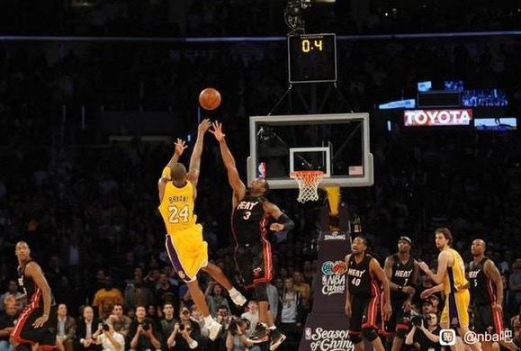
One can only hope that when we scream ourselves hoarse over our team’s dramatic buzzer-beater, we’re not watching a carefully staged theatrical production.
(Some data in this article sourced from The Athletic, Bleacher Report, ESPN, CoinGecko; all cases supported by public reports)
Join TechFlow official community to stay tuned
Telegram:https://t.me/TechFlowDaily
X (Twitter):https://x.com/TechFlowPost
X (Twitter) EN:https://x.com/BlockFlow_News
 Foresight News






