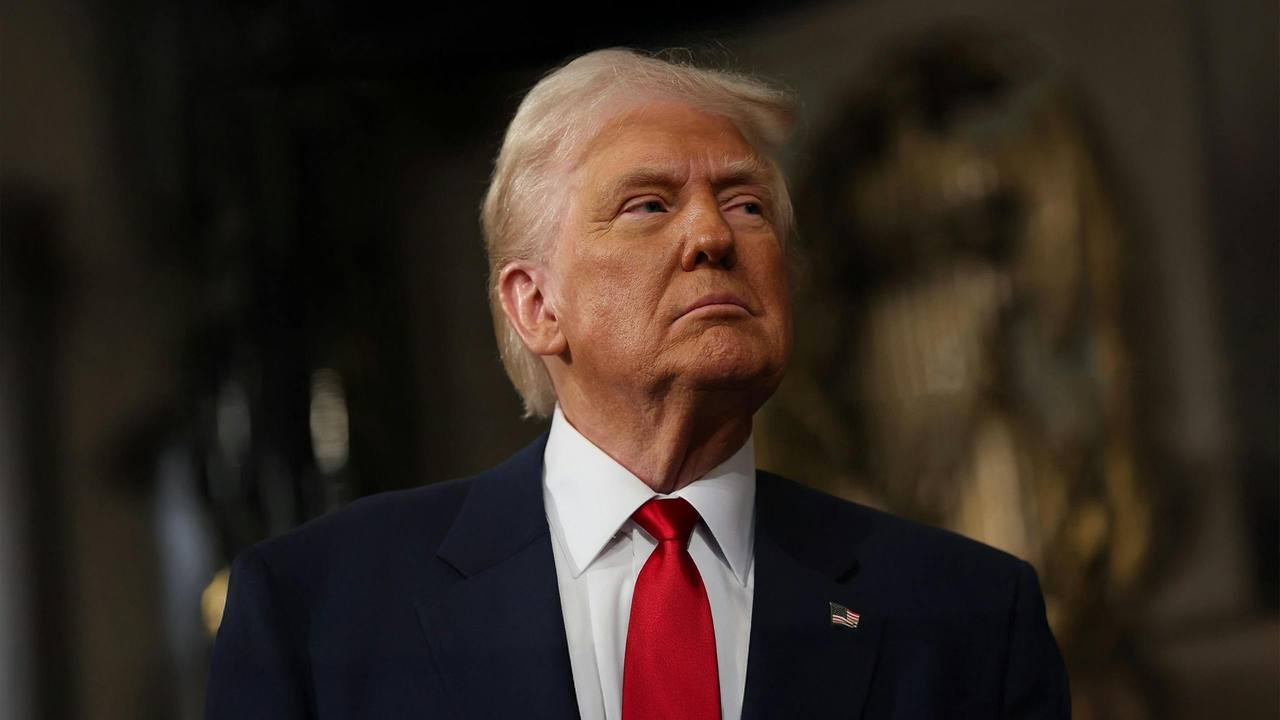
Behind Trump's Crypto Dinner, A Grand Exchange of Interests
TechFlow Selected TechFlow Selected
Behind Trump's Crypto Dinner, A Grand Exchange of Interests
Despite the Democrats' uproar, the Trump family's money-making endeavors are unlikely to stop easily.
 Navigating Web3 tides with focused insights
Author: Tuoluo Finance
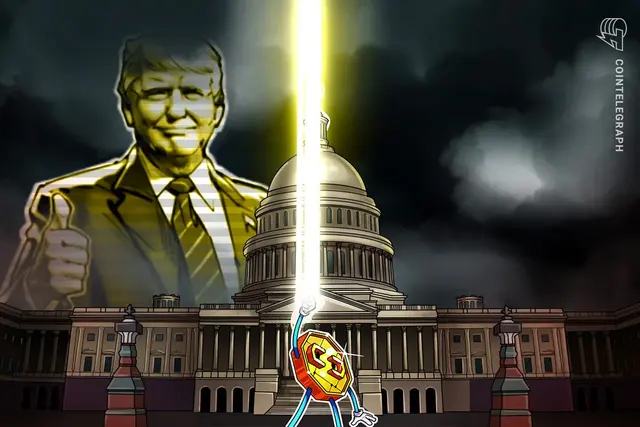
The much-hyped Trump dinner, which had been building up in the market for nearly a month, finally took place.
On May 22, the event centered around the MEME coin Trump, touted as the "world's most exclusive invitation," officially kicked off. The top 220 token holders were granted access to the Trump National Golf Club, where they enjoyed a lavish dinner funded entirely by their own substantial investments.
Prior to the dinner, organizers rolled out leaderboards, orchestrated power gatherings, and even added identity marketing with custom watches. These aggressive tactics sent TRUMP’s price soaring, though there was widespread skepticism about whether Trump would actually show up. Fortunately, the famously talkative political figure didn’t stand everyone up—he personally attended and delivered a speech.
As usual, Trump’s appearance was brief and ceremonial. Ironically, despite being a U.S.-based event, the gathering appeared overwhelmingly dominated by Chinese attendees, giving Trump a firsthand experience of the real influence of Chinese crypto enthusiasts.
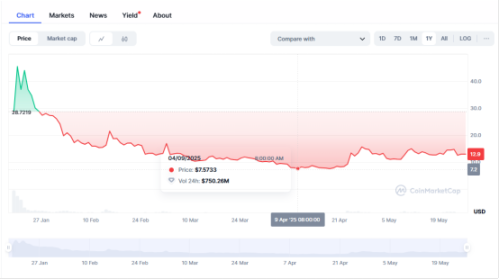
Going back to April, TRUMP had been stagnant for a long time, dropping to around $7 amid anticipated large-scale token unlocks of 40 million tokens. Just as data seemed to confirm that the president was poised to dump on retail investors, Trump finally remembered his MEME coin. In the early hours of April 24, the official TRUMP website announced a dinner event for top holders, inviting the top 220 $TRUMP holders to dine at Trump’s golf club in Washington on May 22. The top 25 holders would not only attend the dinner but also join an exclusive pre-dinner reception with Trump himself. To intensify competition, a public leaderboard was introduced, and later, the top five holders received Trump-branded watches—clearly elevating status-based social signaling.
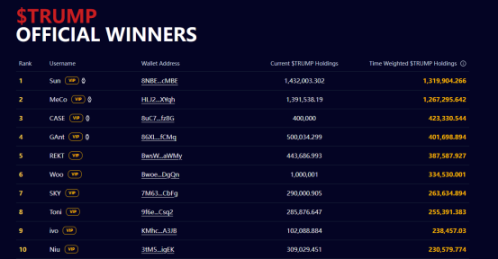
Since both holding amount and duration were factored in, whales and major investors rushed to accumulate TRUMP tokens. After nearly a month of accumulation, the guest list was finalized. According to NBC News citing blockchain analytics firm Nansen, the 220 invitees collectively spent as much as $394 million on $TRUMP tokens, averaging about $1.78 million per person. The top holder owned 1.43 million tokens, while the second held 1.39 million.
On May 22, the dinner began. The location was carefully chosen—Trump’s stronghold at the Trump National Golf Club just outside Washington, D.C. Emphasizing confidentiality, media were barred from entering, and live streaming or recording devices were strictly prohibited. However, possibly as a promotional tactic, guests were allowed to bring their mobile phones.
Thanks to this allowance and the power of social media, details of the event and attendees eventually surfaced. The schedule included a private reception for the top 25 holders at 5 p.m., followed by the main dinner starting at 6 p.m., lasting three and a half hours.
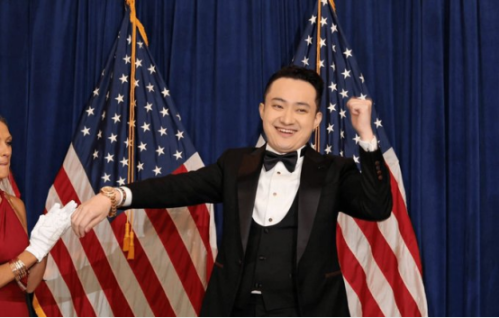
The guest list was particularly intriguing. The top holder had already teased the event on social media—none other than Justin Sun, who reportedly spent approximately $39.4 million to claim the top spot. Besides Sun, according to The New York Times, attendees included Washington attorney Elliot Berke, Wintermute founder and CEO Evgeny Gaevoy, Delphi Digital co-founders Anil Lulla and Yan Liberman, Shanghai-based crypto investor Cheng Lu, CTS International founder Stephen Dworkin, Hyperithm CEO Sangrok Oh and executive Charles Ayres, Origin co-founder Matthew Liu, conservative media figure Caitlin Sinclair, former NBA star Lamar Odom, Acheron Trading founder Wesley Pryor, Magic Eden co-founder and CEO Jack Tan Lu, Synthetix founder Kain Warwick, and Kronos Research CEO Vincent Liu.
Overall, the vast majority were well-known figures in the crypto space or active participants, many of whom were previously notable donors to Trump—highlighting how the dinner served as a display of power climbing within the crypto industry. Interestingly, insiders revealed that about 72% of invitees came from outside the United States, with Chinese nationals forming a significant portion—an eye-opening moment even for Trump.
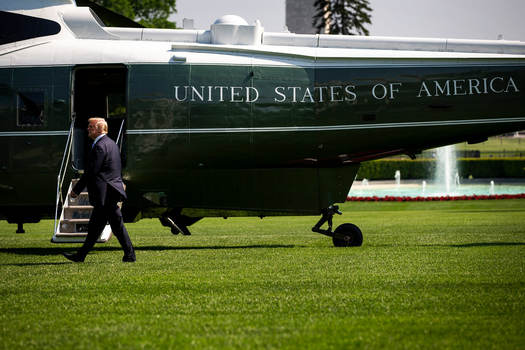
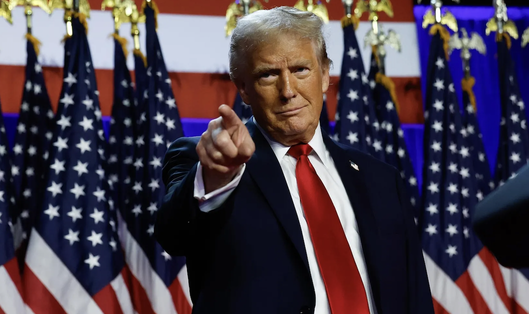
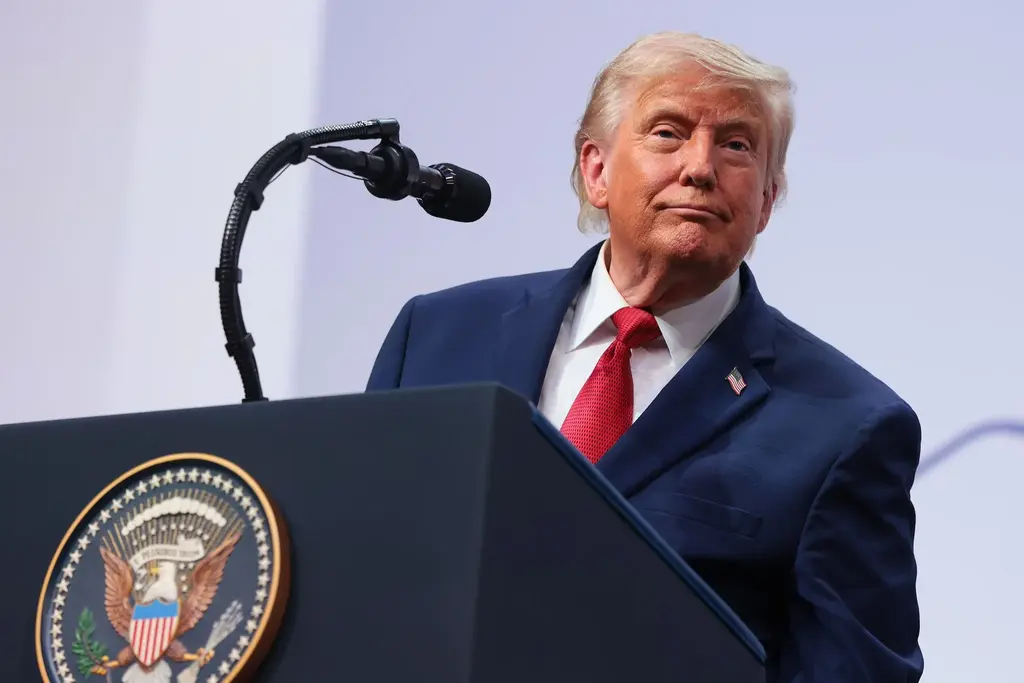
Trump arrived directly at the venue via military helicopter and delivered a roughly 30-minute speech. His remarks offered nothing new—same criticisms of Biden, subtle self-promotion, and assurances to supporters. He claimed Biden had previously suppressed the crypto industry, but now America would become the global hub for crypto, stating, "America is leading in cryptocurrency, Bitcoin, and we will maintain that position."
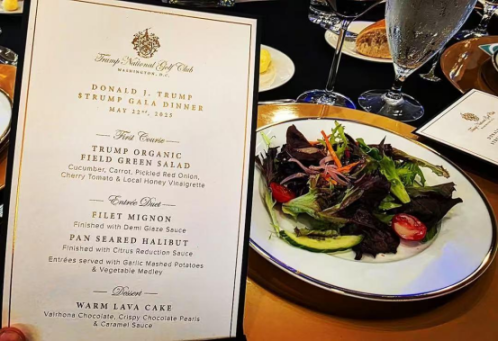
Shortly after, Trump quickly left by helicopter, leaving the 220 token holders to enjoy their multi-million-dollar-funded dinner. Despite the enormous cost, the menu was surprisingly modest: garden salad, choice of filet mignon or pan-seared sole, garlic mashed potatoes and mixed vegetables, topped off with molten chocolate cake. At first glance, it resembled standard Western cuisine. Some attendees on X complained the food was unappetizing and undersized, with one even comparing it unfavorably to a rural banquet—prompting widespread amusement.
Once Trump departed, the spotlight naturally shifted to the number one holder—Justin Sun. Sun delivered a speech expressing gratitude to Trump: "Thank you to the Trump administration for everything you’ve done for our industry. Not long ago, crypto participants faced constant pressure—we couldn’t possibly host such a grand event in Washington, bringing all industry players together in the U.S. to build the crypto ecosystem. This is the most beautiful thing I can imagine.
If I can come to the U.S., then anyone can." The evening then turned into a full-blown social media showcase, transforming what was meant to be a Trump dinner into a Justin Sun affair. While the event largely followed the project’s official announcement, vague marketing wasn't entirely absent. For example, the Trump website initially explicitly stated that the top 25 TRUMP holders would receive a "special VIP White House tour," but later quietly removed the mention of the White House, replacing it with a more ambiguous reference to a VIP tour.
Overall, Trump showed up, the dinner happened, and people gathered—so credibility was maintained. From a market perspective, however, given Trump’s fleeting presence and meaningless speech, the event had no real impact and amounted to little more than gossip. That said, the TRUMP MEME clearly benefited. Thanks to coordinated funding by major holders, the token stabilized during a period of large unlock-induced volatility, rising from a low of $7.5 to $16, currently trading at $12.9—an increase of over 70% in just one and a half months.
Looking deeper, Trump himself remains the ultimate winner. In reality, the entire event functioned as an alternative form of political donation gathering. While表面上 framed as personal investment in a TRUMP-based token with individual profit and loss, it was effectively a bet on Trump. Outsiders hope to leverage presidential connections to gain entry into influential circles, while insiders see it as overt political payback and quid pro quo.
Take Justin Sun as an example. The U.S. has been investigating him for years—dating back to 2021 when the U.S. Attorney’s Office in Manhattan requested information about him, with evidence collection continuing at least through 2023. In 2023, the SEC accused him of fraudulently manipulating the TRX token market on Tron. As a result, Sun had long avoided traveling to the U.S. But everything changed after Trump took office. Sun invested $75 million in Trump family-backed WIFL, becoming an enterprise advisor for the project. Now, he doubled down by spending heavily again to become the top holder and meet Trump face-to-face. The results have been striking:
In February, the SEC suspended its investigation into Justin Sun. By April, Canary even filed the first TRONETF application with the SEC—no surprise given Sun’s declaration that “if I can come to the U.S., then anyone can.” Moreover, choosing the crypto industry was a shrewd move by Trump. Beyond the meme coin’s efficiency as a novel fundraising tool, the sector itself has unique characteristics: rich in capital yet lacking mainstream legitimacy—like a child holding gold. This makes it easy to manipulate through rhetoric alone, amplifying personal influence while satisfying Trump’s identity politics agenda.
Notably, even those wealthy holders participating in these events have long suffered from being labeled part of an illegitimate “gray economy,” driving a deep desire for social recognition and political connections. Under these conditions, events like this dinner are tailor-made for the crypto community. Still, not everyone was satisfied. Outside the festive dinner, over 100 protesters gathered, shouting “shame” at arriving guests. They denounced the event as “Trump’s crypto corruption,” accusing it of putting a price tag on democracy. Oregon Democratic Senator Jeff Merkley even showed up in support, yelling that the dinner was the “Mount Everest of corruption.”
The controversy continues to grow. On May 24, 35 members of the U.S. House of Representatives jointly wrote to the Department of Justice demanding an investigation into Trump’s private TRUMP dinner, alleging possible violations of the Foreign Emoluments Clause in the Constitution and federal anti-bribery laws. Lawmakers pointed out that most attendees appeared to be foreign nationals, suggesting the undisclosed interactions could serve as channels for foreign governments to influence U.S. policy. Democrats are simultaneously pushing two legislative measures: restricting high-level government officials and their families from engaging with cryptocurrencies, and adding amendments targeting stablecoin platforms linked to the Trump family within the GENIUS Act. Legal experts note that if the DOJ determines the dinner constituted foreign benefit transfers, constitutional litigation could follow.
So far, Trump has not responded personally, but White House press secretary Karoline Leavitt dismissed the allegations at a press briefing, calling any suggestion that the president profited from office “utter nonsense.” Meanwhile, comments made a week earlier by Trump’s eldest son, Donald Trump Jr., at a business forum hosted by the Qatari government may reflect the family’s stance: “Even perfectly legal transactions attract baseless accusations, so our position this time is clear—we’ll follow the rules, but we won’t let business be permanently restrained.”
In light of this, despite Democratic outcry, the Trump family’s money-making machine shows no signs of slowing down. In the end, Trump gains a loyal voting bloc and effortless crypto wealth far exceeding real estate profits; the crypto industry secures a seat at the mainstream table and institutional validation; and token holders ascend into the ranks of the “New Money.” Everyone wins.
Join TechFlow official community to stay tuned
Telegram:https://t.me/TechFlowDaily
X (Twitter):https://x.com/TechFlowPost
X (Twitter) EN:https://x.com/BlockFlow_News