








The Truth Behind Apple AI's Collapse: From Jobs' Vision to Executive Missteps
TechFlow Selected TechFlow Selected
The Truth Behind Apple AI's Collapse: From Jobs' Vision to Executive Missteps
Apple, usually careful about its public image, has been completely exposed this time due to its underwhelming AI.
 Navigating Web3 tides with focused insights
Author: Moonshot
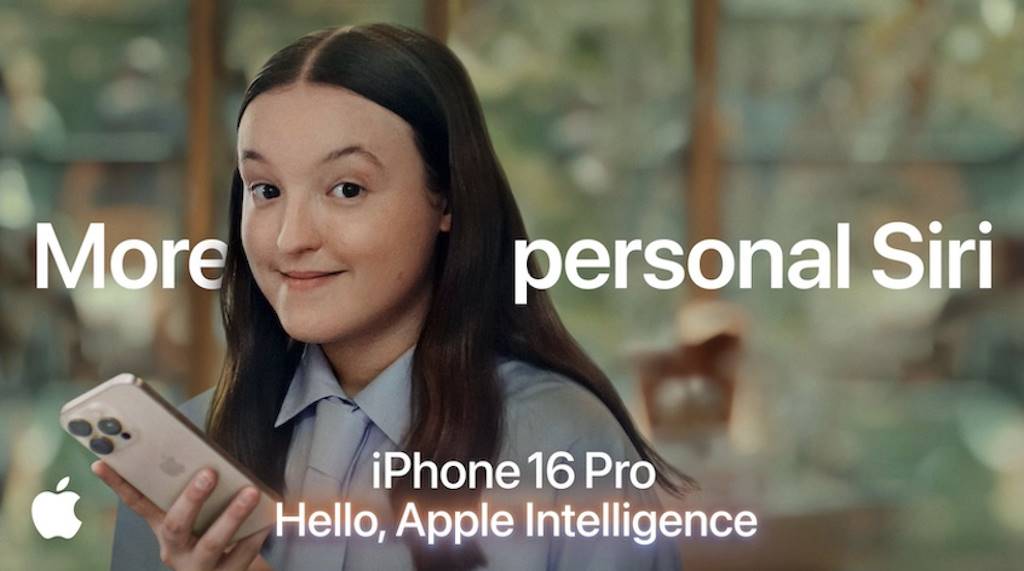
AI has been hot for nearly three years.
Major tech giants have rushed to jump in, yet amid this frenzy, Apple—the company closest to our daily lives—seems farthest from AI.
The biggest giant appears invisible in the hottest trend.
Last June at WWDC, Apple slowly unveiled Apple Intelligence. Now, almost a year later, for most users, Apple Intelligence remains something they’ve only heard about but never seen.
The world sees that Apple’s AI efforts have failed, but no one knows exactly what went wrong.
Prominent Apple analyst Mark Gurman recently published a lengthy article in foreign media titled "Why Apple Still Hasn’t Cracked AI," revealing internal hesitation toward AI, internal conflicts, and insurmountable technical bottlenecks within Apple.
Notably, Gurman uses “Still hasn’t,” a phrase that already sets the tone for Apple’s current state.
This article reorganizes the original piece to present Apple’s history, current situation, root problems, and future challenges in the AI field, analyzing why Apple struggles so much in the AI race, making AI its Achilles’ heel.
01 Fourteen Years Ago, Siri Was Already a Large Model Concept
On October 4, 2011, one day before Steve Jobs passed away, Siri—the legacy he left to Apple—was launched.
At the time, Siri seemed like science fiction made real. It could understand voice commands, book restaurants, find movie theaters, or hail taxis. Apple once again turned futuristic concepts into mainstream products.
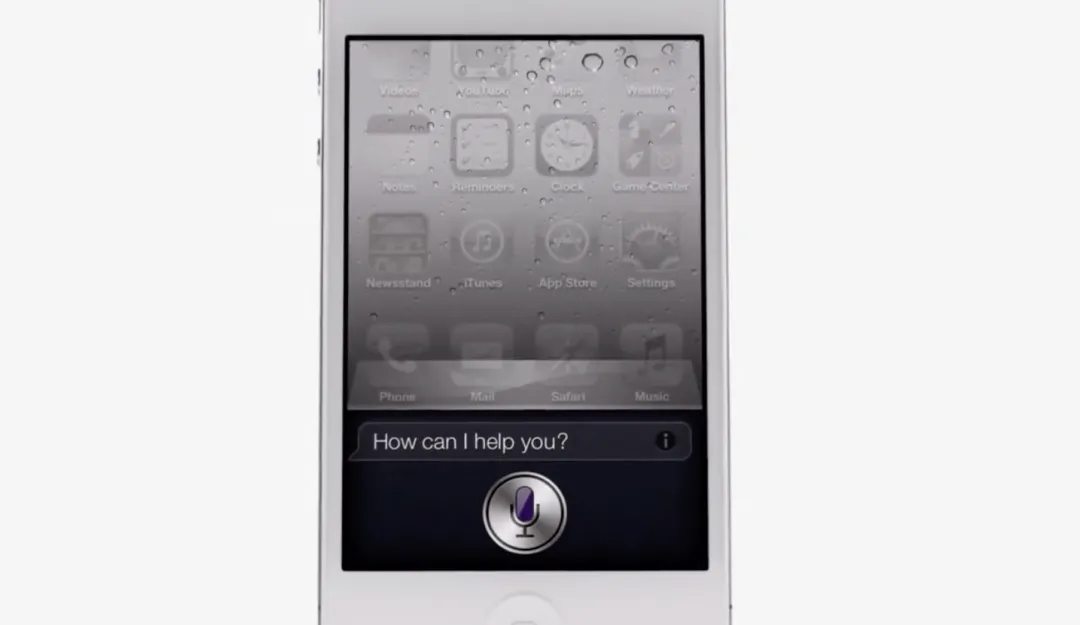
Siri launched alongside the legendary iPhone 4s|Image source: Apple
Back then, Jobs wasn’t particularly interested in building search engines.
A person who worked with him said: "Jobs didn’t believe users would actively search for things. He thought Apple’s role was to carefully select and present desired content to users." This philosophy, like many of Jobs’ beliefs, continued to deeply influence Apple after his death.
When Jobs first encountered Siri—a standalone app on the App Store—he was immediately captivated.
Siri co-founder Dag Kittlaus recalled that Siri’s ultimate goal was "to speak to the internet, and have an assistant handle everything for you. You wouldn’t even need to know where information comes from; issues with discovering apps and websites would be solved." This is precisely today’s most widespread application scenario for large language models.
Jobs instantly realized Siri was far more than just an app. He quickly contacted Kittlaus, inviting the Siri team to his home. During a three-hour meeting, Jobs proposed acquiring their company. Kittlaus initially rejected the offer, but couldn’t resist Jobs calling him every single day for 24 consecutive days.
Eventually, Kittlaus agreed to sell Siri. Jobs immediately made it Apple’s top development priority and fully immersed himself in its development during the final stage of his life.
Initially, Siri led the smart voice assistant market. But a few years later, competitors like Google, Amazon, and Xiaomi rolled out more advanced voice assistants and smart speakers, while Siri showed no significant progress.
With Siri’s launch, Apple also began machine learning research, primarily used for facial and fingerprint recognition, smart suggestions (such as reminding departure times based on traffic), improving maps, and key projects at the time: headsets and cars.
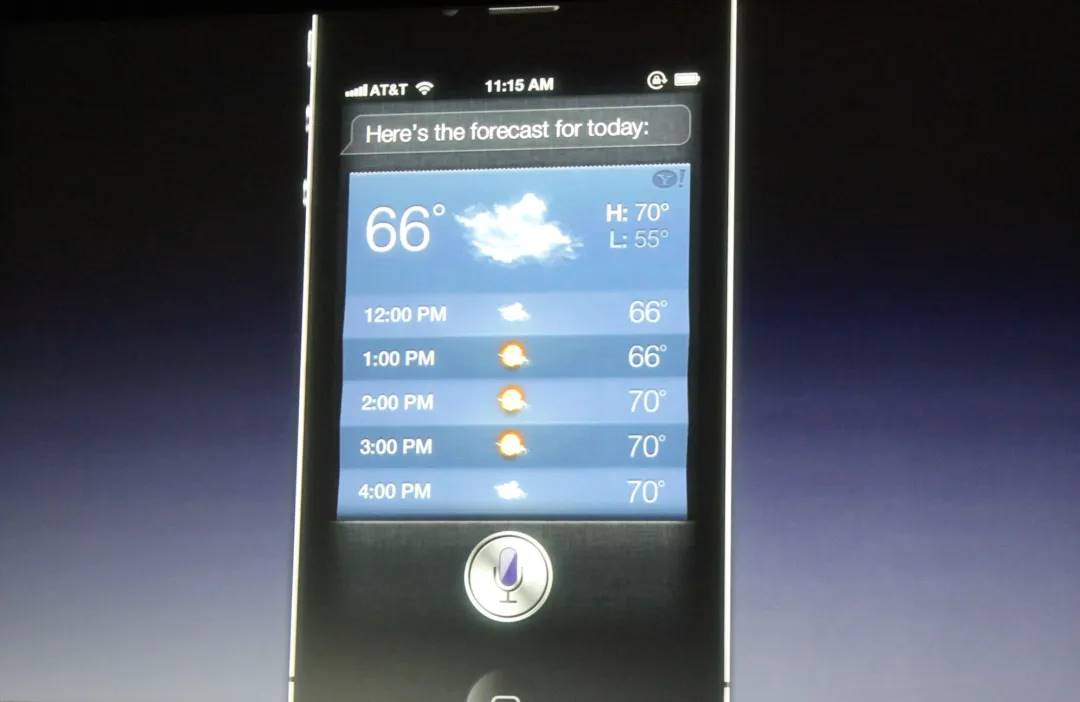
Using Siri to check weather|Image source: Apple
In the early years, Siri’s development focused solely on basic tasks such as providing weather updates, setting timers, playing music, and handling text messages.
In action, Apple had already positioned itself early in the AI industry, acquiring several small AI companies including machine learning firms Laserlike, Tuplejump, and Turi.
Insiders revealed Apple even considered acquiring Mobileye Global Inc. for about $4 billion, potentially Apple’s largest acquisition ever.
Mobileye accelerates autonomous driving systems and computer vision technology development. But Apple ultimately abandoned the deal, and in 2017 Intel acquired Mobileye for $15 billion.
So in terms of direction, Apple did not bet on AI in the voice assistant space.
At that time, OpenAI—only six months old—claimed it would build a “general-purpose” robot. But Siri remained stuck doing the same tasks it handled at acquisition: setting alarms, checking weather, and playing music across countless iPhones.
02 Expectations, Infighting, Exclusion
Why did wealthy, powerful, capable Apple stumble in AI? Perhaps only seasoned Apple analyst Mark Gurman could access so many insider details. He devoted extensive coverage to Apple’s internal AI infighting.
In 2018, Apple poached John Giannandrea (known as JG) from Google to lead AI.
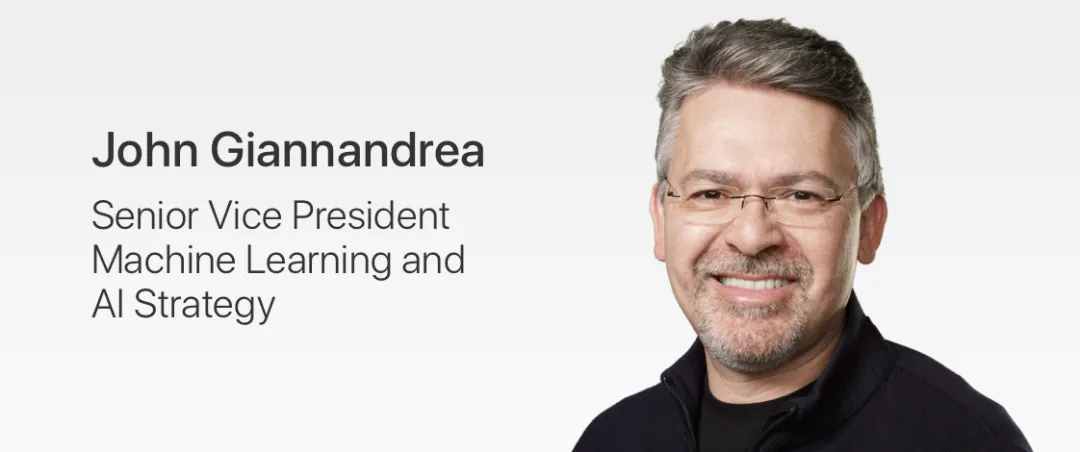
Apple AI chief John Giannandrea|Image source: Apple
Previously, JG led Google’s search and AI divisions, deploying AI technologies in products like Google Photos, Translate, and Gmail.
"JG wasn’t just regarded as the most influential executive after the CEO at Google—he also served as CTO of internet pioneer Netscape," said a hiring participant. "Could there be a better fit?"
For Apple, recruiting JG wasn’t just a blow against rival Google; he was expected to be the first step in transforming Apple into an AI leader.
In Apple’s official press release at the time, Cook stated: "Machine learning and AI are crucial to Apple’s future. They will not only revolutionize how people interact with technology but have already significantly improved users’ lives. We’re incredibly fortunate to work alongside John. As a leader in AI, he will surely drive substantial progress in this critical area."
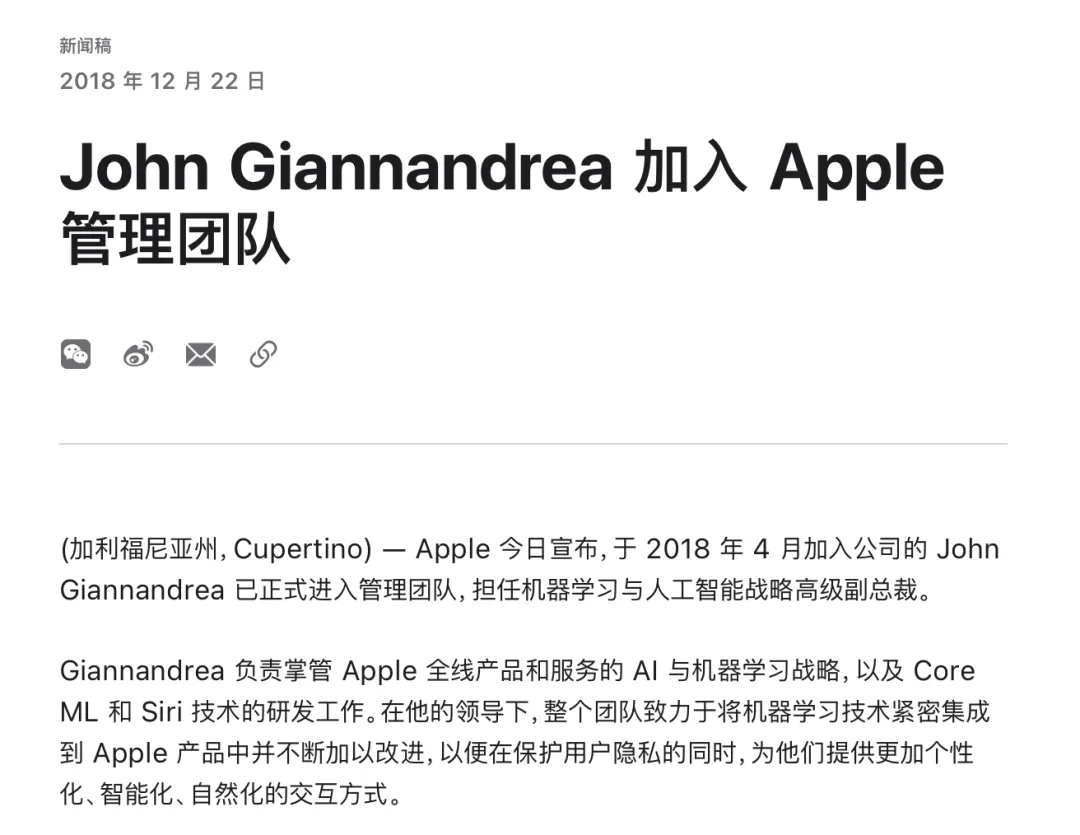
John Giannandrea joined Apple in 2018 to lead AI and machine learning|Image source: Apple
Yet seven years later, those expectations and optimism have vanished. Not only has Apple’s AI failed to gain momentum—it has fallen further behind.
The core issue:
Executives lack unified understanding of the AI roadmap.
Some senior software engineering leaders believed Apple should emphasize AI more in iOS. Around 2014, one executive said: "We quickly realized this was revolutionary technology, far more powerful than we initially understood." But they couldn’t convince iOS head Craig Federighi to take AI seriously—"Many suggestions fell on deaf ears."
Yet Cook unexpectedly embraced AI. A colleague said: "Cook is one of the biggest AI believers inside Apple. He’s long been frustrated that Siri lags behind Alexa and dissatisfied that Apple failed to secure a place in the smart speaker market."
However, JG’s own judgment on AI kept wavering.
When JG joined Apple in 2018, according to other executives, he saw Apple’s closed software ecosystem as a unique advantage, enabling instant deployment of new features across billions of devices.
But JG soon discovered Apple needed to invest hundreds of millions extra for large-scale testing and image/text annotation to train large models. JG recruited top AI researchers from Google and built teams for testing and data analysis. Then he targeted Siri, replacing its leadership and proposing to cut rarely used features.
Yet JG’s efforts were frequently blocked. Multiple colleagues revealed that software chief Craig Federighi refused to commit massive resources to AI, not viewing it as a core mobile device capability.
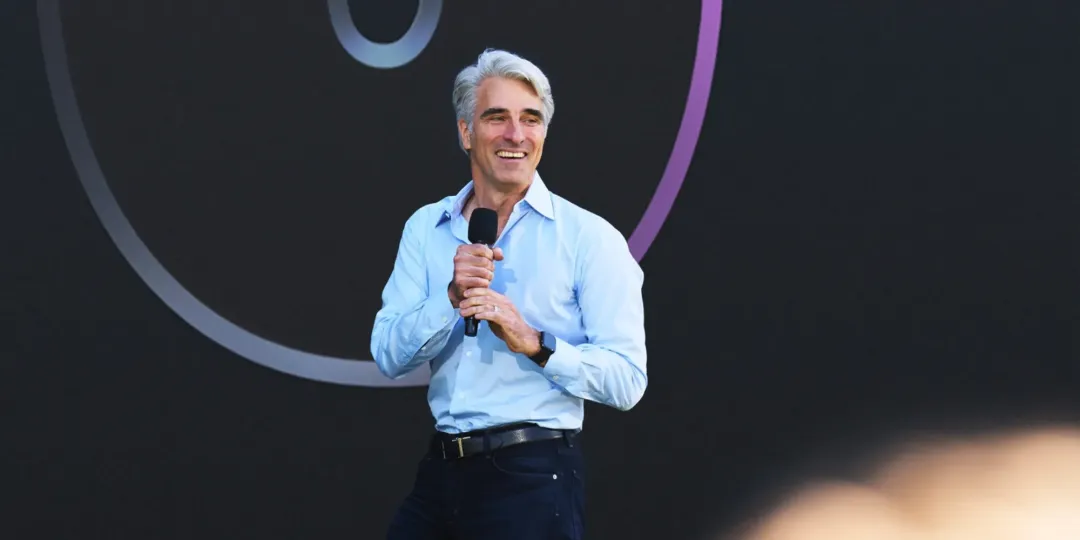
Craig Federighi is a familiar face at launches, consistently leading Apple’s software team|Image source: Apple
A long-time Apple executive said: "Craig isn’t the type to say, ‘We need to do something big and get more budget and people.’"
Other leaders shared similar reservations. One veteran executive said: "In AI, you must invest first to discover what the product is. That’s not Apple’s way. At Apple, we know the end goal before developing. Our usual strategy is to enter late, leverage over one billion users, move steadily, and eventually beat everyone."
But this strategy doesn’t work for AI. ChatGPT’s November 2022 launch caught Apple completely off guard.
A senior executive admitted that prior to this, Apple "didn’t even have a concept for Apple Intelligence."
Another executive said: "OpenAI’s moves weren’t secret. Anyone paying attention to the market should have seen it and committed fully."
Within a month of ChatGPT’s release, Craig Federighi started using generative AI to write code for software projects. Insiders revealed he suddenly recognized AI’s potential, teaming up with JG and other executives to meet companies like OpenAI and Anthropic, urgently studying the latest models and market trends. From then on, Craig demanded iOS 18 include as many AI features as possible by 2024.
JG restarted building an AI team for large language models—now years behind competitors.
Multiple employees reported that various internal product teams each handled parts of AI development, resulting in fragmented technology, inconsistent progress, and compatibility issues.
At WWDC 2024, Apple Intelligence arrived as scheduled—but capabilities were limited.
Apple’s generative AI indeed lagged. According to Bloomberg, Apple internally developed a chatbot capable of basic image generation, but it trailed ChatGPT by at least 25%, showing clear accuracy deficiencies in most queries.
To deliver AI products consumers actually want, Apple had to negotiate with rivals like Google, Anthropic, and OpenAI.
This sparked internal division. JG strongly advocated adopting Google’s Gemini, arguing OpenAI offered weaker personal data protection and long-term sustainability. But Apple’s corporate development team disagreed—they favored OpenAI. Thus at WWDC, it was announced that Siri-unhandled requests would be routed to ChatGPT.
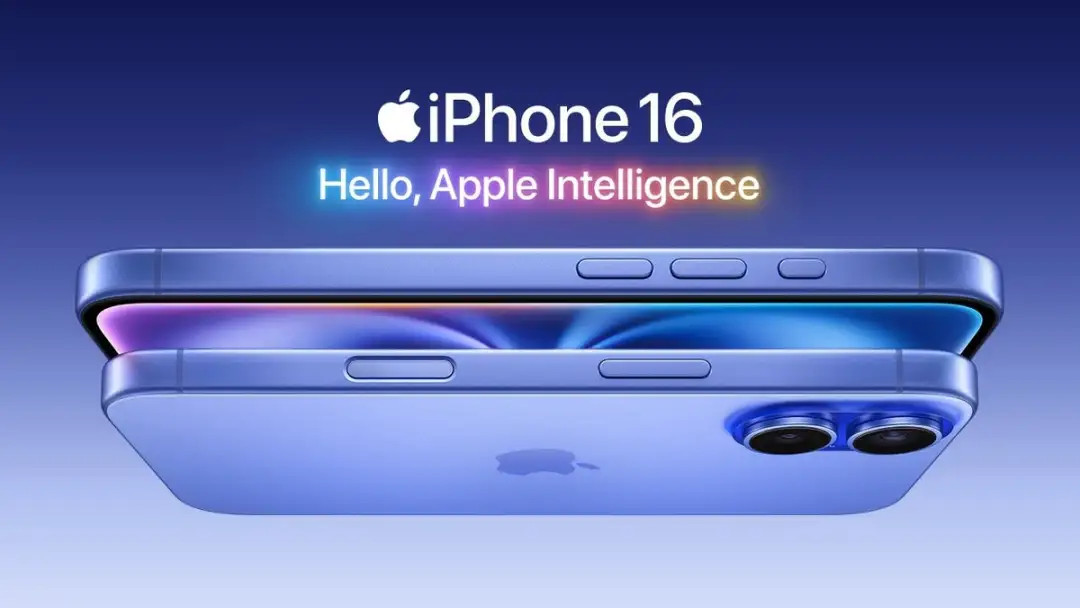
The iPhone 16, marketed around Apple Intelligence, remains unfulfilled|Image source: Apple
Many executives felt uneasy about Apple lacking its own AI chatbot, but JG didn’t see large models as AI’s future.
Multiple employees said JG believed AI agents replacing humans was still years away, and most consumers—including himself—distrusted generative AI.
These employees said this explains why JG never pushed hard to build a consumer-facing ChatGPT competitor. They revealed JG once stated consumers don’t want tools like ChatGPT.
Internally, JG bore most blame for delays and missteps. But multiple employees said JG struggled to integrate into Apple’s inner circle of top executives—"They’ve worked together for decades, running the company like a family business."
JG’s position became awkward—an external hire unable to drive core change at Apple. An employee familiar with him said: "JG should have aggressively fought for major funding, but he’s not a salesman—he’s a technologist."
Others said JG wasn’t hands-on enough and didn’t hold employees strictly accountable. One executive said: "All other engineering teams go all-out and deliver on time, but JG’s team doesn’t—they lack execution." This perception of "laxity" extended to perks.
Unlike other Silicon Valley giants, Apple headquarters staff pay for cafeteria meals. But during Apple Intelligence crunch periods, some of JG’s engineers received free meal vouchers, sparking resentment in other teams. One employee said: "Apple doesn’t provide free food, yet their team delivered a year late and still got free lunch." These subtle disparities fueled internal divisions.
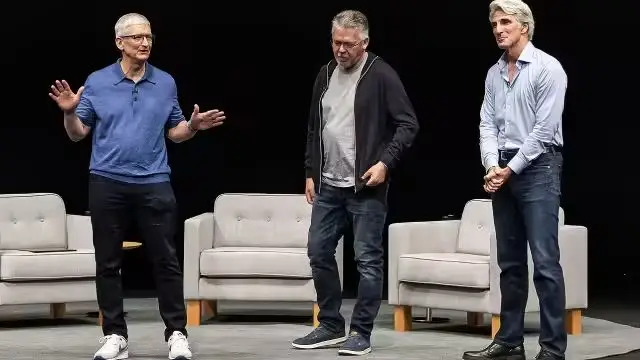
Left: Cook, Center: JG, Right: Craig Federighi|Image source: Bloomberg
JG’s alleged lack of urgency may stem not just from personality but philosophical views on AI.
He consistently held conservative views on AI development pace and questioned chatbots’ value, seeing threats from OpenAI, Meta, and Google as non-urgent.
Some Apple colleagues said JG insisted users wanted AI assistants as the device’s primary interface—not just another app. Despite delays and setbacks, he clung to this vision.
In March this year, JG lost control over all product development, including Siri and robotics. Other executives revealed Cook lost confidence in JG’s ability to execute new products.
JG retained oversight of AI, large language model development, AI analytics, and some development teams. Insiders said some executives discussed reducing JG’s responsibilities or easing him into retirement, but figures like Craig Federighi worried that if JG left, the top researchers and engineers he brought might leave too.
Currently, JG chose to stay. He told colleagues he wouldn’t leave until Apple’s AI efforts are back on track. He admitted feeling relieved about no longer managing Siri.
03 Technological Lag, at the Crossroads of Privacy
A tech giant’s failures can’t be blamed solely on one person like JG.
Marketing and advertising teams promoted unfinished features prematurely. Craig Federighi was the final decision-maker for software projects. Cook set the entire company’s product development culture.
Even the former CFO was overly conservative when purchasing GPUs. Apple failed to leverage its market dominance and cash reserves, instead following routine slow procurement of AI hardware. As a result, most global GPUs were snapped up by rivals like Amazon and Microsoft, slowing Apple’s AI model training.
Executives from Apple and other companies revealed Apple employs far fewer AI staff and purchases fewer GPUs for training and running large language models compared to competitors.
For Apple, missing a potentially disruptive technology isn’t fatal. After all, Apple often lets peers explore new technologies first to validate markets, then refines and delivers well-designed, user-friendly versions later.
This strategy shaped users’ perception of Apple as “not chasing the newest, but delivering the best.” Relying on meticulously crafted products, curated content, and annual software updates, Apple has become the world’s most valuable tech company.
That’s Apple’s mindset too. During May’s earnings call, when shareholders asked Cook about AI delays, he said it simply required more time to meet Apple’s quality standards: "There aren’t many other reasons—just took longer than we expected."
But how long is too long? Apple has invested heavily in AI with little to show. Moreover, AI is a faster, more complex technology.
Looking back, Apple’s most successful products were built on internally developed core technologies—like iPhone’s multi-touch and Mac’s in-house M-series chips. Yet in AI, Apple’s technical prowess is hard to see.
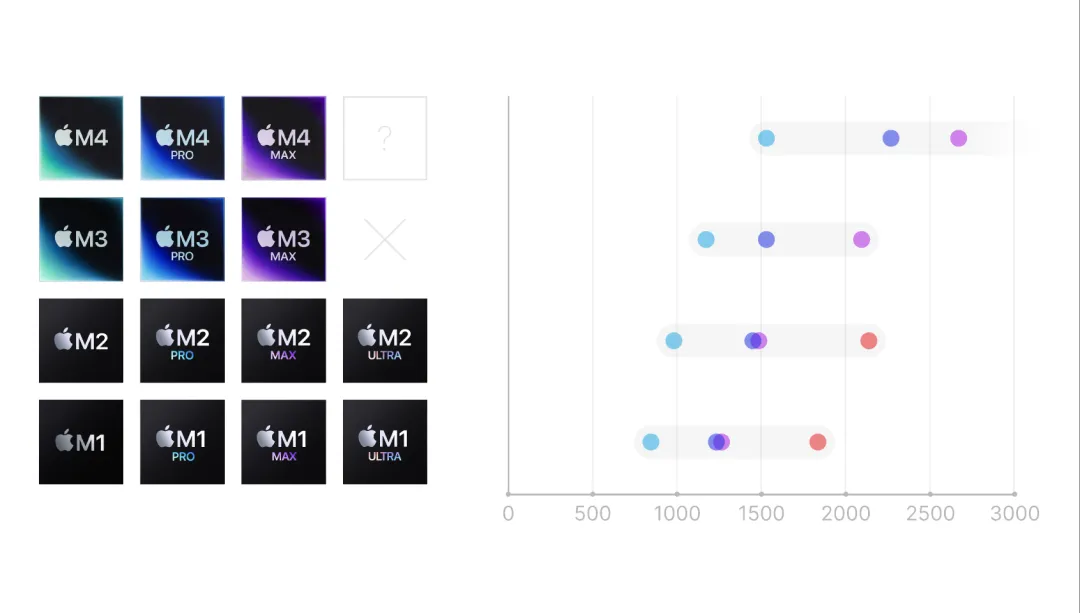
Apple’s in-house M-series chips have fully penetrated its hardware lineup|Image source: Figma
Worse, Apple faces a unique technical bottleneck in AI that other giants don’t: data utilization.
For years, Apple has touted user privacy as a key selling point—now it’s become a roadblock to AI development.
With 2.35 billion active devices, Apple holds more web search, user behavior, and communication data than many rivals. But Apple’s restrictions on AI developers’ data access are far stricter than Google, Meta, and OpenAI, forcing researchers to rely on third-party licensed datasets and synthetic data (artificially created for AI training).
A person familiar with Apple’s AI and software development said: "At Apple, every AI move faces a thousand vetoes—you have to battle privacy enforcers just to make progress." Another executive with similar views said: "Look at X’s Grok—it keeps improving because it has all of X’s data. What does Apple have to train its own AI?"
Apple stands at the crossroads of data and privacy. A former marketing advantage has become a technical disadvantage. In the wild, fast-moving AI market, Apple appears overly “refined.”
04 Ripple Effects
Apple’s weakness in AI affects more than just Apple Intelligence.
Last year, Apple terminated its self-driving car project—a decade-long, multibillion-dollar effort—partly because AI couldn’t fulfill promises of full autonomy.
According to Gurman, AI failures could jeopardize Apple’s future product plans, including AR glasses, robots, and Apple Watch and AirPods capable of recognizing surrounding objects.
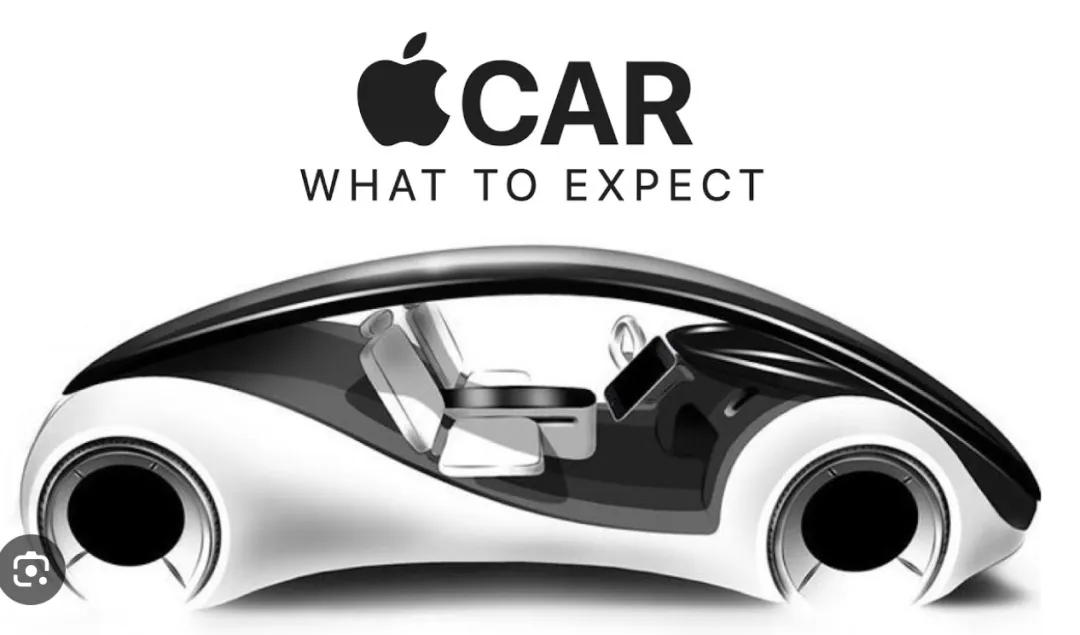
Apple bet wrongly on building cars|Image source: Apple Explained
If Apple fails to infuse AI into hardware going forward, it won’t just undermine its “hardware as a vehicle for software” philosophy but also damage its prized hardware-software ecosystem.
Eddy Cue, Apple’s senior vice president of services, told colleagues Apple’s dominant position in tech is now at risk.
Last month, Google search volume on Apple devices declined. Eddy Cue said: "This has never happened in 22 years—AI is the reason." He admitted users increasingly rely on large language models for information.
Cue pointed out Apple doesn’t provide indispensable goods like ExxonMobil (a major U.S. oil company). He worries AI could be to Apple what the iPhone was to Nokia—Nokia fell to Apple, and Apple might fall to AI.
He even bluntly stated the iPhone could become irrelevant within ten years: "Sounds crazy, but it’s possible."
Bigger challenges come externally. Insiders revealed that to comply with upcoming EU regulations, Apple is modifying its operating system to allow users to switch default voice assistants from Siri to third-party options.
This means if Apple doesn’t achieve breakthroughs in voice assistants, users may abandon Siri for AI assistants from OpenAI, Anthropic, Meta, Alphabet, X, or even DeepSeek.
Apple isn’t standing idle. Employees revealed Apple’s Zurich AI office is building a Siri entirely based on large language models, aiming to make Siri more conversational and better at information integration. This secret project is known as LLM Siri.
Apple also has thousands of analysts in offices in Texas, Spain, and Ireland reviewing the accuracy of Apple Intelligence summaries, comparing data biases, and assessing AI hallucination frequency.
As for Apple’s in-house chatbot, some executives now aim to make Siri a true ChatGPT competitor.
To achieve this, the company is starting to let Siri access the open web and integrate multi-source data. Employees said Apple’s internally tested chatbot has made significant progress over the past six months, with some executives believing its performance now matches recent versions of ChatGPT.
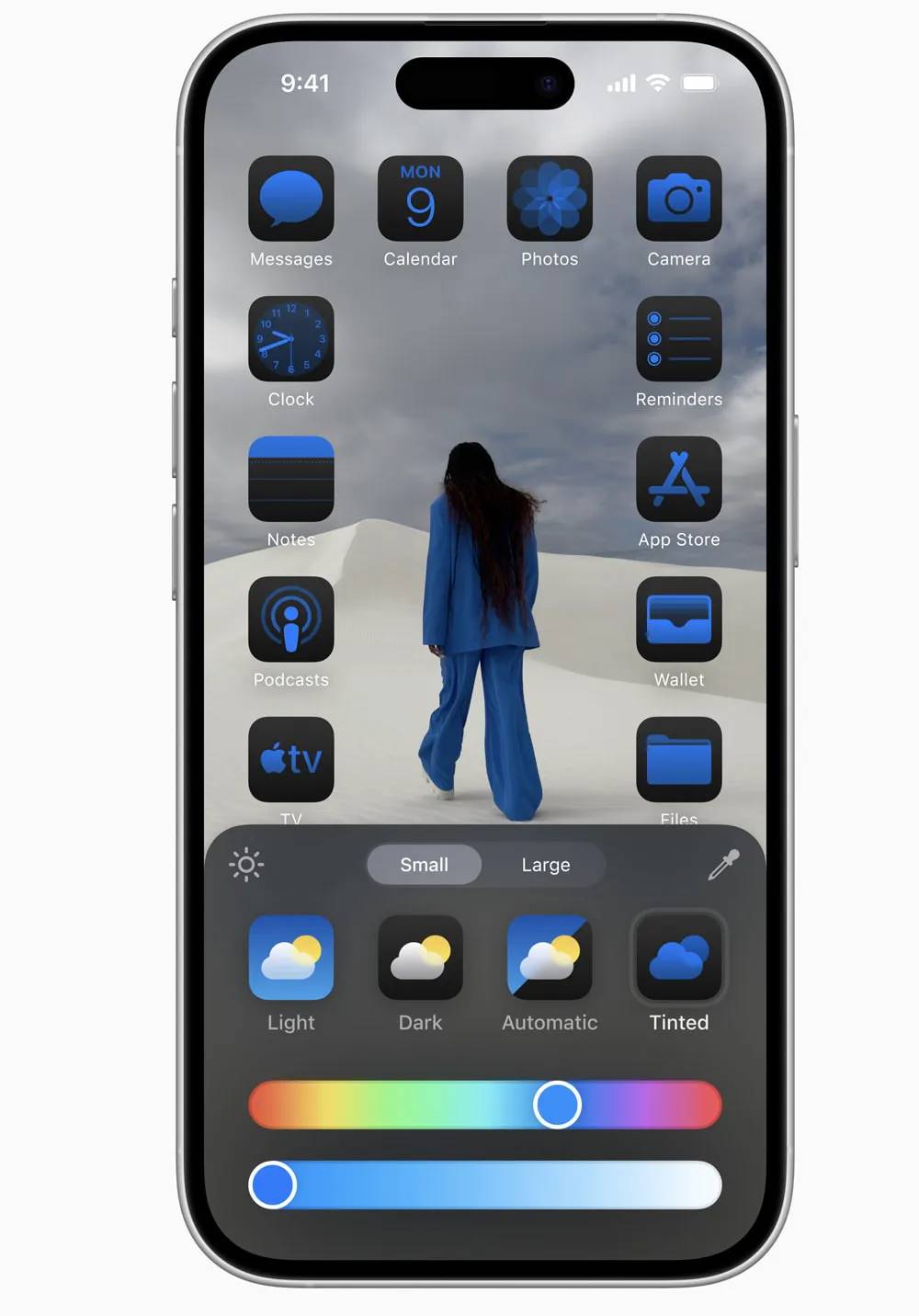
After waiting a year for the new system, is it just a color palette?|Image source: Apple
Insiders revealed that for next month’s WWDC, Apple plans to focus on upgrading existing Apple Intelligence features and adding new ones like AI-optimized battery management and virtual health coaching.
Major Siri upgrades—and even promises made a year ago—are unlikely to feature prominently at WWDC. Sources said although Apple internally places high hopes on “LLM Siri,” the company plans to market Apple Intelligence separately from Siri.
One concern is that Siri, lagging significantly behind rivals, could drag down Apple’s AI messaging. Additionally, Apple now hesitates to announce new features months in advance.
Remember Siri co-founder Kittlaus? He remains optimistic about Siri’s AI transformation, saying: "All model companies don’t really understand what an assistant is, but Apple has been researching this concept since 2010." He believes Apple just needs to make Siri smarter: "Apple has the devices and brand. Just give Siri a ‘new brain,’ and it can absolutely become the preferred assistant."
Fourteen years ago, Siri’s debut placed Apple at the peak of intelligent interaction. Jobs’ vision ignited the voice assistant market and nurtured today’s chatbots that converse with us naturally in everyday language.
Yet today, Apple stumbles in the AI race—delayed and underwhelming Apple Intelligence, stagnant and outdated Siri, failed autonomous driving...
Mark Gurman, with access to internal information, reveals not just Apple’s surface-level AI delays but deeper strategic indecision, technological deadlocks, and friction between core culture and the pulse of the times.
Strategies and corporate cultures once sources of pride now become stumbling blocks in the face of AI, reshaping the tech landscape at unprecedented speed.
Apple’s future is shadowed by its AI shortcomings. Cook says it’s just a matter of time. But how much time does Apple really have?
At least at next month’s WWDC, we won’t see the answers we期待.
Join TechFlow official community to stay tuned
Telegram:https://t.me/TechFlowDaily
X (Twitter):https://x.com/TechFlowPost
X (Twitter) EN:https://x.com/BlockFlow_News
 极客公园
极客公园


