Interview with Dr. Xiao Feng (Part 1): Dollar Stablecoin Legislation Is a Victory for Technological Innovation, but the Impact Will Be Very Complex
TechFlow Selected TechFlow Selected
Interview with Dr. Xiao Feng (Part 1): Dollar Stablecoin Legislation Is a Victory for Technological Innovation, but the Impact Will Be Very Complex
"We will enter an explosive phase of the digital economy ecosystem, quickly witnessing many new digital economic phenomena and business species."
 Navigating Web3 tides with focused insights
Author: Meng Yan
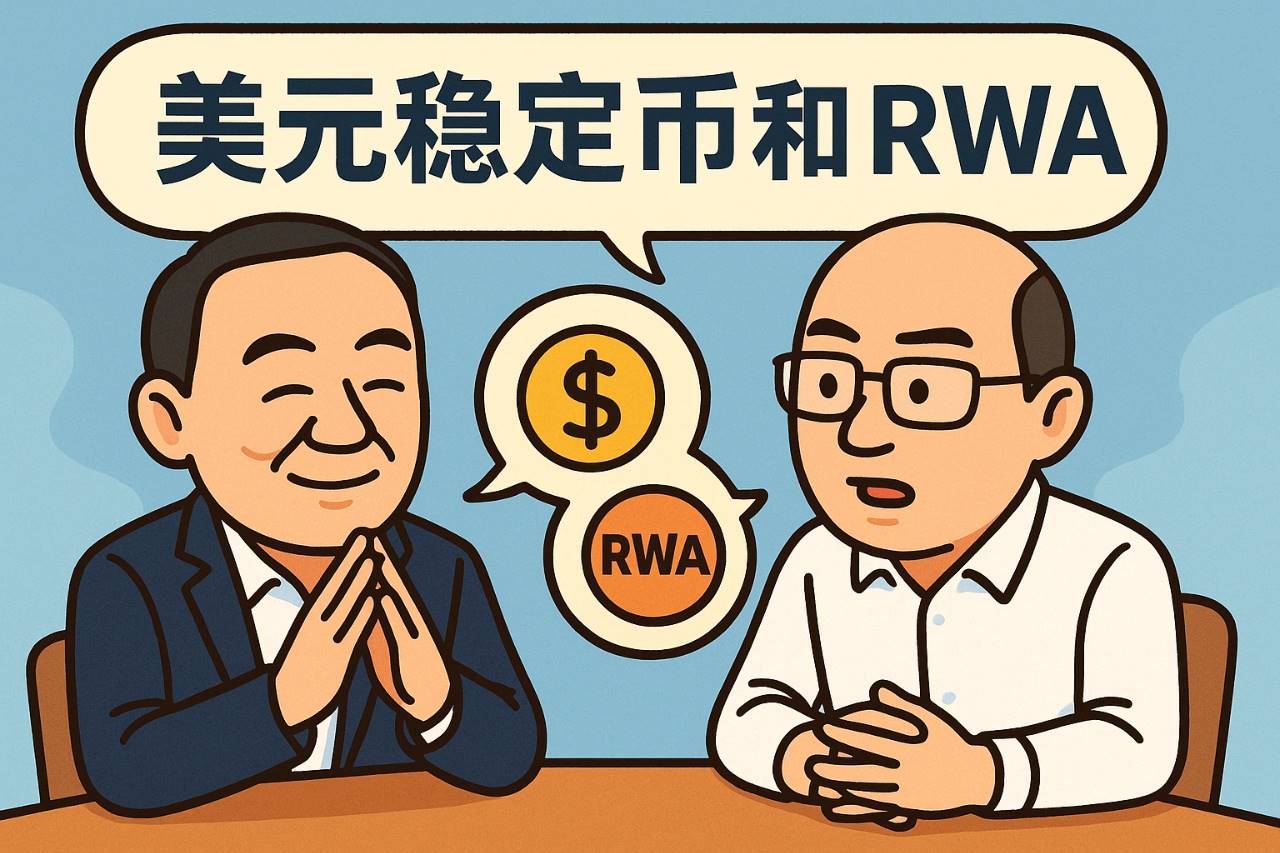
Introduction: With the U.S. Senate passing a motion to vote on the dollar stablecoin bill, and Hong Kong's Legislative Council approving the draft ordinance for Hong Kong dollar stablecoins, stablecoins have rapidly become one of the hottest industry topics, attracting broader attention.
It is widely expected that the implementation of the dollar stablecoin legislation will trigger an exciting boom in blockchain-based digital economies. Around dollar stablecoins and real-world assets (RWA), a new window of entrepreneurial opportunity will emerge.
Dr. Xiao Feng is a leading figure among Chinese-speaking communities in blockchain research and practice, with deep understanding of blockchain, stablecoins, and RWA.
To fully understand this era of opportunity, I was fortunate to have an in-depth conversation with Dr. Xiao Feng through video conferencing and written exchanges, which I have compiled and published here for discussion with peers. Due to the length of the original text, it is published in two parts. The first part mainly interprets the significance of dollar stablecoins, while the second part focuses on the opportunities stablecoin economy and RWA bring to Chinese entrepreneurs. The views expressed are solely those of the author, and readers are welcome to exchange opinions.
1. The Motivation Behind Stablecoin Legislation Is Transparent
Meng Yan: Dr. Xiao, your recent speeches have caused significant resonance throughout the Chinese-speaking blockchain community, especially your speech titled "Back to Square One" aimed at blockchain entrepreneurs, which has had far-reaching influence. In that speech, you didn't just reiterate the value logic of blockchain again—you clearly pointed out that our industry is facing a new cycle of explosive growth, and entrepreneurs need to return to their original intentions and restart correctly. This is how I understood your message.
The timing of your speech was indeed precise. On May 19, the U.S. Senate passed a motion to vote on the GENIUS stablecoin bill, followed by Hong Kong’s Legislative Council passing the “Stablecoin Ordinance Bill” on May 21. A quiet legislative race around stablecoins has already begun. A new consensus is forming: the blockchain field is about to enter a golden window for innovation and entrepreneurship—an intensity of energy that may even surpass AI over the coming period. Many people outside the blockchain and Web3 space who may have dismissed it last month now are changing their perspectives and beginning to pay attention to opportunities in this domain.
This situation did not come easily. I've been involved in this industry for ten years and feel quite emotional about it. Over the past years, major countries worldwide have generally taken a very cautious, even negative stance toward this entire set of emerging technologies—blockchain, crypto assets, tokens, DeFi, Web3—with tight regulation and mainstream media almost unanimously engaging in stigmatization. In my memory, there hasn’t been another case since the Industrial Revolution over two centuries ago where a new technology has been treated this way. But as the saying goes, mountains cannot block rivers flowing eastward—we’ve finally reached this day.
However, the sudden shift by the Trump administration still requires explanation from the public. I’ve seen some self-media interpreting this from a conspiracy theory angle—for example, as a money-making tool for personal gain by the Trump family, or as a form of monetary warfare aligned with trade wars.
So what do you think is the real motivation behind the U.S. push for stablecoin legislation?
Xiao Feng:
The U.S. presidential team and Congress have been relatively frank and transparent about their motivations regarding stablecoin legislation. They openly state that the first goal is to modernize America's payment and financial systems, and the second is to consolidate and strengthen the status of the U.S. dollar, creating trillions of dollars in demand for U.S. Treasury bonds within a few years. I believe this is the answer—there aren't so many conspiracy theories here.
Not long ago, I spoke with a cryptocurrency policy advisor to the U.S. president, who told me directly that Bitcoin national reserves rank second for the United States—the top priority is dollar stablecoins, which represent core U.S. interests. From what I understand, the Trump administration aims to ensure the passage of the GENIUS Act before Congress goes on recess in August, though it might happen even sooner.
In this context, Hong Kong’s legislative authorities demonstrated flexibility and high efficiency by passing the stablecoin ordinance through three readings—an achievement worthy of praise.
Meng Yan: Some people are now comparing this bill to the 1944 Bretton Woods Conference and the 1971 Nixon Shock, calling it the construction of a “Bretton Woods System for the digital economy.” The general logic behind this view is that during deglobalization, the U.S. fears weakening of the dollar’s position. Therefore, it uses digital currency as a “nuclear weapon” to launch a downward-dimensional strike against the existing international monetary and financial system, offsetting impacts on the dollar and consolidating dollar hegemony. What do you think of this perspective?
Xiao Feng:
As I mentioned earlier, the U.S. openly acknowledges one key purpose of pushing stablecoin legislation is to consolidate and enhance the dollar’s status. Judging from the Senate vote, this is bipartisan consensus—they know they’re making history.
The U.S. arrived at this understanding after a process—and paid certain costs. The previous U.S. government, particularly technocratic officials like former SEC Chair Gary Gensler, understood blockchain well—but why were they stuck for so many years? Simply because they couldn’t let go of the existing payment network, including SWIFT, and the financial governance, regulatory, and anti-money laundering mechanisms built upon it.
But technological progress in blockchain in recent years, especially the financial sanctions against Russia following the Russia-Ukraine war, has clearly demonstrated blockchain’s technical advantages—advantages that are undeniable. Thus, the transition of the entire financial infrastructure to blockchain is inevitable, just as moving from steam engines to electrification—no force can stop it. Burying one’s head in the sand no longer makes sense; reality outweighs human will.
Compared to the previous administration, the Trump administration shows a more pragmatic attitude across the board—call it principle-free if you want, or call it proactive. So the current U.S. stance is: if payment clearing inevitably bypasses SWIFT, then at least make sure it doesn’t bypass the dollar; if dollar tokenization is inevitable, then ensure every dollar token is backed by U.S. assets. Since blocking it is impossible, better to guide it properly—to guarantee that the dollar remains the primary means of payment and settlement in the digital economy, in Web3, and in the AI era. This is America’s core national interest. From the U.S. perspective, this is an open game—a clear strategy, not a secret plot.
Can dollar stablecoins create a new “Bretton Woods System”? We’ll need to observe. Over the past few years, the dollar’s global position has declined. If the U.S. hopes to reinforce the dollar’s standing via stablecoins, that’s unquestionable. But whether such a single measure can achieve that goal, especially whether we can say it creates a whole new system, depends on future developments and interactions between legislation and practice. Still, I have one judgment: although the Trump team and U.S. Congress deeply understand dollar stablecoins, they may not fully anticipate the long-term implications. In this sense, advancing the GENIUS Act involves some risk. Will it reverse course like his trade war policies? That remains to be seen.
2. Two Dollar Stablecoin Systems and Their Complex Consequences
Meng Yan: Speaking of long-term effects, “currency war” conspiracy narratives are popular on Chinese internet platforms today, claiming the U.S. initiated stablecoin legislation to “weaponize” stablecoins. Do you agree with this view?
Xiao Feng:
“Currency war” has been a popular narrative over the past decade. From the standpoint of other countries, it’s indeed necessary to fully assess the impact of dollar stablecoins. Promoting tokenized fiat currency through legislation is unprecedented in world monetary history—it will inevitably trigger a series of complex economic and financial reactions. No one can completely foresee its consequences, not even the U.S. president or Congress. However, based on what has emerged from the GENIUS Act, at least two issues deserve special attention.
First, the borders of sovereign currencies become more fragile. Today, currency usage is bounded by national administrative divisions, with sovereign states maintaining monopolies internally and controlling foreign exchange conversion at borders—a governance mechanism now over a century old. Once dollar stablecoins see large-scale adoption, this mechanism breaks down. Blockchain transforms the internet into a payment network and financial infrastructure, enabling money to operate independently of traditional banking systems and clearing networks. Through smart contracts, cryptographic accounts, and peer-to-peer transmission, money can penetrate micro-level operations in other economies, covering daily consumption, labor payments, cross-border e-commerce, freelancer settlements, and even payments between AIs or machines. At this stage, stablecoins cease to be mere payment tools—they become financial infrastructure embedded within foreign economic systems. They effectively incorporate portions of other nations’ economic activities into their own economic sphere, creating a new mechanism of monetary network expansion. This poses structural challenges to existing sovereign currencies, financial regulation frameworks, and macroeconomic policy tools. Mechanisms once reliant on banking systems, foreign exchange controls, and payment rules are becoming increasingly vulnerable in the face of blockchain and stablecoin technology.
Meng Yan: What you describe is already happening. In some African, Southeast Asian, and Latin American countries where local fiat currencies have depreciated continuously, young people widely use USDT and other dollar stablecoins, causing headaches for local monetary authorities. When I visited Ghana last year, central bank officials told me dollar stablecoins were spreading like wildfire among youth in Ghana and Nigeria, undermining the status of their local currency. They asked me how they could technically resist the invasion of dollar stablecoins—I couldn’t answer. When your local currency loses 20–30% annually, it’s no surprise people turn to the dollar.
Xiao Feng:
This is only the beginning. As dollar stablecoins evolve, a second issue emerges: the complex ecosystem potentially arising from offshore dollar stablecoins. According to the GENIUS Act, institutions outside the U.S. may also issue dollar stablecoins, provided they are backed by U.S. fiat assets, registered in the U.S., subject to U.S. regulations and laws, and ready to comply with U.S. law enforcement orders. These requirements are extremely high—but crucially, these are conditions for legal circulation “in the U.S. market.” If a stablecoin does not enter the U.S. market or involve Americans or U.S. entities, even these conditions can be relaxed. This effectively opens up a gray zone, conditionally allowing foreign institutions to mint dollars. As a result, two systems may emerge: onshore and offshore dollar stablecoins—similar to today’s dollar and Eurodollar systems. The onshore system would be strict and uniform, while the offshore ecosystem would be far more complex, with dozens or even hundreds of different cryptocurrencies all called “dollar stablecoins” circulating, looping, mapping, exchanging, and interacting across dozens of public chains and hundreds of private chains—producing complex effects never seen nor anticipated before.
Meng Yan: Can we say this is essentially the U.S. delegating part of its seigniorage rights to non-bank foreign institutions, thus decentralizing the issuance power of dollar stablecoins? This reminds me of early Western Han China, when coinage rights were delegated, allowing private mints. Historical records don’t detail how these currencies interacted or what economic problems arose. Since industrialization began, no country has ever attempted to delegate coinage rights to foreign entities—we are about to witness a new chapter in world monetary history. Let me draw an imperfect analogy: future dollar stablecoins will resemble copper coins during the reigns of Emperors Wen and Jing, with many “brands”—high quality and low quality, minted by Deng Tong, by Liu Bi—circulating and competing globally. The U.S. government appears to cede part of its dollar coinage authority, but in reality, through regulation and enforcement, turns U.S. Treasuries into the “copper mine” backing all these coins. It’s a strategic retreat to advance—turning global stablecoin issuers into “franchise stores” of the dollar, dramatically increasing global demand for U.S. debt, enhancing dollar penetration, and extending the reach of U.S. financial regulation.
Xiao Feng:
Yes, but the reality will be even more complicated. Amid trade tensions and “deglobalization,” we paradoxically see a trend of “dollarization” in the global digital economy. As AI advances rapidly, the “internet of value” suddenly accelerates. The complex interplay of these economic and technological trends exceeds everyone’s predictive capacity.
Especially the offshore dollar stablecoin system, which will develop multiple layers and attract participation from many financial institutions, internet companies, and even sovereign states, spawning an exceptionally rich and diverse ecosystem. From high-grade offshore dollar stablecoins issued abroad but fully compliant with U.S. regulations and usable within the U.S., to locally regulated dollar stablecoins that follow other sovereign rules but avoid the U.S. market and Americans, to “wild” non-compliant stablecoins, and inevitably various counterfeit coins, over-issuance, dirty money issues—on one hand, this will greatly amplify the dollar’s “brand effect,” spread the psychological anchoring of the dollar as a “unit of account” globally, and expand the scope of U.S. financial regulation and enforcement. On the other hand, such a super-complex monetary system will inevitably pose unprecedented challenges to financial stability and regulatory oversight for both the U.S. and countries worldwide. Initially, U.S. regulators may struggle to keep pace or lack jurisdiction, possibly leading to policy reversals. In short, the real world will be incredibly dynamic—and messy. I can confidently say we are entering an ecological explosion phase in the digital economy, soon witnessing many new digital economic phenomena and business species.
At this stage, discussion on this issue is still insufficient. Especially on Chinese-language internet platforms, discourse is severely lacking.
Still, I maintain that the primary purpose of the U.S. introducing dollar stablecoin legislation is to follow technological trends, act proactively, and consolidate the dollar’s status—not to target the current international monetary system. The so-called “weaponization” is merely a “by-product” of blockchain’s disruptive technological edge. Emotional discussions on this topic easily mislead. Currently, conspiracy theories and conflict narratives are trendy and satisfying on Chinese internet platforms—we must be especially careful not to be misled by emotions and end up opposing historical trends. Simply put, if this were truly a currency war, should we build walls and defend fiercely? Should we continue blocking blockchain, tokenization, and crypto finance entirely? Thinking this way would lead to grave mistakes.
We must understand that the “aggressiveness” of blockchain stablecoins lies in naturally attracting and binding more real economic activity under a framework of higher efficiency, lower cost, and fewer intermediaries. Its expansion is rooted in technological superiority—efficiency, institutional design, and network effects—and cannot be resisted indefinitely. We acknowledge its disruptive innovation character, its aggressiveness and destructiveness toward existing systems—even calling it a “downward-dimensional strike” wouldn’t be excessive. But how should we respond? Wasn’t gunpowder a downward-dimensional strike against cold weapons? Weren’t steam engines against manual and animal labor? Wasn’t the internet against postal and telephone networks? So which side do you stand on?
My position has been consistent for ten years. Faced with a technology like blockchain, we should go with the flow—develop our own stablecoin ecosystems in open, compliant, trustworthy ways—and secure a place in the next-generation financial network. Some talk about monetary sovereignty, financial sovereignty—I say, responding proactively to disruptive technological innovation is the truly responsible attitude toward sovereignty.
3. Stablecoin Breakthroughs Are Ultimately Victories of Technological Innovation
Meng Yan: The U.S. taking the lead in promoting stablecoin legislation does have its particularities. The peculiarity lies in the fact that the first mover happens to be the world’s largest and most advanced economy, driving the transformation of the world’s most important reserve currency. For many countries, they might prefer smaller, less critical economies to pilot such changes using less dominant currencies, progressing gradually and cautiously. But now, the U.S. approach forces a storm of change directly upon everyone—creating a kind of Sisyphean dilemma: answer me, or I will consume you.
Facing such a challenge, many react defensively out of instinct. Especially given constant media reports about how blockchain enables money laundering, illegal financing, and illicit transactions, alongside endless speculation stories—now suddenly the U.S. adopts this same technology to promote stablecoins and RWA. Naturally, many assume this is the U.S. launching a currency war, treating blockchain as a weapon. This mindset is understandable.
Xiao Feng:
The mindset is understandable, but we must return to first principles and go back to square one. Right now, our discussions on blockchain and stablecoins are too macroscopic—starting immediately with topics like monetary systems, dollar hegemony, financial wars—while microscopic analysis is severely lacking. Many of us forget that the primary driver behind stablecoin development has always been technological innovation—creating real value for ordinary users and consumers. The root cause of stablecoins’ massive impact lies precisely in the series of technical advantages conferred by blockchain. I’ve been explaining these points for ten years, but it’s still not enough—now is the time to repeat them again and again until everyone understands: this technology truly possesses enormous superiority. Its success is inevitable—nothing can stop it.
Meng Yan: Indeed, clarifying this logic is very important. I recall you mentioning in a speech that you’ve been passionate about blockchain for ten years, without changing your初心. Could you summarize again which technical advantages of blockchain fascinate you?
Xiao Feng:
Its fundamental technical advantages manifest in four aspects: accounts, ledgers, accounting methods, and units of account.
Regarding accounts: Traditional finance relies on bank custodial accounts to record all economic activities. But in blockchain, there are no bank accounts—digital asset wallets replace them, known as cryptographic accounts. Users create these accounts themselves using cryptographic tools—self-custody, self-management of assets.
Regarding ledgers: Public blockchains serve as global public ledgers—globally liquid, unbounded by administrative regions, geography, or time.
Regarding accounting methods: Distributed ledger technology differs from double-entry bookkeeping, and settlement models differ too. Traditional finance uses net settlement, while blockchain uses gross settlement—payment equals settlement, with payment, clearing, and settlement completed in one step.
Regarding units of account: The native unit of account on blockchain is cryptocurrency. If you want to use fiat as a unit of account, issuing orders won’t help—you must first tokenize fiat, creating its digital twin on-chain.
These technical advantages sound abstract, but they translate into tangible user benefits. To judge whether a new technology holds overwhelming advantages, there’s a simple method: observe how many times efficiency increases and costs decrease. Tenfold improvement means replacement; hundred- or thousand-fold improvement means nothing can stop it. For instance, cars are roughly ten times faster than horse-drawn carriages—so the entire carriage system must eventually be phased out. The internet costs about one-hundredth of telegraph, telephone, and TV networks—when the internet first emerged, many tried hard to block internet calls and video streaming, but what was the result? Those networks have all been replaced by the internet. In the face of such immense technological advantage, any conservative or resistant argument collapses.
I always say, users’ financial needs remain unchanged: easy access to credit, fast receipt of funds. Let’s compare remittance efficiency. Sending money from Shanghai to the U.S. today may take days or even weeks; via blockchain stablecoins, it arrives in seconds. How many times more efficient is that? Even more extreme: recently, I sent money from Hong Kong to Shanghai and found a month later it had failed—using stablecoins, it could have been done in ten seconds. How many times more efficient? Perhaps tens of thousands or even hundreds of thousands of times. Can any force resist such overwhelming technological superiority?
Let me give another example. Traditional trading systems struggle to achieve uninterrupted 7x24 operation. Some leading stock trading systems are now trying to extend trading hours, with plans for 5x23—five days a week, 23 hours a day—but they still need to pause one hour daily because traditional clearing systems require a point in time to halt, reconcile positions, and perform net settlement. But look at blockchain payments and trading—all run continuously around the clock. Why is this possible? Precisely because, as mentioned earlier, it performs gross settlement transaction-by-transaction on a global ledger, enabling continuous clearing and settlement. I heard NASDAQ is building a 7x24 trading system—I suspect it will internally rely on blockchain technology. Once implemented, global investors will be able to trade U.S. assets with dollar stablecoins nonstop—the implications for investors and U.S. firms are obvious. So you see, all these macro-level strategic discussions ultimately rest on technological innovation.
There are many other advantages: no intermediaries, peer-to-peer, borderless, near-instant global transfers, near-zero fees, automated and irreversible transactions via smart contracts—users can tell the difference immediately. Who needs convincing? It’s like comparing electric motors to steam engines, light bulbs to gas lamps, integrated circuits to vacuum tubes. As an ordinary user, without specialized knowledge or external aids, you instantly know which is superior and which will disappear. It’s a plainly evident fact.
If we understand these basic technical realities, we reach a simpler conclusion—that the fundamental motivation behind the U.S. push for stablecoins is to follow the trend of technological development and drive the modernization of payment and financial infrastructure.
Of course, such a strategy certainly involves multiple considerations—maintaining dollar hegemony, competition within the monetary and financial system, even potential profit motives for the Trump family. But all these considerations are grounded in one fundamental reality: blockchain, as next-generation financial infrastructure, possesses overwhelming technological superiority. A key reason many view blockchain as a monster is their failure to deeply recognize its inherent advancement and inevitability. I often say, reality outweighs human will. If you could block it, you might debate whether to do so—but if you fundamentally cannot block it, what’s the point of debating how to resist? Doing the impossible only delays action and leads to falling behind in the new round of competition over financial infrastructure and monetary systems.
That’s why I’m very excited about Hong Kong’s early passage of its stablecoin bill—it’s the right response posture.
Join TechFlow official community to stay tuned
Telegram:https://t.me/TechFlowDaily
X (Twitter):https://x.com/TechFlowPost
X (Twitter) EN:https://x.com/BlockFlow_News
 Yan Meng