








Understanding Cross-Chain Lending Infrastructure Soul Protocol in One Article
TechFlow Selected TechFlow Selected
Understanding Cross-Chain Lending Infrastructure Soul Protocol in One Article
Cross-chain communication convergence: Can Soul Protocol break down DeFi lending silos?
 Navigating Web3 tides with focused insights
Author: Scof, ChainCatcher
What is Soul Protocol?
Soul Protocol is a cross-chain lending protocol aiming to bridge the gap between existing DeFi lending protocols and different public blockchains, enabling users to borrow and lend assets more flexibly across multiple chains and protocols. Users can perform cross-chain lending operations on various chains such as Ethereum, Arbitrum, Optimism, and Avalanche, using mainstream lending protocols like Aave, Compound, and Venus.
The key feature of Soul is that it does not rely on asset bridges or synthetic asset issuance. Instead, it leverages cross-chain communication protocols like LayerZero to allow users to directly use native assets for lending. This design reduces risks and costs associated with transferring assets across chains while improving asset liquidity and utilization efficiency.
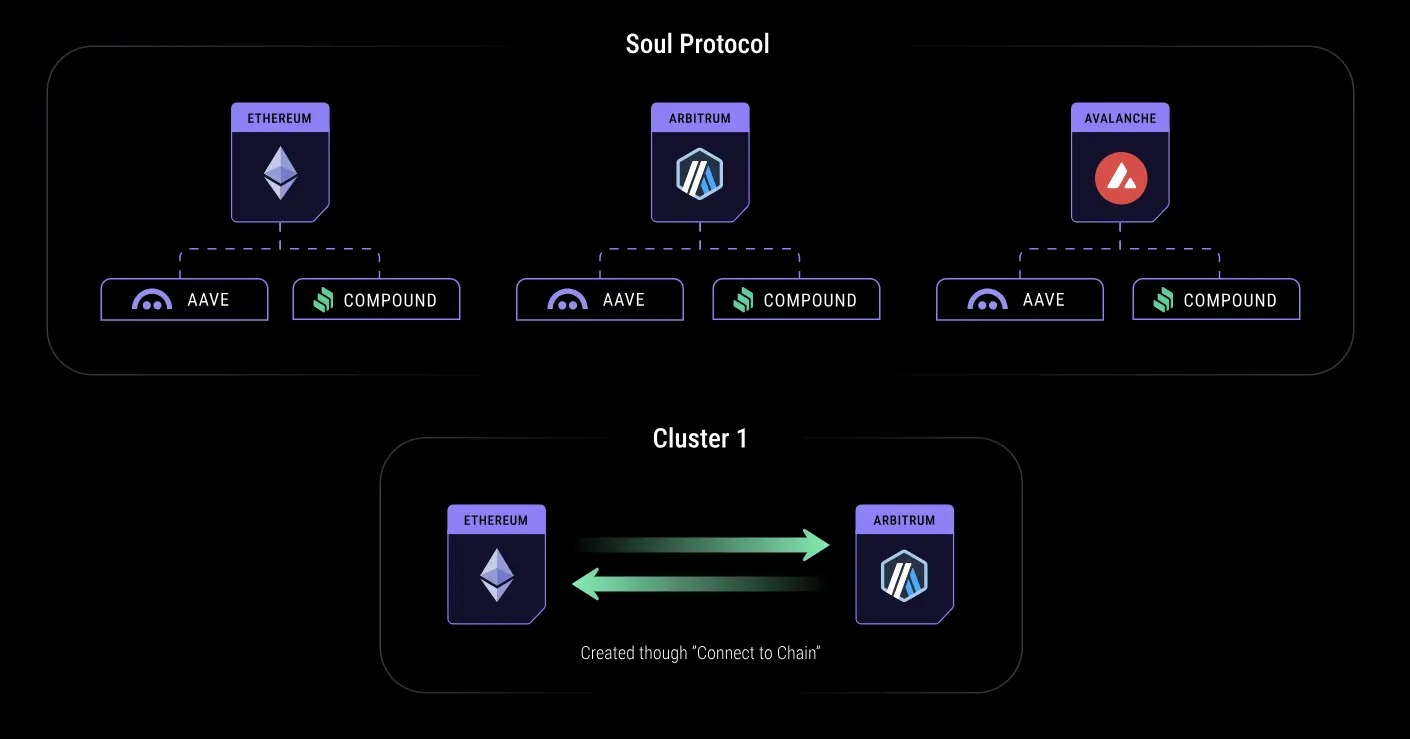
Currently, Soul remains in the testing phase, open for users to test features, provide feedback, and experience its functionality.
How Does Soul Break Down Lending Barriers?
The current DeFi lending market faces several common issues:
Fragmented Lending Protocols
Most existing lending protocols support only a single blockchain. Users who want to lend across different chains often need to manually switch networks and bridge assets—an inconvenient and cumbersome process.
High Cost and Slow Speed for Cross-Chain Lending
Traditional cross-chain lending typically requires asset bridging, which adds extra steps and introduces both fees and security risks. The bridging process itself is also inefficient, making it difficult to meet demands for arbitrage or flexible borrowing.
Limited Borrowing Capacity
Since assets and borrowing power are scattered across different chains and protocols, users often cannot consolidate all their assets for borrowing, leading to lower capital efficiency.
Soul Protocol aims to solve these problems through a unified cross-chain lending infrastructure:
-
Users can deposit assets on any supported chain and borrow on other chains or protocols without bridging assets.
-
Automatically matches interest rates across different protocols and chains, helping users find lower borrowing rates or higher deposit yields.
-
Borrowing power is no longer confined to a single chain or protocol, thereby increasing overall capital efficiency.
-
Supports cross-chain arbitrage and leveraged strategies without complex asset transfers.
Throughout this process, users only need to interact with Soul’s interface, while underlying cross-chain communication protocols like LayerZero handle asset and data synchronization. To enhance system resilience, Soul also integrates backup channels such as Wormhole, Axelar, and Chainlink's CCIP in case of communication failures.
Team Background and Current Progress
Soul Protocol is developed by Soul Labs. The founding team member Ahmed S previously built Hatom. The project has maintained a low profile over the past year and has now launched its testnet, supporting major chains and lending protocols, with public access for testing and feedback.
Soul Protocol operates under a community participation and test incentive model. During the testnet phase, users can earn points (Seeds) by using the dApp and completing designated tasks. These points will be redeemable for Soul’s native token $SO upon mainnet launch.
The project has not yet disclosed any external funding information but is advancing testing and product optimization through community engagement. Users participating in testing can help identify issues, provide suggestions, and receive corresponding rewards.
Join TechFlow official community to stay tuned
Telegram:https://t.me/TechFlowDaily
X (Twitter):https://x.com/TechFlowPost
X (Twitter) EN:https://x.com/BlockFlow_News
 ChainCatcher 链捕手






