Solana DePIN sector monthly revenue hits new high this year? Reviewing major projects' April performance
TechFlow Selected TechFlow Selected
Solana DePIN sector monthly revenue hits new high this year? Reviewing major projects' April performance
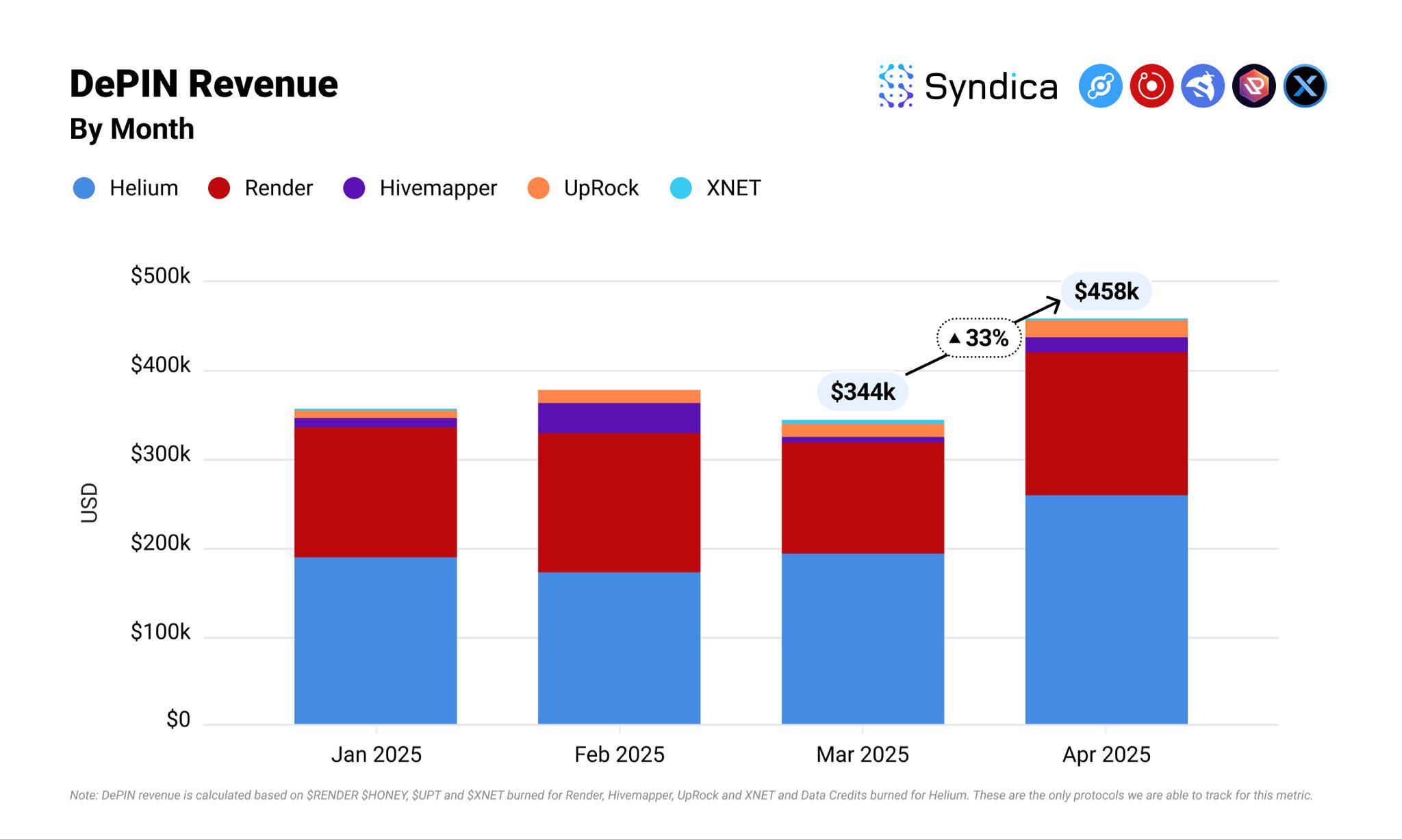
In April, the Solana ecosystem's DePIN sector achieved a cumulative monthly revenue of $458,000, up 33% year-on-year and marking its best performance this year.
 Navigating Web3 tides with focused insights
Author: Syndica
Translation: Zen, PANews
Solana's DePIN ecosystem achieved a year-to-date record high in revenue, with monthly income reaching $458,000 in April, up 33% year-on-year—the best performance this year. This growth was primarily driven by steady expansion from projects such as Helium, Render, Hivemapper, and XNET.
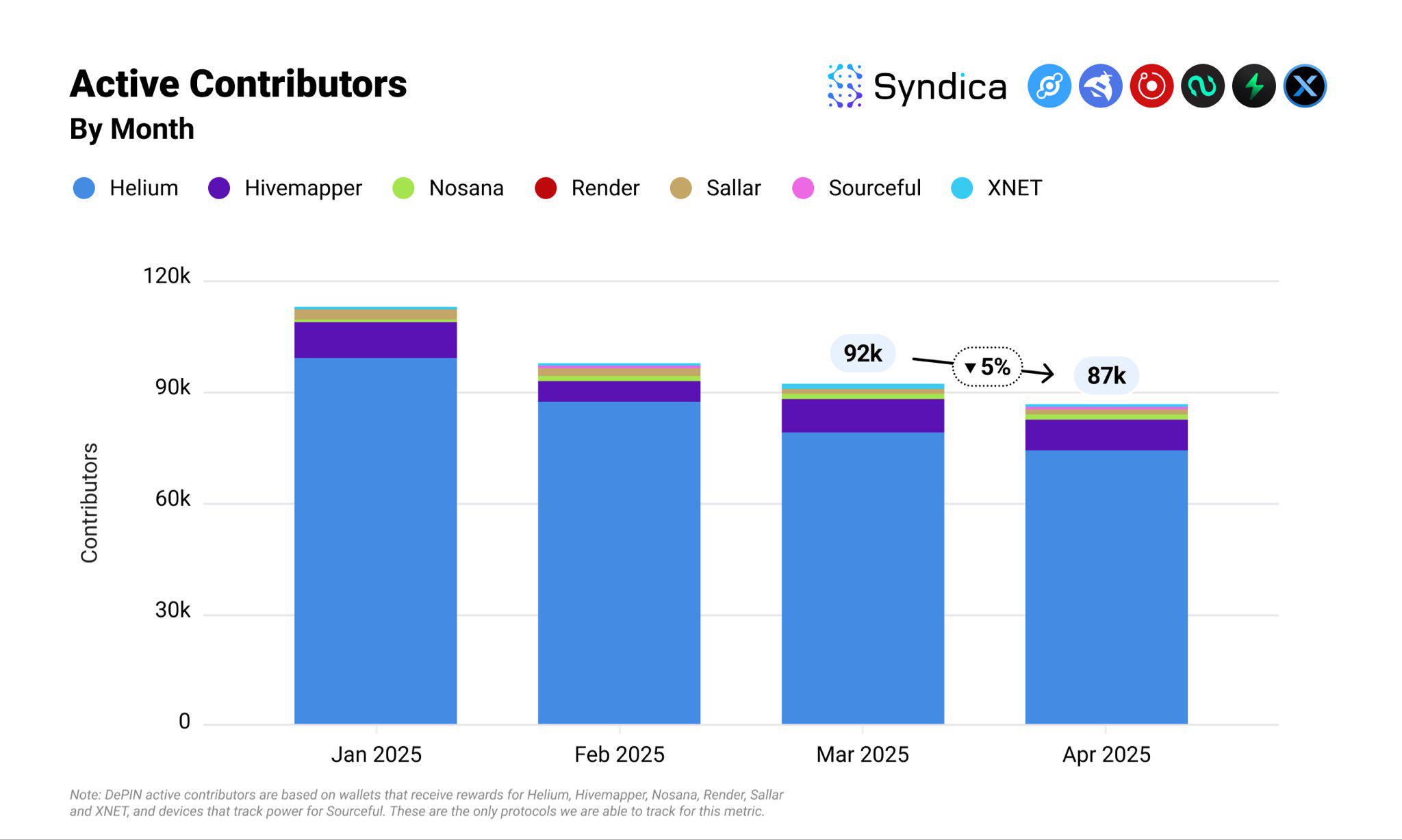
However, the number of active contributors to DePIN protocols has slightly declined. Helium, Hivemapper, Nosana, Render, Sallar, Sourceful, and XNET collectively maintained around 87,000 active contributors.
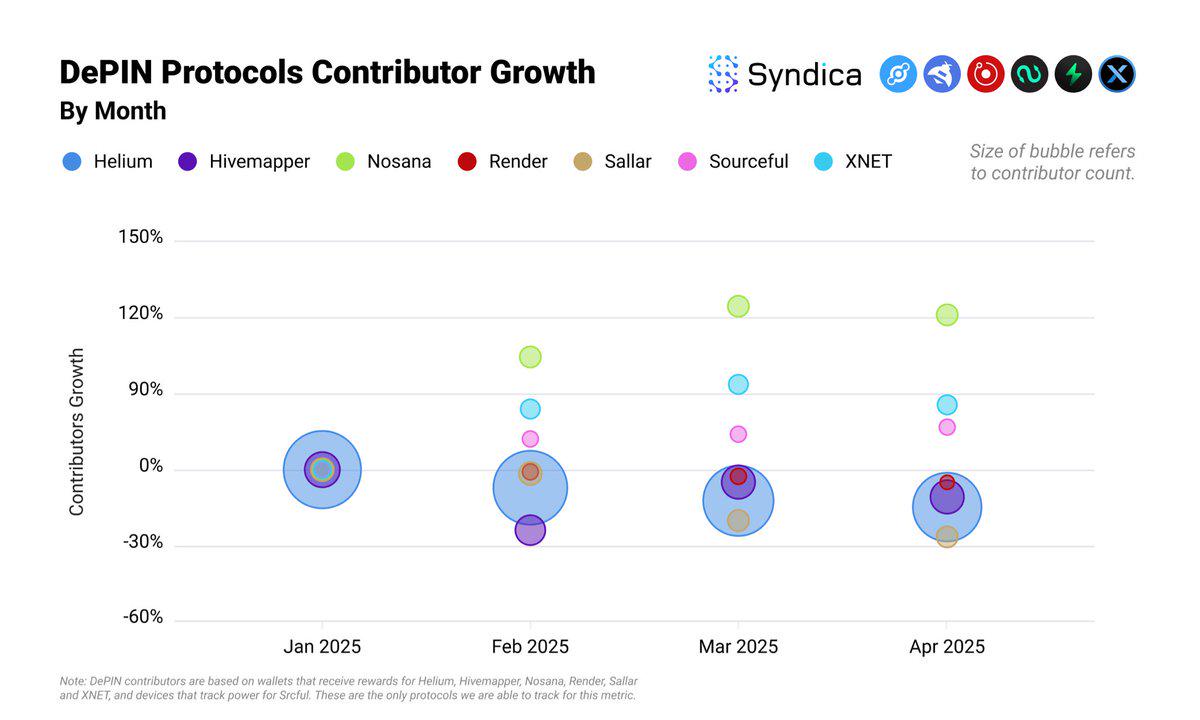
In April 2025, smaller DePIN protocols saw significant growth in contributor numbers, with Nosana’s growth rate exceeding 100%, while larger protocols like Helium and Hivemapper experienced flat or slight declines.
Below is a review of key DePIN projects:
Dabba Network
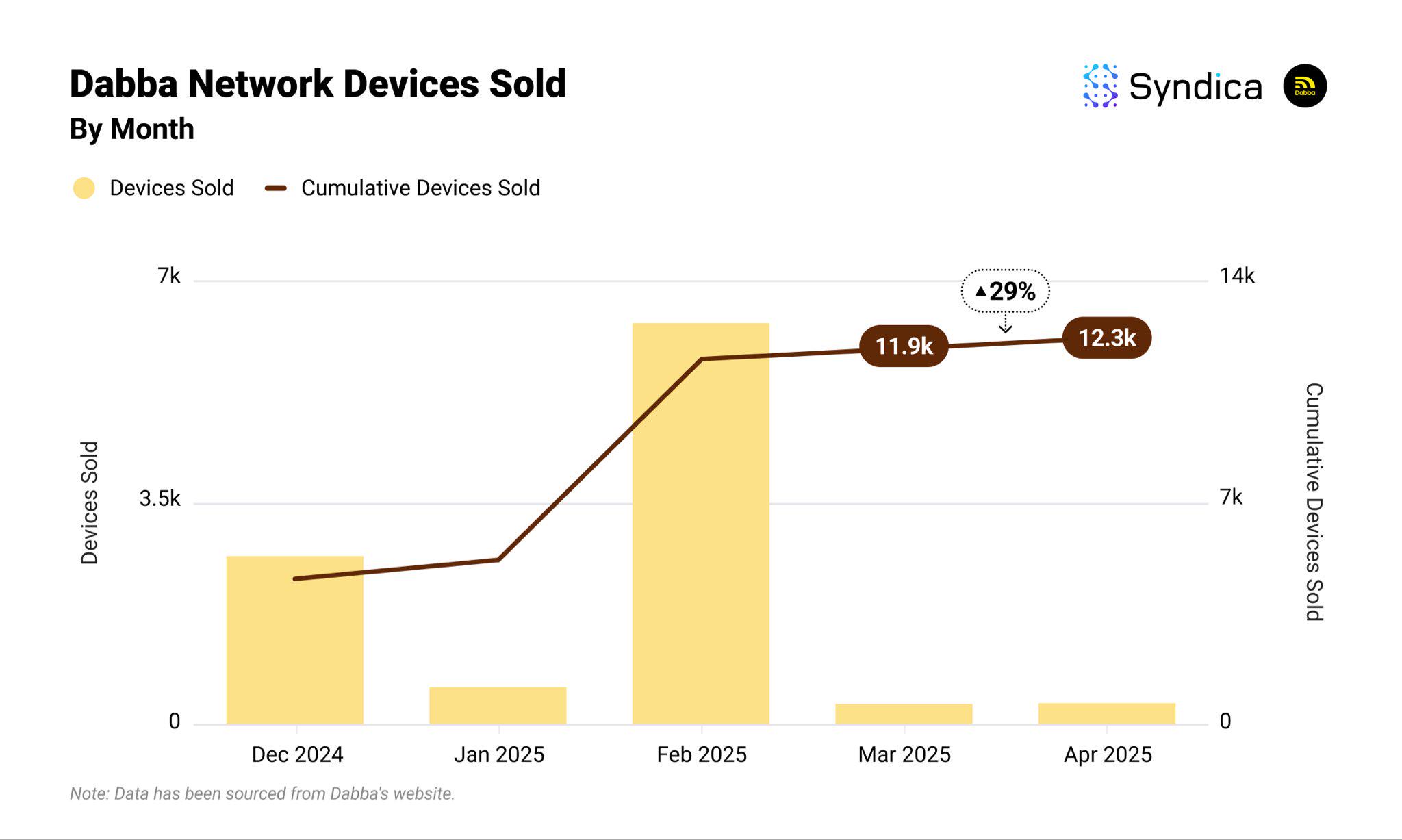
Dabba Network is an India-focused DePIN built on Solana, aiming to deploy Wi-Fi hotspots across India through a "managed deployment" model in partnership with local cable operators, providing users with high-speed, low-cost internet access. From March to April, its cumulative data consumption surged to 8,000 TB, doubling the previous figure; device sales rose 29% during the same period, further expanding network scale.
Helium Mobile
Helium Mobile is a mobile virtual network operator under the Helium network, combining community-deployed Wi-Fi hotspots with cellular base stations from partner carriers to offer users low-cost mobile data and voice services.
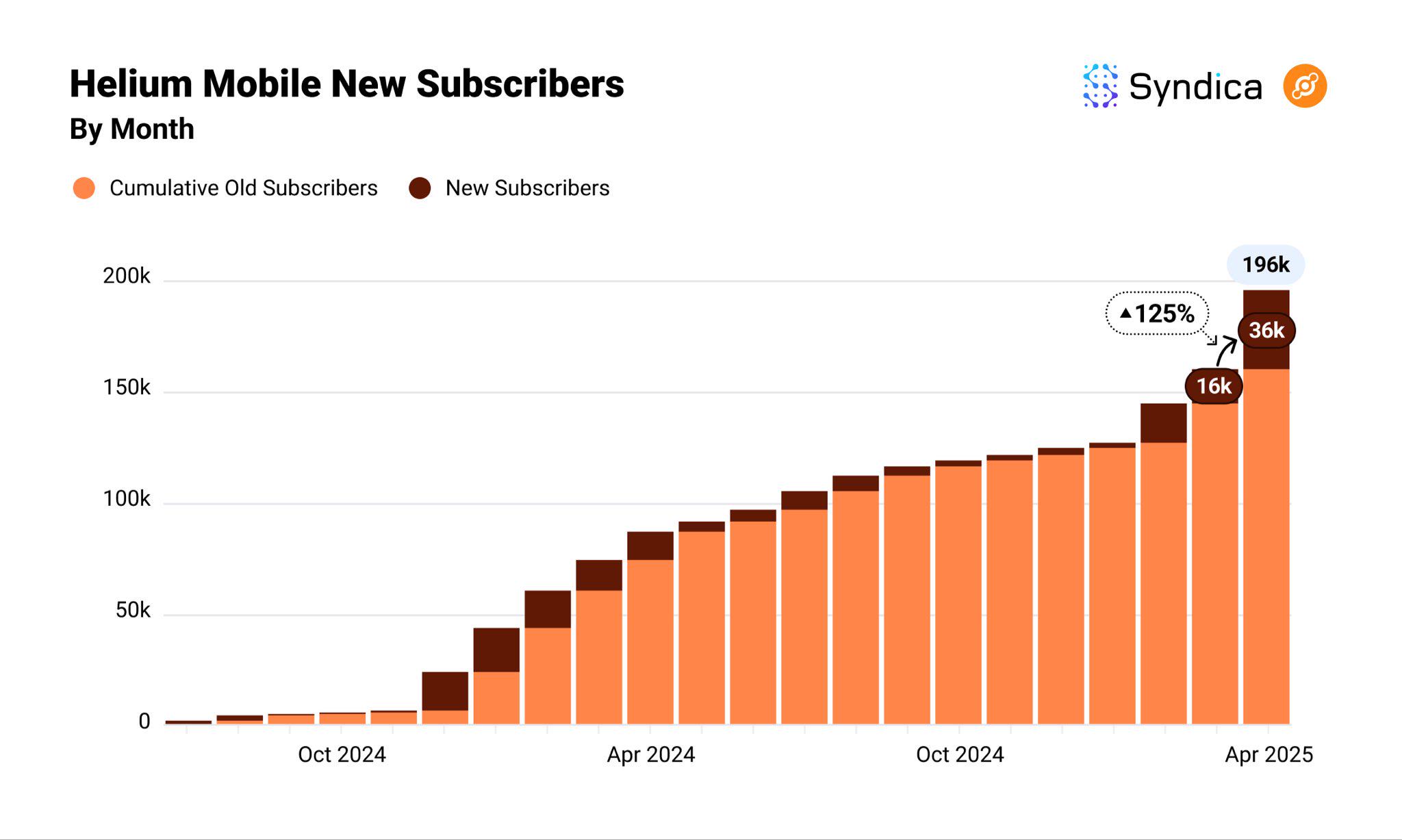
After opening free mobile plans to all users, Helium Mobile saw a 125% surge in new subscribers, reaching 36,000—a record high. Correspondingly, Helium Mobile revenue hit a record $250,000. Monthly revenue measured by data credit burn increased 34% to a new high of $250,000, with data offload accounting for 79%.
(Note: When users access mobile networks, part of the traffic is "offloaded" onto Helium network hotspots for transmission and billing—this portion is known as "offload data" or "data offload traffic.")
In addition, Helium Mobile’s average daily offload subscriptions rose 65%, and offloaded data volume grew 32%, both setting new historical records.
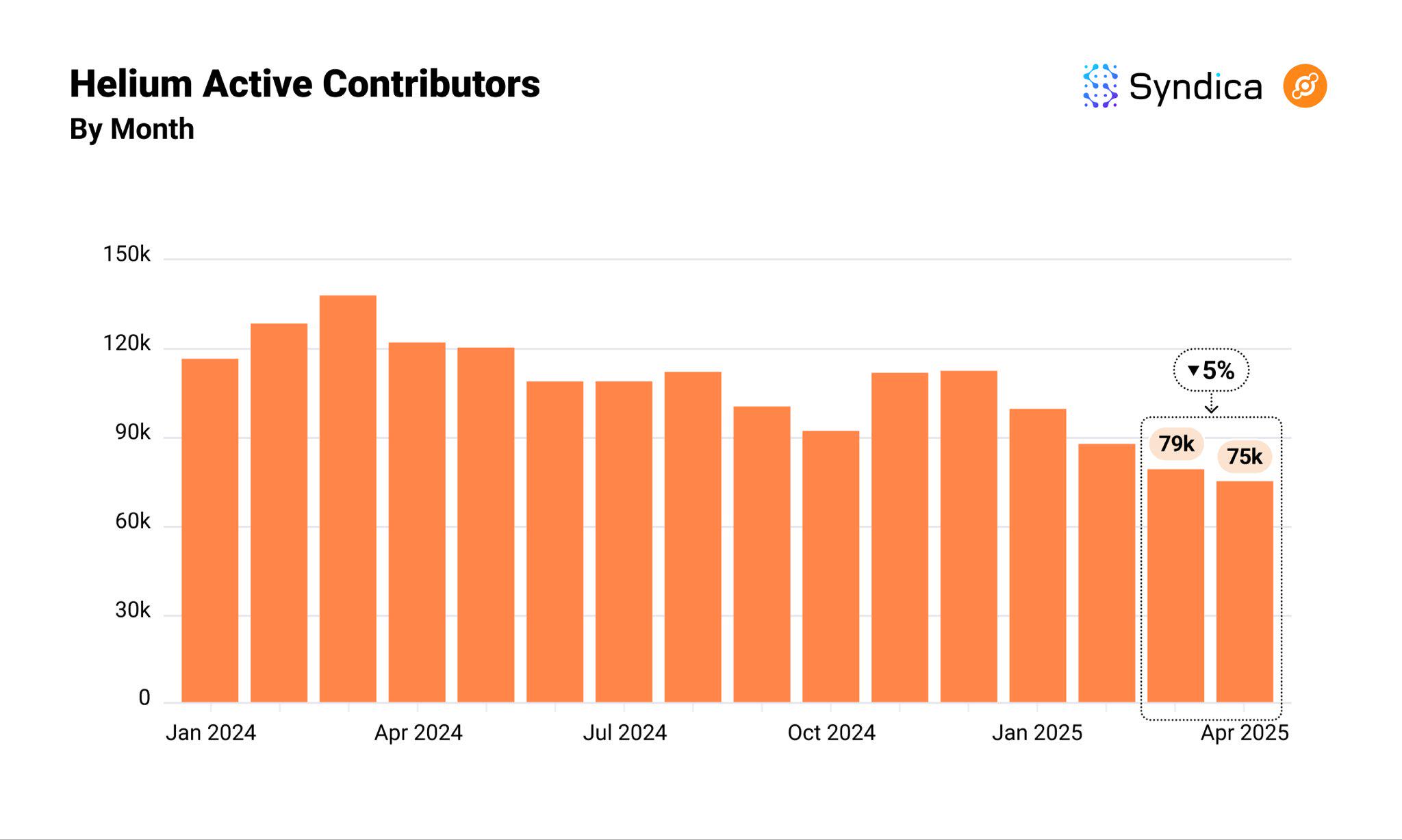
Notably, since 2025, Helium’s active contributor count has shown a slight downward trend, stabilizing at around 75,000.
XNET
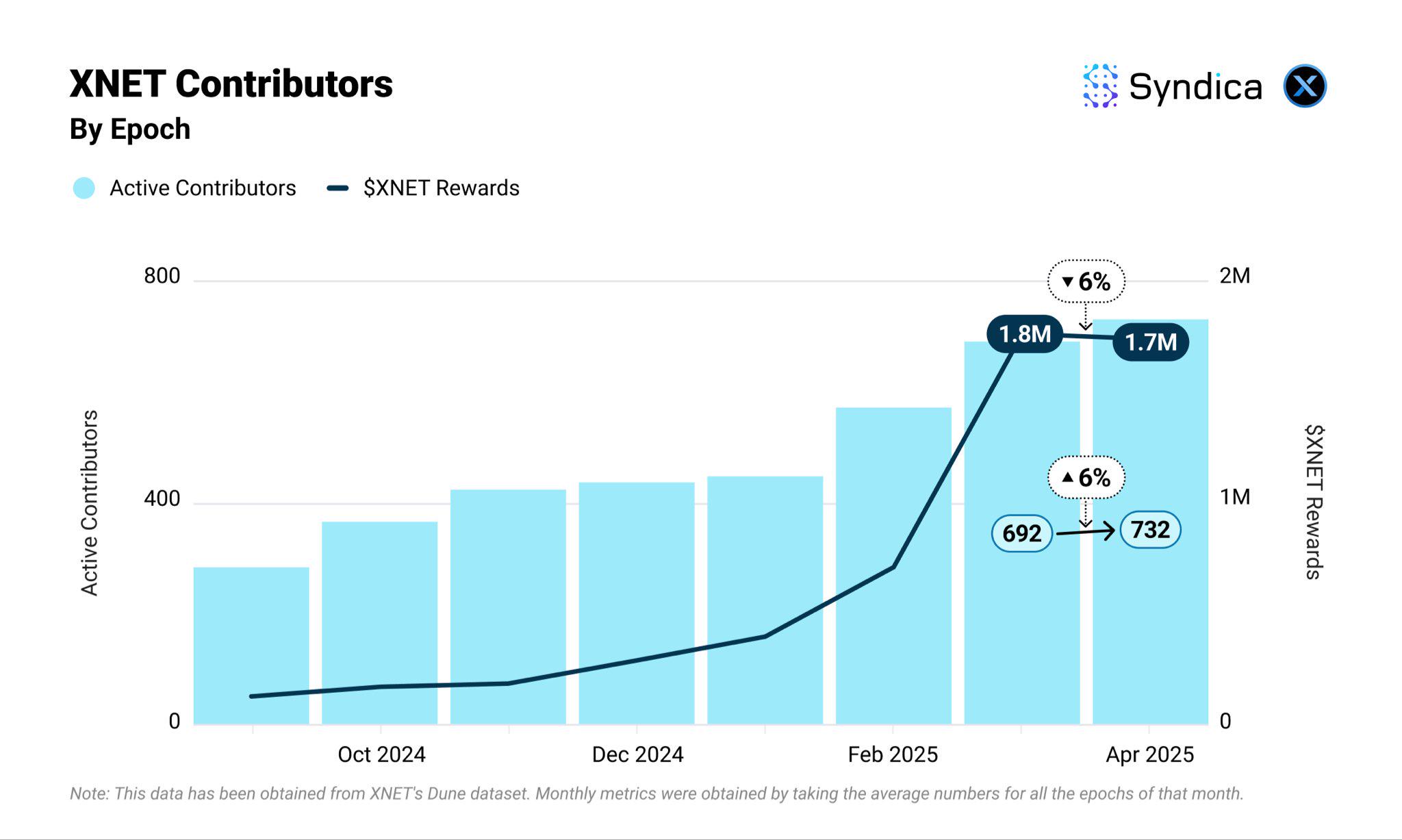
XNET is a decentralized mobile network built on the Solana blockchain. In April, XNET continued its data offload growth, with average daily offload increasing another 16%, marking eight consecutive months of steady upward momentum. Additionally, despite a 6% decrease in rewards, XNET Mobile’s active contributors rose 6% to 732 in April—reaching a new all-time high.
Roam
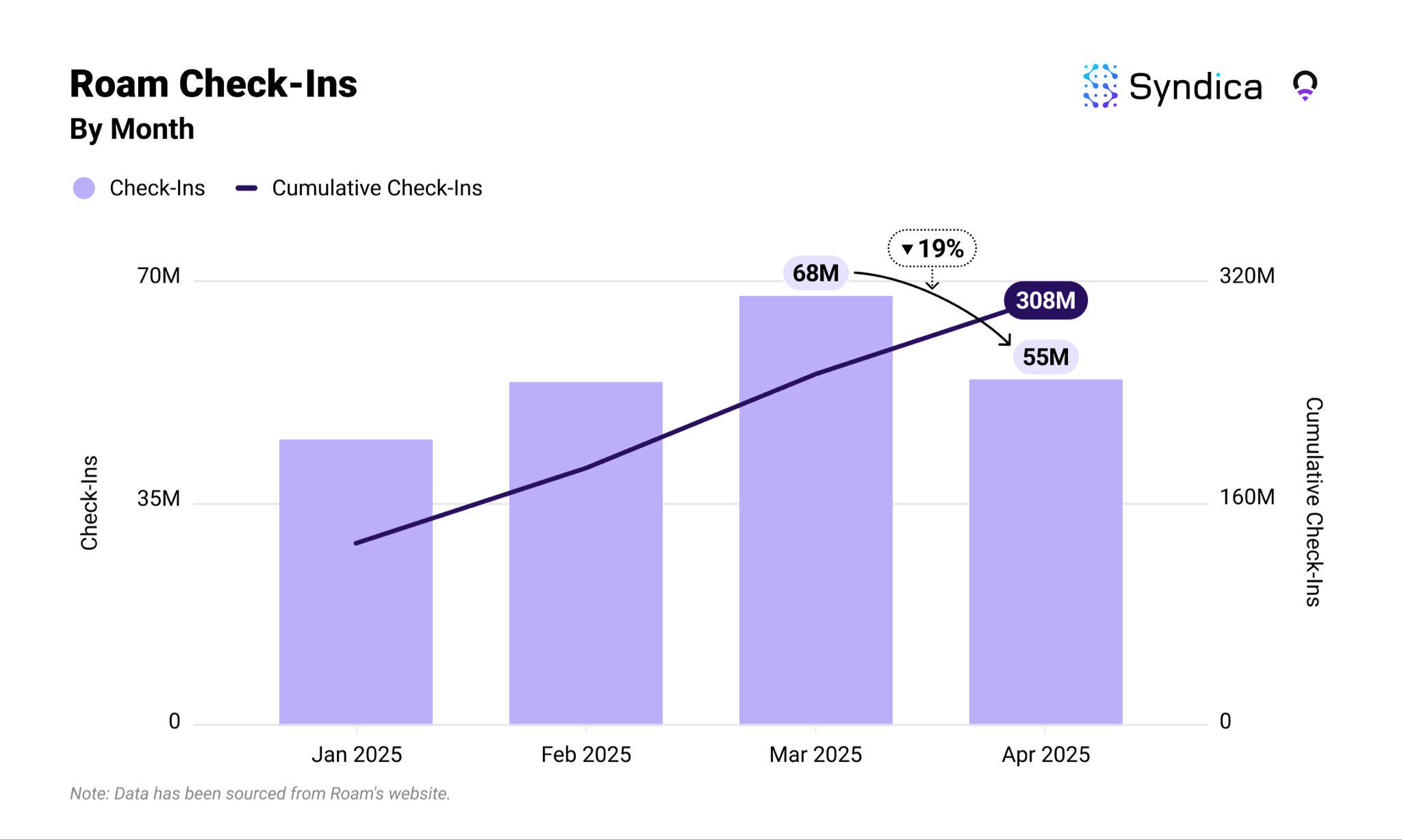
In April, Roam added 535,000 new Wi-Fi nodes (second-highest in history) and 87,000 new users, bringing total protocol nodes close to 4 million and user count near 3 million. Although monthly user check-ins dropped 19%, cumulative check-ins surpassed 300 million, demonstrating strong user retention.
Shaga
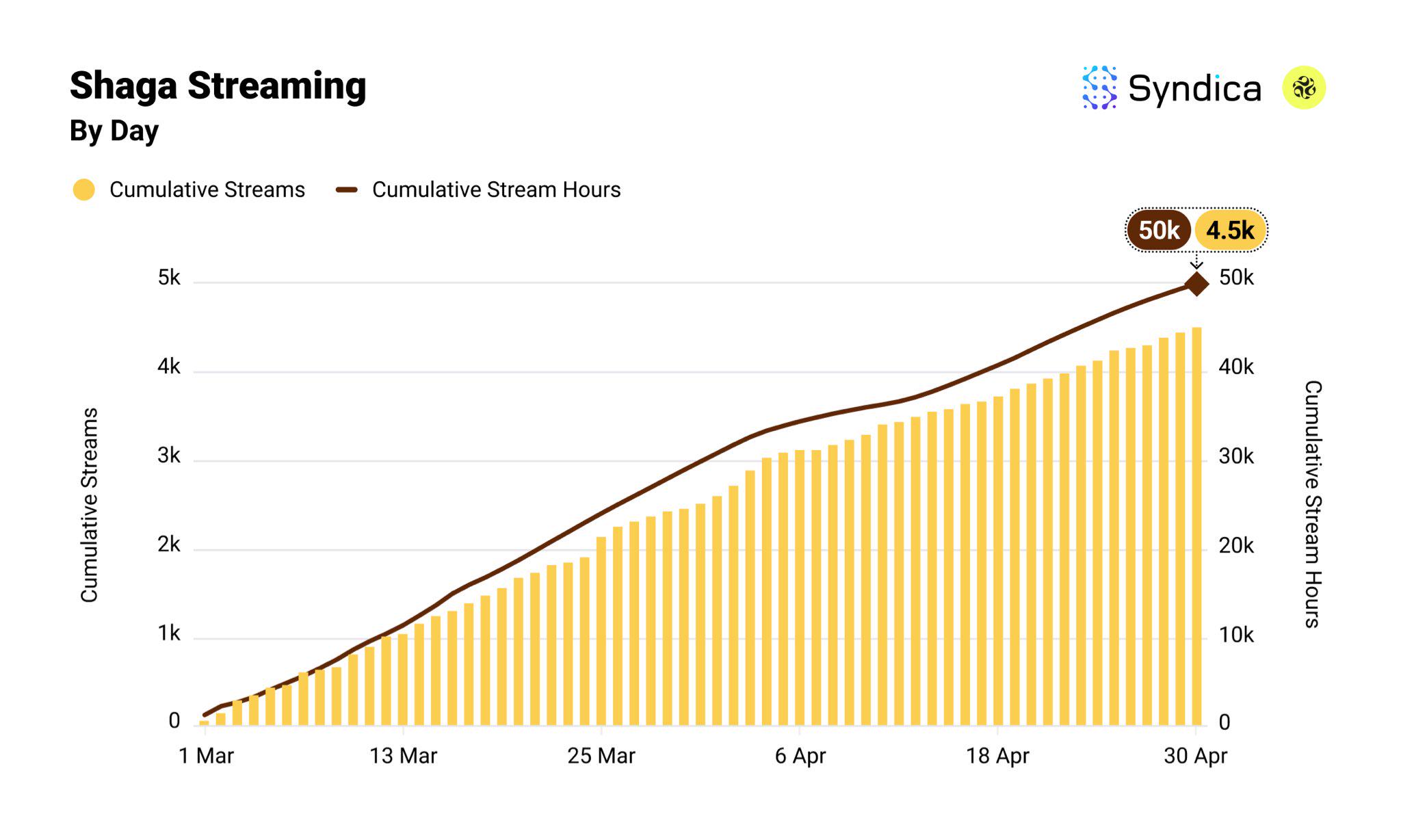
The Shaga protocol leverages idle GPU computing power to support Web3 gaming, currently supporting 74 GPU models, offering 33.12 TB of storage and 15.27 Gbps throughput, enabling high-performance computing. Within two months, Shaga facilitated 4,500 interactive game livestreams totaling 50,000 hours, allowing viewers to control and participate in streamer gameplay in real time.
Hivello
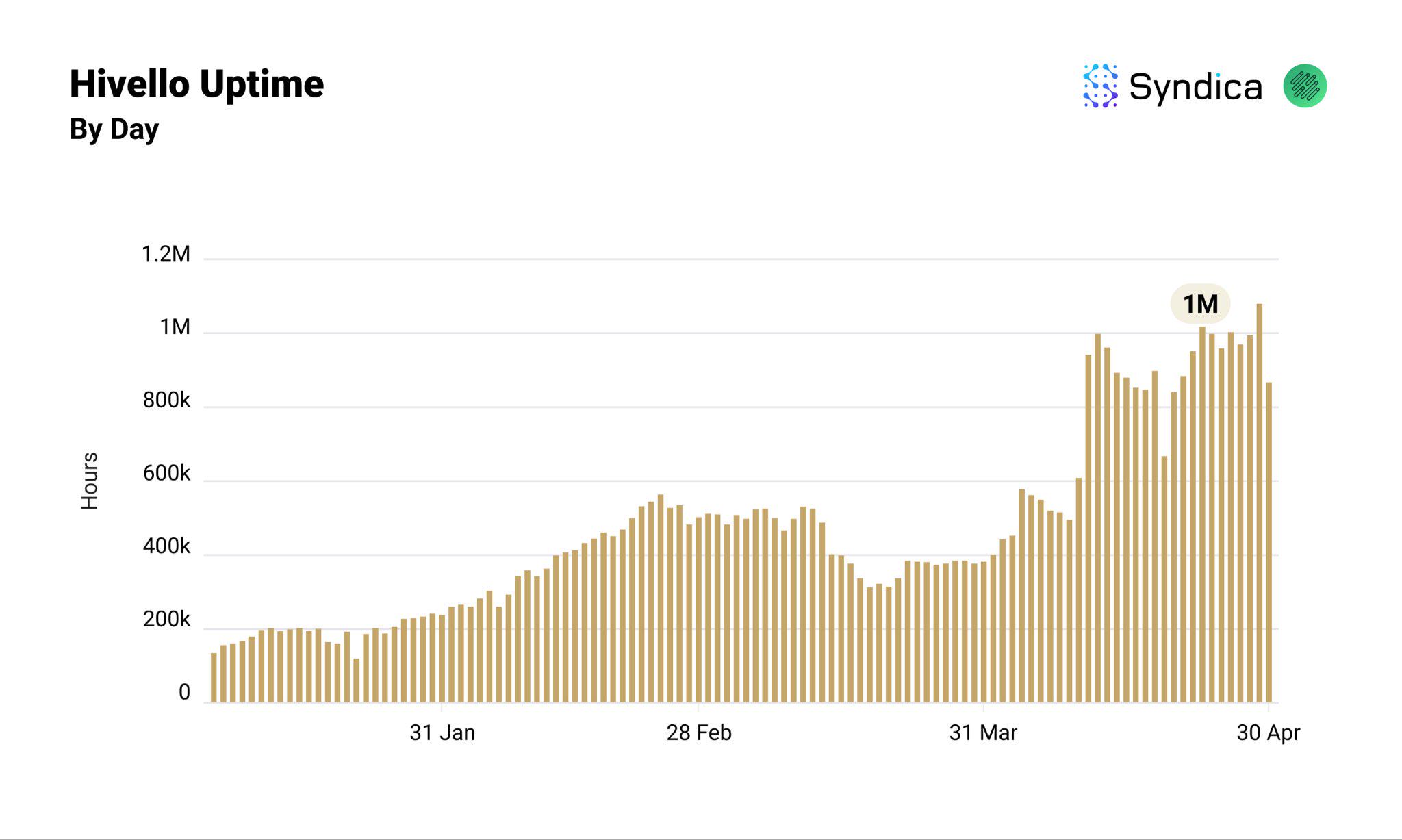
As a DePIN aggregation platform that monetizes idle resources, Hivello saw online hours double in April compared to March, with more nodes joining the contribution network.
Nosana
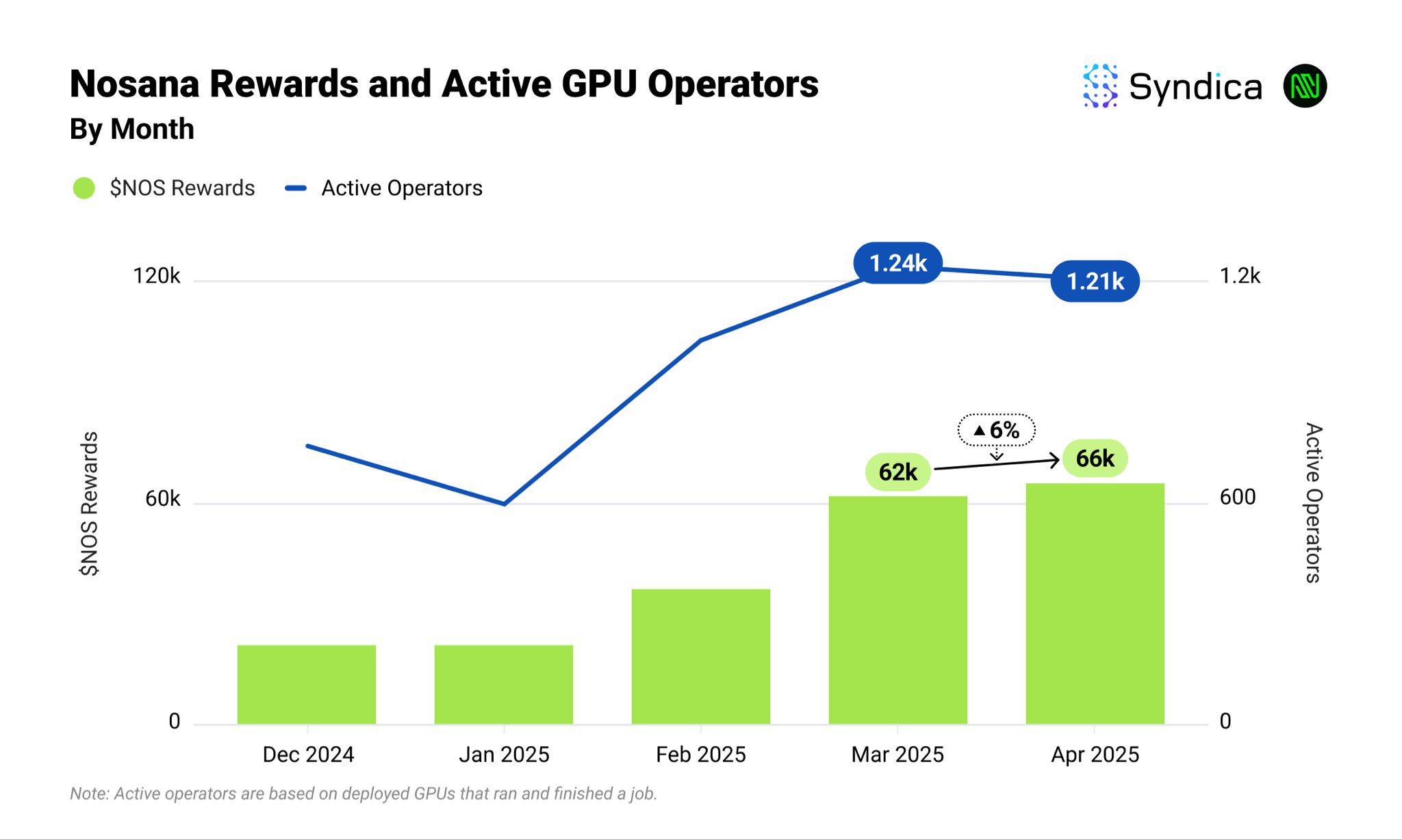
Nosana is a decentralized GPU computing network built on the Solana blockchain, focusing on providing distributed computing power for AI inference workloads. In April, job completion (in the Nosana network, each AI client inference request submitted is assigned to one or more GPU nodes for execution; the entire process from computation start to result return is referred to as a "job") and contributor rewards saw slight increases, with GPU nodes remaining stable. The newly launched Gaianet AI collaboration project allows AI agents to run on Nosana infrastructure, potentially driving further job growth.
Sallar.io
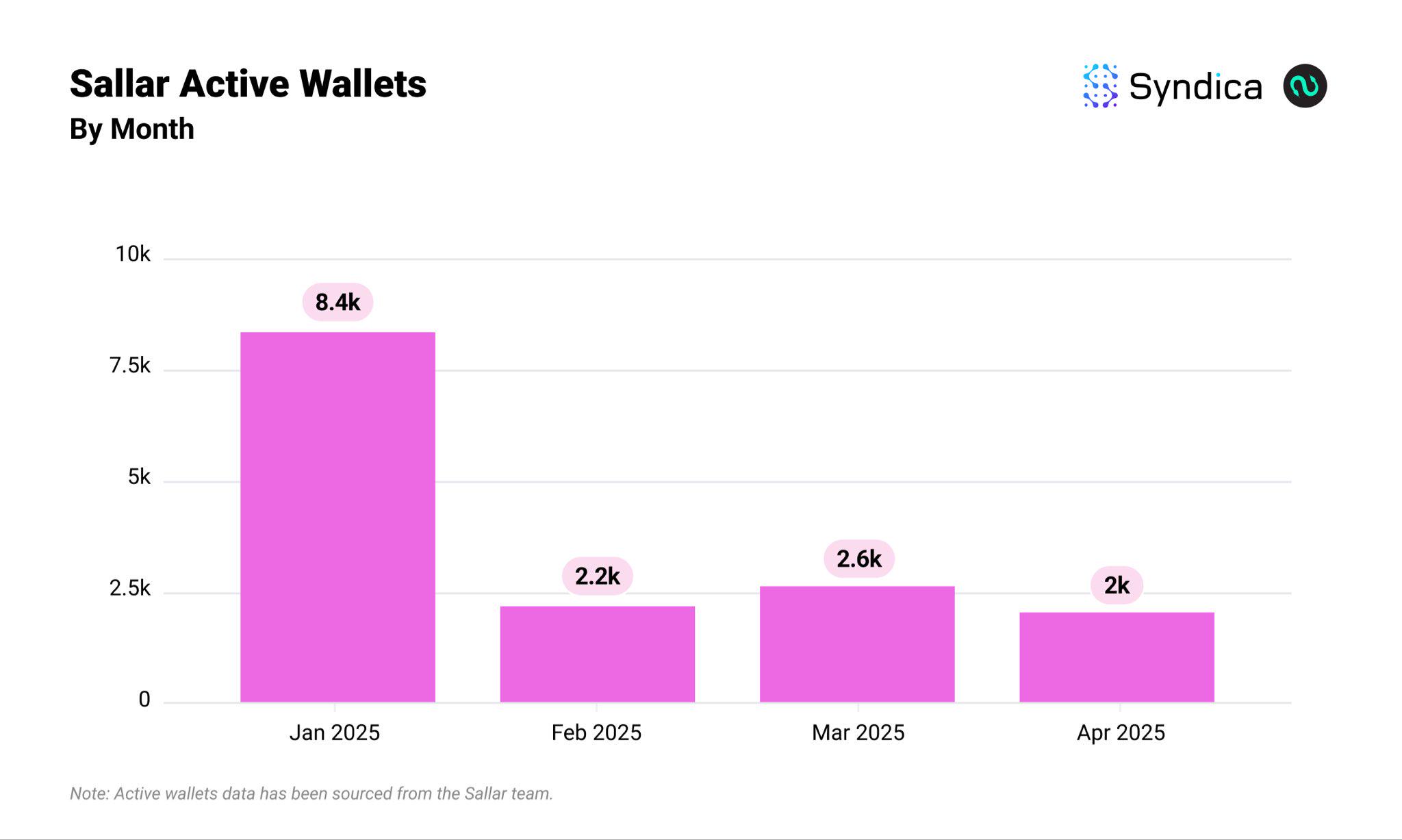
Sallar is a protocol that connects idle computing power from devices like smartphones into the network, forming distributed computing nodes to support high-performance computing needs. In April, Sallar’s USD-denominated rewards increased 27% month-on-month. As a protocol enabling shared device computing power for AI tasks, dollar rewards rose to $11,800 in April, with active wallet count remaining stable.
Grass
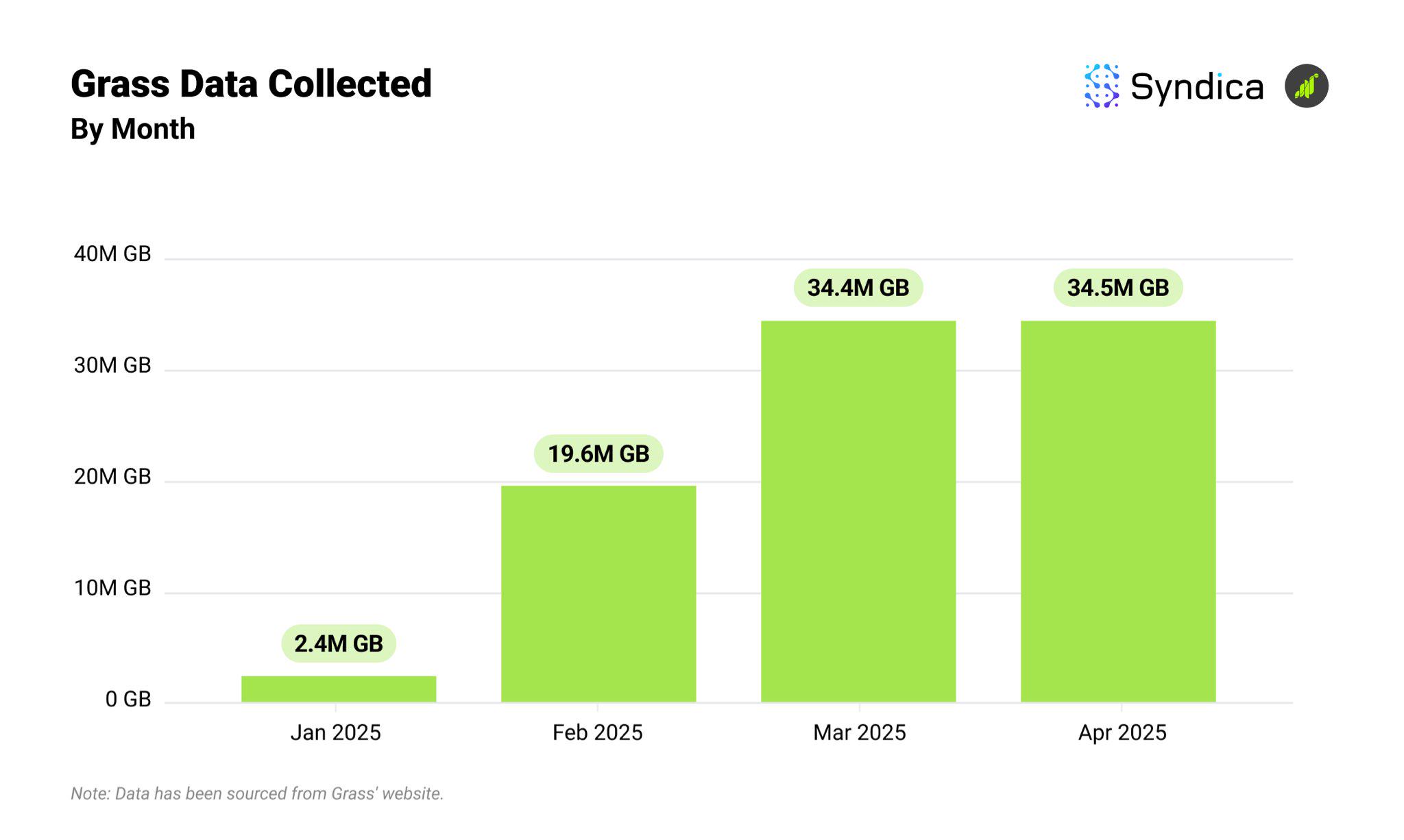
Grass connects users' idle internet bandwidth to the network, providing foundational data sources for AI training, data scraping, and proxy services, rewarding participants with on-chain tokens. In April, Grass set another record in data collection volume, reaching 34.5 million GB.
Wingbits
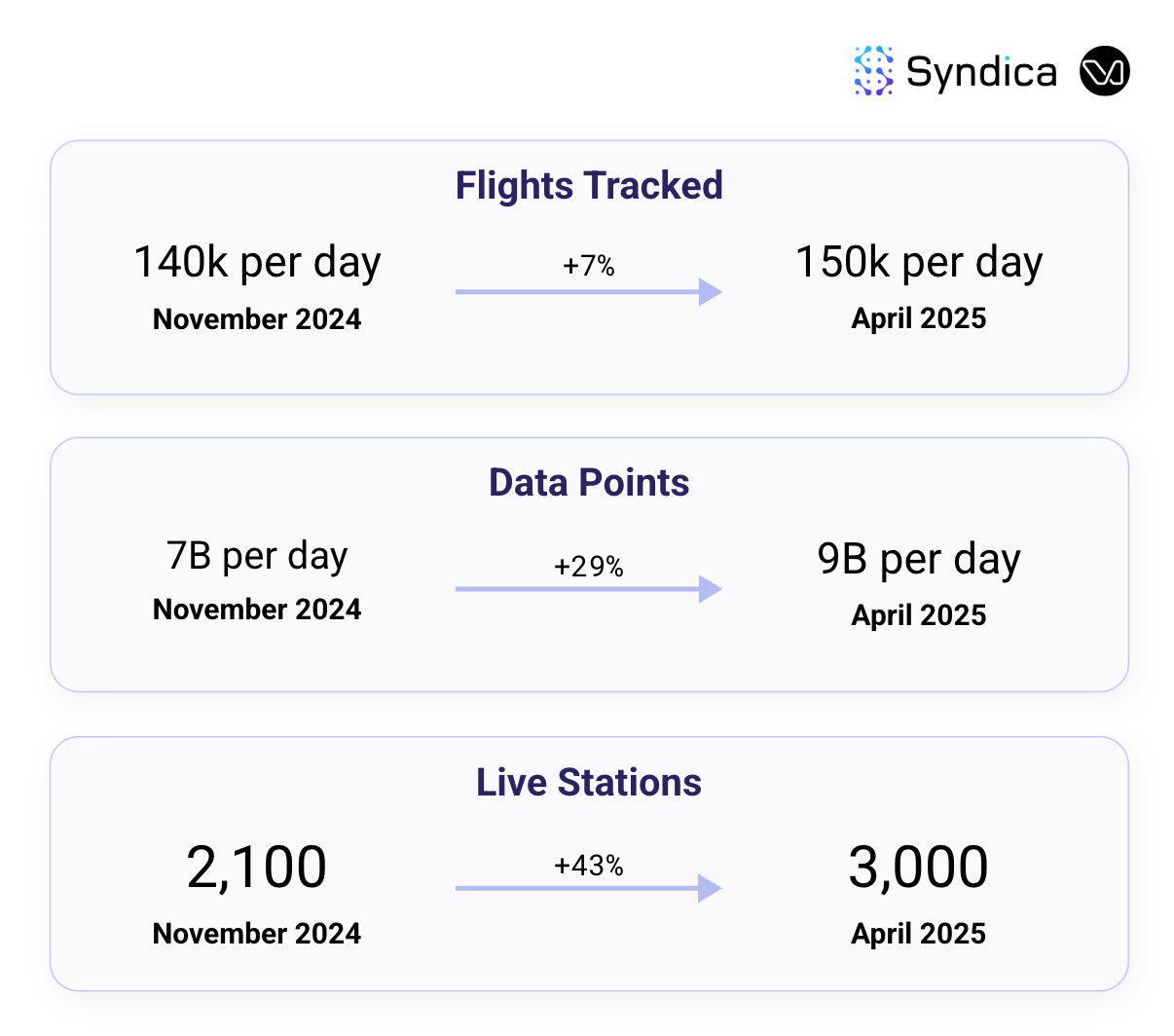
Wingbits is a decentralized physical infrastructure network (DePIN) project based on the Solana blockchain that collects real-time aircraft, helicopter, and drone data via ADS-B hardware deployed globally by users, uploading it to the blockchain in exchange for native token rewards. Since November 2024, Wingbits has increased tracked flights to 150,000, daily collected data points to 9 billion—up 7% and 29% respectively—and contributing sites rose 43% to 3,000.
Hivemapper
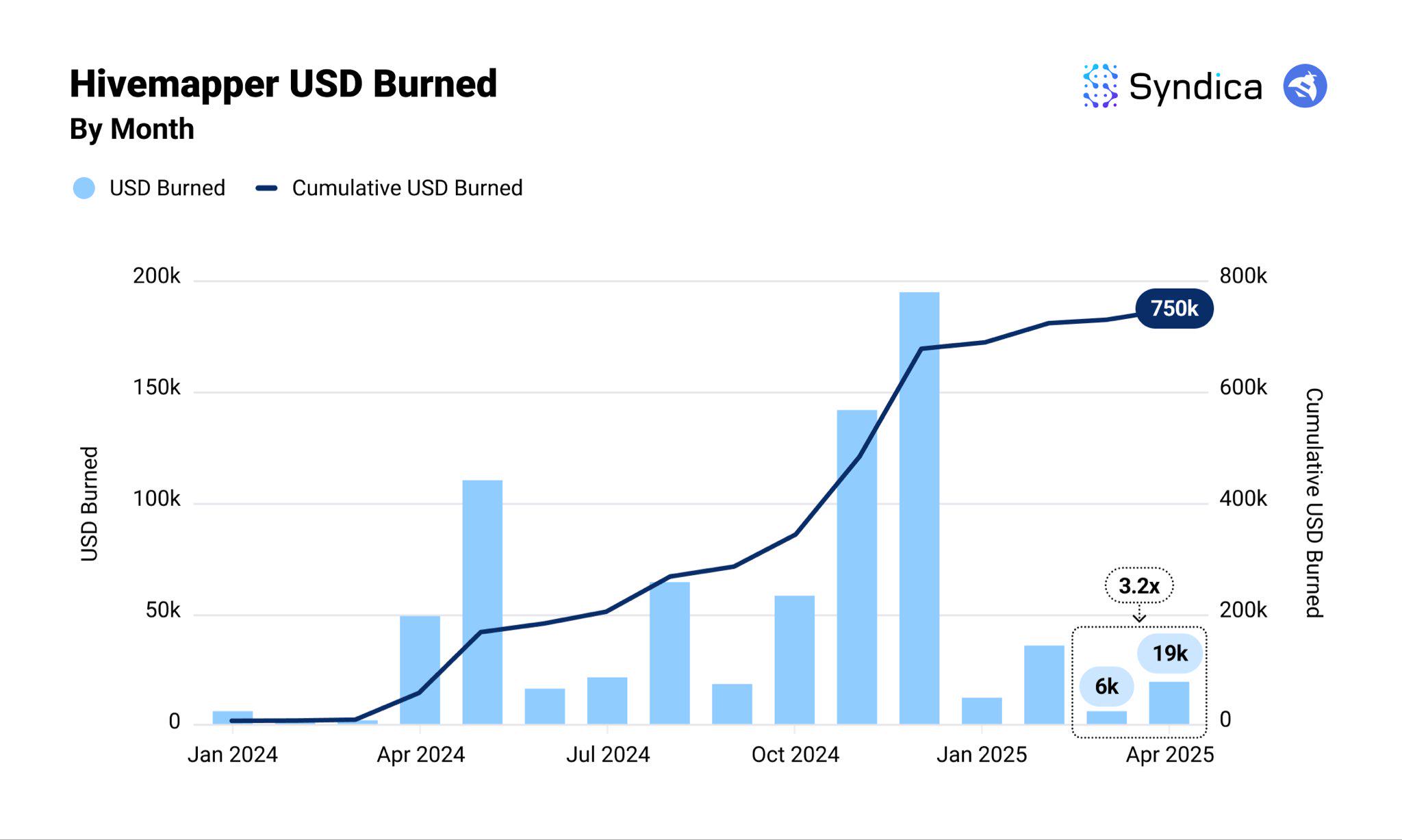
Hivemapper is a decentralized mapping network where users earn $HONEY tokens by collecting street-level imagery via dashcams. The team continues product iteration, allocating 20–30% of monthly Beekeeper platform fees toward $HONEY token burns, which may further drive growth.
Hivemapper’s monthly mapping mileage remained stable in April. Its AI-powered fleet management platform, Beekeeper, officially launched that month, expected to bring new growth momentum as more fleets join. Since February, Hivemapper’s active map contributors have stabilized at around 5,000.
NATIX Network
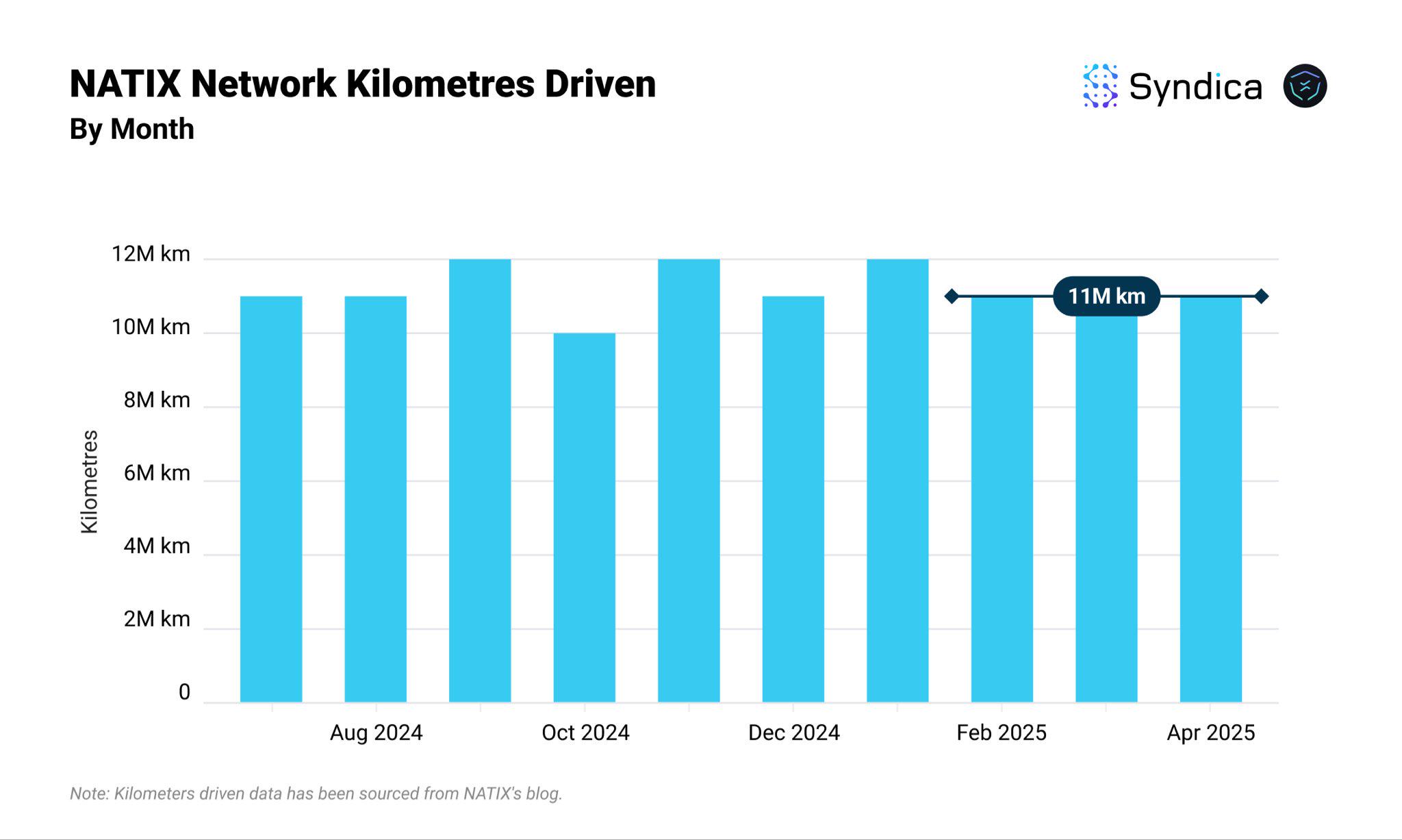
NATIX Network aims to collect street view and geospatial data via smartphones and dedicated devices, providing high-precision positioning and imaging support for mapping, autonomous driving, and physical AI, with participants rewarded in tokens for data contributions. The ecosystem remained stable in April—user-driven mileage stayed at 11 million kilometers for the third consecutive month.
Sourceful Energy
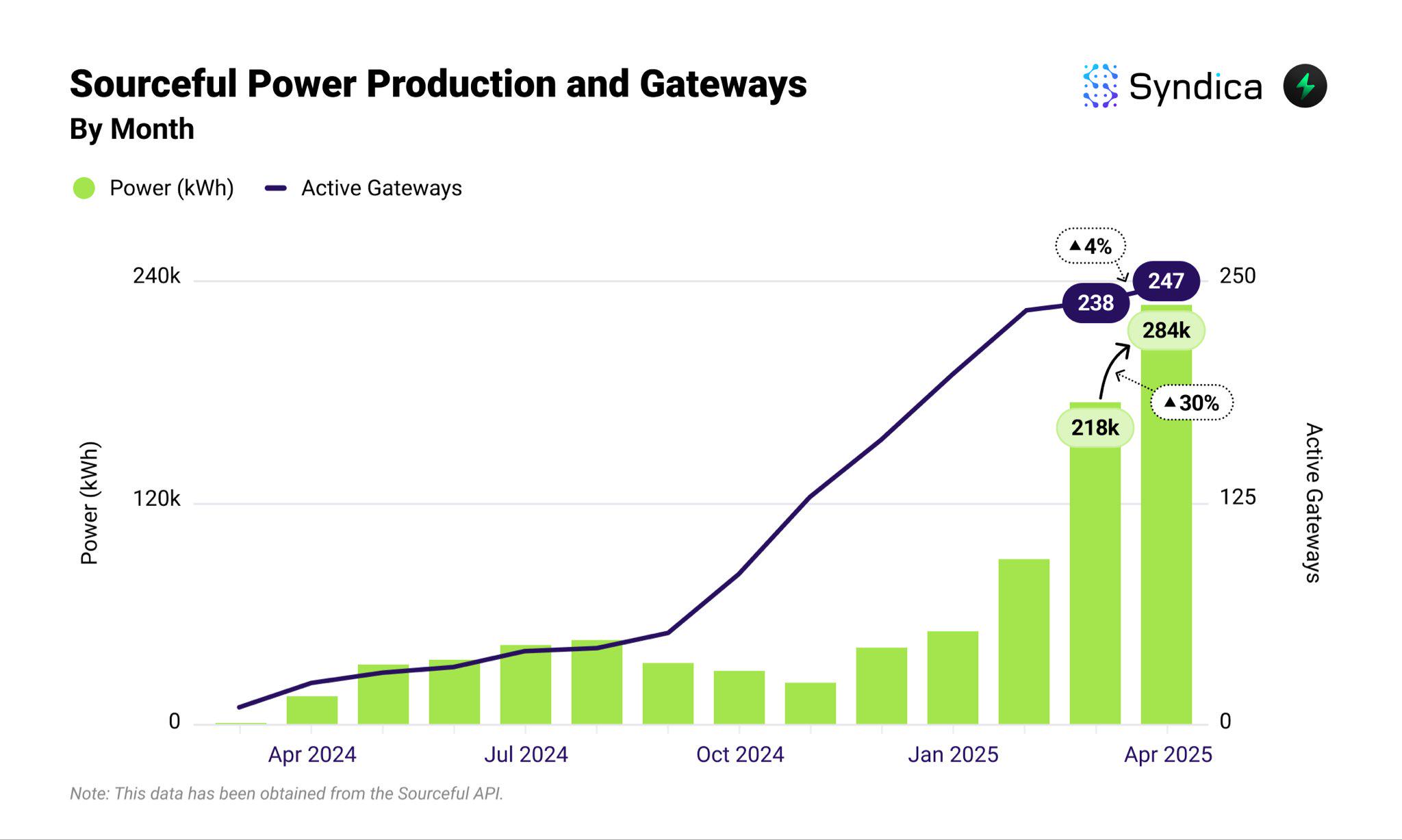
Sourceful Energy centers on decentralized virtual power plants (VPP), connecting residential and commercial distributed energy resources (such as solar panels, EVs, and battery storage) to the Solana blockchain, with participants receiving token incentives for contributing power or data. In April, Sourceful Energy’s power output grew 30%. With 500 pre-orders secured for its newly launched Zap smart energy efficiency analytics device, this upward trend is expected to continue.
AmbiosNetwork
Ambios Network operates the world’s largest environmental monitoring DePIN, deploying low-cost air quality and environmental sensors to deliver real-time, hyper-local environmental data for enterprises, AI, and public services, with sensor owners earning token rewards. In April, Ambios Network surpassed 2 million cumulative user ecological data check-ins, with ecological data check-ins growing 12%; total platform users reached 45,000, up 2% year-on-year.
Join TechFlow official community to stay tuned
Telegram:https://t.me/TechFlowDaily
X (Twitter):https://x.com/TechFlowPost
X (Twitter) EN:https://x.com/BlockFlow_News
 @Syndica_io