Trump's "Pro-Crypto" 100-Day Report Card: BTC Drops Over 10%, "We Overestimated Him!"
TechFlow Selected TechFlow Selected
Trump's "Pro-Crypto" 100-Day Report Card: BTC Drops Over 10%, "We Overestimated Him!"
Symbolic significance > substantive benefits?
 Navigating Web3 tides with focused insights
Source: DL News
Translation and compilation: Bitpush News
Since Donald Trump took office as U.S. President, it has been a chaotic time for various industries. As he celebrates 100 days into his second term, digital asset supporters are assessing what his administration means for the industry.
Mateusz Kara, CEO of cryptocurrency firm Ari10, told DL News the key question is: "Did we overestimate what Trump can actually do?"
Digital asset firms backed Trump during last year's U.S. election, hoping he would end the Biden administration’s crackdown on crypto, introduce favorable regulations, and usher in a bull market.
While some rules have eased, the White House's trade war has caused the global cryptocurrency market to shrink by nearly 21%—about $800 billion—from its December highs.
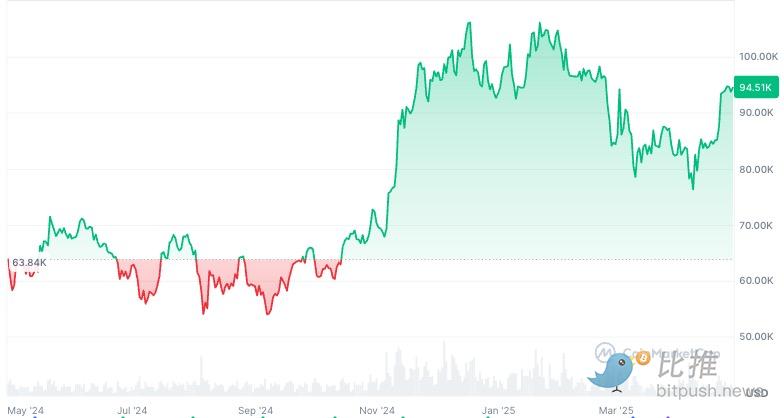
Bitcoin has dropped more than 10% from its level the day before Trump's inauguration on January 20, when it hit a record high of $109,225. According to Dow Jones market data, earlier this month Bitcoin fell below $74,500 on April 7 amid tariff concerns, hitting risk assets alongside other markets. At the time of writing, it had rebounded to around $94,500.
So what promises has Trump fulfilled so far—and where does the industry go from here?
The 'Crypto War' Under Biden
Former U.S. President Joe Biden harshly criticized cryptocurrencies, advocating strict regulation and supporting the crypto crackdown led by then-Securities and Exchange Commission (SEC) Chair Gary Gensler.
During his campaign, Trump pledged to end Biden’s “crypto war.”
After taking office, Trump replaced Gensler with Paul Atkins, a pro-crypto new SEC chair who promised regulatory clarity.
This year, the SEC dropped lawsuits against major crypto companies including Coinbase, Ripple, and Kraken.
Trump also appointed industry allies such as Howard Lutnick—backer of Tether—to serve as Commerce Secretary, and named David Sacks as Crypto Czar.
In his first 100 days, Trump issued sweeping executive orders banning the creation of a digital dollar, protecting self-custody, establishing a Crypto Regulatory Advisory Group, and creating a Strategic Bitcoin Reserve.
He also granted clemency to Ross Ulbricht, founder of Silk Road, and hosted the first-ever White House Crypto Summit.
This year, federal regulators rolled back multiple crypto guidelines from the Biden era, paving the way for financial institutions to enter crypto services.
Symbols Over Substance?
In short, Trump appears to have fulfilled most of his crypto-related promises. So why are some market watchers still dissatisfied?
Jonathan Dixon, executive at regtech firm eflow Global, told DL News: "So far, many campaign promises seem more symbolic than substantive."
"The Bitcoin reserve is essentially rebranding—these assets were already held by the government, not an indication of active market participation."
Dixon said while Trump’s actions mark a "rhetorical shift from the previous administration," "rhetoric alone doesn’t translate into regulatory certainty."
The Trump administration hasn't yet pushed new laws through Congress, though several bills are advancing on Capitol Hill.
Republican Senator Tim Scott of South Carolina said in early April: "We're making good progress."
Eric Rose, Executive Head of Digital Assets at StoneX Digital, noted: "These are all very positive factors for the sector, but they take time to materialize... Just because banks are allowed to participate in digital assets doesn't mean they’ll jump in tomorrow, right? They need time to formulate strategies, decide which direction they want to go, how to execute, and hire the right people."
Rose told Market Watch this preparation could take up to two years.
Trade War
Mateusz Kara, CEO of Ari10, said: "Markets may feel disappointed with Trump’s leadership because we haven’t seen prices rise. This stems from delayed rate cuts and the chaos Trump has brought to markets."
Trump has yet to deliver on his promise of lower interest rates—a move widely seen as a catalyst for risk assets like crypto and equities.
This explains part of why Bitcoin surged when the Fed cut rates in September and November.
The issue is that the Federal Reserve operates independently of the White House, and Fed Chair Jerome Powell remains reluctant to cut rates—especially after Trump imposed sweeping tariffs on nearly 100 countries, including island nations whose primary residents are penguins, further clouding America’s financial future.
After Trump paused these tariffs, the overall crypto market saw a slight recovery—but any renewed hostilities could erase those gains.
Anthony Young, Chief Commercial Officer at crypto risk management firm CoinCover, said: "The U.S. government’s trade war will inevitably impact the crypto industry, and the key question is whether crypto can continue serving as a hedge against global market volatility."
Some believe Trump’s trade war could actually benefit crypto.
Papuna Lezhava, CEO and Co-Founder of fintech startup Keepz and former IMF advisor, said: "Trump’s foreign trade policies could make cryptocurrencies more attractive to individuals seeking to avoid traditional financial systems or government-controlled currencies."
Join TechFlow official community to stay tuned
Telegram:https://t.me/TechFlowDaily
X (Twitter):https://x.com/TechFlowPost
X (Twitter) EN:https://x.com/BlockFlow_News
 @DLNewsInfo