








From "Black Tech" to Mass Production: iQIYI's Evolution in Virtual Production
TechFlow Selected TechFlow Selected
From "Black Tech" to Mass Production: iQIYI's Evolution in Virtual Production
Technology will ultimately return to its essential nature as a tool.
 Navigating Web3 tides with focused insights
Author: Zheng Xuan

Virtual production, a technological concept that has been gaining traction in China for several years, is now entering a new phase of industrial development.
Since Disney's *The Mandalorian* sparked industry-wide attention in 2020, major domestic long-form video platforms such as iQiyi, Youku, Tencent Video, and Mango TV have continued to invest in virtual production technology. Films like *The Wandering Earth 2* and *Born to Fly*, along with popular series including *Counting Stars*, the *Fox Spirit Matchmaker* series, and *The Code of Riverside*, have already incorporated virtual production stages for certain scenes.
At the recently concluded iQiyi World Conference, Zhu Liang, Vice President of iQiyi and Head of Intelligent Production, stated that virtual production has entered a "mass production" phase over the past year: project volume increased by 50%, the 2,400㎡ flagship virtual production stage in Hengdian operates routinely, and both sci-fi and realistic-themed dramas are beginning to adopt the technology. Beyond iQiyi, Tencent Video also announced this year its investment into virtual production, pushing forward practical implementation for drama series.
How did this technology—once questioned last year as a "false demand"—suddenly become viable? Was it due to a technological breakthrough or heavy resource investment from platforms? And where is virtual production ultimately headed? At the iQiyi World Conference, I spoke with iQiyi’s team and some colleagues in the film and television industry to uncover part of the answer.
01 Technology Not Chasing Hype, But Fitting Crew Needs
First, let’s clarify what virtual production is. Its core principle combines LED volume stages with Unreal Engine to generate dynamic digital environments during filming, replacing traditional green screens and post-production compositing, enabling real-time visualization and more realistic visual effects.
In simple terms, digital environments replace physical sets, with actors performing inside specially designed studios equipped with large LED screens. One moment, an actor might be standing in a snowy winter landscape; the next, they could be transported to a scorching desert.
This technology significantly streamlines scene construction and post-production workflows for films and TV shows, especially beneficial for fantasy and sci-fi genres—whether it’s the mythological world from *Classic of Mountains and Seas* in *Counting Stars*, interstellar travel in *The Mandalorian*, or the post-nuclear Mandelore planet, all of which pose immense challenges when built physically or composited entirely in post.
Despite its popularity in China, practical teams often hit roadblocks: the tech may be impressive, but crews struggle to use it effectively. For example, engineers might boast about “real-time rendering performance,” while directors care more about whether “actors can immerse themselves in front of LED walls.” Or there are complex system parameters, yet script supervisors still need hours just to learn how to upload assets.
iQiyi’s solution is pragmatic—let those who understand filmmaking lead the tech development, creating a full suite of systems tailored to actual creative needs. The following hardware and software innovations may not represent the flashiest or most expensive technical capabilities, but they directly address pain points faced by production teams using virtual production.
1. In-house developed IQ Stage system doesn’t chase maximum LED screen size (“hardware maxing out”), but instead optimizes features most important to directors—“real-time preview” and “lighting matching”—ensuring seamless integration between real and virtual elements. This solves wide-angle overhead shot issues that even Hollywood tries to avoid, breaking through creative limitations.
2. The studio features China’s first electric rotating turntable platform for art direction. Issues encountered during filming of *Clouded Inn*, such as difficulty switching scenes and shooting reverse angles in front of LED walls, were resolved during the production of *Counting Stars*.
3. QClip cloud collaboration reduces dailies upload time from “days” to “minutes,” eliminating the need for producers to carry hard drives around. Creative leads can remotely view footage instantly, leveraging virtual production’s “what you see is what you get” advantage, reducing unusable takes and increasing usable virtual footage ratio.
Each innovation isn't a groundbreaking leap like developing an "AI large model" or inventing the next-generation "game engine," but collectively they solve real-world problems for creators, transforming virtual production from a mere concept into something usable—and even user-friendly—laying the foundation for iQiyi’s surge in virtual production output this year.
02 The Secret to Mass Production: Ecosystem Synergy
In 2023, iQiyi launched *Clouded Inn*, the first Chinese series to use virtual production. A year later, the same team produced *Counting Stars*, utilizing virtual production across seven major scenes—the highest usage volume and number of scenes in the industry, with a final footage inclusion rate reaching 16%. By 2025, virtual production had moved toward batch implementation and entered mass production. At the conference, iQiyi unveiled virtual production clips from multiple upcoming series including *Tales of Tang Dynasty: Chang’an*, *Cloud Host: Gavel of Drunkenness*, *Fox Spirit Matchmaker: Wang Quan Chapter*, *A Dream of Spring*, and *With Jin to Chang’an*.
While most platforms today can only produce one or two demo projects, iQiyi’s success stems not only from solutions better aligned with filmmakers’ practical needs but also from platform-level technical synergy.
At this year’s conference, iQiyi introduced its AI-powered creative tool, Script Workshop. During a media briefing, Liu Wenfeng, President of iQiyi’s Infrastructure and Intelligent Distribution Group, noted that virtual production project volume grew by 50% this year, thanks in part to Script Workshop.
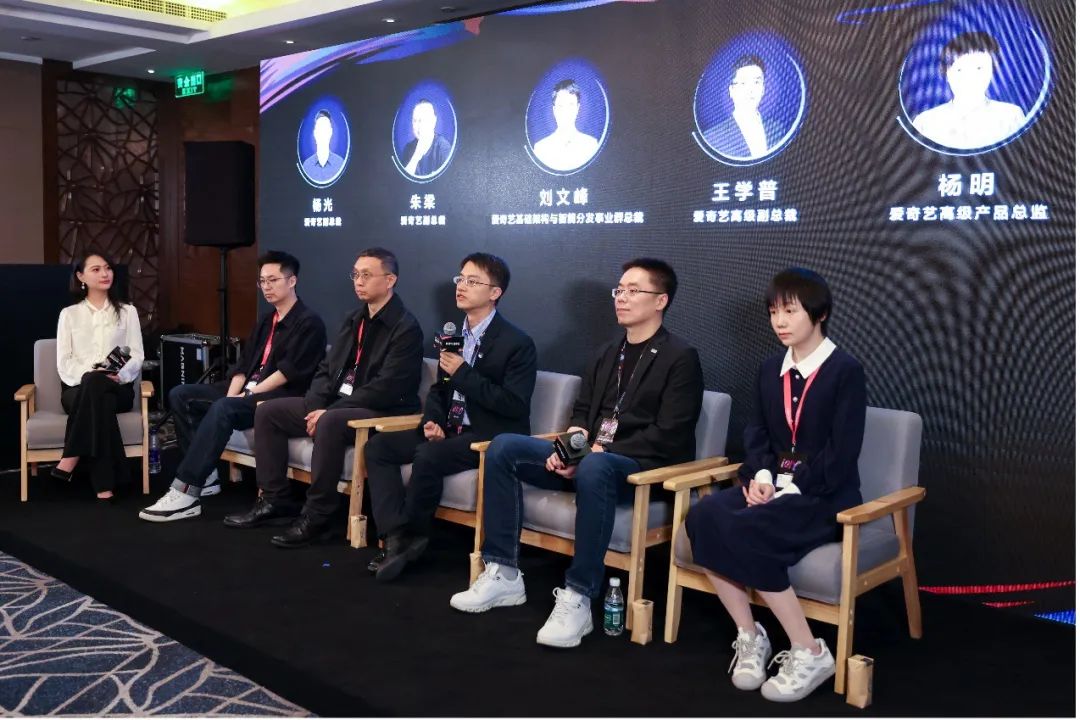
Zhu Liang explained that uploading scripts to Script Workshop enables multi-dimensional analysis, breaking down how many scenes and sequences a drama contains.
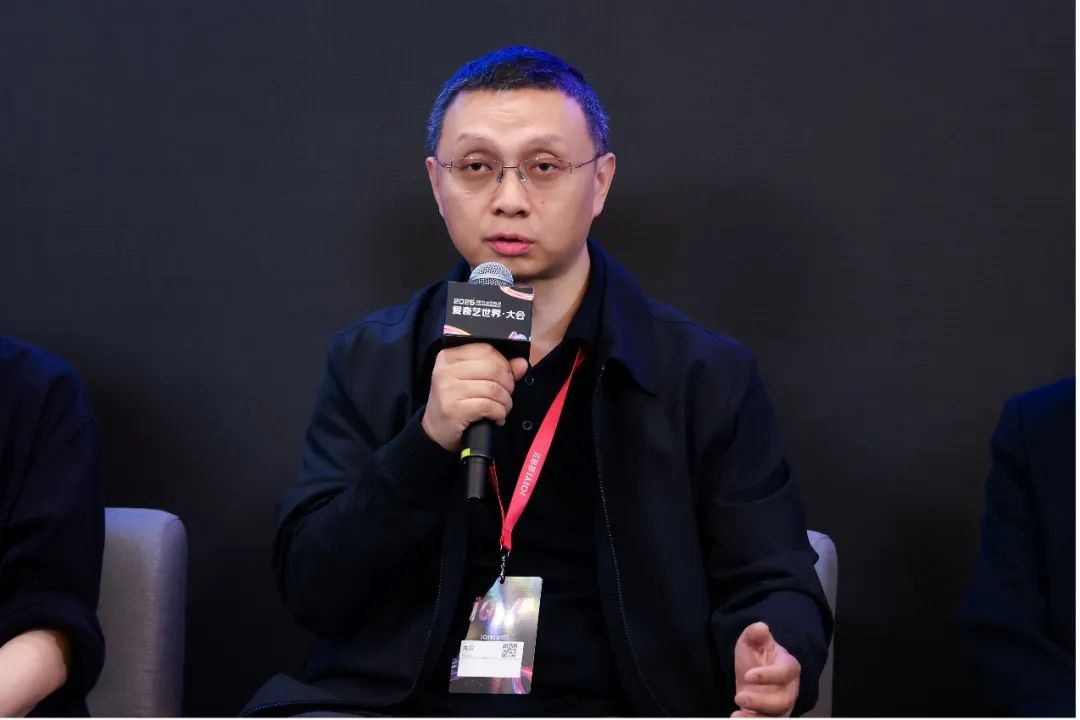
iQiyi’s Script Workshop identifies scripts suitable for virtual production and uses AI assistance at the scripting stage to determine which scenes are best suited for virtual shoots and what proportion of virtual content would be optimal. This dramatically improves evaluation efficiency—where an experienced analyst might take a week to review a single script, Script Workshop speeds up the process several-fold. It also enhances accuracy in scene selection and boosts the ability of Image Workshop to design reference visuals for creative teams.
Beyond pre-production and post-editing, achieving optimal results requires a comprehensive intelligent production ecosystem. For instance, the dedicated QClip hardware and software automatically records and uploads footage from virtual shoots. Creators can access multi-camera feeds from director monitors in real time. These materials are uploaded within minutes to iQiyi’s “Production Management System,” synchronizing metadata with electronic script logs and original assets in the cloud.
With QClip, on-set editors can directly retrieve proxy files from the QClip server, quickly assess shot usability based on instant multi-angle playback, and easily search and review continuity shots on-site. The high-standard action sequences in *Counting Stars* were completed through close coordination between martial arts directors and editors enabled by this system.
Finally, the vast amount of digital assets created via virtual production aren’t limited to reuse across scenes and editing—they also support broader IP development, enabling diversified business models. Virtual environments built for *Counting Stars*, for example, can be reused directly in other series, VR experiences, or even offline theme parks, turning digital assets stored in computers into sustainable commercial value. At the conference, many attendees experienced the show’s “Observatory” at outdoor exhibits using Apple Vision Pro, where high-fidelity environments combined with gesture interaction delivered strong immersion.
Virtual production is not a “single-point technology,” but rather an “upgrade to cinematic industrialization.” Today, iQiyi is no longer just a content company—it increasingly resembles an “infrastructure provider” for the film and television industry.
03 Future Vision: Technology Liberating Creativity
As virtual production enters mass production, its ultimate value becomes clearer.
Cross-format reuse of digital assets is already emerging: film sets can be recreated in theme parks, transformed into VR interactive experiences, or adapted into game skins… This “create once, use everywhere” model not only reduces development costs but ensures high fidelity across IP expressions.
For creators, technological advances mean liberation from physical constraints and expanded imagination. Zhu Liang admits some creative teams remain skeptical about new technologies, concerned about visual outcomes and actor adaptability. Yet he firmly believes virtual production does not replace traditional shooting, but opens new creative dimensions.
Take epic fantasy or sci-fi franchises like *Game of Thrones*, *Star Wars*, or *The Wandering Earth*—they rarely come in “low-budget” versions because they require constructing worlds that don’t exist in reality. Only CG could achieve this before, but at a cost of hundreds of thousands or even millions per minute—prohibitive for small teams and causing many promising sci-fi IPs to miss their chance at adaptation.
Today, AI-enhanced virtual production allows low-budget series to achieve cinematic quality, giving the vast library of premium web literature IPs accumulated over China’s past two decades a greater chance at screen adaptation.
Notably, technology application is expanding beyond genre boundaries. While virtual shooting is currently used mainly to replace difficult-to-film real locations—thus more common in sci-fi and fantasy—the potential extends far beyond, becoming a powerful tool for any quality-driven director seeking creative expression.
According to insiders, iQiyi has begun applying virtual production to realistic题材 content—for instance, recreating a long-vanished location in a character’s flashback memory. Scenes that previously required expensive reconstruction for authenticity can now be achieved at low cost with high quality through virtual production.
04 Conclusion: Letting Technology Return to Its Tool Nature
When virtual production first emerged, some asked: “Is this just for big-budget productions?” But iQiyi’s practice proves that technology eventually returns to its essence—as a tool—that lets creators spend less energy worrying about *how* to shoot, and more focusing on *what* to shoot.
The third episode of *Black Mirror Season 7* recently went viral, imagining future filmmaking without cameras or studios—actors simply wear brain-computer interfaces and enter computer-simulated worlds to perform. It feels like the ultimate form of virtual production.
Perhaps one day, virtual production will replace today’s entire film and TV production system. We might no longer need physical studios or on-location shoots—just a few thousand square meters of LED walls, paired with omnipotent AI and digital software—to produce all影视剧.
Interestingly, when posed with this question, Zhu Liang—who oversees iQiyi’s virtual production—cares less about what percentage of a production is virtualized, or when the first fully virtual movie or series will appear. Instead, he focuses on how technology can better support imagination and expressiveness, enable ideas to be realized more efficiently and affordably, and help directors create more compelling works—that’s the prerequisite for high adoption of virtual production.
While others are still debating whether to adopt virtual production, iQiyi is already asking: How can this technology help the next *The Knockout* emerge faster?
Join TechFlow official community to stay tuned
Telegram:https://t.me/TechFlowDaily
X (Twitter):https://x.com/TechFlowPost
X (Twitter) EN:https://x.com/BlockFlow_News
 极客公园
极客公园











