Web3 Oasis in the Desert: Dubai's Digital Gold Dream
TechFlow Selected TechFlow Selected
Web3 Oasis in the Desert: Dubai's Digital Gold Dream
The chief said, "No one remembers the second in the world."
 Navigating Web3 tides with focused insights
By Bright, Foresight News
On March 12, 2025, Binance announced a $2 billion investment from MGX, an Abu Dhabi-based institutional investor. This largest institutional investment in the history of the crypto industry sent a powerful message to the world— the Middle East, particularly the UAE, is ambitiously building a "Jerusalem" for cryptocurrency.
With Token2049 Dubai approaching, join us on a tour of this digital oasis shaped by palm trees and blockchain.
I. Digital Mecca Between Two Oceans and Three Continents: Dubai's Geopolitical Code
Strategic Hub in the Desert
In the northeastern corner of the Arabian Peninsula, the UAE shines like a gem nestled between the Persian Gulf and the Gulf of Oman. This federation of seven emirates occupies a strategic crossroads linking Europe, Asia, and Africa. Dubai, its most dazzling city, transformed in just 40 years from an obscure desert fishing village into a global financial hub.
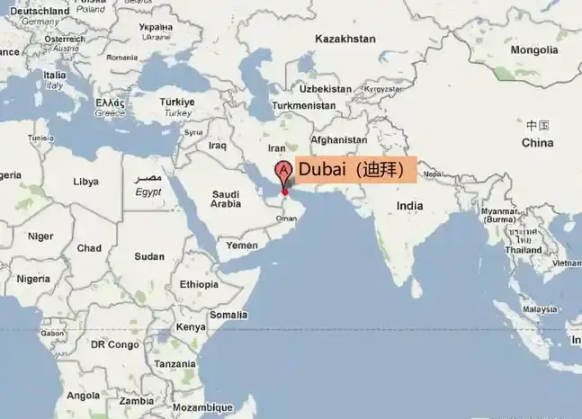
This miraculous transformation was no accident—the threads of geopolitics were woven long before. Controlling the Strait of Hormuz and overlooking the world’s energy lifelines, Dubai is not only at the heart of petrodollar flows but also a major intersection for East-West commodity trade. In 2023, the UAE surpassed the UK to become the world’s second-largest gold trading center, with over $129 billion in annual trade volume. According to data from the Dubai Multi Commodities Centre (DMCC), Dubai now accounts for 15% of global gold trade each year.
Dubai’s geopolitical strategy has always centered on “neutrality as a stance.” As a member of the Gulf Cooperation Council (GCC), the UAE maintains neutrality in regional conflicts—complying with Western sanctions on Russia while absorbing capital fleeing the Russia-Ukraine war, fueling a real estate boom by late 2022. This “eat both sides” diplomacy has turned Dubai into a haven for wealth and discreet transactions. Its role as a bridge was further solidified after Iran and Saudi Arabia reconciled in 2023.
Dubai’s Web3 “geopolitics” also lies in its permissive regulatory environment attracting global talent. After Singapore’s Monetary Authority cracked down on crypto speculation in September 2023, Chinese-speaking professionals began shifting their focus to Dubai. One practitioner noted: “Singapore works well for finance, but not for launching projects—VCs can’t afford it anymore. If you want to build, you come to Dubai.” India imposed a 30% tax on crypto gains starting April 2022, followed by a 1% levy on digital asset purchases in July that same year. Sandeep Nailwal, co-founder of Polygon, exemplifies this trend—he left India in 2020 and settled in Dubai, stating: “I wanted to build better Web3 platforms in India, but chaotic regulations left me no choice.”
From Dubai, Web3 professionals can easily fly via Emirates Airlines—the world’s largest carrier—to other Web3 hubs such as Singapore, Switzerland, Portugal, Hong Kong, and North America, forming a global network of innovation. This geographic advantage makes Dubai the “digital Mecca” for global Web3 talent and capital.
Residents of the Crypto Frontier
As of September 2024, the UAE’s population reached 12.5 million, with expatriates making up 88%. Dubai has 3.76 million residents, or 41.9% of the national total, and eight times the national population density. According to research by the UAE telecom regulator TDRA, approximately 11.4% of residents own or invest in cryptocurrencies, placing the UAE among the top ten countries globally for crypto adoption.
Dubai’s crypto users are young and high-income. A YouGov survey shows that 66% of Emirati adults follow cryptocurrency news, and 11.4% hold or invest in digital assets—ranking among the world’s top ten. Research by Holborn Assets indicates that users aged 18–30 (30%) and 30–40 (45%) dominate. Locals (33%) show higher investment interest than Arab expats (23%), Asian residents (24%), and Westerners (19%). 59% view crypto as a long-term investment, 35% use it for portfolio diversification, 11% as inflation hedge, 34% engage in short-term trading, and 22% use it for daily payments. Bitcoin (72%) is hailed as “digital gold,” Ethereum (52%) is favored for smart contract functionality, followed by stablecoins (45%). 24% pay attention to infrastructure projects, 21% invest in Layer 1 blockchains, and 22% back AI-related crypto ventures. CEX (45.7%) and DEX (48.4%) usage are nearly equal. Business24-7 rankings show eToro appeals to beginners, OKX leads in derivatives liquidity, Binance offers the widest token selection, while dYdX and Uniswap rank top in DEX trading volume. 37% believe blockchain will revolutionize real estate transactions by enhancing transparency and reducing friction.

Dubai is also a multicultural melting pot. Even without fluency in Arabic, newcomers can live and even launch startups seamlessly thanks to widespread UnionPay acceptance and rapid FinTech development. Cryptocurrencies are already accepted across Dubai—from luxury hotels to street vendors—reinforcing local confidence in Web3. However, Dubai’s demographic structure is unique. According to Dubai government statistics, over 80% of the population consists of foreign laborers, primarily from India and Pakistan, while locals form a small minority largely dependent on state welfare. This makes Dubai’s Web3 ecosystem more of a global testing ground than a locally driven market.
Dubai’s immigration policy reinforces its “money-first” ethos. Non-Muslims are almost never granted citizenship and can only obtain long-term residency through the “Golden Visa.” For example, investing 2 million dirhams (~$540,000) in property grants a ten-year residency permit, leading to the rise of “visa apartments” on Palm Jumeirah—some as small as 25 square meters, complete with Bitcoin mining rigs. In 2023, a retired teacher from Shanghai used her pension to buy two restrooms in the Jumeirah Lake Towers, jokingly calling it her “toilet mine,” and livestreamed her “appreciation journey” on WeChat groups, with the latest episode exploring how to mine using toilet water tanks. These absurd cases reflect Dubai’s extreme openness to capital: as long as you have money, there’s a place for you.
II. Crypto Apocalypse in the Post-Oil Era: Dubai’s Philosophy of Future Civilization
DIFC Under Maritime Law and Its Lighthouse VARA
In the “Wild West” of cryptocurrency, Dubai has chosen a bold and innovative path. The UAE legal system is based on civil and Islamic law, emphasizing codified statutes and religious compliance, especially in personal status matters such as marriage, divorce, and inheritance, reflecting a relatively conservative Islamic character.
To promote financial development and attract international investment, Dubai established the Dubai International Financial Centre (DIFC) in 2004 and introduced a common law framework derived from British maritime law. This additional legal architecture allows Dubai to create an international, flexible legal environment ideal for fintech, blockchain, and digital asset innovation.

The Virtual Assets Regulatory Authority (VARA), founded in 2022, is a pioneering institution under DIFC’s unique legal system. It is arguably the world’s first comprehensive virtual asset regulator. Beyond rule-making, VARA acts as a catalyst for innovation. Through its “sandbox regulation” model, it strikes a golden balance between compliance and freedom.
VARA’s threefold mission is clear:
• Investor Protection: Mandating exchanges to custody client assets and strictly enforce anti-money laundering (AML) and know-your-customer (KYC) procedures;
• Technology Neutrality: Not favoring any specific technology, allowing coexistence of blockchain, Web3, DeFi, and other forms;
• Innovation Incentives: Establishing a regulatory sandbox where startups can test new products in a controlled environment.
Unlike the U.S. SEC’s “securitization-focused” approach, VARA adopts a more flexible classification of crypto assets. Bitcoin may be treated as a commodity, platform tokens as securities—depending on the project’s whitepaper and actual use case. This flexibility has attracted major exchanges like Binance, Coinbase, and Bybit. Meanwhile, DIFC supports a “sandbox testing” model, allowing new financial products to be trialed under supervision. In 2024, DIFC launched the world’s first Digital Assets Law, providing unprecedented legal certainty for fintech and digital assets.
VARA’s licensing speed embodies the so-called “Dubai pace.” There’s a joke that crypto licenses in Dubai are easier to get than taxi permits, and the slogan “In Crypto We Trust” has quietly come with a price tag. Objectively speaking, as one insider remarked during Token2049: “Compared to Singapore and Hong Kong, Dubai’s regulations are friendlier and better suited for reaching retail users.” This permissive environment has made Dubai a top destination for crypto projects—even shawarma vendors display QR codes saying “USDT Accepted,” as if the entire city were hosting a decentralized barbecue party.
An Islam-Compliant Crypto Ecosystem
The Islamic financial system centers on principles from the Quran and Hadith, prohibiting interest (Riba), promoting risk-sharing (Mudarabah/Musharaka), and requiring asset-backed financing. Integrating these religious principles with modern finance is complex, and insufficient compliance could trigger systemic risks.

Dubai’s regulatory innovation extends beyond technology into cultural adaptability. In 2023, VARA partnered with the Islamic Financial Services Board (IFSB) to release the Guidelines for Sharia-Compliant Crypto Assets, adding a distinctive religious dimension to the crypto ecosystem. Key provisions include:
• Prohibiting investments in blockchain projects involving gambling, alcohol, or other forbidden goods;
• Requiring stablecoins to be backed by Sharia-compliant assets such as gold or real estate;
• Ensuring smart contracts align with Islamic principles of contractual freedom.
This dual compliance of “religion + technology” positions Dubai as a gateway for cryptocurrency in the Islamic world. Traditional Islamic finance forbids interest (Riba) and uncertainty (Gharar), emphasizing shared risk—principles that resonate with the decentralized nature and smart contract mechanisms of crypto. As early as 2018, Dubai Islamic Bank (DIB) launched compliant crypto custodial services, defining Bitcoin as “digital gold” to sidestep interest prohibitions. The Islamic DeFi platform Amanah, built on Polygon, offers Sharia-compliant staking and lending with ~3.5% annual returns, attracting wealthy clients across the Middle East. This tension and fusion define the unique charm of the region’s crypto landscape.
A Resonant Blueprint: AI and Web3 Converge
Dubai’s ambitions go far beyond. In 2024, DIFC launched the “Dubai AI & Web3.0 Campus,” aiming to create the largest AI cluster in the Middle East and North Africa. Located in the DIFC Innovation One building, the campus focuses on applying AI and Web3 technologies in key future industries, drawing numerous entrepreneurs and engineers. Thanks to such initiatives, Dubai ranked sixth in fintech and eighth overall in the 2021 Global Financial Centres Index (GFCI). Unlike traditional financial powerhouses like New York, London, or Shanghai, Dubai’s ascent has been significantly propelled by the crypto economy.
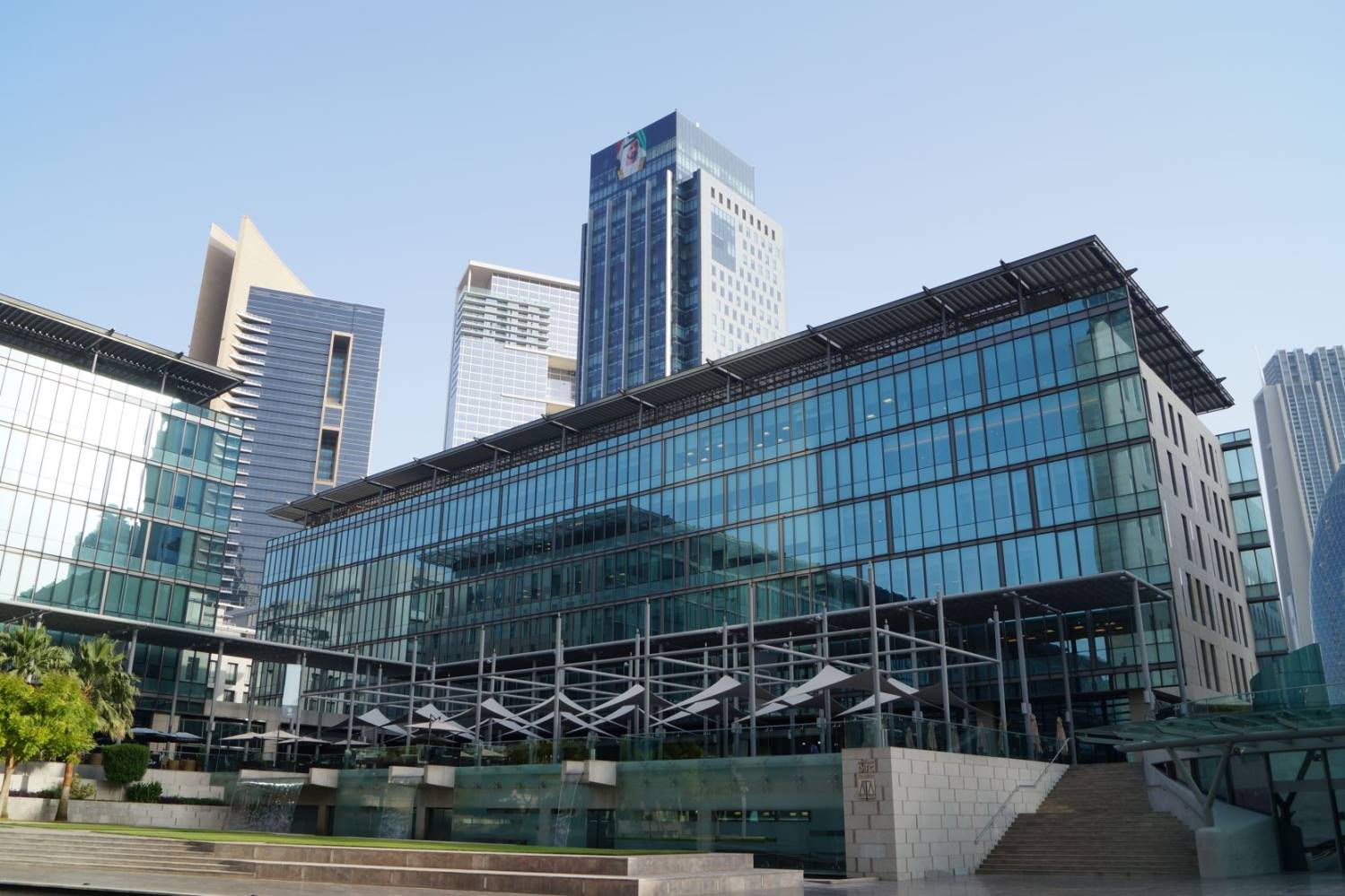
As early as 2013, the UAE launched the “Smart Dubai Initiative,” leveraging blockchain to enhance government efficiency and driving evolution from payment tools (1.0) to financial applications (2.0) and public administration (3.0). Today, this vision is taking shape. The 2021 “Digital Economy Strategy 2030” aims to make Dubai a global blockchain hub, generating $150 billion in economic value. In 2023, Dubai unveiled its “Metaverse Strategy,” targeting leadership in the virtual world. This shift from “oil economy” to “digital civilization” stems from a profound understanding of the post-oil era. As Dubai’s ruler once said: “No one remembers who came second.” On the Web3 track, Dubai is determined to lead.
A New Global Money Laundering Hub?
Yet Dubai’s progressive regulations naturally invite controversy, with nicknames like “global money laundering center” or “virtual asset liquidity optimization hub” questioning its legitimacy. In this neutral city, the line between innovation and fraud remains blurred.
The UAE’s sheikhs are perhaps the world’s greatest “hedge fund managers.” They aggressively sell oil from beneath the ground while constructing new generations of “wells” aboveground—skyscrapers filled with illusions of wealth—funneling credit card bills generated by endless streams of visitors into fresh “pipelines.”
Dubai sells dreams to all who arrive. The wealthy flood in with illicit funds, easily “whitewashing” them through real estate or investments. In 2024, the UAE attracted more millionaires (with over $1 million in net assets) than any other country, surpassing even the United States. For those arriving empty-handed but dreaming of riches, scam parks like “Ras Al Khaimah” and “Oasis” continue to expand their electric batons and prison cells.
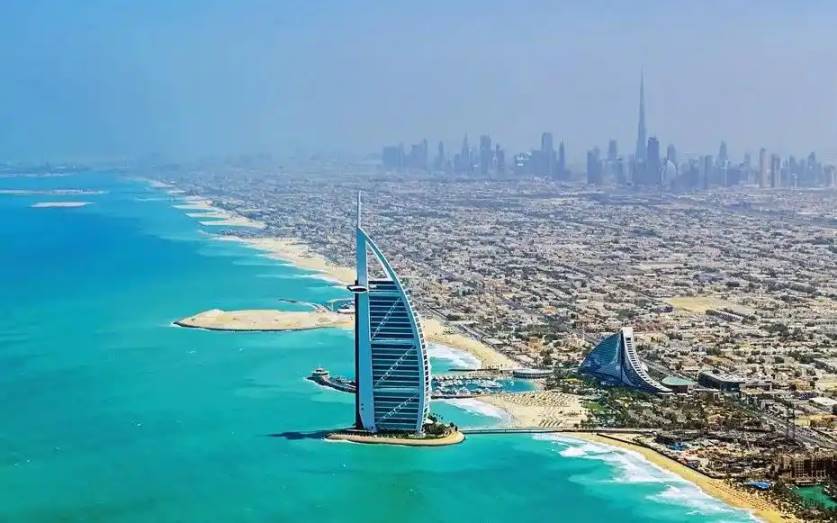
Dubai Crown Prince’s 2023 announcement of the “Metaverse Strategy” further reveals the city’s ability to monetize illusion. From desert mirages to NFT markets and virtual land sales at government buildings, Dubai consistently leads at the frontier of reality and fiction. When you talk money with the sheikhs, they pat your shoulder and assure you, “We don’t deal with money—we deal with dreams,” because the casino ultimately belongs to them. Whether oil or Bitcoin, global fortune seekers will always bow before the Burj Khalifa.
III. Cyber Frontline on the Palm Island: Dubai’s Crypto Industry Ecosystem
Dubai’s Web3 ecosystem resembles the man-made miracle of the Palm Islands—a cyber oasis irrigated by code, capital, and ambition. From USDT QR codes at shawarma stands to Bitcoin payments at sail-shaped hotels, the city has embedded cryptocurrency into the capillaries of daily life, creating a seamless digital frontline where physical and virtual worlds merge.
The Exchange Rush to Dubai: Global Giants Plant Their Flags in the Desert
Just as the Ottoman Empire’s trade blockade sparked the Age of Exploration, global regulatory storms have thrust Dubai into the spotlight as a Web3 haven. In November 2022, Binance obtained a Financial Services Permission (FSP) from the Abu Dhabi Global Market (ADGM) Financial Services Regulatory Authority (FSRA), marking a milestone in its expansion into the MENA region. In 2025, Binance secured another $2 billion investment from Abu Dhabi’s MGX. Led by royal family member Tahnoun bin Zayed Al Nahyan, this massive injection marks not only a turning point in Binance’s history but also a deep commitment by UAE capital to Web3. MGX, part of the Abu Dhabi AI Council (AIATC), previously invested in OpenAI and Anthropic, revealing its cross-domain ambitions from AI to blockchain.
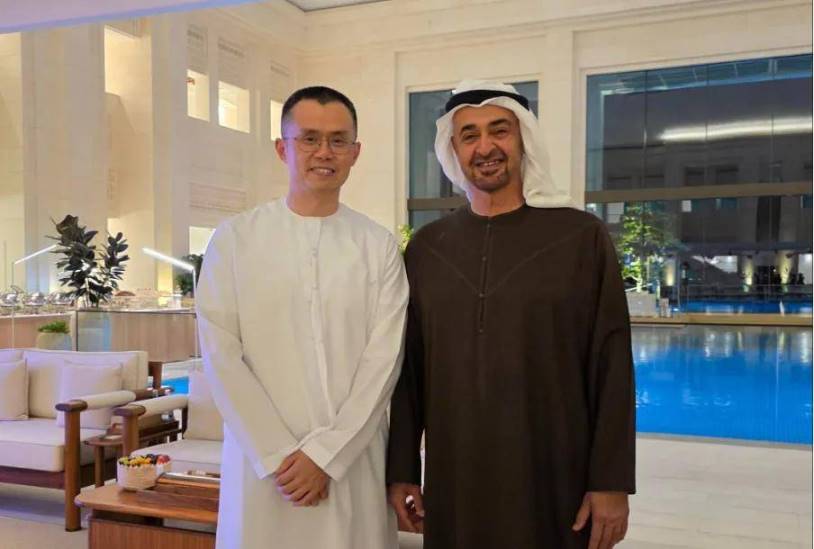
Other major players quickly followed. Bybit, Coinbase, OKX, and HTX have all established headquarters or regional offices in Dubai. In October 2024, OKX received a license from the Virtual Assets Regulatory Authority (VARA), becoming the latest compliant exchange. In 2020, Ripple set up its regional HQ in the Dubai International Financial Centre (DIFC), circumventing regulatory pressure from the U.S. SEC, and partnered with Emirates NBD (ENBD) to reduce remittance times from Southeast Asia to the Middle East from three days to just three seconds—showcasing blockchain’s practical utility. In 2022, Kraken became the first exchange to offer direct AED trading pairs, lowering entry barriers for local users. Asset managers like Cobo and Amber accelerated their presence, applying for SCA and VARA licenses since 2020 to serve wealth management demand in the MENA region.
Dubai isn’t the largest crypto market in the Middle East—Saudi Arabia ranks third in terms of population and trading volume, with the UAE fifth. But Dubai has become the regional “front office” thanks to its regulatory clarity and superior infrastructure. According to Bitget’s 2023 report, crypto adoption in the Middle East surged by 166%, with the UAE leading the region with 7% of global trading volume and $25 billion in transaction value. Chainalysis data further shows that Dubai’s crypto sector contributes about 100 billion dirhams ($27.25 billion) in output, accounting for 4.3% of UAE GDP. As of 2024, Dubai hosts over 1,400 blockchain startups valued at $24.5 billion collectively, supported by over 90 investment funds and 12 incubators forming a closed-loop ecosystem. DMCC’s Crypto Centre has registered 460 local blockchain firms—over half the city’s total—with Switzerland’s Crypto Valley establishing Crypto Oasis in Dubai to link two global crypto hubs.
Token2049 and Industry Summits: The Victoria’s Secret Show of Crypto
Token2049 Dubai is a barometer for the global Web3 industry, gathering exchange executives, on-chain developers, venture capitalists, and policymakers. During the 2024 summit, fleets of Lamborghinis lined the Burj Al Arab, Russian models in bikinis emblazoned with exchange logos handed out flyers, and Korean GameFi teams tossed “fractionalized NFTs” at pool parties—an event dubbed the “Victoria’s Secret Show of the crypto world.” Inside the venue, VARA officials shared the stage with Binance CEO Changpeng Zhao, discussing regulatory sandboxes and CBDCs; outside, DJs at Palm Island nightclubs used smart contracts to distribute ticket revenues in real time—an impressive demonstration of on-chain transparency. The summit is not just a feast of tech and capital but also a microcosm of Dubai’s “build it and they will come” strategy.
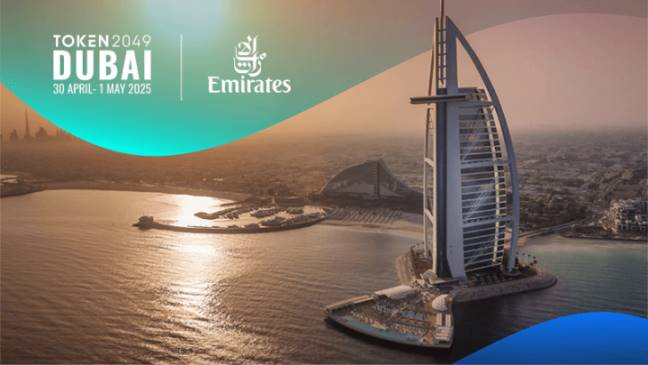
Dubai’s summit culture goes beyond Token2049. At GITEX 2023, the blockchain and metaverse pavilion attracted attendees fresh from Asia Token2049, showcasing cutting-edge projects from decentralized identity to AI-powered DeFi protocols. The 2024 Dubai FinTech Summit welcomed over 10,000 decision-makers, 300 thought leaders, and 200 exhibitors, focusing on payment revolutions and on-chain finance. The 2023 Middle East Metaverse Conference brought together 300 experts from over 40 organizations to discuss strategic applications of virtual real estate and digital culture. These events are not merely showcases—they are Dubai’s antennae connecting to the global Web3 network.
Dubai’s events also highlight its linguistic and cultural advantages. UAE officials’ fluent English and global outlook shine at events like GITEX, whereas some Chinese Web3 project teams struggle with language. One Binance executive faced criticism during an event for his accent, underscoring Dubai’s high bar for international communication. DIFC’s FinTech Hive accelerator and the Dubai Future District Fund (launched in 2020 with a 1 billion dirham endowment from the ruler) leverage summits and roadshows to identify promising startups, having incubated 584 companies in 2023 alone across payments, on-chain finance, and metaverse applications.
Dubai-Style Crypto Applications: Digital Life from Streets to Clouds
Payment Revolution: On-Chain Transactions from Shawarma to Mansions
Dubai has integrated cryptocurrency into everyday payments. At Dubai Mall’s aquarium, sharks glide past screens flashing Bitcoin price charts, and crypto ATMs outnumber public restrooms. Shawarma vendors display “Accepts USDT” QR codes, tourists use BitOasis to convert crypto into dirhams, and check into seven-star Burj Al Arab using Bitcoin. In 2023, Cartier and Rolex boutiques began accepting USDT, pushing high-end consumption fully on-chain. Citizens School became the first school in the Middle East to accept Bitcoin and Ethereum for tuition, with parents joking, “Paying with ETH means our kids learn Web3 thinking.”
Real estate is a major arena for crypto payments. In 2023, developers started accepting Dogecoin for property purchases, and organizations like Kiklabb approved crypto payments. A YouGov survey found that 40% see crypto as an efficient cross-border remittance tool, 36% would use crypto cards for shopping, and 20% are interested in crypto gifts. In 2019, Rixos Premium installed Dubai’s first Bitcoin ATM, allowing tourists to buy BTC with cash. In 2023, LucidPay launched a Tezos-based stablecoin, and some hospitals began accepting Bitcoin donations, reducing trust costs in philanthropy through blockchain transparency. In 2022, a black diamond sold for $4.3 million in a crypto auction, with buyer Richard Hert paying in Bitcoin—sparking widespread discussion.
Ripple’s collaboration with ENBD has boosted cross-border remittances to near-instant speeds. Data from 2023 shows that 64% of Middle Eastern payment firms expect over half of merchants to accept crypto payments within three years. In 2024, Deel’s platform reported that Dubai employees have the highest crypto withdrawal rate in the Middle East, with Ethereum at 51%, followed by USDC and Bitcoin. This payment ecosystem isn’t just technological progress—it’s also a strategic response to the shadow of SWIFT sanctions. Cryptocurrency’s borderless nature presents an alternative to dollar dominance.
GameFi and NFTs: From One Thousand and One Nights
The metaverse strategy is Dubai’s grand narrative. In 2022, Crown Prince Hamdan announced a five-year metaverse plan, aiming to rank among the world’s top ten metaverse economies, attract over 1,000 companies, and create 40,000 virtual jobs. In 2023, Dubai Electricity and Water Authority (DEWA) launched DEWAverse, allowing customers to pay bills and employees to receive on-chain training in virtual space. In 2024, BEDU unveiled Project 2117 at the Museum of the Future, planning to onboard 100 million users into its metaverse ecosystem spanning education, art, and social interaction.
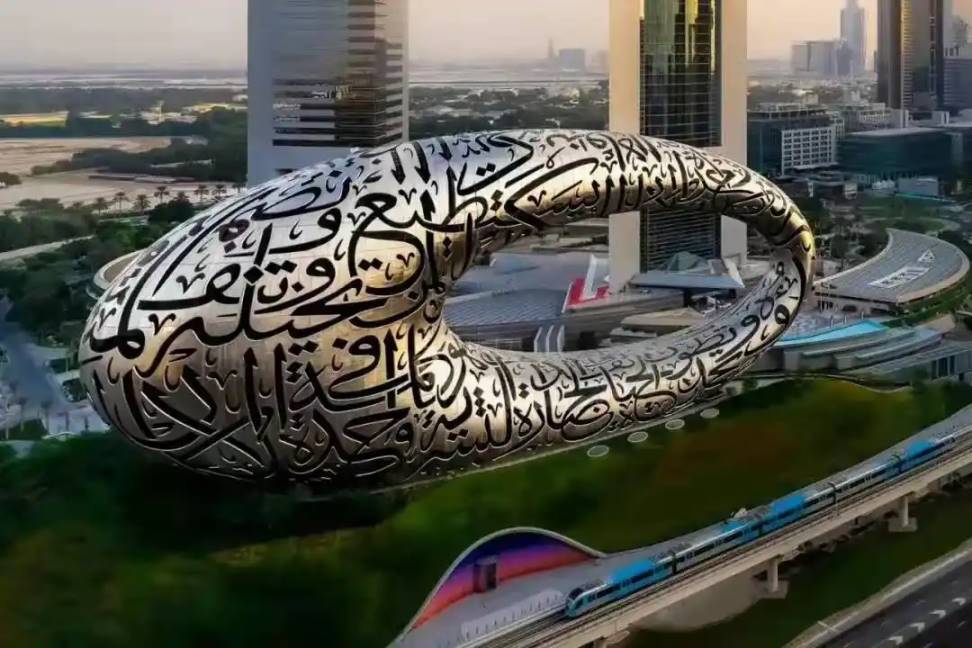
VARA demonstrated cyber foresight in 2022 by purchasing virtual land in The Sandbox, becoming the world’s first regulator with a metaverse headquarters. In 2023, Wemade and Whampoa Digital launched a $100 million Web3 fund focused on metaverse and blockchain gaming. ResearchAndMarkets forecasts Dubai’s NFT market to grow at a CAGR of 32.1% from 2022 to 2028.
Dubai’s Web3 gaming ecosystem has emerged as a new channel for Emirati cultural export. In 2024, the UAE launched a “Metaverse Gaming Valley,” attracting flagship projects like Axie Infinity and Decentraland. The NFT game Sinbad’s Voyage, inspired by *One Thousand and One Nights*, lets players buy virtual land tied to Dubai landmarks like the Burj Khalifa, with land value linked to real-world real estate. In 2023, a virtual plot on Palm Jumeirah sold for 15 ETH. The Middle East eSports League on Polygon rewards players in crypto—when a Dubai tournament champion won 2 BTC in 2024, the livestream drew over 5 million viewers.
The Foundation: Policy Support and Infrastructure
Dubai’s crypto ecosystem thrives thanks to forward-looking government policies. The 2013 “Smart Dubai Initiative” launched blockchain in public services. The Global Blockchain Council was formed in 2016. In 2018, Dubai pledged that 50% of government transactions would be blockchain-based by 2021. VARA was established in 2022, adopting a “test-adapt-scale” model and quickly covering giants like Binance, OKX, and Huobi within six months. In 2023, DIFC introduced the Digital Assets Law, providing legal safeguards for on-chain finance. DMCC’s Crypto Centre and the Dubai Future Foundation (established in 2016) attract startups through tax incentives and incubation programs, supporting 584 startups and issuing over 100,000 Golden Visas.
On infrastructure, Dubai’s global connectivity and logistics are unmatched. Emirates Airlines links all major Web3 hubs worldwide. Dubai Port leads the Middle East in throughput, supporting cross-border payments and hardware supply chains. In 2023, Dubai’s 772 crypto firms provided employment for professionals. PwC forecasts the MENA blockchain market to exceed $3.2 billion in 2024. The Dubai Department of Economic Development’s e-Economy division promotes broader adoption through women’s entrepreneurship programs and metaverse education.
Dubai’s crypto ecosystem is not merely a technological sandbox, but a confluence of capital and culture. From streets to clouds, the city is rewriting One Thousand and One Nights with blockchain—one token, one transaction at a time—as a cyber prophecy of the future.
Join TechFlow official community to stay tuned
Telegram:https://t.me/TechFlowDaily
X (Twitter):https://x.com/TechFlowPost
X (Twitter) EN:https://x.com/BlockFlow_News
 Foresight News