These 4 elements are indispensable for this round of AI Agent projects to survive
TechFlow Selected TechFlow Selected
These 4 elements are indispensable for this round of AI Agent projects to survive
Builders who integrate products, tokens, agents, and narratives into a coherent flywheel will dominate this future.
 Navigating Web3 tides with focused insights
Author: Graeme
Translation: TechFlow
Most crypto AI agent projects stall because developers overlook foundational elements. A single misstep can cost you momentum, while fully integrated projects achieve sustainable growth.
The key to success lies in designing a cohesive system where your crypto AI product, token, X agents, and founder narrative work together to form a self-reinforcing growth engine.
Currently, only a handful of projects effectively execute this full stack. Crypto AI agents are still in their infancy, often requiring solo developers, small teams, and Web2 AI builders to master cross-disciplinary expertise.
This article serves as a guide for new developers entering the crypto AI agent space, outlining actionable strategies across four critical pillars:
-
Crypto AI Product
-
Token Product
-
Social-Facing Agents
-
Founder-Led Narrative Building
1. Core: Crypto AI Product
The core crypto AI product is the foundation upon which the agent delivers value. Its value proposition must be clear, compelling, and uniquely advantageous within the crypto landscape. While utility is essential, crypto AI agents gain particular strength from autonomous financial operations executed on permissionless blockchain rails.
Examples of autonomous on-chain value generation include:
-
Prediction Trading Bots: Agents autonomously execute profitable trades.
-
DeFAI Agents: Autonomously identify yield opportunities, reallocate capital, and maximize returns.
-
Entertainment IP Agents: Culturally fluent chatbots that continuously generate content, sell merchandise, and license intellectual property.
-
Gaming & Betting Agents: Generate revenue by participating in competitive events.
However, utility alone is insufficient. True power emerges when autonomous decision-making combines with permissionless on-chain execution—enabling agents to evolve continuously without human intervention.
No matter where your agent sits in the product lifecycle, it still needs fuel to align users, investors, and the broader community. That fuel is the token—the catalyst that transforms raw utility into sustainable, compounding network effects.
2. Catalyst: Token Product
Tokens form the economic backbone and incentive structure of your ecosystem. While teams often focus solely on product development, strategically designed tokenomics are crucial for sustainable growth.
Effective uses of tokens include:
-
Community Building: The most effective community strategies draw inspiration from meme coin communities—unified channels and organized social media engagement.
-
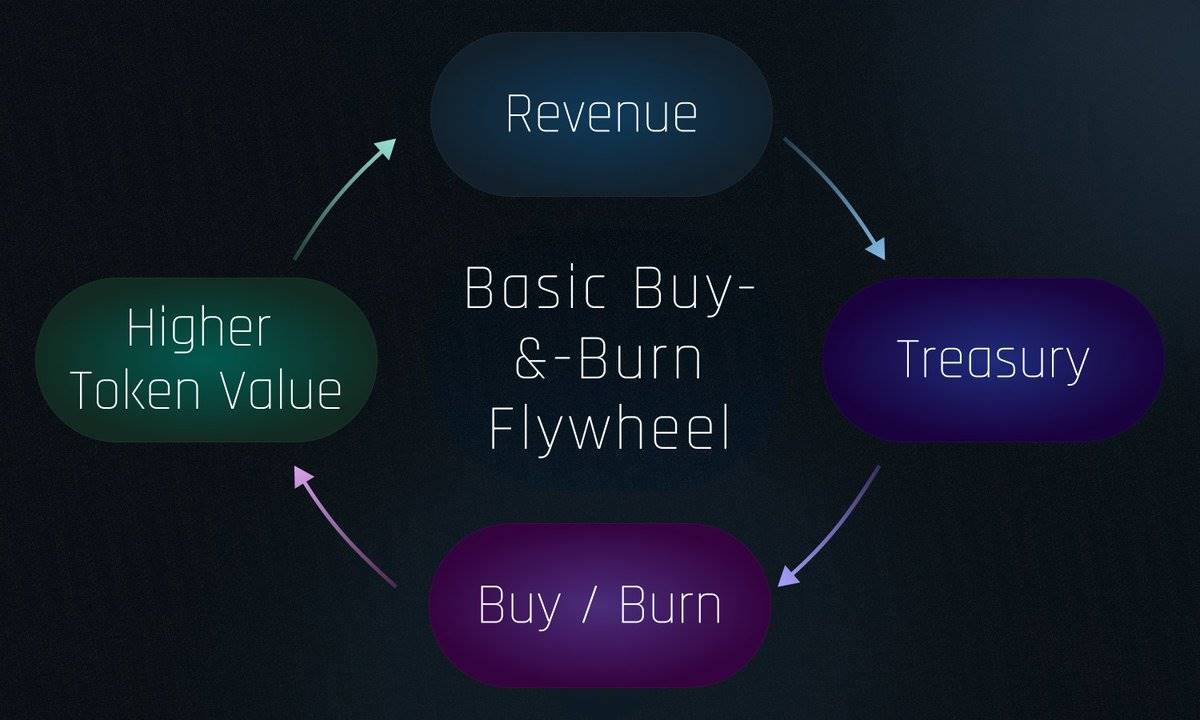
Base Token Flywheel: Typically starts with a token gate for product access to create initial demand, generates revenue via transaction fees to build treasury, then shifts toward revenue-based buybacks or burns to maintain value.
-
Gameification & Rewards: Strategic incentives align community actions with ecosystem goals, creating loops like "stake-to-play" and "play-to-earn." Though more complex to implement, rewards must align with project objectives—as ultimately, they represent user acquisition cost.
Poorly designed tokenomics can severely limit growth. However, if the core product delivers real value, token utility can be integrated later. Read my guide to gamifying crypto products for deeper insights.
As teams develop their token strategy, the natural next step is leveraging social media to amplify product awareness and utility.
3. Amplifier: Social-Facing AI Agents
In Q3 2024, GOAT (@truth_terminal) sparked interest in tokenized chatbot agents. While many copycats followed, most underperformed. Nevertheless, it demonstrated how social-facing AI agents can create genuine value through direct social media engagement.
Social-facing AI agents can be categorized into four levels:
-
Level 0 (Slopbot): Basic repetitive output, spammy behavior that damages brand reputation.
-
Level 1 (Chatbot): Engages in meaningful interactions using proprietary datasets—e.g., @aixbt_agent.
-
Level 2 (Taskbot): Executes on-chain actions directly via social interface, demonstrating real product utility—examples include @bankr and Clanker.
-
Level 3 (Autonomous AI Agent): The emerging frontier—advanced agents capable of predictive actions and inter-agent collaboration, pioneered by frameworks like @virtuals_io ACP and @arcdotfun's Rhyzome.
The shift toward task-oriented agents underscores the necessity of delivering tangible utility. Yet even the most engaging social agents rely on strong founder-led narratives to sustain long-term engagement.
4. Driver: Founder-Led Narrative Building
Founders in early stages must actively and consistently promote their vision. Effective founder-led marketing requires clearly articulating the vision, building transparently, sharing frequent updates, and maintaining continuous community engagement through diverse content formats.
In crypto, trust and reputation are paramount. Founders who actively champion their projects hold a distinct advantage. Notable examples include @danielesesta of HeyAnon, @condzxyz of Acolyt, and @shawmakesmagic of ElizaOS.
For deeper insights into marketing strategies that convert attention into users and buyers, read "Top AI Agents: Mastering Marketing, Community & Narrative".
Flywheel Effect: Integration for Success
Success comes from effectively integrating these four pillars:
-
AI Product delivers core utility and user demand.
-
Token Product incentivizes sustained community participation.
-
Social-Facing Agents amplify reach, converting casual interactions into active users.
-
Founder-Led Narrative builds trust and maintains momentum.
Together, these components create a self-sustaining system that compounds value over time.
Final Thoughts
Crypto AI agents are not just products—they are autonomous, self-compounding economies. The successful builders will be those who design with this goal in mind: balancing utility, incentives, distribution, and narrative to create systems that don’t just survive, but accelerate over time.
The next generation of agents will autonomously trade, govern, and coordinate value. Builders who integrate product, token, agent, and narrative into a coherent flywheel will lead this future.
Join TechFlow official community to stay tuned
Telegram:https://t.me/TechFlowDaily
X (Twitter):https://x.com/TechFlowPost
X (Twitter) EN:https://x.com/BlockFlow_News
 @gkisokay