Paradigm Founder Huang Gongyu Interview: Early Investment in Zhang Yiming, Sequoia Experience, and Crypto Technology Trends
TechFlow Selected TechFlow Selected
Paradigm Founder Huang Gongyu Interview: Early Investment in Zhang Yiming, Sequoia Experience, and Crypto Technology Trends
There are many paths to greatness, no matter what you call it.
 Navigating Web3 tides with focused insights
Author: MD
Produced by: Bright Company
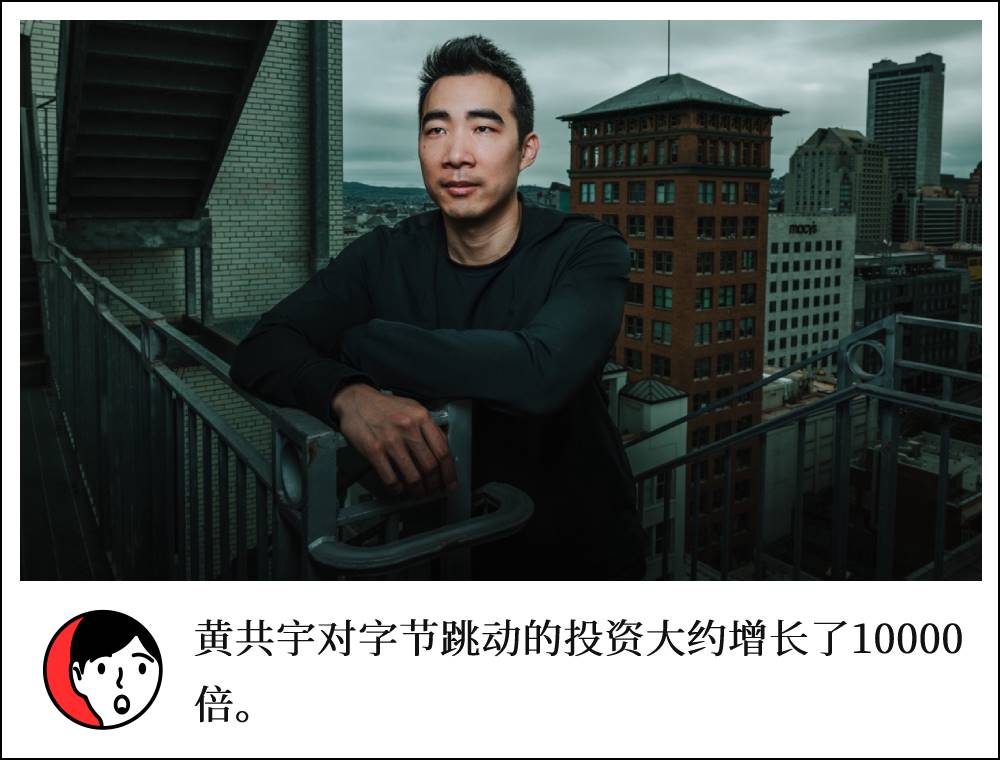
Recently, Patrick O'Shaughnessy, host of the well-known investment podcast "Invest Like the Best," conducted an in-depth interview with Matt Huang (Huang Gongyu), co-founder of the crypto investment firm Paradigm. Huang previously served as a partner at Sequoia Capital in the United States. Currently, Paradigm manages over $12 billion in assets. In 2018, Huang co-founded Paradigm with Coinbase co-founder Fred Ehrsam.
During the interview, Huang recalled his experience investing in ByteDance back in 2012.
At that time, he felt Silicon Valley had little informational advantage left; consumer applications had become very predictable for both interesting work and solid returns. He had previously sold a company he founded to Twitter. During a break, he traveled to Beijing with the idea of starting a tech company in China, meeting six founders. One was Zhang Yiming, who was then working on Toutiao. From Huang’s perspective, this venture seemed unlikely to succeed—similar U.S. projects had all failed.Zhang communicated through a translator, but Huang was captivated by the founder's non-verbal cues—his gestures, expressions, and intensity painted a vivid picture beyond words.
Throughout their conversation, Zhang made a profound impression on Huang. In the interview, Huang said:“I remember having a deep sense that he was an exceptionally capable and intensely focused person, yet balanced—not self-destructively crazy, but extremely aggressive, with ambitions to conquer the world. I think this is a rare combination.”
As he left the apartment where ByteDance was just beginning (possibly Huqing Jiayuan), he thought, “I need to find a way to support this person.”
Soon after, Huang wrote a check to ByteDance at a valuation between $20 million and $30 million—the largest personal investment he had ever made at the time.With ByteDance now valued at $200 billion to $300 billion, his investment has grown approximately 10,000-fold. He still holds most of his shares and admits, “this might be the best investment I’ve ever made.”
Huang’s education was influenced by East Asian family values, and he once considered pursuing a Ph.D. at MIT. His father, Huang Qicai, is a renowned financial economist who led LTCM’s Asia office; his mother is a computer science professor.
Below is the translated transcript of the interview compiled by Bright Company (edited)
Patrick=Patrick O'Shaughnessy, Host of Invest Like the Best, CEO of Positive Sum
Matt=Matt Huang, Co-founder of Paradigm, Former Partner at Sequoia Capital
Patrick:Our guest today is Matt Huang, co-founder of Paradigm, a leading crypto investment firm managing over $12 billion in assets. In 2018, Matt co-founded Paradigm with Coinbase co-founder Fred Ehrsam. Prior to that, Matt was a partner at Sequoia Capital, where he led many of the firm’s crypto investments. It’s widely reported that Michael Moritz called Matt the only regrettable loss in Sequoia’s history.
In our conversation,Matt shares his framework for navigating the often incomprehensible frontier of crypto, how his early investment in ByteDance—now up roughly 10,000 times from his initial stake—shaped his method for identifying exceptional founders, and why he remains so firmly convinced of the long-term potential of crypto technology.His firm, Paradigm, not only invests in many industry-leading companies but also builds open-source tools used widely across the crypto world.
Matt possesses a rare blend of IQ and EQ, enabling him to grasp technical complexity, bring together unique talent, and navigate the volatility that defines the crypto landscape. Whether you're intrigued by or skeptical about crypto, I believe his insights are valuable.
#01 Early Life and Education
Patrick:If you were to divide your life into early chapters—say, before becoming a professional—what would those chapters be? What happened in them? And why do you define them this way?
Matt:Let me think. I’d say there’s a childhood chapter, like many people, where my primary goal was getting into college. Looking back, for many reasons, this feels somewhat frustrating, and I wouldn’t want my kids to go through it. But it was a primal goal in my life. My parents are both PhDs and professors, so education was our family’s North Star.
Patrick:Guiding principle.
Matt:Yes. I was lucky—by stereotypical Asian parenting standards, they were relatively liberal. They supported me deeply later in life when I took risks and decided not to follow that path.
Anyway, that was phase one. Phase two was exploration during college—naturally figuring out what comes next. Phase three was launching a failed startup. Phase four was learning to be an investor. I suppose I’m now in phase five,starting Paradigm and finding my form of self-expression.
Patrick:When did you first consciously recognize this guiding principle within your family?
Matt:Only in hindsight. At the time, it was as natural as water. Interestingly, I recall family gatheringswhere my parents would introduce friends or acquaintances almost like mentioning titles—always stating which university someone graduated from.From a young age, this deeply instilled the notion that education defined a person’s worth. I believe this is entirely wrong, but it was the original force driving me forward.
Patrick:Did you enjoy college?
Matt:Yes, actually quite a lot.
Patrick:Why?
Matt:I went to MIT, which is a uniquely special place. I didn’t realize it at the time, but it may be one of the densest concentrations of unusual people on Earth. I think such centers are rare—I believe Silicon Valley is one, and the crypto space is another. These hubs generate much creative and interesting fringe activity.
I also met my wife there, which I didn’t appreciate at the time. Now, seeing some friends struggle post-college, I don’t envy their environments.
Patrick:Beyond meeting your wife, what was your most memorable day at MIT?
Matt:Hmm, most memorable...…Actually, this extends into the next chapter. Startups are trendy now, but around 2008, they were relatively new. Perhaps if you went to Stanford, startups were the default path, but at MIT, most followed conventional routes—finance, consulting, high-frequency trading.
I remember a close friend a year above me telling me he was dropping out to join a startup in San Francisco called Dropbox.He was probably employee number six or seven. That shattered my worldview. Given my upbringing and parental influence,——the belief was strong that one must not only get into a good university but graduate—and possibly pursue a PhD. Dropping out seemed insane.
Yet, this was someone I deeply respected—very capable, not failing academically or chasing something unrealistic like acting. This was a turning point because it made me wonder what chain of thinking could lead a capable person to make such a choice. This led me to Paul Graham’s essays and Y Combinator, opening my eyes to the entire Silicon Valley ecosystem.
Patrick:I remember reading Paul Graham’s essays. Those writings can open doors to possibilities. Can you elaborate on your thoughts afterward and what you actually did?
Matt:It was highly leveraged.Paul Graham wrote some text online that I believe profoundly changed the world, opening a universe for nerds on how to start companies.Previously, they were entirely dependent on MBA-holding CEOs. So I find this theme fascinating.
For me, it had a big impact becausethe meta-cognitive takeaway was highly actionable.I was in a mindset: Go to MIT, my parents wanted me to do a PhD. I needed to decide my major and where to apply. I wasn’t sure what to do over summer to contribute to research.
Even unclear if this was what I should optimize for. What struck me as liberating in Paul Graham’s writing was that you don’t need permission from others—unlike PhD programs. You can figure out what you want to do and just go do it. There’s now a popular meme: Just go build things. I know it sounds cliché, but I believe it contains deep truth.
This was deeply inspiring—it reshaped my worldview. I majored in applied math. I built websites as a kid and tinkered with Photoshop—many kids did these things. But I never truly learned programming or computer science principles.
Then I immediately shifted—many CS courses counted toward the math major. From then on, I started learning to build. My roommate and I began doing things that eventually led us to start a company.
#02 The Startup Rite of Passage
Patrick:Tell the story of the failed startup. It’s a rite of passage.
Matt:We applied to Y Combinator twice, got rejected the first time. I clearly remember flying to California for interviews, meeting Paul Graham (PG), and then him calling us that night. Maybe they still do this—same-day replies. He said: “We really like you guys, but we’re very unexcited about your idea. Can you come back? We’ll brainstorm and try to come up with something for you to do.”
We did, but still couldn’t come up with anything they liked. Then about a week later, he published an essay titledsomething like “Why Young People Have Bad Ideas.”
Patrick:You were quite illustrative (laughs).
Matt:Yes, exactly. So I think we fell into common traps for young founders. You overestimate problems you encountered in college—many young people focus on issues they faced in school, but college students aren’t representative of average consumers.
From there, six months later, we kept building and developing. Eventually, in the next batch, we had a prototype with users… but even then, it was still a bad idea. If you recall that era, streaming content was just going online—Netflix, Hulu.
Patrick:What year was that?
Matt:That was 2010. So we raised angel and seed funding through Y Combinator and continued building, but ultimately it didn’t pan out as hoped. So we looked for acquisition opportunities and were eventually acquired by Twitter. That itself was an interesting chapter.
Patrick:What did you learn from the M&A process?
Matt:At that time,they weren't acquiring the business—they were acquiring talent.We interviewed with Airbnb and Palantir. I chose Twitter, which was probably the worst-run among the three.
I’d say, from failure or a failed startup, there wasn’t much tangible to learn, but I believe there are lessons. Now as a parent, I definitely experience this more. Some things you must live through to learn.You can read a lot, think you understand, but real insight only hits when you’re immersed.
I think the ambiguity of creating something from scratch, the loneliness of being a founder, and empathy for all founders—that’s probably my main takeaway. I believe this helped me most.
Patrick:If I could go back to the end of that chapter and ask you, “Matt, what’s your worldview?” What would you have said?”
Matt:Well, I knew I wanted to work in tech and build things. I wasn’t sure if Silicon Valley was the ideal place to do it.This actually ties into… I briefly considered starting a company in China.Because it was 2012. Everyone in Silicon Valley felt saturated. Obviously untrue, but iPhone launched in 2007, and many mobile apps were already developed.
I think 2012 saw Instacart and Snapchat founded. Those may have been the last major mobile-first consumer wins. That’s the area I was interested in. Enterprise apps were cool for some, but not for me.
So China seemed like a field for compound annual growth. I thought, hey,as a Chinese-American, maybe I’d have an edge there. After arriving, I realized, no, I’m not truly Chinese.It was completely different.But this eventually led to the ByteDance investment—we can discuss that. When I returned, I felt there was latent multi-decade compound growth opportunity, and crypto is such a domain.
#03 On Early Investment in ByteDance and Zhang Yiming: Highly Focused, Aggressive, Ambitious, Yet Balanced
Patrick:I have a mental image—like we’re filming a movie about you.The opening scene is you boarding a plane to China in 2012.That would be the opening shot. Could we do this in audio? Can you describe every detail you can recall about that pivotal trip?
Matt:I’ll try. If you recall 2012, every American VC and company was trying to enter China. China was entering Hollywood. Globalization was front and center. Maybe that’s where I should go.
I took a week off from Twitter. I had mutual friends who knew VCs or tech folks in China. They arranged meetings. I landed in Beijing. I’d been there before—during an MIT summer, studying language. But even in those short six years, the city had transformed.Stepping off the plane, you see a massive, gray city.But I remember feeling energy on the ground—a culture undergoing rapid growth. Meanwhile, despite startup enthusiasm in Silicon Valley, the culture felt somewhat complacent in places.
It was inspiring. So I went from meeting to meeting,with no intention to invest—just trying to learn. I met the Chinese versions of Dropbox, X, and Y.
I remember arriving at ByteDance—a split apartment in an apartment building. I brought a translator. We took the elevator up, the floor very basic.I was pulled into a small kitchen—imagine an old fridge, possibly dirty, and a simple IKEA-style table with stools.I sat there, talking with Zhang Yiming, ByteDance’s founder, and the translator.
One interesting thing—we had a mutual friend, Graham Duncan, who talked about interviewing, referrals, observing people. Looking back, this was a unique experience. While he spoke, I might not fully grasp meaning, but the translator would relay it.But while he spoke, I could fully focus on his nonverbal signals.
I remember having a profound sense thathe was an exceptionally capable, highly focused person, yet balanced—not self-destructively crazy, but extremely aggressive, with ambitions to conquer the world. I think this is a rare combination.I also didn’t like the idea—a personalized news app (i.e., Toutiao). This was before TikTok or Douyin, so their main business and vision was a personalized news app.
I remembered similar ideas hadn’t succeeded in the U.S.—many tried. I now have some post-hoc understanding of why it succeeded in China, but at the time, I didn’t like the idea. But walking out of that meeting, I thought, wow, I need to find a way to support this person.
Patrick:How did you do it? Did you pull out $20,000 saying, “let me invest in your company?”Like, what was the actual conversation and process?
Matt:After that trip,I discussed with other investors introduced through mutual contacts. That trip taught me—he’s the one.Then that group basically pleaded with existing VCs to let us participate. They were very kind.
Patrick:What was the valuation when you invested?
Matt:There were different share types, but roughly between $20 million and $30 million.
Patrick:Okay, what started crystallizing for you—entering the investor’s mind and investment phase? Was there a moment like, “wow, this is something I want to keep doing?”What changed?
Matt:I think at that stage of life,he was probably the most impressive person I’d ever met—you’ve surely had many such experiences—one I genuinely spent quality time with.Reading stories about impressive people is very inspiring—and a bit addictive. Now as a VC, we essentially do this all day.
Patrick:Going back, you mentioned two traits:he was neither out of control nor reckless, but bold and aggressive.Maybe elaborate further—not focusing on those traits—describe that meeting in detail. What did you see? What did you feel?
Matt:He had a very clear understanding of what he wanted to build and why.I recently re-read Elon Musk’s 2006 Tesla Master Plan. If you read that document, it describes business strategy with extreme clarity. Zhang Yiming had that same clarity about this personalized news idea—but personalized news undersells it.
I think he saw what it would eventually become—the global market for attention and media.Before algorithms, you used social networks to get information. Before social networks, editors curated newspapers. But this is the high-frequency trading version of media markets, and he saw that.
It took me longer to fully grasp this. But his clarity and radical ambition—from day one, he was intensely focused on building an international business.Back then, every Chinese company was domestic—Tencent, Alibaba too. So him believing he could do this was incredibly bold.
Patrick:I assume you’ve held this investment for a long time. Do you still hold it? We can discuss this from a crypto angle too. Many mutual friends were early Bitcoin investors. A notable phenomenon: those already wealthy found it easier to hold.
But first-time big winners—if they get 100x, they might sell because they’ve made so much. But then they miss bigger gains by not holding longer. Do you still hold it? If so, what’s it like holding such an investment whose value far exceeds your initial expectations?
Matt:I hold most of it. It’s a strange situation because it was mostly illiquid. So compared to crypto, it’s much easier.I think when there was a sound secondary market and selling became possible, I don’t know, I didn’t compare to original cost.At that time,it always had the potential to become China’s biggest company.
As an investor, this certainly confuses you—this might be the best investment I’ve ever participated in.
Patrick:What’s the return on investment?
Matt:I haven’t calculated the exact diluted number in my head,but secondary market prices now trade around $200 billion to $300 billion.Roughly, that’s a 10,000x return—call it a 5,000x return…
Patrick:Pretty solid.
Matt:If a U.S. company had these numbers, its value would reach $1 trillion to $2 trillion. So it might grow another 10x.
Patrick:Knowing this might be your best investment—is that weird?
Matt:Yes, it’s weird. I’ve become more accepting of reality,but let’s not pretend this was some great skill.I had some intuition it was a good investment. But like many early investments, it was just a chance to say “yes.”
Patrick:Yes, I wonder—out of my top five successful investments ranked 1 to 5—how many shared that “energy signature” you described? Maybe list them?
Matt:Yes, except for crypto investments, all others were like this.
Patrick:Of course.
Matt:I think there’s a community or meme analogy for that “energy signature” in crypto.
Patrick:Yes. Give me a sense. What were the other four most important investments?
Matt:I don’t have a spreadsheet. Somehow, I didn’t track this.
Patrick:Go by feel.
Matt:Yes. If I had to guess,I’d say ByteDance, Bitcoin, Ethereum. Are these personal or including fund investments?
Patrick:Both.
Matt:I should take credit for Uniswap—we can discuss later. Also some regular tech investments, like Instacart—I participated in the seed round.
#04 Lessons from High Standards at Sequoia Capital
Patrick:Alright, let’s move to the pure investor chapter—specifically, Sequoia Capital. How did you get there? It’s a transition story. Then I have many questions about formative experiences there..
Matt:So I was sitting at Twitter, and suddenly an email appeared—an HR recruiter about a job opening at Sequoia.At the time, I didn’t have any real aspiration or intent to become an investor or VC.So initially, I thought it was spam. Why would they email me? Wouldn’t they target people likely to enter finance, like bankers?
I didn’t really understand the diverse backgrounds in this field. But I was intrigued and eventually spoke with Pat Grady—I think you know him.When he introduced me to Sequoia, I became very interested. I met more team members.I still consider it one of the highest-quality teams and cultures I’ve experienced.
Again, I was interested in investing, but unsure if I wanted to do it. But I joined almost purely based on the strength of the team.
Patrick:Looking back, how long were you there?
Matt:Four and a half years.
Patrick:Over those four and a half years, what changed? If I spoke with you on day one versus day last, what was the “treatment effect” of Sequoia on you?
Matt:It was certainly profound. Probably the biggest thing was exposure to high standards.It might be the highest standard I’ve experienced—including my startup days and Paradigm.Their ability to maintain extreme excellence. I think their legendary history with Apple, Google, Cisco helps.
Patrick:Walking in, the wall of fame is impressive. Those logo walls—quite striking.
Matt:Yes, the posters and S-1 filings.The fact that 20% of Nasdaq-listed companies came from them is shocking.So I think it contributes to… Even massive successes seem mundane when your track record includes such giants. So many days, $100 million outcomes were seen as mediocre.
I remember on my second day, WhatsApp’s acquisition was announced. An awkward champagne celebration in the lobby. Everyone was called out, glasses clinking, everyone toasting—but no one drank. Five minutes later, everyone returned to desks. Not a culture of frequent celebration.
But overall, high standards—not just for companies or investments, but for personal taste and individual aspirations. They operate at such high levels,and I think Tyler Cowen mentioned on his blog that one free lunch is raising the ambition of those around you.
I think high
Join TechFlow official community to stay tuned
Telegram:https://t.me/TechFlowDaily
X (Twitter):https://x.com/TechFlowPost
X (Twitter) EN:https://x.com/BlockFlow_News