Opinion: "Bitcoin DeFi" Is Just Nonsense and an Investment Trap Under Technical Limitations
TechFlow Selected TechFlow Selected
Opinion: "Bitcoin DeFi" Is Just Nonsense and an Investment Trap Under Technical Limitations
The so-called "Bitcoin DeFi" doesn't actually exist.
 Navigating Web3 tides with focused insights
Original: Justin Bons, Founder of Cyber Capital
Translation: Yuliya, PANews

"Bitcoin DeFi" doesn't actually exist. Whether it's BitVM, BitcoinOS, Rootstock, or Sovryn, these projects are either extremely centralized or entirely impractical. After thorough investigation, the truth is shocking—much of their marketing can almost be described as fraudulent.
The Fundamental Reason Bitcoin Cannot Support DeFi
Bitcoin cannot enable real DeFi because it lacks a Turing-complete virtual machine (Turing-complete VM). Simply put, it cannot support complex smart contracts like Ethereum or Solana. This means that no matter how heavily marketed, Bitcoin fundamentally lacks the core capabilities required for DeFi.
The "De" in DeFi stands for "decentralized." Yet all so-called "Bitcoin DeFi" projects today are inherently centralized. This misleads users and has already cost investors hundreds of millions of dollars.
BitVM
BitVM claims to enable smart contracts on Bitcoin via "optimistic two-party computation," similar to how many Ethereum Layer 2 (L2) networks operate, involving a "prover" and a "verifier." However, unlike most centralized ETH L2s, BitVM is even more centralized because its "verifier" is permissioned.
In most ETH L2s like Optimism, users can still submit fraud proofs even if the centralized prover attempts to cheat. But BitVM is different—it has only one permissioned verifier, effectively creating a highly centralized system.
In practice, BitVM relies on two computers operated by trusted parties selected by a single authority, representing nearly the most centralized setup possible. Although BitVM2 plans to make verifiers permissionless, this would only be feasible after the initial setup, which still requires a group of permissioned participants and depends on a "1-of-n honesty assumption." Given current deployments, these future promises are irrelevant.
Moreover, the BitVM system is extremely inefficient. Bitcoin (BTC) lacks a Turing-complete programming language, though theoretically any function could be implemented using simple switches. BitVM attempts this by chaining opcodes together during disputes and publishing them in Taproot transactions, combining opcodes into logic gates using Boolean Logic. However, this approach is overly complex and inefficient.
This solution is profoundly impractical—it’s orders of magnitude less efficient, requires extremely powerful computers, and creates strong centralization pressure, even if the two nodes are permissionless. It also severely limits system capacity, as equivalent processing in a Turing-complete VM would require far fewer resources, making BitVM unscalable by comparison. Even ignoring BTC’s inherent inability to support large-scale BitVM usage, the sheer computational load explains why BitVM uses an optimistic model—its present and future outlook remains bleak.
Rootstock
Rootstock is a sidechain linked to BTC, promoting smart contract functionality. But it depends on a "permissioned federation" to maintain the two-way peg, meaning this federation can censor or even steal user assets.
While Rootstock is essentially no different from a bank—and contradicts Bitcoin’s decentralized ethos—at least it honestly acknowledges its centralized nature in project documentation.
Sovryn
Sovryn is built on top of Rootstock, relying on its smart contracts and pegging mechanism, making it equally highly centralized.
Yet Sovryn’s website claims it is "decentralized" and offers "native Bitcoin trading," which is clearly misleading. More alarmingly, the team behind Sovryn is also involved with the next project discussed: BitcoinOS.

BitcoinOS
BitcoinOS is the most exaggerated among these projects. It claims to solve problems that Ethereum hasn’t even resolved: privacy, cross-chain interoperability, trustless bridging, and even "true Rollups."
But in reality, its whitepaper suffers from severe information gaps, completely avoiding critical details about its "off-chain execution" design—the very part that introduces trust risks.
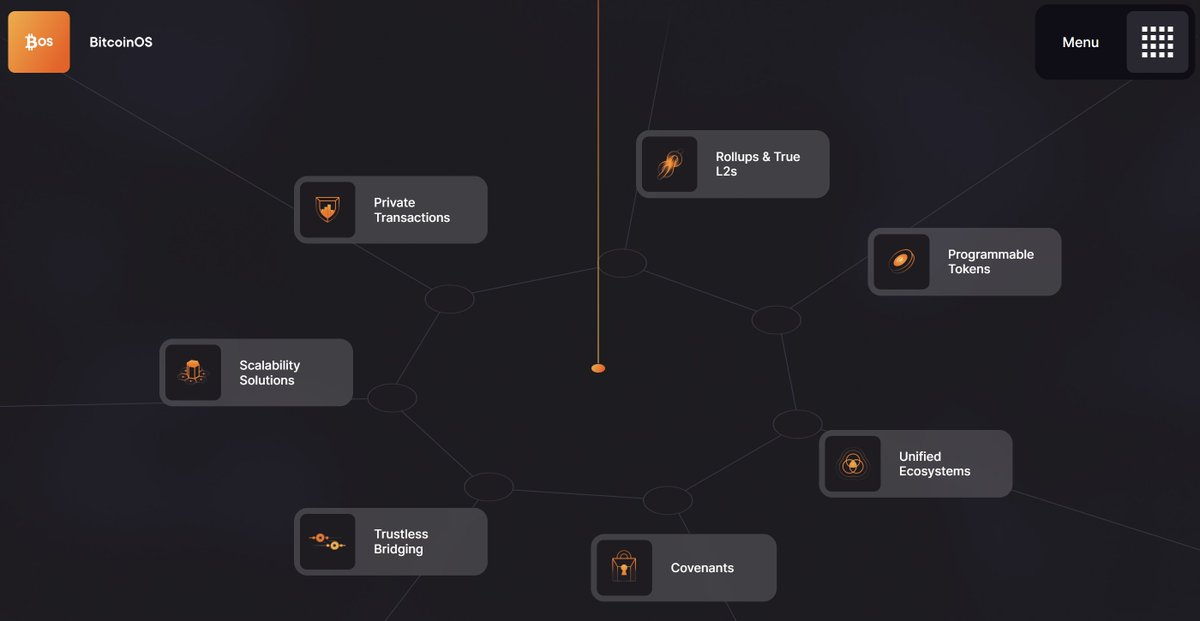
BitcoinOS uses a prover-verifier structure similar to BitVM, yet its documentation fails entirely to explain how verifiers will be decentralized. This deliberate omission is highly deceptive, implying that verifiers remain under centralized control.
Furthermore, the project claims to support "more advanced Rollups than Ethereum," but technically this goal is unachievable. Bitcoin’s lack of Turing completeness means that execution, sequencing, and verification for L2 must all occur off-chain. This necessarily requires a centralized sequencer or federation, exposing greater centralization risks.
Even more absurdly, BitcoinOS’s Rollup system needs to submit 400KB state proofs to the main chain every six blocks—occupying 10% of Bitcoin’s block capacity. This makes BitcoinOS an extremely slow and expensive data availability solution, unable to compete with others, rendering BTC-based DeFi not only fully centralized but also insecure. Shockingly, none of these details are mentioned in official documentation.
The So-Called "L2 Scaling" Is an Illusion
Many current Bitcoin (BTC) "DeFi" projects stem from the narrative of "Layer 2 scaling." Broadly speaking, L2/modular scaling attempts to expand a base layer’s (L1) functionality and performance by building additional layers on top.
However, this approach has almost never succeeded in practice. Offloading transaction volume to another competing chain does not truly scale the original chain; instead, it signals declining utility for the base chain, providing a convenient excuse for never needing to scale L1 itself.
Worse, this method often corrupts the incentive structures of the original chain’s leadership through the toxic influence of L2 tokens and equity. For example, Ethereum once dominated DeFi but has now been surpassed by Solana in terms of "real usage." This is no accident—it’s a structural consequence of the L2 narrative.

BTC’s L2 scaling plans could make mass self-custody impractical. Users who want to control their private keys still need multiple on-chain transactions to access L2s. Yet current on-chain capacity cannot support such large-scale operations.
For instance, if all holders wanted to move their coins today, the transaction queue would exceed two months; if everyone on Earth made just one transaction, the backlog would stretch beyond twenty years. This makes self-custody nearly impossible, forcing the public to rely on custodial services—completely undermining Bitcoin’s original purpose.

Why Bitcoin Will Not Change
Many still fantasize that Bitcoin might one day adapt to support DeFi functions. But deep political-economic analysis shows such a transformation is nearly impossible.
Bitcoin’s governance mechanism is exceptionally closed-off. The Bitcoin Core team can almost unilaterally block any protocol upgrade. For example, even moderate proposals like restoring OP_CAT have been blocked for years—let alone disruptive changes like introducing a Turing-complete VM. Therefore, expecting Bitcoin to support DeFi is simply unrealistic.

This Is a "Scam Cycle"
A "scam cycle" has formed around Bitcoin DeFi projects: every few years, a new wave emerges claiming to "bring DeFi to Bitcoin," often raising hundreds of millions from investors. But they quickly fade due to technical bottlenecks and model flaws. A few years later, new projects reappear—targeting a fresh batch of historically uninformed investors.
These projects exploit people’s fantasy that "Bitcoin can do DeFi too." But the reality is, Bitcoin’s protocol has seen almost no major technical changes in the past decade. Despite massive funding and resources poured into the space, DeFi remains unrealized—so it’s hard to believe the same codebase could suddenly achieve it today.
Bitcoin DeFi Is Just a Fantasy
Among all projects examined, Sovryn and BitcoinOS are the most controversial—making wildly exaggerated claims while concealing significant trade-offs and flaws. Rootstock, while still centralized, at least admits it. BitVM shows some innovation but still cannot overcome its efficiency and structural limitations.
Ironically, researching BTC’s L2 ecosystem only deepens appreciation for the transparency and self-criticism within Ethereum’s L2 space. Ethereum even has dedicated tools like "L2Beat" to track each L2’s risks and operational status—something nearly absent in the Bitcoin L2 world.
In conclusion, "Bitcoin DeFi" does not exist. It has neither native capability nor a realistic path to implementation. It is purely a collective delusion driven by greed, wishful thinking, and ignorance—much like the myth once surrounding Bitcoin itself. We don’t need to tolerate Bitcoin’s mediocrity and stagnation anymore. There is already a real DeFi economy on-chain, generating billions in annual revenue. Instead of chasing fantasies, let’s support the real crypto revolution.
Join TechFlow official community to stay tuned
Telegram:https://t.me/TechFlowDaily
X (Twitter):https://x.com/TechFlowPost
X (Twitter) EN:https://x.com/BlockFlow_News
 @cybercapital