








Financial Freedom and Neo-Feudalism
TechFlow Selected TechFlow Selected
Financial Freedom and Neo-Feudalism
You need to work hard to accumulate wealth and build your own small empire.
 Navigating Web3 tides with focused insights
Author: Tulip King
Translation: Block unicorn
Prologue
Content coins are scams, and they’ve brought it upon themselves. Decentralized finance (DeFi) isn't better than traditional finance (TradFi)—it's just different. Feudalism will replace the modern state.
Cryptocurrency Is Regulatory Arbitrage
Let’s be honest: if governments weren’t drowning in massive debt and insolvency, if the Federal Reserve hadn’t enriched the upper class through money printing, if governments hadn’t bailed out failing corporations, or if they actually cared about curbing inflation and raising wages—there would be no need for cryptocurrency. Bitcoin didn’t emerge from some divine mathematical revelation. Bitcoin was born out of disgust. Satoshi Nakamoto’s message in the genesis block wasn’t subtle: “Chancellor on brink of second bailout for banks.” This wasn’t a random headline—it was a deliberate provocation against a system that refused to let creative destruction run its course after 2008.
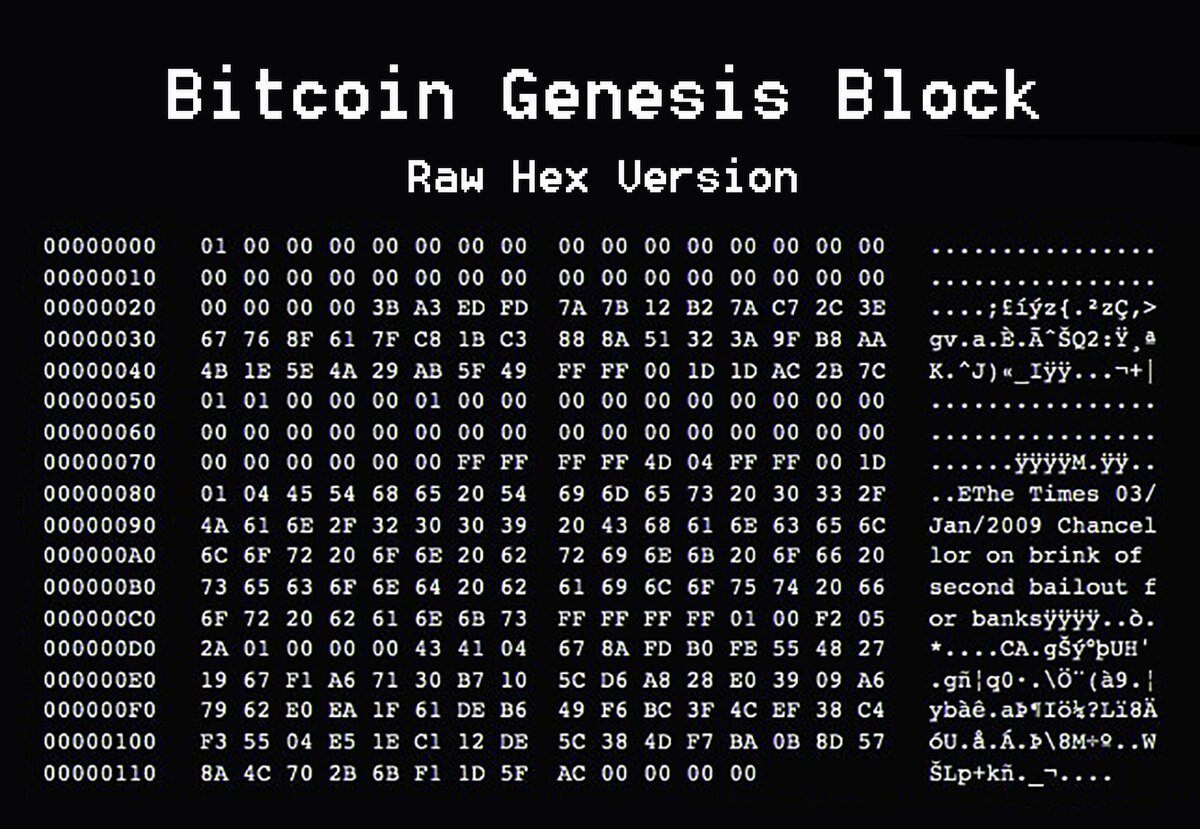
Bitcoin's genesis block and newspaper headline
There was a turning point where governments could have chosen to let the economy function on its own. They could have allowed banks and businesses to fail, embracing creative destruction. It would have been painful—but we’d be better off in the long run. Unfortunately, Baby Boomers lack any capacity for self-sacrifice. They’re determined to kick the can down the road until they’re all dead and it’s no longer their problem (fair enough—I might do the same).
The crypto ecosystem didn’t invent new finance; it invented a new platform. By moving familiar services—payments, lending, market-making—into nominally “permissionless” code, projects exploited the vacuum left by the over-regulated landscape post-2008.
Look at DeFi: it primarily re-creates traditional financial services without compliance costs. Lending? See Compound or Aave. Options and derivatives? Check dYdX or Synthetix. Exchanges? Uniswap is merely a market maker with better UX and no KYC. The innovation isn’t in the service—it’s in delivering these services permissionlessly.
Unless mainstream regulation becomes more adaptive, this cat-and-mouse game of arbitrage-driven innovation will continue. We aren’t revolutionizing finance. We’re simply relocating it to a jurisdiction with fewer cops.
Not Better, Just Different
You must view economics, politics, and technology as dynamic, responsive systems. They are all fundamentally the same thing—human coordination mechanisms constantly evolving to address immediate survival threats. Human societies continuously rewrite their "rules of the game" to solve the most pressing problems of the moment. Therefore, ranking any system by a single standard is meaningless.
History lesson:
Feudalism: Emerged during the decline of the Roman Empire, when Europe lacked standing armies or reliable roads. By pledging land to soldiers, lords quickly established small-scale defense networks against Viking and Magyar raids, offering peasants protection that distant monarchs couldn’t provide. This wasn’t “primitive”—it was a rational response to fragmentation and insecurity.
Absolute monarchy: Rose in the 17th century to fund the enormous costs of standing artillery and musket units. By centralizing tax and judicial powers, the “fiscal-military state” could rapidly mobilize revenue and manpower sufficient to survive great power wars. Kings weren’t “evil”—they were the solution to the problem of increasingly expensive warfare.
Mass democracy: Developed to govern industrial societies. Industrialization concentrated educated workers in cities and expanded wealth. Broader suffrage made taxation, conscription, and public education politically sustainable under these new social pressures. Democracy wasn’t “progressive”—it was an adaptation.

Evolution of political systems and their core challenges
Because threats, technologies, and social norms constantly change, the “correct” political order also shifts. The system that protected farmland in 1000 AD or funded armies in 1700 AD could never manage railroads and factories in 1900 AD. Judging these systems outside their original context is like asking whether a plow or a microchip is the “better” tool—it entirely depends on the task at hand. This means cryptocurrency isn’t better than our current financial system; it’s just different, and hopefully better suited to our era.
I’m almost a full-blown crypto fanatic. I believe cryptocurrency fits our current economic/political/technological environment better than any other solution. We will ultimately prevail. But it’s unrealistic to assume crypto won’t create as many problems as it solves. You can—and should—expect these issues to intensify over the coming centuries until the world is transformed once again.
Unintended Consequences
It turns out that when you give people access to permissionless capital markets, the first thing they do is scam each other. Both hilarious and tragic. The real consequences of cryptocurrency have emerged—and not all of them are good:
Theft and hacking: In 2022 alone, North Korea’s Lazarus Group stole around $1.7 billion in cryptocurrency. Think about it—a nuclear-armed rogue state funding its weapons program by hacking your DeFi protocol. In traditional finance, there are at least mechanisms to freeze accounts and recover stolen funds. In crypto? Haha, the money’s gone. “Code is law” sounds great—until someone exploits a bug in your code and instantly drains your life savings.
Funds lost: Self-custody means being your own bank, which sounds empowering—until you realize most people are terrible at being banks. Approximately 20% of all bitcoins are permanently lost due to forgotten private keys, misplaced passwords, or transfers to wrong addresses. No customer service, no refunds, no FDIC insurance. Only permanent, irreversible loss. Your funds aren’t “safe”—they’re one hardware failure or mental lapse away from vanishing forever.
Hyper-financialization: We’re rapidly assigning price data to everything. People are tokenizing themselves—literally minting personal tokens tied to their reputation or output. Soon, your Twitter followers, personal brand, and even your relationships might have trading pairs and order books. Imagine how it feels when your human worth is publicly priced for speculation. What happens when a bad take causes your personal “stock” to crash 40%? When your value as a person fluctuates like a meme coin?
These aren’t bugs—they’re features. The permissionlessness that frees you from government control also frees scammers from punishment. The self-custody that liberates you from banks also burdens you with unbearable security responsibilities. The tokenization that enables new financing models also commodifies human existence.
The edges of freedom are sharp. Many who shout “liberation” don’t know what to do once they’re free.
Neo-Feudalism
You need to consider what it truly means if Bitcoin (and crypto) succeeds. It means we fully move money and markets beyond the regulatory reach of the nation-state. Literal separation of money and state. This will reshape society on a scale comparable to the separation of church and state. The modern state depends so heavily on monetary control that losing it would inevitably lead to total collapse.
Without control over money, states lose their primary levers of power:
-
They cannot effectively collect taxes
-
They cannot control monetary policy
-
They cannot impose financial sanctions
-
They cannot fund social programs or militaries
What fills this power vacuum? I envision the modern state being replaced by something resembling feudalism. Let’s call it neo-feudalism. Neo-feudal societies will operate through patronage networks, with crypto magnates sitting atop small personal empires (I’m not joking).

Studying patronage systems in feudal societies
This isn’t radical theory—it’s already taking shape. Look at how major protocols operate. Largest token holders wield disproportionate influence over governance. Whales can single-handedly determine the fate of proposals. Founders are revered almost religiously. Discord servers have strict hierarchies from “OGs” to newcomers.
Combine this with Balaji Srinivasan’s concept of the “network state”—essentially cloud communities with their own currency, governance, and possibly even physical territory. These aren’t “states” in the traditional sense. They’re digital fiefdoms with charismatic leaders, loyal followers, and sources of wealth and power operating outside conventional jurisdictions.
When money exists within neutral protocols rather than under state control, power concentrates in the hands of those who control capital—not elected officials. Crypto billionaires will become the new feudal lords, offering protection, opportunity, and resources to those who join their networks. They won’t call themselves “lords”—they’ll be founders, thought leaders, or protocol governors. But this dynamic will look eerily familiar to medieval historians.
Think I’m exaggerating? We’ve already seen crypto figures rescue entire protocols, launch personal venture funds larger than some countries’ GDPs, and amass legions of devoted followers. Fragments of neo-feudalism are already forming: concentrated wealth, personal loyalty networks, privatized security and governance, and weakening state authority.
This system may be more meritocratic and fluid than old-school feudalism. You can “swear allegiance” to different network states with just a few clicks, rather than being born a serf. But the fundamental power dynamics—the strong capital holders providing security and opportunity to loyal network participants—will be strikingly medieval in character.
Final Recommendations
My advice remains consistent. In a crypto-dominated world where individuals are empowered beyond today’s oversized nation-states, you must become an exceptional individual. You must work relentlessly to accumulate wealth and build your own small empire.
Specifically:
Maximize your skills and reputation. In the neo-feudal world, your value comes from what you can do, not your credentials or job title. Focus on becoming a top-tier expert in a field others need. Even in feudal times, skilled artisans, engineers, and strategists always found patrons. Build a verifiable, public reputation that follows you across networks.
Accumulate hard assets across systems. Don’t go all-in on the old world or the new. Hold Bitcoin as insurance against state collapse, but also own gold, productive land, and income-generating investments. During global reorganization, cross-system hedging is the safest strategy.
Actively build your network. Start cultivating your own “micro-empire” now. This could be a Discord community, a DAO, or simply a strong network of capable allies. In neo-feudalism, your security comes from your network. Lone wolves get eaten; strong networks thrive.
Develop self-sovereign skills. Learn operational security, best practices for self-custody, and independent living skills. Protection from large institutions may not last forever. Those who can manage their own security—digital and physical—will hold a massive advantage.
Position yourself near power. If you can’t be a lord, become a trusted advisor or deputy. In any political system, those closest to power benefit the most. Identify promising protocols, communities, or network states, and become an indispensable part of them early.
The fundamental truth is that the skills needed to prepare for neo-feudalism are the same ones required to succeed in crypto today: self-reliance, technical competence, network building, and capital accumulation.
Whether we end up in a true neo-feudal order or merely a more fragmented world of competing systems, those who anticipate this shift and position themselves accordingly will thrive. Those clinging to outdated assumptions about how wealth and power operate will struggle.
Crypto promises freedom from state constraints. It may indeed deliver that—along with all the responsibility, dangers, and power dynamics that come with real freedom. Be careful what you wish for.
Join TechFlow official community to stay tuned
Telegram:https://t.me/TechFlowDaily
X (Twitter):https://x.com/TechFlowPost
X (Twitter) EN:https://x.com/BlockFlow_News
 @mikeykremer






