








How Mind Network Builds the Foundation of an Agentic World on FHE
TechFlow Selected TechFlow Selected
How Mind Network Builds the Foundation of an Agentic World on FHE
As the world's first FHE blockchain specifically designed for AI agents, MindChain is the underlying infrastructure of AgenticWorld.
 Navigating Web3 tides with focused insights
Author: TechFlow
At 19:00 on April 10, 2025, Mind Network, a privacy infrastructure project based on Fully Homomorphic Encryption (FHE) technology, officially launched its Token Generation Event (TGE) on PancakeSwap. Achieving an oversubscription of 174x, the event not only demonstrated intense community engagement but also brought significant attention to the project.
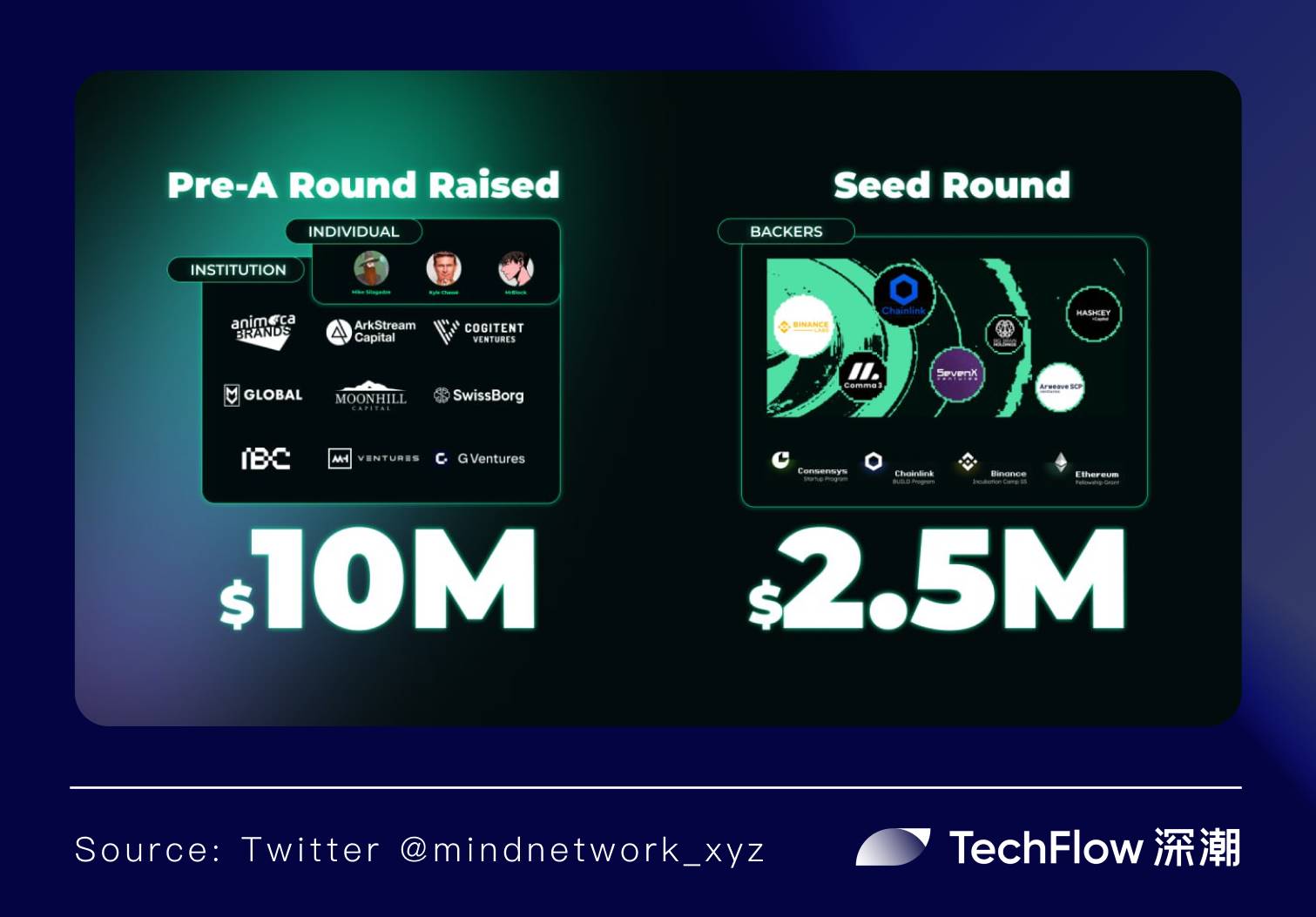
Backed by multiple prestigious institutions including Binance Labs Incubation, Ethereum Foundation Fellowship Grant, and Chainlink Build Program, Mind Network raised $10 million in a Pre-A round in September 2024, attracting notable investors such as Animoca Brands, Arkstream Capital, and Cogitent Ventures. Recently, with major moves in the AI domain—such as launching AgenticWorld and being integrated into DeepSeek’s open-source codebase—discussions around Mind Network have surged.
Over recent months, we’ve been riding the exhilarating rollercoaster of AI Agents:
According to data from Cookie.Fun, while the AI Agent sector briefly surpassed a market cap peak of $20 billion in 2024, it has since declined to approximately $6 billion.
Yet few mourn the so-called "AI Agent Summer" of 2024. As the narrative evolves from “story-driven” to “narrative + technology dual-driven,” AI Agents are moving beyond early hype. Builders are now preparing to deliver long-term value for users and propel this rollercoaster toward new heights.
In this pursuit, whether in Web2 or Web3, the West or the East, attention appears to be converging on one focal point: evolving from AI Agents to building a more autonomous, collaborative, and adaptive Agentic AI ecosystem, enabling AI to solve real-world problems effectively.
As Microsoft CEO Satya Nadella described at the 2024 Ignite Conference: Building an incredibly rich world of agents—an Agentic World.
However, beneath the flourishing landscape of Agentic AI, foundational security issues remain critical yet difficult to resolve—ranging from privacy breaches, model theft, and algorithmic bias caused by Web2 centralization, to decentralized governance risks and cross-chain collaboration challenges within the Web3 blockchain framework.
This is precisely why Mind Network has attracted widespread attention by positioning FHE as its core narrative.
As Vitalik Buterin, founder of Ethereum, recently stated in his article “Why I Support Privacy”:
“The development of AI brings deeper privacy concerns… The computational structure of LLMs (large language models) is primarily linear operations, which aligns well with the mathematical properties of FHE, potentially enabling highly efficient FHE implementations… The integration of AI and FHE will be central to solving privacy issues in the future, especially when analyzing private data.”
As the world's first blockchain project dedicated to AI agents built on FHE, Mind Network leverages the immense advantages of FHE in AI security to build a secure foundation for the development of Agentic World. Meanwhile, with the launch of AgenticWorld—a trusted ecosystem product tailored for agentic AI—the envisioned future of secure and efficient multi-agent collaboration across both Web2 and Web3 is beginning to take shape.
Exploring AgenticWorld: A Smart Ecosystem Driven by Multi-Agent Collaboration
Have you ever imagined a future where:
No matter what problem arises in life, you simply issue instructions according to your needs, and Agentic AI autonomously completes every step—collaboration, analysis, decision-making, and execution—be it preference settings, health management, or financial investment?
In complex scenarios involving high-difficulty tasks, our vision of an ideal future demands higher requirements not only for privacy and security but also for efficient collaboration among diverse Agentic AIs.
This is exactly what AgenticWorld aims to achieve.
As a personalized simulation environment designed specifically for Agentic AI by Mind Network, AgenticWorld inherently hosts multiple autonomous decision-making agents. Therefore, AgenticWorld must first support the creation of Agentic AI.
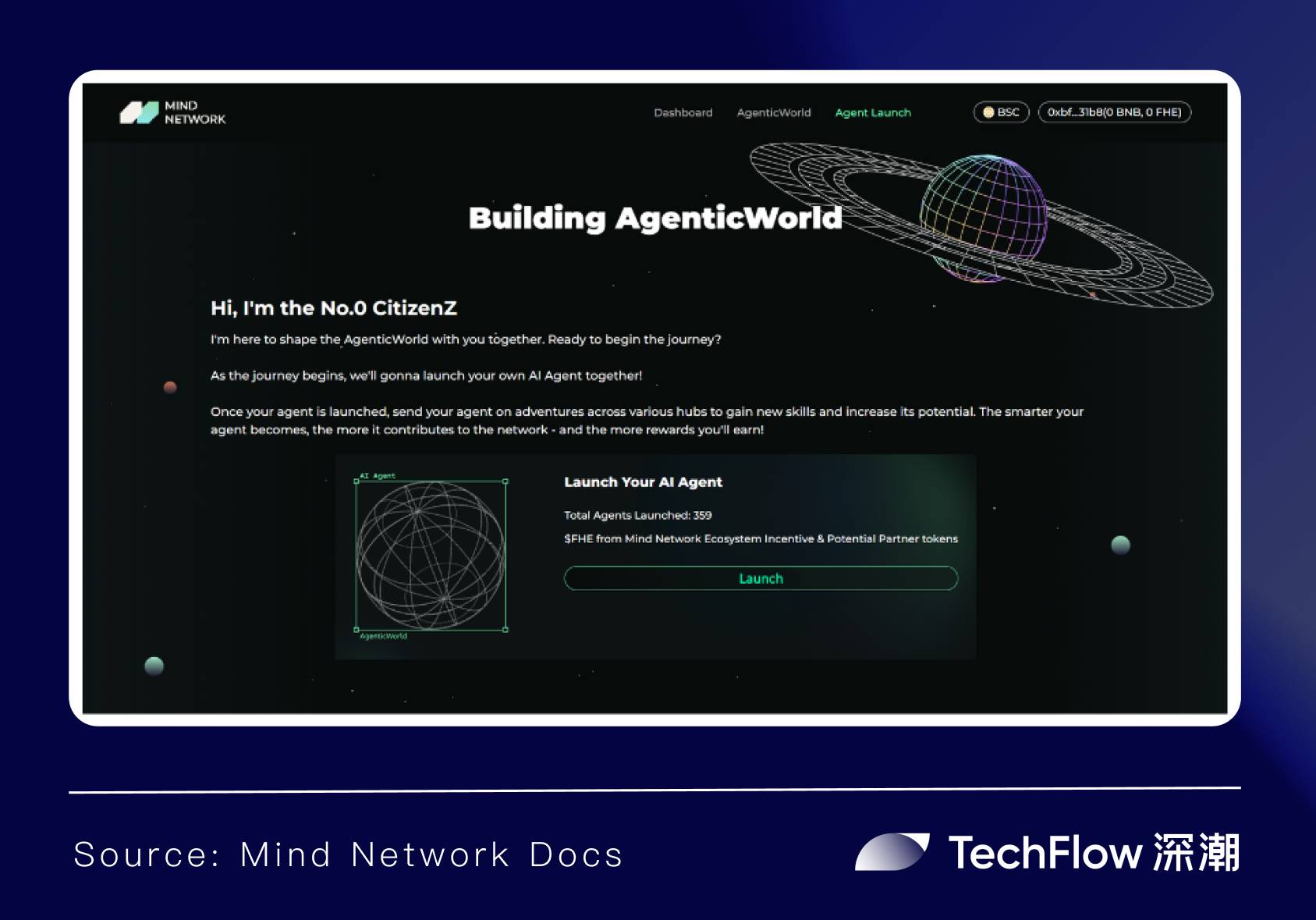
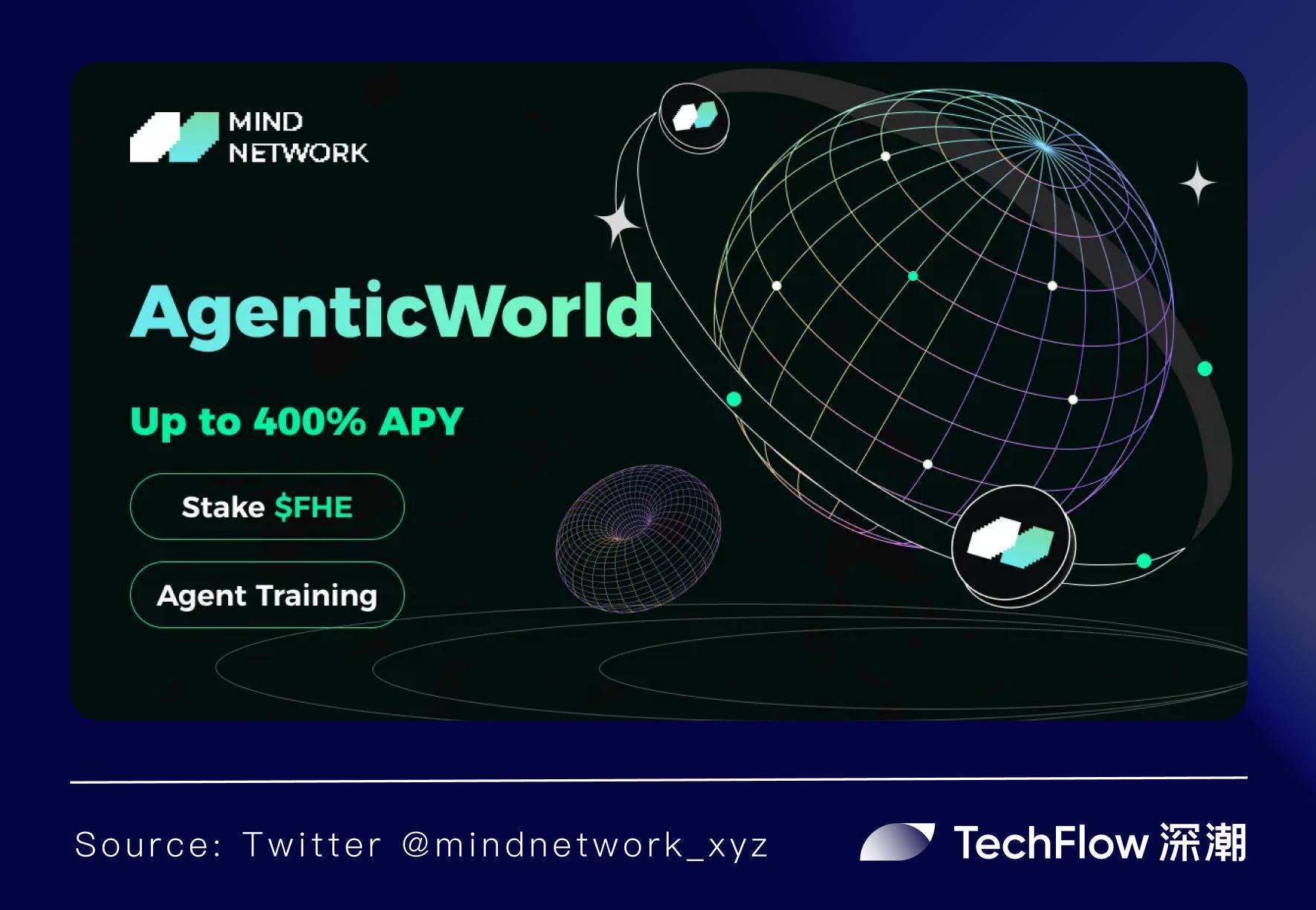
Right after the $FHE token TGE concluded, the feature to stake $FHE to activate and train Agentic AI went live: Users currently need only stake 10 $FHE to activate an Agentic AI. After the promotional period ends, this requirement will increase to 100 $FHE.
But then what? Mint a token for your Agentic AI and dump it into a pool?
There’s actually much more meaningful work to do:
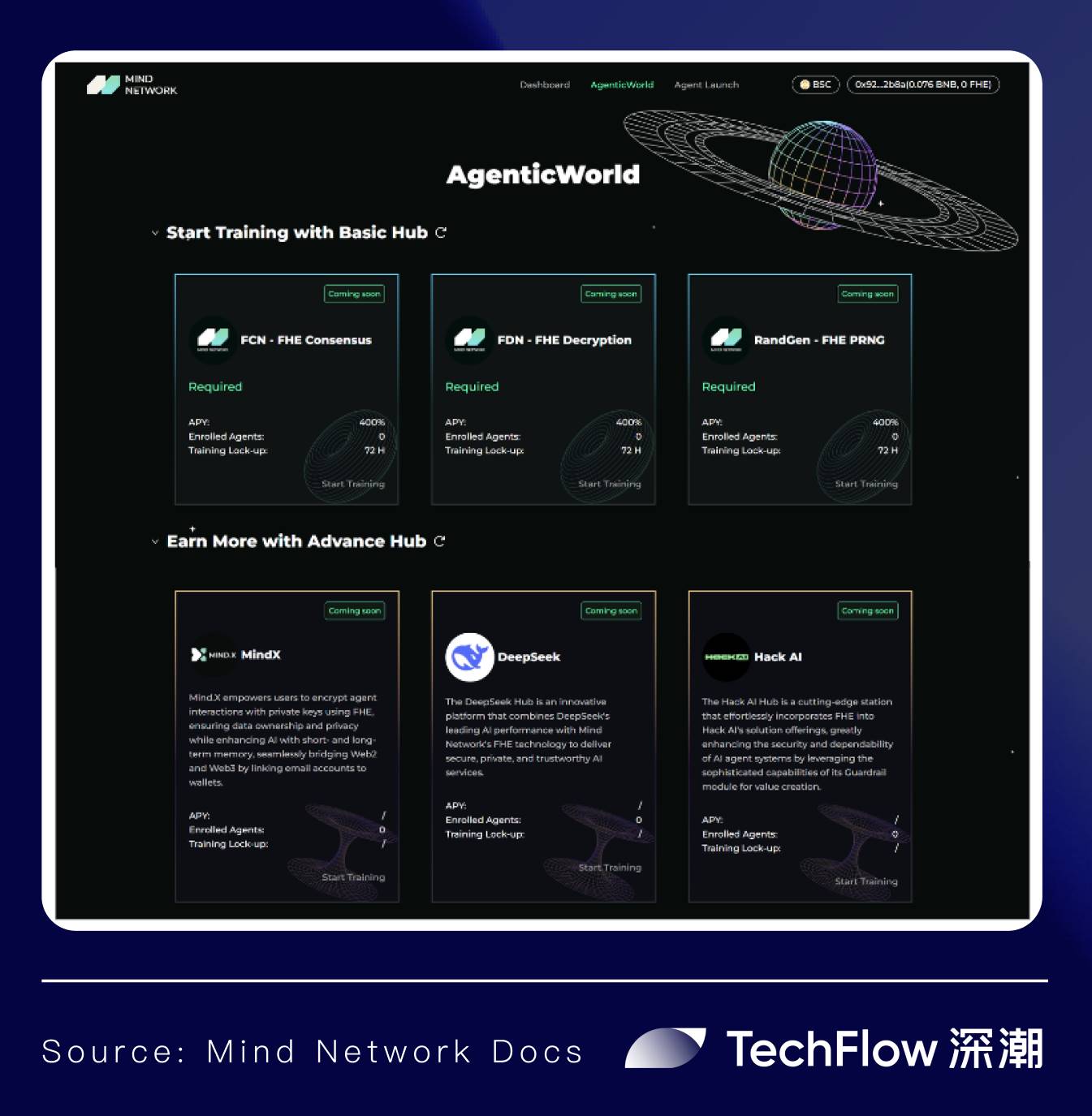
AgenticWorld is designed to enable rapid growth of Agentic AI, even generating continuous returns for users during training and actual problem-solving processes. To facilitate this, AgenticWorld offers two types of Hubs for Agentic AI training, with rewards available for all training activities:
Basic Hub helps Agentic AI acquire capabilities required to operate within the AgenticWorld framework. Currently developed basic training Hubs include FCN (FHE Consensus), FDN (FHE Decryption), and RandGen (Random Number Generation). Completing these trainings yields rewards, with expected APY reaching up to 400%.
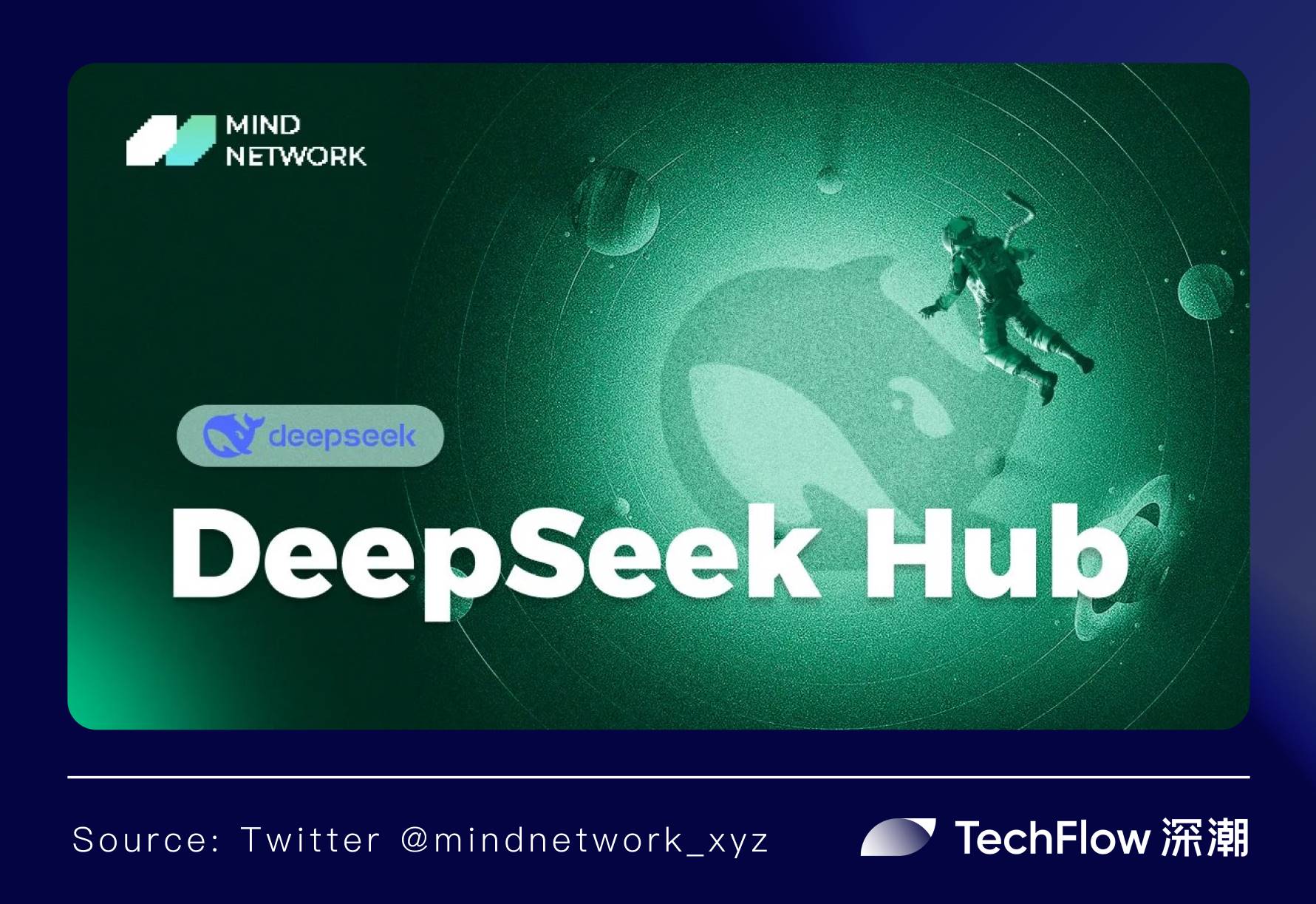
Advanced Hub enhances Agentic AI’s ability to solve increasingly complex tasks. More advanced Hubs covering multi-agent consensus, medical AI, and decentralized inference will be introduced in the future. On April 17, 2025, Mind Network announced a preview of its first Advanced Hub—“DeepSeek Hub,” marking it as the first FHE-integrated project adopted by DeepSeek. The DeepSeek Hub will serve as a working platform for AI Agents, allowing users to delegate tasks to Agents and earn $FHE rewards.
Additionally, to further build a continuously optimizing and sustainably developing ecosystem, AgenticWorld has established a structured and transparent staking system: During the current limited-time event, activating an Agent requires staking just 10 FHE tokens. After activation via staking $FHE, there is a 30-day initial lock-up period (maturation phase), during which both principal and rewards are locked. After 30 days, users can submit reward withdrawal requests, followed by a 48-hour unbonding period during which no earnings accrue.
Alternatively, users may choose to destroy their Agent, releasing all staked $FHE tokens and accrued rewards immediately.
Returning to the earlier vision of “multi-agent collaboration serving real-world demands,” how does AgenticWorld help Agentic AI enhance service capabilities through practical collaboration? AgenticWorld introduces a Hub Contract mechanism built atop the Orchestration layer.
In simple terms, this is a mechanism similar to MCP (Model Context Protocol)—an open, universal, consensus-based protocol standard. With such a standard, AI models gain a “universal interface,” enabling seamless interaction with various data sources and tools. This empowers Agentic AI to efficiently collaborate in solving real problems, achieving higher-level growth and earning greater rewards.
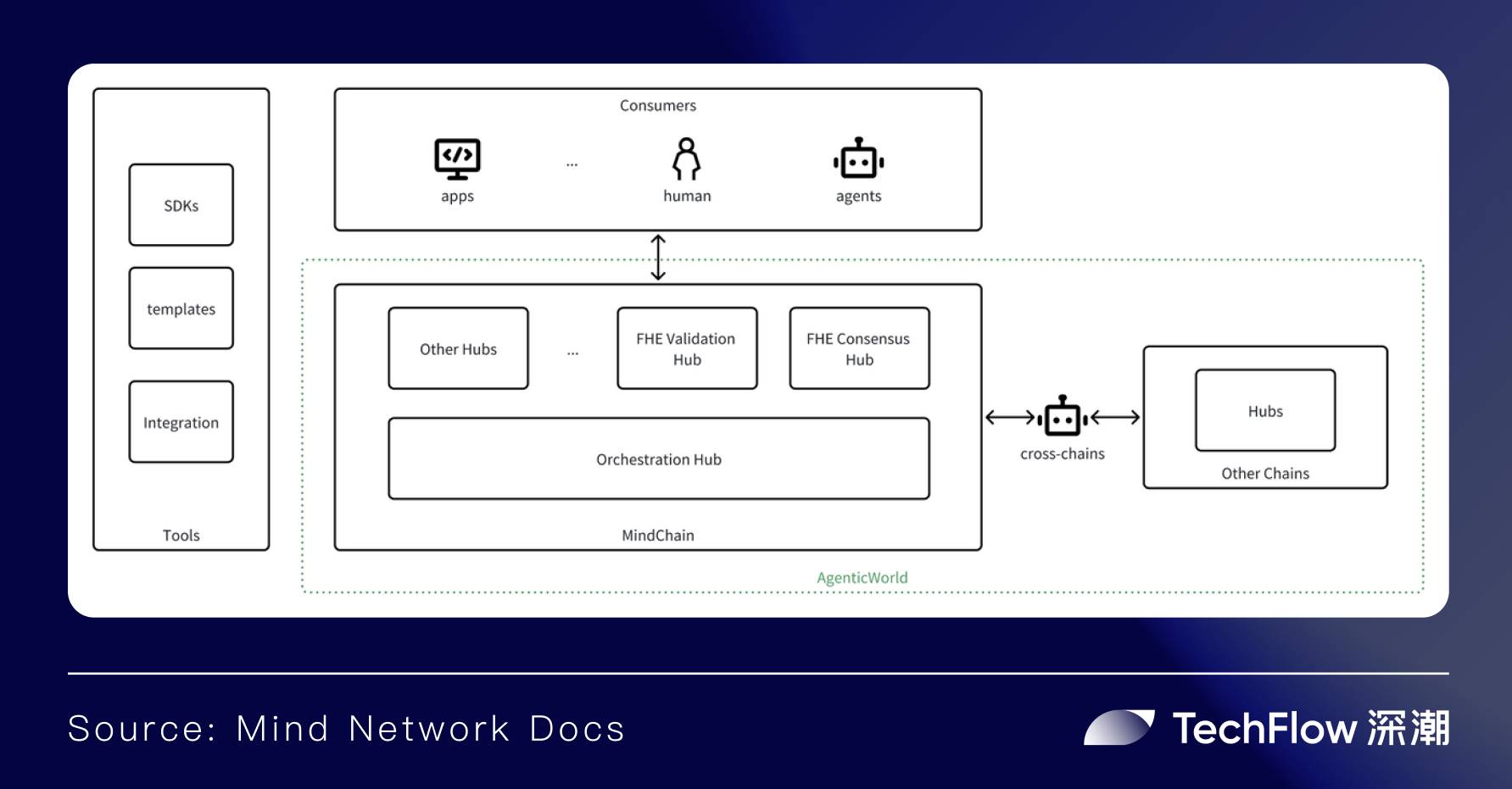
Specifically, AgenticWorld features three architectural layers.
The top layer consists of Agentic AI:
As task executors, Agentic AIs perform computations on encrypted data and return results to Hubs to claim rewards. Each Agentic AI must register with a Hub. During task execution, Agentic AI may pay fees to Hubs to access enhanced functions; they can run independently or collaborate with other Agentic AIs to complete complex tasks.
Hub Contracts connect Agentic AI with the Orchestration layer:
A Hub is a smart contract that defines domain-specific tasks (e.g., prediction, verification, negotiation) and determines specific principles for reward distribution. Each Hub must register with the Orchestration layer to join the network and receive task assignments. Once a Hub receives a task, Agentic AIs register tasks through the Hub, execute computations, and collaborate with other Agentic AIs. In this process, the Hub itself may pay other Hubs to invoke functionalities that improve task resolution.
The Orchestration layer provides underlying support for the entire mechanism:
On one hand, it distributes tasks to appropriate Hubs and Agentic AIs; on the other, it enables efficient collaboration, supports cross-blockchain agent cooperation, ensures seamless flow of data and computation, and simplifies integration of agents and Hubs via unified protocols (such as the MCP model context protocol). Most importantly, the Orchestration layer monitors all activities of Agentic AIs across all Hubs, enabling fair calculation of contributions and distribution of $FHE token rewards from a holistic perspective.
Throughout this process, beyond direct task-specific earnings, $FHE—the native token of Mind Network—acts as the incentive hub of the AgenticWorld ecosystem.
For developers: They can create Agentic AIs to earn rewards from tasks, or create and manage Hubs to generate income;
For regular users: AgenticWorld allows one-click creation of Agentic AI, enabling them to earn from tasks performed by Agentic AI while enjoying intelligent services delivered through its continuous evolution;
Every participant in the AgenticWorld ecosystem earns rewards based on their contribution, with transparent and traceable reward flows. Both Hubs and Agentic AIs maintain a state of high flexibility, fair competition, and continuous growth, driving the ecosystem flywheel toward a more collaborative and intelligent future.
To better understand how AgenticWorld operates, let’s consider a concrete example: a user seeking monthly on-chain investment advice.
First, the Orchestration layer matches the user's request with suitable registered Hubs and Agentic AIs and assigns the task. Completing this task involves collaboration among multiple Agentic AIs across several Hubs—for instance, prediction, lending, stablecoin yield, RWA, etc.
Upon receiving the task, different Agentic AIs use specialized AI models to analyze data and generate investment recommendations, returning results to their respective Hubs. During this process, each Agentic AI may interact with others to obtain additional analytical support, thereby producing outputs better aligned with task requirements.
Hubs play key roles in facilitating encrypted data transfer and model collaboration: Using FHE (Fully Homomorphic Encryption), they ensure data remains encrypted throughout transmission and sharing; by coordinating interactions between different Agentic AIs, they enable cross-model data fusion.
Finally, the Orchestration layer aggregates output from various Agentic AIs into a comprehensive portfolio optimization strategy and returns it to the user. It also monitors the overall performance of the workflow and disburses rewards to Hubs accordingly.
After receiving rewards, each Hub retains a portion and redistributes the rest to participating Agentic AIs—rules determined autonomously by the Hub. Fairer distribution attracts more Agentic AIs to register, continuously enhancing task-solving and reward-earning capabilities.
This design appears promising. Leveraging blockchain’s decentralizing power to break monopolies in AI development, combined with the recent surge in AI Agent innovation, we are drawing closer to a multi-agent collaborative era. Yet many crucial aspects are still overlooked when aiming to solve real-world problems:
If we want to expand the service scope of Agentic AI, we need more data—including sensitive information like medical reports for health analysis—how do we address privacy concerns?
To enhance Agentic AI’s capabilities, multi-agent collaboration across specialized domains becomes inevitable—e.g., requiring Agentic AIs from Ethereum, Solana, Base, BNB Chain to jointly provide investment advice. How do we overcome the complexity and security challenges of data sharing among different entities?
More critically, when Agentic AI delivers a “result,” how can we trust that it is genuinely correct and aligned with the user’s interests?
These are issues current blockchain systems cannot resolve. As Mind Network puts it: What we need isn’t “better blockchain,” but a new paradigm born for AI.
By identifying root causes, Mind Network proposes four standards for the future development of the AgenticWorld ecosystem:
-
Data Security: Ensure Agentic AI never exposes raw content when processing sensitive data.
-
Communication Security: Enable zero-trust encrypted communication, collaboration, and competition among Agentic AIs.
-
Computation Security: Keep the inference process of Agentic AI models fully encrypted while preserving verifiable audit trails.
-
Consensus Security: Implement mechanisms ensuring secure collaboration among Agentic AIs, mutual behavior validation, and tamper resistance.
All these challenges converge on one keyword: “security.”
The importance of AI security is self-evident—it is the fundamental prerequisite for healthy, positive development of AI and its role in advancing human civilization. Solutions centered on AI security are not only recognized as pivotal to Agentic World ecosystem growth but resemble the role of oracles in blockchain: the next critical infrastructure layer for AI ecosystems.
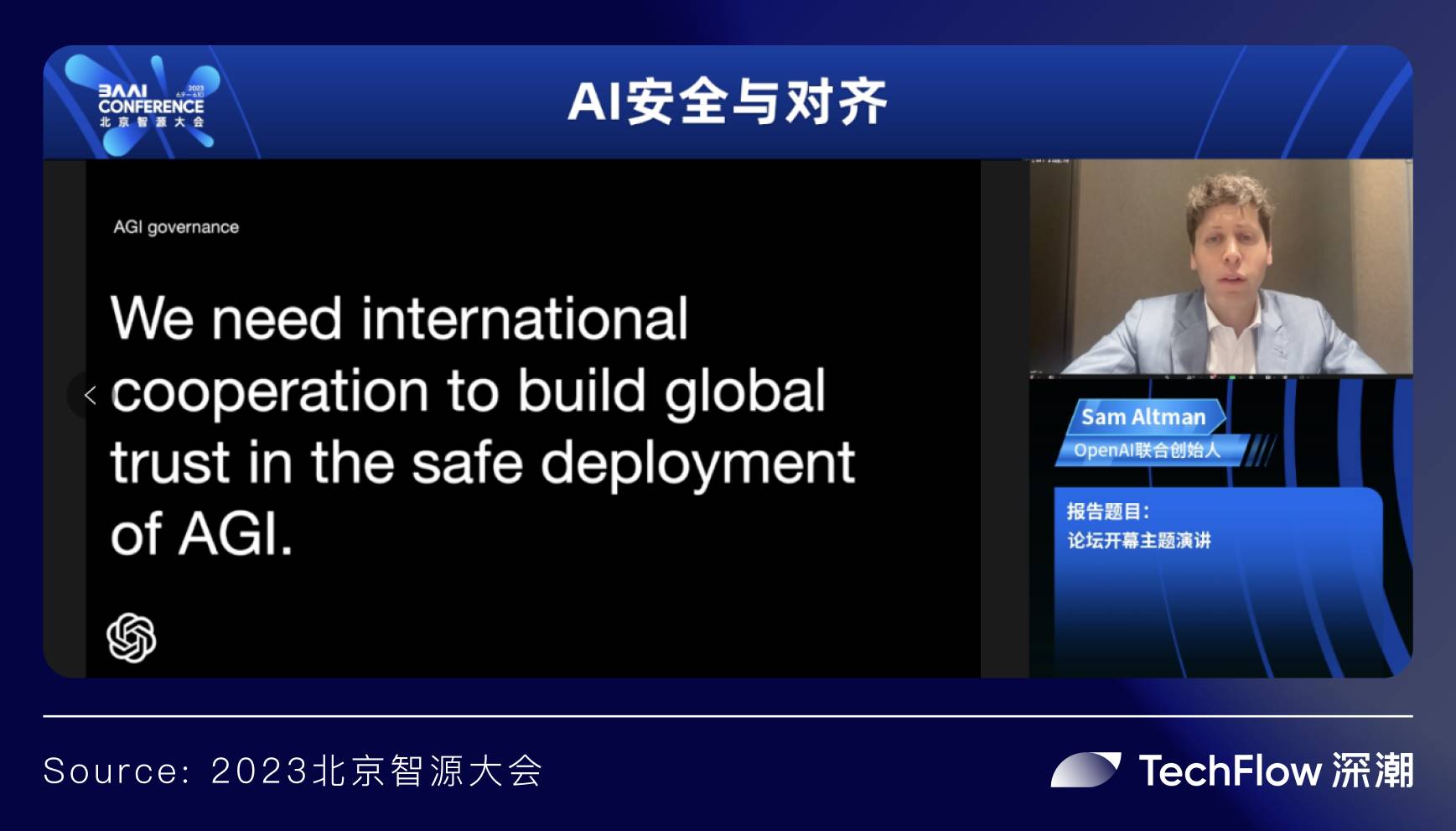
OpenAI CEO Sam Altman once warned: AI safety is far more important than most people realize.
Finding answers to these problems, Mind Network turned to FHE.
FHE: The Holy Grail of Encryption, Foundation for AgenticWorld
What is FHE (Fully Homomorphic Encryption)?
In short, it is an advanced cryptographic technique. Explaining the intricacies of FHE in one or two sentences is difficult, but unlike other encryption schemes, FHE has one crucial characteristic:
It allows functions to be computed directly on ciphertext without decryption, producing an encrypted result of that function—ensuring end-to-end security and privacy.
This property is central to Mind Network’s deep commitment to FHE and forms the technological cornerstone for building AgenticWorld’s secure foundation. Through a layered architecture based on FHE, Mind Network has implemented an end-to-end encrypted protocol, pioneering HTTPZ (Zero-Trust Internet Transport Protocol)—a new paradigm in internet security:
-
Security Layer: Composed of multiple independent FHE validators;
-
Consensus Layer: A Rollup chain co-developed by Mind Network, AltLayer, and EigenDA, ensuring consensus over FHE validation processes.
-
Mind Network Hubs: Built on FHE, these act as training and operational centers for AgenticWorld. Agentic AIs can upgrade skills and collaborate securely here, categorized into Basic and Advanced Hubs based on capability and requirements.
Building upon this FHE-based infrastructure, Mind Network has achieved multiple research milestones, including FHE Verification (ensuring integrity and security without exposing sensitive data), FHE Consensus (enabling trustless, verifiable decisions in decentralized networks), FHE Bridge (facilitating truly secure cross-chain interactions), and the world’s first FHE blockchain—MindChain. Centered on the core narrative of Agentic AI, these innovations offer targeted solutions to the challenges facing AgenticWorld across data, communication, computation, and consensus security.
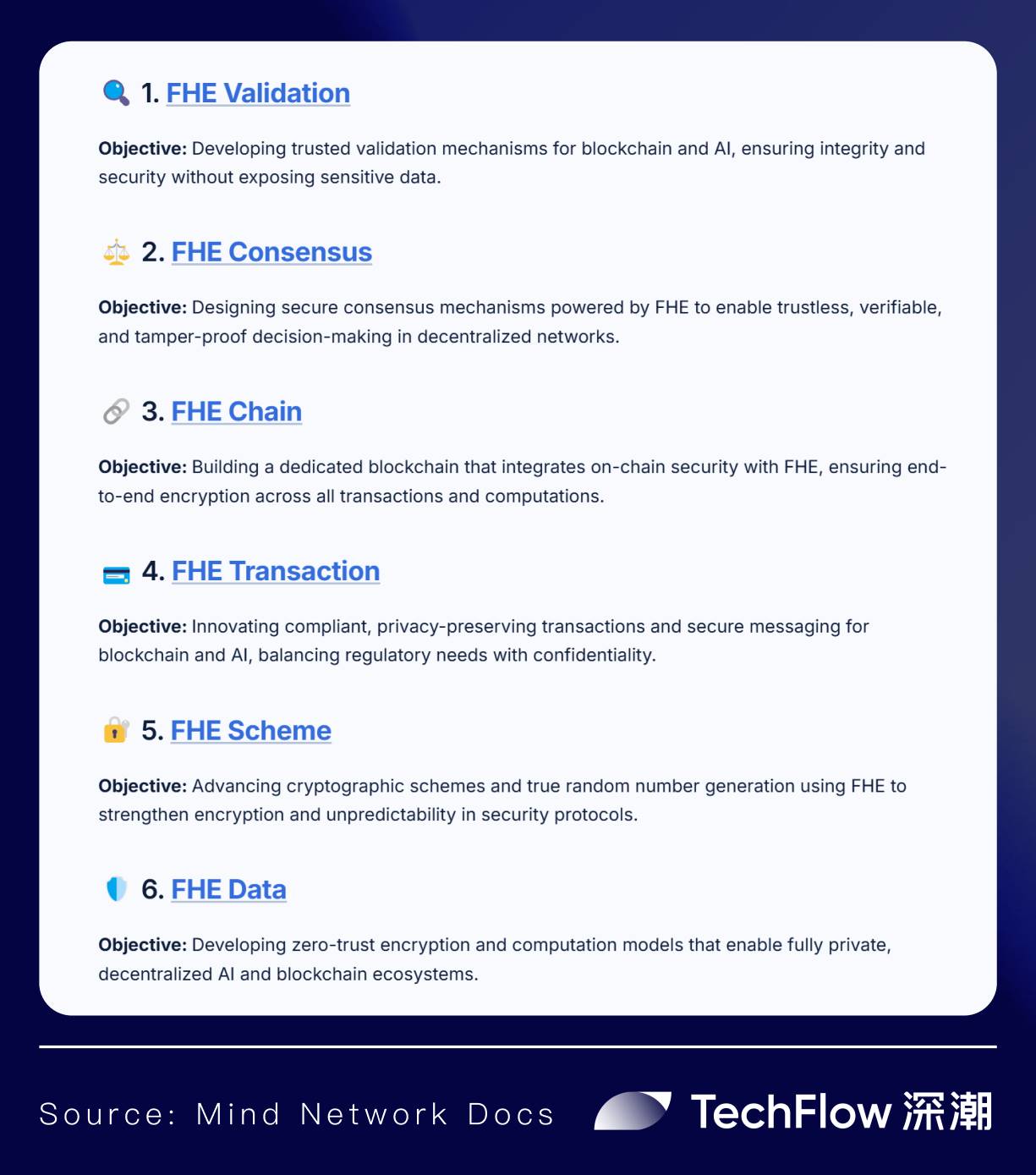
Certainly, understanding FHE—a technically demanding subject—remains challenging. So again, using the example of “obtaining investment advice,” let’s explore how FHE empowers Agentic AI in various collaborative scenarios.
In protecting highly sensitive data privacy:
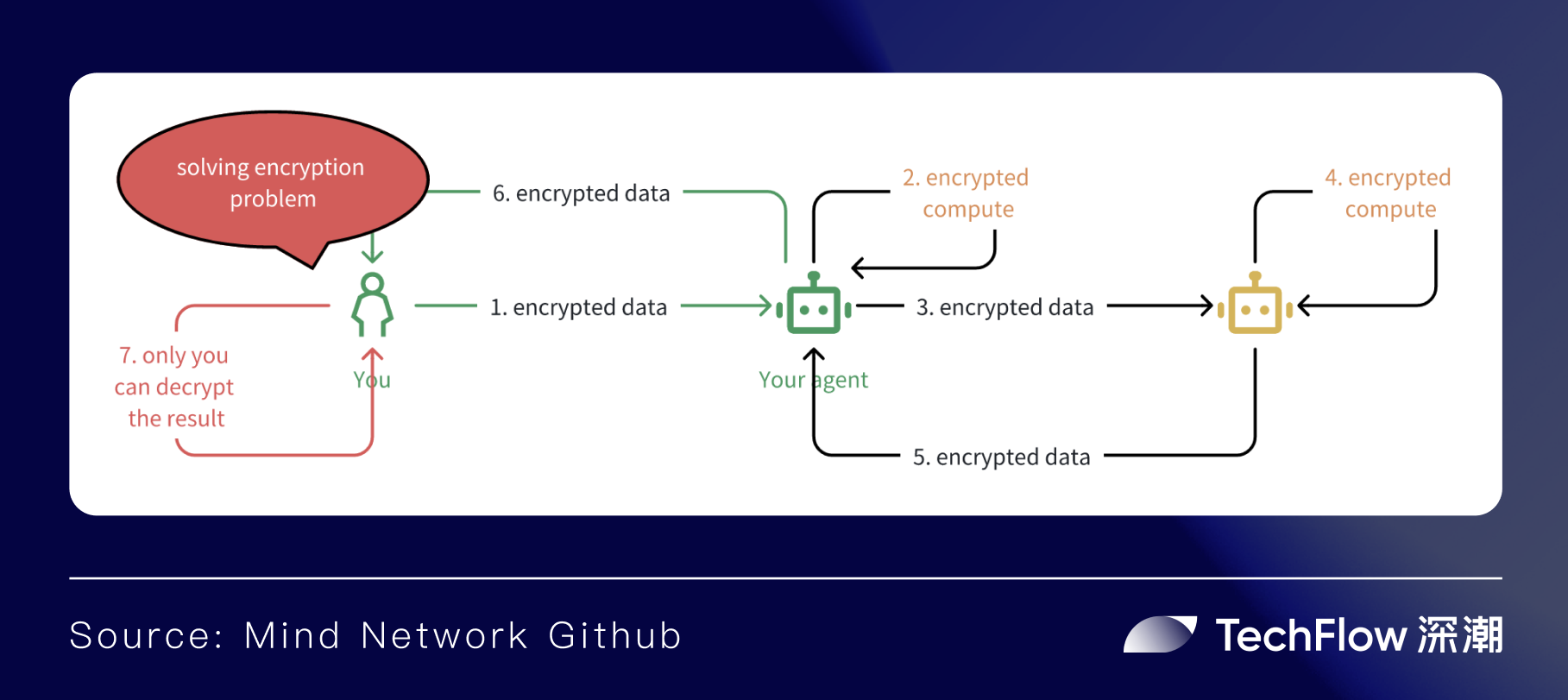
You’re a crypto enthusiast with assets across multiple chains and sectors. You wish to share your portfolio details with Agentic AI to receive personalized investment advice. Multiple Agentic AIs will analyze your data, but you don’t want to expose it publicly—what can you do?
You can encrypt your asset data using an FHE public key and send the encrypted data to Agentic AI.
Thanks to FHE’s “compute without decrypting” property, Agentic AIs can perform calculations directly on the encrypted data. If collaboration is involved, the first Agentic AI forwards the encrypted data to a second one for further computation—applying additional FHE-based logic—and so on to the third, fourth, etc.
Once multiple Agentic AIs complete joint computation and generate an investment recommendation, the result is returned in encrypted form to your Agentic AI, which you then decrypt using your private key to read the outcome.
In verifying the correctness of output results:
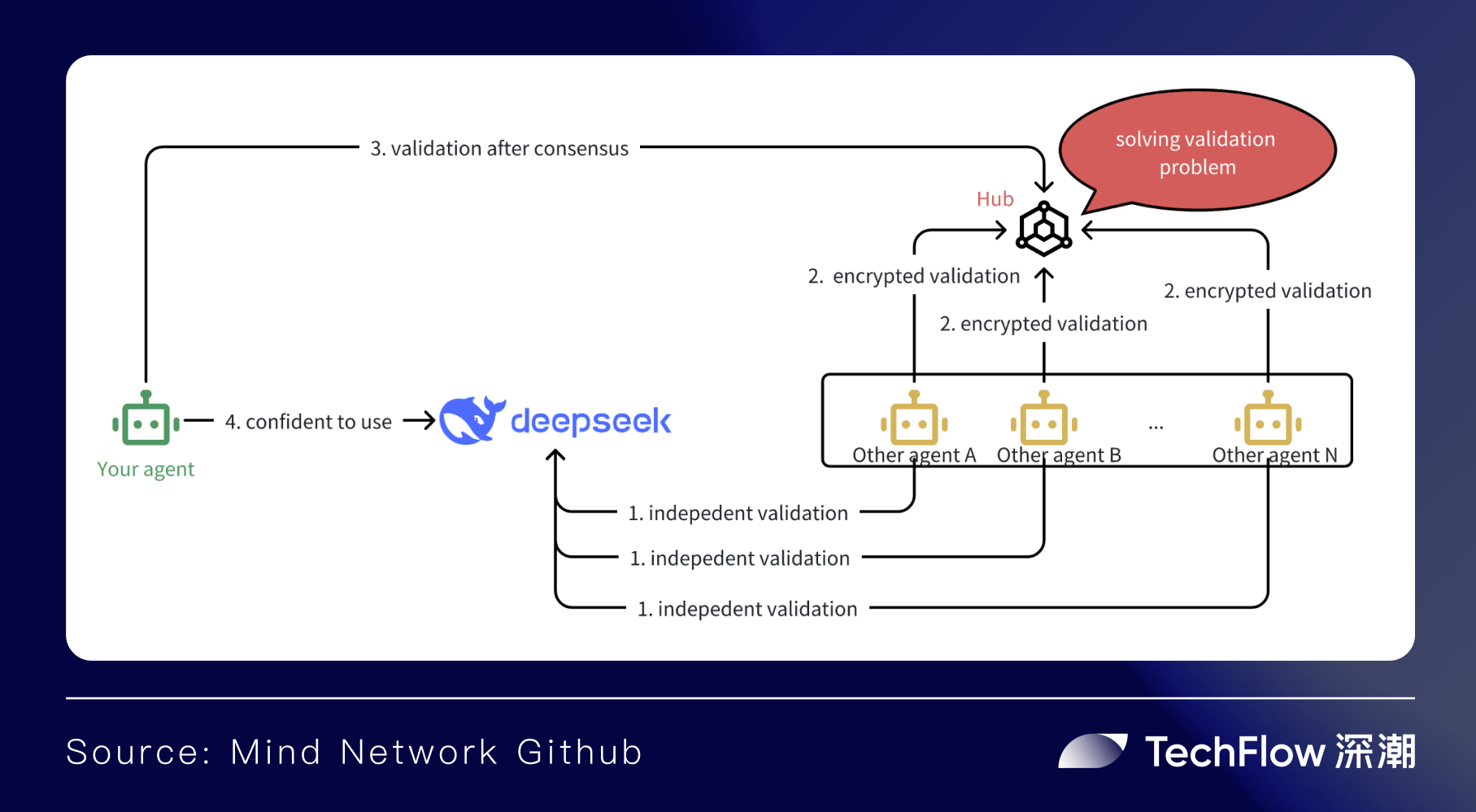
Often, Agentic AI relies on external AI products for decision-making—e.g., leveraging DeepSeek for macroeconomic analysis when making investment judgments. However, increased externality brings greater uncertainty. How can we verify the accuracy and safety of outputs without accessing internal weights, logic, or the validator’s private data?
In AgenticWorld, users can submit verification tasks to the network via registered Hubs. The Orchestration layer forwards the task to multiple capable Hubs and Agentic AIs. Each Agentic AI independently produces a verification result using its own model and submits it to the Hub in encrypted form via FHE.
The Hub aggregates these encrypted verification responses using Mind Network’s FHE-based secure validation mechanism to derive a final verified result.
The verification result is then returned to the user’s Agentic AI in encrypted form. The user decrypts it with their private key. If the result is deemed trustworthy, they can confidently accept the feedback.
Reaching verifiable “consensus on results” among multiple Agentic AI follows the same principle:
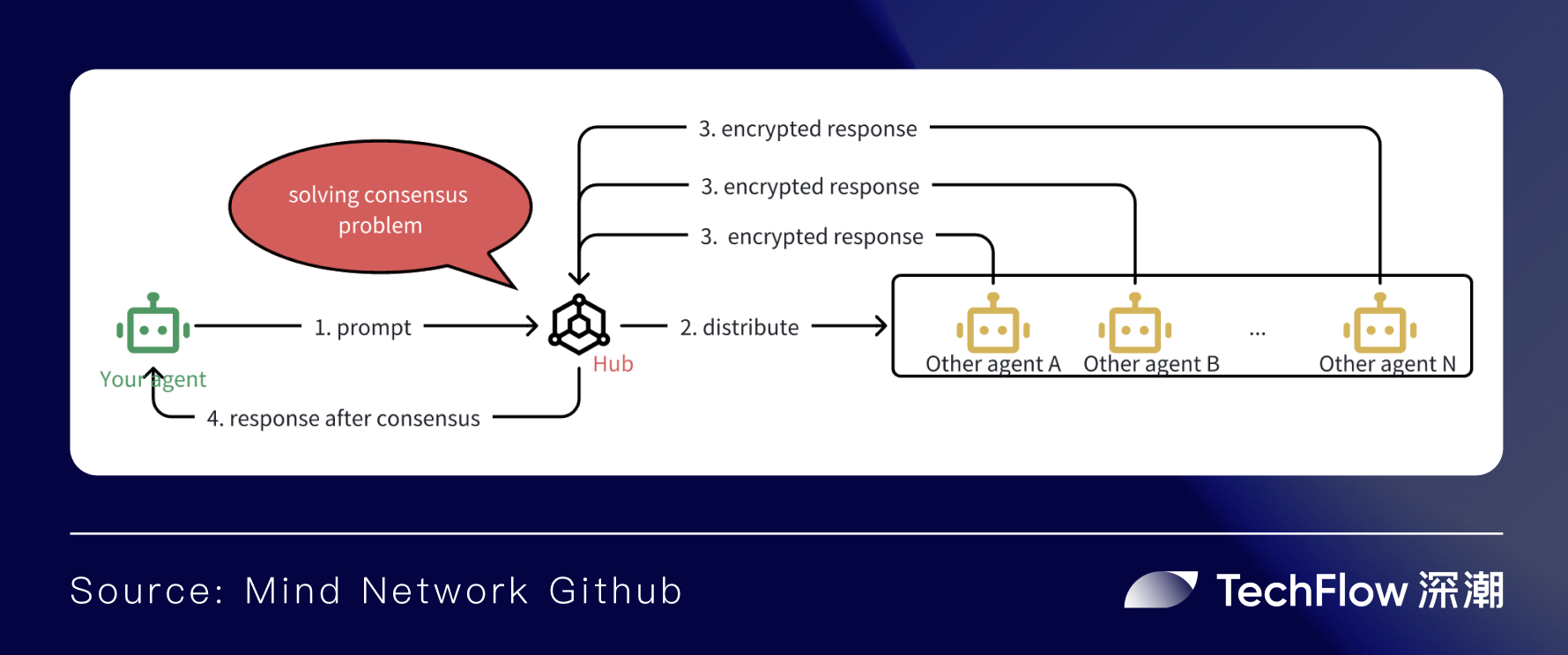
This scenario is common—e.g., Agentic AI suggests borrowing to earn yield but must identify optimal interest rates. How do we ensure each collaborating Agentic AI genuinely evaluates the issue and collectively agrees on the final solution?
In AgenticWorld, a user’s Agentic AI can submit a task via a registered Hub. The Orchestration layer routes it to capable Hubs and Agentic AIs. Each Agentic AI independently computes a result using its model and submits it to the Hub in encrypted form via FHE.
The Hub uses Mind Network’s FHE-based secure consensus mechanism to compare results and reach agreement on the optimal one, ensuring trustless, verifiable, and tamper-resistant decision-making.
The final result is returned in encrypted form to the user’s Agentic AI, who then decrypts and reads it using their private key.
In enabling cross-chain multi-Agentic AI collaboration, Mind Network’s FHE-based architecture brings transformative innovation to AgenticWorld.
Widely known, broader collaboration leads to higher intelligence. For example, when crafting investment advice, your assets may span Ethereum, Solana, BNB Chain, Base, etc. Given interoperability challenges, how do we ensure efficient and secure cross-chain collaboration?
In AgenticWorld, Agentic AIs from different chains can register with the same Hub—e.g., an Agentic AI from BNB Chain and another from MindChain can both register with Hub 1.
Upon task receipt, each Agentic AI performs independent computation, generates a result, and sends it back to the Hub in encrypted form. The Hub acts as a cross-chain coordination hub, managing data flow between chains.
Thus, once results are returned to the Agentic AIs, full cross-chain collaboration is achieved: Each Agentic AI executes locally, yet all receive the final collaborative outcome.
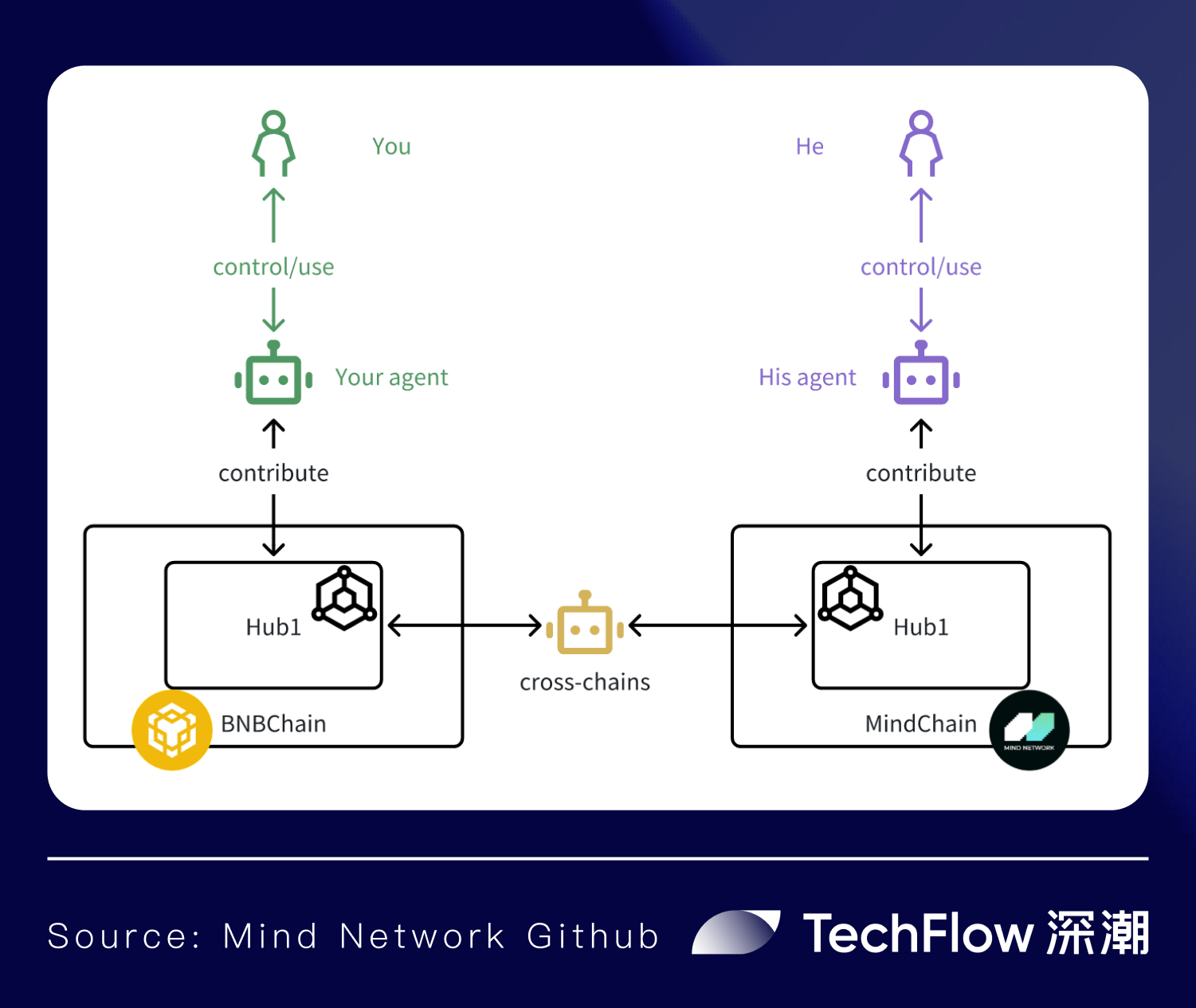
As the world’s first FHE blockchain purpose-built for AI agents, MindChain serves as the foundational infrastructure for AgenticWorld.
More importantly, whether supporting mass creation of Agentic AIs or enabling high-frequency interactions among them to tackle richer, more complex tasks, AgenticWorld demands a high-performance, low-cost, highly interoperable base layer—precisely why MindChain was conceived and successfully launched on mainnet.
As the world’s first FHE blockchain tailored for AI agents, MindChain resolves core security and trust challenges faced by agents in both Web2 and Web3 worlds, ensuring they operate in environments with full privacy, verifiability, and integrity guarantees.
Mind Network has already deployed Orchestration contracts on MindChain, allowing developers immediate access—an indicator that AgenticWorld is rapidly approaching.
In fact, from Web2 to Web3, from empowering AI to real-world application deployment, the AgenticWorld ecosystem has already demonstrated unique advantages across multiple domains.
From Web2 to Web3: Unlocking the Ceiling of AI Possibilities
Under the AgenticWorld framework, Mind Network’s enhancement of AI capabilities is evident across multiple areas through ecosystem partnerships:
In AI storage, Mind Network collaborates with IPFS, Arweave, and Greenfield to offer privacy-focused AI data storage services.
In AI computing, Mind Network partners with io.net to integrate FHE into its distributed computing platform, enhancing product security and strengthening resilience amid global GPU shortages.
In AI inference, Mind Network collaborates with Allora to enable encrypted input and computation in decentralized AI inference, while verifying outputs to establish trust.
In AI security, Mind Network teams up with Swarms to launch Swarms Shield—a decentralized enterprise-grade AI computing security system focused on secure communication and computation among multi-Agentic AI collaborations, ensuring fairness, security, and privacy in Agentic AI execution.
Moreover, Mind Network has announced collaborations with Phala Network (next-gen TEE infrastructure), Lumoz (decentralized ZK-RaaS network), CARV (modular identity and data layer for gaming and AI), and KIP Protocol (decentralized AI base protocol). By integrating technologies like TEE and ZK, while leveraging Mind Network’s FHE Hub consensus validation strengths in “end-to-end secure services and autonomous consensus,” they aim to build next-generation secure, zero-trust AI Agent solutions.
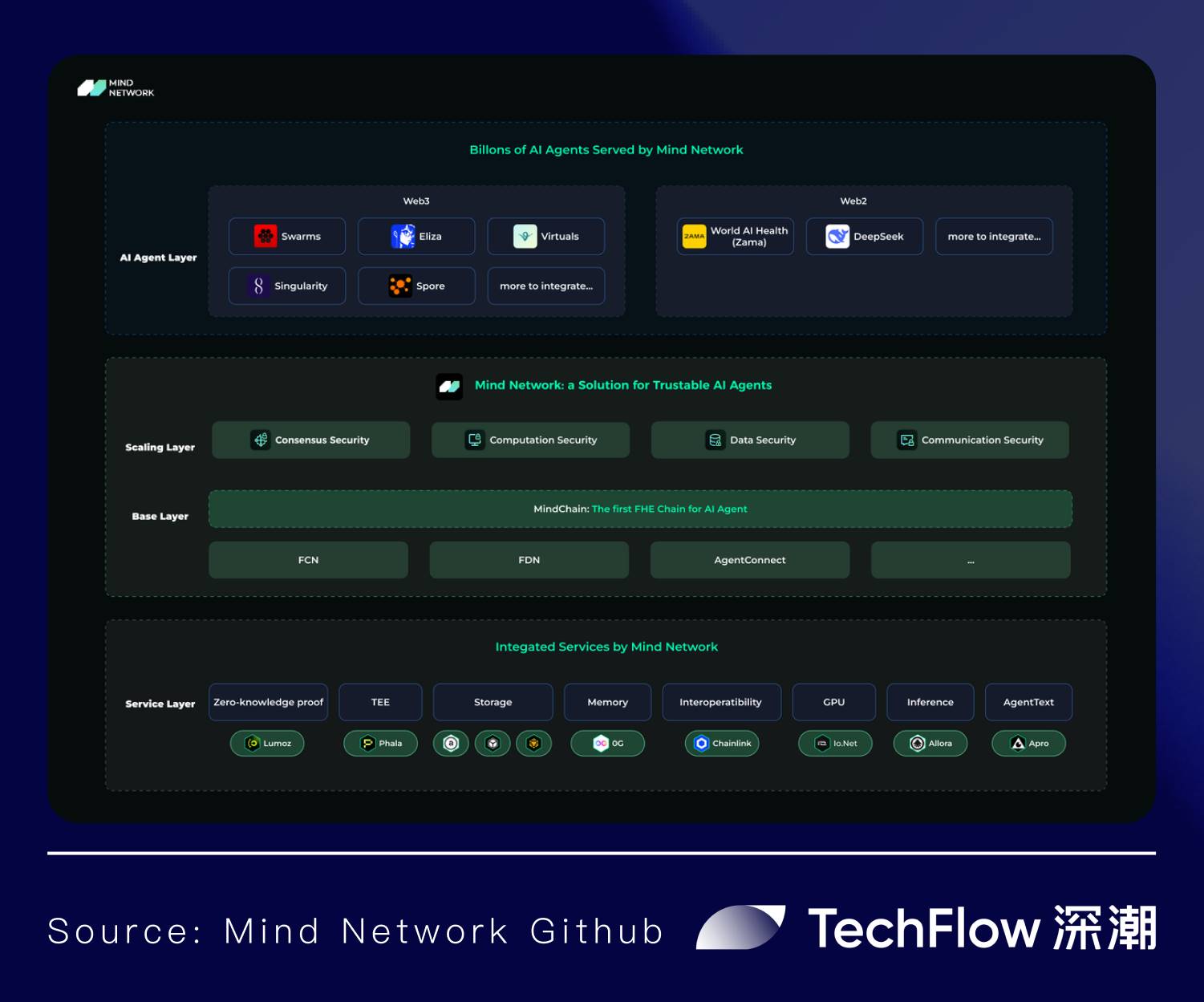
Notably, AgenticWorld is not exclusive to Web3. Its ultimate goal is enhancing Agentic AI service capabilities—building an efficient, collaborative, intelligent, secure, and automated Agentic AI ecosystem to accelerate the arrival of an AI-driven intelligent future.
Therefore, AgenticWorld is an ecosystem transcending the Web2 vs. Web3 dichotomy, aiming to serve the entire AI industry and all verticals.
This is clearly reflected in its ecosystem development.
When creating a Hub or Agentic AI, you can select from popular open-source agent frameworks based on your needs—whether Web2 or Web3.
Currently supported Web2 frameworks include leading LLM frameworks such as LangChain/LangGraph, AutoGen, and CrewAI. Supported Web3 frameworks include Swarms, AI16Z, and Virtuals—highlighting AgenticWorld’s strong cross-ecosystem collaboration potential.
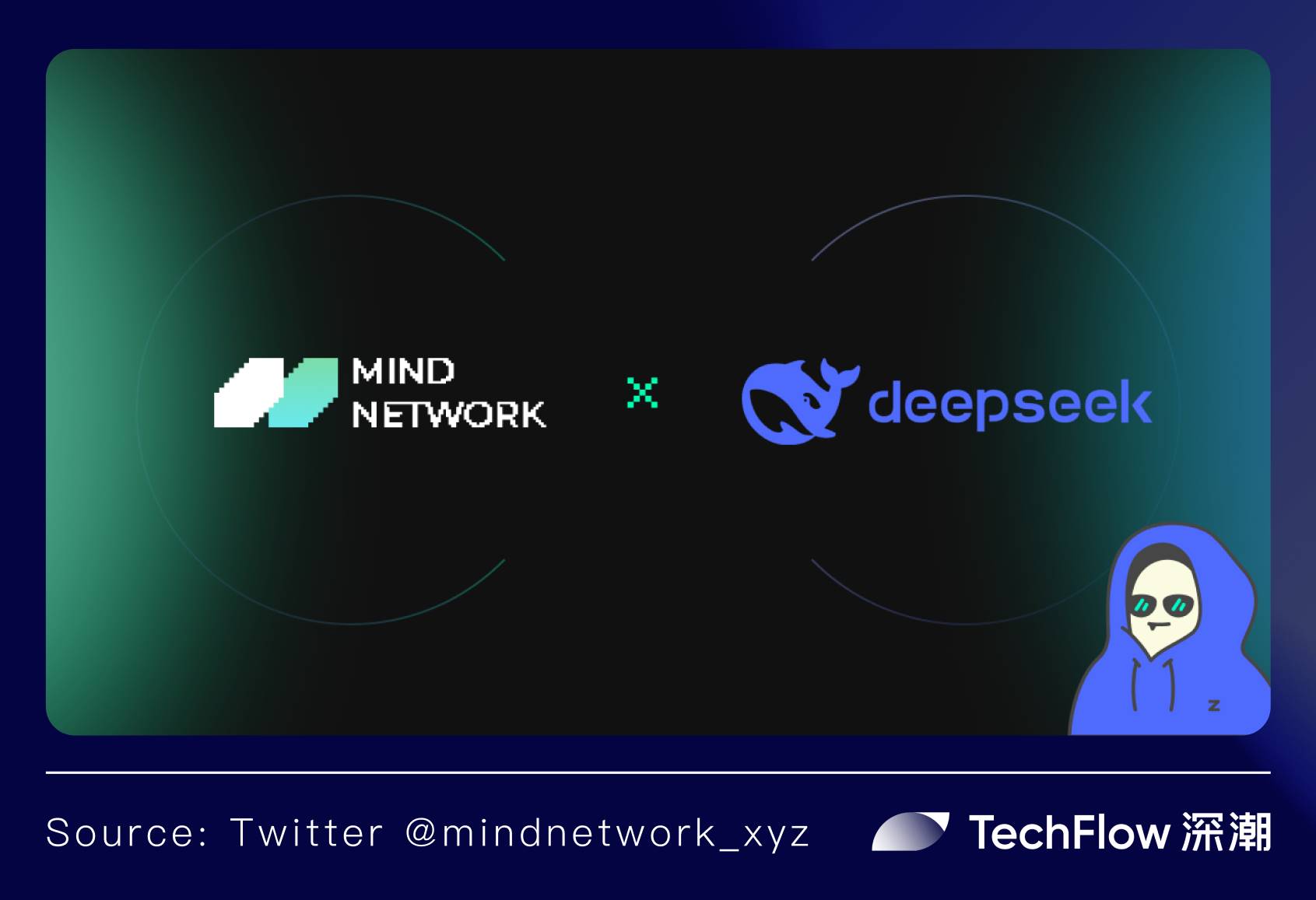
Notably, Mind Network has earned recognition from top-tier AI projects: In February 2025, DeepSeek announced integration of the first FHE-based encrypted AI security framework—Mind FHE Rust SDK—into its open-source repository. Developed in Rust, this SDK ensures data, computation, consensus, and collaboration security among AI Agents.
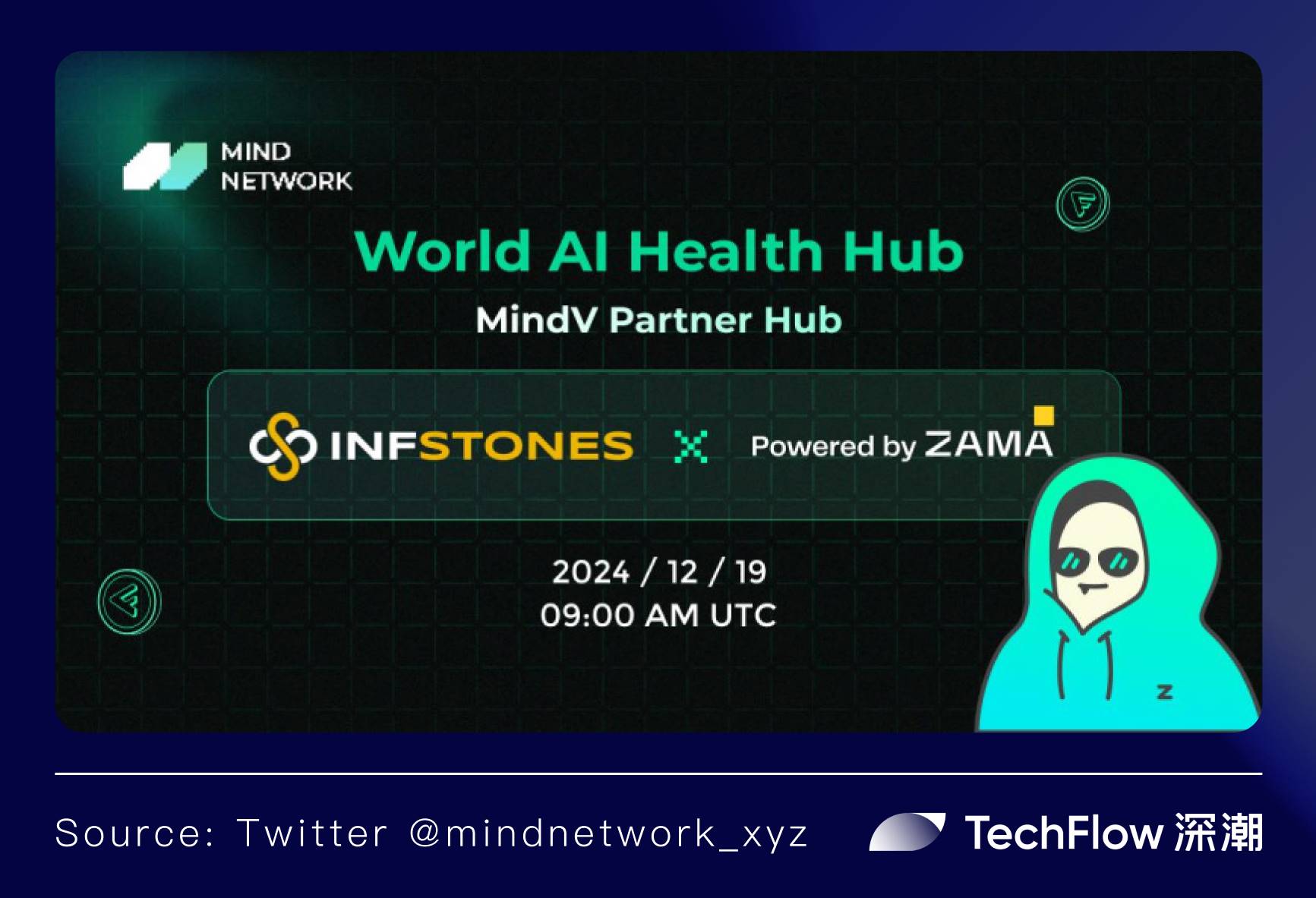
Of course, regarding how to drive Agentic AI adoption in real-life applications, AgenticWorld offers a paradigm-shifting answer: the World AI Health Hub.
Built in collaboration with ZAMA and InfStones, World AI Health Hub is a decentralized AI computing platform for healthcare, aiming to provide global users with secure, transparent, and private medical services. Leveraging FHE technology, it protects medical data privacy, prevents misuse, sets new standards for secure medical data computation, and advances AI in health tech.
Viewing ecosystem construction holistically, it’s clear that AgenticWorld’s potential extends far beyond current use cases:
Within the AgenticWorld ecosystem, each Agentic AI operates according to its goals, rules, and learning abilities. Theoretically, under the vision of continuously improving AI service capabilities, AgenticWorld can adapt to any application scenario.
As more functional Agentic AIs and Hubs emerge and interact, learn, and evolve within AgenticWorld, they will progressively strengthen their ability to solve most real-life problems.
For example, leveraging AgenticWorld’s strengths in data privacy protection, decentralized collaboration, efficient decision-making, and multi-party co-creation, it can comprehensively empower financial development—delivering more precise, secure, and high-yield investment experiences—such as multiple AI Agents collaborating to find optimal arbitrage paths and executing secure trades.
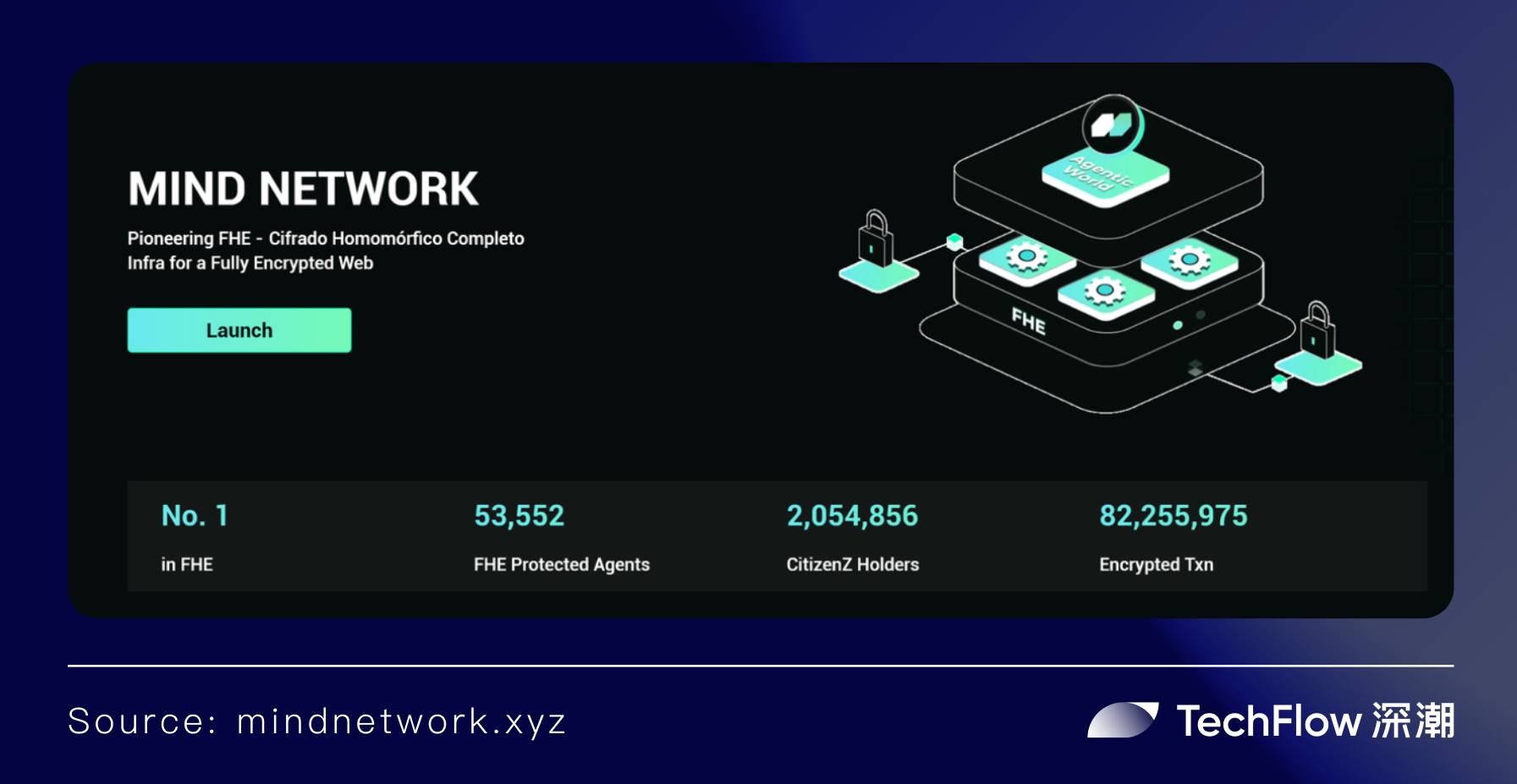
According to official Mind Network website data, Mind Network currently supports 53,552 agents, with over 1.2 million $FHE tokens staked, further strengthening ecosystem synergies.
TGE Oversubscribed 174x: Using $FHE to Drive a Positive Ecosystem Flywheel
In the recently completed TGE event, Mind Network performed impressively: Raising a total of 224,778 BNB; 74,926 addresses participated; oversubscription exceeded 174x. Simultaneously, $FHE airdrops were distributed, accounting for 7.5% of the total token supply.
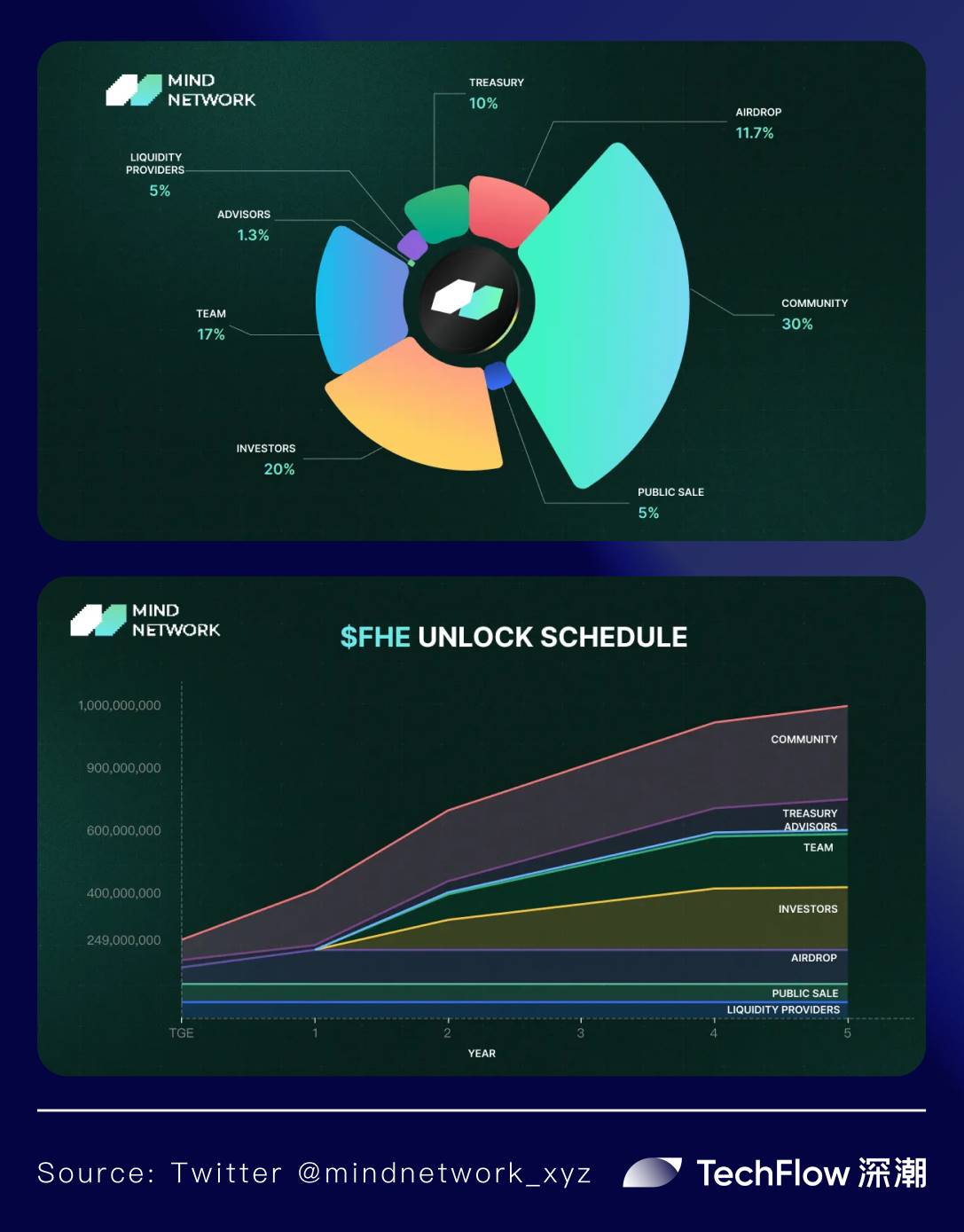
With the TGE concluded, Mind Network officially unveiled the $FHE tokenomics. According to official data, the total $FHE supply is 1 billion tokens, with an initial circulating supply of 24.9%. The detailed allocation is as follows:
-
Airdrop: 11.7%
-
Community: 30%
-
Public Sale: 5%
-
Investors: 20%
-
Team: 17%
-
Advisors: 1.3%
-
Liquidity Providers: 5%
-
Treasury: 10%
As the native token, $FHE serves key roles in the Mind Network ecosystem: staking to activate and run Agentic AI, rewarding ecosystem contributors, paying service fees, and governing the ecosystem via MindDAO and Hub-based proposals. These multifaceted utilities make $FHE a vital lever for economic vitality and provide long-term value assurance.
The massive community enthusiasm sparked by $FHE during TGE and airdrops stems partly from Mind Network’s deep respect for community rights:
We observe that allocations for investors, team, and advisors are subject to a 48-month vesting schedule with a 12-month cliff, whereas community portions—such as airdrops and public sales—are unlocked at TGE. This time advantage granted to the community reflects Mind Network’s community-first principle and signals its determination for long-term, sustained development.
On the other hand, this community fervor largely reflects strong confidence in $FHE’s future potential:
Many have noticed that the $FHE token shares its name with Fully Homomorphic Encryption (FHE). This direct naming strengthens the association between Mind and FHE, underscoring Mind Network’s commitment to advancing FHE technology and its widespread adoption.
Looking ahead, $FHE’s current market cap is approximately $16 million, with FDV around $66 million—below its previous valuation of $100 million.
From an AI sector perspective, comparing Mind Network’s valuation with peers like Nillion and MyShell reveals significant upside potential for $FHE. Under the grand narrative of AI security—and given that Mind Network is currently the only project focused on AI Agent consensus—$FHE could emerge as the core asset of an “AI Agent security engine.”
From an FHE narrative standpoint, security as an industry cornerstone means secure computing solutions—including ZK, FHE, and MPC—have long been favored by capital, communities, and users alike. We’ve seen numerous ZK-based projects reach multi-billion dollar valuations. FHE, hailed as the holy grail of cryptography and recognized by NIST (National Institute of Standards and Technology) as a post-quantum encryption standard, enjoys strong endorsement from figures like Vitalik Buterin. As one of the few projects actively driving FHE adoption, Mind Network fuels even greater community expectations for $FHE’s future performance.
Conclusion
We all deeply desire such a future:
In a vibrant Agentic World, with FHE as the security foundation, Agentic AI rapidly iterates toward greater intelligence, efficiency, collaboration, and execution power—helping us solve nearly all problems.
With the TGE launching on April 10, 2025, Mind Network will continue advancing in product and ecosystem development:
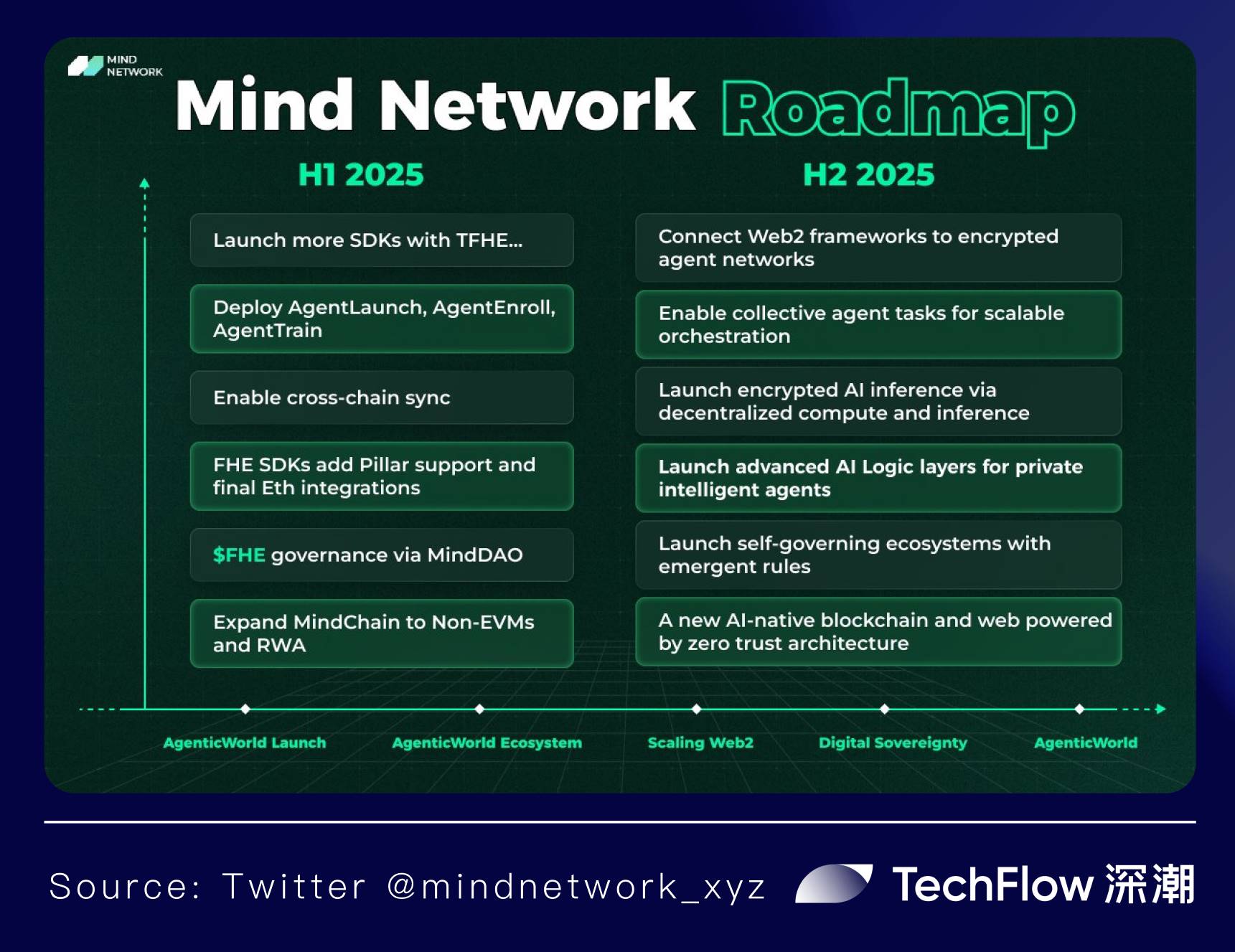
As these milestones unfold and more users and developers engage with the AgenticWorld ecosystem across DeFi, social, and governance domains, the Agentic World we envision is gradually unfolding before us.
As participants and witnesses of the Agentic AI wave—Are you ready to experience it all?
Join TechFlow official community to stay tuned
Telegram:https://t.me/TechFlowDaily
X (Twitter):https://x.com/TechFlowPost
X (Twitter) EN:https://x.com/BlockFlow_News
 深潮TechFlow


