From "Evangelist" to "Harvester": Galaxy's Art of "Pump and Dump"
TechFlow Selected TechFlow Selected
From "Evangelist" to "Harvester": Galaxy's Art of "Pump and Dump"
"Faith" is originally the most touching word in the world of investing, but when it is exploited by malicious actors to manipulate the market, faith becomes poison, ultimately devouring every blind follower.
 Navigating Web3 tides with focused insights
By Daii
In the world of cryptocurrency, the distance between a "evangelist" and a "harvester" is often just a thin, nearly invisible line.
That line is called "trust."
The evangelist we're talking about today is Mike Novogratz—a former Goldman Sachs partner, advisor to the New York Federal Reserve, and now founder and CEO of Galaxy Digital. With unmatched passion and unwavering conviction, he has spread the vision of crypto through various channels, becoming an influential voice in the industry.
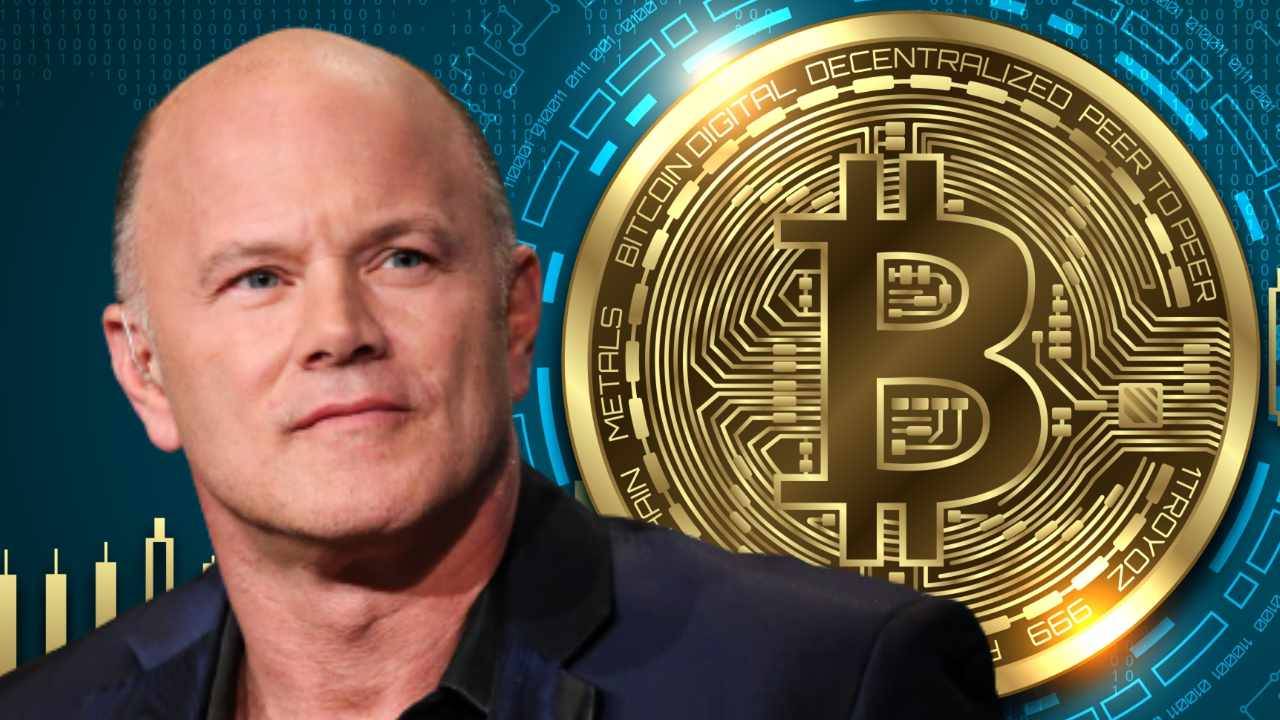
Galaxy Digital, hailed as "Wall Street’s most crypto-literate institution," manages billions in assets and enjoys immense credibility across the crypto space. Countless investors have entrusted their capital to Galaxy and Novogratz, hoping to seize generational opportunities and become one of the lucky few.
Yet sometimes, "trust" becomes a deadly trap.
We intended to share this story last week, but the sudden U.S.-China tariff war forced us to interrupt with an episode on the fracturing of dollar dominance and the rise of decentralized stablecoins. While those grand narratives shape global dynamics, for ordinary investors, this story may matter far more.
If you lost everything investing in Luna, don’t blame yourself too harshly. It wasn’t necessarily due to poor judgment, nor was Luna doomed from the start. The real reason? You simply didn’t know that the man urging you daily to “hold the faith” had quietly offloaded all his holdings while you were buying at peak prices.
What’s even more critical: such harvesting plays never truly end—they merely change stages and actors. Behind nearly every “faith-fueled rally,” countless retail investors are left paying the bill for meticulously calculated exit strategies executed by a select few.
You might feel anger, even demand justice. But the cruel truth is this: unless you can clearly prove these KOLs (Key Opinion Leaders) or institutions acted with fraudulent intent, recovering your losses is almost impossible.
Legal definitions of fraud set an extremely high bar—you must provide solid evidence showing they not only knew the project carried massive risks or false information, but also harbored clear malicious intent to mislead you into buying so they could cash out at the top.
Reality, however, is always more complex than theory. These KOLs skillfully avoid crossing legal red lines. Their language remains deliberately vague—phrases like “I’m bullish,” “huge potential,” or “this is my personal opinion, not investment advice.” As long as their words stay ambiguous and their selling actions concealed, prosecution becomes nearly impossible.
This is the thickest fig leaf covering KOL-style harvesting—intent is hard to prove, subjective malice impossible to establish.
But surely you’re wondering: if it's so difficult to expose, why did Galaxy CEO Mike Novogratz eventually get caught?
Here, we must introduce a key figure—the Attorney General of New York State—and a special law known as the Martin Act. Thanks to this legislation, the NY Attorney General doesn’t need to prove explicit fraudulent intent to launch investigations and uncover sophisticated scams hiding behind “faith.” Galaxy was the first to be caught—but certainly won’t be the last. We’ve previously covered the Martin Act in detail; this same law that once fined the Trump Organization $450 million is now turning its gaze toward crypto.
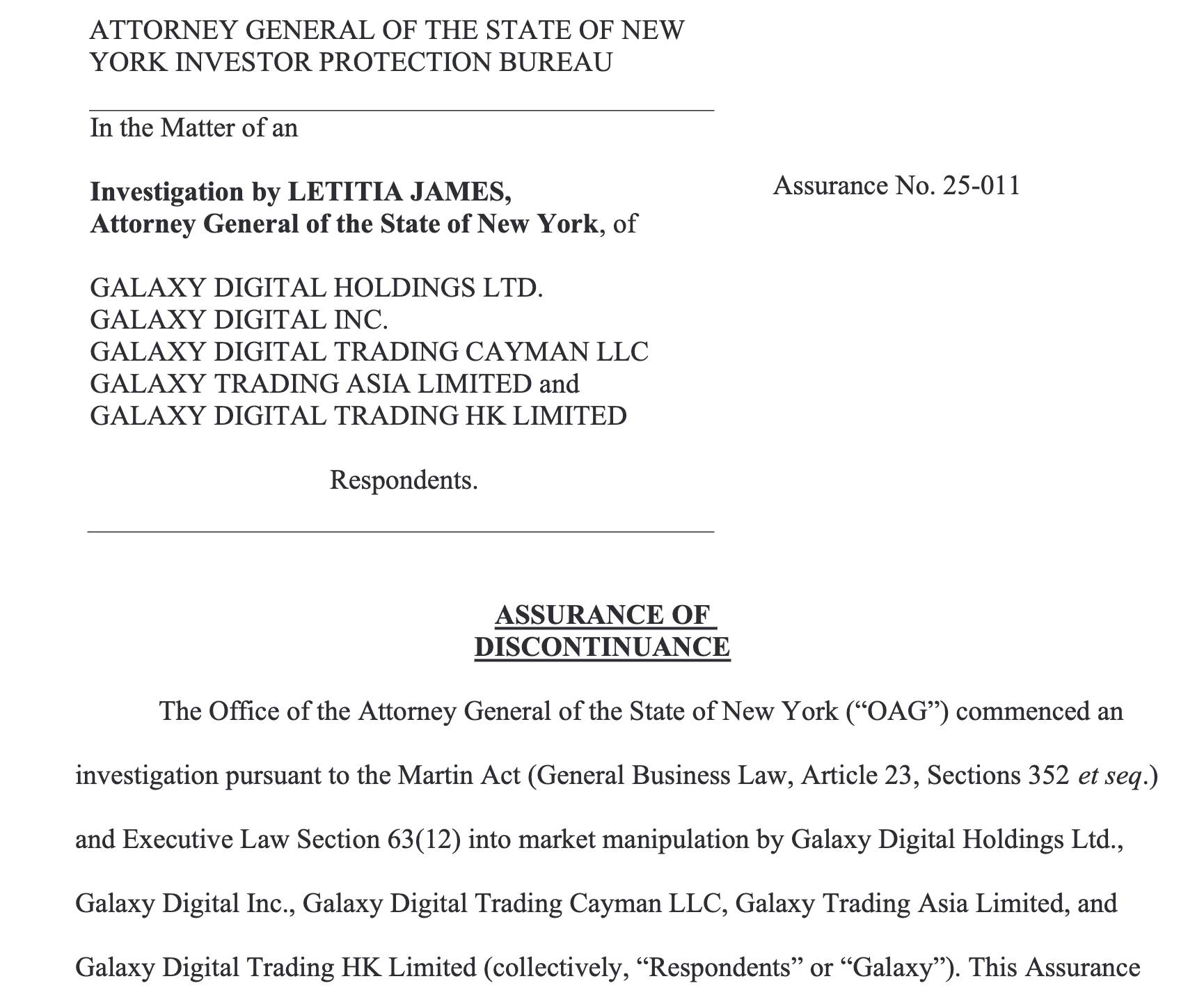
After reading the 44-page report released by the New York State Attorney General’s office, I couldn’t help but reflect: without this so-called “toughest securities law in America,” there would have been no deep investigation. We might never have learned that behind the collapse of Luna—a $40 billion bubble—lay such a precise and sophisticated institutional dumping script.
I hope this article isn’t just another dramatic financial tale for you, but rather a series of warnings about keeping your distance from KOLs and institutions.
Now, let’s first understand how Galaxy and LUNA came together.
1. How Did Galaxy “Connect” With Luna?
Before diving into this thrilling “dumping story,” we must first clarify who Galaxy really is.
1.1 Who Is Galaxy?
Galaxy Digital, officially Galaxy Digital Holdings Ltd., is registered in the Cayman Islands with operational headquarters in New York. It was founded by Mike Novogratz, a Wall Street veteran with decades of experience.
Who is he? A former Goldman Sachs partner, former member of the New York Fed’s Investment Advisory Committee, and one of the earliest public advocates for digital assets since 2013—an “institutional believer” ahead of his time. If you've watched CNBC, Bloomberg, or read Financial Times coverage on “Bitcoin’s future,” chances are his name came up repeatedly.
In 2018, he launched Galaxy, which now manages over $5 billion in assets across 123 affiliated companies worldwide, spanning market making, venture capital, trading, custody, research—the full suite. Think of it as a “Morgan Stanley of crypto.”
In short, if the industry needs a representative that best embodies “Wall Street meets crypto,” it’s Galaxy. Clearly, Galaxy was Luna’s ideal partner—and arguably the only one capable of pulling it off.
1.2 What Was Luna?
Now let’s meet the other protagonist: Luna.
Luna was a cryptocurrency launched in 2018 by Terraform Labs, founded by South Korean entrepreneur Do Kwon and registered in Singapore. Its core goal was to build a dual-token system combining an algorithmic stablecoin and a native token.
The ecosystem consisted of several components:
-
Terra Blockchain: the underlying ledger where transactions occur;
-
Luna: the platform’s native token, used for governance, staking, and regulating supply/demand of the stablecoin;
-
TerraUSD (UST) and TerraKRW: so-called “stablecoins” claiming to be pegged to USD and KRW;
-
CHAI: a South Korean payment app marketed as proof of “real-world use cases.”

Sounds impressive, right? But here’s the problem: its “stability mechanism” relied entirely on market behavior. Once UST de-pegged, Luna would spiral into a “death spiral.” UST was fundamentally an algorithmic stablecoin—an approach that, to date, has yet to produce a single successful case. Our previous episode “Tariffs Are Swords, Currency Is Shield” offers deeper analysis on stablecoins—do check it out.
Note CHAI, the payment system mentioned above. Similar to Alipay in China or PayPal in the U.S., Do Kwon co-founded CHAI. This real-world connection became crucial raw material for Galaxy to hype up Luna.
In essence: Luna represented innovative financial engineering—possible to succeed, but far more likely to fail. Still, Do Kwon believed the narrative was compelling enough. He needed a “Western spokesperson” to sell this story to American investors.
1.3 The “Connection”: A Scripted Western Endorsement Deal
Enter 2020. Do Kwon realized that for Luna to go viral, Korean traders and whitepapers alone wouldn't suffice. To gain traction in Western markets, he needed credible brand endorsement. So he turned to Galaxy.
In August 2020, Terraform reached out with an offer: if Galaxy’s CEO would publicly promote Luna, they’d grant favorable investment terms.
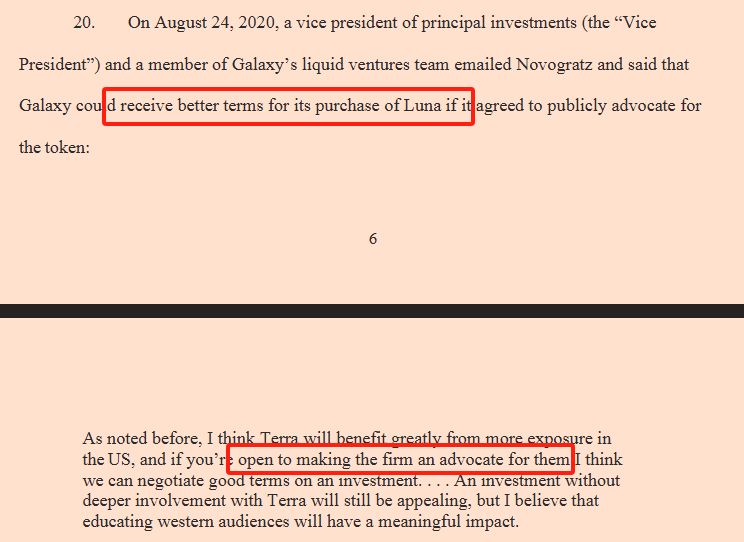
Internally, Galaxy began discussions. They had already noticed Terraform’s technology and recognized the project’s vast capital needs. On October 27, 2020, both parties finalized the deal (see image below):
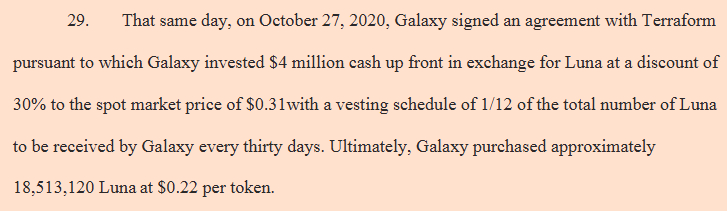
-
Galaxy invested $4 million;
-
Purchased 18.51 million Luna tokens at a discounted price of $0.22 each;
-
Vesting schedule: 1/12 unlocked monthly, immediately sellable upon release.
Important note: the market price at the time was $0.31—Galaxy received a 30% discount, with no mandatory lock-up period. This wasn’t “lucky pricing”—it was earned through endorsement, promotion, and public backing.
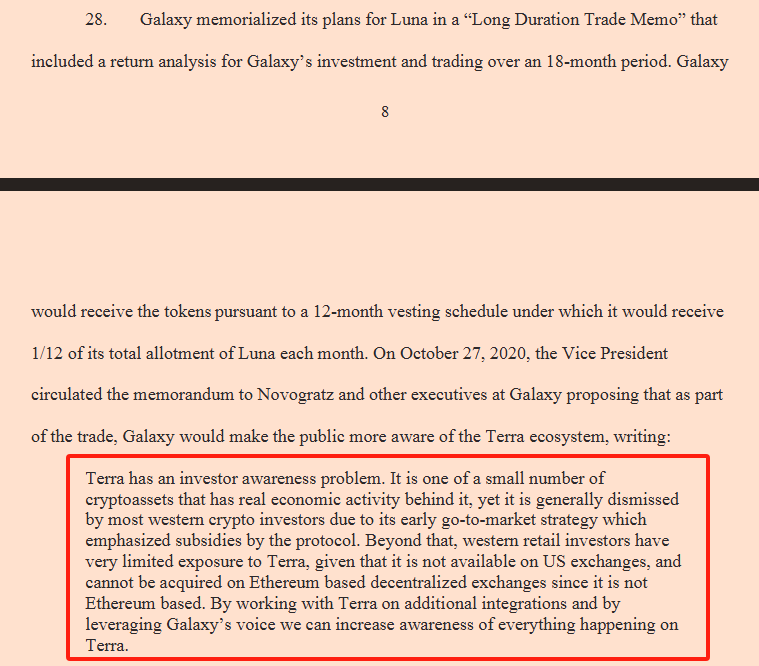
The hidden rule? Say good things, get early unlock rights. Galaxy accepted gleefully, even noting internally that Terraform lacked recognition in the U.S. market and depended on Galaxy to validate its economic activity—see highlighted text in the image below.
From November 2020 onward, Galaxy began systematically mentioning Luna across podcasts, Twitter, and interviews. Prices rose, trading volume surged. This pattern continued uninterrupted for a full year.
1.4 Summary: United by Money, Not Mission
Galaxy and Luna’s alliance wasn’t born of shared ideals or technological admiration—it was a pure exchange of interests:
-
Terraform offered discounts and unlocking privileges;
-
Galaxy provided visibility, trust, and branding;
-
An implicit understanding formed: you run the scheme, I’ll pump it—no questions asked.
-
The results spoke for themselves:
-
Luna’s price soared from $0.31 to a peak of $119;
-
Galaxy profited hundreds of millions;
-
Retail investors bought high, then plunged into the death spiral.
At its core, this was a classic “structured dump playbook.” Yet it didn’t violate traditional securities laws—which is why many KOLs defended Galaxy. Under the Martin Act, however, this constitutes outright fraud: saying one thing while doing the opposite—pumping while dumping—is market manipulation, plain and simple.
Hence Galaxy agreed to pay a $200 million settlement to secure a “cease investigation” guarantee from the NY Attorney General—see image below.
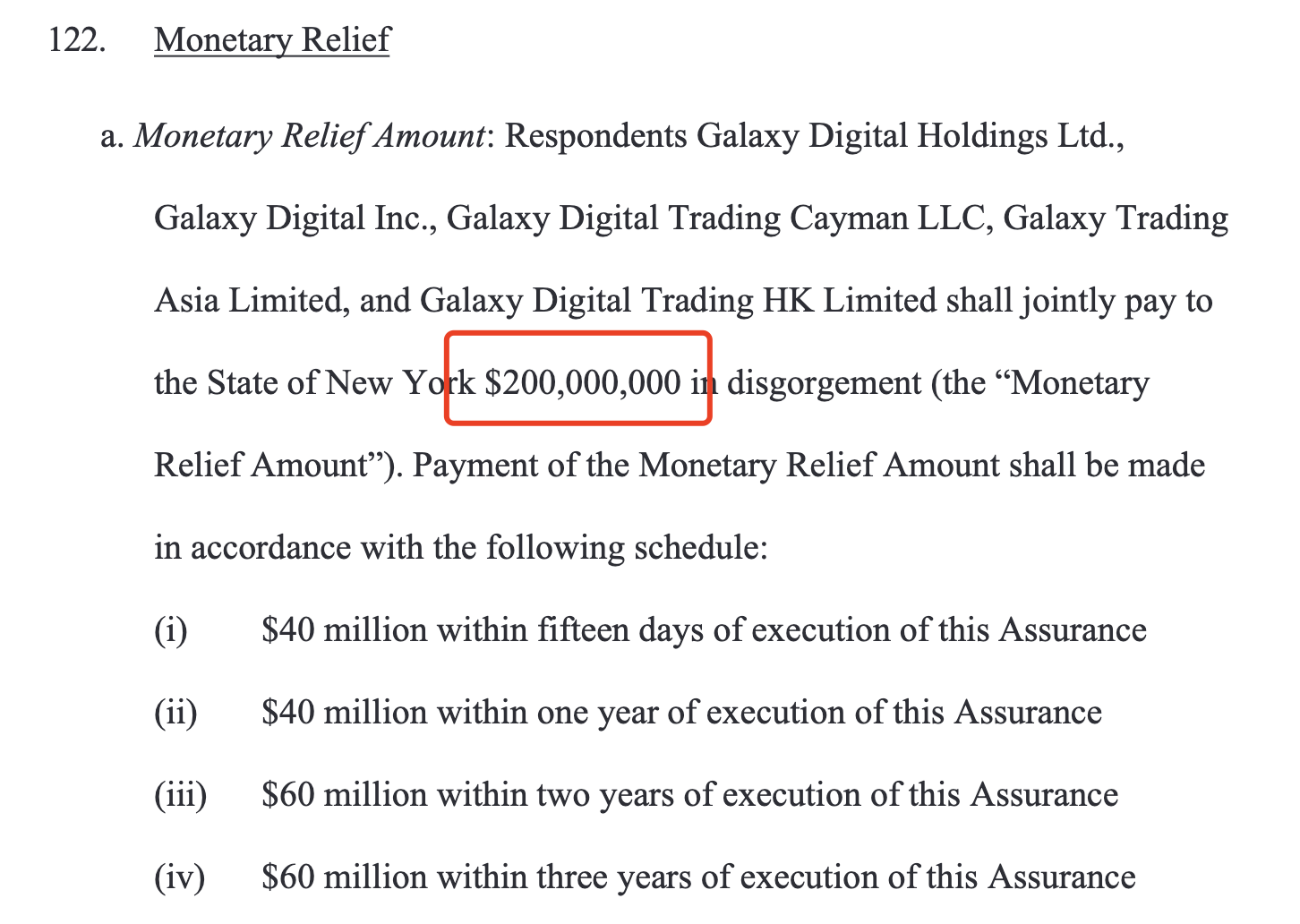
To dissect Galaxy’s pump-and-dump tactics, I carefully studied the 44-page document. Below, I’ll break it down step by step.
2. How Did Galaxy Pump and Dump?
Next, we reveal how Galaxy mastered the art of shouting “faith” while precisely dumping tokens. Before delving into this heartbreaking tale, I should offer a few fair remarks about Galaxy and Mike Novogratz—so you don’t mistakenly view Novogratz as merely a shameless opportunist.
You may not know that back in 2013, when Wall Street collectively mocked Bitcoin, Novogratz had already invested real money. He didn’t just buy Bitcoin—he openly advocated for crypto on mainstream financial media, championing what he saw as a “financial revolution.” In fact, he predicted significant Bitcoin price increases in 2013, and in 2014 participated in crowdfunding for Ethereum during its infancy. He claimed 20% of his net worth was invested in Bitcoin and Ethereum—an astonishing move in the conservative Wall Street circles of the time.
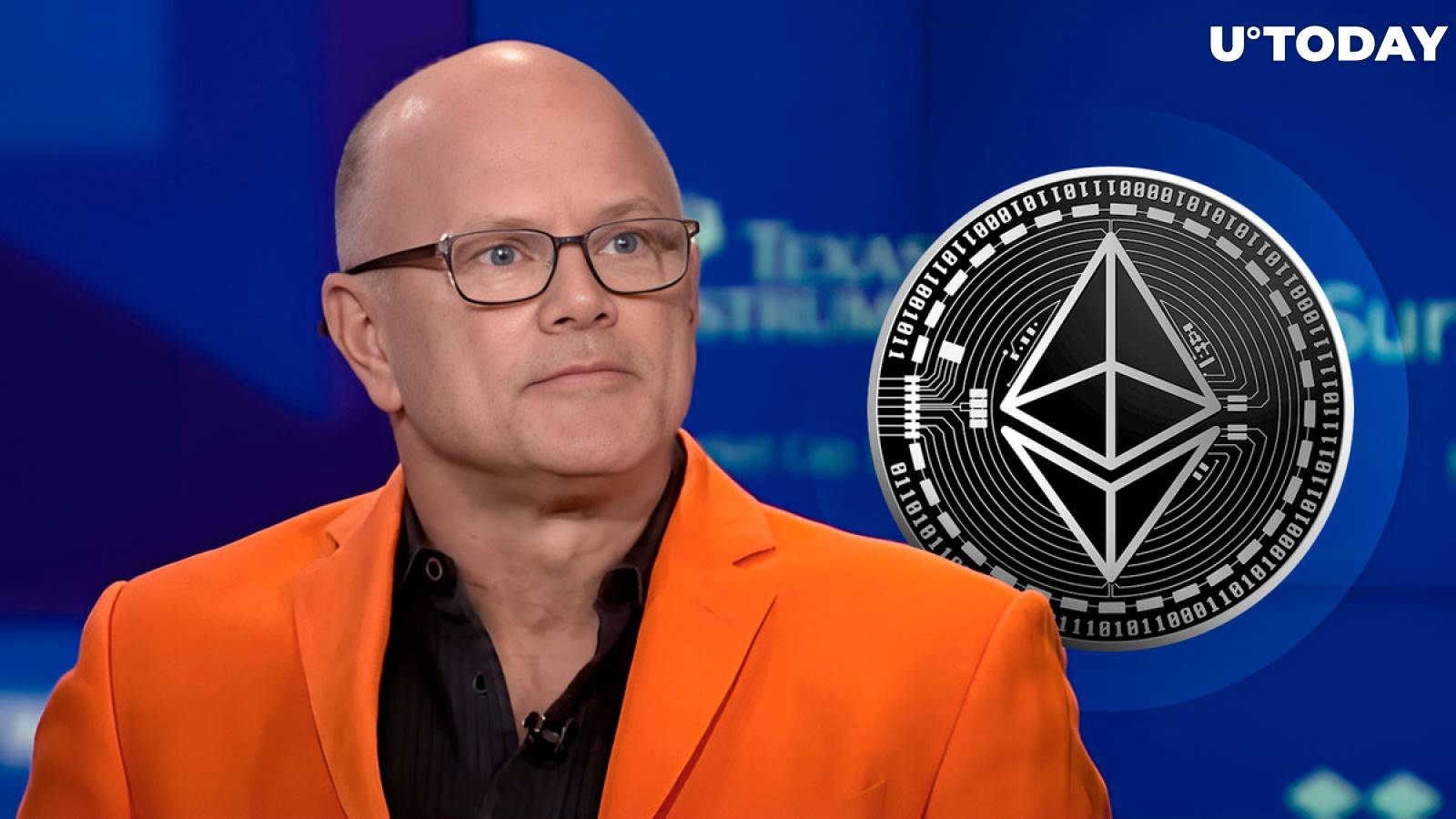
As of 2024, Galaxy has publicly invested in 72 projects including Polygon, Bitfarms, and Celestia, totaling billions in investments. While Circle (issuer of USDC) and Bitwise (crypto ETF issuer) haven’t directly disclosed Galaxy’s investment records, Galaxy’s active involvement in ecosystem partnerships and advisory services has meaningfully contributed to the broader development of the crypto industry.
In other words, the ability to trade on Coinbase, transfer using USDC, and see Ethereum ETFs approved—all owe something to Galaxy’s early contributions during uncertain market phases. Galaxy isn’t some “parasitic harvester,” but rather a long-term participant who helped nurture the industry’s growth.
Which makes today’s exposure all the more tragic. Given Galaxy’s accumulated reputation and resources, they could have chosen transparent, legal paths to profit—instead falling into the disreputable mire of “gray-area dumping.”
Unfortunately, Galaxy couldn’t resist temptation. They fell into their own trap, choosing a clever yet unethical path—pump and dump.
Next, I’ll walk you through exactly how Galaxy manipulated market sentiment with surgical precision to execute their exit.
2.1 First Taste: The Initial “Pump & Dump” Attempt
The story begins at the end of 2020.
Under their agreement, Galaxy received 1/12 of their Luna allocation each month. As a seasoned Wall Street player, Novogratz naturally understood the fastest way to make money: “shout and sell.”
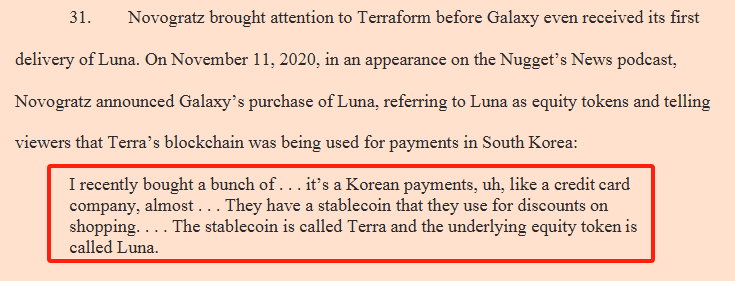
On November 11, 2020—before Galaxy even received their first batch of Luna—Novogratz eagerly took the stage. On the popular podcast Nugget’s News, he told listeners he’d recently bought a lot of Luna, describing it as a Korean payments company similar to credit card firms, where users earn discounts. See image below. In reality, this was false—Luna had no real-world utility.
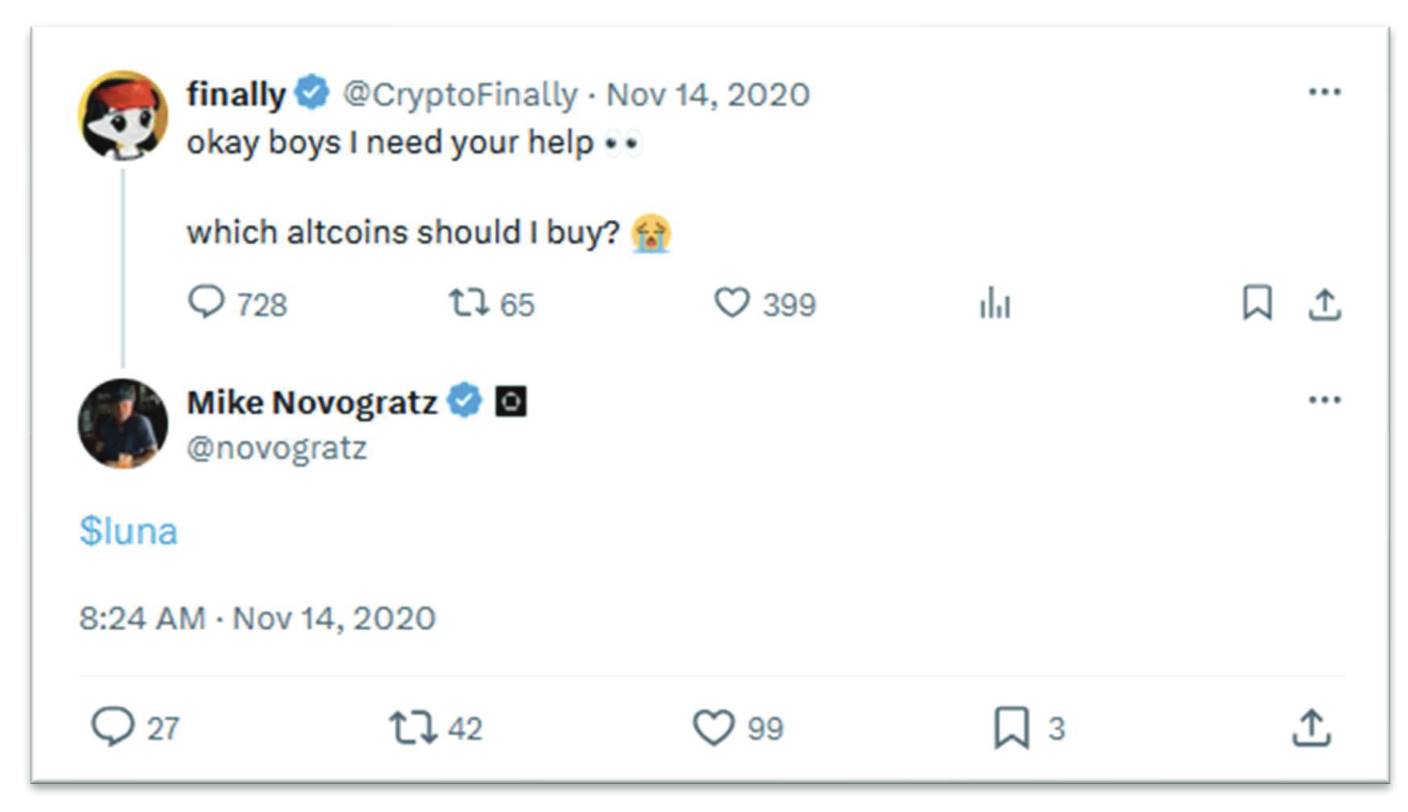
Just days later, on November 14, someone tweeted asking for coin recommendations. Novogratz replied instantly: $luna. See image below.
In December, Novogratz tweeted: “The Korean payment app Chai already has 80,000 daily active users—$LUNA has huge potential!” That day, Luna’s daily trading volume jumped from $27.5 million to $69 million—igniting market frenzy.
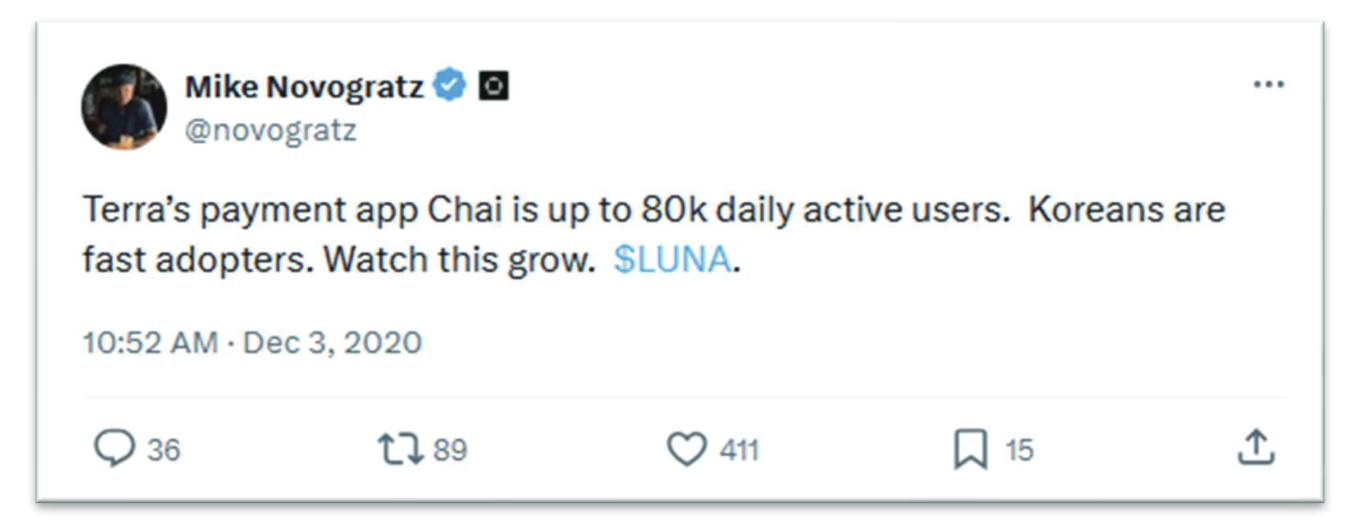
On that very day, Galaxy received their first unlocked batch: over 1.54 million Luna. Yet this “respectable” Wall Street veteran instructed his team: “Don’t rush to sell.” His rule? Wait three days after posting bullish tweets before offloading.
Two weeks later, on December 16–17, Galaxy sold all 1.54 million tokens at $0.50–$0.52 each. The first “pump and dump” concluded flawlessly.
That “wait three days after pumping” rule sounded principled—yet even that self-imposed guideline wasn’t consistently followed. Faced with the flood of profits, principles quickly crumbled.
2.2 Breaking Even: Bloomberg’s Unwitting Boost
Galaxy clearly became addicted to “pump and dump.” But to recoup their initial investment fast, they needed a bigger stage. This time, they targeted mainstream financial media—Bloomberg.
In January 2021, Galaxy proactively contacted Bloomberg, submitting a press release filled with fabricated data, claiming:
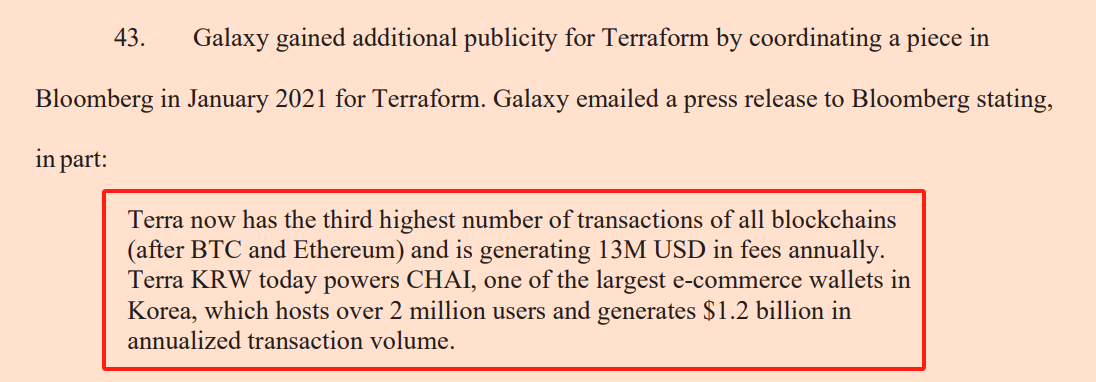
Terra now has the third highest number of transactions of all blockchains (after BTC and Ethereum) and is generating 13M USD in fees annually. Terra KRW today powers CHAI, one of the largest e-commerce wallets in Korea, which hosts over 2 million users and generates $1.2 billion in annualized transaction volume.
Translation: Terra had become the third-largest blockchain by transaction volume, behind only Bitcoin and Ethereum, generating $13 million in annual fees. TerraKRW powered CHAI—one of Korea’s largest e-wallets—with over 2 million users and $1.2 billion in annual transaction volume.
The truth? CHAI’s transactions didn’t use the Terra blockchain at all. All payments were still processed in Korean won—completely unrelated to Luna or TerraKRW. Why did Galaxy and Terra fabricate this? Because without CHAI as backing, the entire narrative collapses.
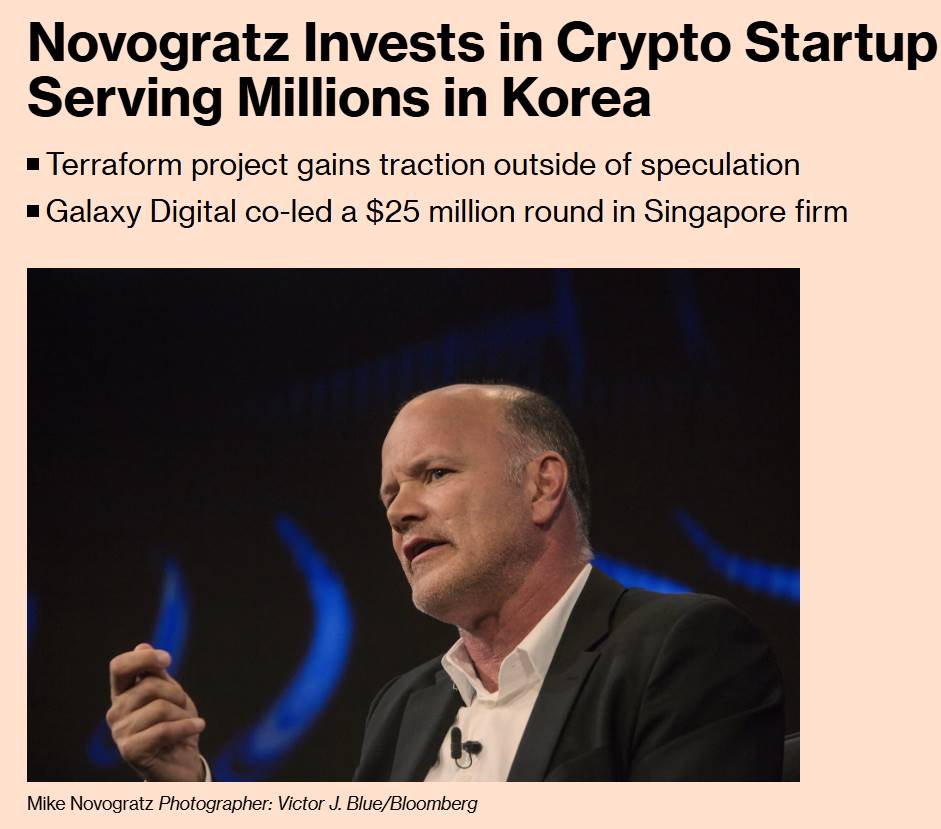
On January 26, 2021, Bloomberg published a major article titled “Novogratz Invests in Crypto Startup Serving Millions in Korea.” Luna’s price immediately surged from $0.89 to $1.23.
CoinTelegraph ran a headline: “LUNA doubles in price after $25 million investment by Galaxy Digital,” triggering a market frenzy.
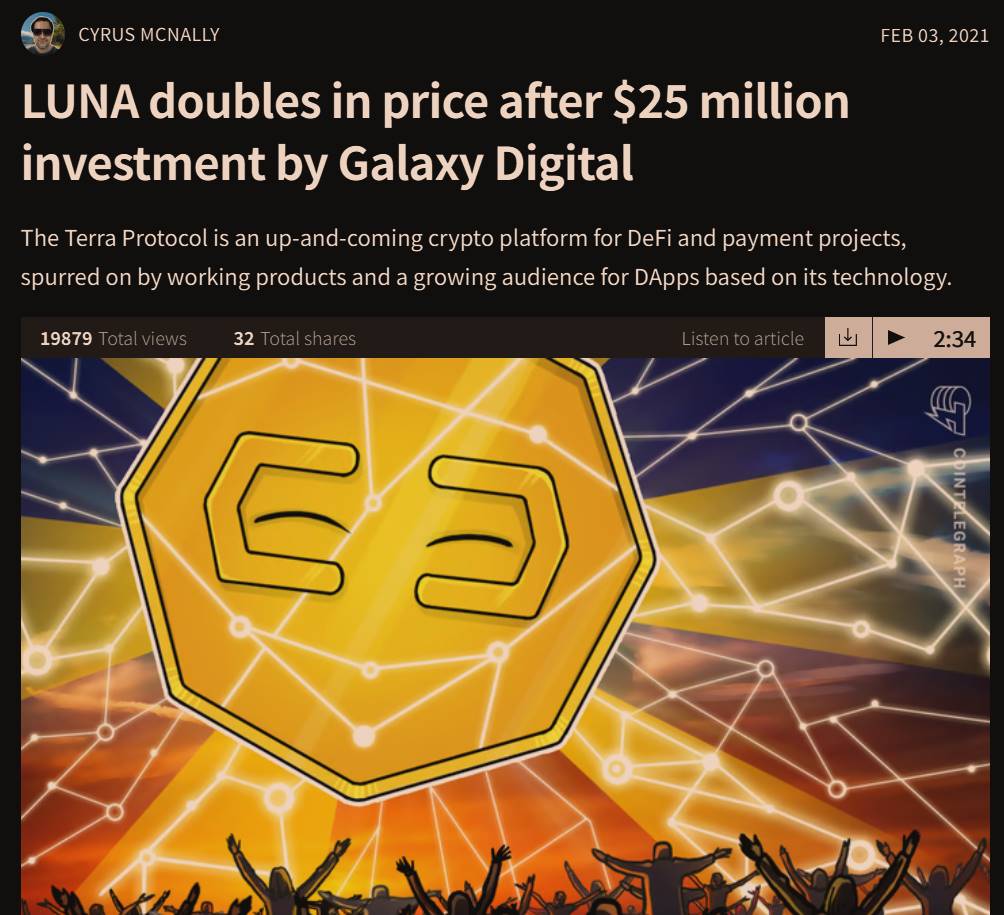
Days after the Bloomberg report, Galaxy dumped again—on January 30, 2021, selling over 1.54 million Luna at $1.47 each. At this point, Galaxy had fully recovered their initial $4 million investment.
A clean, textbook-perfect operation—true mastery of the “art of dumping.”
2.3 Escalation: Tattoos and Fabricated Data Combo
With costs recovered, Galaxy grew bolder. They escalated their tactics.
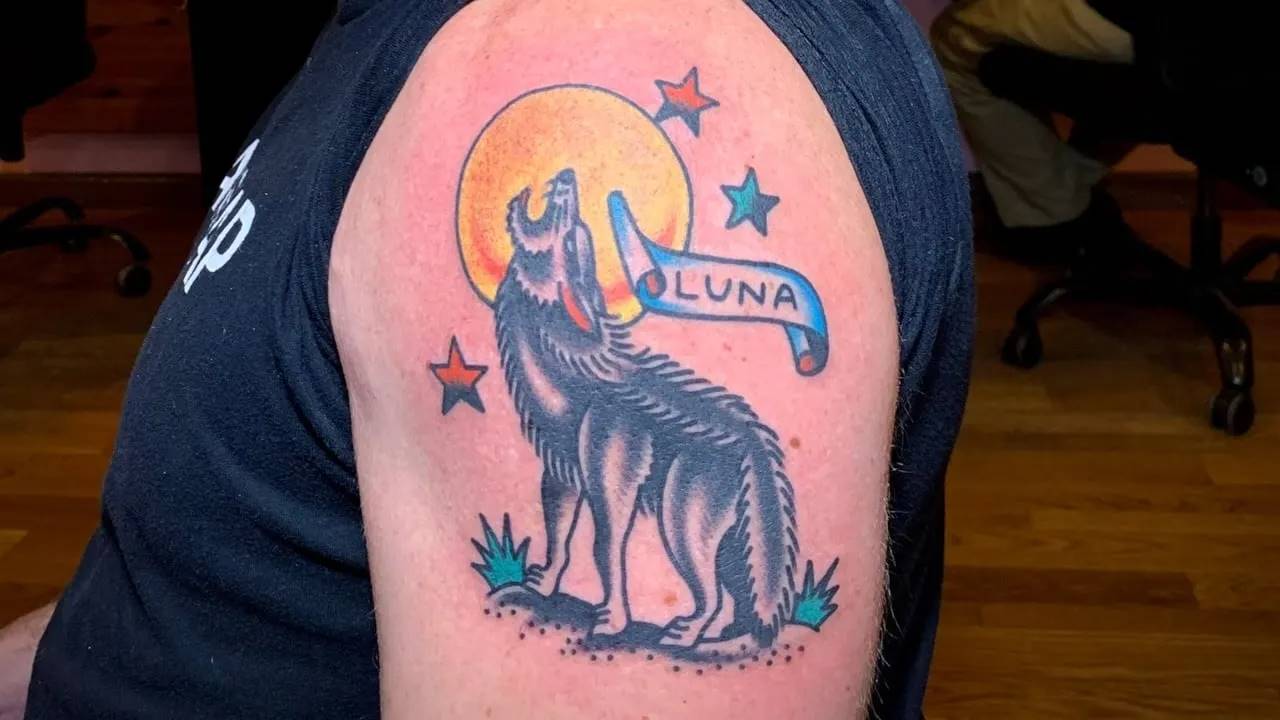
In March 2021, Novogratz tweeted: “If Luna hits $100, I’ll get a Luna tattoo!” This deeply personal pledge instantly went viral within the community.
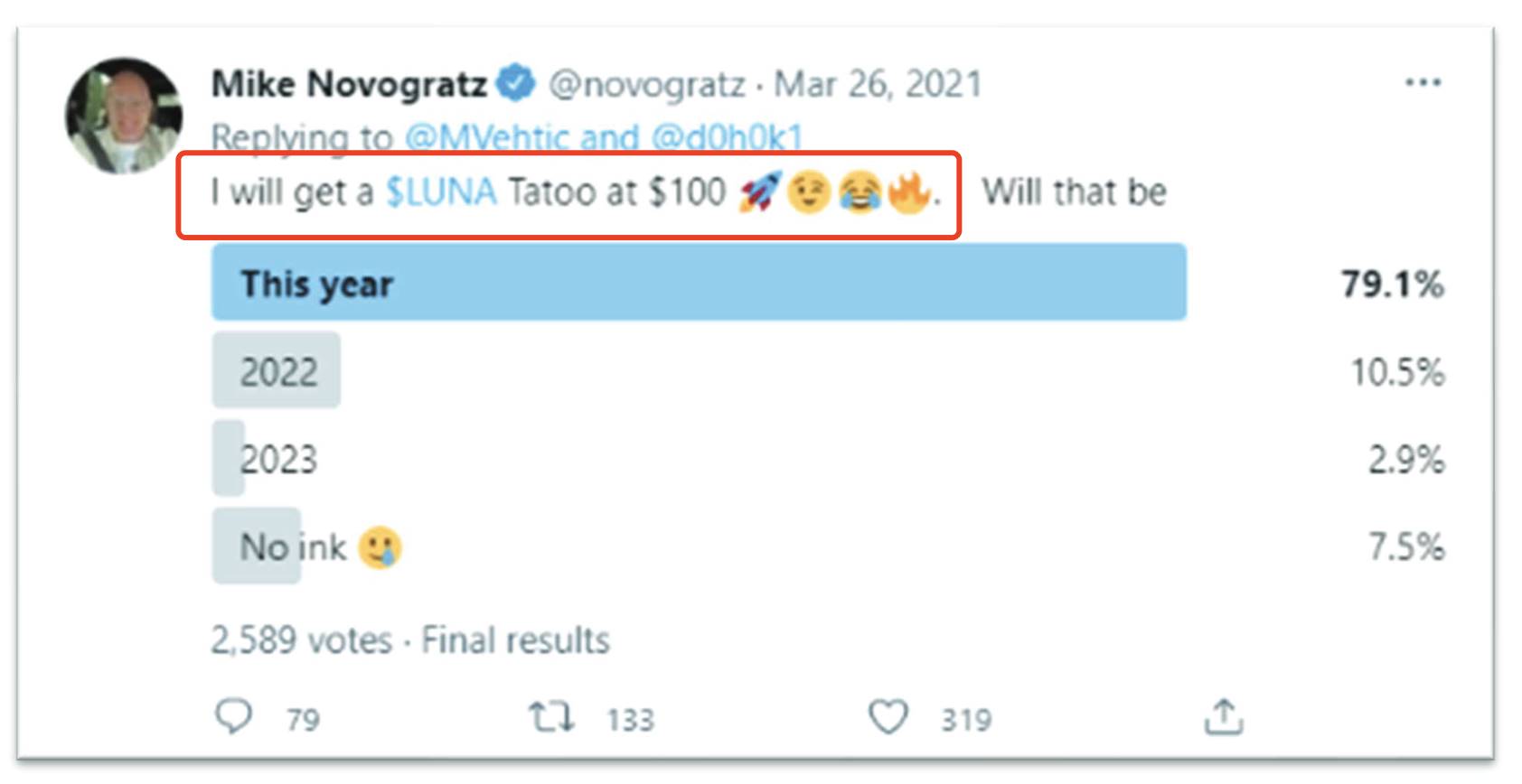
Simultaneously, Novogratz continued blurring the relationship between CHAI and Terra, repeatedly misleading people into believing Terra blockchain had strong real-world adoption. For example:
April 26, 2021: On a podcast, he claimed “6% of payments in Korea are via CHAI.”
May 21: He exaggerated further: “7%-8% of Korean payments now happen via CHAI on blockchain.”
June 22: “8% of payments in Korea are now done via CHAI.”
September 13: Speaking at the Barclays Global Financial Services Conference, he stated: “Now 9% of payments are conducted via the Luna blockchain.”
But in reality, CHAI accounted for less than 1% of total Korean transactions—and CHAI didn’t even run on the Terra blockchain. These claims were entirely false. Yet each statement caused immediate price spikes, and Galaxy seized every opportunity to dump:
Early May 2021: Sold 1.3 million Luna at up to $18.60 each;
June 4: Offloaded nearly 1.79 million at ~$6.91;
Early August: Sold another 1.61 million at $12.19–$14.79.
Then, on December 24, 2021—Christmas Eve—Luna actually hit $100! True to his word, Novogratz posted a photo of his new Luna tattoo, sending social media into a frenzy.
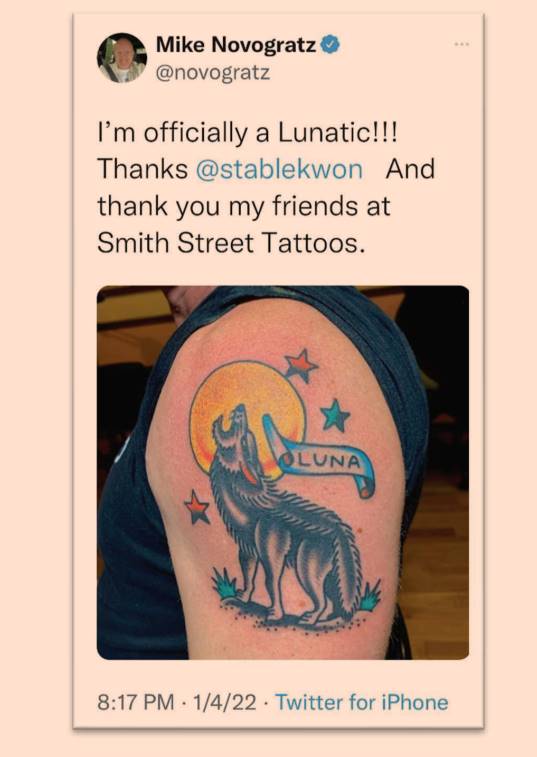
Yet Galaxy didn’t pause. On Christmas Day itself, they began selling at $96.96. In early January 2022, they continued dumping at around $90, cashing out tens of millions.
Can you imagine? As Novogratz uploaded that tattoo photo, traders behind the scenes were rapidly clicking sell buttons, flooding the euphoric market with Luna tokens.
2.4 The Final Frenzy: “Keep the Faith” While Mass Dumping
At the start of 2022, Galaxy and Novogratz entered their final phase of madness.
January 5: As Luna dropped from $100 to ~$80 and market nerves frayed, Novogratz returned. On Twitter, he reassured anxious investors: “After big rallies, consolidation happens. $100 is just symbolic. Be patient—Luna will rise again. Keep the faith!”
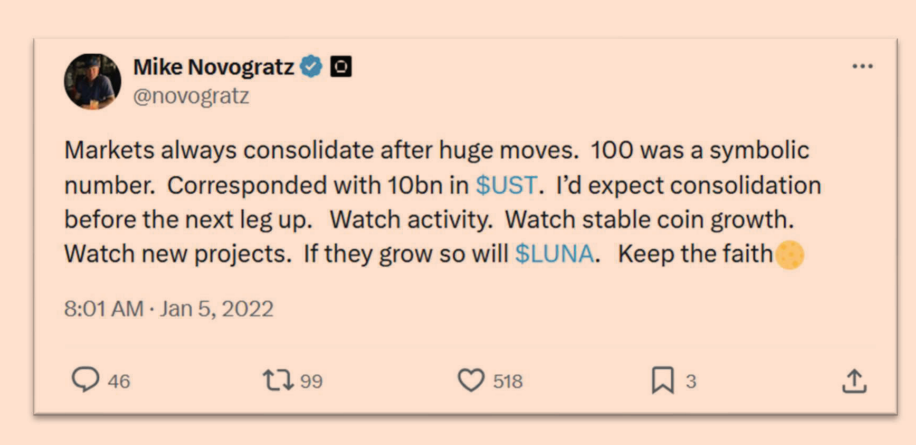
This famous “Keep the faith” phrase acted like adrenaline. Tens of thousands of Luna holders reignited their hopes. Meanwhile, inside Galaxy’s trading desk, a completely different scene unfolded:
January 5: Galaxy dumped over 160,000 Luna at $77.51–$84.80, cashing out ~$13.58 million;
January 6–7: Sold another 520,000+ tokens, raising nearly $40 million;
January 10–13: In just four days, offloaded nearly 680,000 more, pocketing over $50 million.
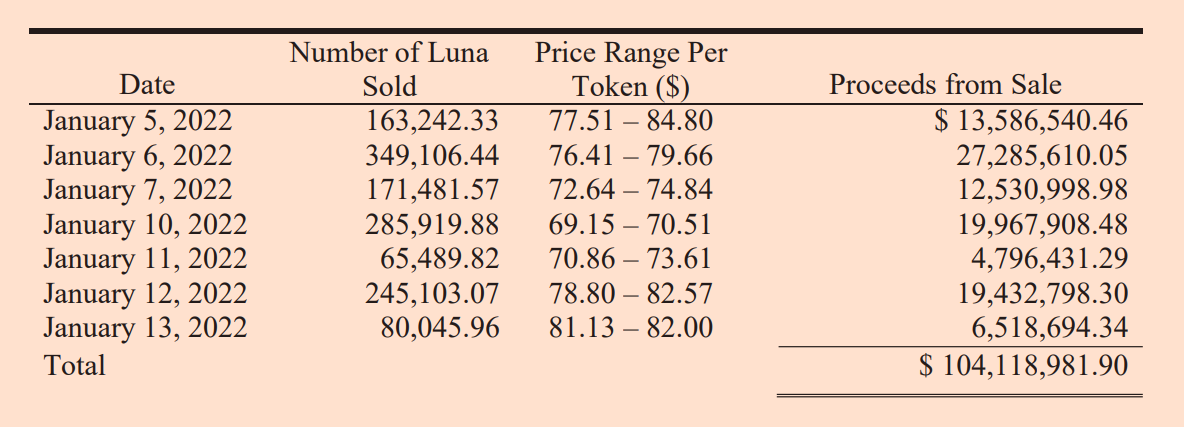
Beneath Novogratz’s passionate cries of “Keep the faith,” Galaxy quietly sold over 1.3 million Luna in just one week—netting $104 million. And they never disclosed any sales, maintaining their “faithful believer” persona.
Even more absurd: on January 15, as Luna dipped to ~$87, Novogratz humorously retweeted a picture labeled “Viejo Lobo” (Spanish for “Old Wolf”), joking about his role in the Luna community—as if signaling he was a savvy old predator calmly watching the chaos.
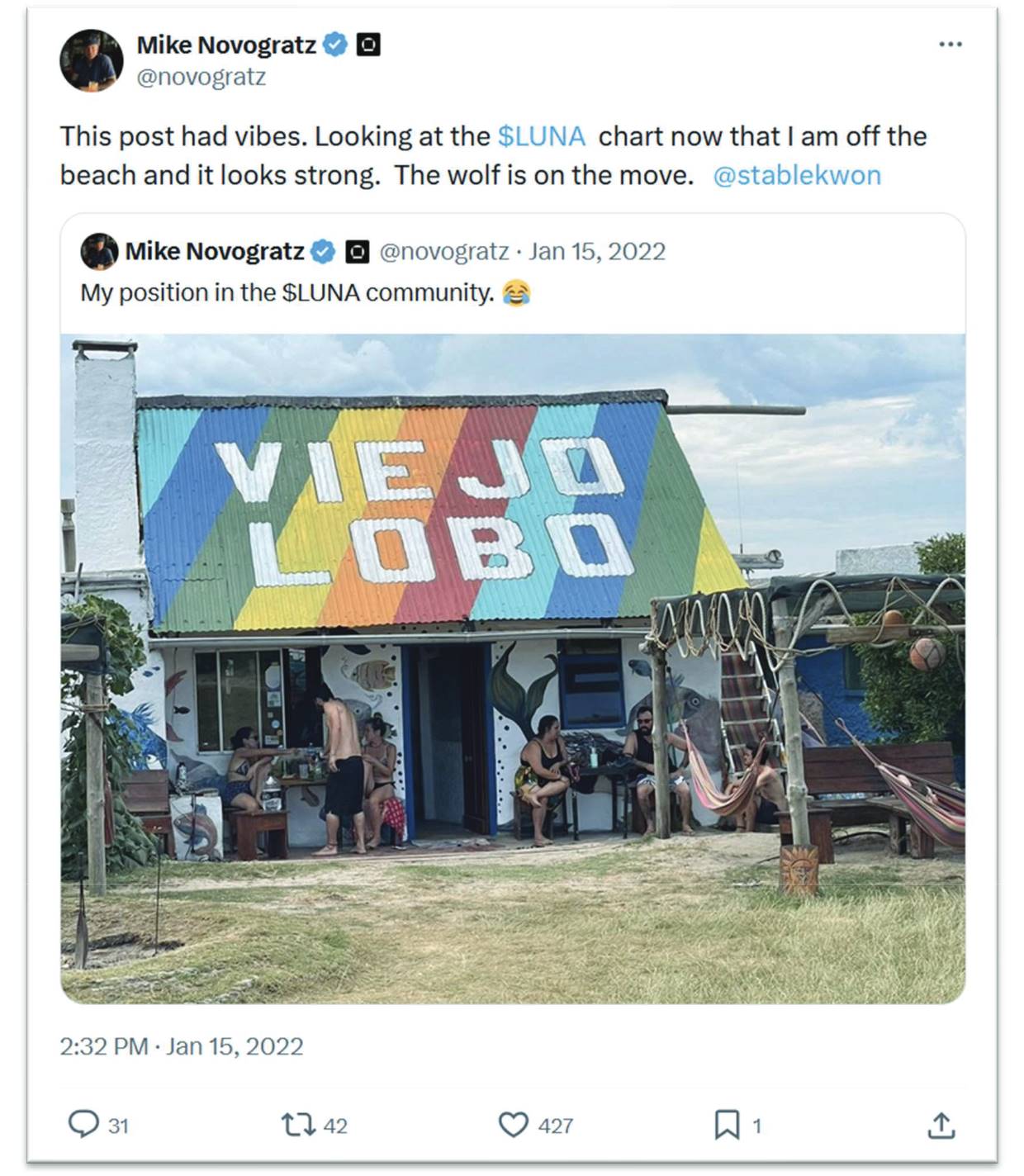
Yet within just 90 minutes of that tweet, Galaxy swiftly sold another 13,276 Luna, capturing a brief rebound to cash out $1.15 million.
The following week, Galaxy dumped over 1.1 million more Luna, selling progressively lower—from $69 down to $48.
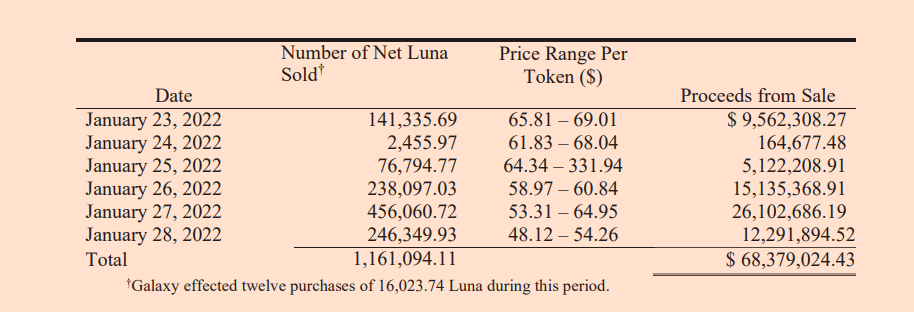
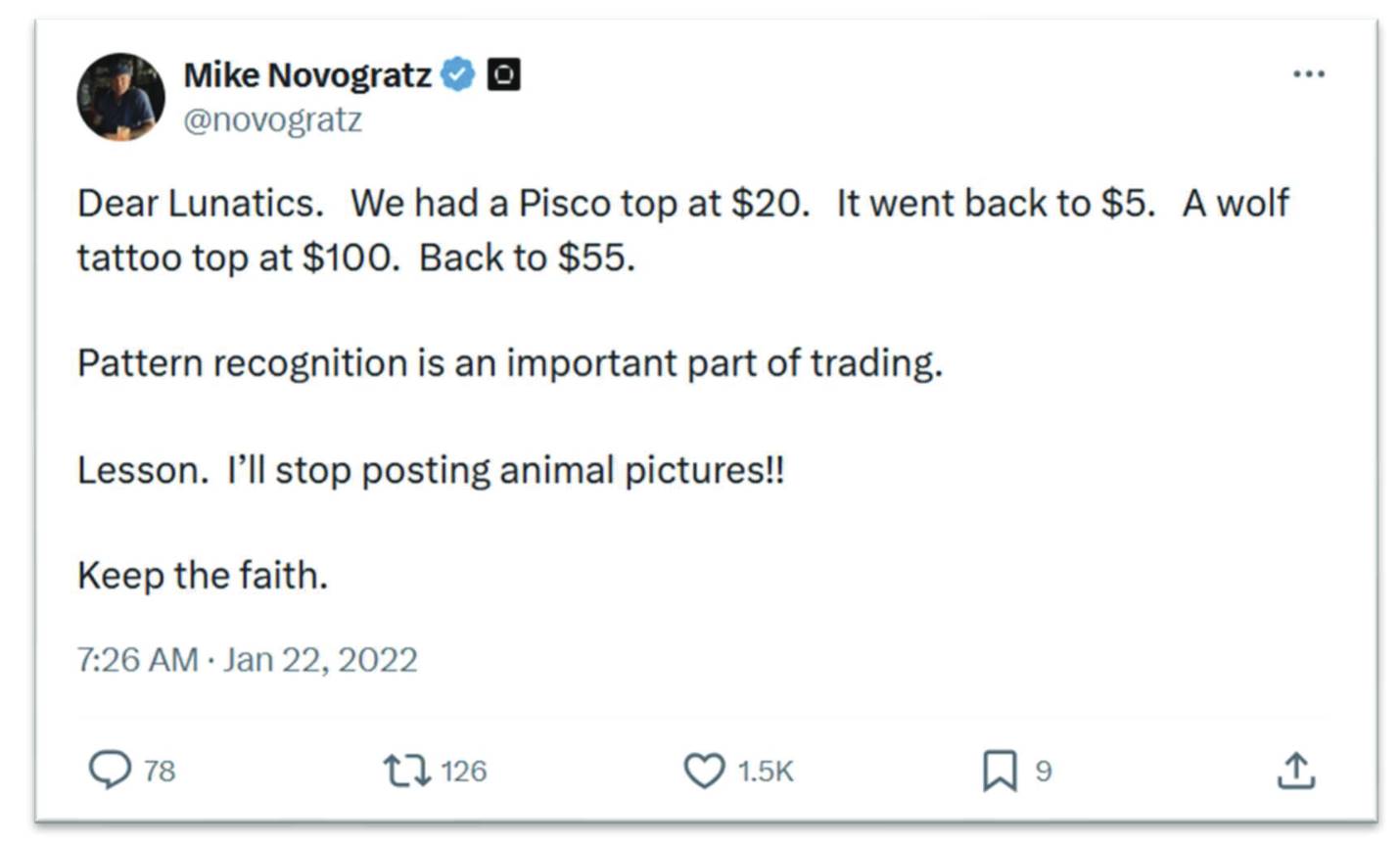
Still, Novogratz kept shouting “Keep the faith,” encouraging followers to hold tight, as if this were normal market correction.
2.5 Summary: After the Party, Only Rubble Remains
Galaxy and Novogratz’s final acts on Luna perfectly illustrated institutional dumping artistry.
Publicly, they played loyal crypto evangelists, passionately shouting “faith,” even etching Luna’s symbol onto their skin.
Behind the spotlight, however, they methodically and continuously dumped Luna until nearly empty.
The end was inevitable. On May 9, 2022, when TerraUSD (UST) collapsed completely, triggering Luna’s death spiral, the token’s price plummeted from $65 to $0.004 in three days—wiping out $40 billion in market cap.
But by then, Galaxy had already exited cleanly—leaving behind only 2,060 Luna tokens, worth less than $10.
Now, it’s time for reflection.
3. Could You Have Avoided This Scam?
After reading Galaxy’s dramatic pump-and-dump saga, you might ask: could I have avoided this scam if I were smarter, more cautious?
To answer honestly, we must objectively examine the subtle clues hidden beneath such schemes, and assess retail investors’ strengths and weaknesses. Let’s analyze this from two angles: why you could have, and why you couldn’t.
3.1 Why You Could Have
In fact, with sufficient vigilance, basic knowledge, and patience, it was entirely possible to avoid Galaxy’s carefully crafted “pump and dump” scam.
First, Red Flags in Exaggerated Data
Diligent investors doing minimal research could detect serious exaggerations or outright falsehoods in Galaxy and Novogratz’s promotional claims.
For instance, Novogratz repeatedly claimed:
April 2021: “6% of Korean payments are now via CHAI.”
May 21: “7%-8% of payments via CHAI on blockchain.”
By September: “9% of payments in Korea are now completed via the Luna blockchain.”
But actual data? According to official CHAI figures (available via tools like Chaiscan), CHAI’s share of Korea’s payment market remained under 1%. Moreover, CHAI never actually used Terra’s blockchain for settlements.
Any quick check of Chaiscan data would reveal these so-called real-world applications were pure fiction. In short, a little attention could easily expose the severe data distortion and misinformation in Galaxy’s messaging.
Second, Clear Signs of Systematic Selling
Another red flag: the correlation between Galaxy’s public endorsements and subsequent market movements.
Take December 3, 2020: When Novogratz tweeted that CHAI had 80,000 daily active users, Luna’s trading volume exploded from $27.5M to $69M.
Just two weeks later, Galaxy cleared their first batch of Luna at ~$0.50—locking in quick profits.
Or January 30, 2021: Days after Bloomberg reported Galaxy’s investment, they dumped another 1.54 million tokens. The timing of these dumps closely followed promotional highs—each time, selling immediately after price surges.
This pattern repeated monthly. Anyone monitoring on-chain data or Luna circulation trends could clearly see regular large-scale selling—indicating structured distribution by insiders.
Third, Over-the-Top Personal Endorsements
A third warning sign: Novogratz’s excessive personal commitments.
“If Luna hits $100, I’ll get a tattoo!” Such personal pledges fuel emotion—but are also overly dramatic, revealing the manipulator’s desperation to drive market sentiment.
Truly professional investors rarely make such explicit market promises publicly. When similar theatrical commitments or extreme calls emerge, cautious investors should raise alarms and avoid blindly following.
3.2 Why You Couldn’t Have
Yet, beyond rational analysis, we must admit: for most ordinary investors, avoiding such high-level, structured scams is extremely difficult—nearly impossible.
First, Institutional Authority Is Too Powerful
Mike Novogratz, CEO of Galaxy Digital, is a legend in the crypto world. Former Goldman Sachs partner, frequent guest on CNBC and Bloomberg, with a track record of early bets on Bitcoin and Ethereum—his authority and credibility are immense.
For retail investors, seeing such a proven “industry expert” personally endorse a project creates powerful psychological anchoring. Many abandon independent thinking, relying solely on the expert’s recommendation.
Galaxy masterfully exploited this authority effect to manipulate market sentiment. For most investors, seeing through the hidden motives behind such credibility is exceedingly difficult.
Second, Sophisticated Media Manipulation and PR Tactics
When promoting Luna, Galaxy collaborated with top-tier media outlets like Bloomberg and CoinTelegraph, crafting a seemingly credible market image.
The January 26, 2021 Bloomberg report clearly shows Galaxy supplied falsified data to paint Terra and Luna as having robust ecosystems and real-world usage—fabricating the illusion of explosive growth.
This level of media manipulation is hard for average investors to question. Most assume mainstream media reports are vetted and trustworthy—rarely suspecting they’re part of a coordinated propaganda effort.
Third, Emotional Manipulation via “Keep the Faith”
Psychologically, Novogratz’s “Keep the faith” slogan was highly effective emotional control. When prices fall, retail investors crave reassurance to hold on.
This emotional appeal cuts deeper than any rational analysis. Novogratz used it masterfully—through charismatic rhetoric—to dominate market psychology, causing investors to hold during downturns or even buy more at lower prices, becoming the ultimate bagholders.
During Galaxy’s aggressive dumping, most retail investors couldn’t remain fully rational. When everyone chants “faith,” doubters are seen as outliers, facing immense social pressure.
3.3 Summary: Balancing Possibility and Reality
Back to our original question: could you have avoided this scam?
Objectively, it depends on your level of market knowledge, investing experience, and capacity for independent thinking.
If you’re attentive enough to spot discrepancies between data and reality, notice abnormal selling patterns after hype cycles, and remain skeptical of sensational promotions, you might have detected the scam early.
But if you’re an average investor—blinded by institutional prestige, misled by polished media narratives, emotionally swayed by catchy slogans—then against Galaxy’s meticulously scripted play, survival was unlikely.
Greed and deception will always exist. Galaxy’s story wasn’t the first, and won’t be the last.
Conclusion
The line between evangelism and harvesting, once crossed, becomes the sharp edge of a scythe. Behind every scam lies a battle between human greed and fear.
In the story of Galaxy and Luna, we’ve seen how authority can become a harvesting tool, how media amplifies fraud, and how emotion fuels greed. Ultimately, though, there’s no free wealth—no unjustified windfall.
Faith is one of the most beautiful words in investing—but when weaponized to manipulate markets, it becomes poison, ultimately consuming every blind follower.
Yet we must also acknowledge: Galaxy wasn’t purely a predator. During crypto’s wild west era, they stood at the frontier, injecting capital and confidence into the industry. Novogratz’s foresight and Galaxy’s push for standardization genuinely advanced crypto into the mainstream. They weathered industry ups and downs, witnessing and helping shape an era. Sadly, when capital temptation clashed with moral boundaries, Galaxy failed to uphold their初心, choosing a shortcut lacking honor.
True investors must understand: investing isn’t about following authorities or chasing media noise—it’s about independent thinking and rational judgment.
Because: every blind follow pays for the scam; every act of questioning builds capital for freedom.
From today on, remember:
Don’t worship authority—trust data;
Don’t blindly follow—think independently;
Don’t be swept by emotion—govern with reason.
After all, markets are never kind. Only those who stay truly awake deserve real financial freedom.
Lastly, we should thank the Martin Act. May its strong deterrent power curb KOLs’ reckless pump-and-dump behavior going forward.
Join TechFlow official community to stay tuned
Telegram:https://t.me/TechFlowDaily
X (Twitter):https://x.com/TechFlowPost
X (Twitter) EN:https://x.com/BlockFlow_News
 @yzdxs8