The Ripple Effects of U.S. Treasury Sell-Off: From Price Declines to Fiscal Crisis
TechFlow Selected TechFlow Selected
The Ripple Effects of U.S. Treasury Sell-Off: From Price Declines to Fiscal Crisis
U.S. Treasury bonds are not just the government's "IOUs," but also the cornerstone of the global financial system.
 Navigating Web3 tides with focused insights
By: Peter_Techub News
Introduction
U.S. Treasury bonds, known as the "safe haven" of global financial markets, are essentially "IOUs" issued by the U.S. government when borrowing from investors. These IOUs promise to repay principal on a specific date and pay interest at an agreed rate. However, when countries or institutions holding these bonds choose to sell them for various reasons, it triggers a chain reaction in the market, affecting not only the U.S. economy but also the global economy.
This article uses Japan's holdings of $1.2 trillion in U.S. Treasury bonds as a case study to analyze how selling these bonds leads to falling prices, rising yields, and profound impacts on U.S. fiscal health, revealing the logic and risks behind this financial phenomenon.
I. The Nature and Mechanics of U.S. Treasury Bonds
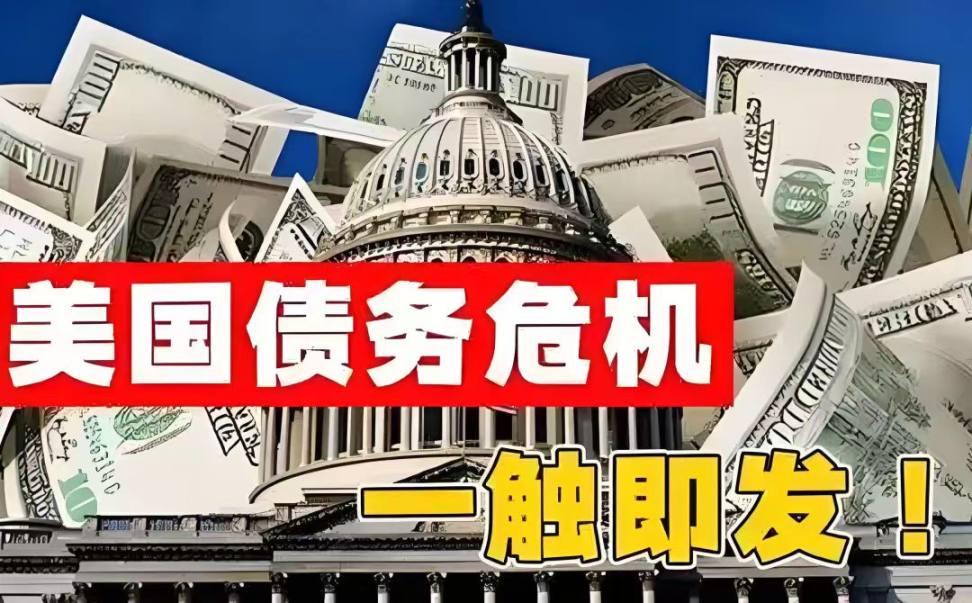
U.S. Treasury bonds are debt instruments issued by the U.S. Department of the Treasury to cover budget deficits or fund government expenditures. Each bond clearly states its face value, maturity date, and interest rate. For example, a bond with a face value of $100, an annual interest rate of 3%, and one year to maturity means the holder will receive $100 in principal plus $3 in interest at maturity—totaling $103. This low-risk profile makes U.S. Treasuries highly attractive to global investors, especially countries like Japan, which holds as much as $1.2 trillion.
However, bonds don't have to be held until maturity. Investors can sell them in the secondary market to obtain cash. Bond prices are influenced by supply and demand: strong demand drives prices up; oversupply causes prices to fall. Price fluctuations directly affect bond yields, forming the core of market dynamics.
II. A Hypothetical Scenario: Japan Sells Treasury Bonds

Suppose Japan decides to sell part of its U.S. Treasury holdings due to economic needs—such as stimulating domestic consumption or managing exchange rate pressure—and puts a large portion of its $1.2 trillion in bonds onto the market. According to supply and demand principles, the sudden increase in bond supply would drive down investor bids. For instance, a bond originally worth $100 might now sell for only $90.
This price drop significantly alters the bond’s yield. Consider again a $100 face-value bond with a 3% annual interest rate that pays $103 at maturity in one year:
-
Normal scenario: An investor pays $100, receives $103 at maturity, yielding 3% ($3 ÷ $100).
-
After the sell-off: If the market price drops to $90, an investor buying at $90 still receives $103 at maturity, earning $13—resulting in a yield of 14.4% ($13 ÷ $90).
Thus, selling bonds leads to lower prices and higher yields—a phenomenon in financial markets known as the "inverse relationship between bond prices and yields."
III. Immediate Consequences of Rising Yields
The rise in Treasury yields has multidimensional effects on markets and the economy. First, it reflects shifts in market confidence in U.S. debt. Higher yields mean investors demand greater returns to compensate for perceived risk—possibly due to the scale of the sell-off or growing concerns about U.S. fiscal health.
More importantly, rising yields directly increase the cost of issuing new Treasury bonds. The U.S. government often relies on a strategy called "rolling over debt"—issuing new bonds to finance maturing ones. If market yields remain at 3%, new bonds can be issued at similar rates. But if yields spike to 14.4%, new bonds must offer higher interest rates to attract buyers, or they will go unsold.
For example, suppose the U.S. needs to issue $100 billion in new bonds:
-
At 3% yield: Annual interest payment is $3 billion.
-
At 14.4% yield: Annual interest payment jumps to $14.4 billion.
This difference significantly increases the U.S. fiscal burden, especially considering the national debt already exceeds $33 trillion (as of 2023 data, likely higher in 2025). A surge in interest payments would crowd out other budget items such as infrastructure, healthcare, or education.
IV. Fiscal Dilemma and the Risks of "Borrowing from Peter to Pay Paul"

The sustainability of U.S. government debt relies heavily on low-cost financing. When yields rise and new bond rates climb, fiscal pressure intensifies. Historically, the U.S. has maintained debt sustainability through "rolling over debt"—borrowing new funds to repay old obligations. However, under high-interest conditions, this strategy becomes increasingly costly.
Using Japan’s sell-off as a trigger, assume market yields remain elevated—the U.S. could face the following challenges:
-
Debt snowball effect: High interest rates cause interest expenses to consume a larger share of the budget. According to projections by the Congressional Budget Office (CBO), if interest rates continue to rise, interest payments could account for over 20% of the federal budget by 2030, limiting government flexibility in economic stimulus or crisis response.
-
Erosion of market confidence: As a cornerstone of global reserve assets, abnormal volatility in Treasury yields may raise investor concerns about the U.S. credit rating. Although the U.S. maintains a AAA rating from some agencies, Standard & Poor’s downgraded it to AA+ in 2011. A large-scale sell-off could exacerbate such risks.
-
Pressure on monetary policy: Rising Treasury yields might force the Federal Reserve to adjust monetary policy—for example, raising the federal funds rate to curb inflation expectations—further increasing borrowing costs for businesses and consumers.
V. Global Economic Implications

Japan’s sale of U.S. Treasuries isn’t just America’s problem—it reverberates across global financial markets:
-
Dollar exchange rate volatility: Higher Treasury yields may boost demand for the dollar, leading to dollar appreciation. This hurts export-dependent economies like Japan, potentially prompting further bond sales and creating a vicious cycle.
-
Pressure on emerging markets: Many emerging economies have dollar-denominated debts. A stronger dollar and higher interest rates increase their repayment burdens, possibly triggering debt crises.
-
Global asset reallocation: Falling Treasury prices may prompt investors to shift capital to other safe-haven assets (like gold) or riskier assets (like equities), causing broader market volatility.
VI. How to Mitigate Sell-Off Risks?
To ease crises triggered by bond sell-offs, the U.S. and the global financial system need coordinated responses:
-
Fiscal reform in the U.S.: Reduce reliance on debt financing through tax optimization or spending cuts to strengthen market confidence in Treasuries.
-
International coordination: Major creditor nations (such as Japan and China) could engage in bilateral talks with the U.S. to negotiate gradual reductions in Treasury holdings, avoiding sharp market disruptions.
-
Federal Reserve intervention: In extreme cases, the Fed could use quantitative easing (QE) to purchase Treasuries, stabilizing prices and yields—though this risks fueling inflation.
-
Reserve diversification: Central banks worldwide could gradually diversify foreign exchange reserves, reducing dependence on U.S. Treasuries and spreading asset-specific risks.
Conclusion
U.S. Treasury bonds are more than just government IOUs—they are the cornerstone of the global financial system. The hypothetical scenario of Japan selling $1.2 trillion in Treasuries reveals the delicate and complex balance within the bond market: selling drives prices down, yields up, and subsequently increases U.S. fiscal costs, potentially undermining global economic stability. This chain reaction reminds us that debt decisions by a single nation can have far-reaching global consequences. In today’s environment of high debt and rising interest rates, countries must carefully manage their financial assets and work together to maintain market stability—so that the game of "borrowing from Peter to pay Paul" does not spiral into an unmanageable fiscal crisis.
Join TechFlow official community to stay tuned
Telegram:https://t.me/TechFlowDaily
X (Twitter):https://x.com/TechFlowPost
X (Twitter) EN:https://x.com/BlockFlow_News
 @News_Techub