Trump's tariff policy is impacting the Bitcoin mining industry
TechFlow Selected TechFlow Selected
Trump's tariff policy is impacting the Bitcoin mining industry
U.S. mining machines will become more expensive, and the market share of mining will decline.
 Navigating Web3 tides with focused insights
Author: Jaran Mellerud
Translation: TechFlow
Trump's tariff policy will have a significant impact on the Bitcoin mining industry. Below is an analysis of how this policy affects the sector.
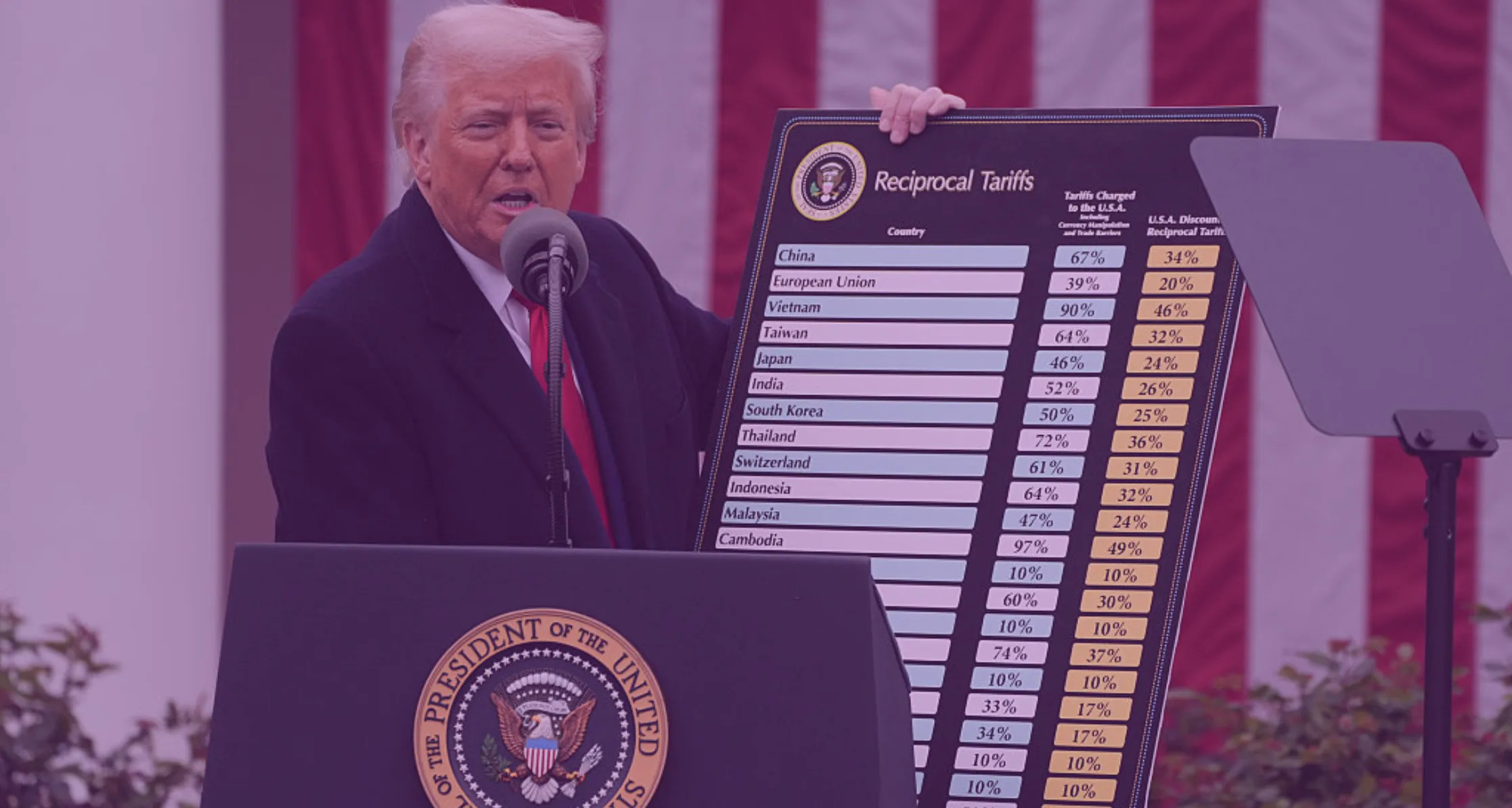
On April 2, Trump announced comprehensive new tariffs on imported goods aimed at strengthening the U.S. trade balance. Southeast Asia has been hit hardest, which will profoundly affect the Bitcoin mining hardware supply chain. This region hosts most mining equipment manufacturers, including major producers such as Bitmain, MicroBT, and Canaan.
In addition, since the United States accounts for 36% of global hash rate, these tariffs could significantly impact miners’ profitability, hardware prices both within and outside the U.S., and the global distribution of computing power.
Before diving into the multifaceted impacts of these tariffs on the Bitcoin mining industry, let’s first briefly explain how tariffs work.
How Do Tariffs Work?
Tariffs are taxes imposed by governments on imported goods, typically intended to protect domestic industries by increasing the price of foreign products. When tariffs are implemented, importers must pay a percentage of the declared value of the goods to customs upon entry.
For example, if a U.S. company imports electronic products worth $1,000 from China and the tariff rate is 54%, the importer must pay an additional $540 in tariffs, bringing the total import cost to $1,540. This increased cost is usually passed on to consumers or reduces the profit margins of importers.
Tariff History: The China-U.S. Trade War and Its Ripple Effects
Bitcoin mining is a global industry, with the United States being a key player. Trade wars and resulting tariffs have already impacted the sector. Historically, however, companies within the industry found ways to circumvent these tariffs. In the following sections, we’ll explore how tariffs have historically affected the Bitcoin mining supply chain and what strategies companies adopted to avoid them.
In 2018, the U.S. government imposed a 25% tariff on a range of Chinese goods, including electronics, as part of the China-U.S. trade war.
In response, companies like Bitmain began seeking ways to bypass these high tariffs. They shifted production from mainland China to Southeast Asian countries such as Indonesia, Thailand, and Malaysia, where exports to the U.S. either faced no tariffs or much lower rates—typically between 1% and 3% for electronics.
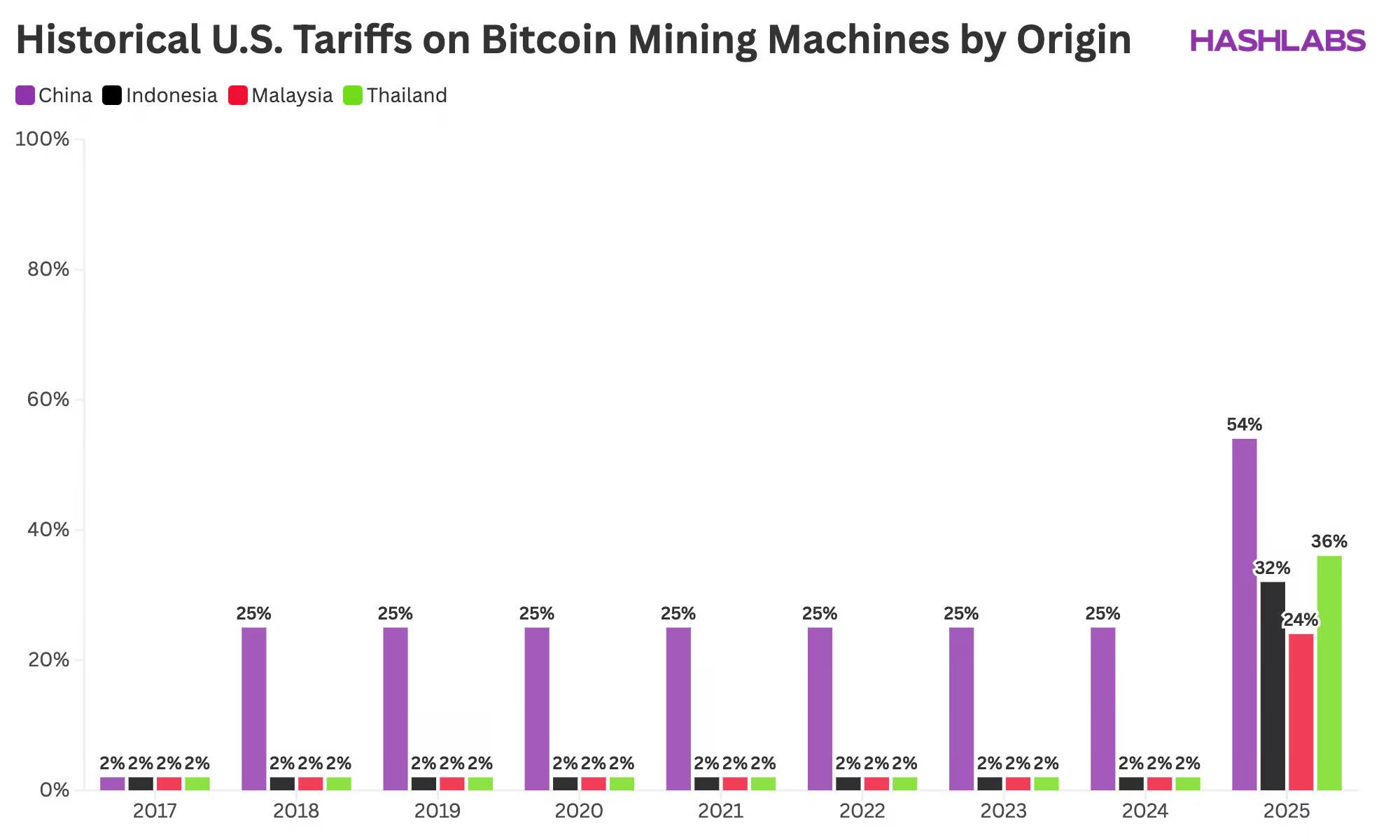
This strategy worked well—until earlier this month, when Trump raised tariffs on goods imported from Indonesia, Malaysia, and Thailand to 32%, 24%, and 36%, respectively. As a result, companies like Bitmain and MicroBT can no longer fully avoid these high tariffs, originally targeted only at goods from China.
In the next section, we will detail how these newly implemented tariffs will affect the Bitcoin mining industry.
Mining Hardware Prices in the U.S. Will Rise Significantly
The most immediate and obvious effect of tariffs is that mining hardware prices in the U.S. will rise sharply.
As Ethan Vera pointed out on “The Mining Pod” podcast: “…any company operating in the U.S. that wants to buy mining rigs will need to pay an extra 22% to 36% for those machines.” This aligns with our data.
However, the 22% price increase applies only to imported miners. Currently, there is still a substantial inventory of mining equipment available domestically in the U.S. According to Bitmars pricing data, mining hardware in the U.S. currently trades at a 13% to 25% premium compared to Hong Kong. As U.S. stockpiles dwindle, this gap may narrow to around 22%, plus minor shipping costs.
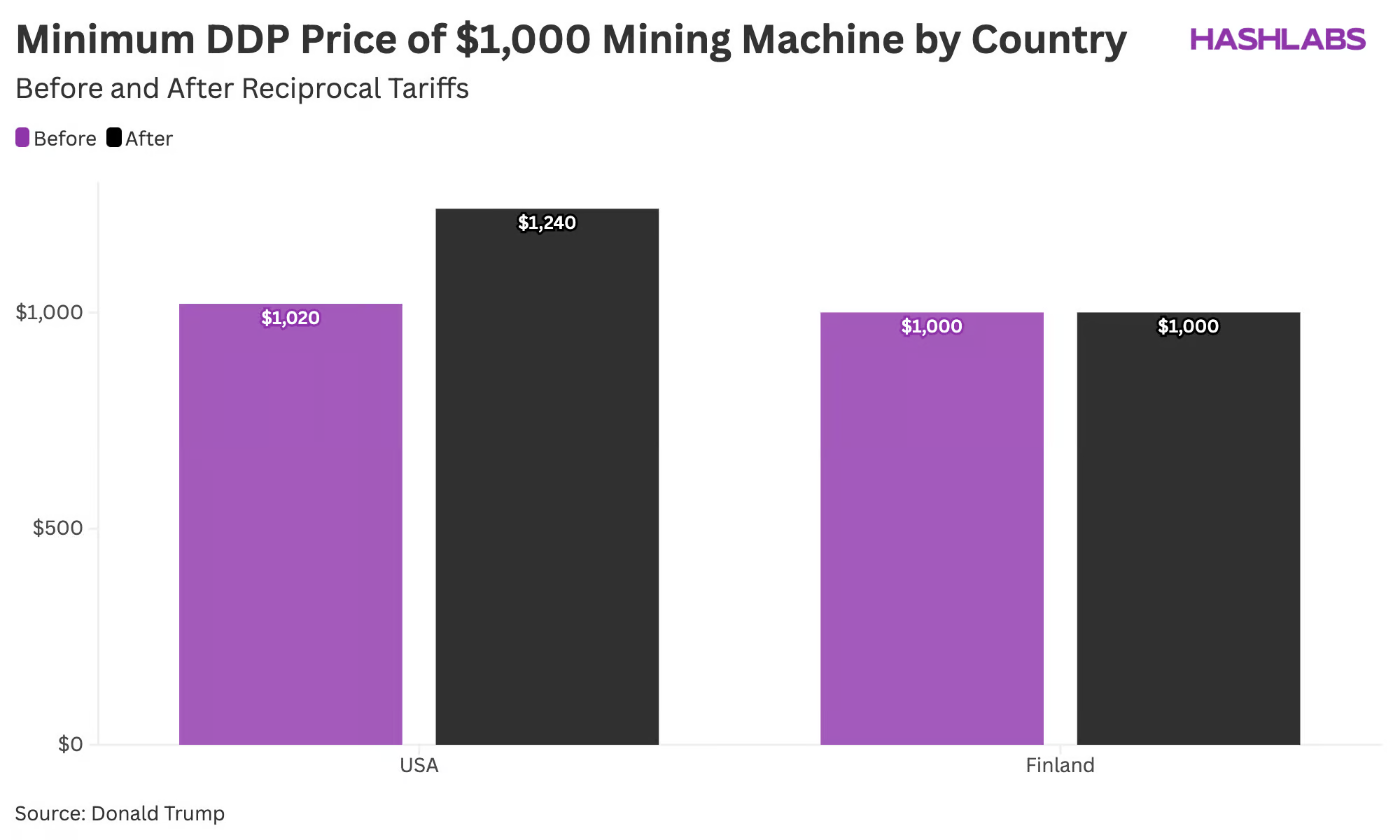
The chart above shows the final cost of importing a $1,000 Bitcoin mining device into the U.S. and Finland before and after the implementation of reciprocal tariffs. Finland, like most other countries, imposes no tariffs on electronics imported from Asia—we use it as a reference point because we operate mining operations there.
As shown, initial import costs into the U.S. were slightly higher due to about a 2% tariff. But after the new tariffs take effect, the minimum cost of a $1,000 mining rig in the U.S. rises to $1,240—a significant increase. Meanwhile, in Finland and most other countries without tariffs, the cost of a $1,000 miner remains unchanged.
In an industry as cost-sensitive as Bitcoin mining, a 22% increase in hardware prices could make operations financially unsustainable. Later in this article, we will discuss how these changes affect mining profitability in the U.S. versus other regions.
Mining Equipment Outside the U.S. May Become Cheaper
As mining hardware prices rise in the U.S., prices elsewhere in the world may experience an opposite downward trend.
Demand for miners shipped to the U.S. is expected to drop sharply, possibly nearing zero. Given that the U.S. has been a dominant force in the ASIC (Application-Specific Integrated Circuit) market, accounting for nearly 40% of global hash rate, a sharp decline in U.S. purchases will lead to a notable reduction in global demand.
With reduced demand from U.S. miners, manufacturers will face excess inventory originally destined for the American market. To clear this surplus, they may need to lower prices to attract buyers in other regions.
While it's difficult to precisely predict how much mining hardware prices will fall—since mining profitability also influences pricing—we can conclude based on basic economic principles: decreased demand for an asset typically leads to lower prices.
This price decline will make it easier for miners outside the U.S. to continue expanding, potentially contributing to the decline in the U.S.'s share of global hash rate, which we'll discuss next.
The U.S. Share of Global Bitcoin Mining Will Decline
Since China banned Bitcoin mining in 2021, the United States has been the dominant force in the sector. According to Hashrate Index data, the U.S. currently accounts for 36% of global hash rate.
Like any business activity, Bitcoin mining revolves around balancing risk and return. Over the past four years, the U.S. attracted substantial mining investment because it was seen as one of the lowest-risk environments globally, offering political stability, abundant energy resources, and liberalized electricity markets. Additionally, miners avoided major import tariffs until now, helping control capital expenditures. Together, these factors created an unmatched risk-return balance.
To understand how new tariffs reshape the U.S. position in global mining, we begin by analyzing returns.
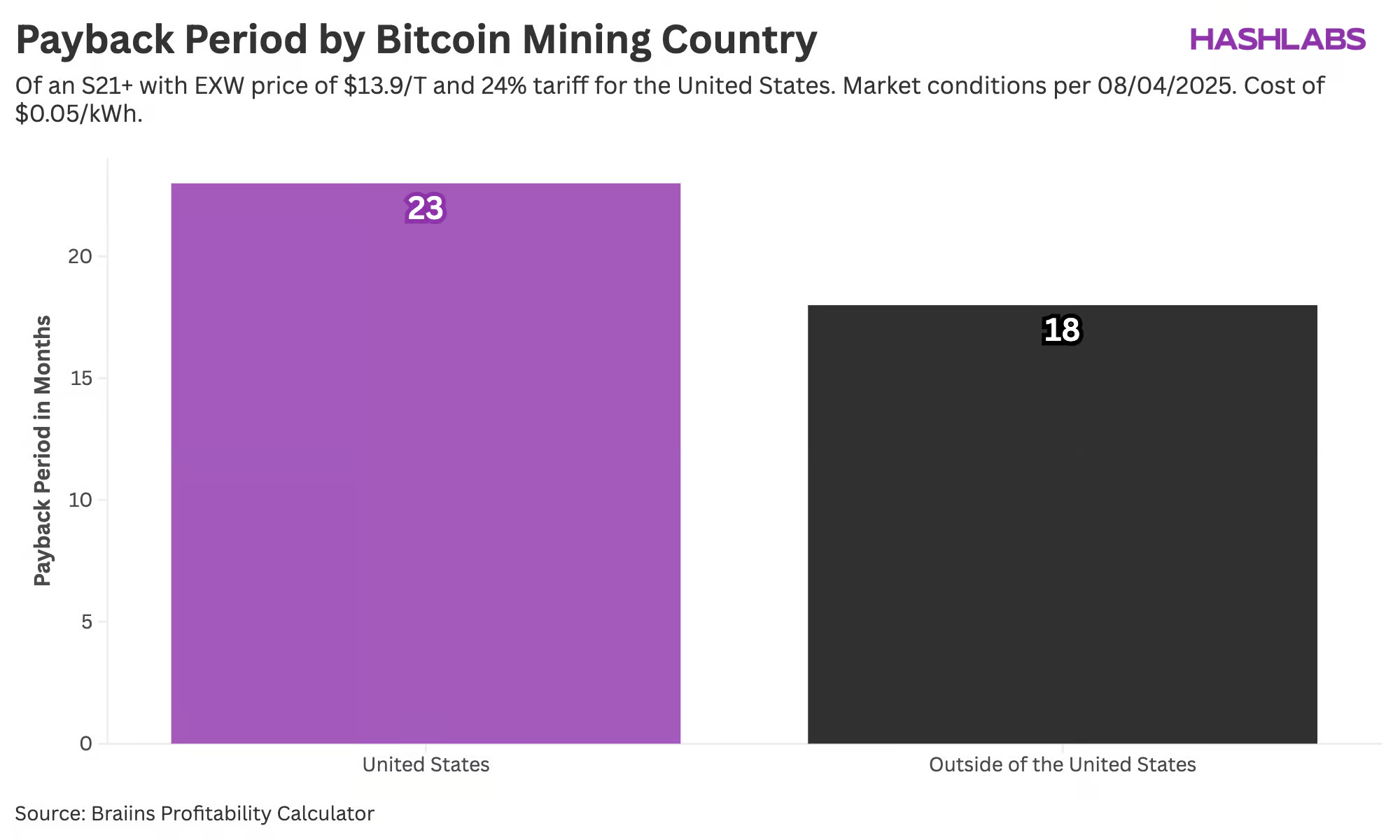
The chart below shows the projected payback period for deploying an Antminer S21+ in the U.S. versus a country unaffected by tariffs. As the data shows, paying 24% more in the U.S. for the same machine significantly extends the payback period—undermining the core economic rationale for mining in the U.S.
Beyond higher hardware costs, the risk side of the equation has also been damaged. Many U.S. miners felt reassured when Trump regained power, expecting regulatory stability. Instead, they're now experiencing the flip side of his unpredictable policymaking. Even if these tariffs are lifted within months, the damage is done—the confidence needed for long-term planning has been shaken. When critical variables can change overnight, few are willing to make major investments.
In short, the once-unmatched risk-return balance of U.S. Bitcoin mining has deteriorated significantly. This shift may gradually reduce the U.S. share of global mining relative to other countries.
Of course, existing mining rigs already imported into the U.S. won’t be affected—there’s no reason for miners to shut them down. But the path to expansion has become steep and uncertain.
Meanwhile, miners in tariff-free jurisdictions will continue scaling up, consolidating their competitive advantage. Therefore, the U.S. share of global hash rate is expected to decline—not because miners are exiting, but because they’re no longer growing.
From a broader perspective, this could lead to a more geographically diverse Bitcoin mining landscape than ever before. While the U.S. will remain a major player, its dominance will weaken, leading to a more balanced global distribution of hash rate. This aligns with predictions from Kristian Csepcsar of Braiins and Summer Meng of Bitmars.
Network Hash Rate Growth Will Slow Down
In the previous section, we explained how the new tariffs could lead to a decline in the U.S. share of global Bitcoin mining. Given the U.S.’s important role in global hash rate, a slowdown—or even complete halt—in its growth will inevitably slow overall global hash rate growth.
According to Hashrate Index data, as of Q2 2025, the U.S. accounted for approximately 36% of global hash rate. In contrast, CBECI data shows the U.S. share was about 38% in January 2022. This indicates that over the past three years, the growth rate of the U.S. mining industry has roughly matched that of the rest of the world.
Assuming this trajectory would have continued, the U.S. would contribute about 36% of future global hash rate growth. Therefore, if the U.S. mining sector stagnates due to tariffs, global hash rate growth could slow by up to 36%.
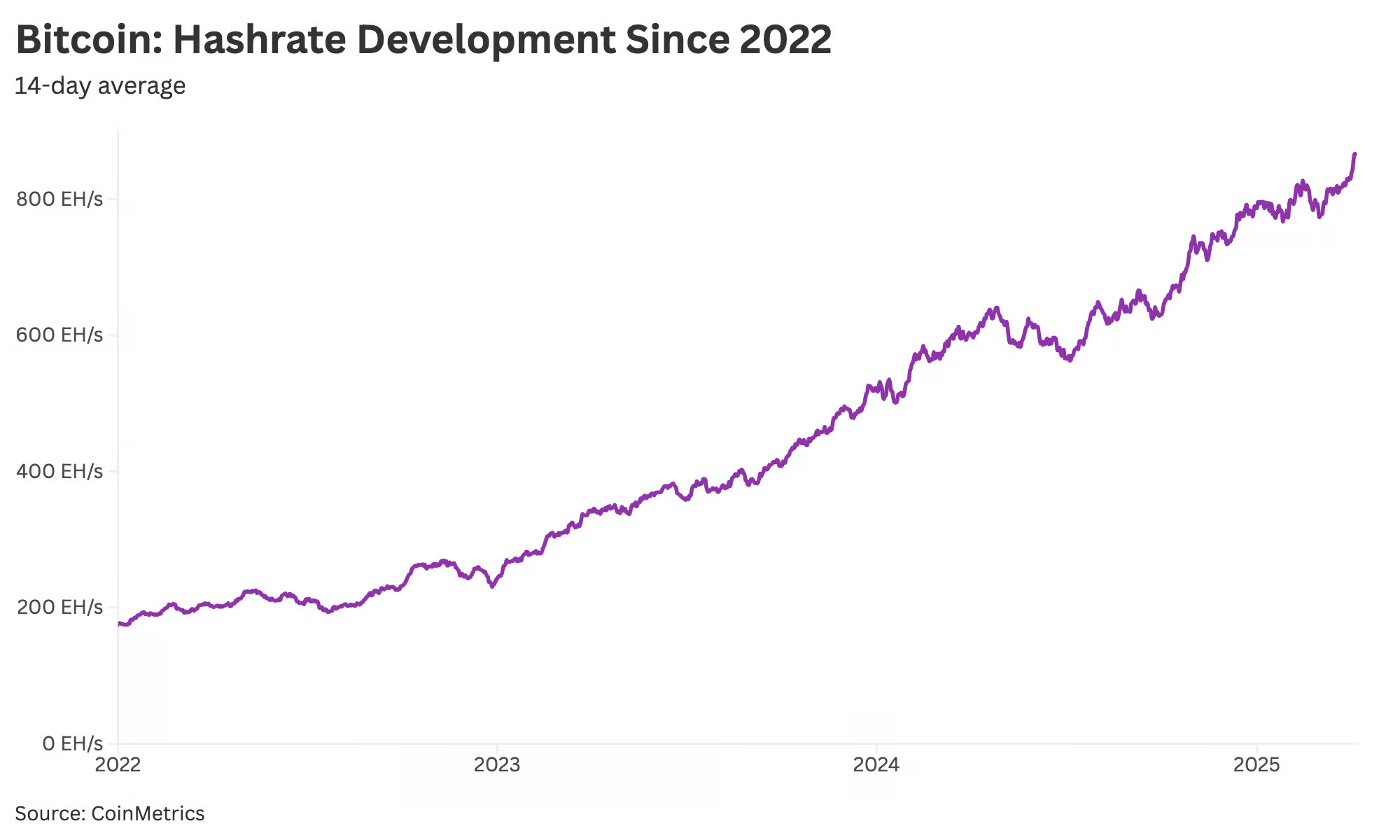
However, it's highly unlikely that U.S. mining growth will stop entirely. As we’ll explain in the next section, these tariffs may be temporary, and circumvention methods may emerge. A more realistic expectation is that the U.S. mining industry will continue expanding—but at a much slower pace. The 36% reduction in global growth should thus be viewed as an absolute upper bound; the actual impact may be somewhat lower.
In the long run, if U.S. growth slows or stalls, miners in other countries may accelerate expansion to gradually fill the gap.
Nevertheless, in the short to medium term—over the next one or two years—we may see global hash rate growth slower than previously anticipated. In an industry where slower hash rate growth means higher revenue, this could be a welcome development for miners worldwide.
Is This Temporary or Permanent?
So far, this article has taken a rather pessimistic view of how these tariffs affect the U.S. Bitcoin mining industry—and rightly so, given their potential immediate and severe consequences. However, the situation is more complex, and several important questions remain.
In the following sections, we’ll address these questions and assess the long-term outlook for the U.S. mining industry amid current challenges.
Will Trump repeal the tariffs a few months after implementing them?
Possibly—especially considering the unpredictability and reactive nature of Trump’s policymaking. If the tariffs are lifted, U.S. miners could once again import mining equipment at competitive prices, alleviating many of the immediate pressures they face.
However, the damage to long-term investor confidence may already be done. Even if tariffs are removed, the mere fact of their sudden introduction makes large-scale, long-term investment in U.S. mining more difficult. In a capital-intensive industry like Bitcoin mining, policy stability is crucial—and right now, that’s in short supply.
Can mining hardware manufacturers circumvent tariffs by importing chips from Taiwan and assembling miners in the U.S.?
Manufacturers could indeed bypass tariffs by importing chips from Taiwan and assembling mining rigs locally in the U.S. According to official White House statements, semiconductors are exempt from reciprocal tariffs. This means chips can be imported duty-free into the U.S. However, local production still requires other components, many of which have become more expensive due to tariffs, contributing to broader inflation in the U.S. economy.
Currently, manufacturers like MicroBT have already established assembly lines in the U.S., though Bitmain has not followed suit. Even with MicroBT’s capacity, its output over the next 1–2 years will fall far short of meeting U.S. demand for mining equipment.
Thus, while technically feasible, this option cannot solve the immediate problems facing U.S. miners. In the long term, however, we expect more mining assembly to gradually shift to the U.S., as manufacturers adapt to the new tariff environment and expand local production. This transition could help reduce reliance on international imports and mitigate the impact of tariffs over time.
Is it realistic to build a fully localized Bitcoin mining hardware supply chain in the U.S., from chip manufacturing to final assembly?
Establishing a complete Bitcoin mining hardware supply chain in the U.S.—from chip fabrication to final assembly—is a complex challenge, despite strong industry and political support for localizing chip production. Currently, the most advanced chips used in Bitcoin mining are produced in Taiwan and South Korea, regions with decades of expertise and finely tuned supply chains. The U.S.’s dependence on Asian nations for critical components represents a major geopolitical risk not just for Bitcoin mining, but for the entire high-tech industry.
While localizing mining rig assembly in the U.S. is feasible, continued reliance on imported chips remains a key obstacle. Companies like Bitmain, MicroBT, and Canaan could establish assembly lines in the U.S., and new entrants like Auradine are eyeing this market. However, without domestically produced cutting-edge chips, these manufacturers will remain dependent on imports for the foreseeable future.
Kristian Csepcsar of Braiins further emphasized this challenge, saying: “Chip foundries have begun building manufacturing facilities in the U.S., but they start at higher nanometer nodes. It will take years to develop the talent and expertise required to move to lower nanometer processes. This process is gradual—companies start with higher-nanometer chips to ensure profitability before expanding into more advanced technologies. Even if the U.S. pushes forward, achieving a fully localized Bitcoin mining hardware supply chain is nearly impossible and would come at an extremely high cost. The real question is whether, given high demand, manufacturing in China and paying tariffs might still be cheaper. After all, launching end-to-end manufacturing in the U.S. requires time and massive investment—just as Bitmain recently attempted to build an assembly line in China, though little has been heard since.”
In short, while the U.S. has significant potential in assembly and chip manufacturing, a fully localized Bitcoin mining hardware supply chain remains a long-term goal rather than a near-term reality. The cost, time, and complexity involved make large-scale realization unlikely in the coming years.
Conclusion
In summary, the newly implemented tariffs on imported goods will significantly impact the U.S. Bitcoin mining industry—leading to higher hardware prices, a declining U.S. market share, and slower global hash rate growth—but the long-term effects are more nuanced.
As the situation evolves, miners and industry stakeholders must closely monitor political and economic developments to respond to potential tariff and policy changes. While the U.S. mining sector may face short-term challenges, opportunities for growth and adaptation remain within the global mining ecosystem.
Join TechFlow official community to stay tuned
Telegram:https://t.me/TechFlowDaily
X (Twitter):https://x.com/TechFlowPost
X (Twitter) EN:https://x.com/BlockFlow_News
 @HashlabsMining