








Redefining Investment Thinking: Howard Marks' Latest Insights
TechFlow Selected TechFlow Selected
Redefining Investment Thinking: Howard Marks' Latest Insights
Mackenzie pointed out that the world is not coming to an end, but the investment rules are undergoing fundamental changes.
 Navigating Web3 tides with focused insights
Author: Kintsugi Investing
Translation: Baihua Blockchain
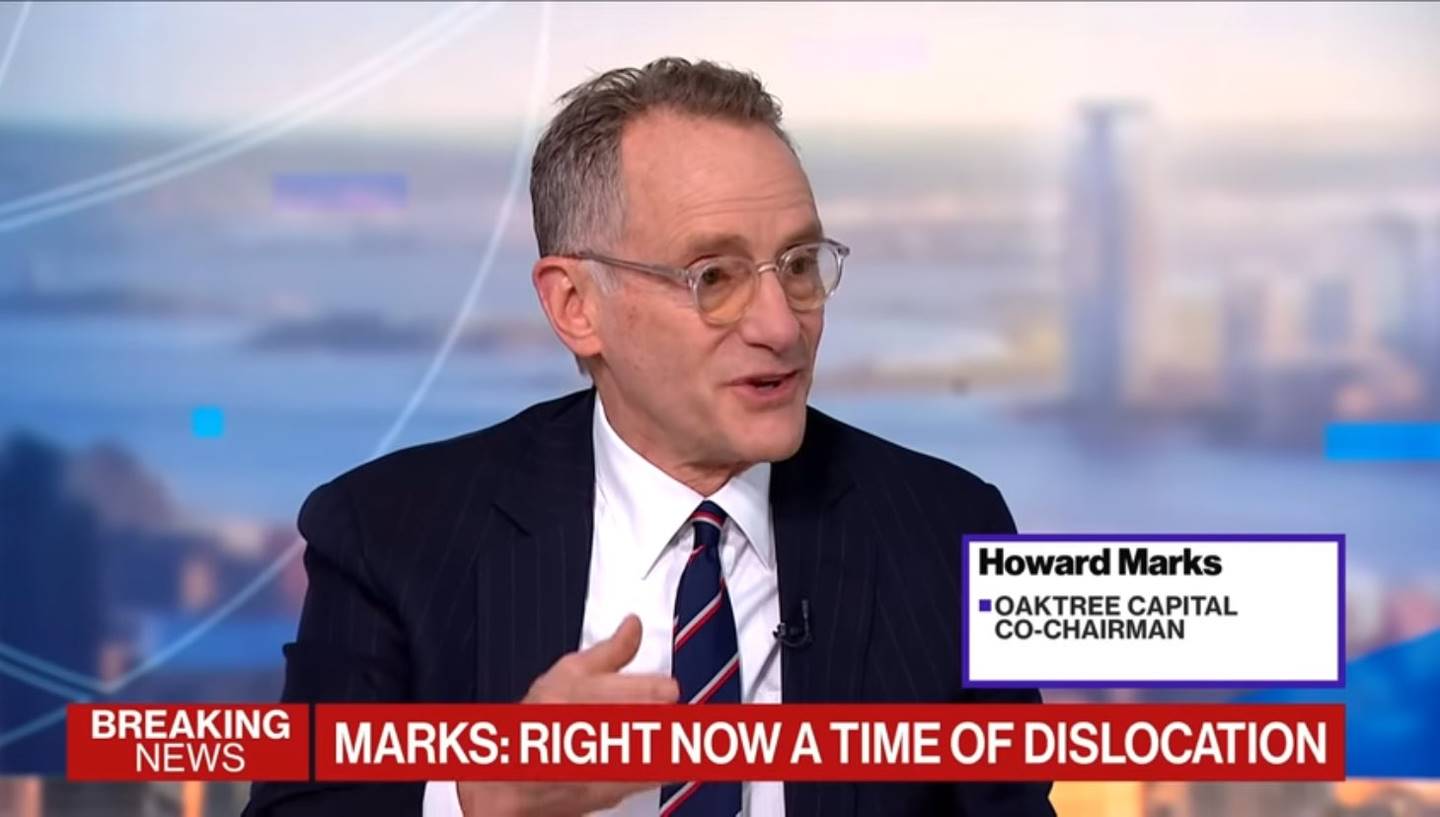
Recently, investment legend Howard Marks shared his profound insights on the current investment landscape during a Bloomberg interview. He wasn't trying to spread fear or predict short-term market movements. Instead, he focused on explaining how "Liberation Day" is redefining the way we think about investing.
Marks pointed out that the world isn't ending, but the rules of investing are undergoing fundamental changes. For decades, investors have benefited from the tailwinds of globalization—open trade, efficient supply chains, and low commodity prices. However, these tailwinds are gradually fading. Instead, we're entering an era of fragmentation. Countries are reassessing trade policies, tariffs are rising, and domestic production is being prioritized—even at the cost of higher prices. This shift has profound implications for the economy, inflation, and asset valuations.
Trade is not merely a political issue; it's also an engine of economic growth. When nations specialize and engage in efficient trade for mutual benefit, everyone gains: lower prices, higher productivity, and broader access to goods. But reversing this trend comes at a cost. One of the most underappreciated effects of globalization has been its role in suppressing inflation. As global trade expanded, the cost of many goods declined significantly—benefiting central banks, consumers, and investors alike. Yet when trade contracts, cost pressures rise. Domestic manufacturing typically means higher wages, greater input costs, and lower efficiency. This isn't inherently bad, but it is inflationary—challenging the assumptions we've relied on for decades.
So how should investors respond? Marks emphasizes the need to rethink the context behind every investment decision. For instance, if structural inflation is higher, valuation multiples may need downward adjustments, capital costs will rise, and discount rates once again become critical. He’s not saying “sell everything,” but rather urging investors to recalibrate their strategies and avoid relying on outdated models in this new environment. Assume less mean reversion, anticipate more structural shifts, and remain cautious about the risks taken.
Another key point: in such an environment, prediction doesn’t work. We cannot reliably forecast what policies, partnerships, or power dynamics will look like six to twelve months ahead. This isn't a flaw—it's reality. If precise forecasting is impossible, what can we do? Marks believes we can anchor ourselves in probability, positioning, and pricing. Rather than attempting to predict, focus on whether assets are fairly priced relative to this new backdrop, then ask yourself: “Does this make sense?”
Discipline becomes especially important amid high uncertainty. Marks advises investors to view volatility as a lens for uncovering opportunities, not as a reason to retreat. The best opportunities often arise when others hesitate—but you must stay logical, not emotional. Also, don’t confuse price declines with increased risk. Markets discount future events; that’s part of the cycle. The crucial question isn’t “Could it go lower?” but rather “Am I being fairly compensated for the risk I’m taking?”
Despite these shifts, Marks still sees the U.S. as a strong place to invest. It has deep capital markets, world-class innovation, and the rule of law—still superior to most alternatives, even as it evolves. However, the label of “automatic best choice” no longer applies. Judgment, not assumption, is now required.
Howard Marks didn’t offer specific market forecasts—he offered perspective. This moment calls for more than reaction; it demands a reassessment of how—and why—we invest. The world is changing, and smart investors will adapt accordingly.
Join TechFlow official community to stay tuned
Telegram:https://t.me/TechFlowDaily
X (Twitter):https://x.com/TechFlowPost
X (Twitter) EN:https://x.com/BlockFlow_News
 @kintsugiinvest






