








IOSG: Memeapp, will it be the next风口 where Crypto meets AI?
TechFlow Selected TechFlow Selected
IOSG: Memeapp, will it be the next风口 where Crypto meets AI?
Memeapp is a type of application that leverages AI-generated app capabilities, lightly integrates crypto, and issues its own assets—some people currently refer to this category as "APP coin."
 Navigating Web3 tides with focused insights
By Danny @IOSG
What is Memeapp?
Memeapp is a category of applications that leverages AI to generate apps, lightly integrates with crypto, and issues its own assets. Some now refer to this as "APP coin".
Users simply input descriptions of an app, and an interactive frontend is generated. Combined with MCP, pre-built components, databases (blockchain), and cloud-based (decentralized) rapid deployment, the process becomes seamless.
MCP stands for Model Context Protocol. It enables AI models to connect with external data and tools by providing server-side Agent integration—acting like a translator that allows AI to interact easily with various tools and data sources without requiring custom code for each connection. This significantly expands Agent capabilities. Issues such as data not being crawlable or tools inaccessible when using agents like Manus will be resolved as services progressively open up to Agents on the backend.
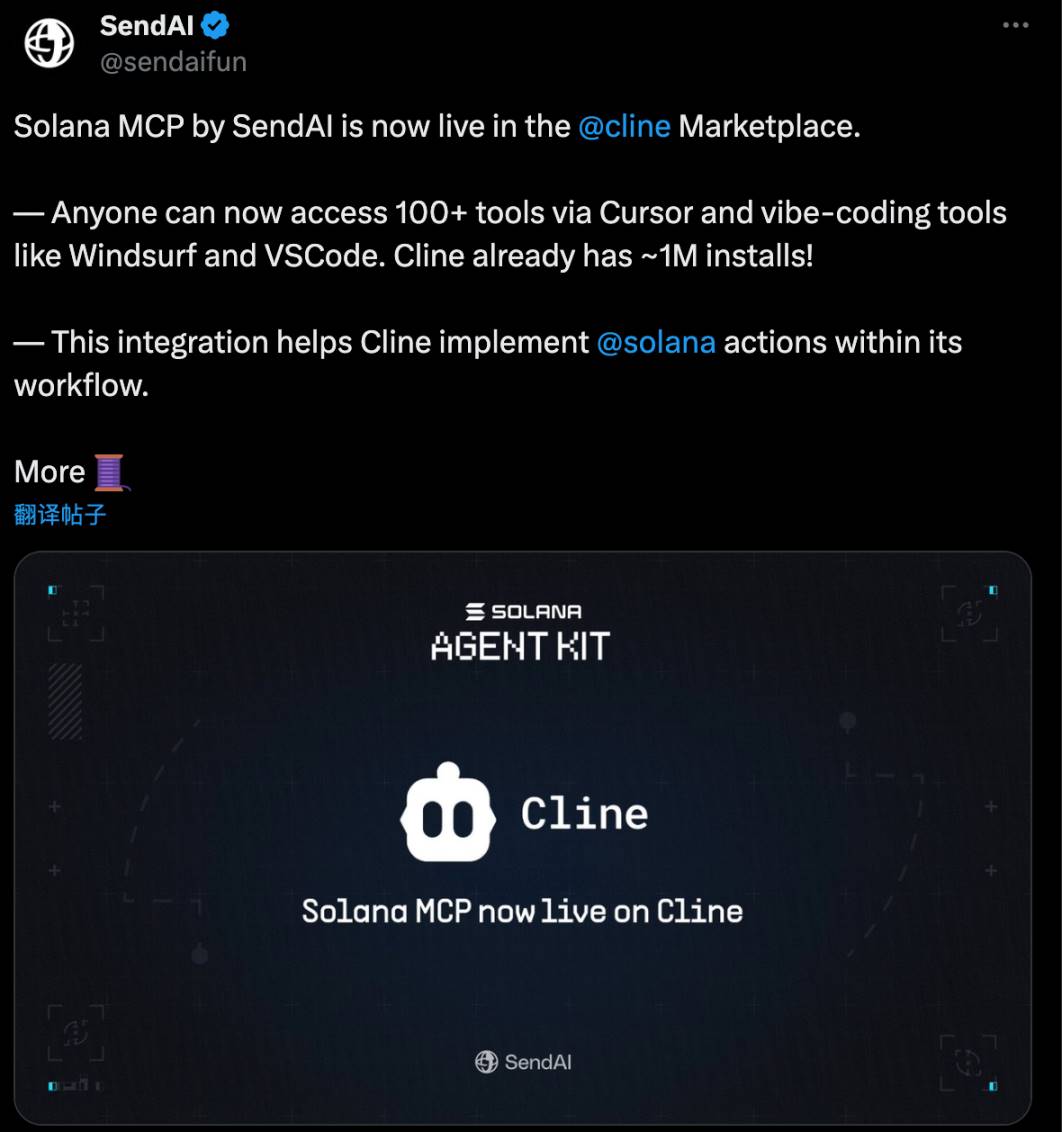
SendAI has released a Solana MCP within Cline, a widely used coding agent, enabling agents to read and write transactions on the Solana blockchain. This dramatically lowers the barrier for future AI-written Solana applications.
These capabilities allow for the rapid creation of simple-logic applications. While AI cannot yet write production-grade smart contracts—and audited, battle-tested contracts are unlikely to be quickly replaced by AI-generated ones—in the future, contract generation could enable truly crypto-native applications.
Such apps are functionally simple but vary greatly in creativity and utility depending on the designer, carrying strong meme culture attributes. Their prototypes already exist—sites on Dexscreener linked to memecoins.
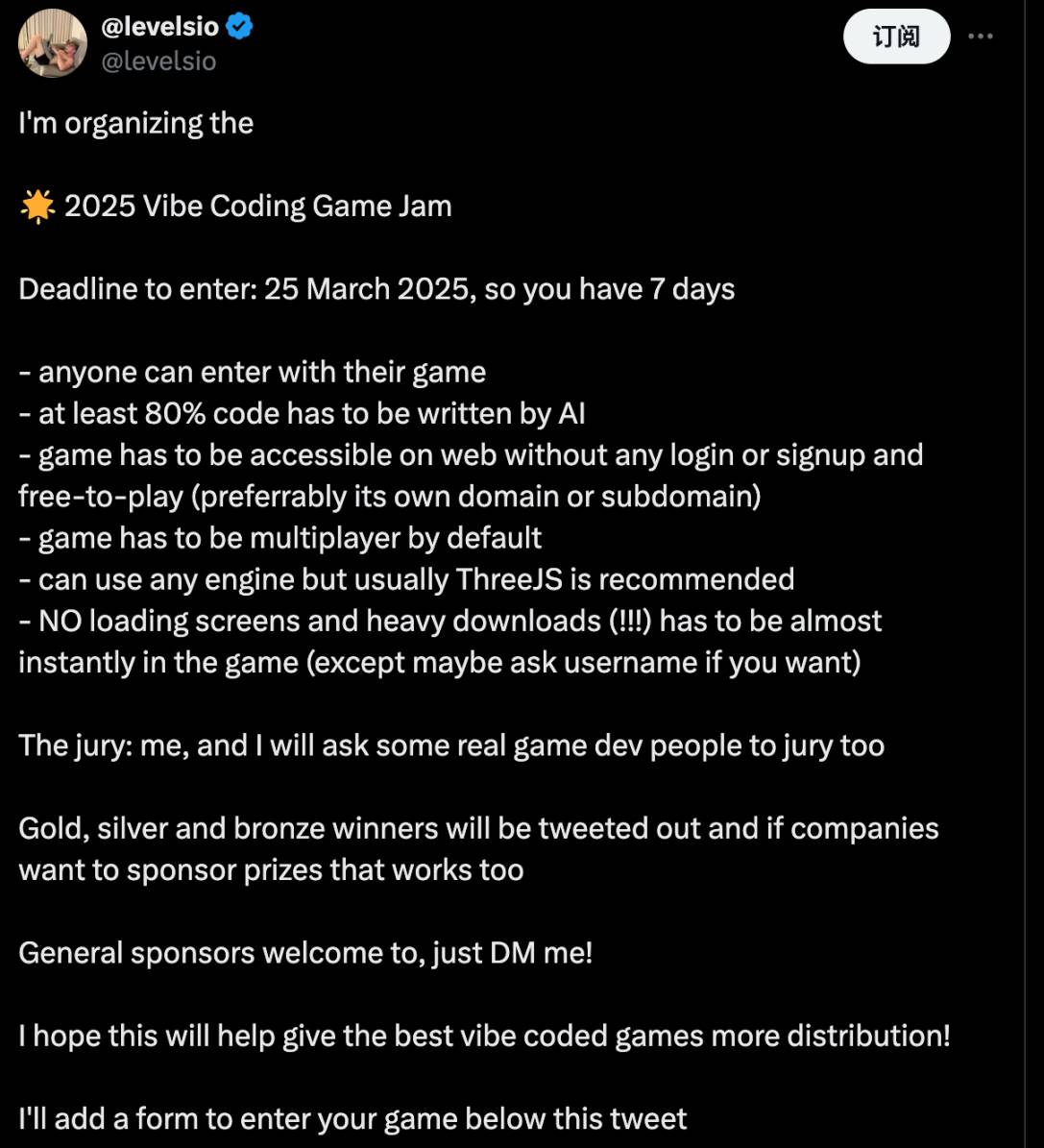
Currently, Memeapps mostly appear as interactive websites and mini-games, already sparking creativity. Noted indie developer @levelsio hosted a "Vibe coding" contest on Twitter. Solana launched a similar event called Vibe Jam.
Why Pay Attention Now?
The logic of Crypto + AI still follows Web2 AI development, enhanced by crypto's ability to tokenize assets.
So what’s happening on the real-world AI application side? Products like Windsurf, v0, Bolt, and Lovable are sparking a wave of mass participation in app creation (Lovable recently raised $15M in February). Tools like Manus—with VM and MCP-enabled Agents—have delivered Aha moments, redefining software development. This innovation, known in English as "Vibe coding," transforms coding from manual labor into creative expression.

After years of refinement, these tools have become highly usable. Since 2025, emerging products have been sufficient for tasks like website building, data dashboards, and small games. Unlike code-assist tools such as Cursor or Windsurf, Vibe coding platforms reduce development barriers to zero—users can build and even debug entire apps via natural language, unlocking powerful customization, cost reduction, and efficiency gains. App development thus becomes a permissionless activity accessible to all.
With advancements in MCP and related technologies, AI’s autonomy in data acquisition and code generation has greatly improved. While producing complex, utility-rich tools remains challenging at present, creating meme-centric apps is well within reach. Hence, mini-games and data panels are currently popular. Software creation has effectively become equivalent to content creation.
Why Combine with Crypto?
The Value Crypto Brings to Memeapp
Solving the Cold Start Problem
One of the biggest commercial challenges facing Memeapp today is the cold start problem. As AI-generated apps grow exponentially, the app market will become increasingly crowded. How to help high-quality apps stand out and acquire their first users becomes critical. In this context, fair launch models like Pumpfun offer an ideal solution—ensuring fair initial participation while effectively driving early-stage growth.
Challenges of Fragmented Ownership
The low cost and ease of replicating AI apps intensify competition. Additionally, the link between creators and operators of AI apps is weak, with no effective mechanism for shared incentives. How to incentivize continuous innovation, protect intellectual property, and fairly distribute and integrate stakeholder interests remain urgent issues. Blockchain technology under Web3 offers new possibilities to address these problems.
As tokenized AI-generated applications, Memeapps truly bring the IPO concept onto the blockchain, opening a new path for capitalizing creativity. This not only attracts over 5.5 billion global internet users but also offers a novel way for AI-connected users to create and share value. With blockchain, creators ensure transparent and traceable ownership, while globally sharing the fruits of their work.
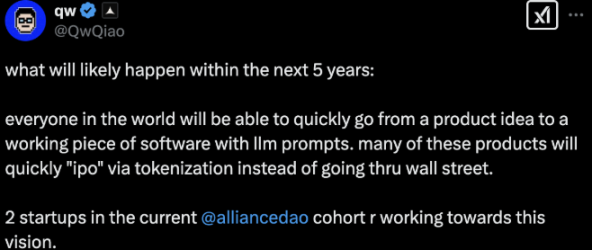
It’s no surprise that various on-chain ownership combinations and derivative玩法 will soon emerge.
The Value Memeapp Brings to Crypto
User-generated software brings innovative interaction experiences—especially impactful in the meme space, akin to short videos delivering a "downward strike" in engagement. Thus, Memeapp is not just a superior alternative to Memecoin but also effectively channels degens’ speculative energy.
For example, a Memeapp-building challenge themed around “morning routine” can spark interest and creativity. I believe people would be curious to explore how winning entries turn such ideas into engaging apps.
At its core, Memeapp fills the gap left by decentralized asset issuance. In early crypto, only developers who built valuable products could issue assets to capture value. However, models like Pumpfun democratized asset issuance but led to excessive chaos due to lack of filtering mechanisms. P influencers earn rewards by doing preliminary discovery, yet users still rely on issuer reputation, contract addresses, Twitter activity, and site quality to judge legitimacy.
This is one reason Memeapp exerts a healthier, more sustainable industry impact compared to Memecoin. Through decentralization and more structured approaches, Memeapp offers greater certainty to users, positively advancing the broader crypto ecosystem.
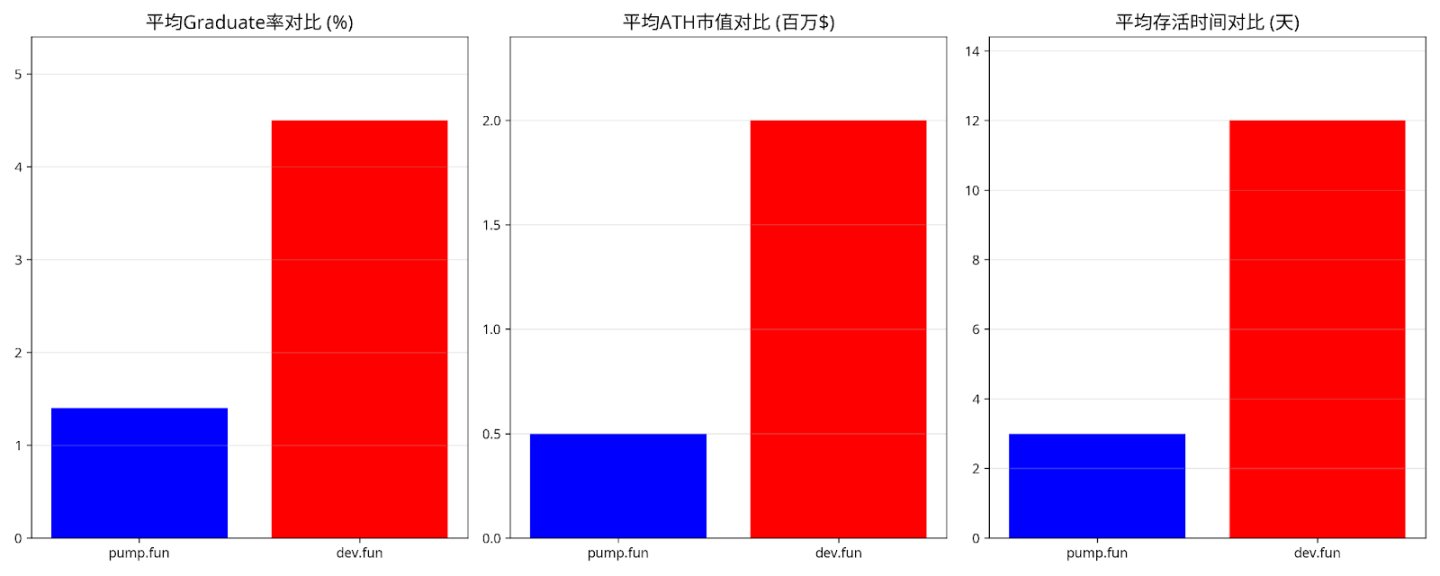
Looking at launch data from pumpfun: dev.fun uses pump.fun for token launches, yet dev.fun tokens show a graduation rate of about 4.5%, significantly higher than pump.fun’s far-below-1% figure. If we define longevity as the duration a post-launch token price remains above its bonding curve valuation, dev.fun tokens survive on average for ~12 days—far exceeding pump.fun’s three-day average. This demonstrates Memeapp’s superior quality and sustainability versus Memecoin.
Soon, participants across the industry will build their own apps, linking individuals, organizations, and ecosystems—creating ripple effects beyond imagination.
Colosseum’s founder and @devfunpump investor @crabbylions used AI to create rick, a grants platform whose token rewards top-tier apps on dev.fun—quickly spawning numerous rick-themed apps.
This means that even within the crypto industry itself, such platforms can simplify and tokenize every action and activity, completely transforming how we build the industry.
What’s Next for Memeapp?
As early adopters begin to recognize the appeal of Memeapp (and I believe this will happen soon), it has the potential to evolve into a robust APP Coin platform. In the future, it won’t just be a simple app—it will support more complex logic contracts, built natively atop AI and crypto infrastructure, driving ecosystem-wide upgrades.
AI-written contracts are a dream direction for many teams, but security is paramount. Therefore, compared to general Vibe coding platforms, the bar for AI writing contracts will be higher. Still, EVM (Ethereum Virtual Machine) is relatively friendly—for example, open-source libraries like OpenZeppelin already allow AI to easily generate basic template contracts. Once AI can write complex contracts, however, it will unlock endless innovation, bringing new possibilities to the entire crypto world.
For instance, current token launch models on platforms like Pump—including token standards, bonding curve parameters, pool size, and liquidity migration—are hardcoded. Imagine a launchpad where users and AI converse to write customized contracts with adjustable parameters and mechanics—the creative potential would be boundless.
Many AI infrastructures lacking use cases will roll out similar offerings. This marks a paradigm shift—from chain-based AI focused on trading Agents to AI centered on real application scenarios.
In the long run, mastering contract-writing capability will allow AI to further penetrate crypto. Remember the two most important organizational structures in blockchain: L2s and DAOs—they are fundamentally contracts. Ethereum’s long-promised vision of全民, fully automated, customizable, and differentiated chain issuance finally becomes tangible.
@Ch40sChain is pioneering this direction, built by the team behind @NethermindEth. Notably, it was previously led by the current Executive Director of the Ethereum Foundation.
Beyond development platforms, two types of organizations may emerge around these “software” content creators:
New Distribution Channels
Much like Steam’s impact on indie games, Memeapp could give rise to similar distribution platforms. These would control visibility and pricing, aggregating Memeapps from various sources, offering personalized recommendations, boosting valuations of already-tokenized projects, and encouraging non-tokenized ones to launch sooner.
In terms of traffic exposure, projects like @KaitoAI Launchpad—focused on distributing Memeapps—may gain increasing opportunities, becoming key drivers for platform and creator growth.
Developer Guild DAOs
Similar to GameFi-era gaming guilds, Memeapp may see the rise of developer-focused guild DAOs. These bottom-up organizations would vertically integrate developer resources, facilitate collaboration on app business needs, and even drive token mergers and innovations.
Already, guilds like @buidldao_ are emerging—aggregating the value of multiple developers into a single token, giving their apps stronger marketing advantages and fostering more creative synergies among builders.
Projects to Watch
Many teams are already moving in this direction:
-
@devfunpump – An AI-generated app platform on Solana requiring users to launch or bind a token on Pump.fun when publishing an app. The product feels inspired by Pump.fun, with models well-tuned to crypto-related prompts and excellent user guidance. The developer community is highly active, with strong meme culture. It's currently one of the best and most usable products available.
-
@alchemistAIapp – One of the earliest platforms on Solana proposing AI-generated apps. Recently updated to V3, it’s one of the few survivors from the last AI wave, with strong native app-building capabilities. Currently lacks app-level tokenization, but has a meaningful platform token economy—its $80M market cap token has captured significant market attention and is listed on Binance Alpha.
-
@tryoharaAI – An AI-generated app platform on Base with a smooth build experience. Default UI is minimal but functional. No app-level tokenization yet.
-
@0xtarobase – Still in stealth mode, aiming to advance AI-generated apps with full contract-writing capabilities.
Many other similar projects remain in stealth—covering infrastructure,上下游, and the organizational innovations mentioned. Memeapp summer is coming at any moment.
My thesis on Memeapp is simple: The nihilism brought by Memecoin is filled by AI-built apps. The app explosion caused by AI is solved by crypto tokenization. Strong end-user perception, low barriers, addressing real needs, and creating legitimate assets—this is the best fusion of Crypto and AI I’ve seen.
Join TechFlow official community to stay tuned
Telegram:https://t.me/TechFlowDaily
X (Twitter):https://x.com/TechFlowPost
X (Twitter) EN:https://x.com/BlockFlow_News
 IOSG Ventures


