








Market's Frightening Night: Amid Tariff and Rate Cut Uncertainty, Is Survival the Ultimate Strategy?
TechFlow Selected TechFlow Selected
Market's Frightening Night: Amid Tariff and Rate Cut Uncertainty, Is Survival the Ultimate Strategy?
Trump performed a radical surgery on the patient, but after stepping down from the operating table, he found that head nurse Powell refused to give the patient a blood transfusion.
 Navigating Web3 tides with focused insights
By 1912212.eth, Foresight News
In the early hours of April 7, after several days of consolidation and volatility, the crypto market plunged again. Bitcoin dropped from $82,000 to a low of $77,000, while Ethereum fell from $1,800 to around $1,500. Solana dipped above $100, and many altcoins suffered significant declines, with tokens such as SUI, BERA, ENA, and AAVE all down over 11% in the past 24 hours.
On the liquidation front, according to Coinglass, more than 288,000 positions were liquidated in the last 24 hours, totaling $891 million in liquidations—$758 million of which were longs. The largest single CEX liquidation occurred on Binance, valued at $16.38 million. On-chain, the "63,410 ETH whale" position was also wiped out due to the rapid price drop, resulting in a loss of up to $79.59 million.
Despite the bloodbath, some bold whales continued accumulating during the dip. Lookonchain data shows one whale bought 5,227 ETH at an average price of $1,578. Additionally, the giant whale address "7 Siblings" kept buying ETH over the past dozen hours, spending 42.66 million USDC to acquire 25,102 ETH at an average price of $1,700. Their total ETH holdings now exceed 660,000 (worth approximately $1.037 billion). They have borrowed 412 million USD by collateralizing ETH across multiple lending protocols. These borrowing positions remain healthy, with liquidation prices all below $1,100.
With markets bleeding red and sentiment only recently recovering to neutral, today’s fear index has sharply turned “extremely fearful.” What happened?
Stock Market Plummets Under Tariff Shadow
Tariff concerns are casting a shadow over global markets. On Monday, U.S. stock futures plunged at open, while the fear index futures surged.
Futures losses narrowed later, with S&P 500 futures down less than 3% after earlier dropping 5.4%. Nasdaq-100 futures were down under 4%, having previously fallen 6.2%. VIX futures spiked 34.4%. U.S. Treasuries rallied, with the 10-year yield falling 10 basis points. During night trading, Apple dropped 5.5%, Tesla fell 10%, and Nvidia declined 9%. Japan's Nikkei 225 and Topix indices both dropped over 5%. Earlier, Nikkei and Topix futures were halted after hitting limit-down triggers. Spot gold reclaimed $3,040 per ounce, having briefly touched $2,971.28. Previously, spot gold had broken below $3,000, reaching a low of $2,988.61 per ounce.
On Sunday, senior Trump economic officials dismissed investor concerns about inflation and recession, insisting that prosperity is coming despite market turmoil triggered by global tariffs. Officials including Treasury Secretary Besent and Commerce Secretary Lutnick affirmed that Trump would stick to his tariff agenda. Lutnick stated that tariffs are coming, while Besent said, “I don’t think there’s any reason we need to price in a recession.”
Trump himself suggested the stock market might need to “take medicine.”
Goldman Sachs’ latest report downgraded its forecast for U.S. Q4 2025 GDP growth to 0.5% and raised the 12-month recession probability from 35% to 45%, citing sharply tighter financial conditions, foreign consumer resistance, and surging policy uncertainty—all of which could dampen capital spending more than previously assumed.
The crypto market is now closely tied to macro trends, especially U.S. equities. As a highly liquid risk asset, it often moves in tandem with broader market swings during macro crises.
Rate Cuts Remain Uncertain
With rising recession fears, expectations for Fed rate cuts have increased. Markets are now pricing in five rate cuts this year, with federal funds futures implying a 120-basis-point reduction in 2024. Strategists led by Jay Barry at JPMorgan Chase expect the Fed to cut rates at every FOMC meeting from now through January 2026, forecasting the upper bound of the federal funds rate to fall to 3.0% by early next year.
On April 4, Trump urged Powell, saying now is the best time to cut rates. However, in his evening speech, Fed Chair Powell stated: “Softening economic growth and rising inflation offset each other, leaving the Fed maintaining its expectation of two rate cuts in 2025. The Fed does not assign probabilities to a recession, but external forecasters have increased their odds. Tariff levels are higher than nearly all forecasters expected, and it remains unclear where they will ultimately settle. Progress toward our 2% inflation target has slowed recently. We are prepared to wait for clearer signals before considering adjustments to our policy stance. It’s too early to say what the appropriate path for monetary policy should be. There will be major fiscal legislation and regulatory changes, and many businesses say they’re waiting for clear guidance before making decisions.”
A commentator quipped, “Trump says he’s performing major surgery on the patient, then steps off the operating table only to find Nurse-in-Chief Powell refuses to give the patient a blood transfusion.”
According to CME’s “Fed Watch” tool, the probability of a 25-basis-point rate cut in May is 33.3%, while the chance of holding rates steady is 66.7%.
The Fed’s reluctance to cut rates has further soured market sentiment, intensifying the pace of sell-offs.
What’s Next for the Market?
After the crypto selloff, market sentiment has turned extremely bearish. However, BTC has yet to break below the March 11 low of $76,606.
Top trader Eugene Ng Ah Sio wrote on his personal channel that this downturn isn’t just unprecedented for crypto—it’s a level of turbulence never seen across global equity markets. He senses that if navigated correctly, surviving this storm could lead to life-changing wealth. But for now, survival is key.
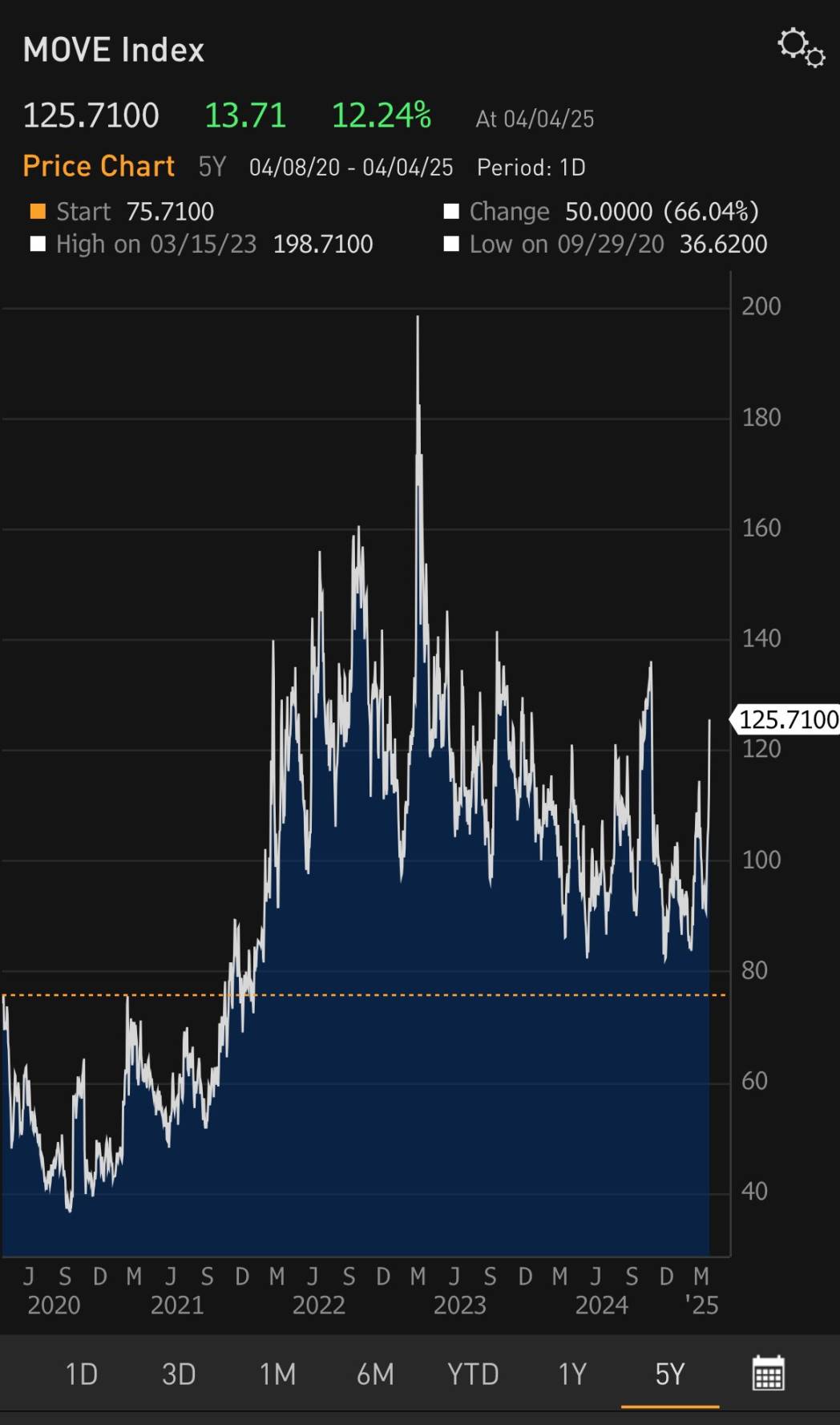
Arthur Hayes posted on social media that a significant portion of Trump’s supporters do not hold substantial financial assets. This creates strong schadenfreude between non-holders and asset holders—precisely why Trump can afford to take a hardline stance on tariffs, confident his core base will back him. He also noted that if the bond volatility index breaks above 140, it would force the Fed to “open the floodgates.”
Since the meme coin frenzy cooled down, valuations of major altcoins have significantly declined. Amid this violent correction, investors have widely felt the pain. Perhaps only after the Fed begins cutting rates will truly valuable projects and protocols gain favor from rational markets.
Join TechFlow official community to stay tuned
Telegram:https://t.me/TechFlowDaily
X (Twitter):https://x.com/TechFlowPost
X (Twitter) EN:https://x.com/BlockFlow_News
 Foresight News











