








The Unconventional Economist Navarro: The Driving Force Behind Trump's Extreme Tariff Policies
TechFlow Selected TechFlow Selected
The Unconventional Economist Navarro: The Driving Force Behind Trump's Extreme Tariff Policies
His role as the driving force behind plunging the global economy into chaos is unquestionable, but whether the cost of this war is worth it remains unknown.
 Navigating Web3 tides with focused insights
By TechFlow
The global financial market is being swept by an unexpected cold wave.
After Trump announced his extreme policy of imposing "reciprocal tariffs" on nearly all trading partners, panic in global capital markets reached its peak:
As of 10 p.m. Eastern Time on April 7, S&P 500 futures dropped 5.98%, Nasdaq 100 futures plunged 6.2%, and Dow Jones Industrial Average futures fell 5.5%.
Asian markets were gripped by risk-averse sentiment, with Japan's Nikkei index falling as much as 8.9% during early trading. Taiwan's Weighted Index plummeted nearly 10% after a two-day holiday, triggering circuit breakers for major stocks such as TSMC and Foxconn.
The crypto market was not spared either.
Investors watched helplessly as their assets shrank, red lines flashing across trading screens like alarms signaling even greater turmoil ahead.
Data from CoinGlass shows liquidations in the cryptocurrency market have surged to approximately $892 million, including over $300 million in both long and short Bitcoin positions.
BTC has dropped to around $77,000, while ETH has fallen further to $1,500.
The trumpet of trade war sounds once again, and standing at the epicenter is Peter Navarro, Trump’s senior trade advisor.
On April 6, Navarro appeared in an interview on Fox News.
Attempting to calm investor sentiment, he resorted to a baffling linguistic tactic:
"The first principle, especially for small investors, is — unless you sell your stocks now, you're not losing money. The smart strategy is not to panic and just hold on."
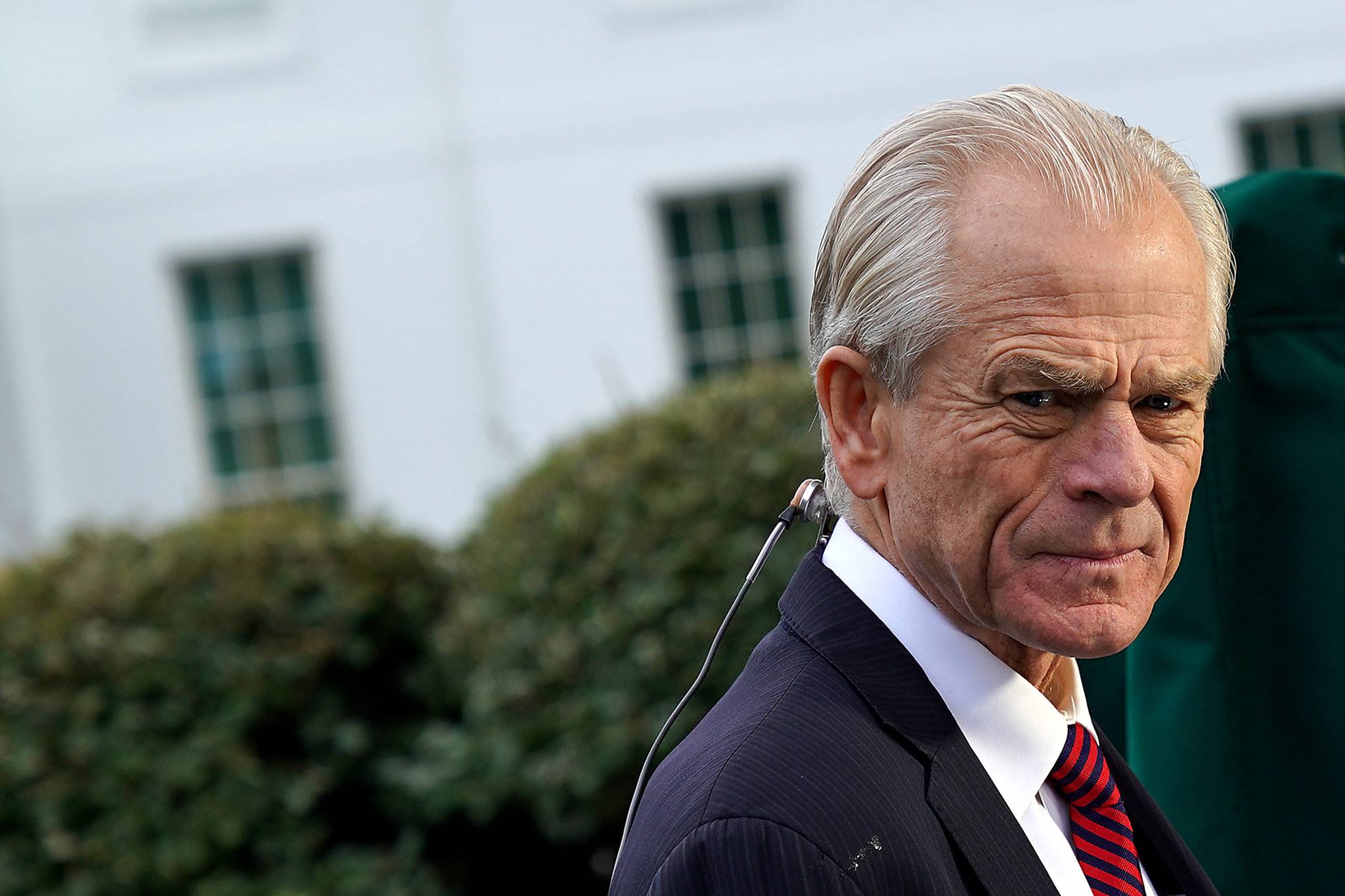
Unrealized losses aren't real losses; if you haven’t sold, you haven’t lost.
It's hard to imagine that such an almost delusional form of ineffective reassurance could come from a seasoned presidential trade advisor and university economics professor.
This statement clearly failed to ease market anxiety, instead drawing more attention to him—the Harvard PhD widely mocked as a "fringe economist," who appears not only as a policy mouthpiece but also as an undeniable force behind extreme protectionism.
Even Elon Musk, usually close to President Trump, recently criticized and subtly mocked this presidential advisor on social media, bluntly stating: "Earning a PhD in economics from Harvard isn’t necessarily good—it may lead to decision-making errors due to excessive arrogance," and questioned whether Navarro had ever created any tangible achievements himself.
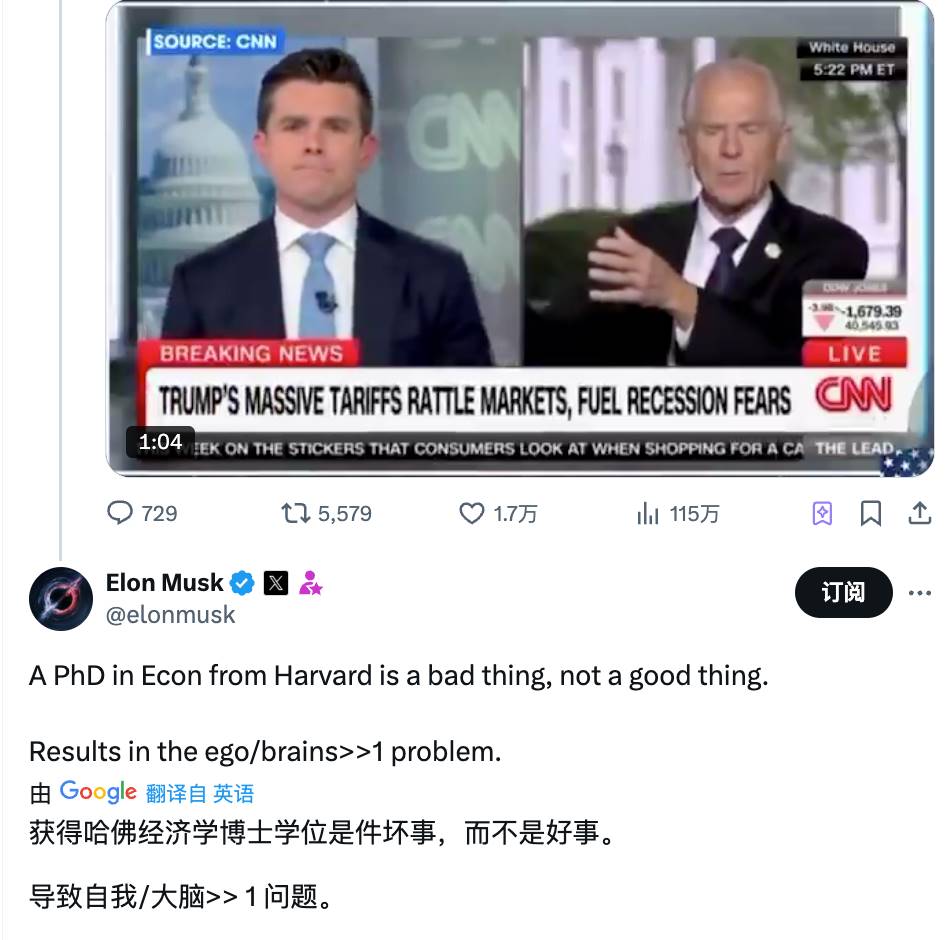
Who exactly is this economist standing behind Trump? How did he drive this storm of tariff policies sweeping across the globe?
From the fringes of academia to the core of White House decision-making, Navarro’s life path intersects with Trump’s protectionist ideology—perhaps together brewing this crisis.
From Academic Fringe to Political Power
Peter Navarro’s story began on July 15, 1959, in a modest household in Cambridge, Massachusetts.
His father, Albert “Al” Navarro, was a saxophonist and clarinet player, while his mother, Evelyn Littlejohn, worked as a secretary at Saks Fifth Avenue.
But family life was brief and turbulent. His parents divorced when he was nine or ten, leaving Navarro to move between Palm Beach, Florida, and Bethesda, Maryland, with his mother.
Growing up in a single-parent home may have planted within him a deep yearning for stability and self-reliance—qualities that quietly took root during his education at Bethesda-Chevy Chase High School in Maryland.
In 1972, he entered Tufts University on an academic scholarship, earning his bachelor’s degree. That same year, he joined the U.S. Peace Corps and served three years in Thailand. This experience exposed him early to the complexities of international society, possibly sowing the seeds for his later focus on global trade imbalances.
In 1979, he earned a Master’s in Public Administration from Harvard University, followed by a Ph.D. in Economics in 1986 under renowned economist Richard E. Caves. With credentials secured, he chose to remain in academia, joining the University of California, Irvine in 1989 as a professor of economics and public policy—a role he held for decades until becoming professor emeritus.
Yet Navarro was never content staying confined to academia—he ran for political office five times, striving to turn ideas into action.
In 1992, he ran for mayor of San Diego, leading the primary with 38.2% of votes but narrowly losing the runoff with 48%.
Thereafter, he campaigned repeatedly for city council, county board, and congressional seats—all unsuccessful. In the 1996 congressional race, he won 41.9%; in a 2001 special city council election, he received only 7.85%. These defeats didn’t deter him—they highlighted both his persistence and marginal status.
Throughout his campaigns, he consistently emphasized economic protectionism and job preservation, echoing what would later become Trump’s “America First” doctrine—yet failing to win voter support at the time.
From a boy in a broken home to a Harvard-trained economist, then a perennial political outsider, Navarro’s journey is full of contradictions.
He appears both a rigorous scholar and a radical activist—leaving footprints in academia while facing repeated rejection in politics.
Amid these oscillations between scholarly and political realms, his stance on trade protectionism and hawkishness toward China had already taken root.
The China Threat Narrative: Early Signs
From the moment Peter Navarro earned his economics doctorate from Harvard, it was clear he wouldn’t settle for the quiet life of academia.
His subsequent trajectory revealed a growing fascination with global economic structures.
When he joined UC Irvine in 1989, he began channeling his academic passion into sharp, polemical writings—with one rising power squarely in his sights: China.
What truly brought him into the spotlight was a series of books promoting the “China threat” theory.
In 2006, he published *The Coming China Wars*, sounding alarm bells about how China’s economic expansion wasn’t merely commercial competition but an existential threat to American manufacturing.
The book brimmed with near-prejudiced conviction—for instance, claiming “China’s development poses a danger to humanity, bringing more conflict and instability to the world.”
Reader reviews on Amazon at the time often accused the book of sensationalism and deliberate hype.
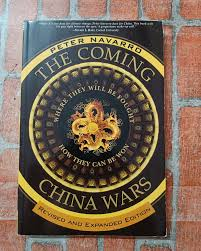
While the book didn’t resonate widely within mainstream economics circles, it stirred ripples among conservative groups.
Five years later, in 2011, *Death by China* elevated Navarro’s critique to new heights. More than analysis, the book read like an indictment.
He aggressively accused China of systematically undermining America’s economy through illegal export subsidies, production subsidies, currency manipulation, and intellectual property theft...
Yet Navarro’s views were far from uncontroversial.
Mainstream economists, such as Simon Johnson of MIT, publicly criticized his work as “overly one-sided, ignoring the complexity of global supply chains.” The harsh tone of his writing sharply contrasted with the typical image of a refined academic, cementing his reputation as an “outlier” in the economics community.
Still, Navarro used over a decade of academic effort to build a comprehensive theory advocating confrontation with China: the U.S. must use strong measures to reverse trade deficits and protect domestic industries. This framework laid the groundwork for his eventual entry into Trump’s inner circle.
His pen had long targeted China—and in 2016, fate would open a far bigger door.
Raised by Trump’s Son-in-Law into the Inner Circle
*Death by China* didn’t make waves in mainstream economics—but it unexpectedly found its way into Trump’s campaign orbit.
Reports indicate that in 2016, during Trump’s first presidential campaign, his son-in-law Jared Kushner stumbled upon the book on Amazon, captivated by its fierce criticism of Chinese trade practices, and promptly recommended it to Donald Trump.
Trump read it and was deeply impressed, declaring: “This guy gets me.”
Navarro later recalled his role from the outset was “to provide analytical backing for Trump’s trade instincts.” A businessman by background, Trump understood trade intuitively—perhaps their underlying logic aligned perfectly. Thus began their fateful alliance.
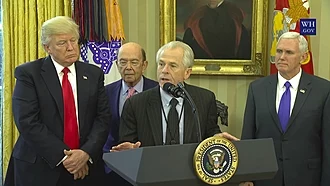
On January 20, 2017, the day Trump was sworn in, Navarro officially entered the White House as director of the newly established National Trade Council.
His first task was predictable: targeting China. He quickly pushed proposals to impose 43% tariffs on Chinese goods and led efforts to levy 25% additional duties on steel and aluminum imports.
When the U.S.-China trade war fully erupted in 2018, Navarro was omnipresent. At White House briefings, he declared: “China must pay the price for its unfair trade practices.”
That year, he also helped draft Trump’s global tariffs on steel and aluminum imports, directly triggering trade tensions with the European Union and Canada. Navarro’s hardline approach not only resonated with Trump’s “America First” agenda but also solidified his position within the White House.
However, Navarro’s tenure in the inner circle wasn’t without turbulence.
In 2020, he released reports alleging election fraud and participated in the January 6, 2021 “Green Bay Sweep” plan, ultimately resulting in a four-month prison sentence in 2023 for contempt of Congress. Despite this, Trump’s trust in him remained unshaken—even calling him a “loyal warrior” while Navarro was incarcerated.
On January 20, 2025, Trump returned to the White House, and Navarro resumed his role as senior trade and manufacturing advisor. This time, his ambitions were bolder.
In February, he co-led trade discussions with Stephen Miller targeting Canada, China, and Mexico, helping shape the trade policy memorandum signed by Trump on his first day back.
Navarro’s “reciprocal tariff” plan—calculating supplementary rates based on trade deficits (e.g., 46% on Vietnam, 20% on the EU)—became the cornerstone of the new policy. In a CNBC interview, he defended it: “These are not bargaining chips. They are necessities under a national emergency.”
This stance was consistent with his academic views over a decade prior.
From a single book in 2016 to becoming the brain behind the 2025 trade war, Navarro’s bond with Trump was no accident.
Their ideologies aligned perfectly: his protectionism matched Trump’s aversion to trade deficits, and his combative personality fit seamlessly with Trump’s policy style.
Despite controversies, even imprisonment, Navarro remained the soul of Trump’s trade strategy. His rise from academic obscurity to the pinnacle of power owed less to luck than to his unwavering obsession with trade confrontation.
Superior Strategy Over Direct Assault
The convergence of Trump and Navarro is now facing its most severe test yet in the 2025 global market.
Returning to Navarro’s opening remark—“you don’t lose money unless you sell”—does this unconventional economist truly understand the mechanics of economic systems?
Navarro may master tariff statistics, but he seems to have missed the essence of strategic wisdom.
As Sun Tzu said: “Supreme excellence consists in breaking the enemy’s resistance without fighting. Next best is to disrupt his alliances by diplomacy. Next is to attack his army. Worst is to besiege cities.”
Ancient wisdom teaches victory through strategy and diplomacy—not brute-force confrontation.
Yet Navarro and Trump’s tariff offensive does precisely the opposite—opting for direct conflict, paying high economic costs in pursuit of so-called “fairness.”
This head-on approach has not weakened adversaries; instead, American businesses and consumers bear the brunt. Economists estimate that 60% of the cost of tariffs on Chinese goods translates into higher prices for imported products—ultimately paid by American households.
Reality is far more complex than theoretical models.
Dragging the global economy into chaos, Navarro’s role as chief architect is undeniable. But whether the price of this war is worth paying remains an open question.
Join TechFlow official community to stay tuned
Telegram:https://t.me/TechFlowDaily
X (Twitter):https://x.com/TechFlowPost
X (Twitter) EN:https://x.com/BlockFlow_News
 深潮TechFlow


