23-Year-Old Man Dies by Suicide Over Meme Coin, an Entertainment-to-Die Crypto Tragedy
TechFlow Selected TechFlow Selected
23-Year-Old Man Dies by Suicide Over Meme Coin, an Entertainment-to-Die Crypto Tragedy
A drug addict with a one-year-old daughter, two cars, and three celebrity tokens ultimately chose to sacrifice himself with a Meme coin.
 Navigating Web3 tides with focused insights
Source: The Wall Street Journal
Translation: Wenser, Odaily Planet Daily
Editor's note: As market liquidity tightens and attention becomes increasingly scarce, meme coins have evolved from vehicles of entertainment-driven attention economies and barometers of trending news into fleeting waves of excess, ultimate PVP battlegrounds that amplify human nature. From the "burn incidents" on pump.fun to adult-streaming tokens, and countless insider schemes that rise and fall overnight, the meme coin frenzy has gradually turned into a slaughter of retail investors by insiders—a crackdown by conspiracy groups on casino gamblers. Now, a 23-year-old man from California has taken his own life due to a meme coin scam, using his death as a tragic satire and rebuke of the brutal reality where "everything can become a meme coin." This is his story. His name was Arnold Haro.
A Tragedy in the Corners of Crypto: When Suicide Becomes a Meme Coin
A 23-year-old man from California ended his life by livestreaming his suicide with a gun after falling victim to a meme coin scam.
At 3:28 p.m. on February 21, inside a remote farmhouse in rural California, Arnold Haro was enduring extreme agony. He scratched his scalp repeatedly, breathing heavily, visibly tormented. "If I die, I hope you turn my death into a meme coin," he told fans watching his live stream on X.
About three hours later, facing his phone’s camera, he picked up a bullet, calmly loaded it into his Smith & Wesson handgun, spun the cylinder—and pulled the trigger. *Bang.* A young life was extinguished.
His final wish was fulfilled—briefly. A meme coin named after Haro’s social media account briefly surged to a market cap of over $2 million before crashing just as quickly, following the fate of countless other meme coins. Of course, this wasn’t an isolated case. A crypto gold rush followed, with dozens of copycat meme coins emerging rapidly. Some even used stills from the suicide livestream as their token logos, as the meme coin community scrambled to profit from Haro’s death.
Meme coins originated with Dogecoin in 2013, initially created as a satirical take on the cryptocurrency world. Over time, an internet subculture grew around the idea that “every cultural moment deserves its own cryptocurrency.” Meme coins tied to celebrities, political figures, and anonymous fringe personalities flooded the market. These tokens lack intrinsic value, built purely on hype around viral memes and associated individuals.

Image source: Silas Stein/DPA/Zuma Press
Undoubtedly, during the explosive growth of cryptocurrencies, meme coins have become part of the $2.8 trillion crypto market. But they’ve also proven to be breeding grounds for scams—a speculative world of bubbles and crashes where token creators profit while others are left holding worthless assets after brief price spikes. U.S. federal authorities classify meme coins as novelties rather than securities, meaning many investor protections afforded to traditional assets do not apply.
The meme coins created around “Haro’s death” reveal the disturbing moral void at the heart of meme coin culture—where anything, even a horrific suicide, can be turned into a token.
Arnold Haro’s sister, Maria Lucero Haro, said the family would not comment on the cause of Arnold’s death but added, “My brother’s death should not become anyone else’s headline or entertainment.”
Falling Victim to a Rug Pull, Meme Coins Vanish Overnight
As Haro became deeper entrenched in the world of meme coins, his life grew increasingly unstable.
The 23-year-old’s crypto wallet shows he had been an active trader of meme coins and NFTs since summer 2024, particularly those on the Solana blockchain.
At the time of Haro’s death, the cryptocurrency market had been rising steadily for a year. In January, Bitcoin broke $106,000, reaching a new all-time high. Crypto enthusiasts and the Trump administration declared a future of crypto legalization, with meme coins expected to play a growing role—including TRUMP, a token launched by Donald Trump himself.
Yet the meme coin space is riddled with “pump and dump” scams so common they’ve earned their own term: rug pull. Haro experienced one after another—each rug pull worsening his already fragile financial situation.
He lived in a rural area outside Fresno, California, with his sister and mother—a house cleaner—with whom he depended on for support. Neighbors described them as quiet; other relatives saw him as foolish.
Police records show he worked in the solar industry and had a one-year-old daughter with his ex-girlfriend, though they had long since separated. He owned two vehicles: a silver Ford F-150 pickup truck and a BMW X6 SUV. According to police reports, his ex-girlfriend said that aside from his regular job, he sold fentanyl and methamphetamine to homeless people near riverbanks. He was also a drug user himself, having suffered a fentanyl overdose in 2020 so severe he had to relearn how to walk and speak.
Under the username MistaFuccYou, he frequently posted extreme memes and racist content. He boasted about gun collecting, opioid use, and being banned from a steakhouse for refusing to tip. After a video of him spinning in circles and vomiting went viral, he became a meme himself—dubbed “360 Vomit Guy” across social media.
His personal accounts were filled with screenshots and posts about crypto losses.
He once demanded an 8-dollar refund from a well-known crypto influencer simply because the latter hadn’t promoted a certain coin enough.
In January, he said he borrowed money to buy tokens launched by President Trump and First Lady Melania Trump. “I promised my parents I’d get rich quick with a big loan on TRUMP tokens, but now it’s crashed to shit,” Haro posted on January 19. “I just bought some MELANIA tokens, but knowing my luck, it probably won’t go anywhere either.”
Both meme coins sharply declined after short-lived hype. TRUMP dropped 86% after nearing a $15 billion market cap. Haro also invested in a fake TRUMP spinoff that quickly went to zero. On January 27, he privately messaged another crypto trader on X, saying he lost his last $500 on a token falsely believed to be linked to rapper Kanye West.
“I tried to sell this token, but couldn’t,” he wrote. The coin had no connection to Kanye. One screenshot showed Haro’s loss at 35.9%.
Meanwhile, his illegal drug dealings appeared to be collapsing. According to his ex-girlfriend’s statements to police, Haro once traded two stolen cars to a Mexican drug dealer for large quantities of marijuana. He told her the dealer had threatened to kill him. Police records also indicate Haro was deeply upset upon discovering his ex-girlfriend was seeing another man. “Arnold owed a lot of people a lot of money. He was very stressed and anxious about it,” read a report summarizing the interview with his ex-girlfriend.
No one knows exactly what drove Haro to pull the trigger. Police found no suicide note or explanation.
When a Death Is Tokenized, Who Is the Real Killer?
Shortly after finishing her shift, Haro’s ex-girlfriend checked her phone and saw the livestream of his death on his X account.
“I’m calling because the father of my daughter is playing Russian roulette live on his social media,” she told a police dispatcher at approximately 5:03 p.m., according to recordings and police records. “I don’t know if this is real.”
At 5:43 p.m., officers reported finding a male body in Haro’s room with a gunshot wound to the head. His mother stood outside the house, hysterically crying, unable to accept what had happened.
Six days after Haro’s death, the U.S. Securities and Exchange Commission (SEC) issued a statement saying there was nothing wrong with meme coins created based on Haro’s image. “Meme coins are typically purchased for entertainment, social interaction, and cultural purposes,” the agency said, suggesting they should be viewed more like collectibles. It added that speculation primarily drives their value.
According to archived versions of the video, in his final moments Haro requested that any meme coins created posthumously be sent to his Solana wallet.
These now-worthless meme coins continue to haunt his family.
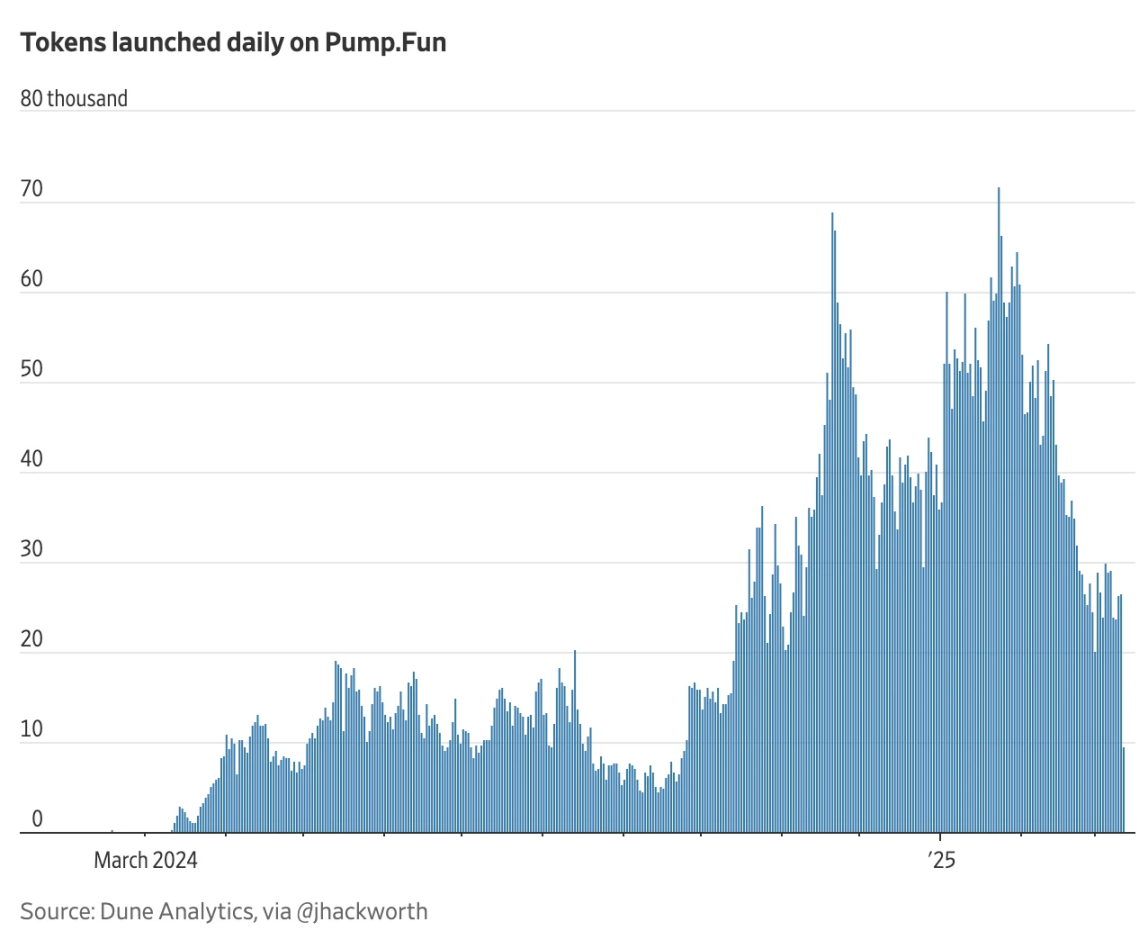
Meme coins related to Haro’s death surged on Pump.Fun—a platform that allows users to create meme coins as easily as making a blog on Tumblr.
Some used still images from the livestream as avatars—showing Haro with closed eyes, gun pressed to his head.
Others used his X profile picture or frames from his vomiting video.
The most popular was a token named MISTA, which briefly reached a market cap of over $2 million before losing half its value within a day. It now trades at around $80,000.
In a statement, a spokesperson for Pump.Fun said, “Mr. Haro’s death is a tragedy. Pump.Fun has no involvement in these events beyond serving as a platform that enables users to create and issue clearly unethical, news-related crypto tokens.”
Some token creators claimed they were raising funds for Haro’s family and sent tokens to his wallet, but it remains unclear whether his family can access these funds. The developer behind the MISTA token claimed to have donated $5,000 to a GoFundMe page set up to cover Haro’s funeral costs.
“Please stop profiting from our pain and my brother’s death,” Haro’s sister pleaded—an appeal that now sounds tragically futile.
Join TechFlow official community to stay tuned
Telegram:https://t.me/TechFlowDaily
X (Twitter):https://x.com/TechFlowPost
X (Twitter) EN:https://x.com/BlockFlow_News