Interview with Dr. Shao Qing: Exploring the Logic Behind Trump's New Crypto Policy and Potential Variables in the Context of AI
TechFlow Selected TechFlow Selected
Interview with Dr. Shao Qing: Exploring the Logic Behind Trump's New Crypto Policy and Potential Variables in the Context of AI
Trump's new crypto policy is essentially intended to create a new channel for billions of people worldwide to "subscribe to America," thereby hedging against the threat posed by America's hollowed-out manufacturing sector and soaring debt to the dollar's international standing.
 Navigating Web3 tides with focused insights
Author: Meng Yan
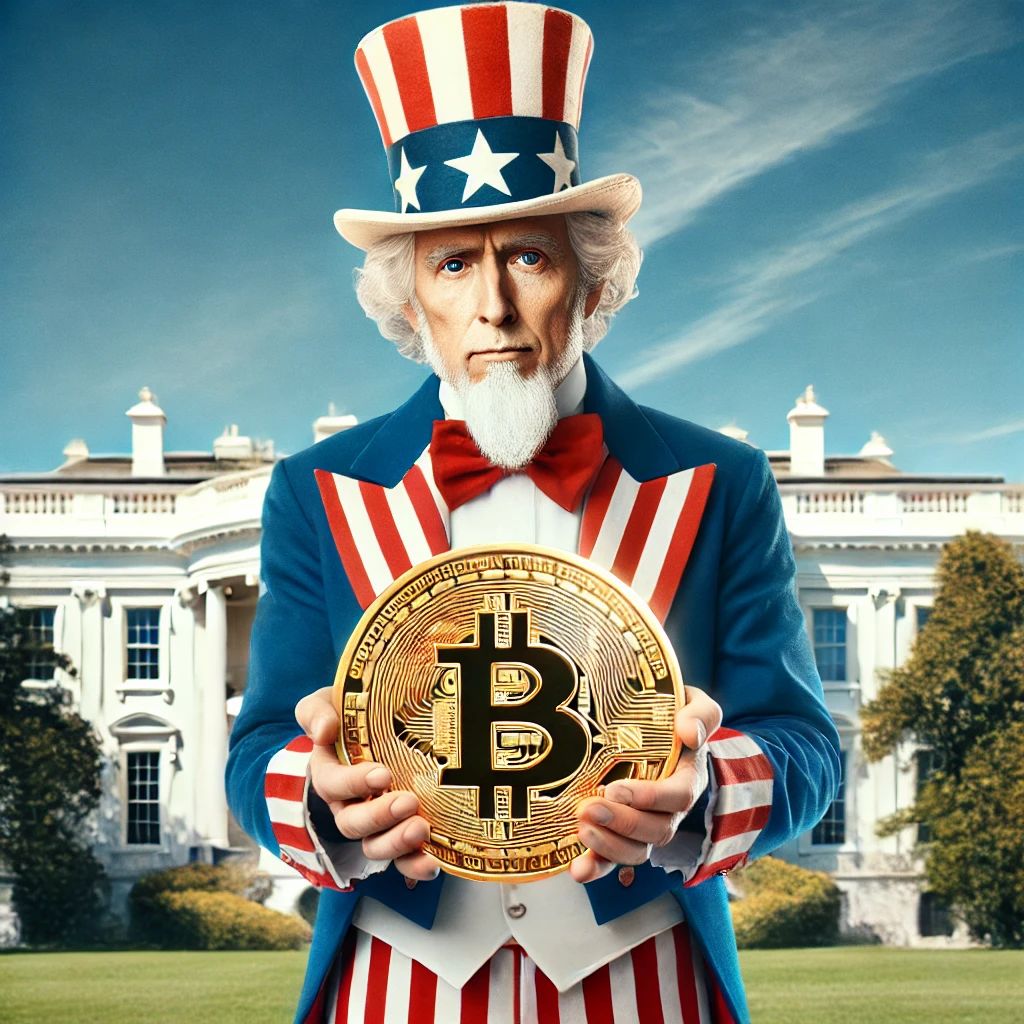
Since Donald Trump returned to the White House, his series of statements and actions in the crypto space have drawn widespread attention. As related policies gradually take shape, a policy framework encompassing cryptocurrency reserves, stablecoins, RWA (real-world assets), and a new form of ICO is emerging. Logically, this not only serves Trump’s geopolitical goal of “revitalizing America,” but also quietly builds a future financial infrastructure deeply integrated with AI technology. However, due to Trump’s unconventional behavior, his new crypto policies have sparked significant controversy—and even ridicule. To better understand this topic, I invited Dr. Shao Qing, who has long resided in the United States and extensively studied the digital asset industry, for a dialogue on the strategic logic behind Trump’s crypto agenda, potential variables under the backdrop of the AI revolution, and how other countries might respond.
TL;DR
The core intent of Trump’s crypto policy is to provide billions globally with a new channel to "subscribe to America"—using dollar-backed stablecoins to purchase U.S. assets on-chain—thereby hedging against threats posed by deindustrialization and soaring debt to the dollar’s international standing. This would buy time for both dollar hegemony and American industrial revival.
Yet the most unpredictable variable lies in the potential fusion between crypto and AI technologies: hundreds of billions—or even trillions—of intelligent agents coordinating resource allocation and collaboration via blockchain could fundamentally transform human economics, military affairs, and daily life, accelerating the world toward a technological singularity.
1. Buying Time for the Dollar
Meng: We’re now seeing concrete signs that Trump’s team is systematically advancing a new crypto policy framework. You're based in the U.S.—how is the domestic industry reacting?
Shao: Indeed, since mid-2024, Trump and his team have projected an image of innovation in the crypto sector. During the election campaign, from public statements and accepting donations in crypto, to supporting specific projects and even launching meme coins personally, they shocked many. After winning, he immediately established a Digital Asset Policy Task Force comprising key decision-makers across nearly all major departments, pledging to roll out a comprehensive regulatory framework for the crypto industry within 180 days—to make the U.S. the “crypto capital of the world.” Over the past few months, they’ve steadily advanced these policies into reality: announcing Bitcoin reserves and crypto custody, hosting the first-ever White House Crypto Summit. In most technological revolutions, companies pull governments forward—but here, it's the president himself leading the charge while businesses follow. From what I observe, the U.S. tech industry was psychologically unprepared for this shift and is only now beginning to seriously consider and respond. Recently, funding tied to stablecoin payments and real-world asset (RWA) tokenization has heated up rapidly, though we’re still in early stages.
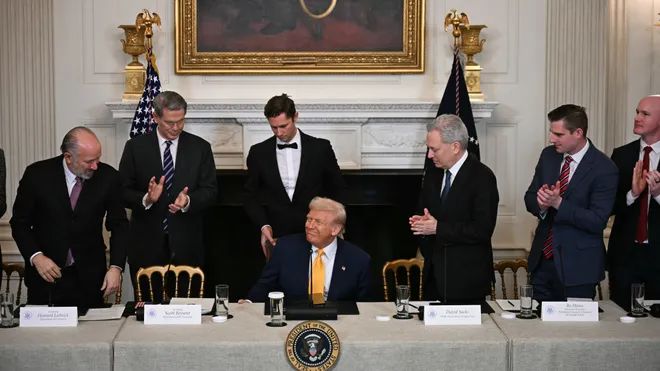
Meng: Trump’s governing style is notoriously unpredictable. He and his family have done many outrageous things around crypto, and combined with his disruptive moves in other areas, many believe he’s just “fumbling around” or trying to enrich his family. But your analysis shows clearly that such superficial views don’t hold water. At least in crypto, Trump’s actions are consistent. What’s the underlying logic driving these moves?
Shao: My view is that Trump’s current administration differs significantly from his previous term—it has very clear goals and strategy. His unpredictability and disruption are tactics aimed at dismantling entrenched institutions to reduce resistance to reform. Download Project 2025’s white paper from the Heritage Foundation website—you’ll see exactly what I mean. His crypto policies align perfectly with his broader strategic vision. While individual actions may seem erratic, when placed within this larger framework, they reveal a coherent, internally logical policy architecture. Its central aim is to leverage crypto infrastructure to enhance the global reach and investability of the dollar, thereby reinforcing its international dominance and buying time for U.S. manufacturing repatriation and capital revaluation.
Meng: Can you break down the structural path of this so-called “comprehensive policy deployment”?
Shao: I summarize it as five interlocking steps. Step one is loosening perceptions and narratives. Rather than amending laws directly, Trump uses rhetoric, symbolism, policy signals—even controversial personal and family actions—to dismantle the Biden-era perception of crypto as a “dangerous beast,” replacing it with a new narrative: “crypto = innovation.” This helps Republicans and traditional conservatives gradually accept the crypto industry as a strategic asset.
Step two: Establishing a national digital asset reserve. This includes federal-level Bitcoin holdings and crypto custody arrangements, as well as Republican-led states openly holding Bitcoin and discussing Ethereum and other major assets as part of their reserve strategy. The implicit message is clear: parts of the U.S. government are beginning to treat crypto as a “strategic financial asset,” elevating its consensus status.
Step three: Finalizing a stablecoin regulatory framework. This is the policy centerpiece. Only within a compliant dollar-backed stablecoin system can digital dollars leverage blockchain’s decentralized, globally accessible nature to become the settlement and issuance medium for global asset investment. This explains why firms like Coinbase and Circle are actively engaging Republican policymakers.
Step four: Tokenizing real-world assets (RWA). This involves putting highly liquid or securitizable assets—U.S. Treasuries, stocks of major corporations, corporate bonds, mortgage-backed securities—on-chain. It shifts the act of “investing in America” from bank accounts to blockchains, from traditional capital markets to on-chain DeFi ecosystems.
Step five: Launching a “regulatable new ICO” mechanism. This isn’t a repeat of the 2017 craze. Instead, it seeks to restore the legitimacy of “on-chain fundraising,” unleashing on-chain venture capital supply to support domestic industrial financing—especially rebuilding the U.S. manufacturing chain.
Meng: So this appears to be a layered policy package. But does it truly form a logically closed loop? Historically, there’s been tension between crypto assets and dollar hegemony—how does Trump’s approach reconcile this?
Shao: That’s precisely the crux. Mainstream crypto narratives emphasize decentralization, de-dollarization, and borderless circulation, while the dollar’s strategy has long relied on control over clearing systems, banking regulation, and capital account openness. There is indeed structural tension.
But Trump’s method is “assimilation rather than confrontation”—he doesn’t suppress on-chain financial innovation; instead, he aims to transform it into new infrastructure serving the dollar.
The core idea: the dollar doesn’t need to spread through bank accounts alone—it can also propagate through blockchains, as long as its unit remains pegged to the dollar standard. In other words, as long as global investors use dollar stablecoins on-chain and invest in U.S. RWAs, America continues collecting “seigniorage” and maintaining pricing power.
Moreover, combining on-chain stablecoins with on-chain assets allows the U.S. to bypass increasing compliance burdens and geopolitical friction in the traditional financial system, achieving financial “de-friction.” This is a form of geofinancial power extension.
Meng: Is this model actually attractive? How do you see its potential impact on economies outside the U.S.?
Shao: We must recognize that the ultimate goal of this policy isn’t merely domestic industrial renewal—it’s attracting overseas capital to “subscribe to America” via blockchain. Simply put, enabling global investors to use digital wallets to buy dollar-denominated on-chain Treasuries, corporate stocks, startup equity, and other tokenized assets—thus re-anchoring the dollar in the Web3 era.
The appeal lies in lowering the barrier for global capital to access U.S. markets through native digital means. Its disruptive potential stems from challenging other sovereigns’ ability to control capital inflows and outflows. If emerging market capital begins bypassing banks and flowing directly into U.S. on-chain asset markets via wallets—a kind of “financial ant-moving”—this would weaken the effectiveness of local financial policy.
In the longer term, the U.S. could rebuild its status as a “financial network hub,” becoming the endpoint for global on-chain asset issuance, settlement, and clearing. Any economy potentially challenging the dollar’s position must now seriously consider the competitive pressure and governance spillover from this pathway.
2. The ICO Mechanism and Reshaping U.S. Innovation Financing
Shao: Of the five steps above, the so-called “new ICO” is the one I’m most uncertain about. It seems the most controversial and breakthrough element. Is it really feasible in practice? And how could it support technological and industrial innovation? I know you've spent considerable time researching this—what conclusions have you reached?
Meng: This topic is sensitive in Chinese discourse, but objectively speaking, the situation is quite clear. Globally—including in the U.S.—the core dilemma in innovation financing is increasingly apparent. Over the past two decades, U.S. high-tech startups have relied on three main channels: Silicon Valley’s venture capital ecosystem, Nasdaq IPOs, and government research grants and innovation incentives. Yet each has limitations: VCs are increasingly focused on late-stage ventures, creating severe early-stage funding bottlenecks; IPOs have high thresholds, eliminating many promising but immature projects; and government programs often suffer from inefficiency and long cycles.
ICO (Initial Coin Offering) once offered a brief experiment in financing democratization—allowing projects to raise funds directly from global investors and end-users via tokens, without relying on traditional financial intermediaries. But due to lack of regulation and rampant abuse, the mechanism was largely shut down after 2018.
A key figure in Trump’s crypto team is SEC Commissioner Hester Pierce, architect of the “Crypto Safe Harbor” proposal. She has long advocated creating a new regulatory framework to restore some legitimacy to ICOs—not reverting to wild, unregulated growth, but establishing a “new ICO” system built on “transparency + approval + disclosure.” Its core principles:
- Token issuance must be tied to actual products, assets, or cash flows, preventing speculative vaporware;
- Issuers must register with the SEC or CFTC but enjoy lighter compliance requirements;
- Projects can conduct on-chain fundraising from accredited investors or foreign users, bypassing traditional secondary-market listing procedures;
- Funds raised must be used for U.S.-based technology, manufacturing, and infrastructure projects, aligning with Trump’s “reindustrialization” agenda.
This institutional design resembles a hybrid of a “regulated Kickstarter + digital bonds + disintermediated issuance”—an attempt to reconstruct America’s risk financing technology stack.
Shao: So if implemented, this wouldn’t just benefit the crypto sector—it could reshape the entire U.S. innovation financing system?
Meng: Exactly. If on-chain fundraising and asset issuance are formally integrated into compliant pathways, the cycle of “innovation → funding → liquidity” will dramatically shorten.
More importantly, this model naturally fits frontier sectors like Web3, AI, and energy tech—industries characterized by high early capital needs, steep learning curves for traditional investors, and mismatched funding rhythms. On-chain fundraising, settled in stablecoins with global liquidity, would greatly empower long-tail projects.
Ultimately, this could establish a new paradigm: “register in the U.S. + issue via dollar stablecoins + raise from global investors,” further consolidating America’s triad dominance in technology, capital, and narrative. Conversely, returning to your earlier point about “strengthening the dollar,” we might also say this mechanism evolves U.S. high-tech industries and innovation systems into foundational pillars of the dollar itself—while weakening geopolitical rivals’ ability to interfere, thanks to the atomized, decentralized nature of dollar circulation.
Shao: What you’re describing may not even be the endgame—the ultimate outcome could be the obsolescence of all traditional securities markets, including today’s digital asset exchanges.
Meng: Technologically, yes—that’s where this trajectory points.
3. Challenges: Institutional Friction and Regulatory Rigidity
Meng: Overall, I agree the policy is logically sound in theory and highly calculated politically. But in reality, can it succeed? Where are the obstacles? Given your experience in the U.S., what’s your take?
Shao: A crucial question. Any policy’s success depends on alignment across institutional, political, and technological conditions. For Trump’s crypto agenda, the biggest hurdles lie in “institutional inertia,” “regulatory infighting,” and “compliance rigidity.”
We can unpack the risks:
First, the U.S. regulatory system is inherently fragmented. The SEC and CFTC have long disputed jurisdiction over digital assets, disagreeing on whether they’re “securities” or “commodities.” Without strong presidential intervention, this internal conflict is hard to resolve.
Second, partisan divides persist on crypto. While Republicans are more crypto-friendly, Democrats remain deeply skeptical—especially in the Senate Finance Committee and the White House Economic Council, where voices equating “crypto = financial instability” dominate. Even if Trump wins re-election, pushing legislation through Congress won’t be easy.
Third, technical and financial infrastructure aren’t yet mature. On-chain RWA, global stablecoin settlement networks, compliant wallet systems—all are progressing but haven’t formed sovereign-grade platforms capable of handling large-scale financial activity. Current DeFi ecosystems lack institutional stability.
But the hardest barrier may be America’s strict anti-money laundering (AML) and counter-terrorism financing (CFT) principles. These are foundational to the dollar’s global role—more sacred than short-term political goals. Any move toward on-chain transactions that weakens KYC, identity verification, or fund tracing risks triggering fierce backlash from Treasury, FinCEN, or even national security agencies.
In other words, to legitimize stablecoins, RWA, and new ICOs, Trump’s team must build a “trackable and auditable on-chain” compliance infrastructure. This is not just a technical challenge, but a governance one. If implementation spins out of control, even a single case of “on-chain dollars funding terrorism” could trigger massive opposition and kill the entire initiative.
Additionally, resistance from traditional finance cannot be ignored. Major banks and financial service providers are highly sensitive to “disintermediated dollar issuance.” They fear erosion of their core businesses—settlement, custody, KYC. This entrenched industry resistance will pose a non-trivial obstacle.
Finally, and most fundamentally, global trust in the dollar isn’t infinitely extendable. Even if the U.S. builds a flawless on-chain financial narrative, continued political polarization, poor debt management, and erratic foreign policy could still deter external investors.
Meng: So the policy’s success hinges heavily on Trump’s ability to maximize “political coordination”? Now in his second term, with a tightly coordinated execution team, he might push this framework into basic shape within two years. But that requires unprecedented cooperation among the President, Treasury, CFTC, SEC, Fed, FinCEN—something extremely rare in history.
Shao: Realistically, I’d say the chance of full implementation is under 50%. But the likelihood of partial rollout—gradually shaping market expectations and strategic momentum—exceeds 70%. Even without complete legal codification, if enough capital, institutions, and developers bet on this direction, the U.S. will have already reabsorbed global crypto-financial resources.
4. Other Economies’ Reactive Responses and Strategic Choices
Meng: So we agree the mid-term goal is using on-chain dollars to reconstruct global investment pathways—an indirect challenge to financial sovereignty elsewhere. How do you expect others to respond?
Shao: Likely through “passive start, active defense.” Currently, major economies—China, EU, Japan, South Korea—remain in early stages of understanding Trump’s strategy. Three reasons: First, Trump has just returned—uncertainty remains over policy continuity. Second, many nations still view on-chain finance as a “technical anomaly” or “risky asset.” Third, stablecoins, RWA, and on-chain fundraising remain gray areas in most fiat regulatory regimes.
But if the U.S. builds an open financial platform using on-chain dollars, assets, and new ICOs—luring global investors to “buy Treasuries, invest in U.S. stocks, fund in dollars on-chain”—then other nations’ capital controls, monetary policy autonomy, and even industrial financing leadership will face serious challenges.
Let’s examine by region.
First, China.
Trump’s crypto policy could pressure China on three fronts:
One, further strain RMB internationalization. Currently, cross-border RMB usage relies on state-led trade settlement frameworks and offshore clearing networks. Once the U.S. on-chain dollar system matures, its “technologically induced convenience” could erode RMB’s marginal space—especially along the Belt and Road, Middle East, and Latin America.
Two, increase technical workarounds to capital controls. Once stablecoins and on-chain U.S. Treasuries gain clear regulatory status, individuals and firms could access dollar assets via non-official wallets and protocols—posing structural challenges to China’s existing cross-border financial oversight.
Three, passive migration of industrial financing sovereignty. If high-tech firms begin raising funds “on-chain”—whether through U.S.-registered shell companies or RWA issuance—China will struggle to monitor the pace and flow of such financing.
Of course, China won’t stay idle. I expect a dual-track response:
One, strengthen e-CNY (digital yuan) and cross-border payment connectivity to build a “compliant on-chain RMB financial system” as a controllable alternative;
Two, legally block the domestic spread of on-chain dollars—restricting wallet access, banning on-chain asset integration into domestic markets, and tightening AML and fund-source requirements.
Meng: How about the EU? Their crypto policies seem more open?
Shao: The EU is indeed more technologically neutral, but still faces structural passivity. MICA (Markets in Crypto-Assets Regulation) aims to create a unified regulatory framework, offering compliance paths for stablecoins and on-chain assets. But the euro lacks the global appeal of a dominant financial currency—it has no anchor assets, global clearing networks, or sufficient risk tolerance. Even if Europe embraces on-chain finance, it may end up as a distribution channel for dollar stablecoins rather than a center for euro-based ecosystems.
If Trump’s plan advances smoothly, the EU faces only two choices: either join and attach to the U.S.-led on-chain dollar system to preserve its tech and institutional roles; or strengthen ECB oversight to craft a “controlled compliance + local currency priority” model, attempting to give the euro independent sovereignty on-chain.
Either way, Europe’s passivity is sealed. The only variable left is “how to lose less,” not “who dominates.”
Meng: I think most countries first need to overcome policy numbness. Over the past decade, many nations launched multiple crypto initiatives—with limited results. So this time, most are watching cautiously, perhaps hoping Trump is bluffing or will abandon the effort quickly. But based on your analysis, his crypto agenda is a key part of his broader strategy—so we should drop doubts about his determination and start assessing consequences and responses.
5. AI + Crypto Could Produce Unexpected Outcomes
Shao: We’ve discussed the logic and implications of Trump’s crypto policy across finance, regulation, and geopolitics. But I feel one critical technological context remains underemphasized: AI.
Meng: Absolutely. Trump’s crypto agenda isn’t unfolding during a period of technological calm—it emerges amid accelerating AI breakthroughs, structural tech-stack reconfiguration, and turbulent global techno-economic currents.
We must recognize that the interaction between AI and crypto is unlocking new systemic possibilities: on-chain identities, assets, and payments combined with vast numbers of self-driven AI agents are rewriting “organizational boundaries” and “transaction structures.”
I recall years ago, Mr. Zhujiaming, after deeply studying blockchain’s characteristics, speculated that historically, blockchain and crypto may not be designed for humans—but for AI. Back then, we couldn’t visualize it. Now, with AI’s rapid advancement, the picture is becoming clear.
The most intuitive example: numerous AI agents can possess crypto wallets, execute contract logic, and autonomously coordinate cross-platform, multilingual, multi-system tasks via on-chain protocols—without human intervention. They could represent individuals, enterprises, or autonomous organizations, conducting global asset allocation, resource coordination, and information governance.
From this perspective, Trump’s crypto policy—intended as a strategic move to re-anchor the dollar globally—might inadvertently catalyze unexpected developments, laying early groundwork for an “on-chain infrastructure map” in the AI era. Stablecoins, RWA, and new ICOs essentially convert the dollar, U.S. assets, and American innovation capacity into digital resource units callable by AI. The on-chain settlement layer becomes a permissionless value collaboration infrastructure for these AI systems.
Shao: Let me go one step further. Unlike autonomous driving—which can be tested in closed environments like restricted roads or cities—AI-crypto integration, as a value transfer and coordination protocol, inherently requires real open-network conditions to validate effectiveness. Hence, large-scale “pre-enactment” has been difficult. This is one major reason most token economy experiments failed over the past decade.
But perhaps there’s another entry point: “simulated market mechanisms” within enterprises. Internal settlement systems in large organizations or factories—especially ERP systems—could serve as ideal “test fields” for crypto.
Imagine a fully intelligent, unmanned manufacturing plant where AI increasingly handles production scheduling, equipment dispatch, raw material procurement, and energy distribution. Introducing programmable payments and settlements—enabling machines to price and pay for resources using stablecoins—could simulate a “machine-native economy.” This isn’t just a natural application for crypto, but also gives AI a runtime mechanism independent of human account systems.
In other words, “digital factories” could become ideal testbeds for AI-crypto convergence. A typical machine world—structurally closed, highly automated participants, behavior highly auditable—may pioneer an “endogenous financial order”: machines exchanging value in machine ways, algorithms enforcing resource allocation via contracts. This would not only redefine “human-machine collaboration,” but also spawn new paradigms of enterprise governance based on on-chain identity and circulation.
Viewed this way, our earlier discussion on “reviving American manufacturing” deserves redefinition. Traditional “reshoring” focuses on factory locations, supply chains, and jobs. But future “manufacturing” may be a fusion of “computation-driven automated capacity” and “digital intelligence systems.” The U.S.’s pursuit of manufacturing superiority may not just be physical industrial restructuring, but gaining leadership in governance models built on digital twins.
Crypto technology is precisely the foundational protocol choice for the financial order component of a “digital twin strategy.” Initially, it supports verifiable data, traceable processes, and clearable transactions in smart manufacturing. But as AI integrates, it evolves into the core settlement engine for fully autonomous systems. This is far bigger than smart manufacturing—it’s about national-level reconstruction of digital order.
Meng: Once this trend begins, it will drastically reduce collaboration friction across networks, making innovation less dependent on organizational structures or legal entities, and more on instant composability of “Agent + Contract + Data.”
Even more profound is the new economic order forged by deep AI-crypto integration. Today, AI collaboration, knowledge sharing, and resource allocation still rely heavily on human-defined paths and legacy payment infrastructures—credit card settlements, API authorizations, account systems. These inherently carry organizational boundaries, flow friction, and settlement delays.
But in the future, when AI agents possess autonomous wallets, execute smart contracts on-chain, and make real-time payments via digital assets, they’ll coordinate tasks and allocate resources without human input—forming a true “machine-to-machine market.” This mechanism could enable hundreds of billions—or trillions—of intelligent agents to spontaneously form orderly economic collaboration networks without centralized coordination. This boundaryless, code-as-law automation will unleash immense productive potential among agents and spawn entirely new forms of industrial division, on-chain governance, and social structure. In a sense, we’re entering a new economic phase dominated by machines—one whose complexity, creativity, and risk of loss of control far exceed any existing system.
In other words, we may stand at the edge of a systemic innovation surge—a critical structure pointing toward a technological singularity may already be forming. Trump may not fully grasp the deep logic of this technological evolution, but his policies could spark the world’s first large-scale experiment in rewriting foundational rules. These policies may never fully materialize, but they’ve already triggered a global reassessment of fintech and policy architecture. In the coming years, more economies will be forced to respond.
Join TechFlow official community to stay tuned
Telegram:https://t.me/TechFlowDaily
X (Twitter):https://x.com/TechFlowPost
X (Twitter) EN:https://x.com/BlockFlow_News
 Yan Meng