Meme tide recedes, Pump.fun自救: Can PumpSwap sustain future business?
TechFlow Selected TechFlow Selected
Meme tide recedes, Pump.fun自救: Can PumpSwap sustain future business?
PumpSwap's future is a game of "time + environment."
 Navigating Web3 tides with focused insights
By TechFlow
Drying liquidity and declining user activity are forcing every project to seek new breakthroughs in order to capture more users and market share.
For example, yesterday Pump.fun announced its brand-new decentralized exchange — PumpSwap.
Judging by the name, "swap" directly refers to the core operation of token exchange in DeFi; as a platform rooted in memecoin culture, this move signals Pump.fun’s ambition to expand into a general-purpose DeFi platform.
So what exactly is PumpSwap? And why has Pump.fun chosen to launch it at this particular moment? We may find some clues by examining its background and motivations.
From Growth to Control
Leveraging its unique “internal/external pool mechanism” and strong memecoin culture, Pump.fun attracted massive user traffic and trading volume during the last cycle.
However, as the platform evolved, limitations of its current model have gradually emerged.
The internal/external pool design brought Pump.fun significant user growth, but also created a critical issue — user experience hinges on liquidity stability.
-
Limits of the internal pool: The internal pool relies entirely on the platform's own resources. When liquidity runs low, users suffer poor trading experiences.
-
Dependency on external pools: When the internal pool cannot meet demand, trades are routed to external platforms like Raydium. While this solves short-term issues, long-term reliance on third-party platforms remains a major vulnerability for Pump.fun.
Under the current model, Pump.fun pays millions of dollars annually in transaction fees to external platforms such as Raydium. These fees not only increase operational costs but also mean that a portion of Pump.fun’s profits goes directly to external liquidity providers.
To reduce dependency on outside platforms, Pump.fun previously launched an experimental AMM pool (amm.pump.fun). Though minimal in features and UI, this test proved that Pump.fun can build its own viable liquidity solution.
The experiment demonstrated that Pump.fun has full capability to create its own liquidity pools and retain all trading fees internally.
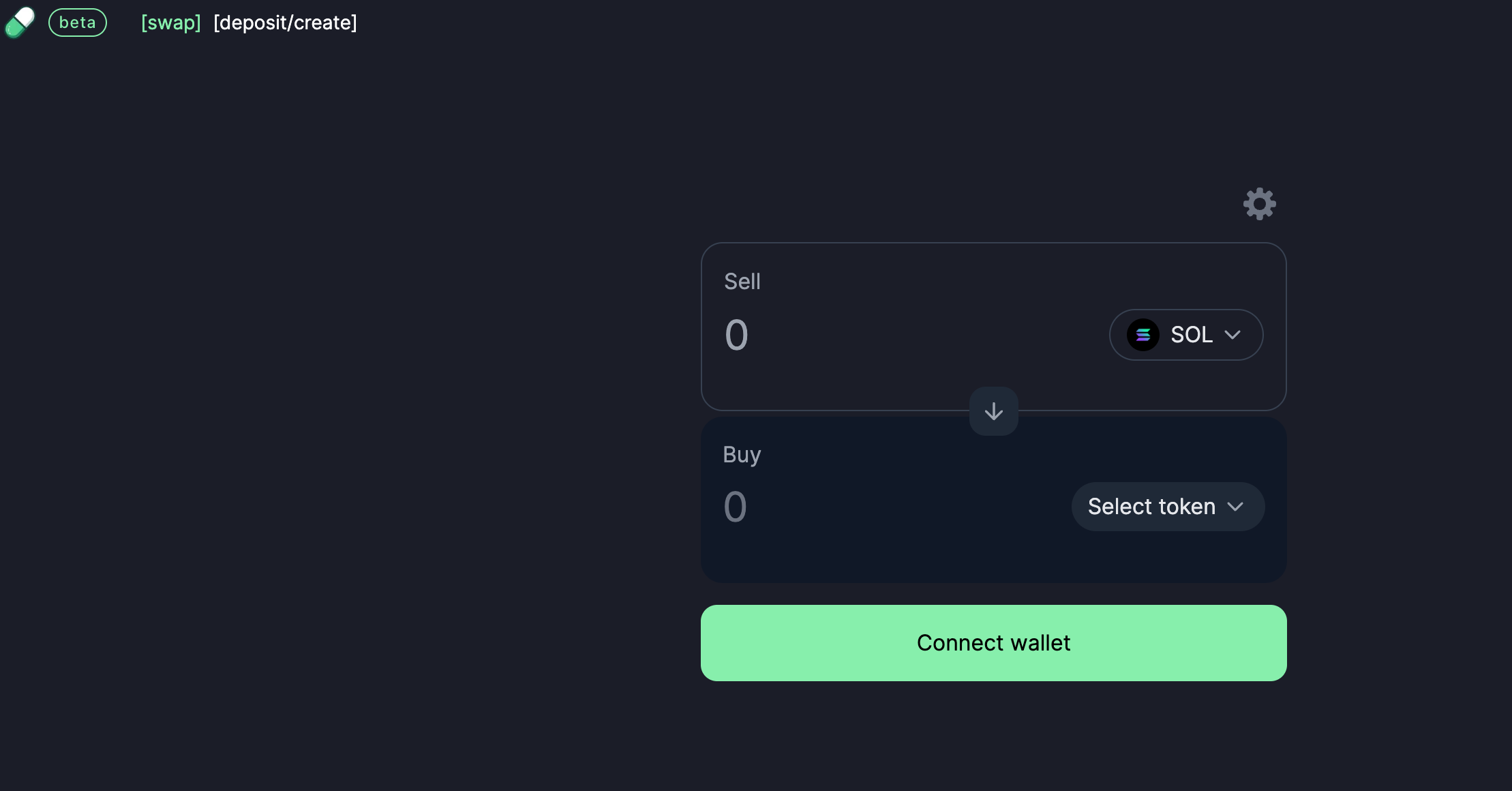
Judging from the current PumpSwap interface, this AMM pool is essentially the foundation for the new Swap product, with nearly identical design and functionality.
(Further reading: Is Pump.fun Building Its Own AMM Pool? Intentions to Capture Raydium’s Profits Are Clear)
Product upgrades are just surface-level changes; the deeper goal is gaining control over liquidity.
In the past, Pump.fun acted as a “traffic source” for Raydium, directing large volumes of trades its way. Now, Pump.fun aims to become a true “liquidity controller,” completely freeing itself from reliance on external platforms.
By building its own liquidity infrastructure, Pump.fun can retain more profit while laying the groundwork for future DeFi offerings—such as perpetual contracts, lending protocols, and other ecosystem innovations.
Quick Overview of PumpSwap Features
Against this backdrop, PumpSwap emerges as a fully-featured decentralized exchange (DEX).
Its primary goals are delivering a more efficient trading experience and driving the ecosystem toward diversification and sustainable growth. As a strategic upgrade for Pump.fun, PumpSwap moves beyond just memecoin trading by supporting high-quality projects and cross-chain assets, expanding both the breadth and depth of its ecosystem.
According to official information, key features and advantages include:
Instant Migration with Zero Fees
PumpSwap has completely overhauled the existing token migration process. All tokens that complete their bonding curve will be automatically migrated to PumpSwap at no cost.
This improvement eliminates the previous 6 SOL migration fee, significantly reducing costs for both users and project teams.
Enhanced Liquidity and Creator Revenue Sharing
Beyond offering higher liquidity for tokens, PumpSwap plans to introduce a Creator Revenue Sharing mechanism. This system will distribute a portion of protocol revenue back to token creators, incentivizing higher-quality projects to launch on PumpSwap and strengthening alignment between creators and the community.
Free Creation and Management of Liquidity Pools
Users can freely create new liquidity pools or add funds to existing ones at zero cost. This flexibility makes asset management easier for users while injecting additional liquidity into the ecosystem.
Support for Diversified Asset Trading
Besides memecoins, PumpSwap supports trading of partnered premium tokens, many of which are being bridged to Solana for the first time. This expands PumpSwap’s asset coverage and gives users more trading options.
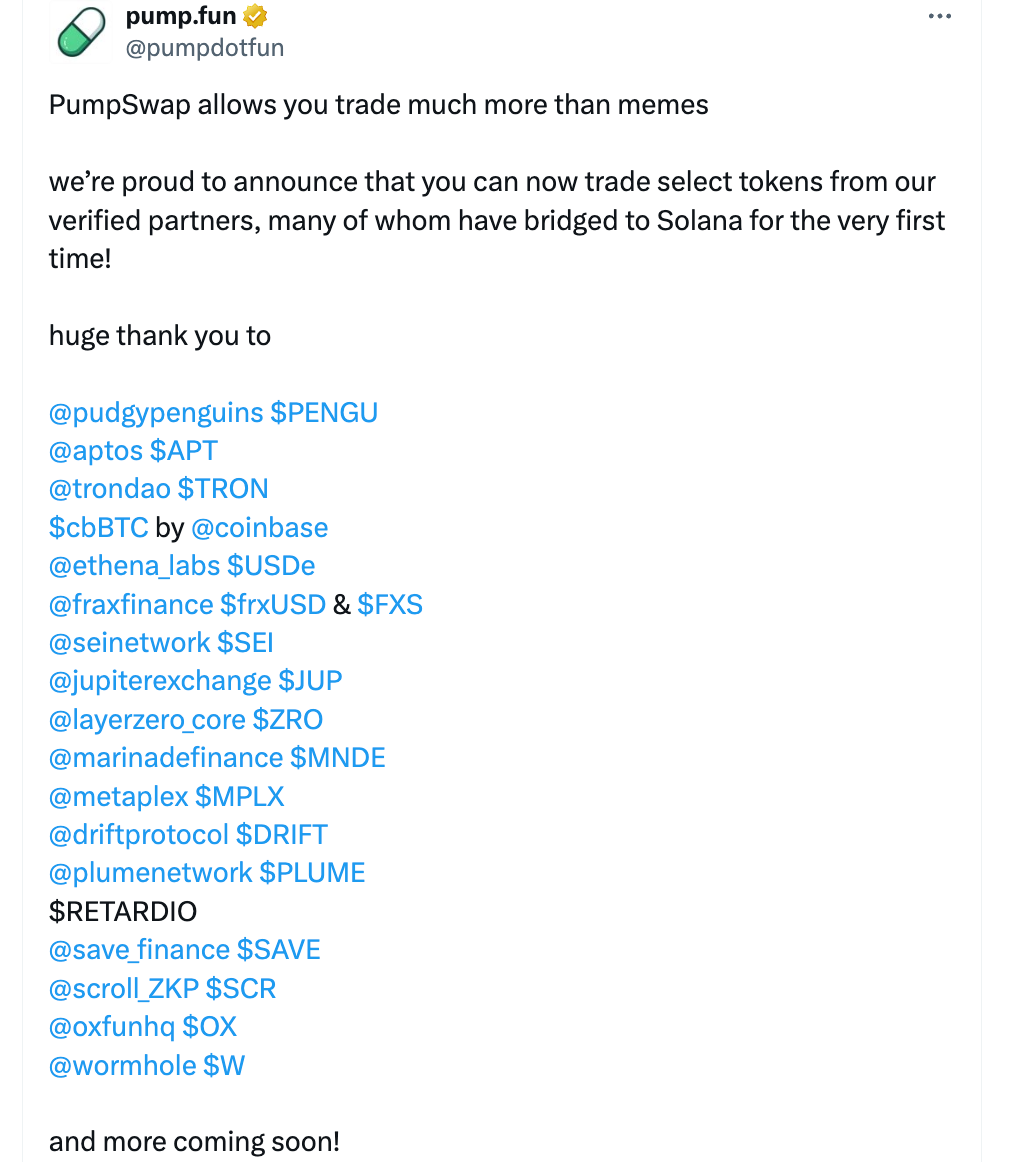
Fair and Incentive-Driven Fee Structure:
PumpSwap’s trading fee aligns with mainstream DEXs like Raydium, charging 0.25% per trade. However, its fee distribution introduces innovation:
-
0.20% to liquidity providers: This reward encourages more users to supply liquidity, enhancing trading depth and platform stability.
-
0.05% to the protocol: This portion funds ongoing development and ecosystem growth.
In the future, once the creator revenue sharing mechanism launches, this fee structure will be further optimized so creators can benefit directly.
Differences and Synergies Between Pump.fun and PumpSwap
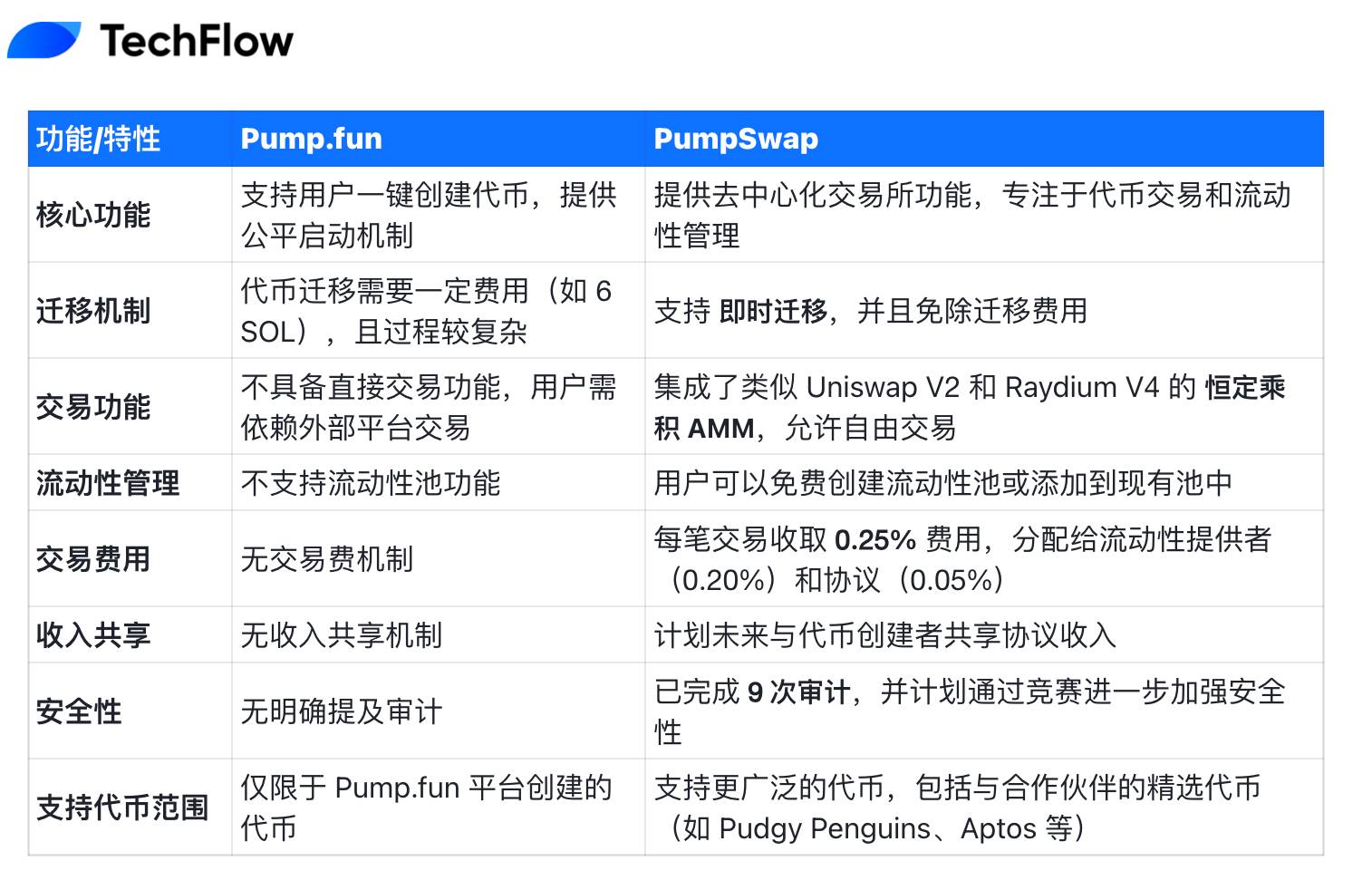
Although PumpSwap is the native DEX of Pump.fun, the two differ clearly in function and positioning—yet complement each other.
Pump.fun is fundamentally a tooling platform centered around memecoin culture. It empowers users to easily create, manage, and promote memecoin projects, lowering the barrier to entry and enabling broader participation in memecoin creation and circulation.
In contrast, PumpSwap functions more as foundational ecosystem infrastructure. As Pump.fun’s native DEX, PumpSwap provides more efficient trading and liquidity solutions for memecoins, while advancing the ecosystem into broader DeFi territory through creator incentives and support for diverse assets.
The relationship between Pump.fun and PumpSwap can be summarized as “entry point and core”:
-
Pump.fun serves as the gateway to the ecosystem, attracting users into memecoin creation and trading via intuitive tools and community engagement.
-
PumpSwap acts as the ecosystem’s core, providing comprehensive services through integrated liquidity and trading support, driving long-term sustainability.
A more direct comparison chart is shown below:
Will It Work?
But right now, would you actually use PumpSwap independently for token swaps?
Given current market conditions and user behavior, the answer is likely no. This means Pump.fun will need aggressive incentive campaigns, strategic events, and partnership marketing efforts to gradually shift user adoption toward its own PumpSwap platform.
With memecoin enthusiasm cooling down, pivoting to DEX operations to find new revenue streams makes sense.
Yet whether PumpSwap ultimately succeeds depends not only on product design, but also on how well external market conditions “cooperate.” Frankly, much of this project’s fate still hinges on macro trends — it’s largely “weather-dependent.”
Timing is crucial.
If new liquidity enters the market or a stronger bull run resumes, PumpSwap could see explosive growth in trading volume. After all, bullish markets naturally reignite interest in memecoins and emerging assets — precisely the demand PumpSwap is positioned to serve.
Conversely, if the market remains stagnant and speculative appetite stays frozen, PumpSwap may face significant headwinds.
Moreover, Pump.fun must establish clearer competitive differentiation within the Solana ecosystem and the wider DeFi space. DEX competition is already fierce, and relying solely on memecoin hype won’t sustain user retention over time.
How PumpSwap leverages innovative incentives, unique user experiences, or collaborations with leading projects to keep users engaged long-term will be the key challenge ahead.
In summary, PumpSwap’s future is a game of “time + environment”: over time, it must continuously refine its product and expand its ecosystem; in terms of environment, it must wait for market sentiment to recover and bring fresh liquidity and users.
In the end, whether this platform truly stands out will depend on its ability to seize opportunities when the market turns favorable and forge a distinctive path forward.
Join TechFlow official community to stay tuned
Telegram:https://t.me/TechFlowDaily
X (Twitter):https://x.com/TechFlowPost
X (Twitter) EN:https://x.com/BlockFlow_News
 深潮TechFlow