
Why Is Cryptocurrency So Heavily Criticized? Industry Challenges and the Path Forward
TechFlow Selected TechFlow Selected
Why Is Cryptocurrency So Heavily Criticized? Industry Challenges and the Path Forward
Cryptocurrency was supposed to be a revolution, but now it has become synonymous with fraud. Can we turn this around?
 Navigating Web3 tides with focused insights
Author: Ignas, DeFi Research
Translation: Nicky, Foresight News
Surprisingly, cryptocurrency has had minimal impact on the daily lives of ordinary people.
Unless someone actively engages with the crypto space, they can easily live a life almost entirely disconnected from the crypto world.
But the problem is that once this "zero-contact" threshold is crossed, exposure to crypto is almost always negative.
You're watching Netflix's *Squid Game*, and suddenly a网红 appears checking crypto prices constantly—so obsessed he demands his phone back just to avoid missing price movements. That scene reminded me of real-life cases I’ve seen.
When browsing news feeds, you’re constantly met with headlines like these (almost all negative):
-
North Korea steals $1.5 billion in crypto, committing the largest financial heist in history
-
"A farce": Trump’s newly launched meme coin sparks outrage across the crypto community
-
UK woman scammed out of £154,000 worth of Bitcoin; suspect charged
-
Crypto trader’s livestream suicide shocks the internet
Fraud, scammers, wild volatility—the flood of negative crypto news has destroyed its public image. Objectively speaking, even we insiders know the industry is riddled with problems.
Yet we also know why we stay: to disrupt outdated financial systems and achieve financial freedom. Yes, the "get-rich-quick" label is precisely what draws criticism, but it's also an undeniable truth. After all, seeking profit through investment is human nature.
However, crypto remains one of the few industries where individuals can build wealth from scratch. In today’s economic climate, slowly building wealth through a middle-class salary has become exceptionally difficult. Gen Z is quietly realizing this and collectively exiting the job market.
If only they knew what crypto could make possible...
Yet I believe the crypto industry does a terrible job communicating its mission—why we need crypto, and why becoming wealthy through it isn’t inherently evil. Below is a pinned comment from the *Financial Times* that perfectly summarizes skeptics’ views:
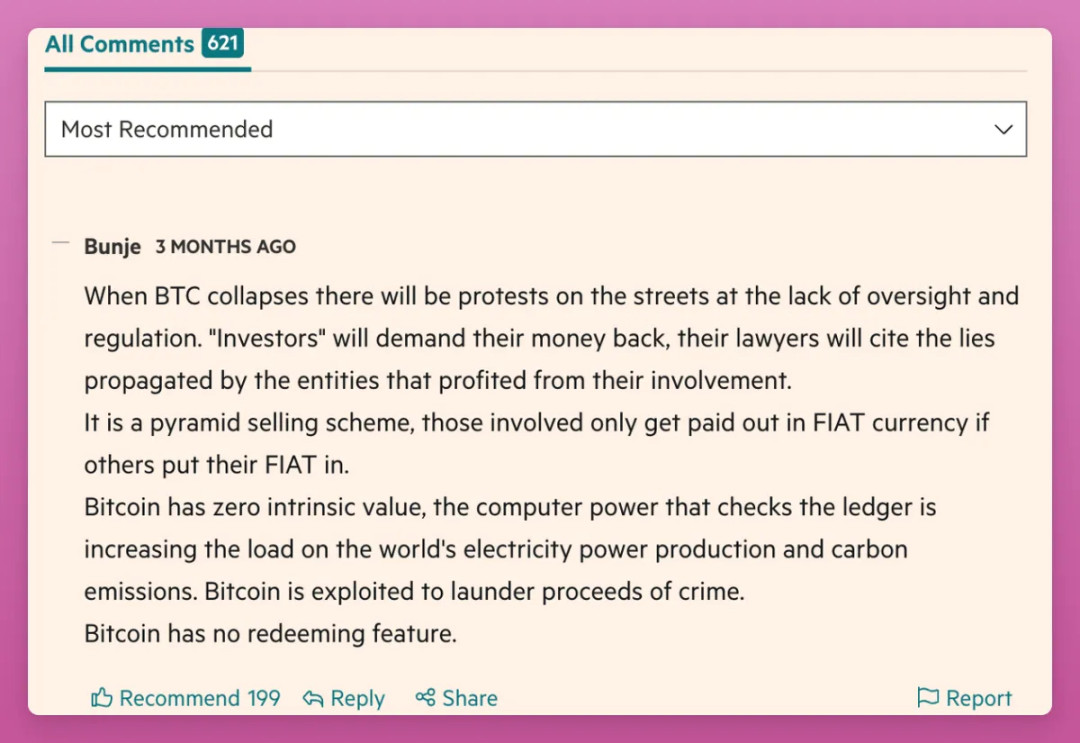
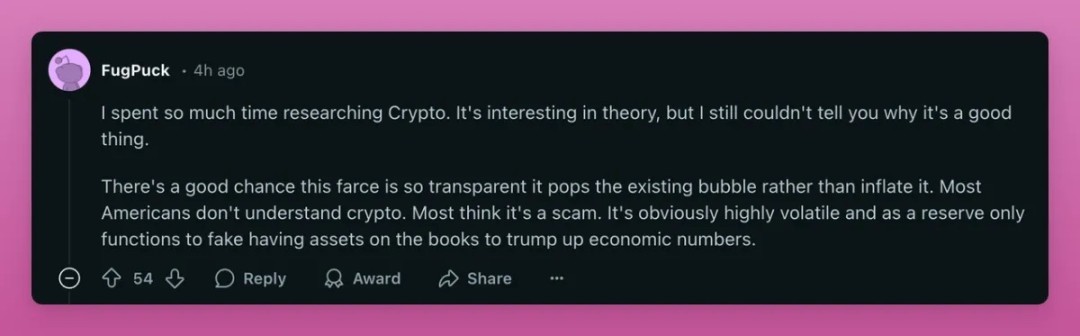
If you've browsed Reddit, you know how much disdain regular people have for crypto. But I genuinely hope mainstream media would publish more positive crypto stories.
To be fair, the *Financial Times* has long been skeptical of crypto, but Bloomberg’s coverage has significantly improved in recent years, often offering deep insights.
Interestingly, in a seemingly mundane article titled “Seven Influencers Shaping Personal Finance in America,” Bloomberg featured a prominent figure from the crypto space.
This individual focuses primarily on meme coins and spends their days promoting them in Telegram groups. I’m glad Bloomberg covers crypto, but I was still surprised they endorsed him!

The person pictured: @cryptomasun
Yes, People Really Do Hate Us
Since this is still a "research" blog post, here are some authoritative survey data points on market sentiment toward cryptocurrency:
Multiple surveys show that non-investors generally view crypto as a high-risk speculative tool rather than a legitimate financial product.
In the UK, 64% of respondents familiar with crypto believe “investing in cryptocurrency is essentially gambling.”
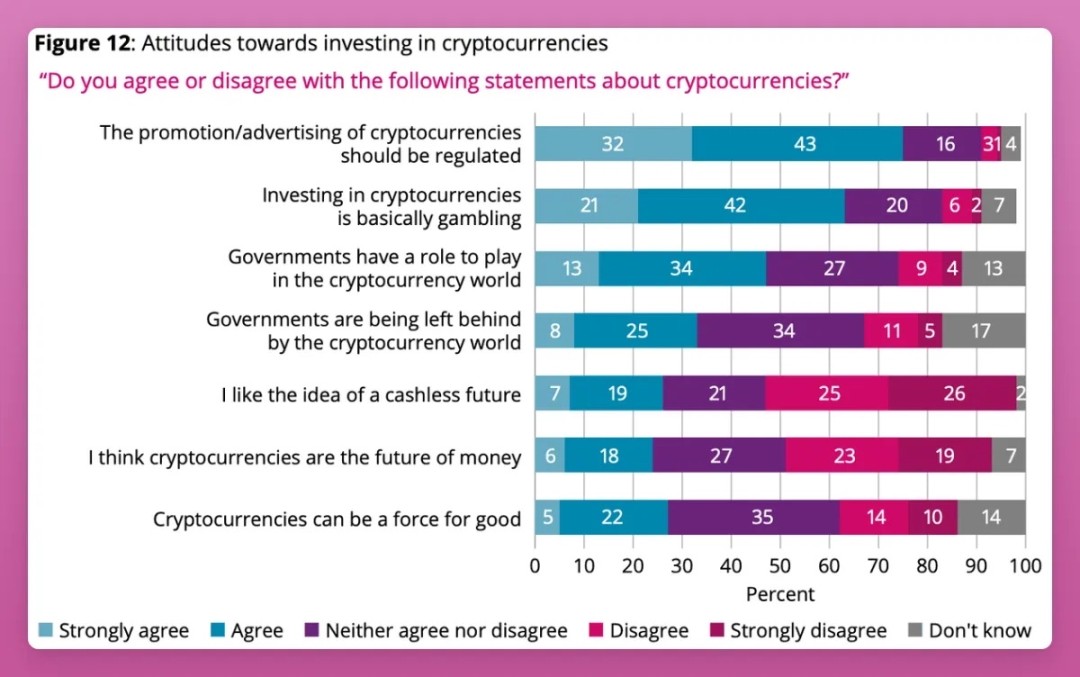
"Study on Attitudes Toward Cryptocurrency Investment"
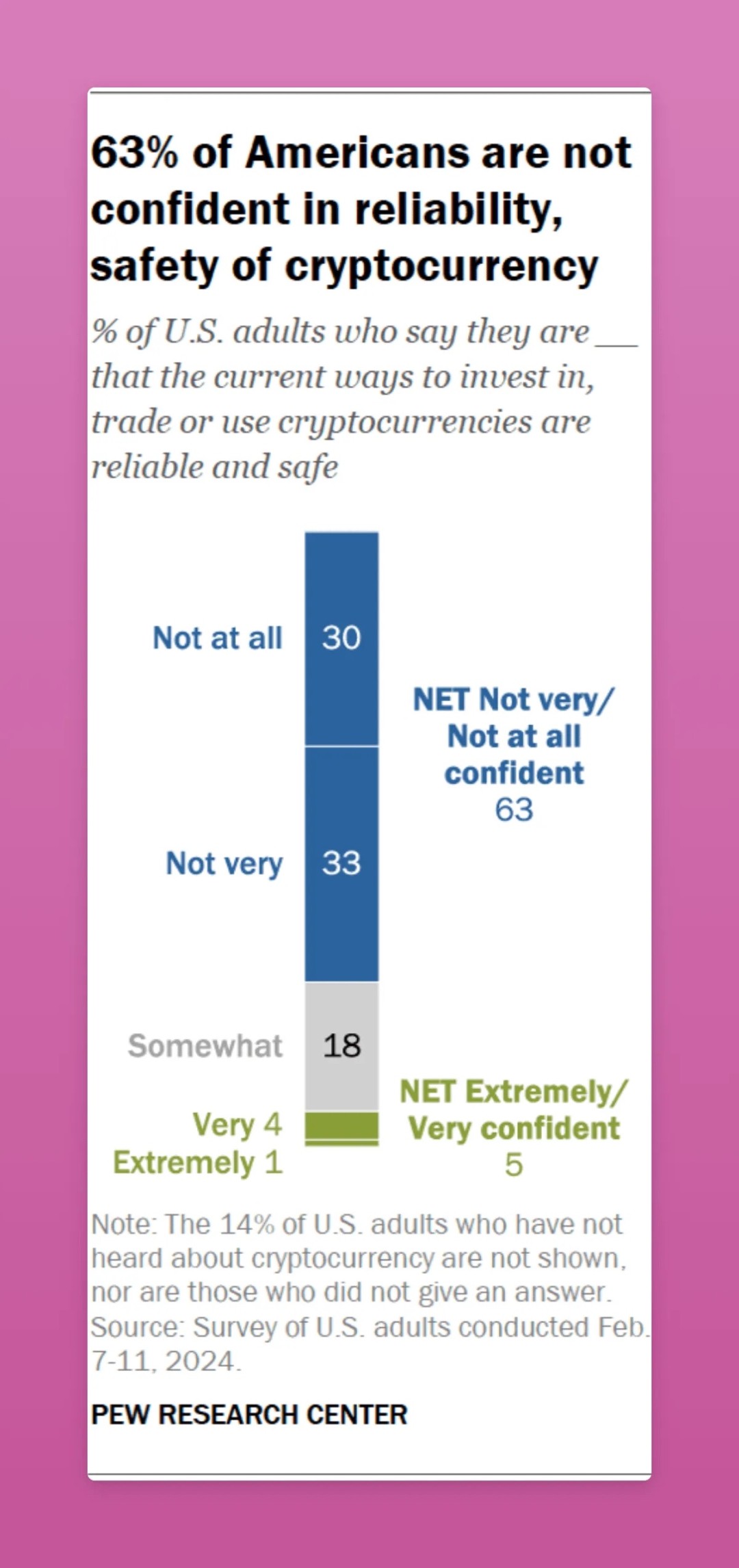
A 2024 Pew Research Center survey found that 75% of Americans distrust its reliability or security, mainly due to rampant scams and extreme market volatility.
Edelman’s 2023 Global Trust Report reveals an even harsher reality: cryptocurrency is distrusted across all demographic groups—and critically, it’s trusted less than the banking system, which is exactly the traditional financial structure crypto aims to disrupt.
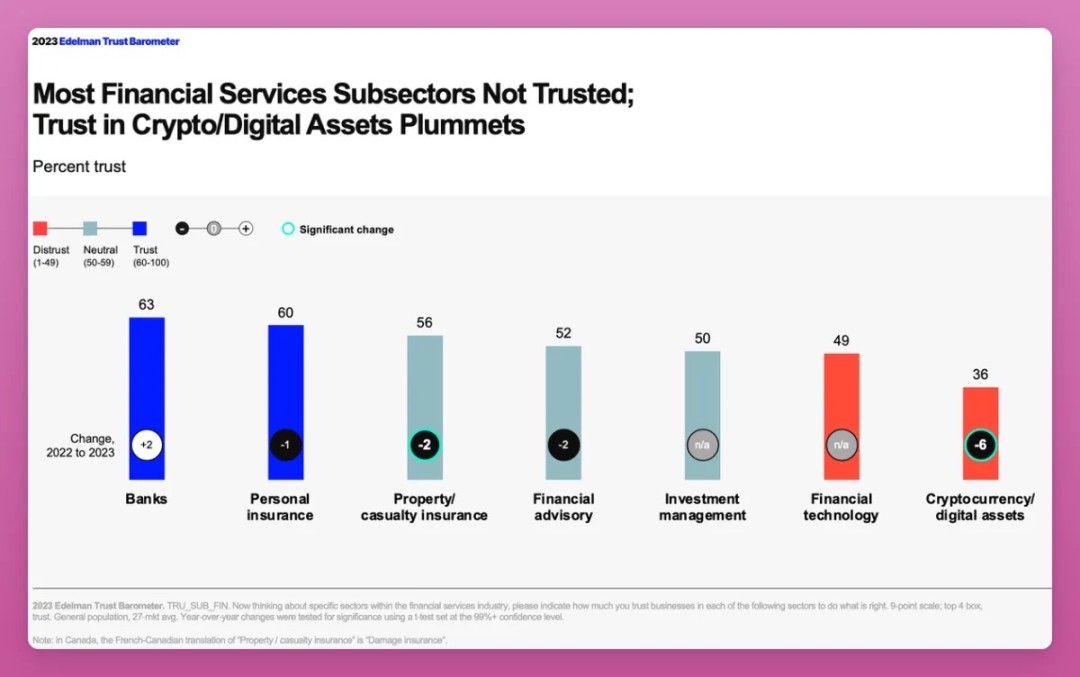
Certainly, FTX’s 2023 collapse severely damaged crypto’s credibility, and the 2024 meme coin frenzy didn’t help either.
Consensys releases an annual industry report, and its 2024 edition highlights a brutal truth: the narrative of crypto as “the future of money” is fading. When negative headlines about speculation, scams, phishing attacks, and money laundering dominate as much as the core value proposition of being a “replacement for traditional finance,” the foundation of the industry begins to crack.
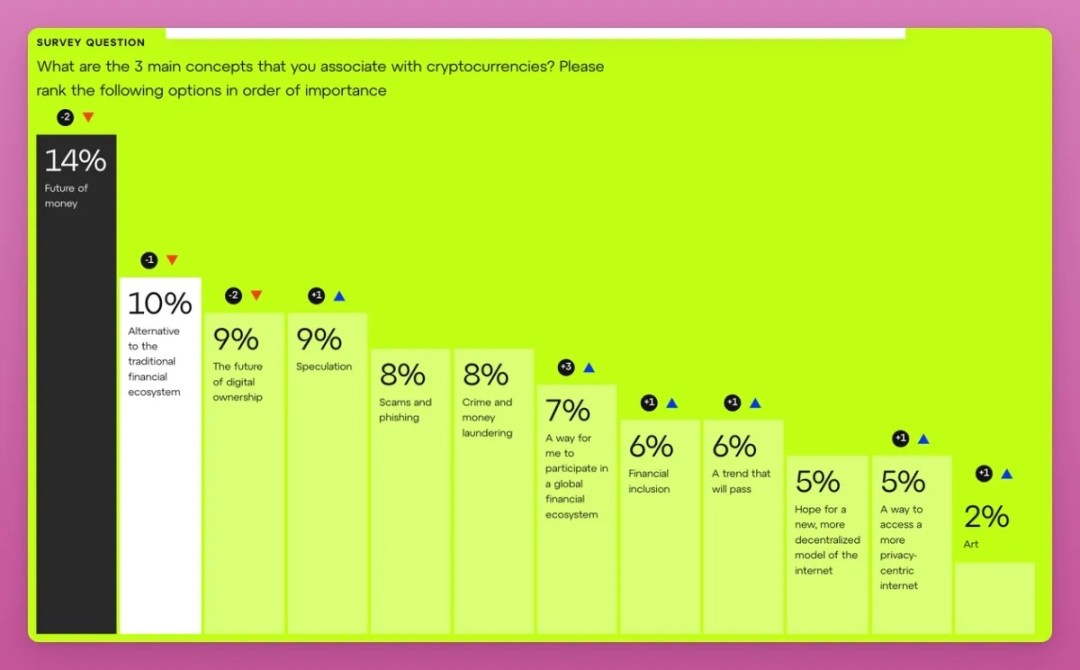
The message is clear: outside the crypto community, people widely question whether digital assets can be considered safe financial instruments.
While writing this, I came across a tweet that perfectly encapsulates public sentiment toward crypto:
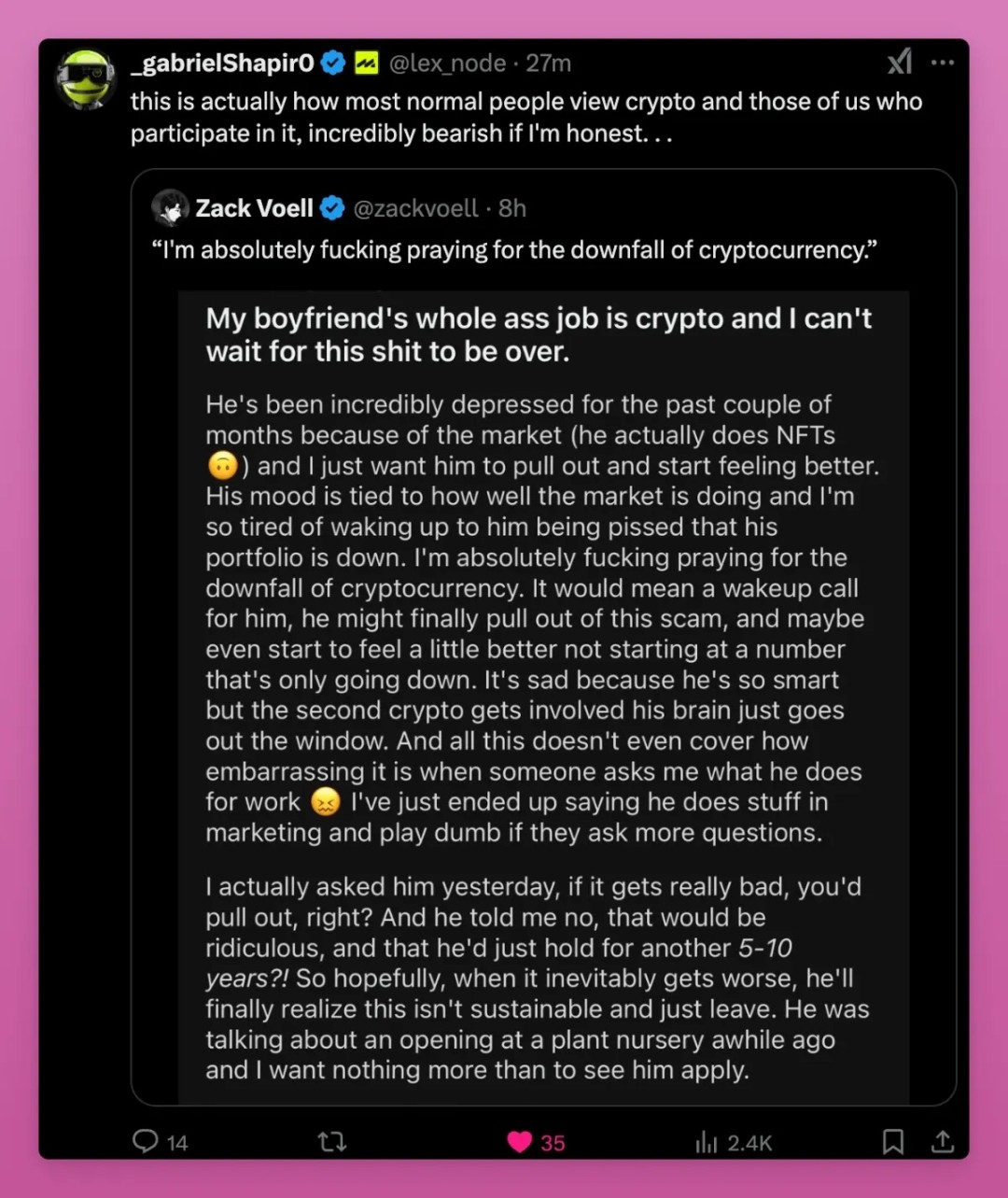
Why Crypto Culture Matters
Our public image might seem irrelevant because most people “just don’t get it.” They fear leaving the 9-to-5 grind and are influenced by mainstream media’s demonization of crypto.
But notably, public perception is quietly shifting. More people are now willing to try crypto than ever before. I believe this shift will bring millions of new members into our community.

I believe we can and should do better. We need to convince the world of crypto’s vision and mission.
Crypto envisions a decentralized financial system where individuals have full control over their assets without relying on intermediaries like banks or governments. Its goal is to create a borderless, censorship-resistant, trust-minimized ecosystem where anyone can transact, store value, and build economies without depending on centralized institutions.
Yet this vision is being drowned out by the noise of meme coins and speculation.
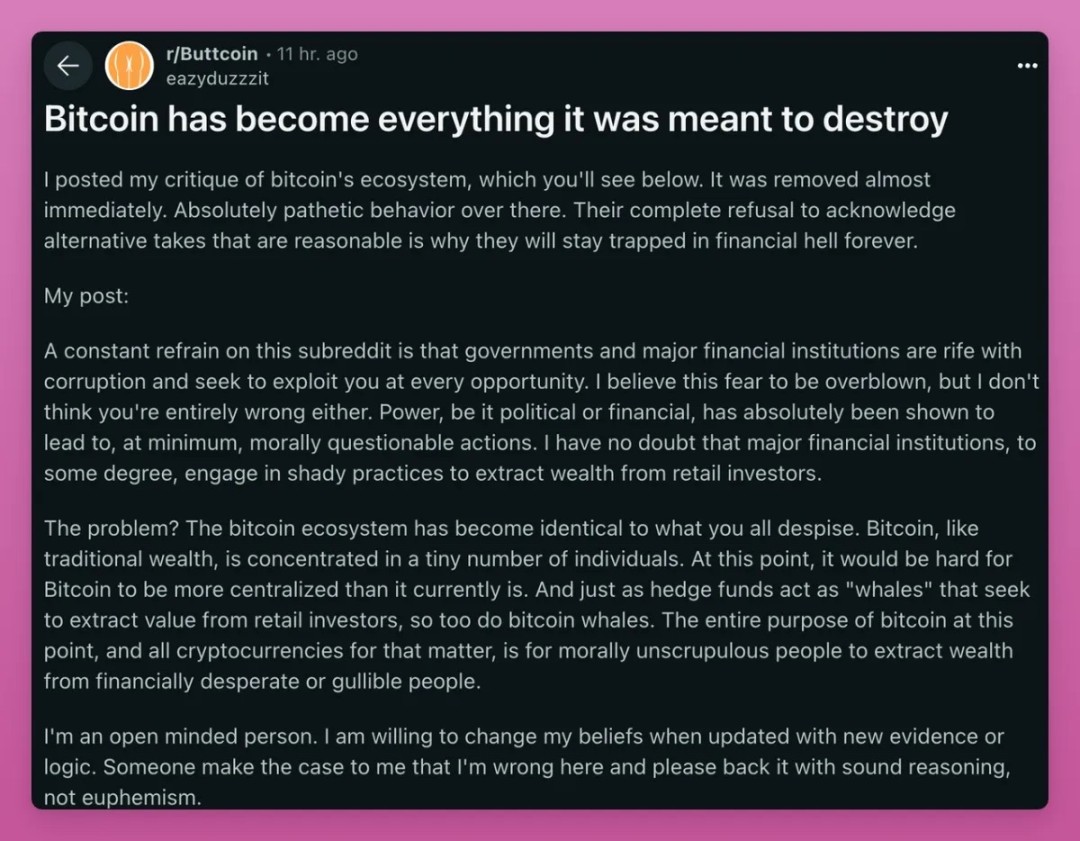
Worse, the public no longer sees crypto as a revolutionary path to improve finance. As one comment pointed out: “The Bitcoin ecosystem has become everything you all claimed to hate.” Wealth and power are concentrated in the hands of a few, extracting value from those in financial distress.
Moreover, due to the Trump administration’s open support, crypto has become forcibly associated with the MAGA movement—an association unpopular beyond its base. Unsurprisingly, the EU views Trump’s endorsement of crypto as a potential threat to the eurozone’s monetary sovereignty.
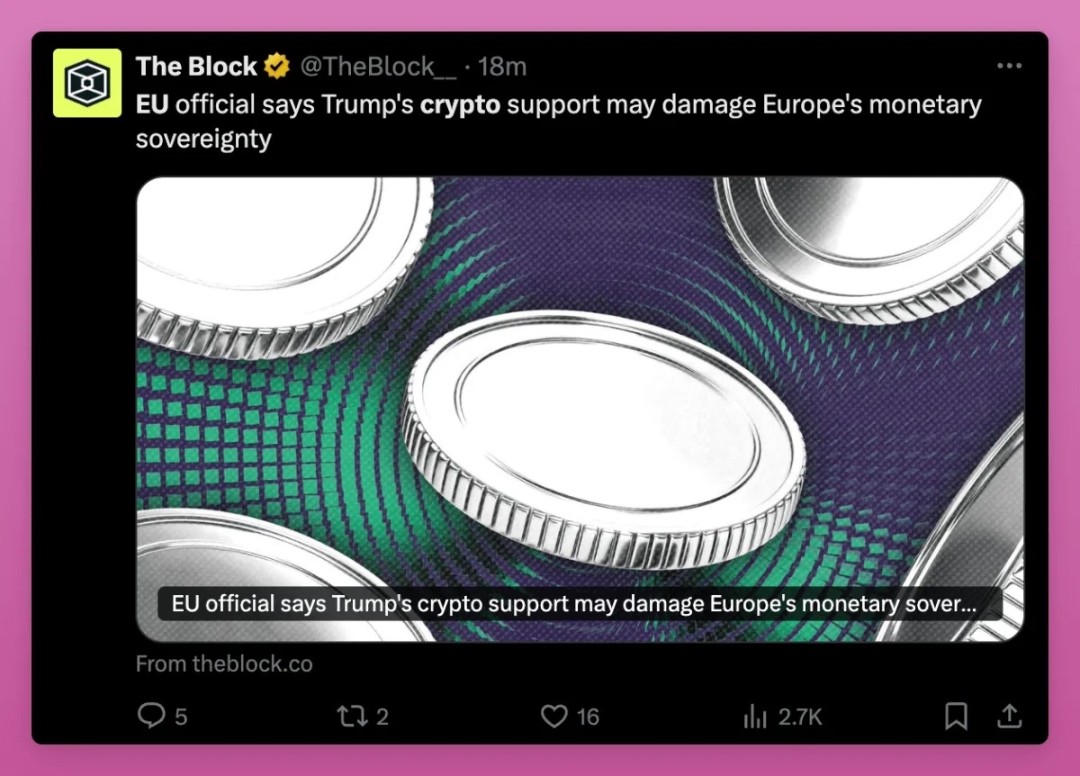
Don’t get me wrong—previous U.S. regulatory relaxation injected optimism into the market. But now the crypto industry is playing a dangerous game of tightrope walking with the Trump administration.
How to Change Public Perception of Crypto? Make It More Open and Fair
Crypto’s reputation won’t fix itself. If we want mainstream adoption, we must reshape the narrative around crypto.
Easier said than done, but change must start from within—even native participants in the crypto space are losing faith.
I believe we must focus on three key areas:
1. Restore the Glory of Crypto
In previous cycles, newcomers to crypto could actually make money. But now, small groups exploit meme coins, and VC-backed tokens with low circulating supply and high FDV (fully diluted valuation) leave new entrants with no chance to profit.
We barely resisted the trend of low-supply, high-FDV token launches in this cycle, only to fall into the trap of meme coin cartels.
Projects like Legion and Echo made progress with fairer funding models, but they remain too exclusive. We need to create and promote projects that generate value instead of destroying it, allowing early participants to benefit together.
Kyle proposed a more detailed plan based on first principles for recovering stronger from this market chaos.
But due to extreme short-termism, predatory cultures, and widespread dishonesty, we’ve entered a vicious cycle—a collective self-harm—where financial nihilism becomes perpetual as everyone thinks, “It’s fine to invest in a random scam project; I’ll exit before they rug pull.”

We need self-regulation against bad actors. The industry must do more to expose frauds and hold influencers accountable for misleading promotions. ZachXBT used to do this, but even he eventually dumped meme coins sent to him, given how out of control criminal behavior has become.
I myself need to do better and distance from value-extractive activities. People need to genuinely earn money while advancing the crypto industry.
Today, too many newcomers end up financially ruined—or worse.
2. Shift the Narrative from Speculation to Utility
Crypto isn’t just for gambling—it brings real-world benefits.
We need to highlight use cases like remittances, financial inclusion, and transparent governance—not just meme coin culture.
DeFi is growing, new social networks are emerging, and projects like Lens, Abstract, and Farcaster offer innovative monetization models. Meanwhile, the expanding use of stablecoins and real-world assets (RWA) helps protect and grow wealth instead of destroying it.
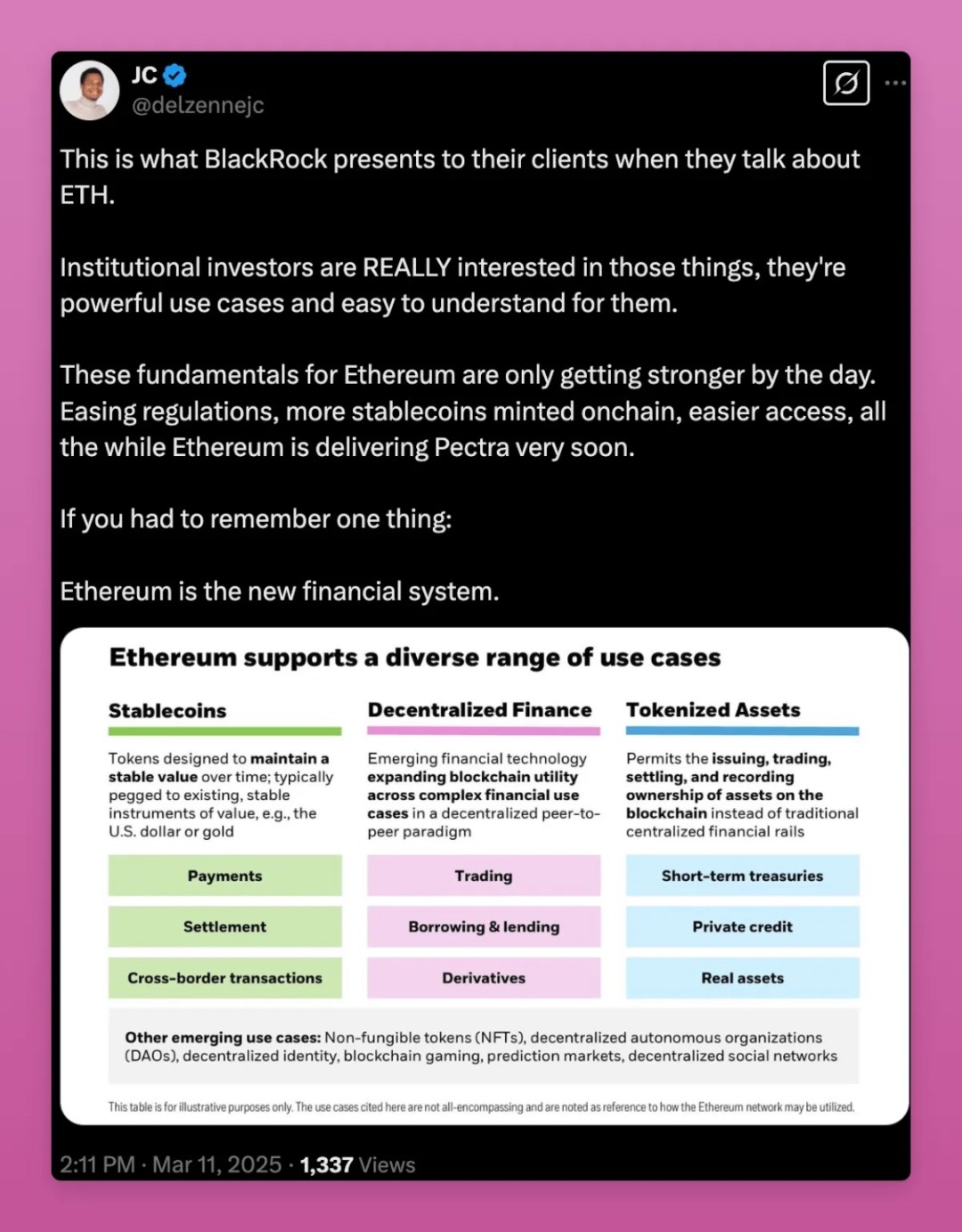
Top KOLs on X may not care, but their platform represents only a small part of the crypto ecosystem.
I'm glad Bitcoin performs decently as "digital gold," but Ethereum and Solana are seen as speculative chains rather than foundational platforms for an open digital economy.
If we promote meme coins as crypto culture, I’d bet Pudgy Penguins will become Web3’s most representative export to Web2 when compared to Web2 meme coins like DOGE and PEPE.
3. Rebuild the Narratives Around Bitcoin and Ethereum
Crypto isn't a monolithic culture but consists of multiple subcultures. The two most prominent are Bitcoin and Ethereum cultures.
I find it frustrating when people say “Bitcoin has become everything it set out to destroy.” Only those who cold-store Bitcoin truly understand the peace of mind that comes from self-custody and independence from the existing financial system.
ETFs benefit our asset scale, but they’re a double-edged sword—buyers don’t experience the freedom of self-custody.
I also hope Bitcoin can distance itself from the MAGA movement. Bitcoin is global and should remain neutral.
This is why I appreciate Ethereum. Many criticize the Ethereum Foundation for not aligning with Trump’s team, but in the long run, this will prove to be a winning strategy.
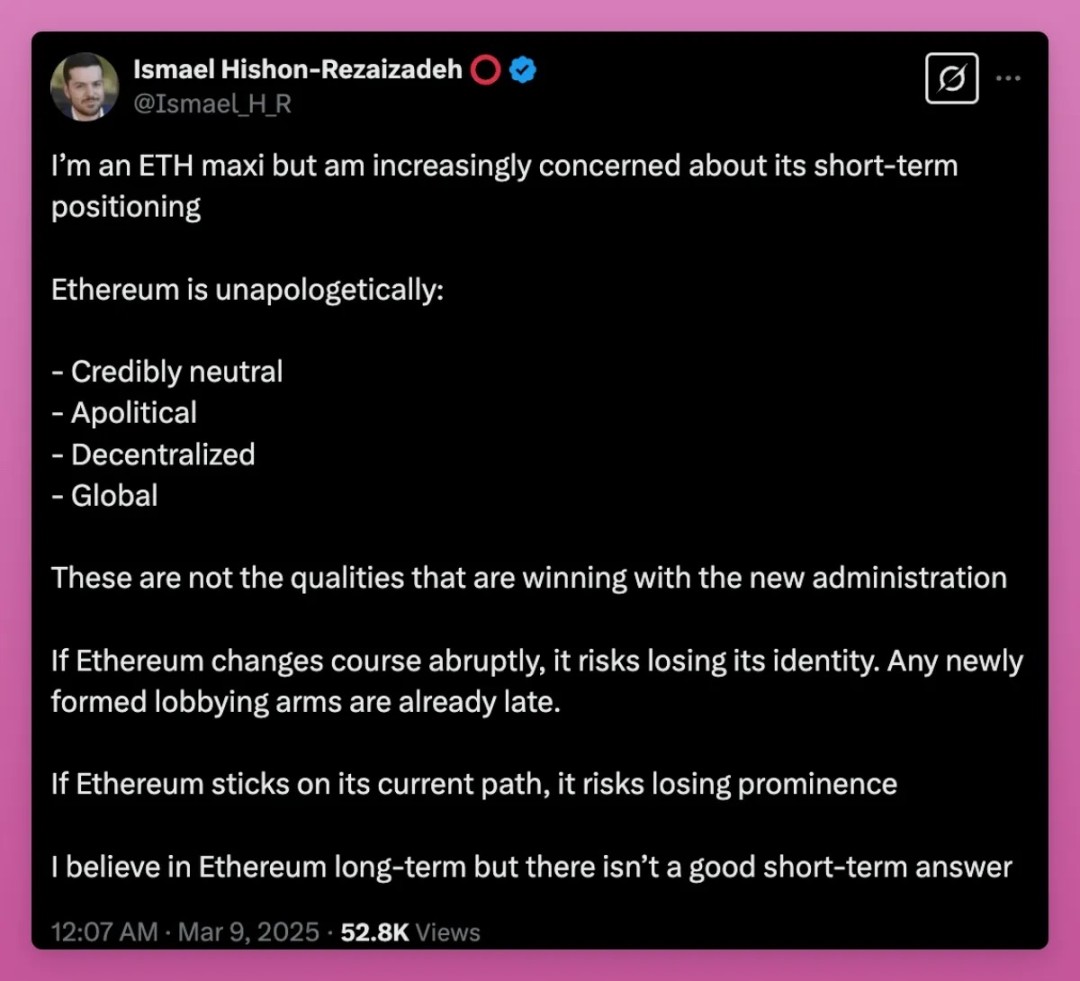
As privacy and democracy erode, as AI blurs the line between reality and illusion, and as digital ownership becomes uncertain, Ethereum offers the last digital refuge.
Ethereum’s core characteristics are crystal clear:
-
Technologically credible neutrality
-
Politically agnostic governance
-
Decentralized value network
-
Global participation ecosystem
This operating system, overlooked by those outside the crypto world, must communicate its ethos outward and deliver products that truly embody Ethereum’s values.
An Optimistic Future
Even though the total crypto market cap has surpassed $2.7 trillion today, have we really “made it”?
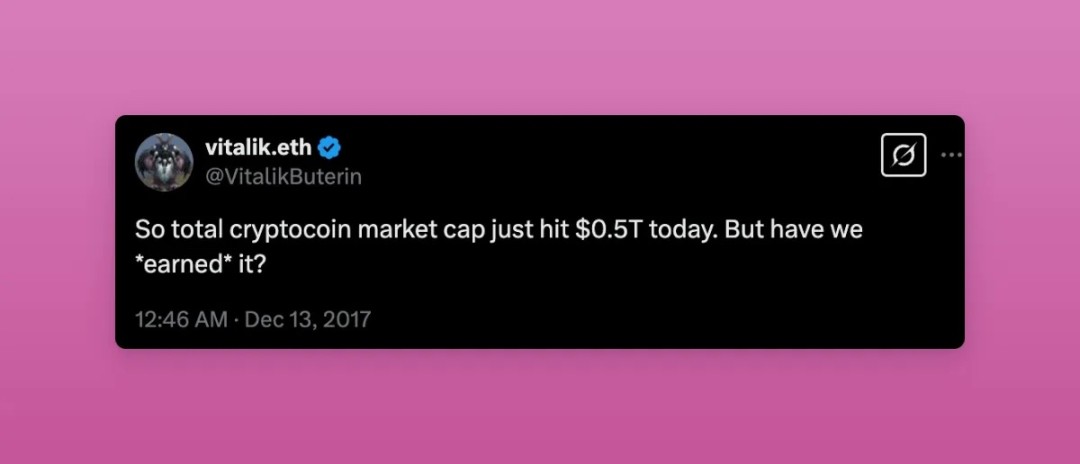
Since Vitalik published that article in 2017, the crypto industry has evolved. Not all activity is speculative or negative.
As I mentioned in a previous tweet, 1.4 billion people globally remain unbanked. Even in the U.S., 4.5% lack bank accounts. The Federal Reserve’s own research shows high-income individuals treat crypto as an investment vehicle, while lower-income groups use it more for transactions. Among those using crypto for payments, 60% earn under $50,000 annually, and 13% are unbanked.
In Chainalysis’ 2023 Cryptocurrency Adoption Index, Venezuela ranked 40th. Stablecoins became lifelines against hyperinflation. Similar to Argentina, as local currencies collapsed, stablecoin purchases surged—clear signs of widespread crypto adoption.
Crypto isn’t just used to fight inflation but also to resist oppressive regimes. During the pandemic, crypto enabled aid delivery to doctors and nurses in Venezuela, bypassing corrupt authorities. Ukraine raised $225 million in crypto donations at the onset of war.
Total Value Locked (TVL) in DeFi reached $88 billion. DEXs are challenging CEXs, and projects like Maker are tokenizing real-world assets (RWAs).
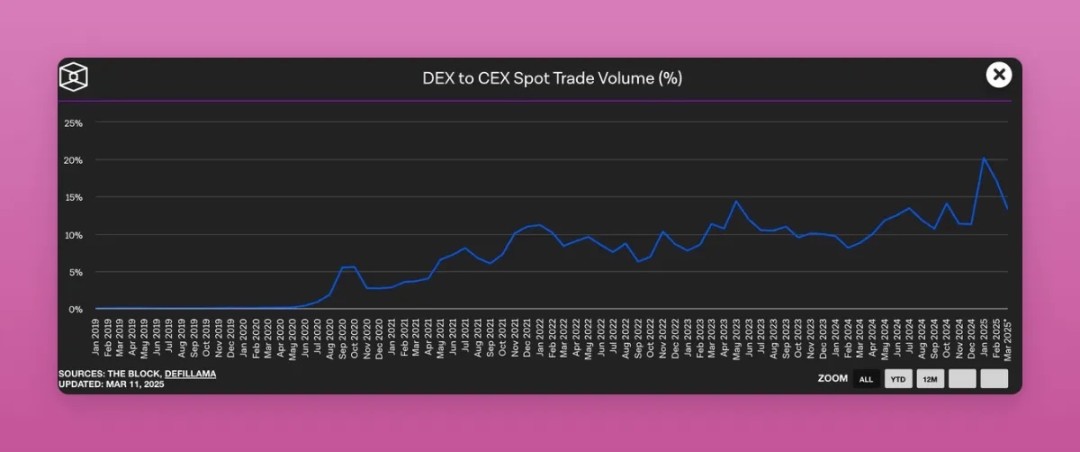
Non-speculative decentralized social apps are also gaining traction. Farcaster and Polymarket now have thousands of daily users, with numbers growing. We now have genuinely usable decentralized applications (dApps).
Yet all these advancements seem ignored on X’s timeline, and we’ve done a terrible job promoting this mission.
Still, I believe the current market downturn happening as I write will help the industry self-correct. Progress will continue. First, we must clean up the mess we’ve created and focus on amplifying crypto’s positive impact.
Join TechFlow official community to stay tuned
Telegram:https://t.me/TechFlowDaily
X (Twitter):https://x.com/TechFlowPost
X (Twitter) EN:https://x.com/BlockFlow_News
 Ignas | DeFi Research