The Secret Weapons Behind DeFi's Comeback: Buybacks, Fee Switches, and the Future of Dividends
TechFlow Selected TechFlow Selected
The Secret Weapons Behind DeFi's Comeback: Buybacks, Fee Switches, and the Future of Dividends
The industry as a whole is transitioning toward sustainable tokenomics, with projects focusing on real revenue distribution.
 Navigating Web3 tides with focused insights
Author: @ManoppoMarco, investor at primitivecrypto
Translation: zhouzhou, BlockBeats
Editor's note: DeFi protocols are accelerating value accrual for token holders, with Aave, Ethena, Hyperliquid, and Jupiter among those implementing buyback programs, fee switches, and new incentive structures. Ethena plans to activate a fee switch to share revenue with stakers and is approaching key milestones. Other protocols are also enhancing token value through buybacks, fee distributions, and governance optimization.
Below is the original content (slightly edited for clarity and readability):
If you've spent eight to nine figures on growth but haven't seen at least linear revenue increases, buybacks aren't necessarily a bad idea. DeFi protocols are under increasing pressure to distribute a portion of their revenue to token holders. Major projects like Aave, Ethena, and Hyperliquid are already exploring ways to introduce value accrual mechanisms for their native tokens.
What’s driving this trend? The election of Donald Trump has ushered in a more favorable regulatory environment for DeFi. Below are updates on the latest tokenomics from Aave, Ethena, Jupiter, and Hyperliquid—including their buyback plans and fee adjustments.
AAVE
Aave has just launched a major tokenomics overhaul focused on buybacks, fee distribution, and improved incentives for token holders. According to Marc Zeller, founder of the Aave Chan Initiative (ACI), this is one of the most significant proposals in Aave’s history.
Buybacks & Fee Adjustments
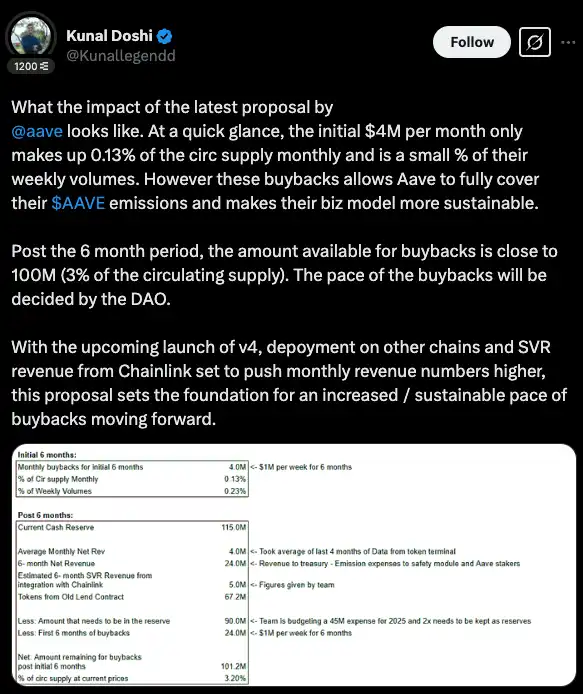
Aave has initiated a six-month buyback program, allocating $1 million per week (approximately $4 million monthly) to offset AAVE token emissions and improve protocol sustainability. After six months, the buyback pool could reach $100 million—about 3% of circulating supply—with deployment timing subject to DAO decisions.
What’s the goal? To control token emissions while strengthening Aave’s treasury.
New Treasury & Governance Initiatives
Aave is establishing the Aave Financial Committee (AFC), dedicated to treasury management and liquidity strategy. Additionally, Aave is finalizing its transition from the LEND token by reclaiming 320,000 AAVE (worth ~$65 million) for future use.
Umbrella: Aave’s New Risk Management System:
Aave spends $27 million annually on liquidity costs, prompting the launch of Umbrella—a system designed to optimize capital efficiency and reduce risk. It will be integrated across multiple blockchains, including Ethereum, Avalanche, Arbitrum, Gnosis, and Base.
Anti-GHO: A New Reward Mechanism for Stablecoin Holders:
Anti-GHO is a new reward mechanism replacing the previous discount model for GHO holders. Users can burn tokens 1:1 to offset GHO debt or convert them into StkGHO, directly linking incentives to Aave’s revenue. This mechanism is still in development and may be part of a future “Aavenomics Part II” update.
What’s Next?
With the rollout of Aave v4, additional chain deployments, and new income streams from Chainlink SVR, this update lays the foundation for larger, more sustainable buybacks in the future.
Jupiter
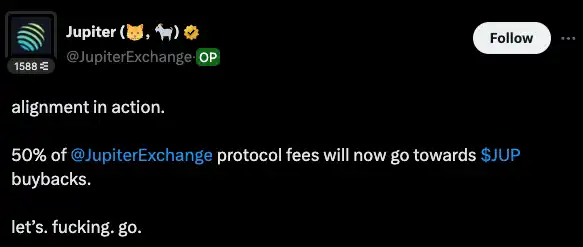
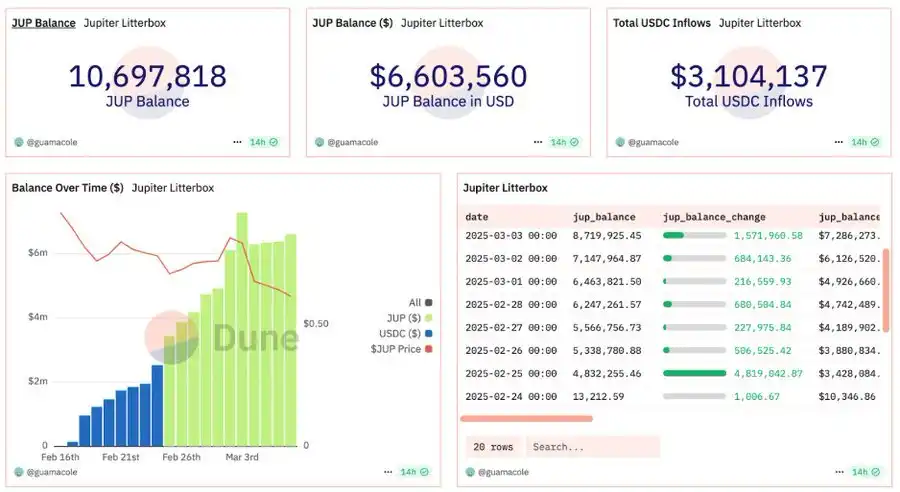
Since February 17, 2025, Jupiter has been using 50% of its protocol fees to buy back and lock JUP tokens over a three-year period. This initiative aims to reduce circulating supply, enhance long-term stability, and boost user engagement within the Solana ecosystem. In February, Jupiter completed its first buyback, purchasing 48,800 JUP tokens for $3.33 million. To date, Jupiter’s Litterbox Trust buyback program has accumulated over 10 million JUP (worth ~$6 million).
What’s Next?
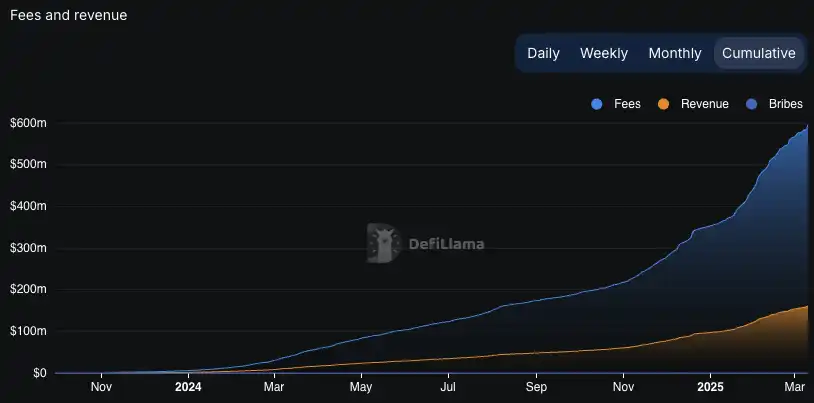
On an annualized basis, Jupiter’s $3.33 million buyback equates to over $35 million per year. Under more aggressive estimates, with $102 million in revenue in 2024, buybacks could exceed $50 million annually.
Hyperliquid
Token Distribution
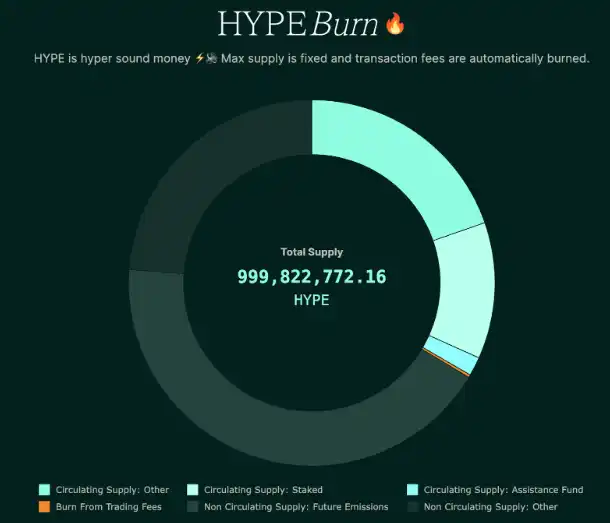
Hyperliquid’s native token HYPE has a total supply of 1 billion, with no fundraising or investor allocations. The breakdown is as follows:
· 31.0%: Airdropped to early users (fully liquid)
· 38.888%: Reserved for future emissions and community rewards
· 23.8%: Allocated to the team, locked for 1 year, with most unlocking between 2027–2028
· 6.0%: Hyper Foundation
· 0.3%: Community grants
· 0.012%: HIP-2
The team-to-community token ratio is 3:7. The largest non-team holder is the Assistance Fund (AF), holding 1.16% of total supply and 3.74% of circulating supply.
Revenue Model & Buyback Mechanism
Hyperliquid’s primary revenue sources include trading fees (spot + derivatives) and HIP-1 auction fees. Since Hyperliquid L1 currently does not charge gas fees, these are not included.
Revenue Allocation
· 46% of perpetual trading fees go to HLP providers (supply-side rewards)
· 54% is used to buy back HYPE via the Assistance Fund (AF)
In addition, all HIP-1 auction fees and spot trading fees paid in USDC are currently fully allocated to HYPE buybacks.
Double Deflationary Mechanism
· Buybacks: AF uses part of the revenue to purchase HYPE tokens, which are held—not burned—by AF
· Burns:
1. All spot trading fees denominated in HYPE (e.g., HYPE-USDC pair) are immediately burned
2. Once HyperEVM goes live, all gas fees will be paid in HYPE and fully burned
Buyback Impact & Staking Mechanism
Based on publicly available Hyperliquid trading fee data, as of March 2025, AF is expected to repurchase approximately 2.5 million HYPE tokens monthly (~$35 million) using 54% of perpetual contract revenue. HYPE staking launched on December 30, 2024, using a PoS reward model (similar to Ethereum), with a current annual yield of about 2.5%. So far, 30 million HYPE have been staked (excluding the 300 million held by the team/foundation).

Future Outlook
Hyperliquid may introduce a fee-sharing model, distributing a portion of on-chain transaction fees directly to HYPE holders to create a more sustainable incentive structure. However, some argue that the current model already creates a stronger flywheel effect across market cycles.
Hyperliquid’s revenue currently comes from trading fees and HIP-1 auctions, with potential future expansion into HyperEVM transaction fees. Beyond buybacks and incentives, part of the fees could also be used to:
· Distribute directly to HYPE holders based on holdings or stake size
· Reward long-term stakers to deepen community participation
· Deposit into a community treasury for governance-directed use
Potential Distribution Models:
· Direct fee sharing:
Part of trading fees converted into USDC or HYPE and distributed periodically to token holders (similar to dividends)
· Staking-enhanced rewards:
Only stakers receive a share, incentivizing long-term holding
· Hybrid model:
Combines fee distribution with HYPE buybacks to balance price support and holder incentives
Ethena
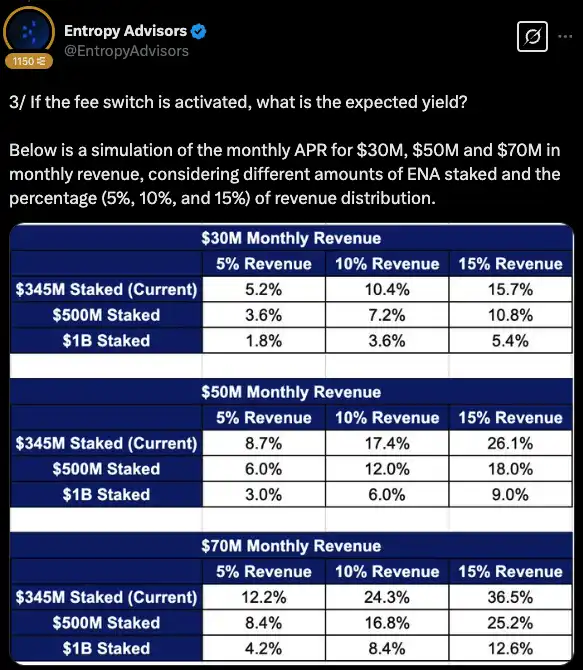
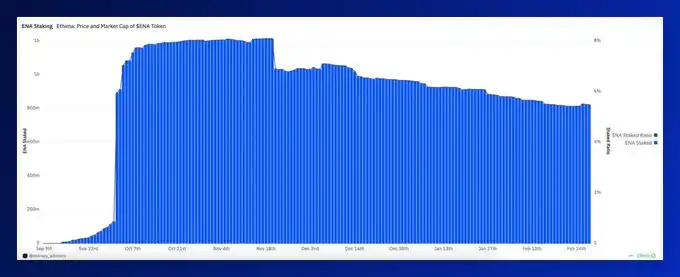
Ethena Labs has now entered the top five DeFi protocols by TVL, generating over $300 million in annual revenue. As the protocol scales, Wintermute’s proposed fee distribution plan has been approved by Ethena’s Risk Committee. Currently, 824 million ENA (worth $324 million) are staked—5.5% of total supply—but stakers only receive points and unclaimed ENA airdrops, without direct access to Ethena’s revenue share.
Ethena Fee Switch & Future Plans:
Activating the fee switch will allow stakers to directly share in protocol revenue, aligning incentives with ENA holders and strengthening DAO governance. Ethena’s revenue primarily comes from funding rates in perpetual markets. Currently, 100% of revenue goes to USDe stakers and the reserve fund. Over the past three months, average monthly revenue has been $50 million.
Before activating the fee switch, the Risk Committee established five key metrics to ensure Ethena is in a solid position.
Current Progress on Metrics:
· USDe supply target: $6B – Only 9% away from target
· Cumulative revenue: $250M+ – Already exceeded in January at $330M
· Exchange integration: Binance/OKX – No timeline yet, though Binance currently holds 4 million USDe
· Reserve fund ≥ 1% of USDe supply – $61M supports $6.1B in USDe
· sUSDe vs. sUSDS APY gap ≥ 5% – Narrowed due to bear market, but could widen again
Outlook
Ethena is nearing its targets, but the fee switch will remain inactive until all conditions are met. Until then, the team will focus on growing USDe supply, securing additional exchange integrations, and monitoring market conditions.
Once all criteria are satisfied, ENA stakers will begin receiving revenue shares.
Summary
Major DeFi protocols are accelerating their shift toward value accrual for token holders. Aave, Ethena, Hyperliquid, and Jupiter are all implementing buyback programs, fee switches, and new incentive structures—making their tokens more valuable beyond pure speculation.
This trend reflects a broader industry move toward sustainable tokenomics, with projects prioritizing real revenue distribution over inflationary incentives.
Aave leverages its strong reserves to support buybacks and governance improvements, Ethena focuses on delivering direct revenue sharing to stakers, Hyperliquid optimizes its buyback and fee distribution model, and Jupiter locks up tokens via buybacks to stabilize supply.
As the regulatory environment improves and DeFi matures, protocols that successfully align incentives with their communities are poised for significant growth.
Join TechFlow official community to stay tuned
Telegram:https://t.me/TechFlowDaily
X (Twitter):https://x.com/TechFlowPost
X (Twitter) EN:https://x.com/BlockFlow_News
 @primitivecrypto