The Power of XRP, the Potential of Ripple: The Breakthrough Path to Mass Crypto Adoption
TechFlow Selected TechFlow Selected
The Power of XRP, the Potential of Ripple: The Breakthrough Path to Mass Crypto Adoption
Ripple's technological foundation is the XRPL ledger, a distributed ledger technology, and XRP is the utility token that operates on this ledger.
 Navigating Web3 tides with focused insights
Author: Will A-Wang
On the night of March 2nd, amidst a weekend of widespread despair across the crypto market, Trump suddenly released a statement regarding a cryptocurrency reserve (U.S. Crypto Reserve): "The American Cryptocurrency Reserve will elevate this critical industry, which suffered years of corrupt attacks under the Biden administration. That's why my executive order on digital assets directs the presidential working group to advance a crypto strategic reserve including XRP, SOL, and ADA. I will ensure America becomes the world capital of crypto. We are making America great again!"
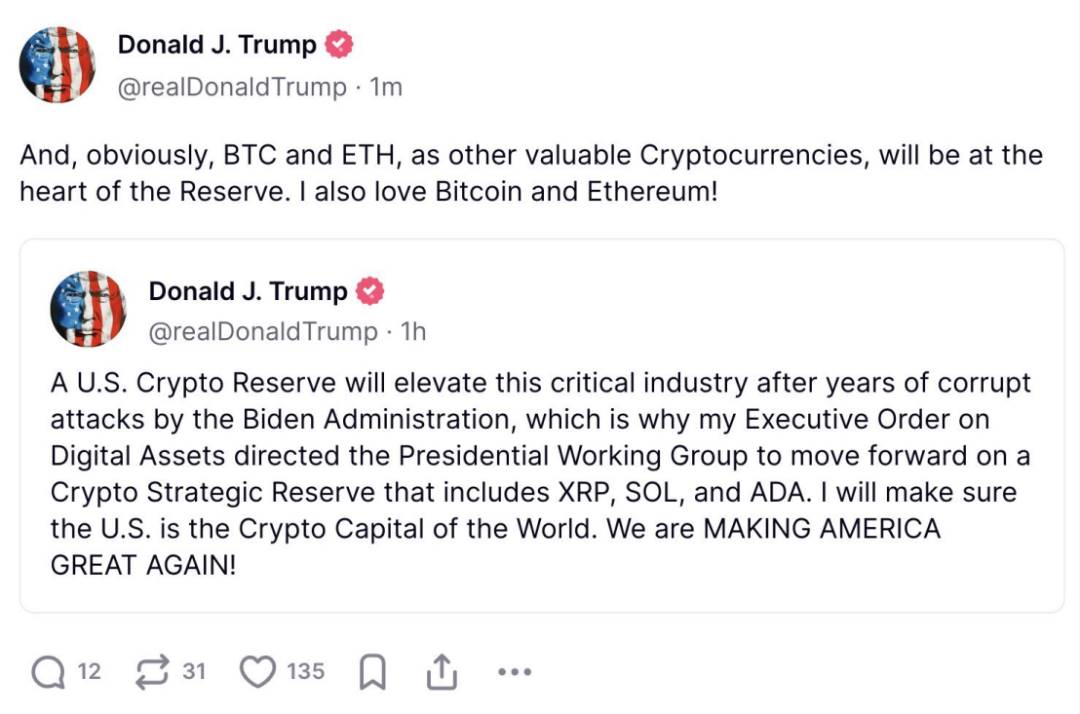
Following the announcement, the crypto market immediately rallied—a true case of “one arrow piercing the clouds, summoning a thousand troops.” Although BitMEX co-founder Arthur Hayes commented it was “nothing new,” this doesn’t prevent us from exploring XRP and Ripple’s underlying business model. After the news broke, XRP surged over 30%.
Therefore, this article aims to explain what Ripple and XRP are, their relationship, and how they operate within both Web2 and Web3 ecosystems. Projects combining Web2 and Web3 business models offer valuable lessons for the industry—especially in today’s context of "Crypto Mass Adoption," where real-world adoption still requires Web2 methods to drive implementation, while leveraging Web3's advantages in network effects and decentralization.
1. Ripple Labs—A Fintech Company
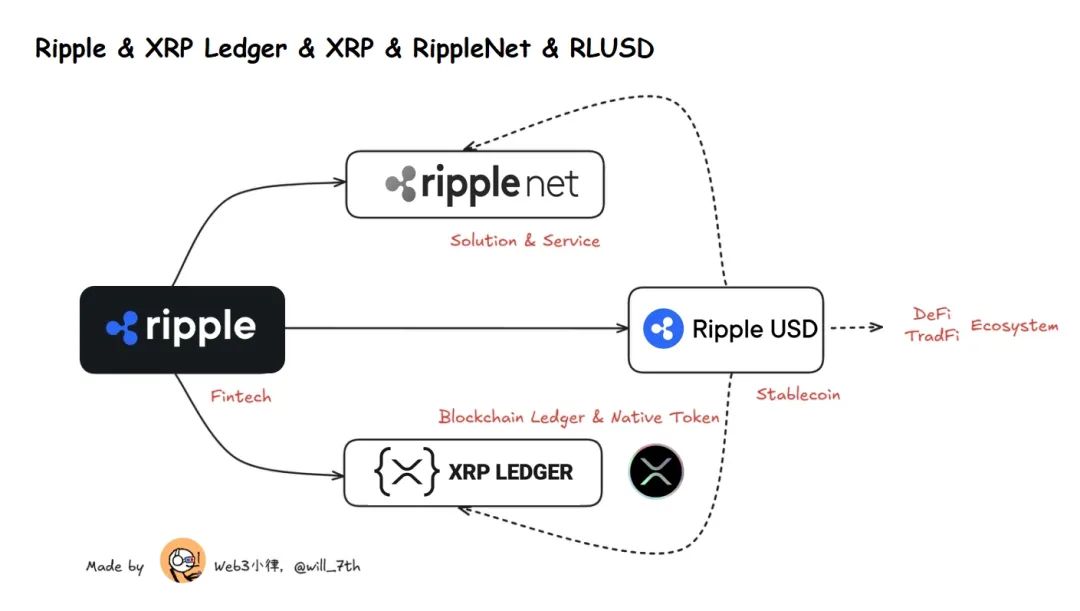
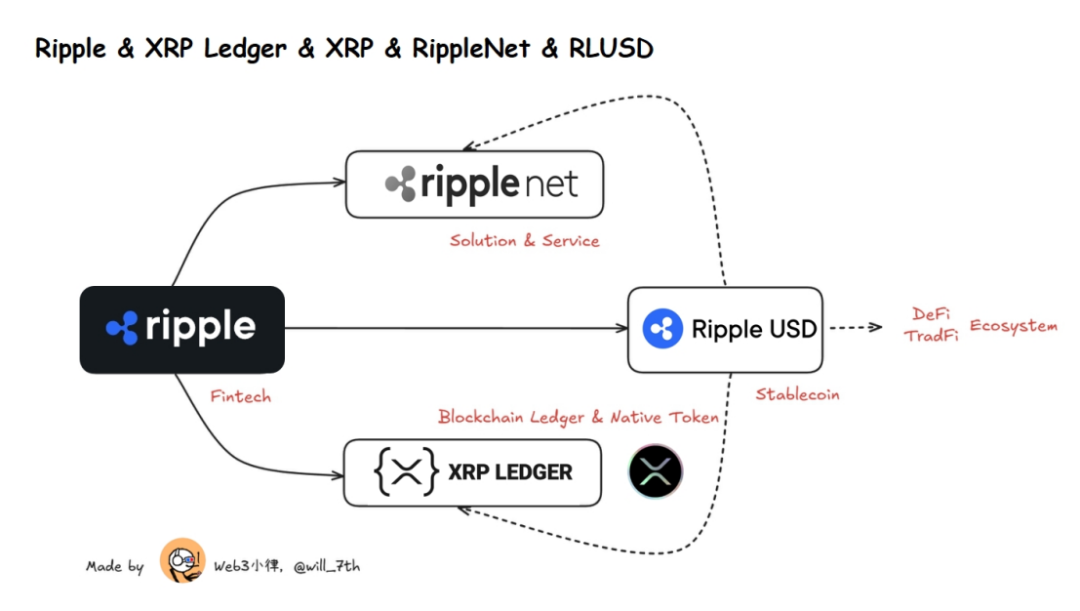
Ripple is a U.S.-based fintech company, also known as Ripple Labs, specializing in blockchain-based solutions for cross-border payments and financial settlements. Its core mission is to optimize international remittance processes within traditional finance using blockchain technology, thereby accelerating global transactions and reducing costs. Ripple’s main products and services include (i) cross-border payments and remittances via RippleNet, and (ii) the recently launched RLUSD stablecoin.
The blockchain technology mentioned above refers to the XRP Ledger (XRPL), an independent distributed ledger technology (DLT) that Ripple relies on to record and verify transactions. XRP is the native utility token operating on this ledger. It is widely seen as an alternative to SWIFT, the payment network traditionally used by financial institutions.
The XRP Ledger (XRPL) is a payment-focused blockchain network developed by Ripple in 2012, enabling financial institutions and payment providers to offer innovative financial services such as custody, digital wallets, and other decentralized applications (DApps).
After the initial launch of the XRP Ledger, Ripple focused on helping financial institutions process cross-border remittances using DLT. Over time, Ripple developed various cross-border payment products built on XRPL and XRP, eventually integrating them all into a flagship service called RippleNet.
RippleNet is one of Ripple’s key offerings. While Ripple has developed numerous financial products leveraging XRPL and XRP over the years, many were consolidated under a single brand: RippleNet—a global payment network connecting banks, payment service providers, and other financial institutions, offering real-time settlement and currency exchange services.
2. XRP Ledger—The Blockchain Ledger Network
In 2011, Jed McCaleb began developing a new cryptocurrency consensus network. In 2012, he approached Ryan Fugger—the founder of RipplePay (now Ripple Payments), a peer-to-peer credit payment network that Fugger had been building since 2004—to further develop the concept. After community discussions, Fugger handed over the platform to McCaleb, and the project was renamed Ripple. With continued efforts from McCaleb, Arthur Britto, and David Schwartz, the XRPL ledger was created in 2012, with XRP as its native token.
The XRP Ledger is a blockchain-based payment protocol designed to facilitate cross-border payments and central bank digital currency (CBDC) management. Unlike most blockchains, XRPL does not use proof-of-work (PoW) or proof-of-stake (PoS) consensus mechanisms. Instead, it relies on a Cobalt-based consensus mechanism, a Byzantine Fault Tolerance (BFT) governance framework for open networks, and the Ripple Protocol Consensus Algorithm (RPCA).
The XRP Ledger offers low transaction costs and high performance, with its native token XRP classified as a payment cryptocurrency. These tokens enable value storage and transfer through a distributed network rather than relying on centralized governments. Thus, XRP primarily functions as a medium for paying transaction fees on the XRPL.
Shortly after launching the XRP Ledger, Jed McCaleb and Arthur Britto co-founded a company called NewCoin with Chris Larsen. This company later became OpenCoin and then Ripple Labs Inc. Upon incorporation, the entity received 80 billion XRP—80% of the initial total token supply. The following year, Jed McCaleb left Ripple and went on to found Stellar.
3. XRP—The Native Token
XRP is the cryptographic asset within the XRP Ledger and serves as the ledger’s native token. Its primary function is to provide a faster, lower-cost solution for global payments compared to traditional financial systems.
XRP operates relatively independently and is not entirely dependent on Ripple. The XRP Ledger is maintained by globally distributed independent validator nodes (such as universities and exchanges). Ripple holds a large amount of XRP and participates in technical development, but even if Ripple ceased operations, XRP could continue to exist. This independence enhances XRP’s scalability and has enabled the creation of a financial payment ecosystem based on XRP. For example:
- DeFi and tokenization: XRPL supports issuing stablecoins, NFTs, and other assets like CBDCs.
- Independent payment tool: Users can conduct direct peer-to-peer transfers using XRP without going through RippleNet.
Thus, XRP’s value is not directly tied to Ripple Labs’ success or failure, and vice versa. Similarly, Ripple cannot restrict others from using the XRP Ledger for their own services, although its large XRP holdings may limit potential competitors.
Ripple is committed to improving the global payment system through its technology, and XRP is one of the key tools in achieving this goal.
In short, Ripple is a private company providing financial payment services, while XRP is the native cryptocurrency on the blockchain network used to support fast, low-cost cross-border payments.
It should be noted that Ripple is not as decentralized as other public blockchains and holds a significant portion of XRP tokens. Instead, Ripple is a for-profit entity serving financial institutions. It initially developed the XRP Ledger and remains a core contributor to the XRP network, with the Ripple team holding the majority of XRP tokens.
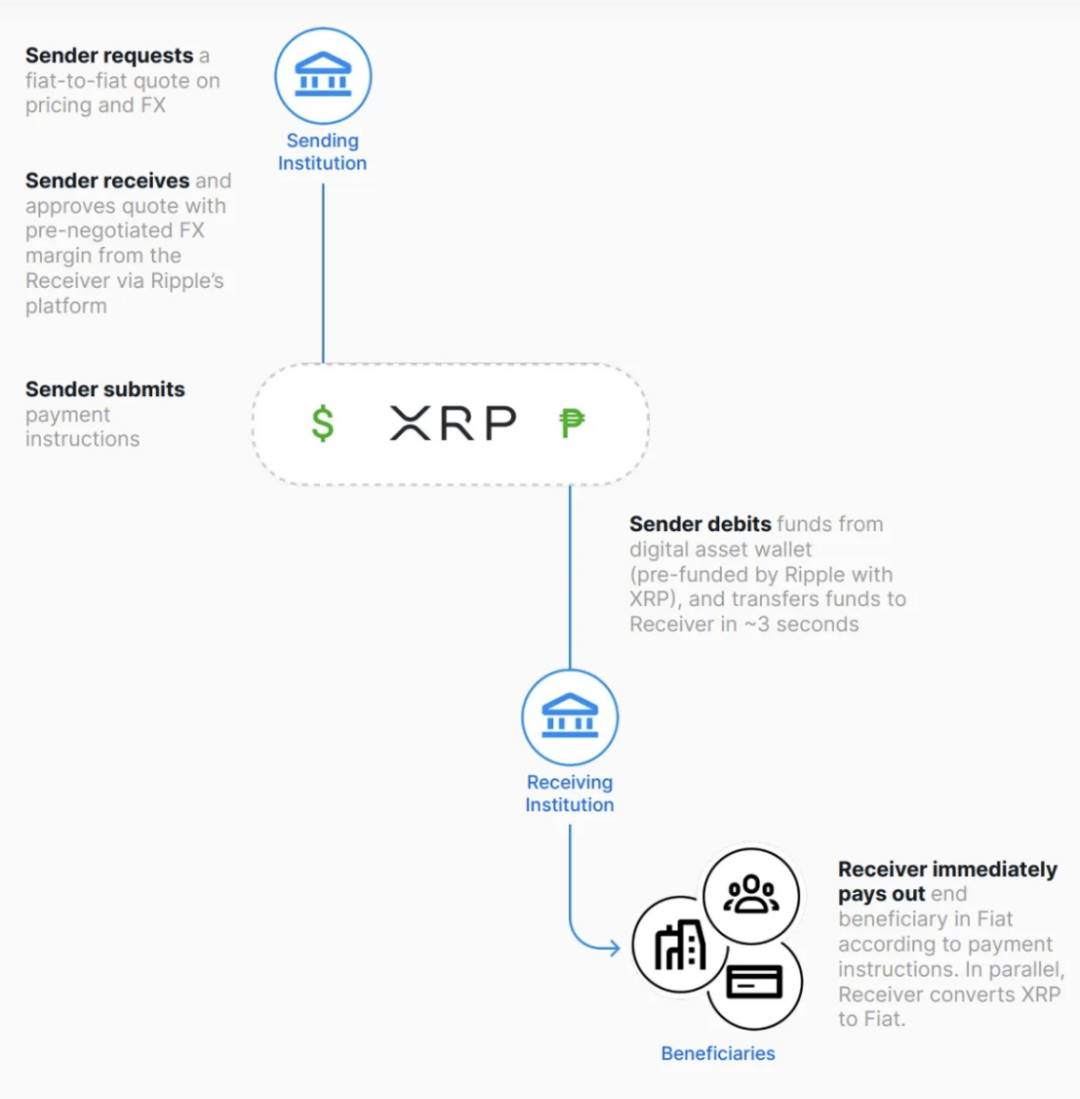
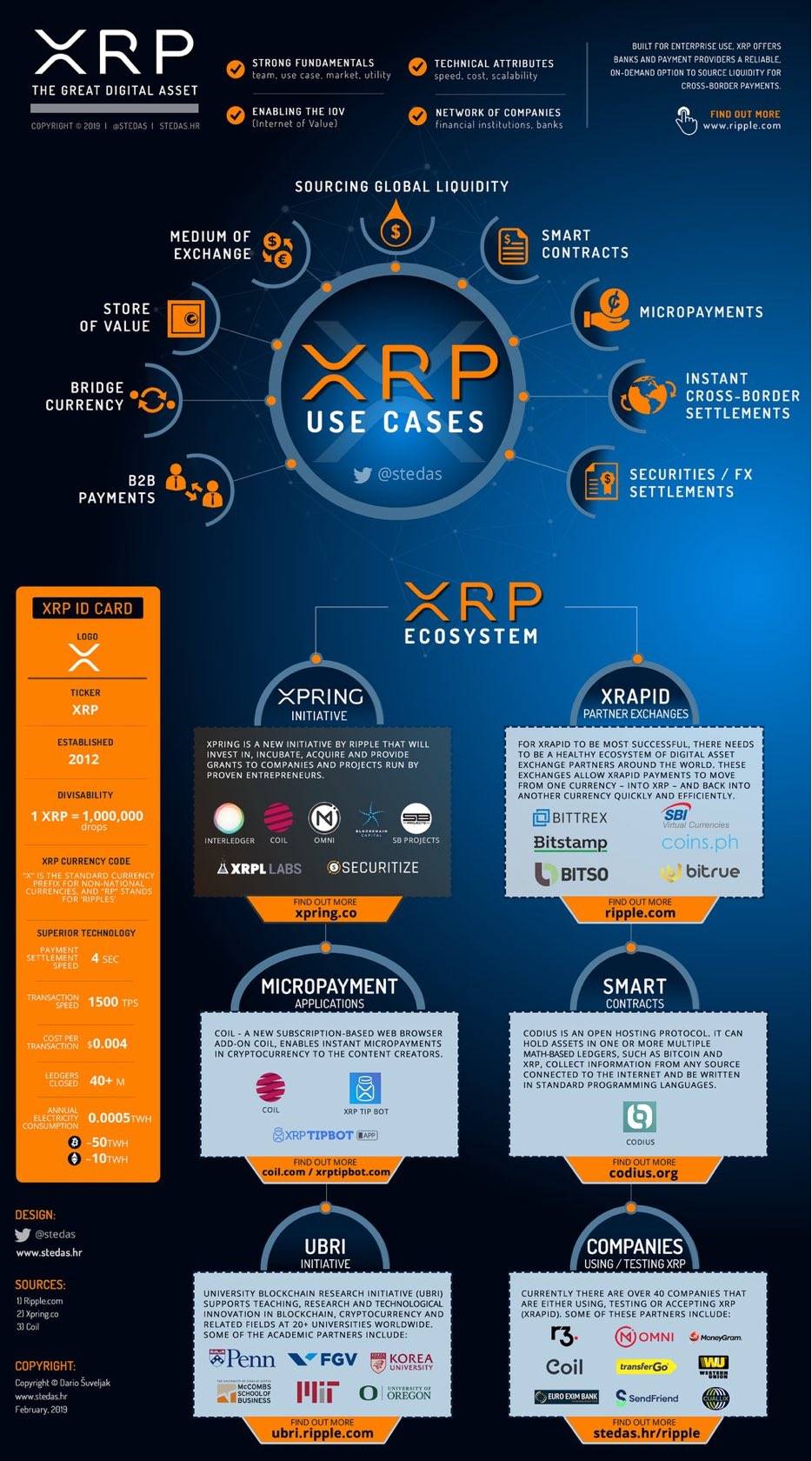
The core role of XRP is to act as a bridge currency for cross-border payments. In Ripple’s On-Demand Liquidity (ODL) solution, XRP serves as an intermediary, replacing the need for pre-funded liquidity pools in traditional correspondent banking systems. For example:
U.S. Bank converts USD to XRP → XRP is sent to Mexico → Mexican Bank converts XRP to pesos.
In this scenario, XRPL’s consensus mechanism (non-PoW) ensures transaction confirmation within 3–5 seconds—significantly faster than Bitcoin (10 minutes) or traditional banking systems—and eliminates capital lock-up and foreign exchange risks associated with pre-funding, all at extremely low cost.
4. RippleNet—The Global Payment Network
RippleNet is a global financial payment network built by Ripple to connect banks, payment service providers, money transfer companies, and other financial institutions, aiming to optimize cross-border payment workflows. It is not a public blockchain but a private, enterprise-grade solution focused on solving inefficiencies in traditional finance.
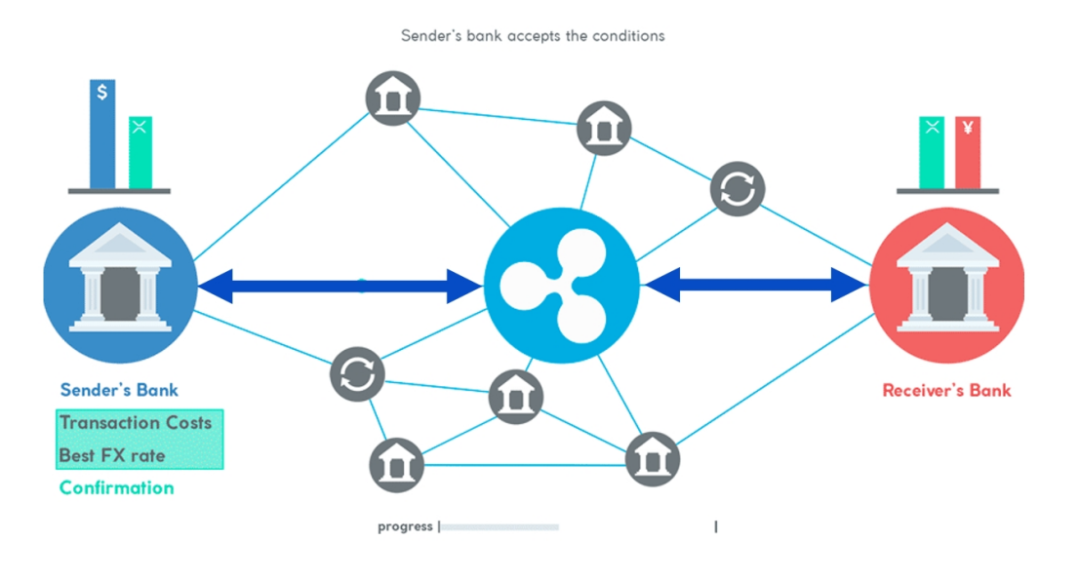
RippleNet leverages blockchain technology to provide fund transfer capabilities for financial institutions worldwide, aiming to build a unified global payment system. In traditional finance, there is no single global payment infrastructure—instead, various institutions operate isolated transfer systems for international payments. These systems lack interoperability, making international transfers expensive and slow.
In today’s interconnected world, this outdated system is increasingly out of place. Despite charging high fees, users often wait weeks to complete payments, limiting access to international markets.
RippleNet aims to solve these issues by providing a decentralized global banking network accessible to all. Through application programming interfaces (APIs), users can transfer funds internationally faster and cheaper than traditional methods. This decentralized network claims to process payments in just three seconds, leveraging the global reach of its XRP token.
Technically, RippleNet is a suite of products that utilize the XRP Ledger blockchain—it is not a standalone blockchain itself. All transactions conducted using RippleNet products are recorded on the XRP Ledger blockchain, but RippleNet itself is not a blockchain.
Moreover, RippleNet addresses the need for pre-funded accounts in cross-border transfers through its On-Demand Liquidity (ODL) solution, which uses the XRP token to source liquidity. RippleNet supports nearly 100 countries and integrates with over 120 fiat currencies, ensuring seamless cross-border payments globally.
Key features and capabilities of RippleNet:
-
Real-time settlement: Traditional cross-border payments rely on correspondent banking networks involving multiple intermediary banks (taking 1–5 days), whereas RippleNet enables direct peer-to-peer communication, confirming transactions in seconds.
-
Unified standards: Provides standardized APIs and protocols (such as ILP, Interledger Protocol), allowing financial institutions across different countries to seamlessly interoperate, eliminating format and compliance discrepancies.
-
Multi-currency support: Enables instant conversion between fiat currencies, cryptocurrencies, and even commodities (e.g., gold), without requiring an intermediary currency like USD.
-
Cost reduction: By minimizing intermediaries and eliminating pre-funded liquidity requirements, reduces cross-border payment costs by up to 60%.
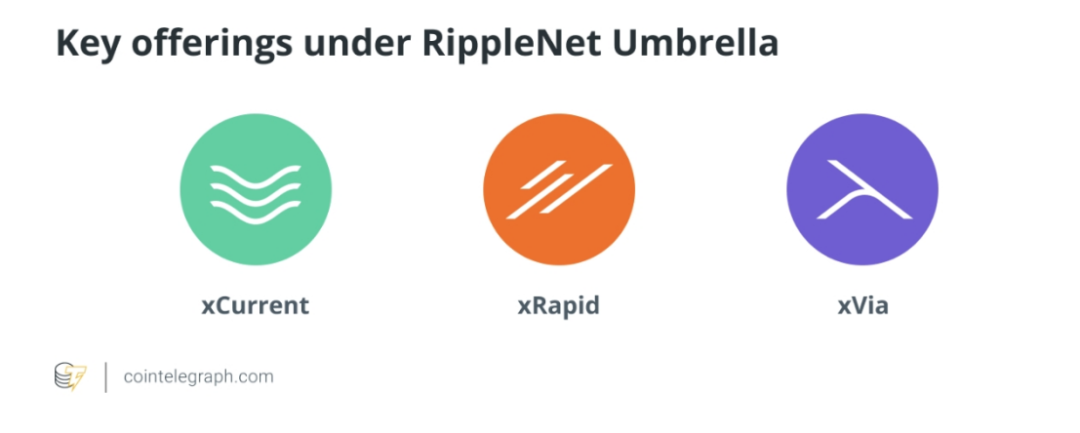
RippleNet consists of several core products: xCurrent, xRapid, and xVia.
4.1 xCurrent
xCurrent targets banks, offering them cross-border payment services at lower costs than traditional international settlements. Banks connect via APIs that convert traditional payments into blockchain-based alternatives powered by XRP.
Designed to align with existing bank compliance and risk frameworks, xCurrent simplifies integration. According to RippleNet documentation, the solution complies with current KYC (Know Your Customer) and AML (Anti-Money Laundering) regulations.
4.2 xRapid
If xCurrent delivers cheap and fast cross-border payments, xRapid ensures customers gain liquidity through the XRP token. Traditional financing requires businesses to pre-fund foreign accounts, as converting one fiat currency to another can take weeks.
xRapid enables near-instant conversions, freeing up liquidity—also known as on-demand liquidity—and eliminates the need for companies to pre-fund overseas accounts, allowing them to keep capital in their home accounts.
4.3 xVia
xVia is the API component of RippleNet, enabling clients to easily connect to the aforementioned services. xVia supports sending payments with detailed information, such as invoices. According to RippleNet documentation, additional benefits include supply chain payment management, international bill payments, real-time remittances, peer-to-peer transfers, cash pooling, and global currency accounts.
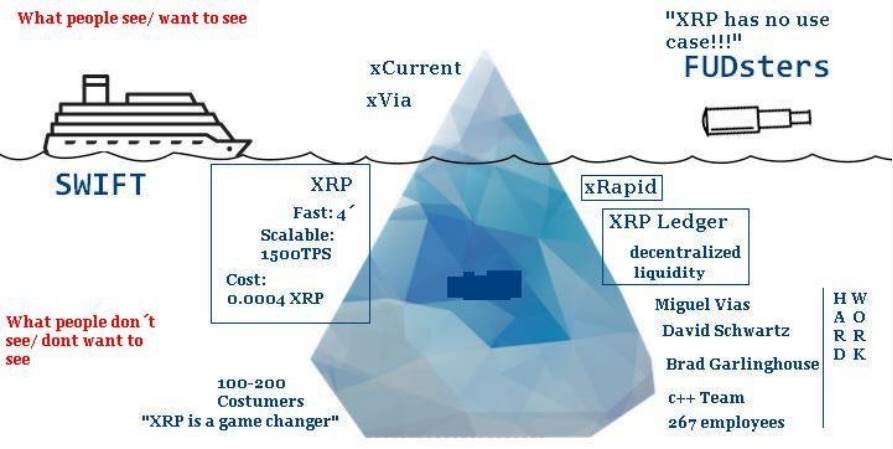
RippleNet workflow (using cross-border remittance as an example):
-
Initiation: Bank A (U.S.) initiates a transfer request to Bank B (Mexico) via RippleNet.
-
Routing & Validation: RippleNet automatically selects the optimal path (direct connection or via liquidity providers).
-
Settlement: If using ODL, Bank A converts USD to XRP, sends it to Bank B, which instantly converts XRP to Mexican pesos.
-
Completion: Funds arrive within seconds, with neither party needing to pre-hold each other’s currency.
4.4 Who Uses RippleNet?
While RippleNet claims global operations, one might wonder how many actual banks use it. Notable users include Santander, SBI Remit (Japan), and over 300 other financial institutions worldwide.
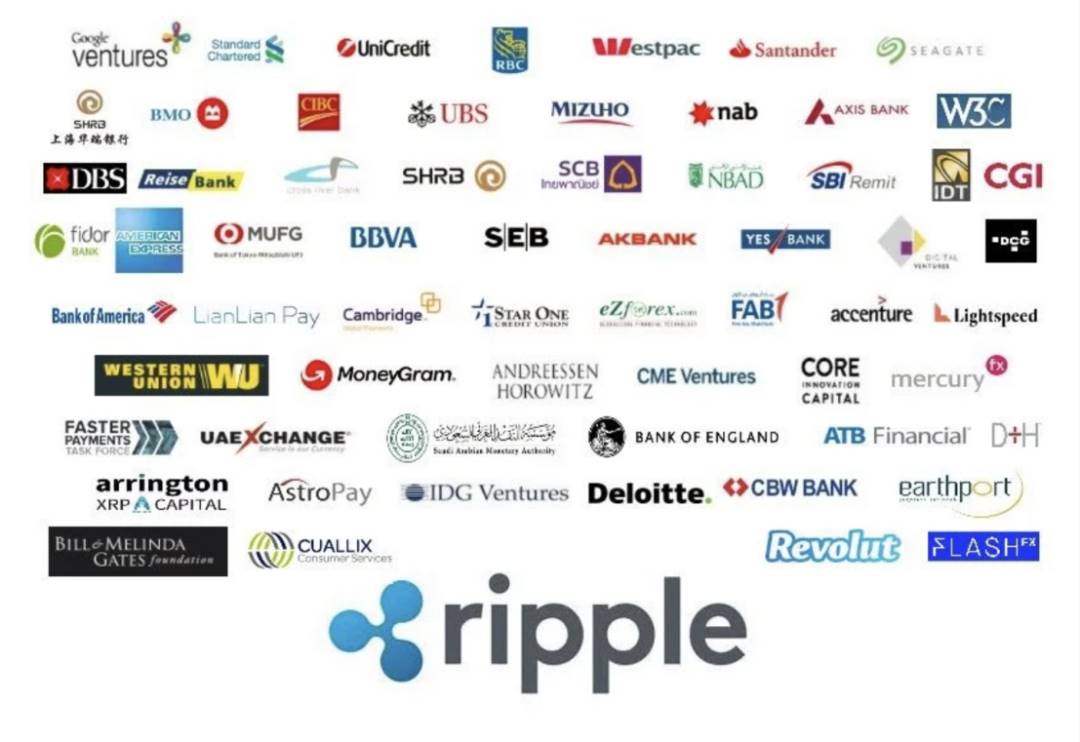
Ripple states that hundreds of banks—from small entities to global institutions—use its services. For instance, Bank of America, Santander, and American Express are among the major corporations utilizing RippleNet. Santander, operating across six European and U.S. countries, has processed over €450 million in funds through RippleNet.
5. RLUSD Stablecoin
5.1 Role of the Stablecoin
Ripple stands at the forefront of financial innovation, creating compliant, scalable, enterprise-grade solutions while bridging traditional finance with digital assets through its newly issued RLUSD stablecoin. The launch of RLUSD—with a strong focus on regulatory compliance—offers customers and users the opportunity to benefit from the stability and transparency uniquely provided by Ripple. This marks a significant milestone in Ripple’s next phase of building global financial services and advancing the internet of value.
RLUSD will be seamlessly integrated across both the XRP Ledger and Ethereum networks, serving as foundational assets for enterprises building additional blockchain solutions. It provides secure, fast, and scalable infrastructure supporting issuance, trading, and payments:
-
Native stablecoin support: XRPL natively supports stablecoins without complex smart contracts.
-
Automatic bridging and DEX integration: Stablecoins on XRPL benefit from deep liquidity and seamless forex swaps.
-
Institutional DeFi applications: RLUSD and other stablecoins can be used for lending, RWA tokenization, and cross-border settlements.
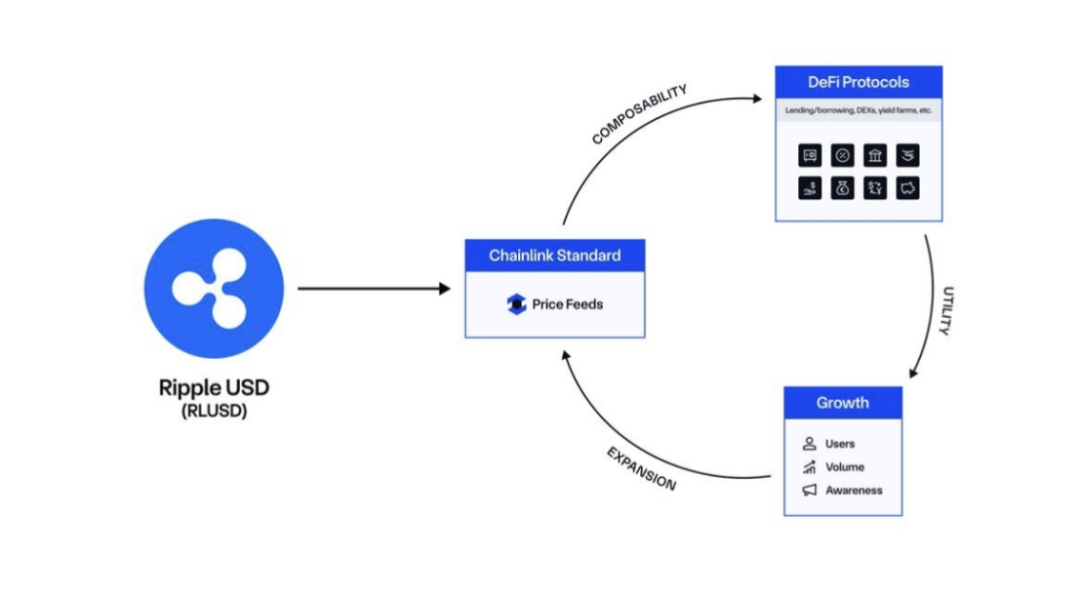
This integration enables RLUSD to play vital roles across multiple domains:
-
Fiat-to-crypto gateway: Easier conversion between fiat and cryptocurrencies for users, traders, and businesses.
-
Global remittances: Fast, affordable international transactions for individuals and enterprises.
-
Daily transactions: A reliable alternative to cash or cards for everyday spending.
-
RWA tokenization: Collateral backing for tokenized assets on XRPL and related transactions.
-
DeFi integration: Users can employ RLUSD in XRPL and Ethereum dApps and DeFi platforms for trading, yield farming, staking, and loan collateral.
5.2 Significance of RLUSD
Ripple’s launch of the RLUSD stablecoin represents a strategic move to solidify its leadership in cross-border payments and expand into broader financial ecosystems. As the global stablecoin market grows rapidly, RLUSD directly addresses institutional demand for low-volatility crypto tools. While XRP offers speed and cost advantages in cross-border settlements, its price volatility remains a concern for conservative institutions. Backed 1:1 by U.S. dollar reserves and short-term Treasuries, RLUSD offers a compliant, stable settlement option that complements XRP, allowing RippleNet users to choose their preferred settlement method based on risk tolerance—further optimizing capital efficiency and user experience.
This initiative also reflects Ripple’s proactive adaptation to regulatory environments. Amid ongoing SEC legal disputes over XRP, RLUSD aims to mitigate compliance risks through transparent audits and adherence to U.S. regulatory frameworks, maintaining trust among institutional clients. Furthermore, positioning RLUSD as a multi-chain asset—planned for deployment on XRP Ledger and Ethereum—enhances cross-chain interoperability within Ripple’s payment network and lays the groundwork for future participation in CBDC and institutional DeFi markets. For example, RLUSD could serve as a bridge linking traditional finance with on-chain Treasury bonds, mortgage lending, and other emerging use cases, helping Ripple seize early-mover advantage in compliant financial innovation.
From a competitive standpoint, RLUSD benefits from RippleNet’s existing network of over 300 financial institution partners, giving it a channel advantage for rapid adoption. Compared to general-purpose stablecoins like USDT and USDC, RLUSD focuses on vertically integrated cross-border payment solutions, leveraging XRPL’s low cost and high speed to target high-frequency settlement scenarios. Additionally, RLUSD’s introduction is seen as a key step in Ripple’s ecosystem expansion—by attracting developers to build stablecoin-related DeFi applications on XRPL, it indirectly boosts XRP’s utility and on-chain activity, creating synergistic ecosystem effects.
However, this strategy faces challenges. Regulatory uncertainty (e.g., progress on U.S. stablecoin legislation), fierce competition from established stablecoins, and pressures around reserve transparency could impact RLUSD’s market acceptance. If Ripple successfully balances technological innovation, regulatory compliance, and customer needs, RLUSD could become a cornerstone in its transformation from a payments provider to a comprehensive financial infrastructure platform—though achieving this vision will require time and market validation.
6. Final Summary
Ripple is a Web2 fintech company that launched the XRP Ledger blockchain network, with XRP as the network’s native token. Ripple’s technological foundation is the XRPL ledger—an independent distributed ledger—while XRP functions as the utility token running on it.
Additionally, Ripple has consolidated its years of expertise in cross-border payments into a financial institution-focused solution called RippleNet, whose core objectives are improving efficiency and reducing costs. Some RippleNet services are implemented using the XRP Ledger blockchain.
XRP is an independent cryptocurrency that acts as an efficient bridge currency within RippleNet, but its value and applications extend far beyond Ripple’s own business scope. The relationship between the two resembles a “highway (RippleNet)” and “fuel (XRP),” though XRP can also be used independently in other contexts.
The launch of RLUSD marks a pivotal step in Ripple’s ecosystem expansion—by encouraging developers to build stablecoin-centric DeFi applications on XRPL, it indirectly increases XRP’s utility and on-chain engagement. At the same time, RLUSD can extend beyond the XRP ecosystem, fostering broader synergistic effects.
Join TechFlow official community to stay tuned
Telegram:https://t.me/TechFlowDaily
X (Twitter):https://x.com/TechFlowPost
X (Twitter) EN:https://x.com/BlockFlow_News
 0xWillmfer