








Leaving behind the lawsuit "cloud", the crypto industry's "legislative battle" begins
TechFlow Selected TechFlow Selected
Leaving behind the lawsuit "cloud", the crypto industry's "legislative battle" begins
U.S. state cryptocurrency reserve bills face hurdles, with Bitcoin volatility as the main concern.
 Navigating Web3 tides with focused insights
By: Mary Liu, BitpushNews
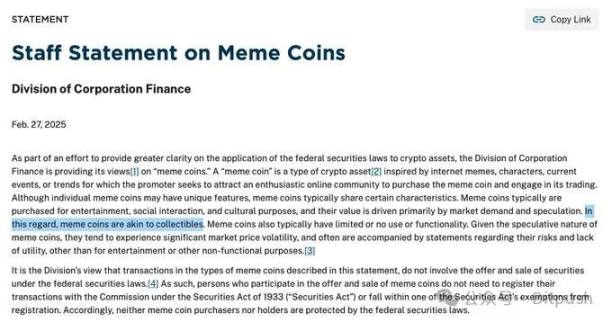
The U.S. Securities and Exchange Commission (SEC) has recently taken a series of actions: dropping investigations and enforcement proceedings against major crypto firms including Uniswap Labs, Robinhood Crypto, OpenSea, Coinbase, and Gemini; seeking settlements with Justin Sun and the Tron Foundation; issuing statements on Memecoins clarifying they are not "securities," among others—sending strong signals of regulatory softening.
A new leadership at the SEC, represented by acting Chair Mark T. Uyeda and Commissioner Hester Peirce, is deliberately moving away from the previous confrontational stance, instead aiming to establish a more constructive dialogue framework with the crypto industry.
Uyeda has publicly acknowledged that in recent years the SEC’s regulation of cryptocurrencies relied heavily on "enforcement" rather than "meaningful communication," implying an urgent need for change. He pledged to promote transparency in crypto policymaking, establish a cryptocurrency working group, and proactively engage in high-level dialogues with key industry players, including meetings with the Cryptocurrency Innovation Council (CCI), MicroStrategy founder Michael Saylor, and representatives from Robinhood.
State-Level Crypto Reserve Bills Face Obstacles, Bitcoin Volatility a Key Concern
While the SEC shifts its regulatory approach, state governments have adopted a more cautious stance toward bitcoin reserves.
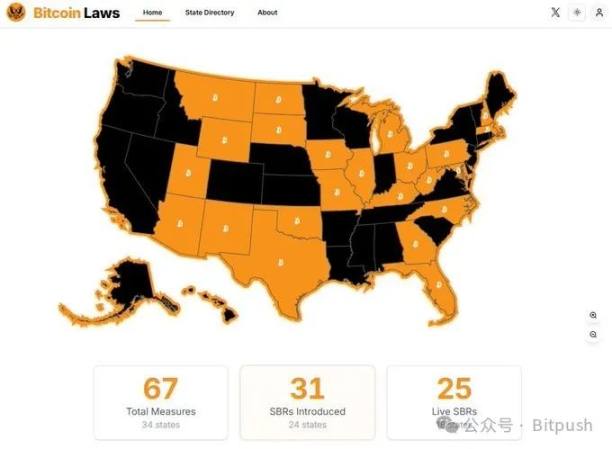
According to data from Bitcoin Laws, 24 U.S. states have introduced strategic crypto reserve bills. However, within the past month, proposals in Montana, North Dakota, South Dakota, and Wyoming have all encountered setbacks and failed to pass.
Lawmakers broadly express concern over the volatility of digital assets like bitcoin.
Jennifer Schulp, director of financial regulation studies at the Cato Institute, said in a Bloomberg interview that the volatility of bitcoin and other digital assets remains a widely recognized issue—even amid positive industry outlooks.
Since reserve funds are typically allocated to low-risk investments to ensure future financial stability, bitcoin's price volatility significantly undermines its appeal as a state-level reserve asset.
As previously reported by TechFlow, South Dakota's proposal would have allowed up to 10% of the state’s funds to be invested in bitcoin, but it was ultimately shelved. Although political figures such as Donald Trump and Senator Cynthia Lummis have advocated for national strategic bitcoin reserves, state governments remain conservative in actual implementation.
Schulp noted: "If a crypto-supportive administration at the federal level is taking time to carefully consider a strategic bitcoin reserve, it makes sense for states to follow suit rather than rush into action."
Stablecoins and Market Structure Emerge as Legislative Priorities
The White House has formed a special policy task force led by venture capitalist David Sacks to develop a comprehensive regulatory framework. Meanwhile, Congress is accelerating legislative efforts, with the Senate Banking Committee planning to vote on a stablecoin bill next month—stablecoin regulation could become a near-term legislative breakthrough.

Tyler Williams, the U.S. Treasury’s newly appointed crypto advisor, spoke at a private digital assets event in Washington, D.C., emphasizing that advancing stablecoin legislation is currently a top priority.
The former Galaxy Digital lawyer stated at the event: "We should do everything we can to support our allies in Congress who are working on stablecoin policy."
He believes establishing a legal framework for dollar-denominated stablecoins would serve as "an excellent use case" for industry advocates in Washington, adding: "If we can create a regulatory framework that allows states, banking regulators, and the entire ecosystem to operate under the same rules, I think that would be a very positive outcome for Washington."
Beyond stablecoin legislation, deeper debates continue over setting operational standards for exchanges like Coinbase and defining whether digital assets should be classified as securities or commodities—a key factor determining jurisdictional boundaries between the SEC and the Commodity Futures Trading Commission (CFTC).
Short-Term Regulatory Pressure May Ease, Long-Term Challenges Remain Daunting
Overall, while progress on crypto reserves at the state level remains slow, the shift in the SEC’s federal regulatory strategy has provided the crypto industry with some breathing room. Nevertheless, the future regulatory landscape remains highly uncertain. Frictions between the crypto industry and the SEC may temporarily ease, but the legislative "long war" over cryptocurrency regulation has only just begun.
Join TechFlow official community to stay tuned
Telegram:https://t.me/TechFlowDaily
X (Twitter):https://x.com/TechFlowPost
X (Twitter) EN:https://x.com/BlockFlow_News
 比推 BitpushNews











