Trump's first cabinet meeting during his second term: tariffs, Ukraine, layoffs, and oil deals were all discussed
TechFlow Selected TechFlow Selected
Trump's first cabinet meeting during his second term: tariffs, Ukraine, layoffs, and oil deals were all discussed
Musk attending the meeting became a highlight.
 Navigating Web3 tides with focused insights
Author: He Hao, Wall Street Insights
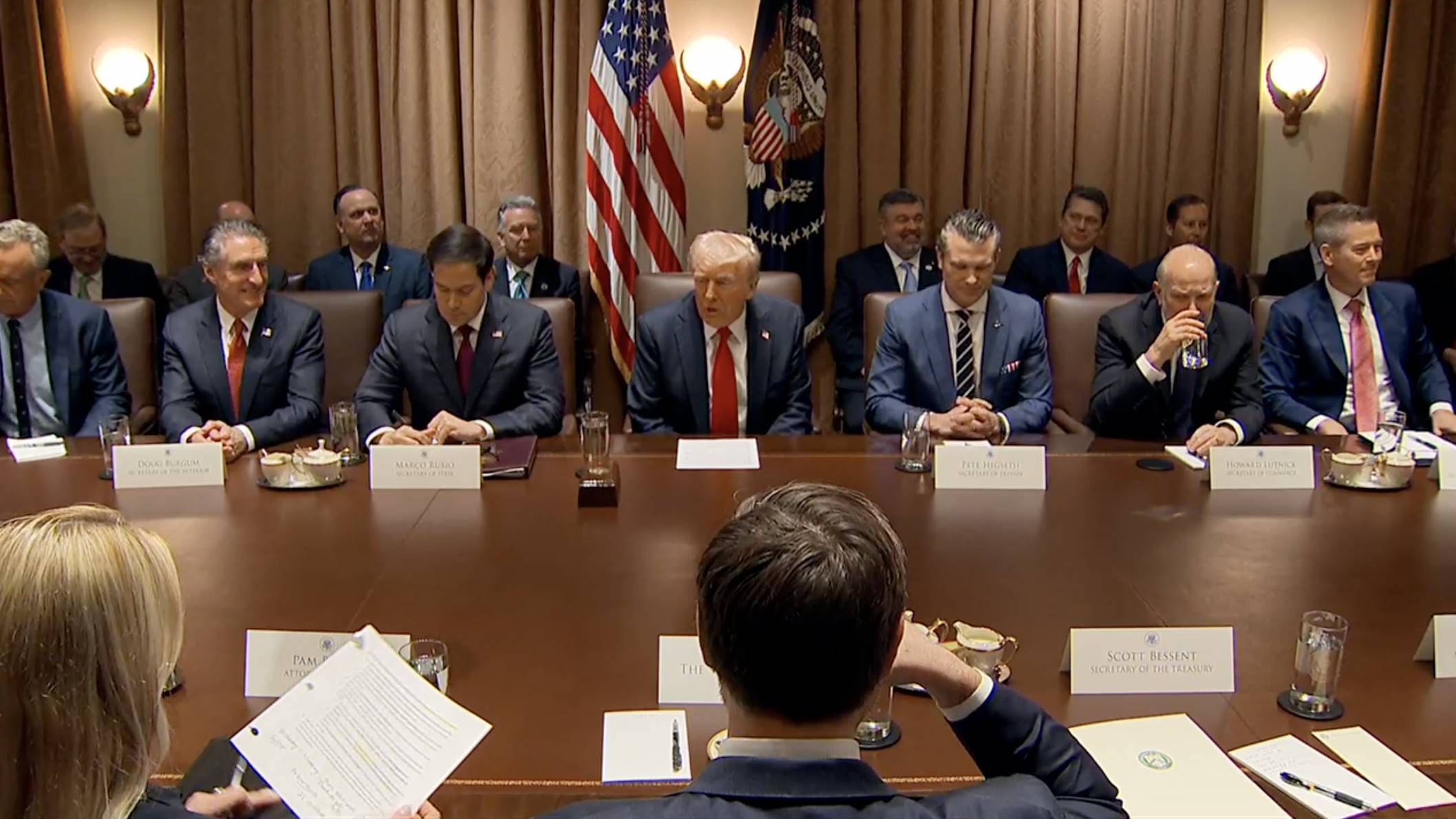
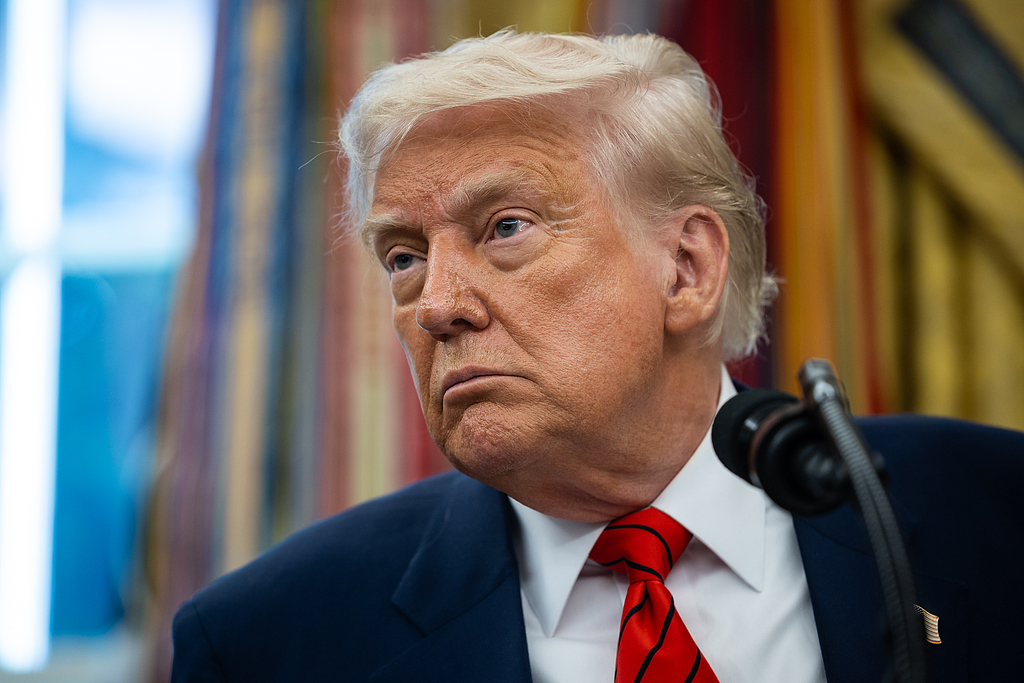
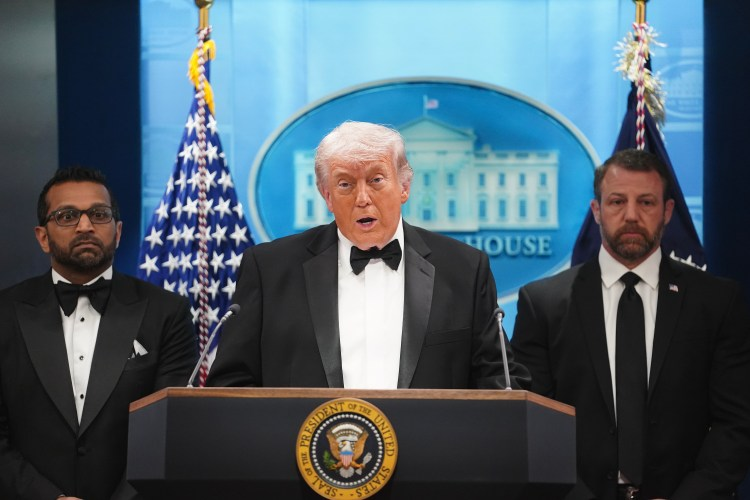
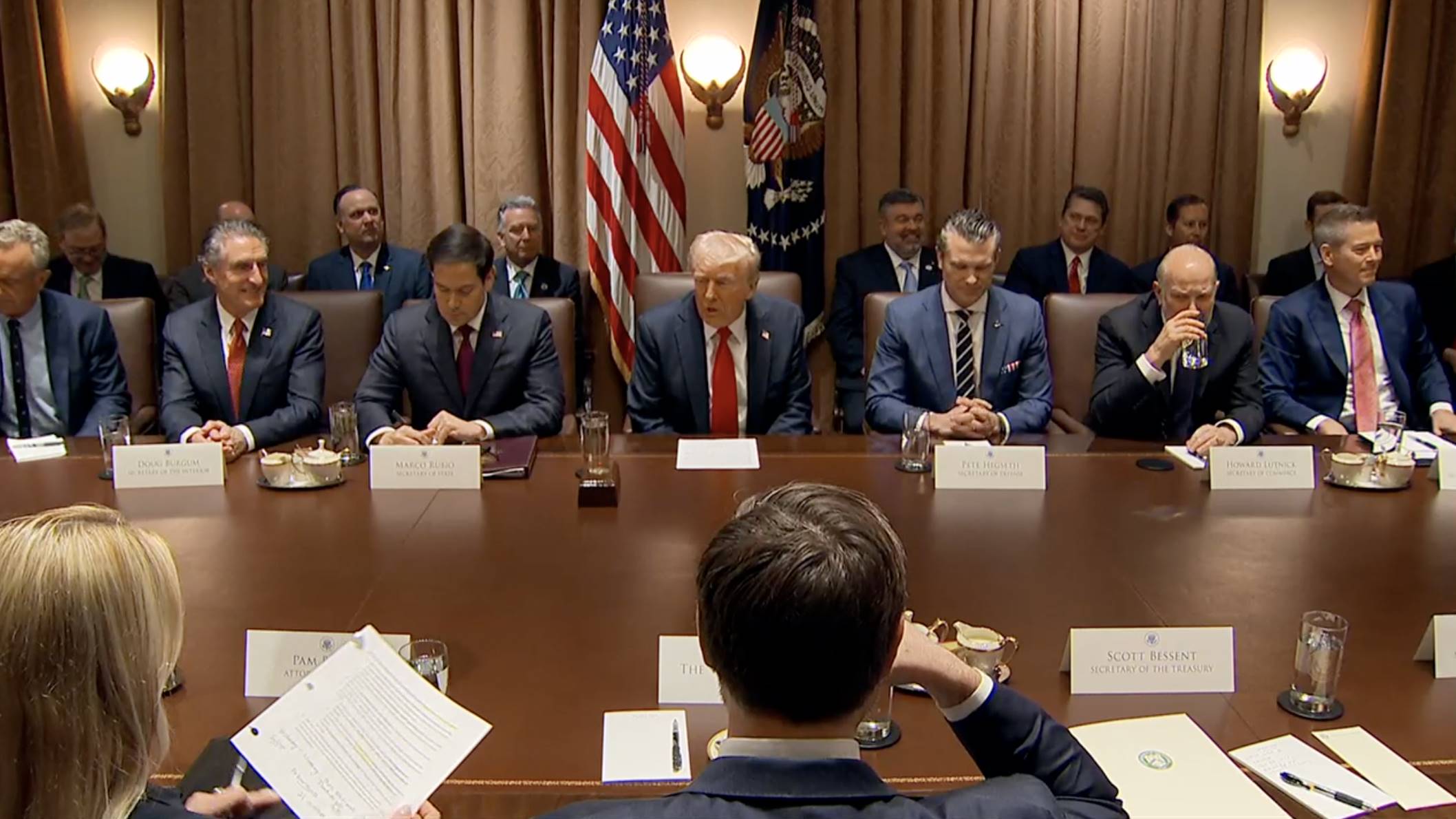
According to CCTV News, on February 26 local time, U.S. President Trump held his first cabinet meeting of his second term.
Around 11 a.m. Eastern Time, as the cabinet meeting began, U.S. stocks broadly maintained their earlier intraday gains, with the S&P 500 up 0.8%, the Dow Jones Industrial Average up 0.3%, the Nasdaq Composite up 1.3%, and the semiconductor index rising nearly 2.8%. WTI crude oil futures rose 0.09% to $68.99 per barrel.
U.S.-Ukraine Minerals Agreement
According to CCTV News, Trump confirmed that Ukraine's president will visit the U.S. on the 28th to sign an agreement related to rare earths. Trump said Ukrainian President Volodymyr Zelenskyy will visit Washington, D.C. on the 28th, and the U.S. and Ukraine will sign agreements on rare earths and other areas. Trump stated, "We will get our money back."
Regarding the upcoming U.S.-Ukraine minerals agreement, Trump explained that the U.S. will "cooperate with Ukraine on rare earths." The U.S. aims to recover the $350 billion allocated to Ukraine by reaching a minerals deal.
Earlier media reports indicated that under the agreement, the U.S. and Ukraine will jointly establish a fund into which Ukraine will channel 50% of future revenues from its oil, natural gas, and mineral resources. The U.S. will have maximum entitlement to the economic benefits generated by the fund, with some income used for reinvestment in Ukraine.
Trump also said: "The U.S. will not provide security guarantees for Ukraine in any agreement to end the Russia-Ukraine conflict, but Europe will do so." He added that Ukraine can "forget about" joining NATO.
Trump expressed hope for more talks between the U.S. and Russia. He said Russian President Putin "must" make concessions in negotiations to end the Russia-Ukraine war. He also said he wants to first see whether the U.S. can reach an agreement with Russia before discussing easing sanctions. Trump said maintaining peace is easy, but reaching (a peace) agreement is difficult.
U.S. Government Efficiency, Deficit, and Staff Reductions
According to CCTV News, Elon Musk, head of the Department of Government Efficiency, attended the meeting despite not being a cabinet member. Musk said the overall goal of the Department of Government Efficiency is to help address the massive fiscal deficit. Musk stated that the U.S. simply cannot afford a $2 trillion annual fiscal deficit. If this continues, the U.S. will face "bankruptcy." He plans to achieve $1 trillion in deficit reduction by the 2026 fiscal year.
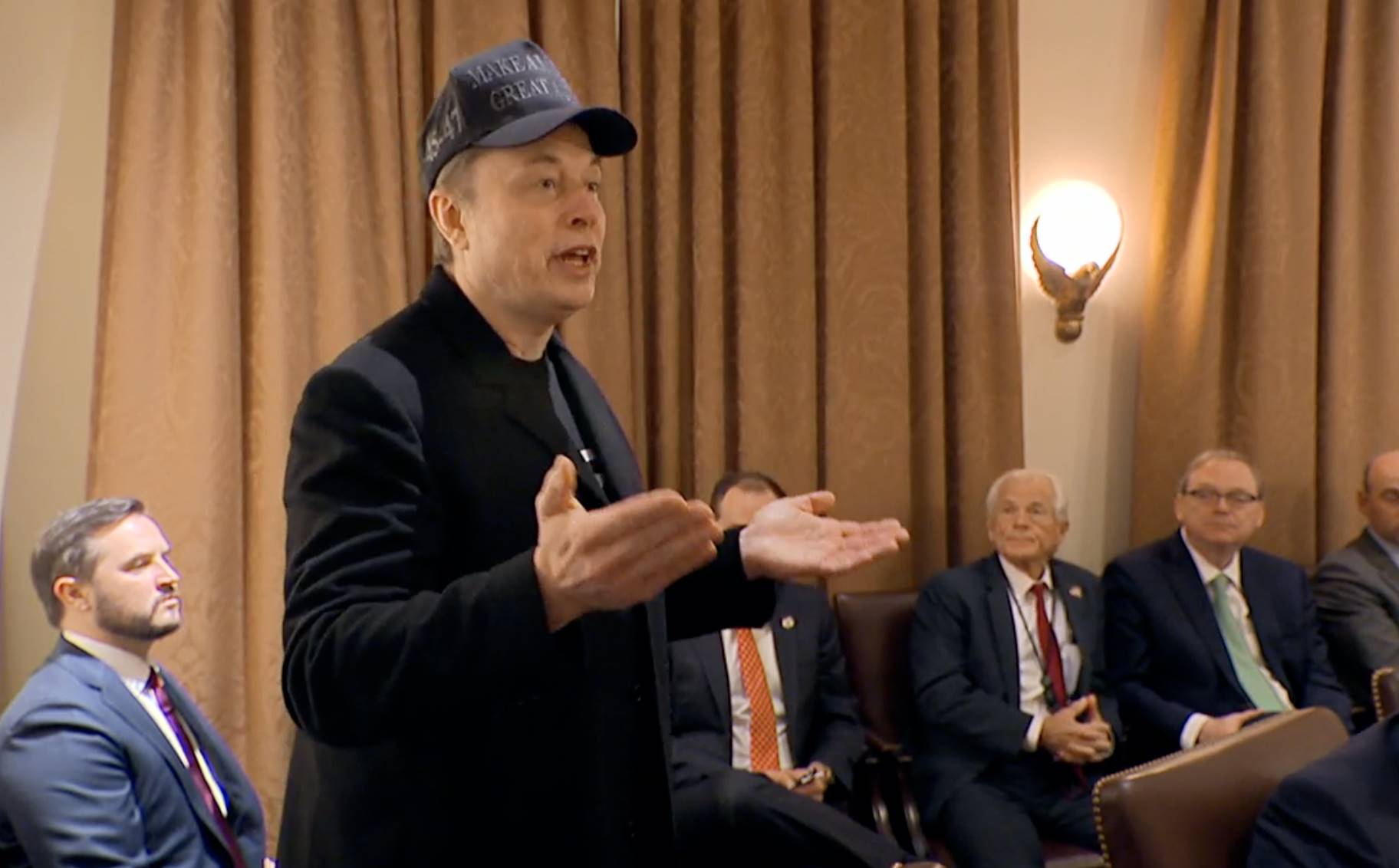
Trump said he is seeking for the Department of Government Efficiency (DOGE) to save up to $1 trillion in federal government spending, hoping to reasonably balance the federal budget in the short term and aiming to balance the budget next year or thereafter.
Trump stated that cuts at the State Department must be carefully targeted. The U.S. will reduce government size. EPA Administrator Zeldin plans to cut 65% of the agency's workforce.
It is reported that a memo issued by the federal human resources agencies—the Office of Personnel Management and the Office of Management and Budget—indicates the Trump administration has directed agencies to collaborate with the "head of the government efficiency team" to submit "reorganization plans" by March 13 in preparation for large-scale layoffs.
Trump Addresses Inflation
Trump acknowledged that declining U.S. inflation is partly due to high interest rates.
Trump Discusses Tariffs
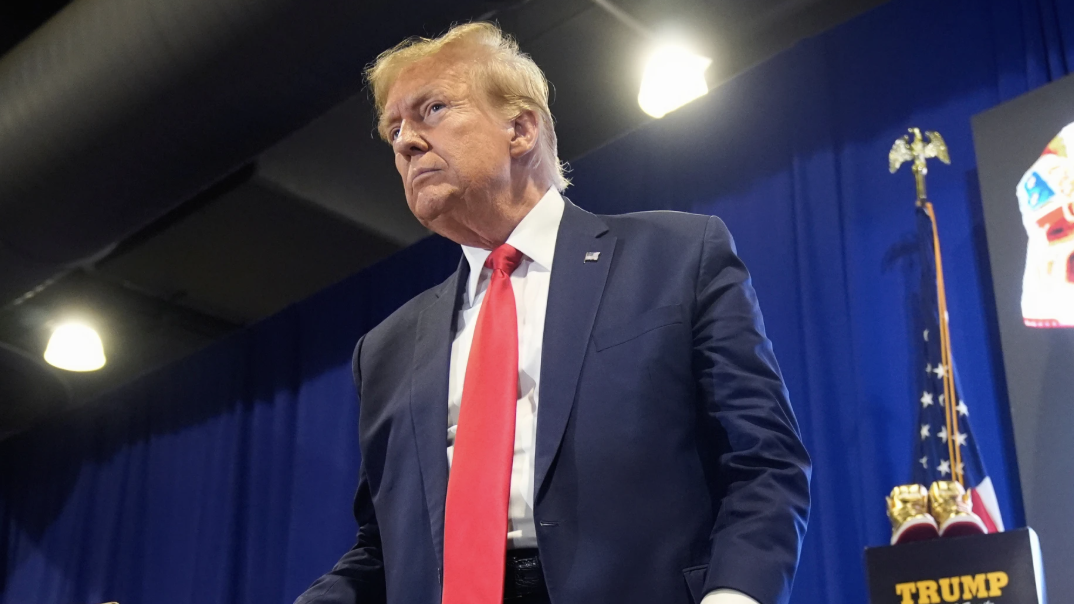
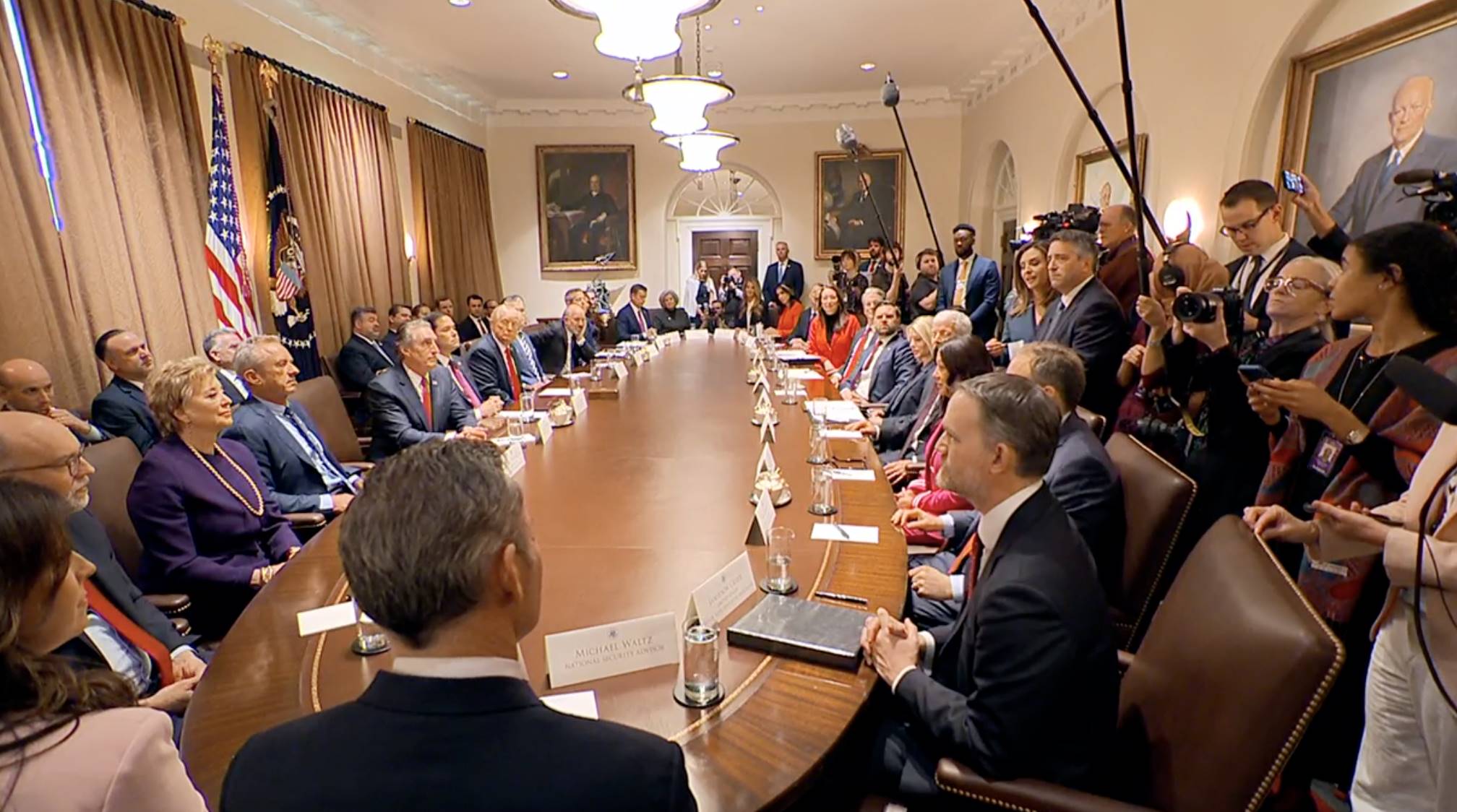
Markets are closely watching Trump's tariff agenda. During Wednesday’s cabinet meeting, Trump discussed tariffs on Canada, Mexico, and the European Union.
According to CCTV News, on February 26 local time, Trump said during the cabinet meeting that most tariffs would remain in place. The U.S. will impose a 25% tariff on goods imported from Mexico and non-energy goods imported from Canada starting April 2.
On February 1, Trump signed an executive order imposing a 25% tariff on products imported from Mexico and Canada, with a 10% increase on Canadian energy products. On the 3rd, Trump announced a 30-day delay in implementing the tariffs on both countries while negotiations continued. Under that decision, the additional tariffs were set to take effect on March 4. On the 24th, Trump said the plan to impose higher tariffs on Mexico and Canada would "proceed as scheduled." Additionally, on the 13th, Trump signed a memorandum directing relevant departments to determine "reciprocal tariffs" with each foreign trade partner.
According to Xinhua News Agency, Trump said the U.S. has decided to impose a 25% tariff on the EU and will announce it "soon." Speaking to the media at the White House during the cabinet meeting, Trump said overall tariff rates on the EU would be set at 25%, applying to automobiles and various other goods. The EU "takes advantage of the U.S.," using various reasons to "reject American cars and agricultural products," and there is approximately a "$300 billion" trade deficit between the U.S. and the EU.
The political news website Politico previously pointed out that the U.S.-EU trade deficit is not as large as Trump claims. According to EU data, the U.S.-EU goods trade deficit was €155.8 billion ($168.6 billion) in 2023, but in services trade, the U.S. had a surplus of €104 billion ($112.6 billion). Overall, the U.S. trade deficit with the EU was €51.8 billion ($56 billion).
It should be noted that Trump gave a series of contradictory answers on Wednesday regarding tariffs on Canada, Mexico, and the EU:
During Wednesday’s cabinet meeting, a reporter asked Trump if he planned to formally implement the 25% tariffs on Canada and Mexico on March 4. Trump responded, "I will not stop the tariffs."
Trump had announced these tariff measures earlier this month but later reached an agreement with the leaders of both countries to postpone implementation by one month in exchange for stricter border controls. This extension will expire next week.
However, later that same day, Trump said the tariffs on Mexico and Canada would take effect on April 2.
U.S. Commerce Secretary Lutnick said at the meeting that the overall tariff actions targeting various countries would be implemented on April 2.
Some analysts say it is unclear whether Trump meant to give Mexico and Canada extra time or whether he confused this tariff measure with another global "reciprocal tariff" plan being developed by the U.S. Department of Commerce and the U.S. Trade Representative's Office. Trump's statements on the tariff timeline often confuse markets, as he frequently references multiple plans when answering reporters' questions.
Following Trump’s comments on Wednesday, markets interpreted them as possibly delaying the imposition of tariffs on Canadian and Mexican imports, causing assets tied to Mexico, Canada, and Europe to briefly rise:
-
The Mexican peso surged against the dollar, climbing from below 20.45 pesos to above 20.30 pesos and hitting a new daily high.
-
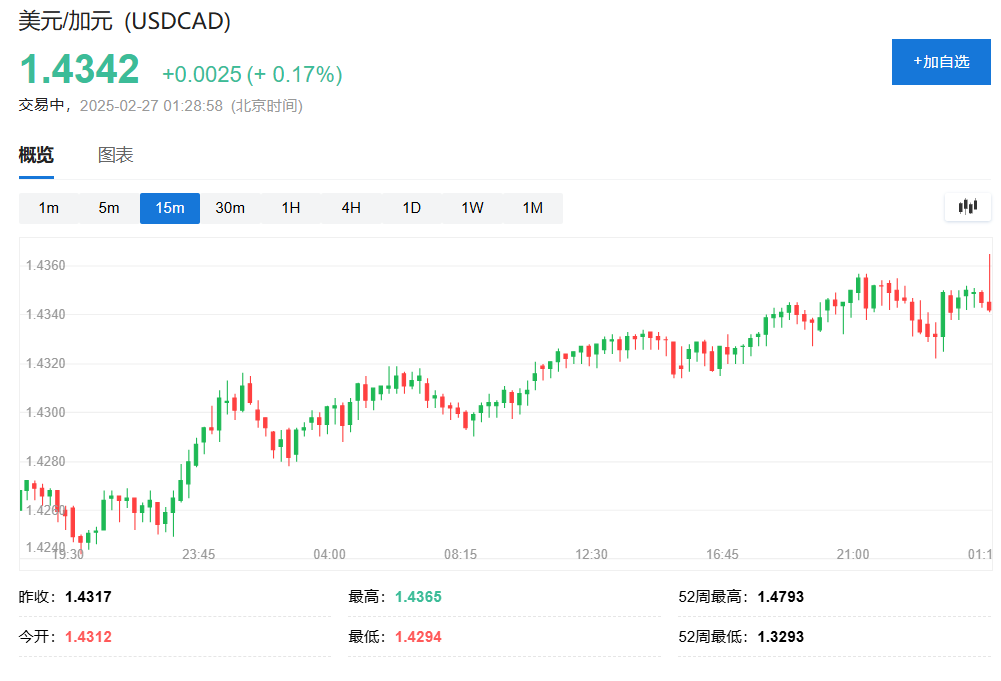
The USD/CAD pair rose about 0.2% to 1.4342.
-
The euro almost fully recovered earlier losses against the dollar. The iShares MSCI Europe ETF listed in the U.S. rose 0.75%, and the iShares MSCI Eurozone ETF rose 0.89%, holding near daily highs.
-
EV-related stocks: Lucid dropped 10.7%, Tesla fell 0.9%, Honda rose 1.5%, Ford rose 1.6%, General Motors gained 5.5%, and Chinese EV maker XPeng rose 15%.
However, subsequently, these assets reversed their initial tariff-driven moves, U.S. stocks continued to retreat, and the euro and U.S.-listed European ETFs pulled back after earlier gains:
-
U.S. stocks erased most of their early gains, with the Nasdaq 100 turning negative after rising over 1% earlier, hitting a new daily low. Among components, Axon rose 16.81% in-session, Intuit gained 11.46%, Micron Technology and Broadcom rose over 4.4%, Nvidia climbed 3.4%, Meta rose 2.6%, Palantir gained 1.87%; Apple fell over 2.7%, Tesla declined over 2.8%, Kraft Heinz, Mondelez, PepsiCo, VRSK, and KDP dropped over 3%, and AppLovin remained the worst performer, down 12.69%.
-
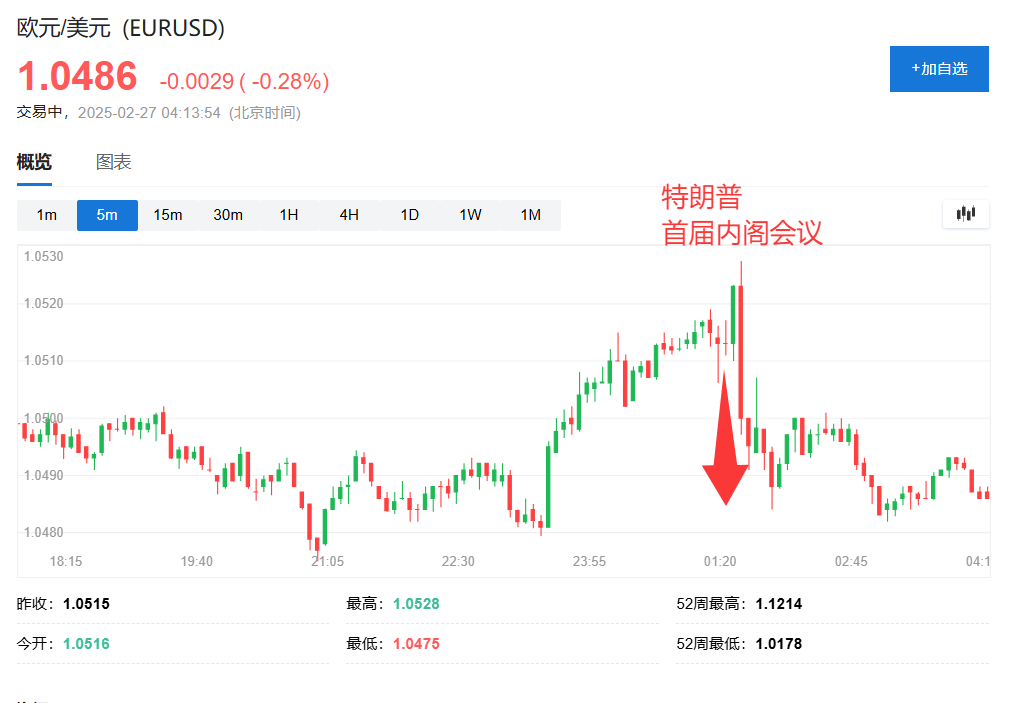
The euro fell over 0.2% against the dollar, reaching a low of 1.0484. The iShares MSCI Europe ETF listed in the U.S. retreated from a daily high of $58.86, ending up 0.22% on the day but falling to a new low of $58.50. The iShares MSCI Eurozone ETF rose 0.35% but dropped to a new low of $53.38, quickly retreating from a high of $53.82.
Later, the euro fell 0.28% to 1.0486. AFP, citing EU Commission sources, reported that the EU will respond to U.S. tariffs "immediately and resolutely."
President Trump Orders Termination of Oil Transactions with Venezuela
According to CCTV News, on February 26 local time, Trump announced he is revoking the "concessions" granted to Venezuela by former President Biden. Trump said he is revoking the "concessions" in the "oil transaction agreement of November 26, 2022."
Venezuela severed diplomatic ties with the U.S. in January 2019, and the U.S. has progressively expanded economic sanctions, including banning imports of Venezuelan crude oil and freezing assets of Venezuelan oil companies in the U.S. On November 26, 2022, the U.S. government issued a license to Chevron allowing limited resumption of crude oil extraction operations in Venezuela and shipping the country’s crude to the U.S.
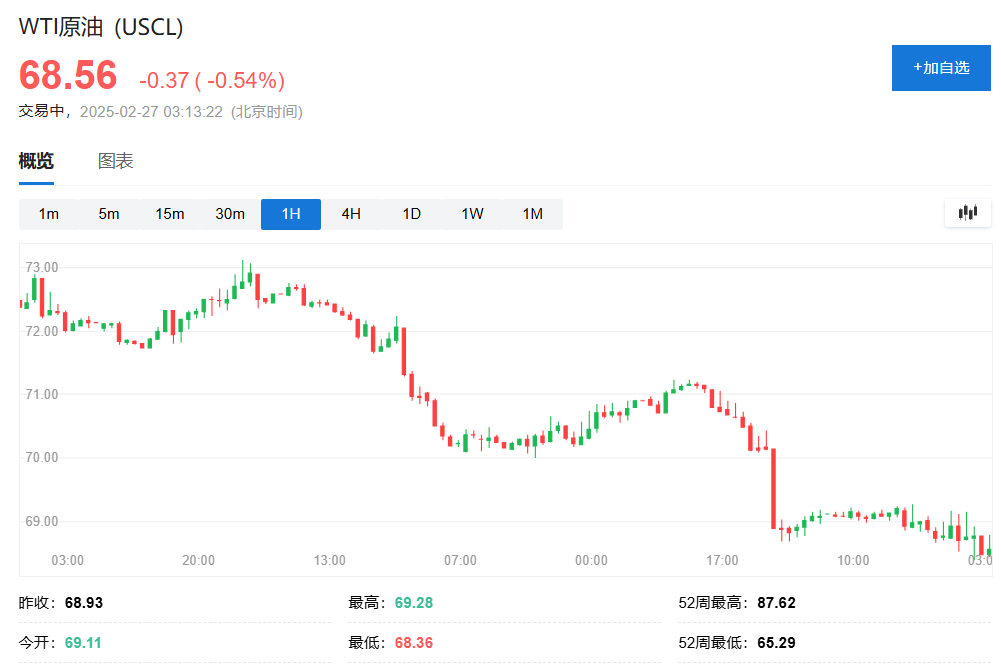
WTI crude oil futures fell 0.54% to $68.56 per barrel.
"Immigrant Gold Card" to Launch in About Two Weeks
During Wednesday’s cabinet meeting, Trump again mentioned the "gold card" program, stating it will launch in about two weeks, with proceeds used to pay down national debt.
Earlier on February 25 local time, Trump told media at the White House that he intends to begin selling $5 million-per-piece U.S. "gold cards" to wealthy immigrants in two weeks. He said the "gold card" would not directly grant citizenship, so congressional approval is not required, but it would confer rights equivalent to a "green card" and serve as a "strong pathway to U.S. citizenship."
White House Bars AP and Other Media Outlets from Covering Trump Cabinet Meeting
According to CCTV News, under the U.S. government's new media policy, the White House barred journalists from the Associated Press and other news organizations from attending President Trump’s first cabinet meeting of his second term. It is reported that the White House denied entry to one photographer from the Associated Press and three journalists from Reuters, The Huffington Post, and Germany’s Der Tagesspiegel.
Join TechFlow official community to stay tuned
Telegram:https://t.me/TechFlowDaily
X (Twitter):https://x.com/TechFlowPost
X (Twitter) EN:https://x.com/BlockFlow_News