Nansen: Reviewing the "insider trading" behind $LIBRA's on-chain data
TechFlow Selected TechFlow Selected
Nansen: Reviewing the "insider trading" behind $LIBRA's on-chain data
86% of traders lost $251 million on $LIBRA, while the remaining profitable traders earned a total of $180 million.
 Navigating Web3 tides with focused insights
Author: Nicolai Søndergaard
Compiled by: TechFlow
Key Takeaways
-
On-chain data shows that 86% of traders lost $251 million on $LIBRA, while the remaining profitable traders collectively earned $180 million;
-
Dave Portnoy lost millions on $LIBRA but later received a $5 million refund;
-
70% of wallets trading $LIBRA between February 16 and 18 ended up with actual losses, with many possibly attempting to profit from Javier Milei's additional retweet;
-
Two wallets bought $LIBRA at 22:01 UTC on February 14 and sold at 22:44 UTC, earning a total of $5.4 million, with wallet HyzGo2 alone capturing $5.1 million;
Introduction
On February 14, 2025, Argentine President Javier Milei publicly endorsed $LIBRA. The token was initially promoted on X as a tool to support small businesses and Argentine startups. Key figures involved in the project include Hayden Davis (self-described "coordinator"), Julian Peh (member of Kip Protocol, referred to by Hayden Davis as part of the "team"), Mauricio Novelli, and Manuel Godoy (Tech Forum Argentina). Within a short time, $LIBRA’s valuation surged rapidly to $4.5 billion.
$LIBRA was minted at 21:38 UTC on February 14. At 22:01 UTC, Milei posted a tweet that triggered significant market attention and attracted "snipers" rushing into the trade. By 22:44 UTC, the token price had spiked to a peak of $4.55 before crashing sharply.
The collapse of $LIBRA began when liquidity was pulled from the token. Hayden Davis later downplayed it as “just a meme,” a stark contrast to its original positioning as a tool supporting Argentina’s economy. Meanwhile, Milei deleted his endorsement tweet when the token price had already fallen 80% from its peak. He later claimed he did not understand the specifics of the project.
More controversially, Hayden Davis stated in an interview with Coffeezilla that Milei did not hold any financial interest in $LIBRA. However, as the token collapsed and Milei withdrew support, investors began questioning whether this was merely a speculative “insider” operation.
On-chain data clearly shows that certain insiders profited unilaterally from retail investors through token trades.
Trading Overview
Many traders suffered severe losses on the recently launched $LIBRA token. On February 14, the number of unique $LIBRA holders was 50,700, but by the time of writing (February 18), this figure had dropped to 35,770. So, which wallets made profits in these trades? Were they all "snipers" and "insiders," or simply extremely fast and technically skilled traders?
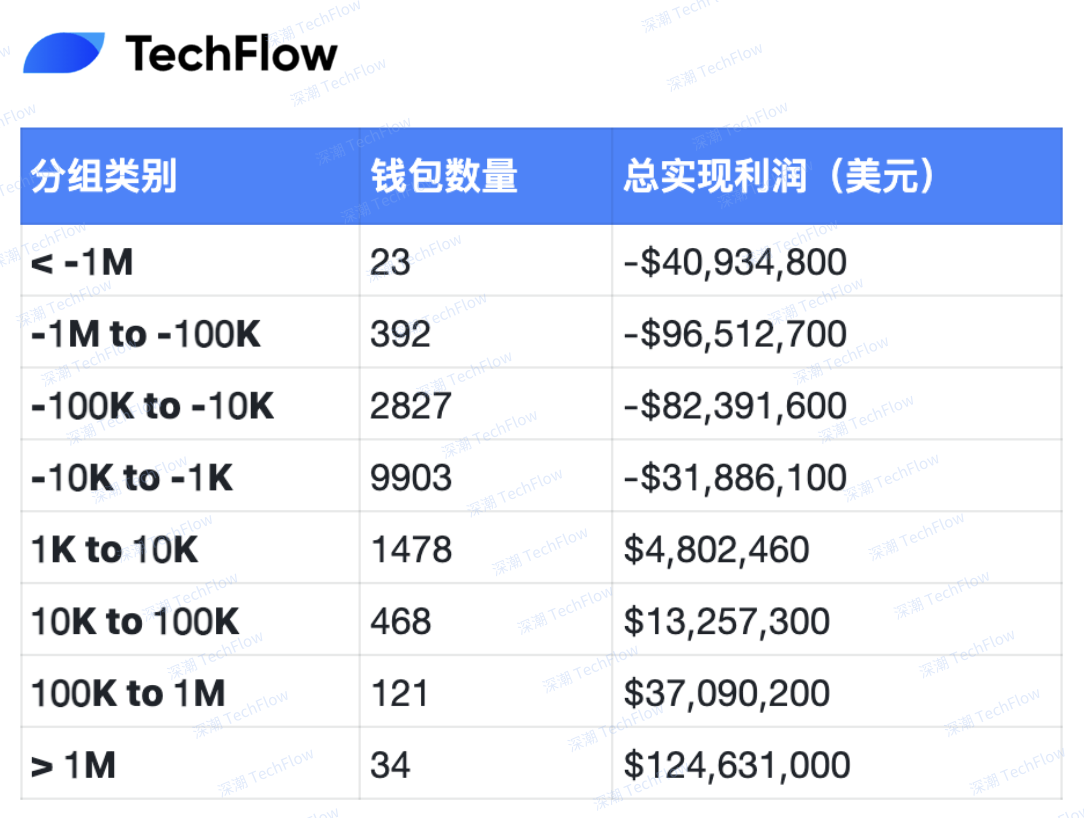
Among all wallets with absolute gains or losses exceeding $1,000, there were 15,431 addresses. Of these, 86.07% incurred a total loss of $251 million, highlighting the severity of losses in $LIBRA trading. On the other hand, only 2,101 profitable wallets collectively achieved around $180 million in gains.
Among them, 57 wallets entered the market quickly, with 37 achieving profits over $1,000. This suggests some early entrants may have been simple automated bots rather than large players deploying substantial capital. Among these wallets, two bought around 22:01 UTC on February 14 and sold by 22:44 UTC, earning a combined $5.4 million. Wallet HyzGo2 alone accounted for $5.1 million of that amount.
Original image by Nicolai Søndergaard, compiled by TechFlow
Note: Nansen's P&L data is based on transaction records of tokens on decentralized exchanges (DEX) and estimates of fund inflows and outflows during specific periods for related wallets, so some margin of error may exist.
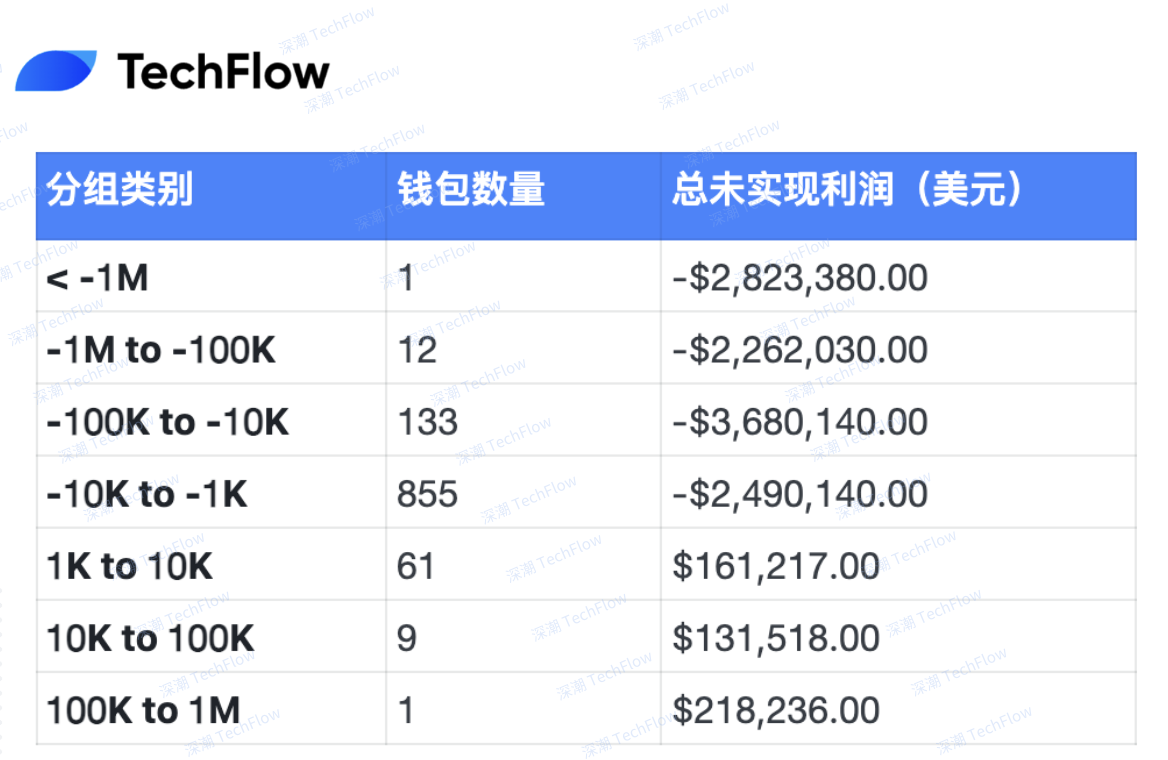
Some wallets still hold unrealized gains or losses. As of 8:00 AM UTC on February 18, 2025, a total of 1,001 wallets still held the token, with approximately $11 million in unrealized losses. Additionally, 71 wallets remained in profit, though their total gains had significantly shrunk to just about $540,000.
Original image by Nicolai Søndergaard, compiled by TechFlow
Who Is Still Trading $LIBRA?
Despite $LIBRA experiencing both highs and sharp declines on February 14 and 15, surprisingly, some wallets continued trading the token. Starting from February 16, a total of 1,990 wallets traded or held $LIBRA. Why is this data noteworthy?
On February 17, Argentine President Javier Milei retweeted a post mentioning that retail investors found it difficult to purchase $LIBRA. This retweet briefly pushed the token price upward, although still far below previous highs. From the low point on February 17, influenced by Milei's tweet, $LIBRA’s price rose more than 125%. However, within the following 24 hours, the price fully retraced back to pre-surge levels.
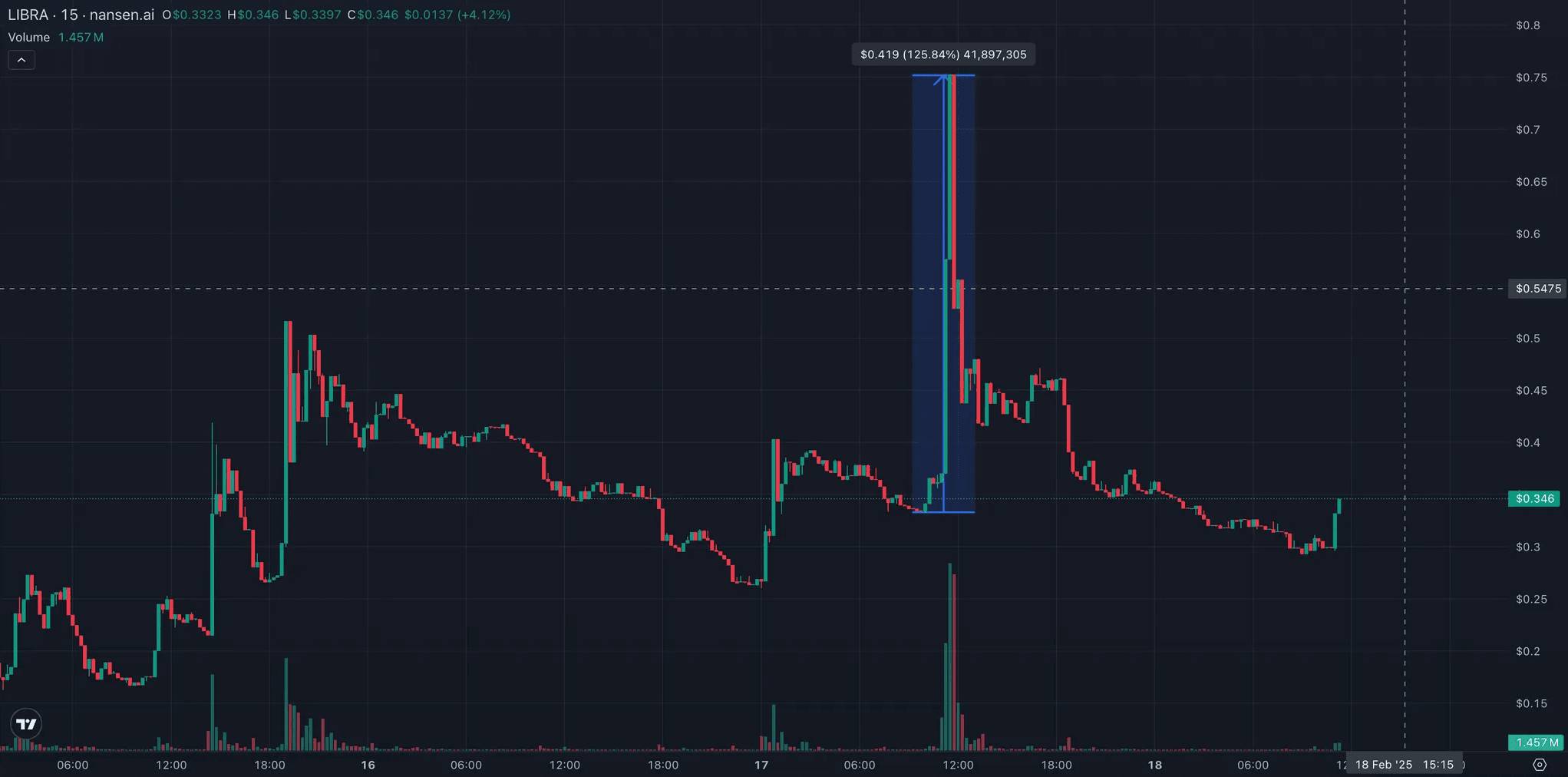
Source: $LIBRA price spike on February 17
However, regardless of when investors entered the market, most wallets ultimately failed to avoid losses. From February 16 to 11:00 AM UTC on February 18, 70% of wallets ended with actual losses. This likely reflects high market volatility and the disadvantages faced by retail investors in execution.
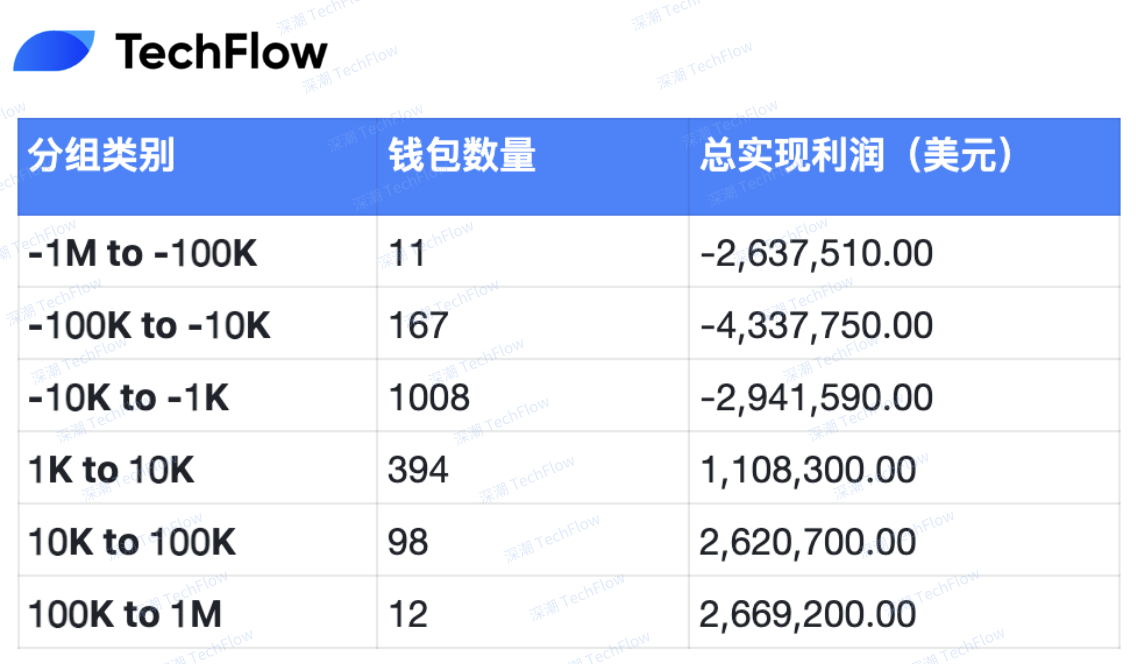
Original image by Nicolai Søndergaard, compiled by TechFlow
Yet, in the unrealized portion, the situation is markedly different: unrealized losses exceed unrealized gains by $4.57 million, highlighting a clear asymmetry between unrealized losses and gains. This also implies potentially more losses remain unconfirmed, further exacerbating the overall loss trend.
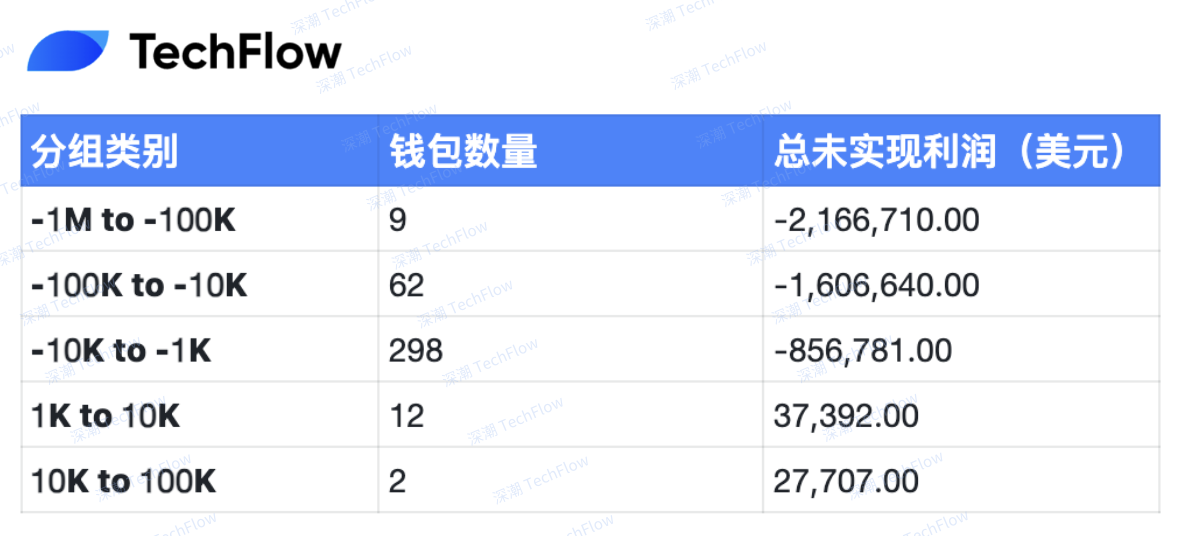
Original image by Nicolai Søndergaard, compiled by TechFlow
On-Chain Analysis
In $LIBRA trading, one of the most successful "snipers" achieved a $6.5 million profit. This investor’s wallet was funded by a Bybit wallet and another external wallet. The user of this external wallet is a trading bot user (e.g., using GMGN or BULLX bots) and is linked to several notable wallets, such as Frankuniversity.eth, extending to hartej.eth, and a wallet funding _khanhamzah on Friendtech platform.
Although existing data is insufficient to confirm whether these wallets belong to the same individual, on-chain data indicates certain connections. For example, 5hjuU7 and Frankuniversity.eth both interacted with the same Bybit hot wallet within days.
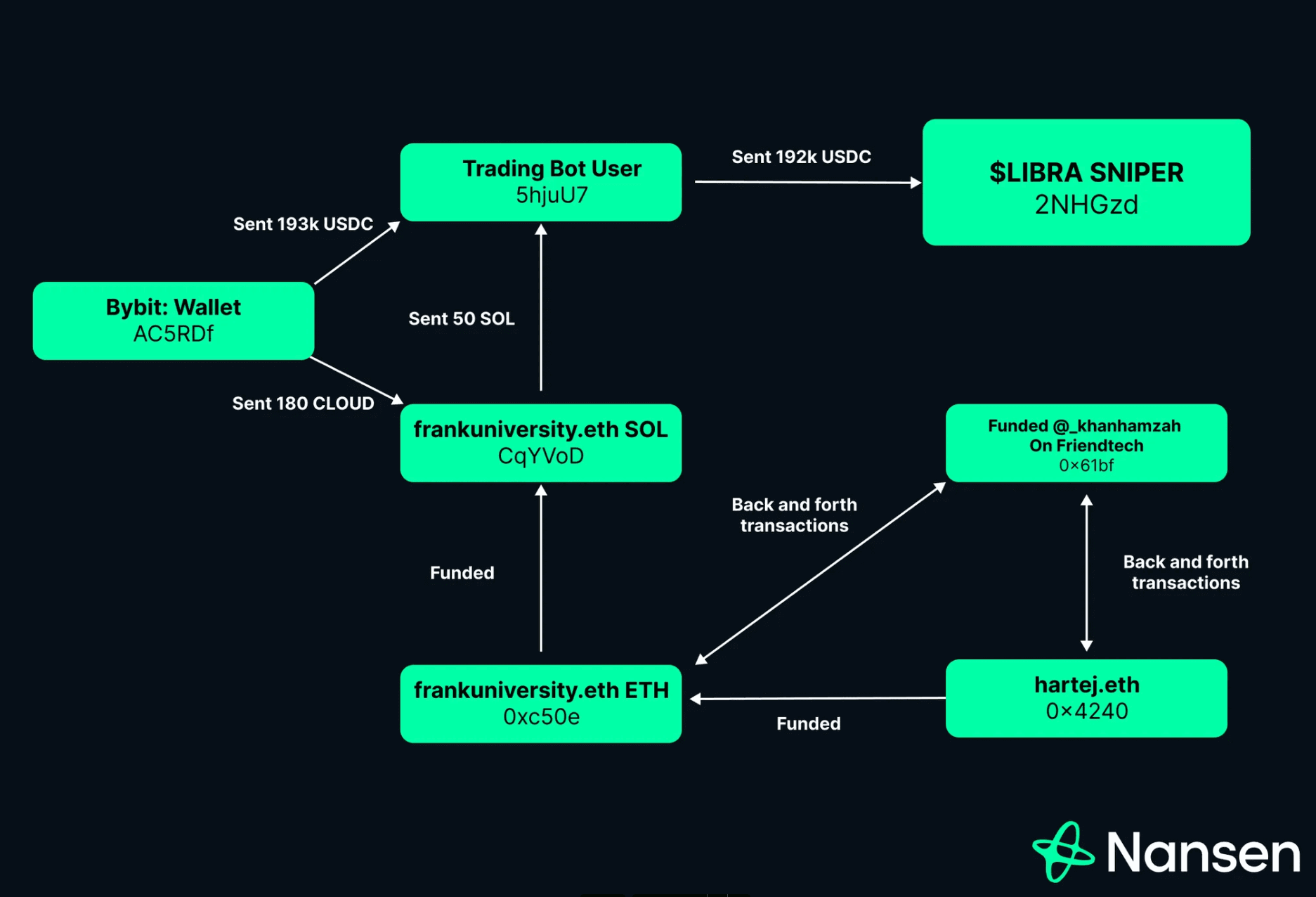
Source: Sniper relationship of 2NHGzd
However, not all "snipers" profited. An investor named XRfKhaCA lost $407,000, buying in at a cost of $6.5 million and selling out for only $6.1 million. Notably, XRfKhaCA is associated with another wallet named dysphoria.sol. dysphoria.sol earned approximately $341,000 on $LIBRA and coincidentally made $11.6 million and $655,000 respectively on $TRUMP and $MELANIA trades. This might suggest the wallet had "inside information" or close ties with "insiders." Additionally, dysphoria.sol received funds on January 4 from blader.eth on Ethereum, reportedly part of compensation for wallets that lost money on the $ZERO project.
On February 18, dysphoria.sol also traded one of Dave Portnoy’s new tokens, $GREED, although profits were relatively small—only about $7,000—as the token price plummeted over 90% within a short period.
The largest single-wallet winner appeared to achieve around $25 million in profit—but was that really the case? An investor named 8bZsrR exchanged 1.7 million USDC for 12.3 million $LIBRA at 22:01:00 +UTC on February 14, 2025, then transferred those tokens to seven other wallets. According to our model, tokens moved out of the wallet are considered sold, forming the basis of the $25 million profit estimate. However, this does not represent the full picture. Further analysis is needed regarding the trading behavior of these seven wallets after receiving the tokens. These wallets sold off holdings at different times, and some appear to have sold at a loss compared to the price at transfer versus final exit.
Across all trades, the 15 worst-performing addresses accumulated losses totaling $33.7 million, with one wallet still holding 57% of its initial balance. The largest single realized loss came from Dave Portnoy’s wallet, amounting to $6.3 million.
According to disclosures from Coffeezilla’s secondary channel, Voidzilla, some key figures involved in the project seemed to have prior knowledge of $LIBRA’s existence. Can this be verified via on-chain data?
Taking Dave Portnoy as an example, he publicly admitted knowing about $LIBRA before its launch but chose not to act immediately, investing only within 10 minutes after the token generation event (TGE), ultimately losing millions. However, according to on-chain USDC inflow records, he was later refunded $5 million. This refund has been confirmed off-chain by both Hayden Davis and Dave Portnoy himself, adding further complexity to the controversy.
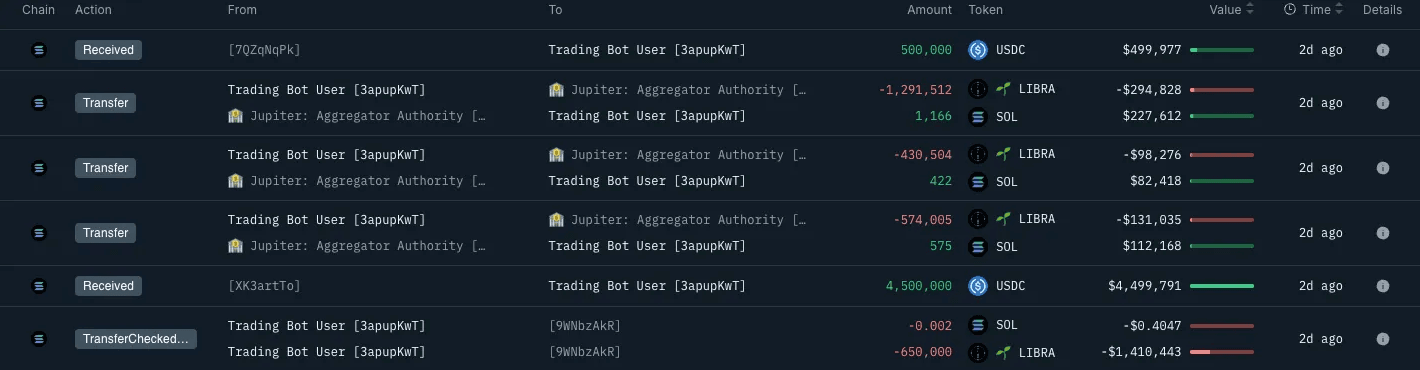
Source: Dave Portnoy's USDC refund record after $LIBRA losses
David Hayes and Kelsier have publicly acknowledged participating in "sniping" tokens they helped launch, including $LIBRA and $MELANIA. This makes allegations of "insiders" purchasing $TRUMP tokens ahead of time more credible. Allegedly, this information was shared at a crypto party in Washington D.C. However, this claim remains unverified and is purely speculative, as David Hayes said he heard it from others without direct evidence. Nevertheless, as revealed by BubbleMaps, "insiders" may also be active across multiple other token trades, with on-chain data showing activity from some connected addresses.
Reputational Damage
When scandals break, companies often face immediate reputational crises. Meteora serves as a typical example. With Ben Chow’s resignation, public scrutiny of the company intensified, amplified further by social media.
Meanwhile, during the $LIBRA incident, Solana (SOL) prices began falling from February 14 and have since declined approximately 16% cumulatively. Although Solana served only as underlying infrastructure and did not directly participate in token trading, its ecosystem was still affected. According to DefiLlama data, Solana’s liquidity plunged from $12.1 billion to $8.29 billion. This phenomenon may relate to investor uncertainty about future Meme token launches and trading, leading to capital gradually exiting the Solana ecosystem.
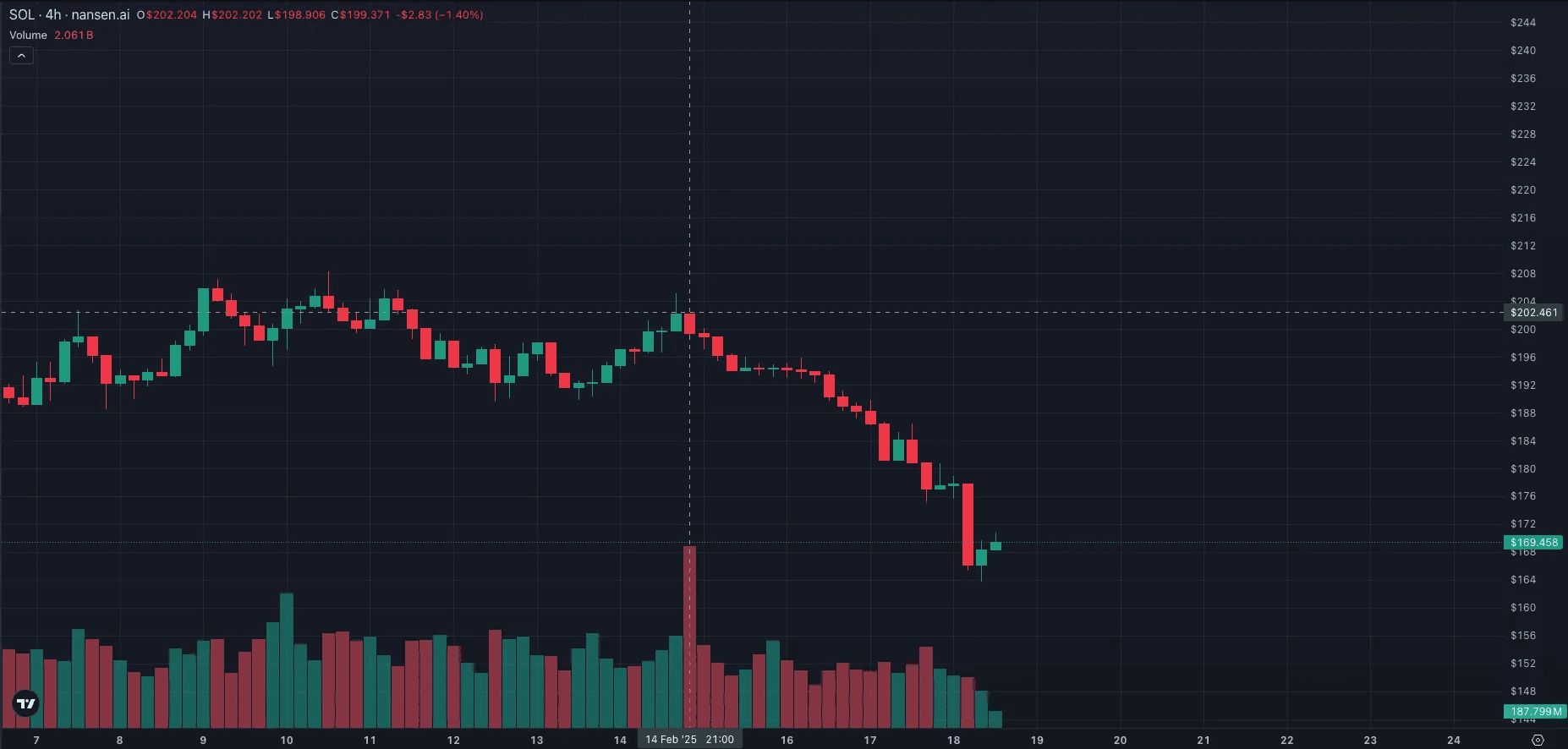
Source: $SOL price decline since February 14
Conclusion
Although $LIBRA initially received a presidential endorsement and reached a $4.5 billion valuation, it quickly collapsed: insiders cashed out rapidly, retail investors suffered heavy losses, and key supporters distanced themselves from the project.
On-chain data clearly reveals this process: a small number of wallets earned millions in profit, while the majority of ordinary traders were left deep in losses. This phenomenon is nothing new—the underlying mechanisms include early access, sniping trades, and exit liquidity provided by subsequent investors. The real damage lies in the erosion of trust and market aversion toward such "viral tokens"—tokens that often crash rapidly before most people fully understand them.
Even the Solana ecosystem was impacted, with a surge in liquidity outflows indicating that the repercussions extend beyond a single token. Based on current conditions, the crypto market appears weary of this cycle: exaggerated promises, rapid price pumps, followed by even faster capital withdrawals.
Whether the $LIBRA incident will serve merely as a necessary cooling-off period for an overheated market—a "healthy" correction—or have deeper implications, especially against the backdrop of U.S. narratives promoting crypto adoption through memes endorsed by the president and first lady, remains to be seen.
Join TechFlow official community to stay tuned
Telegram:https://t.me/TechFlowDaily
X (Twitter):https://x.com/TechFlowPost
X (Twitter) EN:https://x.com/BlockFlow_News
 Nansen