Tiger Research: The Battle for Liquidity – Are Memecoins the Salvation or the Graveyard for CEX?
TechFlow Selected TechFlow Selected
Tiger Research: The Battle for Liquidity – Are Memecoins the Salvation or the Graveyard for CEX?
Exchanges need to integrate on-chain functionality and DeFi elements while ensuring platform stability and compliance.
 Navigating Web3 tides with focused insights
Author: Tiger Research Reports
Translated by: TechFlow

Summary
-
Memecoins have evolved from mere speculative assets into dominant trading forces, attracting substantial liquidity and reshaping capital flow patterns in the crypto market.
-
Platforms like Pump.fun have driven the rise of decentralized exchanges (DEX), drawing in liquidity and active traders, thereby weakening centralized exchanges' (CEX) early price discovery advantages.
-
Exchanges such as MEXC that quickly adapted to memecoin trading are performing strongly, while slower-reacting platforms like Binance face dual challenges in liquidity and market influence.
1. The New Battlefield for Exchanges
Memecoins are redefining the cryptocurrency market. What began as a speculative trend has now become a major trading category on leading exchanges, driving significant trading volumes.
To adapt to this trend, exchanges are adjusting their strategies. Gate.io and MEXC have captured market share by rapidly listing memecoins, while Binance launched "Binance Alpha," focusing on early memecoin listings with smooth transitions. In the DEX space, Solana-based Raydium has overtaken Ethereum-based Uniswap to become the market leader—a clear demonstration of memecoins' powerful market impact.
As memecoins grow increasingly important on exchanges, broader implications deserve attention. Will memecoin trading lead to lasting market transformation or prove just a temporary cyclical phenomenon? Furthermore, how will regulatory changes affect the sustainability of memecoins as mainstream assets? These questions will shape the future of retail trading and exchange development.
2. DEX Disruption: Raydium Overtakes Uniswap

Source: The Block, DefiLlama
The memecoin boom has propelled Raydium's rapid rise. As of January 2025, Raydium holds 27% of the DEX market share, becoming the preferred platform for retail investors. Raydium’s success is closely tied to Solana’s technological advantages, offering lower fees and faster transaction speeds than Ethereum-based exchanges—features that make it ideal for memecoin trading.
Meanwhile, Uniswap's market share dropped from 34.5% in December 2024 to 22% in January 2025, losing its dominance in the DEX market. High Ethereum gas fees remain a key barrier for memecoin traders, pushing many cost-sensitive retail investors toward alternative platforms. If Ethereum-based DEXs fail to innovate promptly, they will face growing pressure from liquidity shifts.
While memecoin trading clearly fueled Raydium’s growth, the sustainability of this trend remains uncertain. Some analysts believe the memecoin trading frenzy may fade as speculative demand declines. However, Raydium has already established itself as a familiar platform among users through memecoin trading. By strengthening liquidity pools, improving user experience, and building efficient trading systems, Raydium could solidify its market position. These efforts would help Raydium maintain a long-term edge in competition between DEXs and CEXs.
3. CEX Response: Can They Keep Up With DEX Growth?
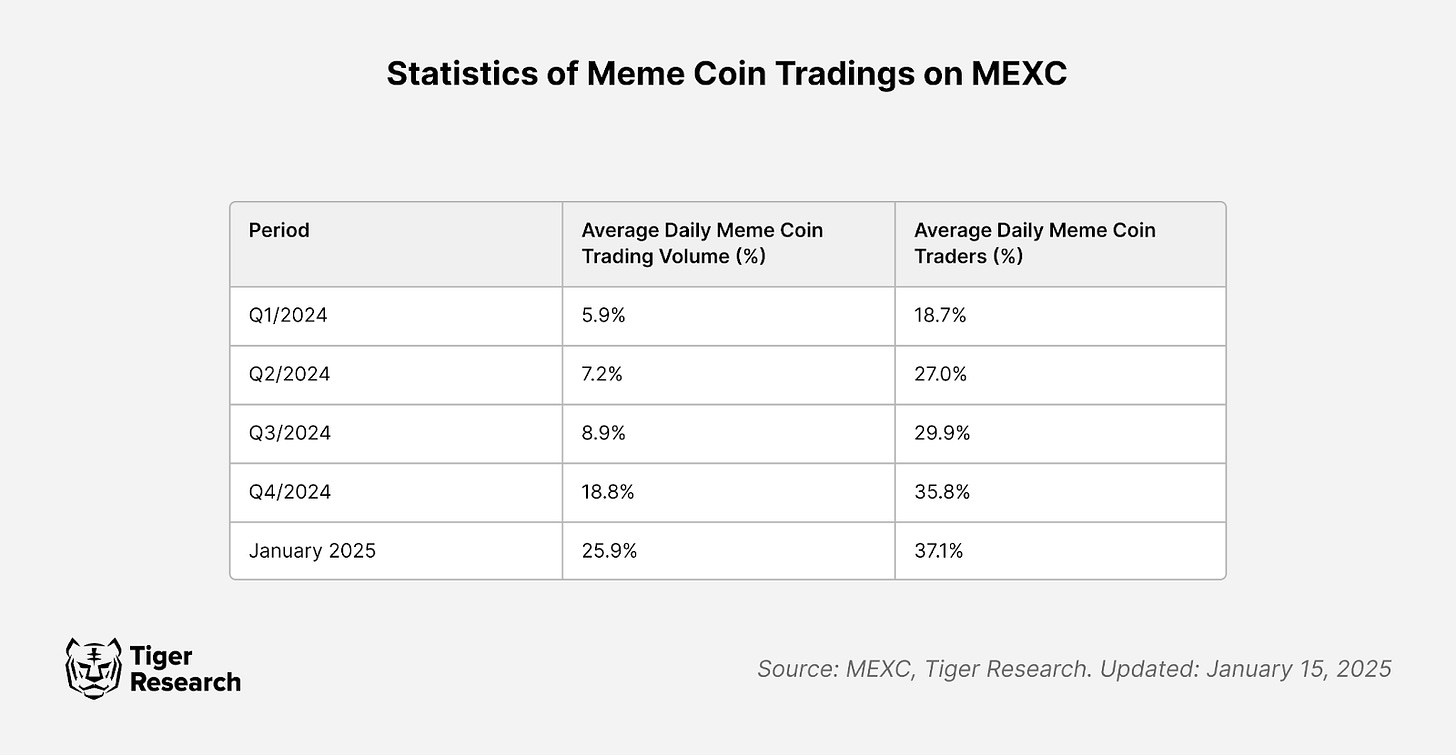
Gate.io and MEXC have successfully attracted a large number of retail investors interested in speculative assets through focused memecoin listing strategies. MEXC, in particular, has led this trend with its fast memecoin listing policy. For example, it opened trading on the same day for Memecoins Official Trump ($TRUMP), directly resulting in record-breaking trading volume and rapid user growth.
These strategies have had significant effects. MEXC’s daily memecoin trading volume surged from 5.9% in Q1 2024 to 25.9% in January 2025. At the same time, the proportion of memecoin traders increased from 18.7% to 37.1%.
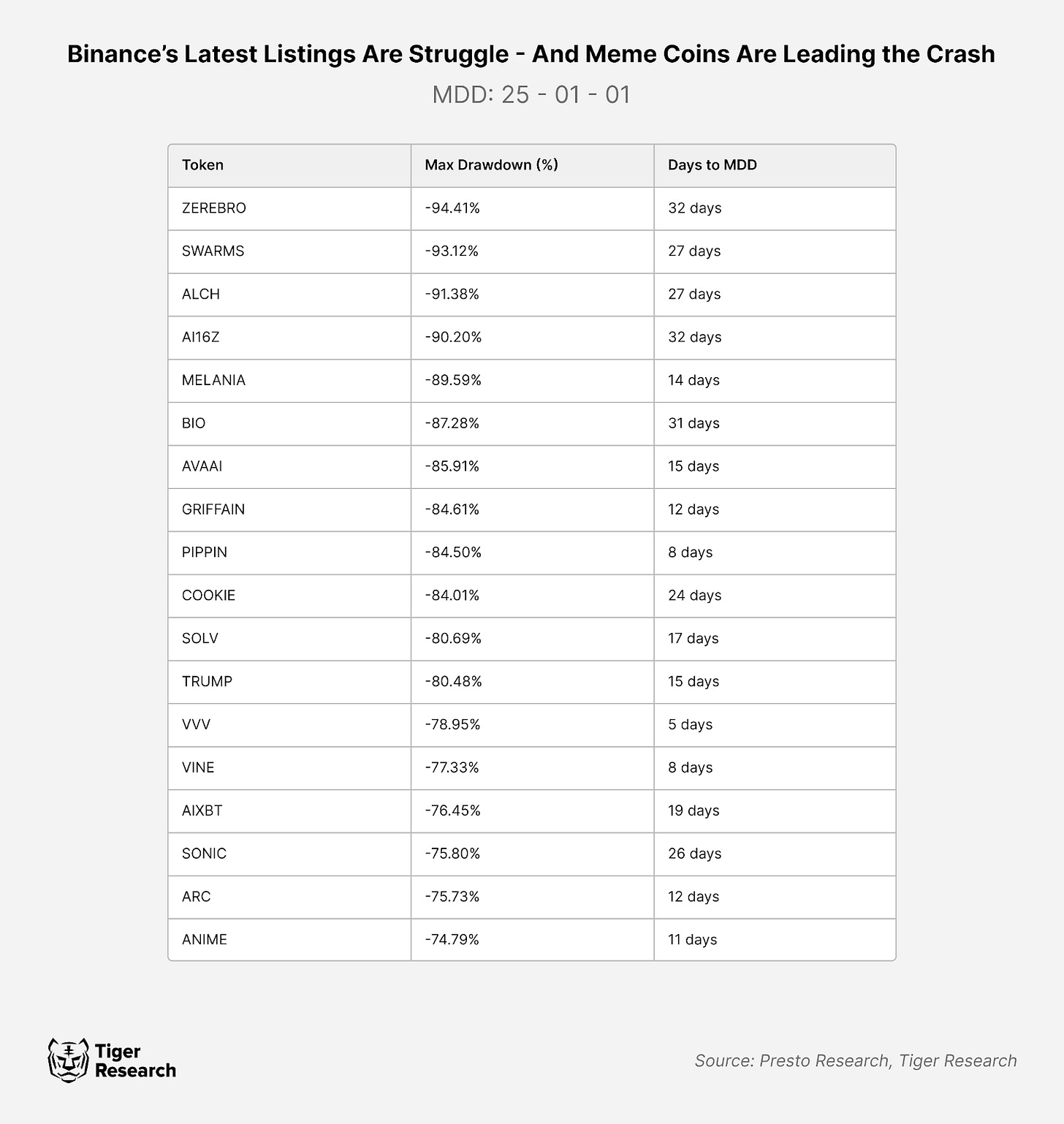
As the world’s largest cryptocurrency exchange, Binance is actively expanding its memecoin listing scope to attract retail liquidity. Recently, Binance has placed greater emphasis on speculative assets, aiming to capture opportunities within the "attention economy." However, due to its nature as a centralized exchange (CEX), Binance inevitably faces internal review processes that delay listings—often until market热度 has cooled or shifted to new trends.
Although Binance provides ample liquidity to protect investors, this liquidity ironically becomes an exit route for early holders to dump memecoins. Because dumping has minimal impact on prices, many newly listed memecoins typically drop more than 75% in value shortly after listing, causing significant losses for numerous investors. This situation not only damages Binance’s long-term reputation but also raises questions about its listing review process.
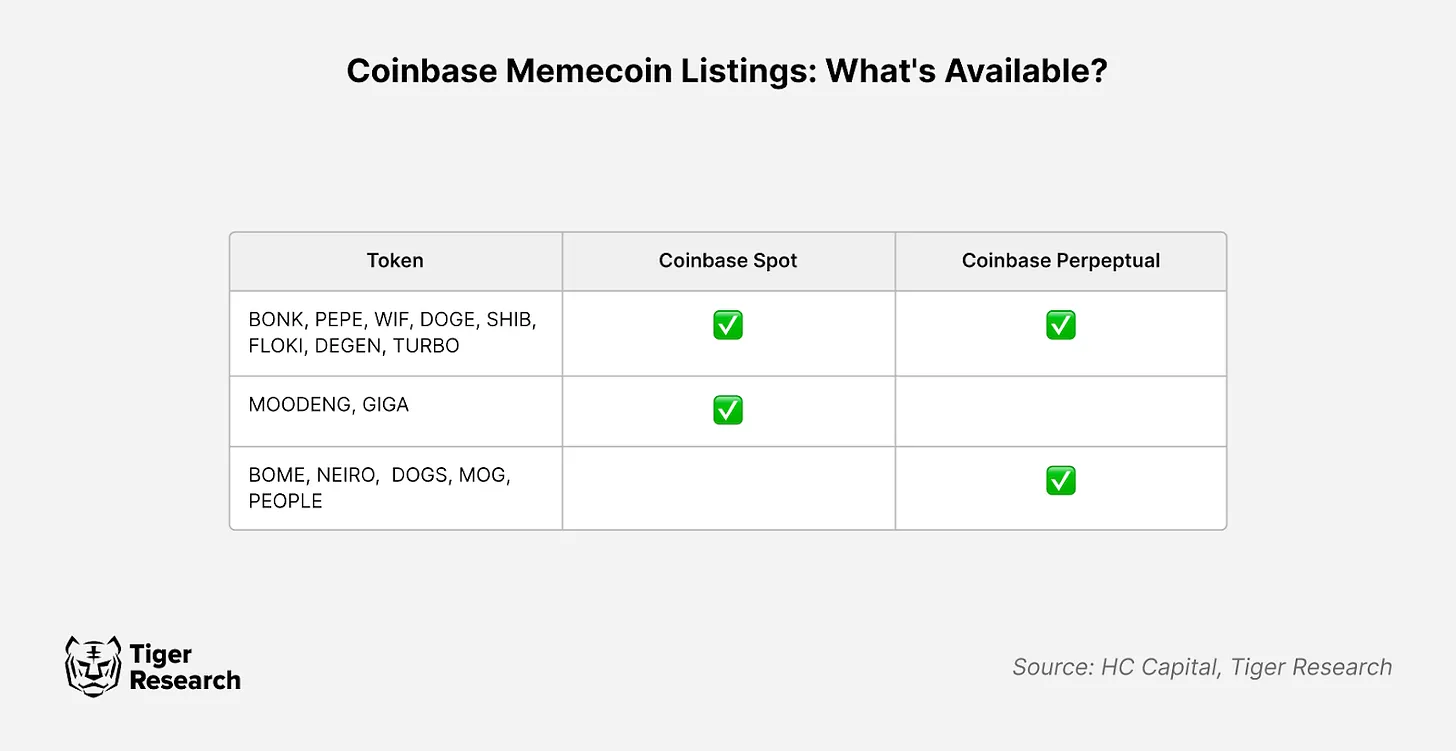
In contrast, major centralized exchanges like Coinbase, Kraken, and Upbit have adopted more conservative approaches, focusing on established cryptocurrencies rather than memecoins. While this strategy misses out on short-term high-return opportunities, it supports platform stability and reduces regulatory risks.
In recent years, the trend of funds flowing from CEX to DEX has become increasingly evident, signaling that CEXs no longer hold absolute market dominance. In response, CEXs must reassess their strategic positioning. Potential options include:
-
Selecting early-stage assets and providing transparent information (e.g., Binance Alpha);
-
Managing risk through selective memecoin listings;
-
Introducing hybrid trading models combining on-chain order books with DeFi elements.
The core challenge for CEXs today lies in balancing the attraction of short-term trading activity with long-term platform stability, maintaining institutional investor trust, and effectively attracting more retail users.
4. Strategic Summary and Future Outlook
Memecoins have evolved from simple speculative tools into significant trading instruments within the cryptocurrency market. With substantial growth in memecoin trading volume on decentralized exchanges (DEX), this trend brings both new opportunities and challenges to the crypto industry.
In the recent bull market, memecoins on DEX significantly outperformed assets listed on centralized exchanges (CEX), prompting more investors to shift toward DEX. Platforms like Pump.fun have optimized the issuance and trading processes for memecoins, enabling new tokens to achieve explosive growth even without CEX listings.
To adapt, market makers, liquidity providers, and project teams are adjusting their strategies. They are no longer solely focused on CEX listings but are increasingly prioritizing DEX environments. By establishing liquidity pools across multiple platforms, they enhance accessibility and flexibility in trading.
However, the memecoin market still faces numerous risks. Unethical behaviors such as rug pulls, cartel manipulation, and malicious trading severely harm investor interests. Due to lack of effective regulation, these issues persist. For instance, the Argentina Libra ($LIBRA) scandal exposed these latent risks, triggering widespread skepticism about memecoins and causing a notable decline in Solana DEX trading volume.
Nonetheless, memecoins continue to demonstrate potential within the crypto space. They are gradually becoming representative assets for certain entities and communities. Examples include Elon Musk’s association with Dogecoin, Trump’s link to the Official Trump Token, and cases of startups and nations issuing memecoins—indicating that cryptocurrencies are capturing real economic and social value. This trend resembles the securitization process in traditional financial markets and may evolve into a new cultural phenomenon.
In light of these changes, CEXs must swiftly adjust their strategies. Investors no longer wait for CEX listings before trading promising assets. To attract more users and stay competitive, exchanges need to integrate on-chain functionality and DeFi elements, while ensuring platform stability and compliance. Such flexible and innovative strategies will be key to driving the crypto market into its next phase of growth.
Disclaimer
This report is prepared based on information believed to be reliable. However, we make no express or implied representations or warranties regarding the accuracy, completeness, or suitability of the information. We accept no liability for any loss arising from the use of this report or its contents. Conclusions and recommendations in this report are based on information available at the time of preparation and may change at any time without notice. All projects, estimates, forecasts, targets, and opinions mentioned in this report are subject to change and may differ from views held by other individuals or organizations.
This report is for informational purposes only and should not be construed as legal, business, investment, or tax advice. Any securities or digital assets mentioned are for illustrative purposes only and do not constitute investment advice or an invitation to provide investment advisory services. This report is not directed at any investor or potential investor.
Terms of Use
Tiger Research permits fair use of its reports. The principle of “fair use” means the content may be used for purposes related to public interest, provided the commercial value of the material is not impaired. If usage falls within the scope of fair use, prior permission is not required. However, when citing Tiger Research reports, the following requirements must be met: 1) Clearly credit “Tiger Research” as the source; 2) Include the Tiger Research logo (black or white). Re-editing or republication of materials requires separate negotiation with Tiger Research. Unauthorized use may result in legal liability.
Join TechFlow official community to stay tuned
Telegram:https://t.me/TechFlowDaily
X (Twitter):https://x.com/TechFlowPost
X (Twitter) EN:https://x.com/BlockFlow_News
 @tiger_research