CEX Embraces Stocks—Are Altcoins Being Abandoned?
TechFlow Selected TechFlow Selected
CEX Embraces Stocks—Are Altcoins Being Abandoned?
Altcoins no longer hold a significant position in the future plans of all CEXs.
 Navigating Web3 tides with focused insights
By Henry Kim and Ryan Yoon
Translated by Chopper; Foresight News
TL;DR
- The growth of spot trading fee models in crypto has plateaued; the rise of decentralized perpetual futures exchanges like Hyperliquid; and a more permissive regulatory environment following the Trump administration’s return to power—these converging factors have prompted leading global crypto exchanges to recalibrate their strategic directions.
- Today, major exchanges are aggressively expanding into traditional financial products such as equities and financial derivatives, gradually aligning their operational models with those of conventional financial institutions.
- Yet this shift raises critical concerns: centralized exchanges (CEXs) have long served as the core liquidity providers across the entire crypto ecosystem. As they progressively de-emphasize crypto-native offerings, the foundational operating order of crypto markets risks being fundamentally disrupted.
- Crypto projects are now entering a phase of self-reliance. Their ability to operate independently—without exchange support—will become the decisive litmus test for viability, triggering clear industry fragmentation.
Trading Apple Stock on Binance
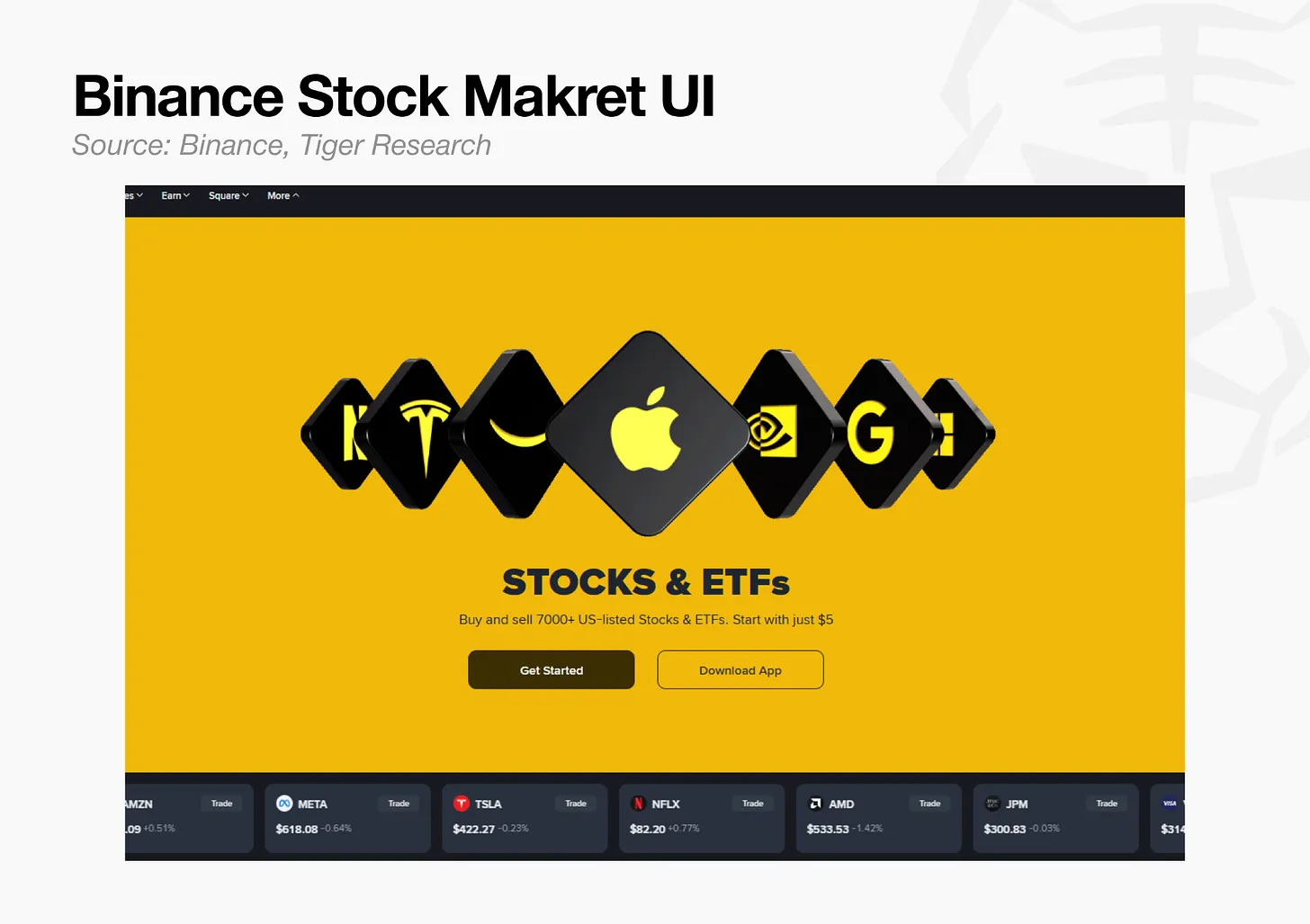
Starting June 1, users can directly trade U.S. equities—including Apple (AAPL) and Alphabet (GOOGL)—via the Binance app. The next day, Binance announced the addition of Korean Composite Stock Price Index (KOSPI) constituents, including SK Hynix, Samsung Electronics, and Hyundai Motor—the three most actively traded Korean stocks.
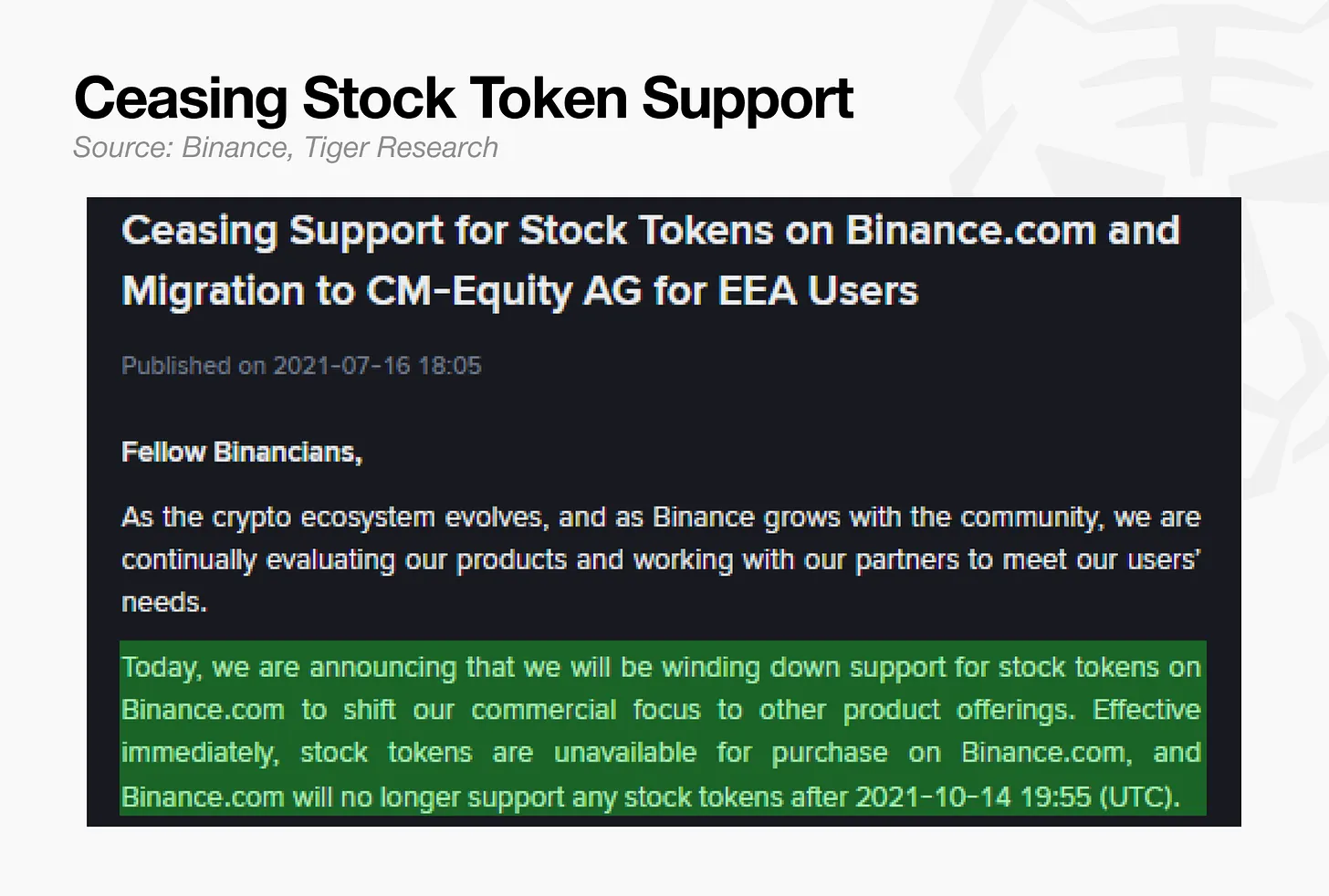
Binance’s ambition to enter the equity trading space dates back to 2021. In April that year, the platform launched tokenized stock trading, supporting assets including Tesla (TSLA), Apple (AAPL), and Microsoft (MSFT). However, under mounting regulatory pressure, the service was fully discontinued in July of the same year. Three structural challenges made sustained operation untenable: first, the legal classification of tokenized stocks—as securities or derivatives—remained unresolved; second, these products lacked investor prospectuses required under EU regulations; and third, Binance itself held no direct license to offer such services. Germany’s Federal Financial Supervisory Authority (BaFin), the UK’s Financial Conduct Authority (FCA), and Hong Kong’s Securities and Futures Commission (SFC) all raised formal objections based on these issues.
This time, the relaunched equity trading service features a significantly overhauled architecture. Binance now executes orders through Nest Trading, a licensed broker regulated by the Abu Dhabi Global Market (ADGM), explicitly defining the offering as a securities brokerage service—thereby sidestepping prior legal ambiguities. The core issue from 2021—the ambiguous legal ownership of underlying asset issuers—has also been largely resolved.
These industry developments display striking temporal alignment. Around the same time, Bybit launched a perpetual futures market for traditional financial assets—not only listing perpetual contracts on SK Hynix and Samsung Electronics but also introducing a perpetual contract on Space Exploration Technologies Corp. (SPCX). Coinbase followed suit, announcing support for SPCX perpetual contracts.
Nearly all top-tier crypto exchanges are collectively pivoting away from purely crypto-centric business models toward integrated platforms offering traditional financial services. This synchronized transformation warrants deeper examination.
Three Drivers Behind the Pivot
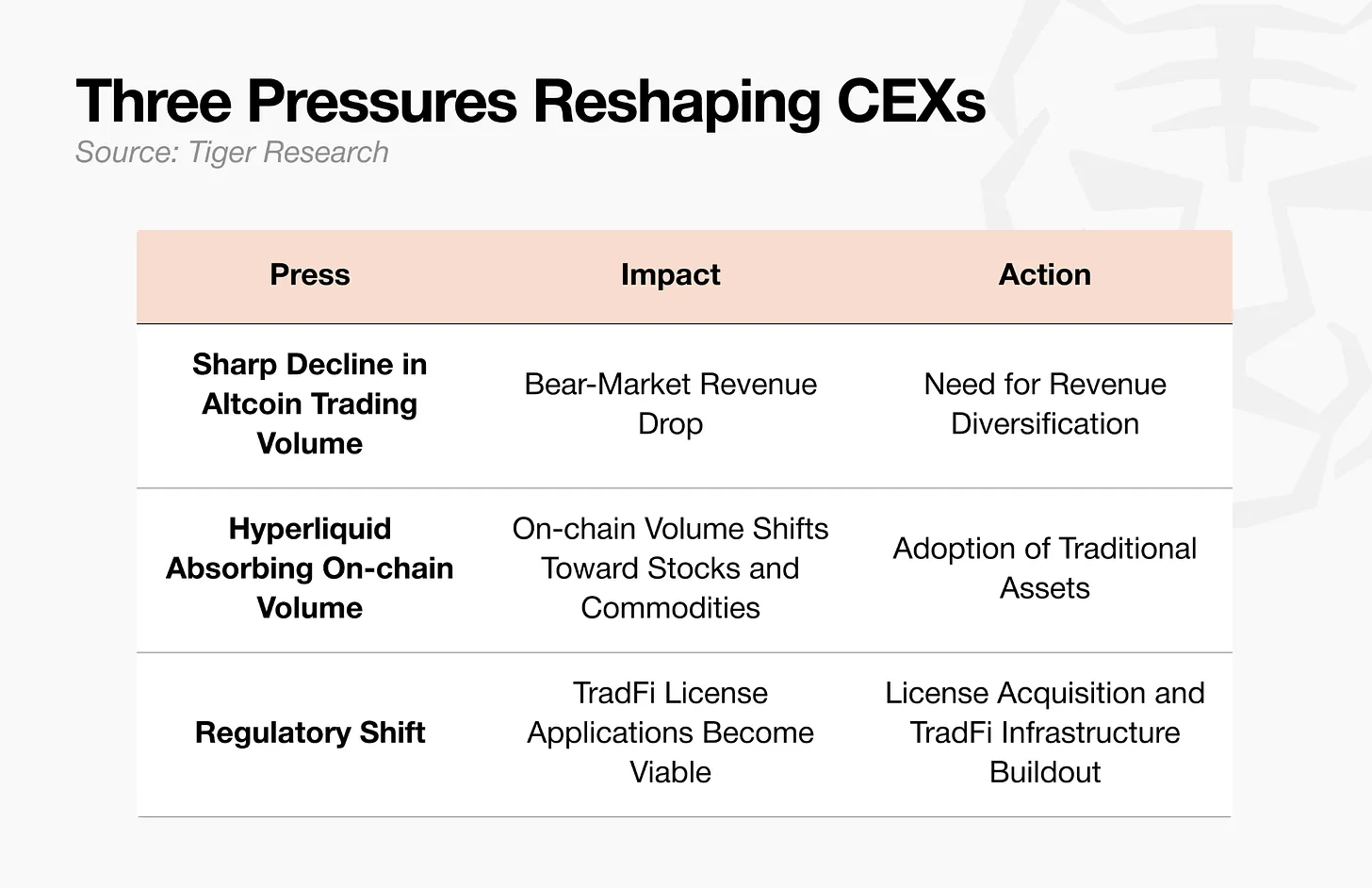
Three external pressures are jointly compelling exchanges to abandon pure crypto-native operations.
Persistent Decline in Crypto Trading Volume
The primary pressure stems from shrinking overall crypto trading volumes. Exchanges’ core revenue comes from crypto trading fees—and trading volume is entirely sentiment-driven.
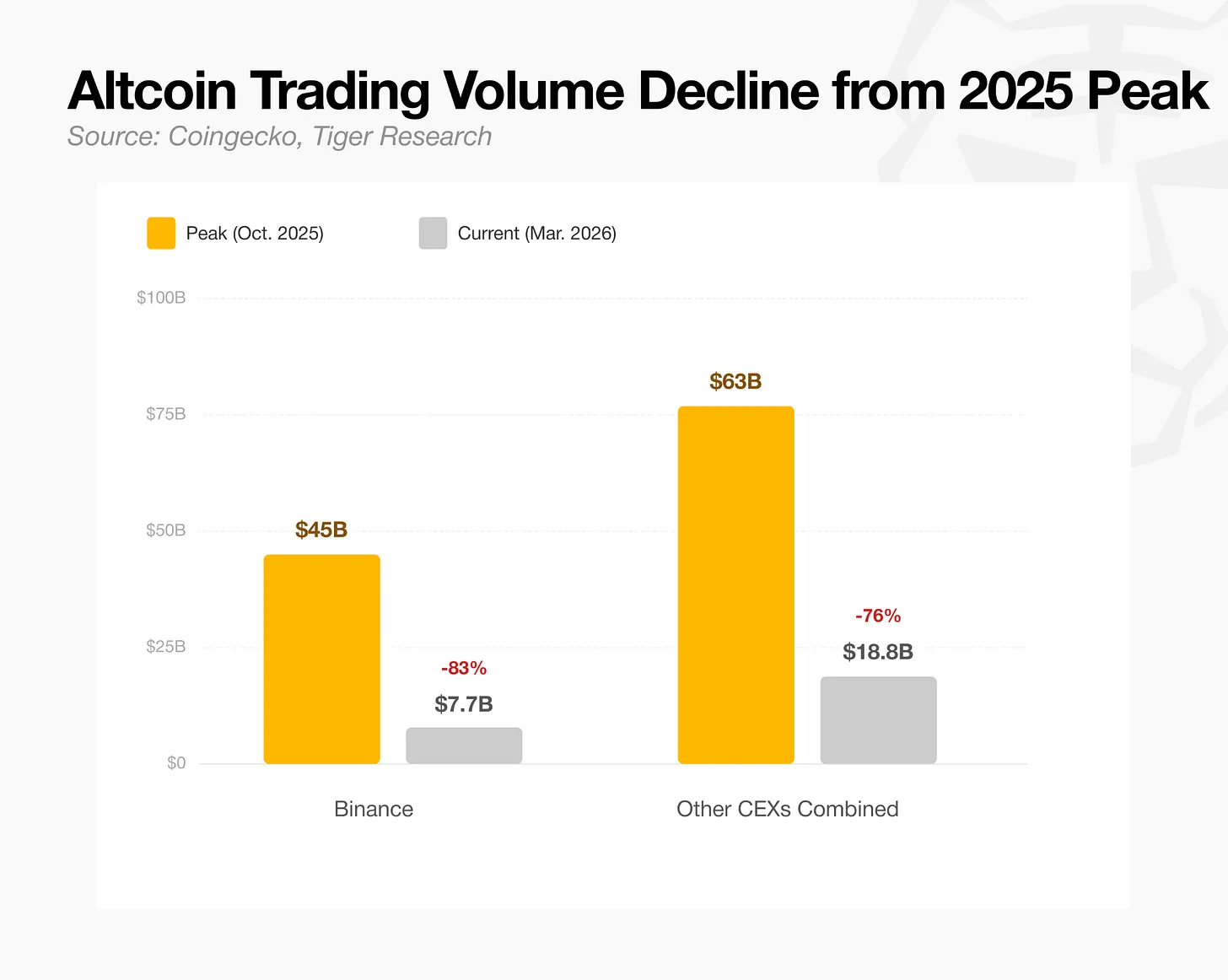
Binance’s average daily spot trading volume has plummeted from a peak of ~$45 billion in October 2025 to just $7.7 billion—a nearly 80% drop. Combined spot volume across all other centralized exchanges has likewise fallen from a peak of $63 billion to $18.8 billion—a roughly 70% decline. As volume continues to shrink, the fee-based revenue model is becoming unsustainable. Leading exchanges have long recognized that relying solely on crypto trading fees cannot sustain a viable long-term revenue structure.
Hyperliquid Drains On-Chain Liquidity
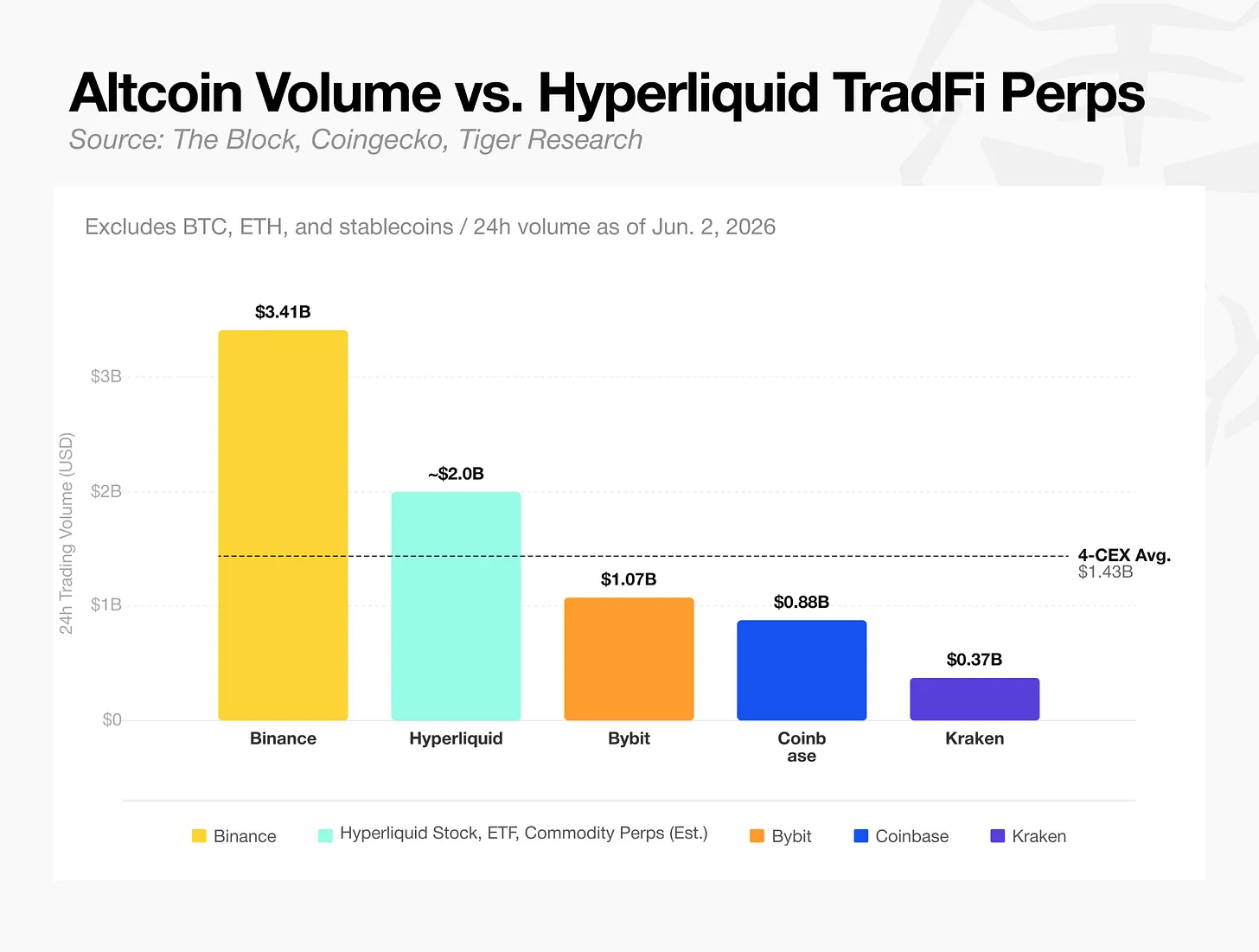
Comparative data reveals today’s shifting landscape: when altcoin trading volume (excluding Bitcoin and Ethereum) is juxtaposed against Hyperliquid’s trading volume in equities and commodities—real-world assets—the disparity is stark.
By launching perpetual futures on equities and commodities, Hyperliquid has steadily absorbed on-chain liquidity. As of mid-2026, 23 of the top 30 perpetual futures by trading volume on Hyperliquid are equities or commodities—crypto-native assets now constitute a minority.
On-chain markets are no longer exclusively crypto domains. A decentralized exchange’s trading scale now rivals that of traditional CEXs—a wake-up call for all centralized platforms.
Regulatory Environment Shifts
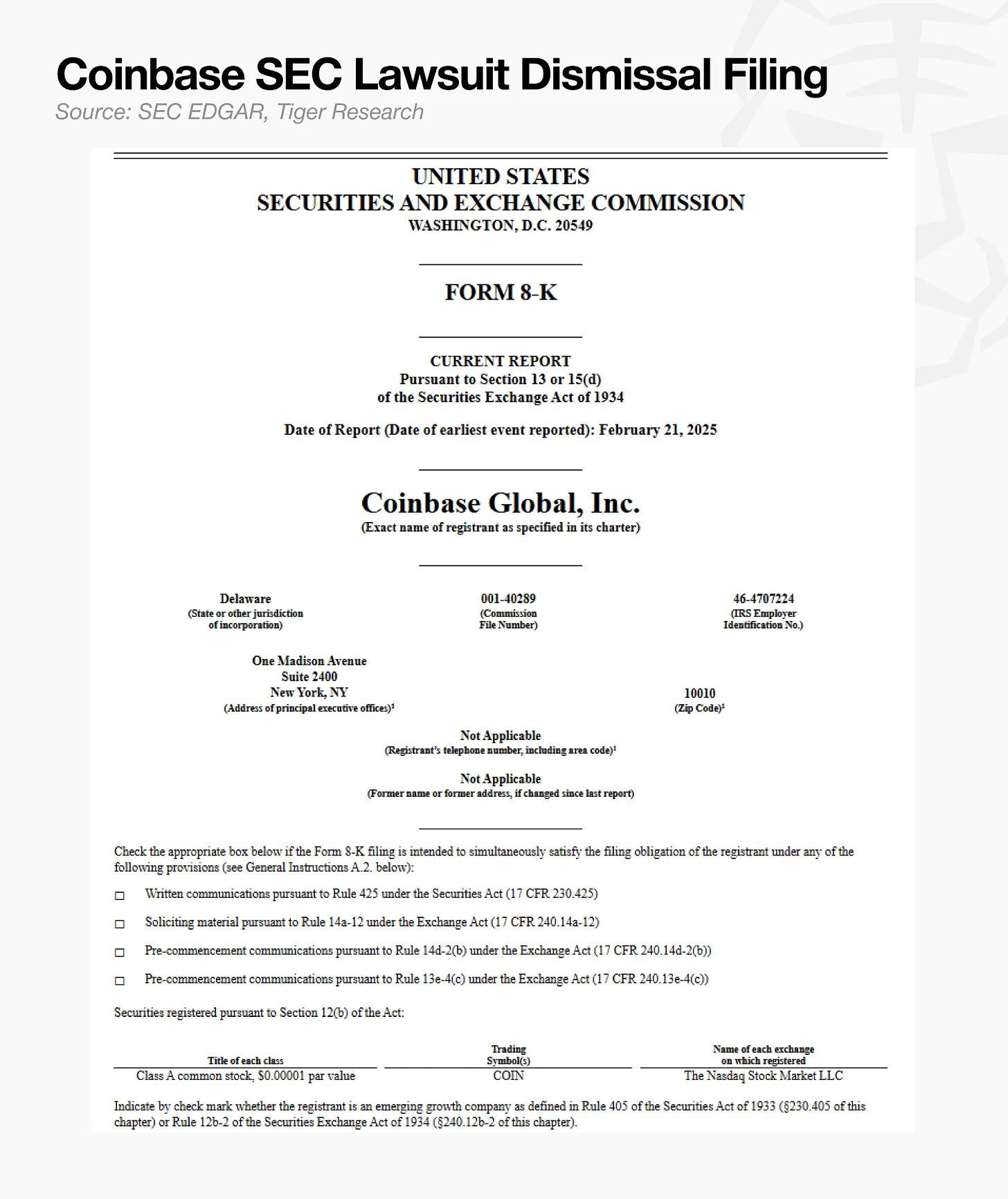
The third pressure point arises from the broader regulatory pivot following the Trump administration’s return. The U.S. Securities and Exchange Commission (SEC) dropped its lawsuits against Coinbase and Kraken. During periods of aggressive enforcement, applying for traditional financial licenses carried prohibitive compliance risk. Today, regulatory boundaries are increasingly clarified—making financial licenses not just compliance enablers, but competitive differentiators.
Within a defined regulatory framework, exchanges can leverage existing strengths to explore new frontiers. With all three pressures converging—and rising market demand for equities and financial derivatives—leading exchanges must accelerate their transformation to ensure long-term survival.
Strategic Responses from Major Centralized Exchanges
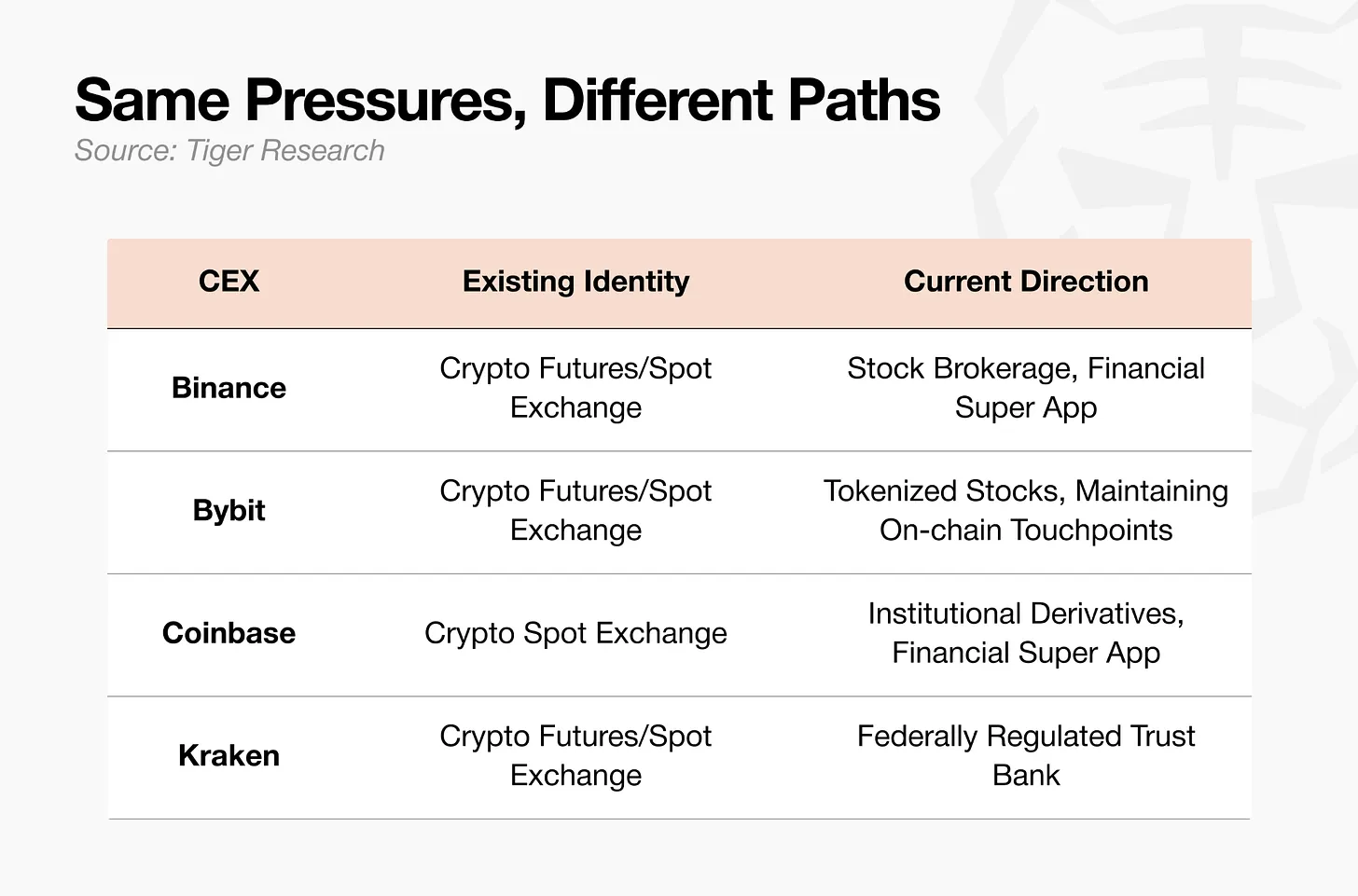
Facing identical industry headwinds, each major centralized exchange has adopted distinct strategic paths.
Binance: Building an Integrated Financial Super-Platform
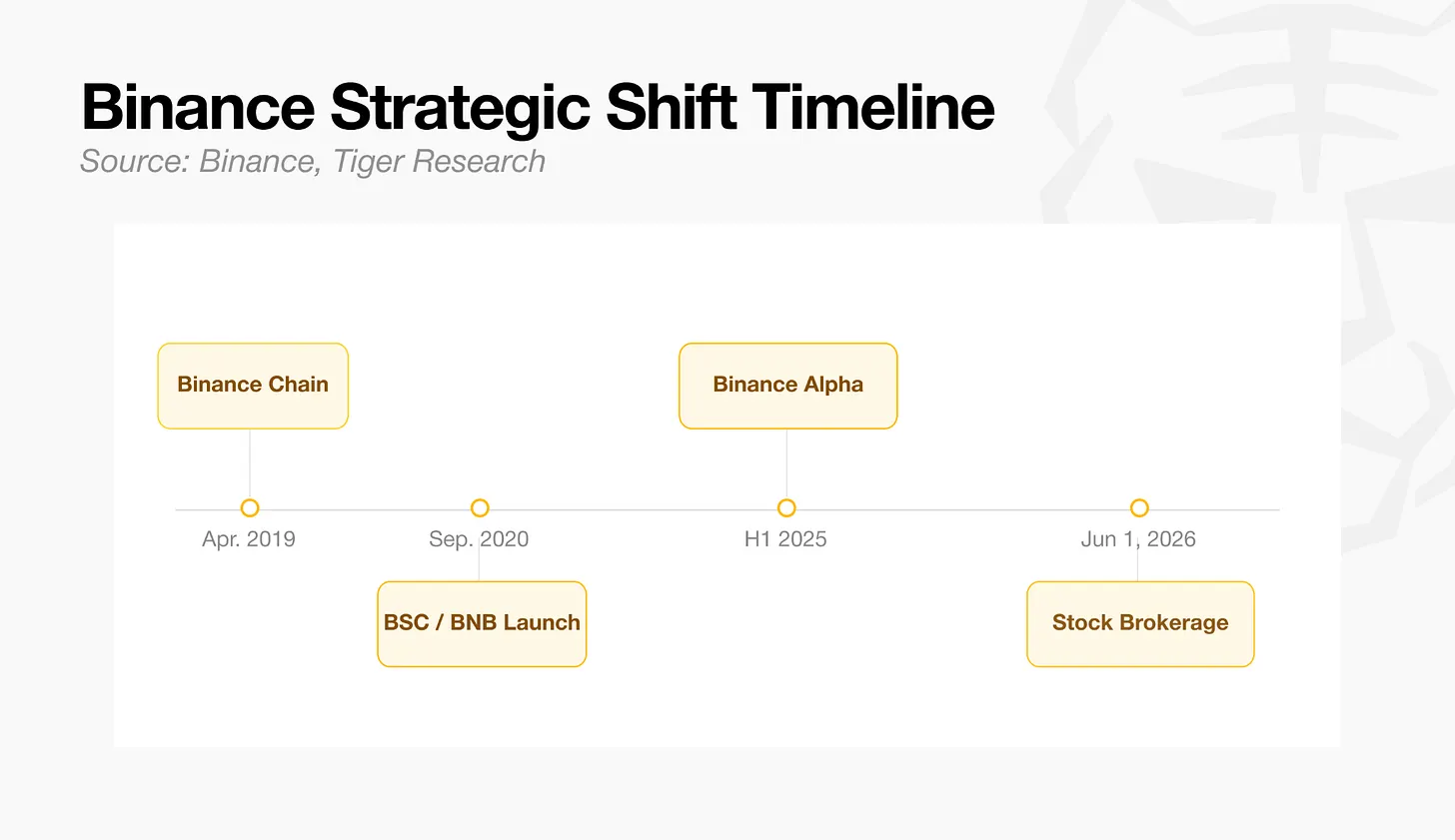
Binance’s vision is unambiguous: build an all-in-one integrated trading platform that retains users’ entire trading activity within its own ecosystem—preventing user attrition.
Binance had already established a strong foothold in on-chain infrastructure—with notable success. It first built out its centralized trading business, then launched Binance Smart Chain (BSC) in April 2019 to enter the on-chain ecosystem. In early 2025, it rolled out Binance Alpha, capturing substantial on-chain market share.
But in 2026, on-chain liquidity began migrating toward equities. Hyperliquid seized the initiative, consistently capturing liquidity with equity- and commodity-linked products—directly challenging Binance’s hard-won on-chain user base. Rather than engage Hyperliquid head-on in its home territory, Binance pursued an alternative path: launching equity trading for its existing user base of over 200 million. Retaining current users proved far more prudent than fighting for new ones in contested terrain.
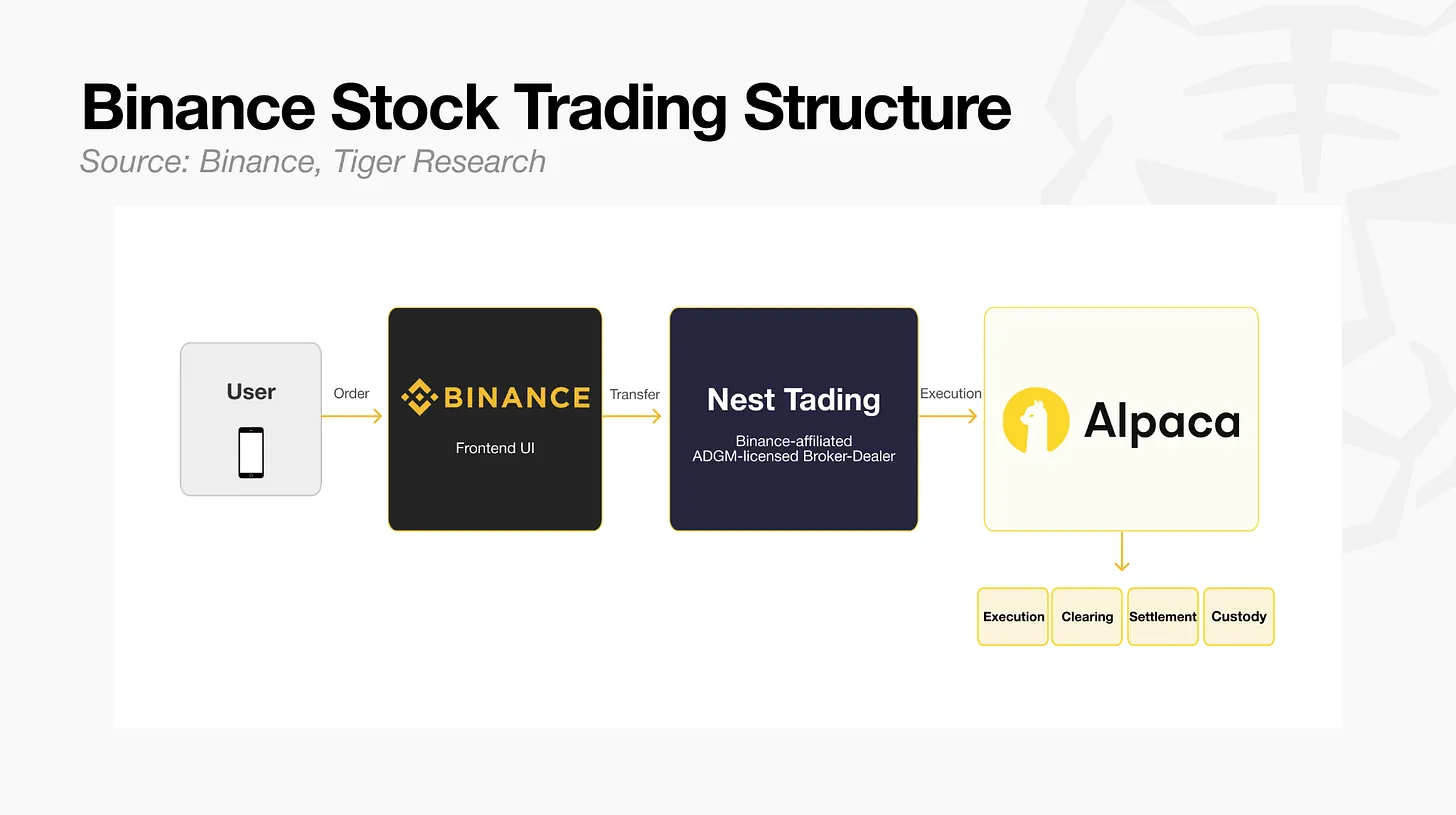
Here’s how the service works: orders placed by users on Binance’s frontend are first received by Nest Trading—an ADGM-licensed broker—and then routed to Alpaca Securities for execution, clearing, settlement, and custody. Binance does not hold any underlying securities—this architecture allows it to operate outside direct securities regulatory oversight.
Notably, Nest Trading has been confirmed as a Binance-affiliated entity, and Binance holds a minority stake in Alpaca. The two parties have signed a revenue-sharing agreement: Nest Trading receives 50% of order flow fees and 65% of securities lending income.
Binance is now building its own end-to-end infrastructure to fully transform into a financial super-app. Before altcoin liquidity migrates further to Hyperliquid and equity markets, the platform is focused on solidifying its existing user base.
Bybit: Dual-Track Strategy
Founded in 2018, Bybit initially gained traction in derivatives trading—scaling rapidly via up to 100x leverage and low fees. Its current strategy follows a dual-track approach: migrating centralized exchange liquidity onto blockchain networks while simultaneously launching traditional financial asset derivatives on its centralized platform.
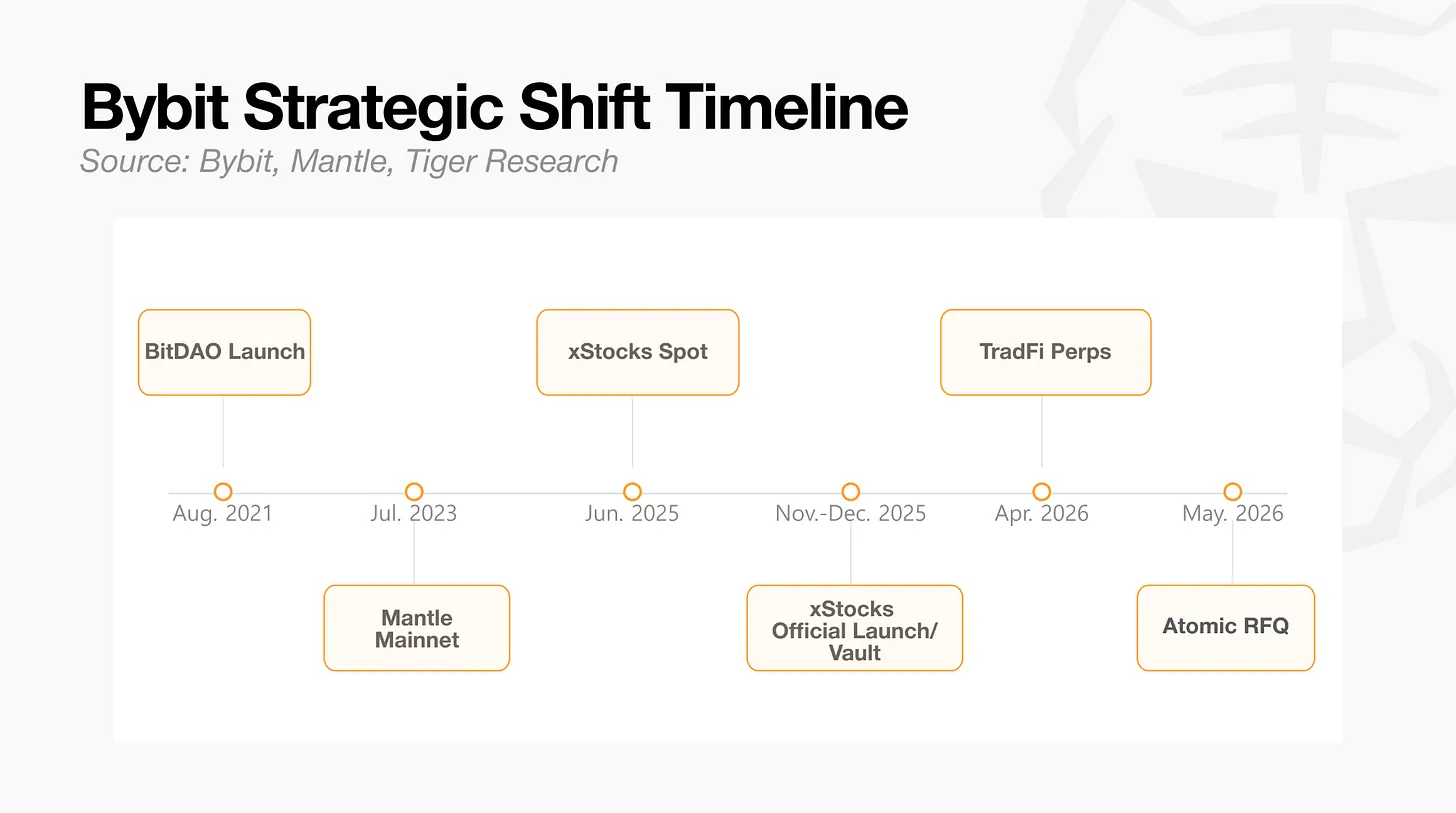
Its rollout began on-chain. In June 2025, Bybit listed tokenized stock products issued by Backed in its spot section—marking its first step into tokenized equities. In November 2025, Bybit partnered with Mantle and Backed to launch xStocks on the Mantle blockchain, covering major U.S. equities including NVIDIA (NVDA) and Apple (AAPL).
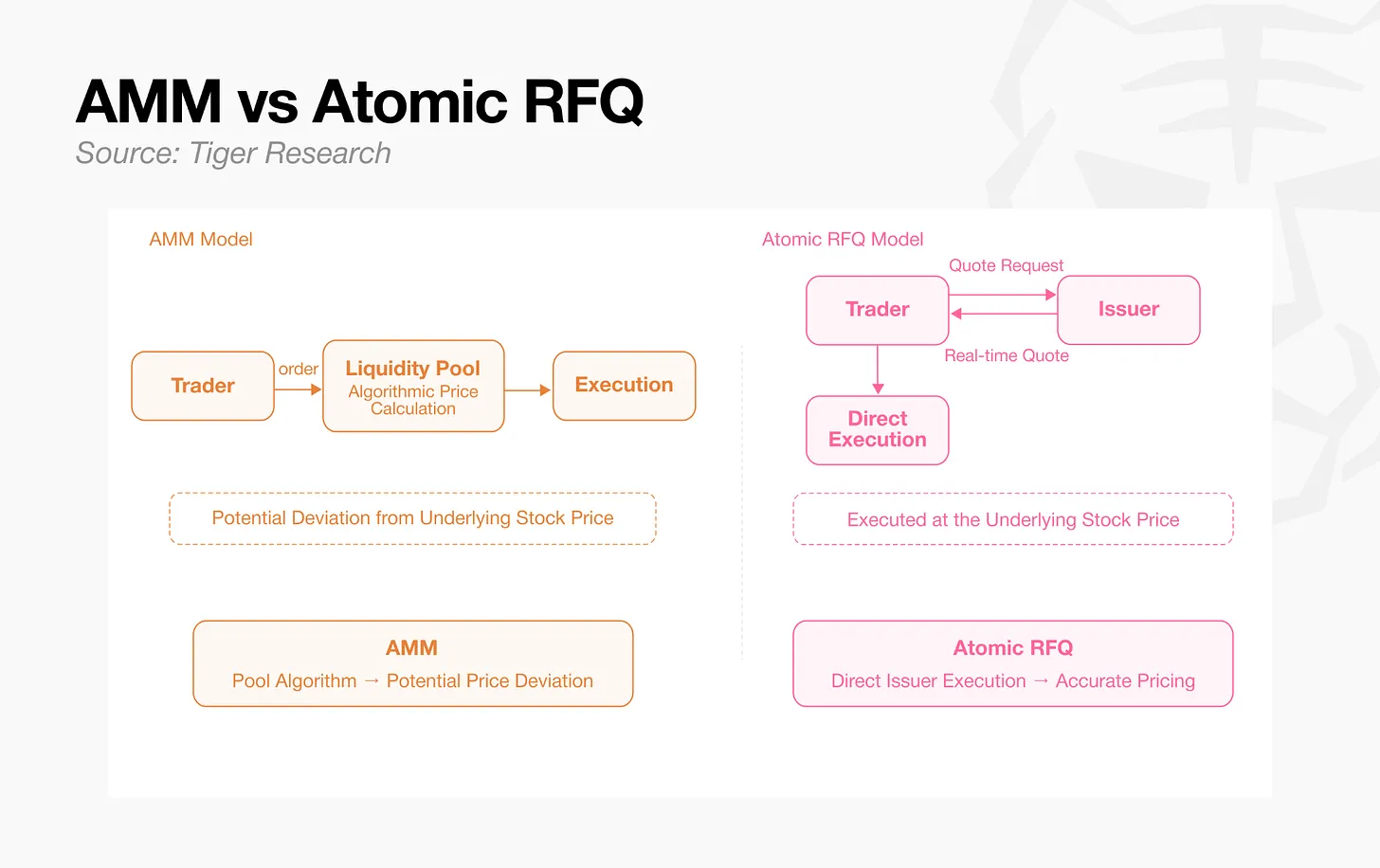
In May 2026, Bybit introduced atomic quoting functionality on Fluxion—a decentralized exchange built on Mantle. Instead of relying on automated market makers, this feature sources quotes directly from asset issuers, enabling on-chain trades to meet institutional execution standards.
In its centralized business segment, Bybit has also moved decisively. Under similar industry pressures as Binance, it launched perpetual futures on traditional financial assets in April 2026—and has added new underlying assets weekly since. Today, perpetual contracts on Tesla (TSLA), NVIDIA (NVDA), Apple (AAPL), gold, silver, and crude oil—all settled in USDT—are available for 24/7 trading. On June 4, perpetual contracts on Samsung Electronics, SK Hynix, and Hyundai Motor went live, alongside pre-IPO shares of Space Exploration Technologies Corp. (SPCX).
Both tracks converge on one goal: building robust infrastructure to bridge on-chain and off-chain environments—enabling precise, institutional-grade trading of traditional financial assets. Unlike Binance, Bybit isn’t betting everything on its centralized platform; instead, it continues deep investment in on-chain ecosystems via Fluxion and the Mantle blockchain.
Coinbase: The Most Trusted Exchange in the U.S. Market
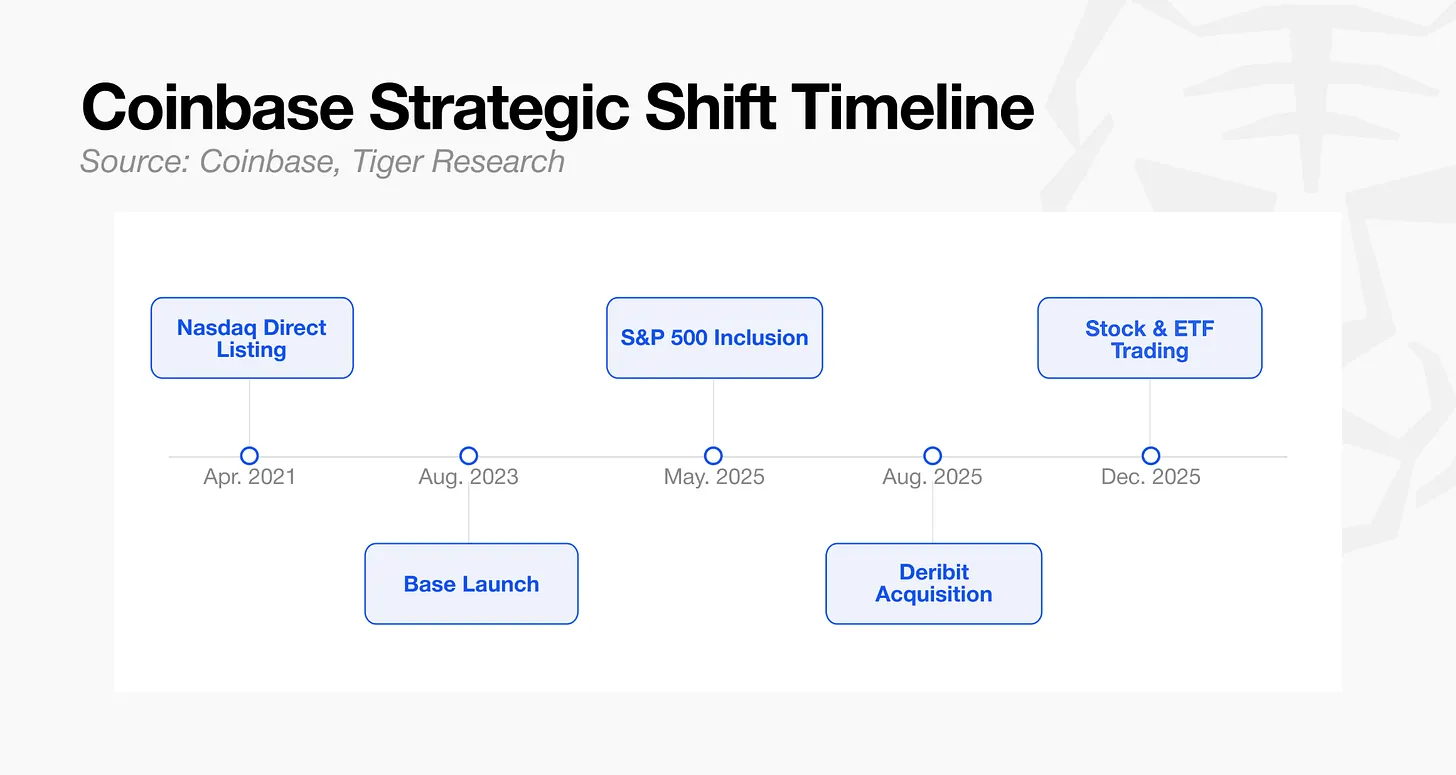
Coinbase went public on Nasdaq in 2021 and was added to the S&P 500 index in May 2025. Backed by Wall Street capital, it remains the world’s most institutionally trusted centralized crypto exchange.
Coinbase maintains an active on-chain presence. Its Ethereum Layer-2 network Base, launched in 2023, grew rapidly—reaching nearly half of total Layer-2 TVL in 2025. But Base’s growth stalled in 2026, and it is no longer a strategic priority.
Coinbase’s current focus is squarely on institutional clients. In August 2025, it acquired Deribit for $2.9 billion—capturing ~85% of the global crypto options market. It subsequently obtained futures commission merchant (FCM) registration from the U.S. Commodity Futures Trading Commission (CFTC), launched cross-margin trading, and unified spot, futures, and perpetual positions into a single margin account—further expanding its institutional client base. That year, hedge funds and asset managers set quarterly records for borrowing balances on the platform.
In December 2025, Coinbase launched zero-commission stock and ETF trading within its own app. While Binance relies on third-party brokers, Coinbase leverages its accumulated regulatory credentials to operate equity trading directly. On June 4, the platform announced support for pre-IPO shares of SpaceX.
As Hyperliquid expands product offerings and accumulates liquidity in regulatory gray zones, Coinbase’s earlier equity trading moves grant it greater agility amid industry upheaval.
Kraken: Marching Toward a Federally Regulated Crypto Bank
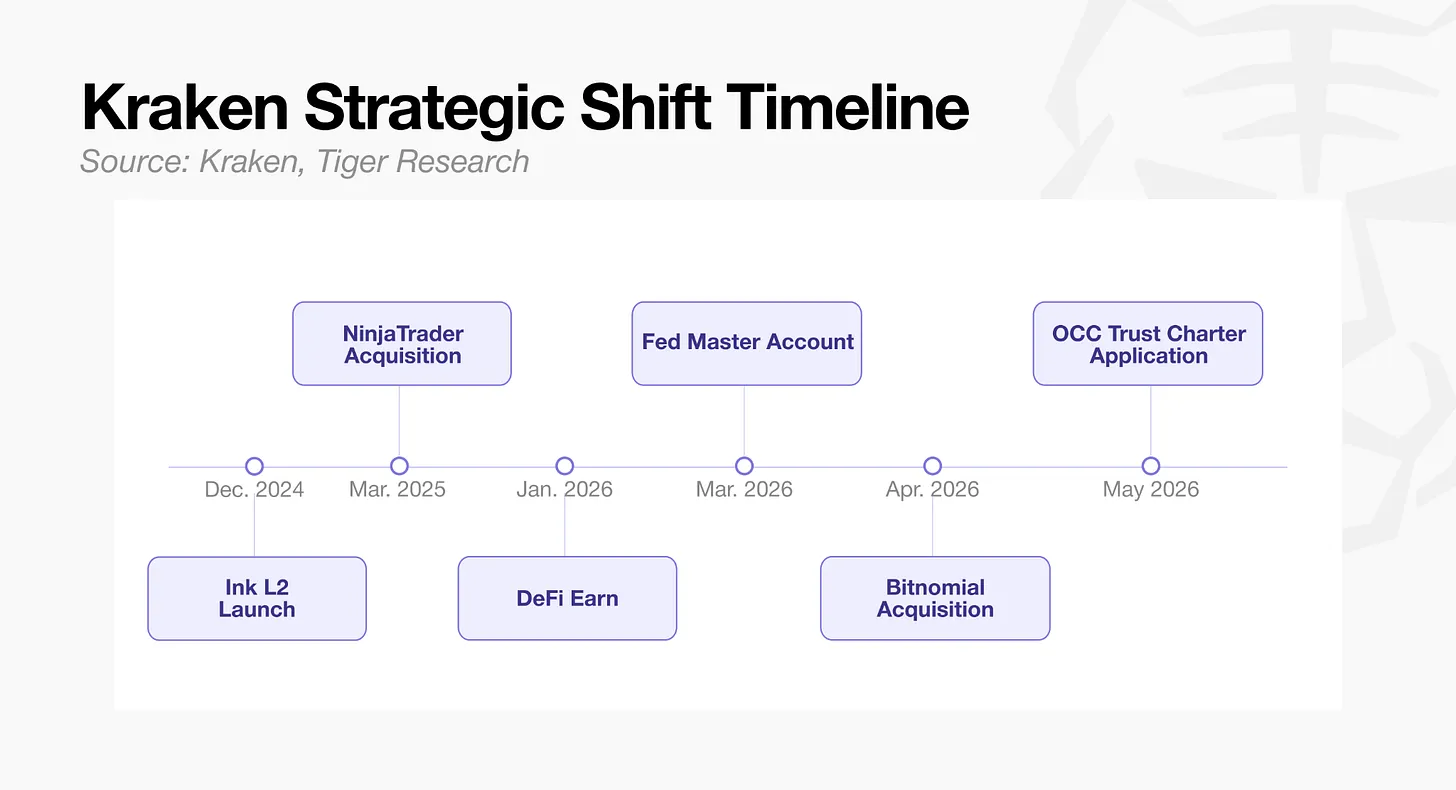
Founded in 2011, Kraken is among the crypto industry’s longest-standing exchanges. Its core strategy centers on consolidating financial licenses and building proprietary infrastructure—ultimately establishing a federally regulated crypto custodial bank.
Securing regulatory approvals is Kraken’s top priority. In March 2025, it acquired NinjaTrader for $1.5 billion—securing a CFTC-registered futures commission merchant license and inheriting its 20,000 retail traders. In April 2026, Kraken acquired Bitnomial for $550 million. After a decade of operation, Bitnomial became the industry’s only native crypto platform holding all three core CFTC licenses: Designated Contract Market (DCM), Derivatives Clearing Organization (DCO), and Futures Commission Merchant (FCM). In March 2026, Kraken secured a master account with the Federal Reserve; in May 2026, it filed for a national trust charter with the Office of the Comptroller of the Currency (OCC).
While pursuing regulatory milestones, Kraken hasn’t neglected on-chain development. In December 2024, it launched its proprietary Layer-2 network Ink, followed by the lending protocol Tydro and the decentralized perpetual futures exchange Nado—both built atop Ink. In January 2026, it launched DeFi Earn—a yield-generating product on-chain—and in May 2026, introduced Bitcoin Vault, a dedicated Bitcoin custody service. All on-chain products are designed around assets whose value propositions can be clearly articulated to institutional clients—altcoins are explicitly excluded from its on-chain roadmap.
While other exchanges rush to list equities to retain users, Kraken has chosen a different path: becoming the institutional crypto bank of choice.
Though strategies differ, all major CEXs share one commonality: altcoins no longer occupy a central role in any of their future plans.
Where Is the Crypto Industry Headed?
For years, centralized exchanges have anchored crypto’s liquidity ecosystem. By listing tokens and fueling trading momentum, they’ve enabled the survival of most crypto projects.
The industry’s deeper problem lies in the near-total absence of crypto projects demonstrating real economic value through actual revenue generation. Token valuations have never rested on fundamentals—but rather on exchange listings, liquidity mining incentives, and other early-stage traffic-driving mechanisms. This system persists only so long as exchanges and traders maintain enduring enthusiasm for the crypto sector.
Now, as retail trading volume shrinks and market enthusiasm cools, exchange support—including listings and marketing resources—is inevitably tightening. The old ecosystem model is structurally unsustainable.
Market sentiment has shifted. Capital is flowing toward projects generating tangible revenue from real products—not tokens reliant solely on exchange lifelines. Hyperliquid’s native token HYPE exemplifies this trend. Though Hyperliquid siphoned on-chain liquidity away from crypto assets toward equities, HYPE remains one of the strongest-performing crypto assets today. This signals the erosion of the once-mutually beneficial relationship between centralized exchanges and crypto projects.
Exchanges’ strategic choices confirm this trend. Retail trading volume and user base remain the bedrock of exchange viability. Clinging to pure crypto trading will only accelerate erosion of that foundation. Market enthusiasm for newly launched crypto tokens has evaporated. Exchanges have no choice but to protect their existing architecture and user base—even as they urgently pursue new revenue streams.
That’s why all major platforms are collectively pivoting toward equity derivatives, wealth management services, and asset custody. As resources shift decisively, exchanges are effectively stepping back—leaving altcoin projects to navigate market challenges independently.
In past bear markets, centralized exchanges bore the brunt alongside the broader crypto industry. Now, however, exchanges are charting paths to growth independent of crypto. This signals that the current downturn may prove more severe for the crypto sector than any prior bear market.
Join TechFlow official community to stay tuned
Telegram:https://t.me/TechFlowDaily
X (Twitter):https://x.com/TechFlowPost
X (Twitter) EN:https://x.com/BlockFlow_News
 @tiger_research